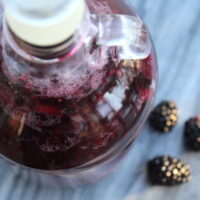
Blackberry Wine
A sweet dessert wine with a beautiful blackberry flavor.
Servings: 20 glasses (1 gallon, about 4 bottles)
Ingredients
- 4 lbs blackberries fresh or frozen
- 2 1/4 lbs sugar about 4 1/2 cups
- 1/4 tsp tannin powder
- 1 tsp acid blend
- 1/2 tsp Pectic Enzyme
- 1/2 tsp yeast nutrient
- 1 packet wine yeast preferably sweet wine yeast
- water to fill
- Optional: 1 Campden tablet + ½ tsp potassium sorbate (for backsweetening only)
Instructions
- Sanitize all equipment.
- Smash blackberries and sugar together in a primary fermentation container.
- Bring 1 quart of water to a boil and pour over the blackberries and sugar. Stir to dissolve the sugar.
- Allow the mixture to cool to around 70 degrees and add the remaining ingredients, adding enough water to fill your 1-gallon fermenter.
- Seal the fermenter with a blow off tube (this ferments a bit violently for a water lock) or leave open for the first part of the primary ferment, just covered with a towel. Stir the mixture daily for 5-7 days until the most vigorous fermentation is complete.
- After about a week, wrack the blackberry wine into a glass carboy (narrow neck) and seal with a water lock. Allow the mixture to ferment for about 3 months before racking again.
- At this point, allow the mixture to ferment for 8-12 months before bottling.
- Allow the blackberry wine to bottle age at least 6 months before tasting.
Notes
Aging Timeline
This recipe follows the long aging cycle from The Home Winemaker's Companion. Plan for 1 week in primary, 3 months in secondary, another 8 to 12 months on the lees after the second racking, and at least 6 months bottle aging. Total time from start to first taste is about 18 months. The long aging is what gives this wine its rich dessert-wine character, and shortcutting it produces a thinner, harsher wine.
Yeast Choices
Lalvin 71B is my first pick for blackberry wine because it brings out fruity esters and finishes with some residual sweetness. Red Star Cote des Blancs is a slow, sweet-finishing yeast that works well if you want a clearly sweet dessert wine. Red Star Premier Blanc has higher alcohol tolerance and ferments drier, so plan to backsweeten if you go with that strain.
Yeast Quantity
A single yeast packet handles 1 to 5 gallons. For a 1-gallon batch, you can pitch the full packet (which speeds up an already-vigorous primary), or use about 1/4 of the packet and store the rest for your next batch.
Mead Variation
Substitute 3 lbs of honey for the 2¼ lbs of sugar to make blackberry mead instead. Mead requires longer secondary aging since honey ferments more slowly than table sugar. Plan on 3 to 6 months in secondary and at least a year of bottle aging.
Stabilizing and Backsweetening
If the wine tastes too dry at the end of secondary, rack to a clean container, add 1 Campden tablet and ½ teaspoon potassium sorbate, and wait 24 to 48 hours to make sure the yeast has died off before adding any sugar. Sweeten with a simple syrup of equal parts water and sugar, starting with about ½ cup of sugar and adjusting to taste. Let the stabilized wine rest for another week before bottling.
Why Not a Standard Airlock
Blackberry wine ferments harder than just about any other fruit wine. A standard narrow-neck carboy with a water lock will overflow within hours of pitching the yeast. Always use a wide-mouth fermenter covered with a clean towel, or a wide-mouth jar with a silicone Mason Tops water lock that vents pressure freely. Move to a narrow-neck carboy with a standard airlock only after the most aggressive primary fermentation has slowed down.
Nutrition
Serving: 1glass | Calories: 236kcal | Carbohydrates: 60g | Protein: 1g | Fat: 1g | Saturated Fat: 0.01g | Polyunsaturated Fat: 0.3g | Monounsaturated Fat: 0.04g | Sodium: 1mg | Potassium: 148mg | Fiber: 5g | Sugar: 55g | Vitamin A: 194IU | Vitamin C: 19mg | Calcium: 27mg | Iron: 1mg
