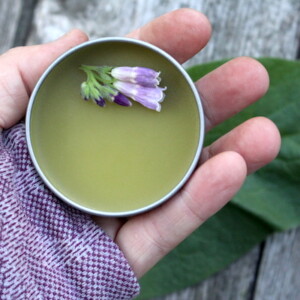
Comfrey Salve
Comfrey salve is easy to make at home, using homegrown herbs or by purchasing dried comfrey. Studies show that comfrey is an effective herbal pain reliever when applied topically.
Ingredients
- 1 1/2 cup dried comfrey leaf, root, or a mix enough to fill a pint jar about 2/3 full; fresh herb works with the warm infusion method, see notes for fresh herbs
- 1 to 1 1/2 cups Olive Oil to fill the pint jar, or coconut, sweet almond, jojoba, or grapeseed
- 1 ounce beeswax
Instructions
- Fill a pint mason jar about two-thirds full with dried comfrey leaf, root, or a mix of both.
- Cover the herb with olive oil, leaving about an inch of headspace at the top of the jar.
- Cold infusion (dried herb): cap the jar and set it on a shelf out of direct sunlight for 4 to 6 weeks. Shake every few days to keep the herb moving through the oil.
- Warm infusion (fresh herb): leave the jar lid loose and keep the jar at 110 to 120°F for 24 to 48 hours. A dehydrator set to 115°F or an Instant Pot on yogurt mode work best. A warm water bath in a bowl works if you refresh the water every few hours. Avoid a slow cooker as a direct heat source.
- Strain the infused oil through a cheesecloth-lined fine mesh strainer into a clean heat-proof container. Squeeze the cheesecloth gently to release the last of the oil, then compost the spent comfrey.
- Return the strained oil to a small saucepan or double boiler. Add the beeswax (1 oz per cup of oil).
- Warm gently over low heat, stirring constantly, until the beeswax has melted completely and the mixture is smooth.
- Pour the finished salve into 2 oz tins or small glass jars.
- Let cool undisturbed for at least 30 minutes before putting lids on or using.
Notes
Yield ~ This recipe makes about 8 oz of finished salve, enough to fill four 2-oz tins.
Beeswax ratio ~ 1 oz beeswax per cup of infused oil produces a medium-firm salve that softens on contact with skin. Use about 3/4 oz per cup for a softer balm, or 1 1/4 oz per cup for a harder, stick-style salve. Coconut oil is solid at room temperature, so use slightly less beeswax (about 3/4 oz per cup) if you substitute it for olive oil.
Substituting oils ~ Olive oil is what I use most often. Coconut, sweet almond, jojoba, and grapeseed all work. Coconut produces a slightly firmer salve at room temperature; jojoba absorbs the fastest into skin. Avoid oils with strong scents that compete with the comfrey.
Leaf vs. root ~ Both work, and you can use them together. Root is traditionally considered more potent for deeper pain like back and joints. Leaf is easier to harvest and dry. A 50/50 mix gives a well-rounded salve.
Cold vs. warm infusion ~ Dried comfrey is the safer default because dried herb doesn't introduce water into the oil. Cold infusion takes 4 to 6 weeks but is hands-off and gives the most reliable potency. Use the warm infusion method only when you're working with fresh herb or need the salve sooner.
Shelf life ~ Stored in a cool, dark, dry place, this salve keeps its potency for 1 to 2 years. A few drops of vitamin E oil stirred in with the beeswax can extend shelf life further. Discard any salve that smells rancid or shows mold.
Pregnancy and nursing ~ Comfrey is not considered safe during pregnancy or while nursing, even applied topically. Skip this salve and use plantain or calendula salve instead.
Duration of use ~ Limit use to no more than 10 consecutive days, and no more than 4 to 6 weeks of total use in a calendar year. For chronic pain, alternate with another pain-relieving salve like arnica or wild lettuce.
For sensitive skin ~ Always patch test on a small area first. A small percentage of users develop skin reactions to comfrey, particularly with longer use.
Don't ingest comfrey ~ Topical use only. The pyrrolizidine alkaloids in comfrey can damage the liver when consumed. Don't drink comfrey tea or take comfrey tinctures, regardless of what older herbals recommend.
Vegan version ~ Substitute candelilla wax for beeswax. See the vegan herbal salve recipe for the right ratio.
Tried this recipe?Let us know how it was!
