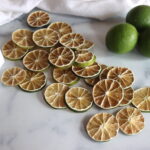
Dehydrating Limes
Dehydrating limes is an easy way to preserve fresh citrus for cocktails, tea, cooking, and garnishes. Slice limes into thin rounds, remove seeds, and dry until crisp or leathery, then store airtight for a shelf-stable pantry staple you’ll use all year.
Equipment
- Dehydrator
Ingredients
- Fresh Limes
Instructions
- Begin by washing your limes well to remove any dirt, debris, or wax coating. Pat dry.
- Slice limes into wheels ¼ to ⅛ of an inch thick. Remove any seeds from the slices.
- Place limes on dehydrator trays (or wire racks and baking sheets for oven-drying) in a single layer. Leave enough room between the slices for air circulation.
- (Dehydrator) Set dehydrator to 125° to 135° F. Dry for 3 to 7 hours, adjusting time for humidity and slice thickness. Lime slices dried at 125° F may take as long as 8 to 10.
- (Oven) Set your oven as low as it will allow (this will generally be around 170° F). Dry for 2 to 3 hours, flipping lime slices if needed.
- Limes are done when they are crisp and devoid of moisture.
Notes
Allow lime wheels to cool for 30 to 60 minutes before moving to an airtight container for storage. Dehydrated fruit is best kept in a cool, dry, and dark location.
Conditioning
Conditioning fruits is a necessary step to be sure spoilage and mold growth don’t ruin your dehydrated food. As outlined by the University of Georgia Cooperative Extension Service, you can condition fruit by moving to an airtight container after the fruit slices have cooled. Seal and allow to sit for 7 to 10 days, shaking the jar once a day. This will allow the moisture to evenly distribute between all the pieces. If you see condensation or any signs of moisture inside the container, your citrus needs to be dehydrated some more. If you see no signs of moisture after 10 days, feel free to move dried fruits for long-term storage.Dehydrating Time
Dehydrating time depends on your local humidity — food items will dehydrate slower when the moisture content in the air is higher. Take ambient humidity into consideration when factoring drying times. Use this chart below as a guide:- 10 to 30% Humidity: 3 Hours
- 31 to 50% Humidity: 4 Hours
- 51 to 70% Humidity: 5 Hours
- 71 to 80% Humidity: 6 Hours
- Above 80% Humidity: 7 Hours
