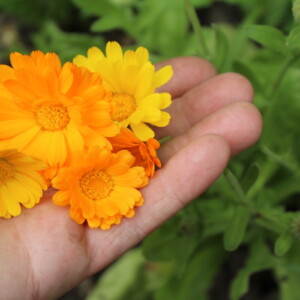
How to Grow Calendula
Step-by-step instructions for starting calendula from seed and growing it as a productive medicinal flower in any temperate climate.
Ingredients
- Calendula seeds Calendula officinalis
- sterile seed-starting mix
- well-drained garden soil
- compost
Instructions
- Sow calendula seeds indoors 3 to 4 weeks before your last spring frost, or direct seed outdoors after the last frost has passed. Plant seeds about 1/4 inch deep in moist seed-starting mix or well-prepared garden soil.
- Maintain soil temperatures between 60 and 65°F for best germination. Calendula doesn't need bottom heat the way warm-season crops do, so room temperature is plenty. Seeds typically emerge in 5 to 15 days outdoors, 10 to 15 days indoors.
- Once seedlings have several true leaves and outdoor temperatures are consistently above 50°F at night, harden off indoor-started seedlings gradually over a week by exposing them to outdoor conditions for increasing periods.
- Transplant outdoors into a sunny location with fertile, well-drained soil amended with compost. Space plants 24 to 36 inches apart, since calendula spreads to fill its space when flowers are harvested regularly.
- Water about 1 inch per week throughout the growing season, keeping soil consistently moist but not waterlogged. Mulch around the base of plants with 2 to 3 inches of compost or shredded leaves to conserve moisture and suppress weeds.
- Begin harvesting flowers once they fully open, about 45 to 65 days from seed. Pinch or snip flower heads in late morning after the dew has dried, taking the entire flower head at the top of the stem. Continuous harvesting actually increases overall production, so don't hold back.
- If plants get leggy or slow down in midsummer heat, cut them back by half. Fresh growth and a new flush of flowers usually follow within 2 to 3 weeks.
- To preserve the harvest, spread fresh flower heads in a single layer on a screen or mesh drying rack in a warm well-ventilated spot out of direct sunlight, or use a dehydrator at 90 to 95°F. Don't wash flowers before drying, since the moisture encourages mold.
- Once flowers are completely crisp (12 to 24 hours in a dehydrator, 1 to 2 weeks air drying), store whole dried flowers in a sealed glass jar away from light. Properly dried calendula keeps its potency for about a year.
To save seeds for next year's garden, leave some spent blossoms on the plant in late summer rather than deadheading them. Wait until the seed heads brown and dry on the plant, then snip them off and finish drying indoors before storing in a paper envelope in a cool, dry, dark place.
Tried this recipe?Let us know how it was!
