How to Plant Apple Seeds
Step-by-step instructions for cold stratifying apple seeds, germinating them, and growing healthy seedlings into fruiting apple trees.
Equipment
- Paper towel
- zip-top plastic bag
- refrigerator
- 1-gallon nursery pot with drainage holes
Ingredients
- Mature apple seeds dark brown and plump
- water
- seed-starting mix
Instructions
- Cut open ripe apples and pick out the seeds. Choose plump, dark brown seeds and discard any that are pale, shriveled, or white, since those are immature and won't germinate. Rinse the seeds gently under cool water to remove all clinging fruit pulp, since residual sugar can encourage mold during the long fridge stay.
- Dampen a paper towel until it's thoroughly moist but not dripping wet. Lay the seeds in a single layer on one half of the towel and fold the other half over to cover them completely.
- Slide the wrapped seeds into a zip-top plastic bag, leaving the bag open about an inch for air exchange. Place the bag in the back of the refrigerator where temperatures stay consistently between 35 and 40°F.
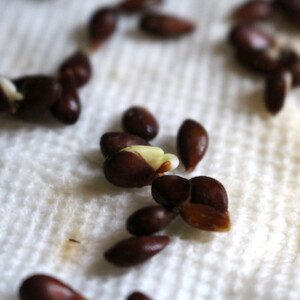
- Check the seeds every week or so to make sure the paper towel stays moist and to look for any signs of mold or sprouting. After about six weeks of cold stratification, many seeds will have visible roots beginning to emerge, which is the signal that they're ready to plant.
- Fill a one-gallon nursery pot with sterile seed-starting mix. Plant about a dozen stratified seeds roughly half an inch deep, spaced evenly around the pot. Water gently until the soil is evenly moist but not waterlogged.
- Place the pot in a warm, bright location with soil temperatures around 70 to 75°F. Seedlings should emerge from the soil within one to two weeks, with seeds that already had visible roots emerging fastest.
- Once the seedlings are 4 to 6 inches tall and nighttime temperatures are consistently above 50°F, transplant them outside to a permanent sunny location with at least 20 feet of space between trees. Stake young seedlings for the first year or two, mulch around the base with wood chips or shredded leaves leaving a small gap at the trunk, and water deeply once a week through the first growing season.
Tried this recipe?Let us know how it was!
