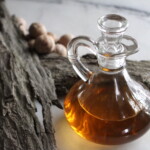
Shagbark Hickory Syrup
Shagbark hickory syrup is a delicious bonus harvested from hickory trees. While they already produce incredibly tasty hickory nuts in the fall, you can also make hickory syrup for year-round harvest.
Servings: 48 servings, or about 3 cups
Equipment
Ingredients
- ½ pound Shagbark hickory bark already detached/shed
- 4 cups Water enough to just cover the bark in your saucepan
- 2 cups cane sugar 1 cup per 1 cup strained hickory tea
Instructions
Toast the bark
- Preheat oven to 350°F.
- Break bark into manageable pieces (roughly 2 inches long by 1–2 inches wide).
- Spread in a single layer on a baking sheet.
- Toast for about 20 minutes, until very fragrant and just slightly darkened on the surface.
- Cool briefly. (You can store toasted bark dry for later, or proceed right away.)
Make hickory “tea”
- Put toasted bark into a saucepan.
- Add enough water to just cover the bark.
- Bring to a low simmer (keep heat gentle).
- Simmer 30–45 minutes, keeping it below a hard boil to avoid bitterness.
- Strain, then measure the liquid (the “tea”).
Turn it into syrup
- Return measured tea to the saucepan.
- Add equal parts sugar: 1 cup sugar per 1 cup tea.
- Stir to dissolve over medium heat, then simmer until syrup thickens.
- Finish at maple-syrup temperature: about 219°F at sea level, or roughly 217°F around 1,000 feet elevation (about 1°F lower per 500 ft of elevation).
- Remove from heat and let cool slightly. It will thicken more as it cools.
Notes
Harvesting bark (important): Use only bark that’s already detached or hanging loose. Shagbarks grow slowly, and damaging the trunk leaves a mark for a long time.
Why toast first: Toasting helps dry the bark (reducing mold risk if stored) and boosts flavor. If you’re not making syrup immediately, toast it anyway, cool completely, and store in a dry jar.
Gentle simmer for better flavor: A rolling boil can pull bitterness. Keep it at a low simmer and let time do the work.
Water/Sugar Ratios: Use just enough water to cover the bark. The recipe scales best if you measure the strained tea and match sugar 1:1 from there.
Finish temperature and crystallization:
If you cook too hot (many instructions say 225°F), you’re edging toward candy stages, which can encourage crystallization. For cane sugar, finishing around maple syrup temps makes sense. If after it cools, you find you want a thicker syrup, you can re-boil it to a slightly hotter temperature, but don’t go over 225°F.
If you cook too hot (many instructions say 225°F), you’re edging toward candy stages, which can encourage crystallization. For cane sugar, finishing around maple syrup temps makes sense. If after it cools, you find you want a thicker syrup, you can re-boil it to a slightly hotter temperature, but don’t go over 225°F.
Nutrition
Serving: 1Tbsp | Calories: 54kcal | Carbohydrates: 13g | Sodium: 2mg | Potassium: 45mg | Sugar: 12g | Calcium: 22mg | Iron: 0.02mg
