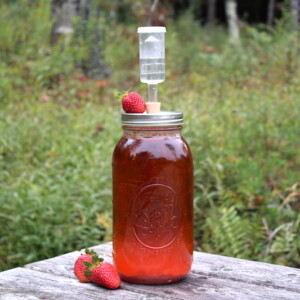
Strawberry Wine
Homemade strawberry wine captures the essence of summer berries in a sweet, blush-pink wine that improves with age. This classic country wine recipe transforms fresh strawberries into bottles of sunshine you can enjoy all year long.
Servings: 20 servings (4 bottles or 1 gallon)
Ingredients
- 4-5 lbs strawberries fresh or frozen
- 2 lbs sugar
- 1 tsp acid blend
- 1 tsp yeast nutrient
- 1/8 to 1/4 tsp tannin powder
- 1/2 tsp Pectic Enzyme
- water to fill
- 1 packet wine yeast see notes
Instructions
- Place the strawberries and sugar into a large bowl or directly into your fermentation vessel. Allow the sugar to pull the juice from the strawberries for a few hours.
- Add the remaining ingredients (except wine yeast) and fill with water to within a few inches of the top of the fermentation vessel. Give it a stir or shake to combine the ingredients.
- Dissolve a packet of wine yeast in about 1/4 cup of water and allow it to rehydrate for at least 5 minutes. Add the dissolved yeast into the wine base and cap the mixture with a water lock.
- Allow the mixture to ferment for about 10 to 12 days and then use a siphon to rack the wine into a new fermenter. Filter through a fine mesh strainer as you go to remove any strawberry chunks and leave any sediment behind.
- Cap with an airlock and allow the strawberry wine to ferment in secondary for about 6 weeks, or until fermentation is complete, before bottling.
- Bottle the wine, leaving behind the sediment. Cork bottles and allow it to age for at least a month, preferably 3-6 months before drinking.
Notes
Ingredient Substitutions
If you’d like to try to make this wine without normal pantry staples, here are a few substitutions (see the article on ingredient substitutions for more details):
- 1 tsp Acid Blend = 1 TABLEspoon lemon juice
- ⅛ tsp Tannin Powder = 1 cup strongly brewed black tea
- 1 tsp Yeast Nutrient = ¼ cup golden raisins (sultanas)
- 1 tsp Pectic Enzyme = freeze the fruit for 1 week before making the wine to break down pectin
Nutrition
Serving: 1grams | Calories: 204kcal | Carbohydrates: 52g | Protein: 1g | Fat: 0.4g | Saturated Fat: 0.01g | Polyunsaturated Fat: 0.1g | Monounsaturated Fat: 0.04g | Sodium: 1mg | Potassium: 140mg | Fiber: 2g | Sugar: 50g | Vitamin A: 11IU | Vitamin C: 53mg | Calcium: 15mg | Iron: 0.4mg
