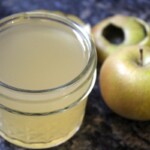
Apple Scrap Vinegar
Turn apple peels and cores into a soft, fruity homemade vinegar with nothing but sugar, water, and a few weeks on the counter. Makes about 1 quart strained vinegar per half gallon jar.
Servings: 64 servings, makes 1 quart or 4 cups
Equipment
- Half Gallon Mason Jar
Ingredients
- 6 cups apple scraps peels and cores, loosely packed, enough to fill a half gallon jar leaving 1 to 2 inches headspace
- 2 Tbsp granulated sugar up to 4 tablespoons for a stronger vinegar, never more than 1/2 cup per half gallon jar
- 4 cups water filtered or dechlorinated, plus more as needed to cover
- 1 Tbsp raw apple cider vinegar with the mother optional starter
Instructions
- Wash the apples well before peeling, since anything on the skin ends up in the finished vinegar. Pack the peels and cores loosely into a half gallon jar, leaving 1 to 2 inches of headspace at the top. Leave the pieces large rather than chopping them.
- Dissolve the sugar in a cup of warm water, then pour it over the scraps.
- Top the jar off with additional water until the scraps are fully submerged with a little liquid to spare. Stir in the raw cider vinegar now if you are using it.
- Set a glass fermentation weight on top so every piece of apple sits below the water line. Any scrap left above the liquid will mold.
- Cover the mouth of the jar with a cloth napkin or doubled cheesecloth and secure it with a rubber band or a jar ring with the flat lid removed. Do not use an airlock or a solid lid, since the ferment needs air exchange to sour into vinegar.
- Set the jar out of direct sunlight at room temperature. After about a week you should see a steady stream of bubbles rising through the scraps as the wild yeast convert sugar into alcohol.
- Ferment for 3 to 6 weeks, tasting occasionally. At 3 weeks the vinegar will be mild and tart, and it sharpens the longer you leave it. The scraps will brown and the liquid will darken to a soft cider color, and a pale gelatinous mother will form on the surface.
- Check the jar every few days for mold on the surface. Scoop off any small spots and make sure the scraps stay fully submerged.
- When the vinegar tastes right to you, strain it through a fine mesh strainer into clean bottles and cap them. Leave the mother in the bottle or reserve a piece to start your next batch.
- Store at room temperature out of direct light. Raw vinegar keeps indefinitely and will continue to sharpen slowly on the shelf.
Notes
Yield: One half-gallon jar of scraps yields roughly 1 quart (4 cups) of finished vinegar. Scale up by making multiple jars rather than using a single larger vessel.
Not for canning: Homemade vinegar has a variable acidity that cannot be measured at home. Tested canning recipes require commercial vinegar standardized to 5 percent acidity. Use apple scrap vinegar for cooking, refrigerator pickles, cleaning, and herbal preparations only.
Sugar is required: Batches made without added sugar consistently spoil rather than ferment. There is not enough residual sugar in the scraps to sustain the yeast on their own.
Honey substitution: Honey works in place of sugar, but the bacteria digest it more slowly, and the ferment will take noticeably longer.
Keep the pieces large: Chopping or grinding the scraps does not speed things up. Small bits float above the fermentation weight and mold.
Slow ferment: Cool kitchens slow the yeast considerably. If there are no bubbles after two weeks, move the jar somewhere warmer or set it on a seedling heat mat. Absent mold, a slow ferment is not a failed ferment.
Mother versus mold: A mother is smooth, translucent, and sits in or on the liquid, and it can be cream, tan, or pink. Mold is fuzzy and dry looking and grows above the water line on exposed apple pieces.
Pasteurizing: Optional. Heat the strained vinegar to about 150F and hold briefly before bottling if you want to stop it from sharpening further.
Nutrition
Calories: 5kcal | Carbohydrates: 0.2g | Sodium: 1mg | Potassium: 16mg | Sugar: 0.1g | Calcium: 2mg | Iron: 0.04mg
