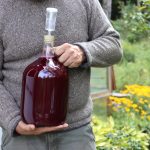
Pyment (Grape Mead)
Pyment is a traditional honey wine made with grapes that combines the best qualities of mead and wine. The honey adds body and residual sweetness while the grapes contribute tannins, color, and fruity depth. This recipe works beautifully with homegrown cold hardy grapes or store bought grape juice.
Servings: 20 glasses (1 gallon, about 4 bottles)
Equipment
- Cheesecloth, Fine Mesh (90 grade) Or Fine mesh straining bag (if using whole grapes)
Ingredients
- 1/2 gallon grape juice fresh pressed or store bought with no preservatives
- 2 lbs honey use 2 lbs per gallon for homegrown grapes, or 1.75 lbs per gallon for sweeter commercial juice
- water to fill to 1 gallon total volume
- 1 packet wine yeast Lalvin 71B-1122 or D47 recommended
- 1 tsp yeast nutrient
- 1/2 tsp pectic enzyme
- 1/8 tsp wine tannin optional, if grapes lack tannin
Instructions
- Sanitize all equipment using one-step brewing sanitizer.
- If using fresh grapes, wash, destem, and crush to extract juice. Freezing grapes for a week before crushing improves juice extraction significantly.
- Combine grape juice, honey, and enough water to fill your fermentation vessel to the neck, leaving a few inches of headspace. Stir vigorously until honey is completely dissolved.
- Add yeast nutrient, pectic enzyme, and tannin if using. Stir well and let sit at room temperature for a few hours or overnight to allow the pectic enzyme to work.
- Rehydrate wine yeast in a small amount of warm water (about 100°F) for 10-15 minutes until it begins to foam, then add to the must and stir gently.
- Seal the fermentation vessel with an airlock. You should see bubbling within 24-48 hours indicating active fermentation.
- Allow primary fermentation for 2-3 weeks at 60-70°F until fermentation slows and sediment settles to the bottom.
- Rack to a clean carboy for secondary fermentation using an auto-siphon, leaving all sediment behind in the primary vessel.
- Age in secondary for 2-6 months in a cool, dark location. Rack again if significant sediment accumulates.
- Taste before bottling and adjust sweetness if desired. To backsweeten, first stabilize with 1 Campden tablet and 1/2 tsp potassium sorbate per gallon, wait 24 hours, then add honey to taste.
- Siphon into clean wine bottles and cork with fresh corks.
- Age in bottles for at least 6 months to 1 year for best flavor. Pyment improves dramatically with extended aging.
Notes
Honey Ratios: Use 2 lbs honey per gallon for homegrown grapes that are less sweet and more acidic. Use 1.75 lbs honey per gallon for sweeter commercial grape juice. The grape juice to water ratio can be adjusted based on your juice intensity - a 50/50 mix works well for very acidic northern wine grapes, while less acidic juice can be used at full strength.
Yeast Selection: Lalvin 71B-1122 is ideal for acidic grapes as it metabolizes malic acid and softens sharp flavors. Lalvin D47 works well for white grape pyment and enhances honey character. K1-V1116 is good for drier styles with its 18% alcohol tolerance. Never use bread yeast.
No Acid Needed: Most grape juice contains enough natural acidity that acid blend is unnecessary. Taste your juice first - if it has pleasant tartness, skip the acid entirely.
Fermentation Timeline: Primary fermentation takes 2-3 weeks. Secondary should be at least 2-3 months, but 6 months produces noticeably better results. Mead ferments more slowly than wine because honey is harder for yeast to digest.
Aging: Pyment improves dramatically with bottle aging. While drinkable after a few months, the best pyments peak at 2-3 years when the honey and grape flavors fully integrate.
Grape Preparation: Freezing fresh grapes for at least a week before crushing breaks down cell walls and significantly improves juice extraction and flavor release.
Grape Skins: For more color and tannin in red grape pyment, ferment with crushed grapes and skins in primary for 3-5 days, stirring daily, before straining and continuing fermentation.
Store-bought Juice: Welch's 100% grape juice and similar products work well. Avoid any juice containing potassium sorbate or sodium benzoate as these preservatives prevent fermentation. Pasteurized juice and added vitamin C (ascorbic acid) are fine.
Troubleshooting Stuck Fermentation: If fermentation stalls, try stirring to resuspend yeast, warming to 65-70°F, or adding more yeast nutrient. Pitch EC-1118 champagne yeast to restart stubborn stuck fermentations.
