
Affiliate disclosure: This post may contain affiliate links. Please see our Privacy Policy.
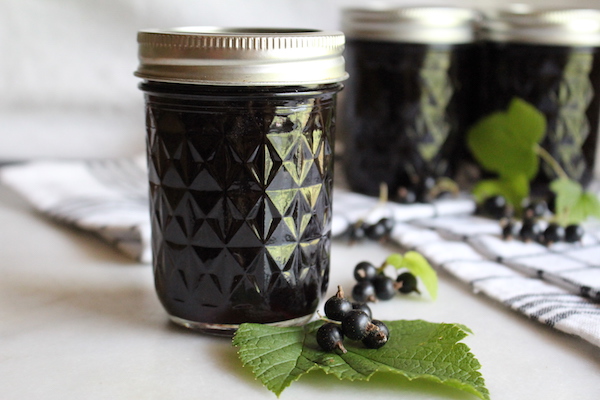
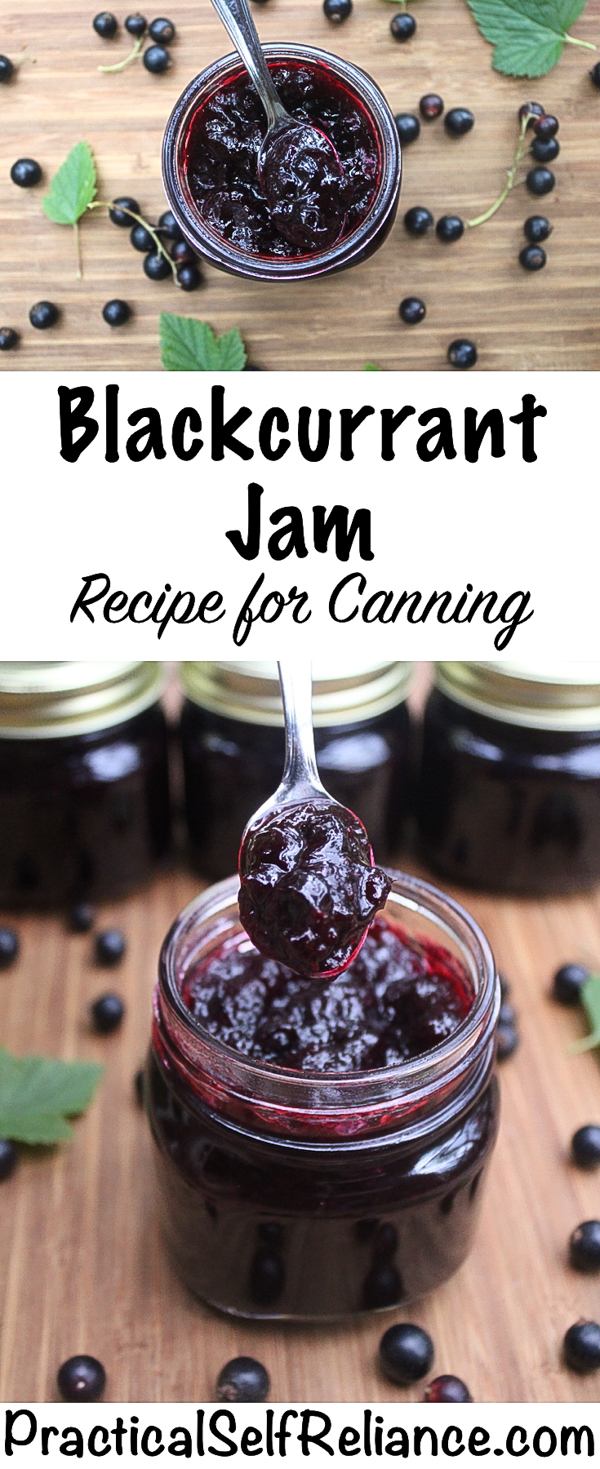
Blackcurrant jam is one of those preserves you simply can’t buy in a store, so if you want that deep, tangy, almost spiced flavor on your toast, you’ll have to make it yourself. It’s one of my favorite jams, and it’s a sad year when I don’t make time to put up a big batch.
Blackcurrants are naturally high in pectin, so they set into a thick, rich jam with no added pectin at all. They do need a good bit of sugar to balance their astringency, but otherwise this follows the same simple, old-fashioned approach as most of my small-batch jams, just with a couple of quirks worth knowing before you start.
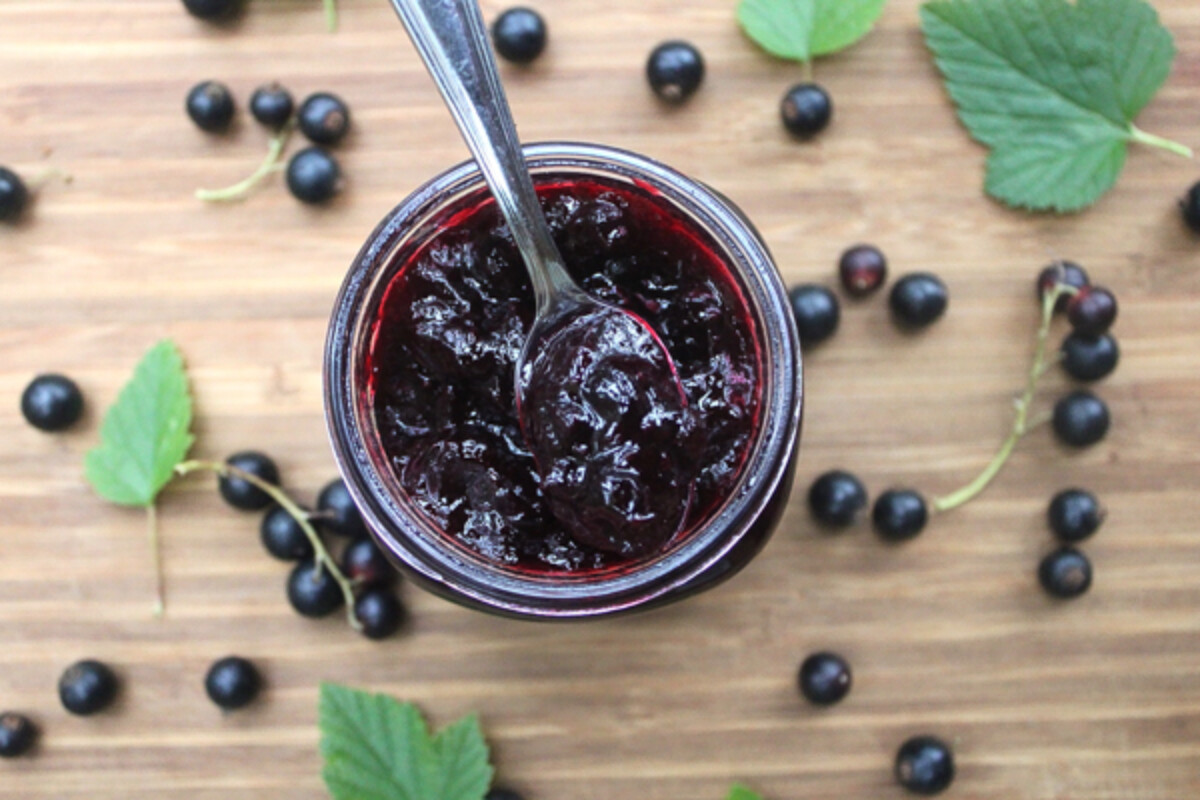
Table of Contents
- Notes from my Kitchen
- Ingredients for Blackcurrant Jam
- How to Make Blackcurrant Jam
- Testing for Gel Stage (Don’t Overcook)
- Canning Blackcurrant Jam
- Altitude Adjustments
- Yield and Batch Size
- Storage Options
- Recipe Tips and Variations
- Ways to Use Blackcurrant Jam
- Blackcurrant Jam FAQs
- More Ways to Preserve Blackcurrants
- Blackcurrant Jam Recipe for Canning
- Jam Recipes
Blackcurrants are a shady woodland fruit, and a single established bush can produce many quarts of berries in a season. They’ve been slow to catch on in the US, in part because they were banned in some states for much of the last century, but they’re making a real comeback at farmers’ markets and pick-your-owns as the local food movement grows.
They’re an easy crop too, producing heavily without spraying or much fuss. If you find yourself with a glut, there are dozens of ideas in my roundup of creative ways to use blackcurrants.
One thing to settle up front is jam versus jelly. This is a jam, which means the skins and pulp stay right in the pot for a rich, textured spread. If you’d rather have a smooth, seedless preserve, you’ll want to strain the fruit and make a blackcurrant jelly instead.
Both are wonderful, so it really comes down to the texture you prefer.
Notes from my Kitchen

Our woodland homestead is shady and cool, which turns out to be exactly what blackcurrants love. A single one of our bushes will hand us well over ten pounds of fruit in a good year, far more than we could ever eat fresh, so a big batch of this jam is a summer ritual around here. The deep, spicy flavor of a blackcurrant is hard to describe, but it’s a huge hit with kids and adults alike in my house.
So the real question, does it get the toddler seal of approval? To be fair, my little one likes tart fruit, and she’ll eat the blackcurrants right off the bush.
Still, she ate it right up saying, “It tastes just like strawberry jam, but sour, and that’s really good.” I’m not sure that’s the best description, but it’s hard enough for an adult to accurately describe the flavor of a blackcurrant, so I’ll cut this 3-year old a bit of slack.
Ingredients for Blackcurrant Jam
This is a short ingredient list, with the measurements in the recipe card below. Here’s what each one does.
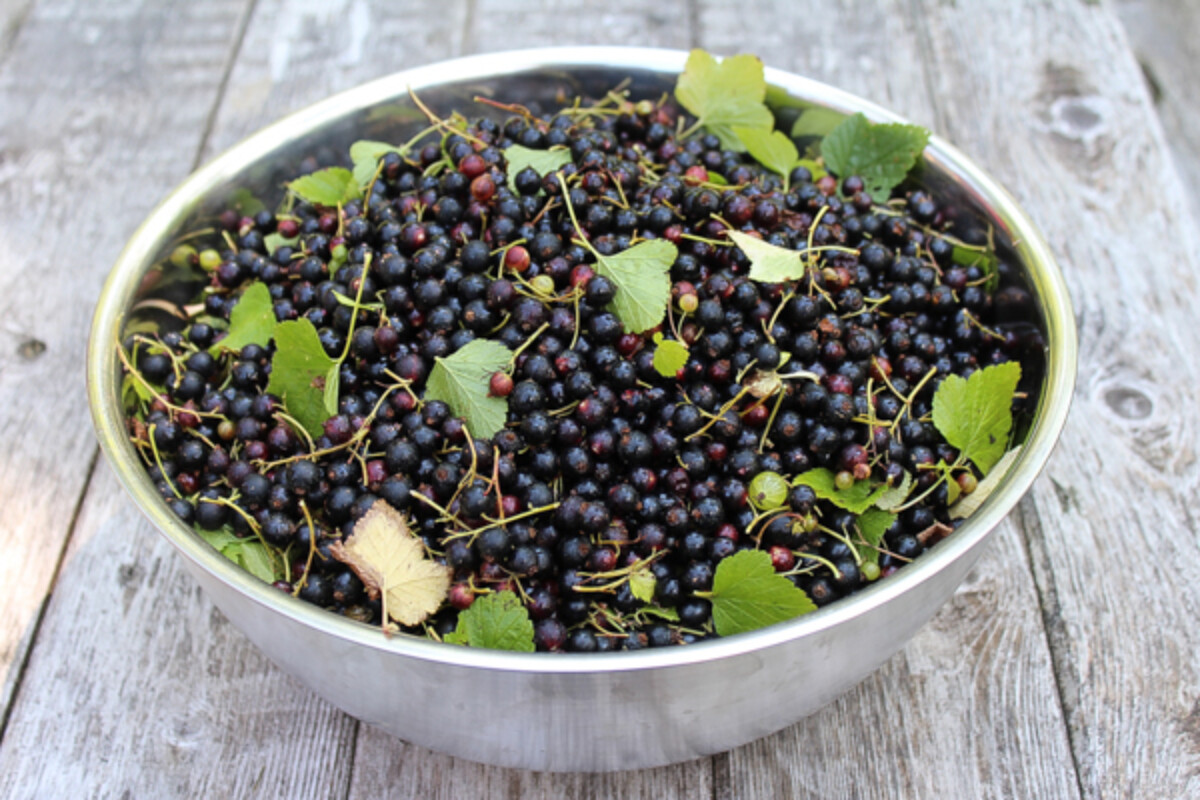
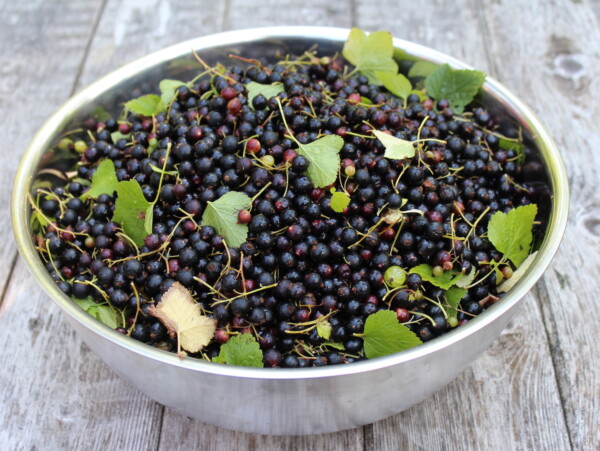
- Blackcurrants: Pick over the fruit and remove the stems and any spent flowers still clinging to the berries. Fresh and frozen currants both work well. Red or yellow currants can stand in for part of the fruit if that’s what you have.
- Granulated sugar: Blackcurrants are quite astringent, and here the sugar isn’t just for sweetness, it balances that sharp edge. This is the one jam where I don’t cut the sugar, since an under-sweetened batch turns bitter rather than pleasantly tart.
- Lemon juice (optional): A few tablespoons brighten the flavor, though it isn’t needed for the set or for safe canning. Blackcurrants are already high in acid, so the lemon is purely for taste.
I know it feels like a lot of sugar, especially if you usually make low-sugar preserves the way I do with my low sugar strawberry jam. Blackcurrants are the exception. If you want to reduce it, start by cutting no more than a quarter of the sugar and taste before you commit, since it’s easy to end up with a sharp, bitter batch.
Thank you very much for this recipe and your concise description of the process, especially the details about elevation and sugar. I’ve scanned a lot of recipes and made yours twice now, and it comes out great.
How to Make Blackcurrant Jam
Blackcurrant jam takes a little longer than a quick, fast-setting berry jam like raspberry jam, mostly because there’s a fair bit of fruit to cook down. It has more in common with a batch of gooseberry jam, another tart, high-pectin fruit. The steps themselves are simple, and the whole thing comes together in under an hour.
Cooking the Jam
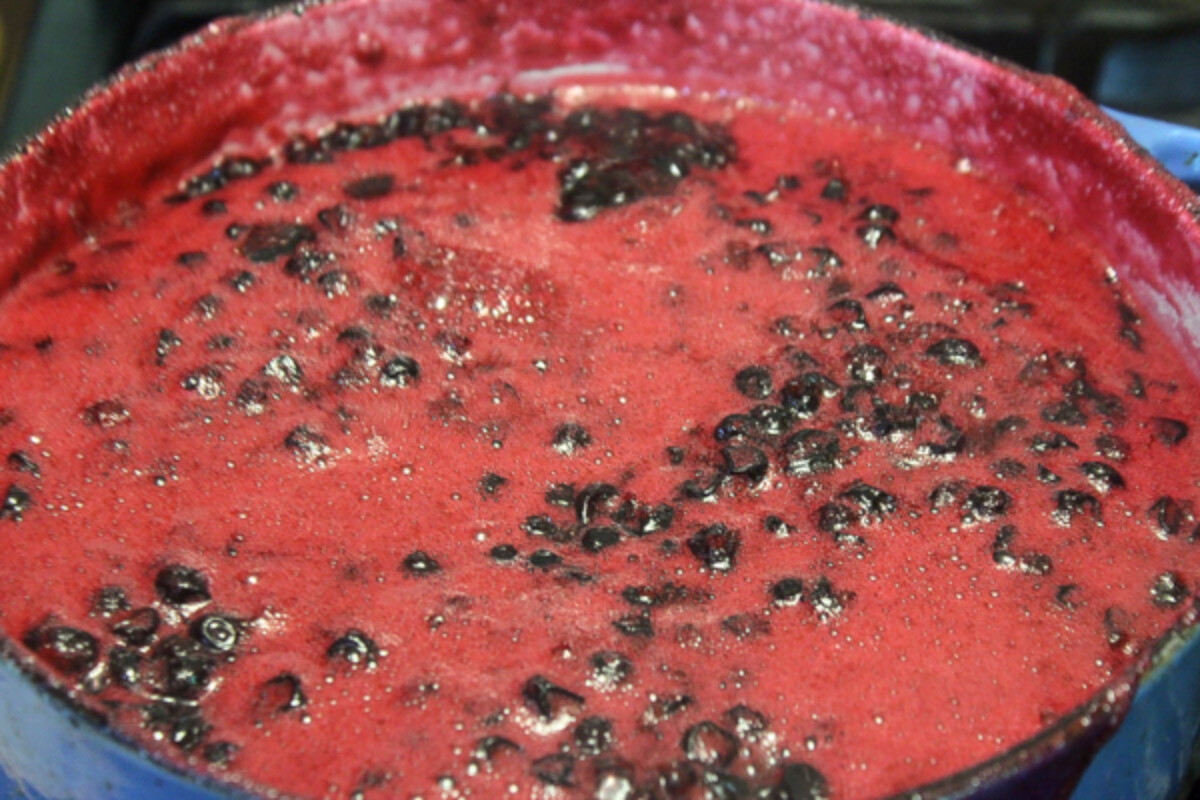
Start by simmering the blackcurrants gently in a thick-bottomed pot. They release their juice quickly, and within about ten minutes you’ll have a pot of dark juice with the softened berry skins floating in it. Don’t skim anything off, since those skins and all that pulp are what give a real jam its body and texture.
Add the sugar and the lemon juice if you’re using it, then keep it at a steady simmer.
It will foam up dramatically at this stage, so make sure your pot started no more than two-thirds full and stir it down whenever it threatens to climb the sides.
After about twenty to thirty minutes, the foaming settles, and the texture visibly changes, turning silky, with big glossy bubbles that swell slowly before they pop. That’s the jam just reaching its set. Cook it a minute or two more, then get it into jars.
Testing for Gel Stage (Don’t Overcook)
This is the single most important thing to get right with blackcurrant jam. These berries are so high in pectin that cooking them all the way to the usual 220°F gel point turns the jam into a stiff paste you can barely spoon out of the jar. Stop too late and you’ll have a hockey puck instead of a spread.
- Watch the pot, not just the clock. When the heavy foaming stops and the surface turns silky with big, slow, glossy bubbles, the jam is setting. That’s your cue.
- Finish below 220°F. If you use a thermometer, blackcurrant jam is usually done around 216 to 218°F, not the 220°F most recipes quote. I pull mine right around there, and it sets up beautifully once cool.
- Adjust for your elevation. Water boils about 1 degree lower for every 500 feet of elevation, so gel stage drops too. Here at 1,000 feet, my finish temperature lands near 218°F. Skipping this step is the top reason a batch over-sets, and it catches people off guard at every elevation.
Canning Blackcurrant Jam
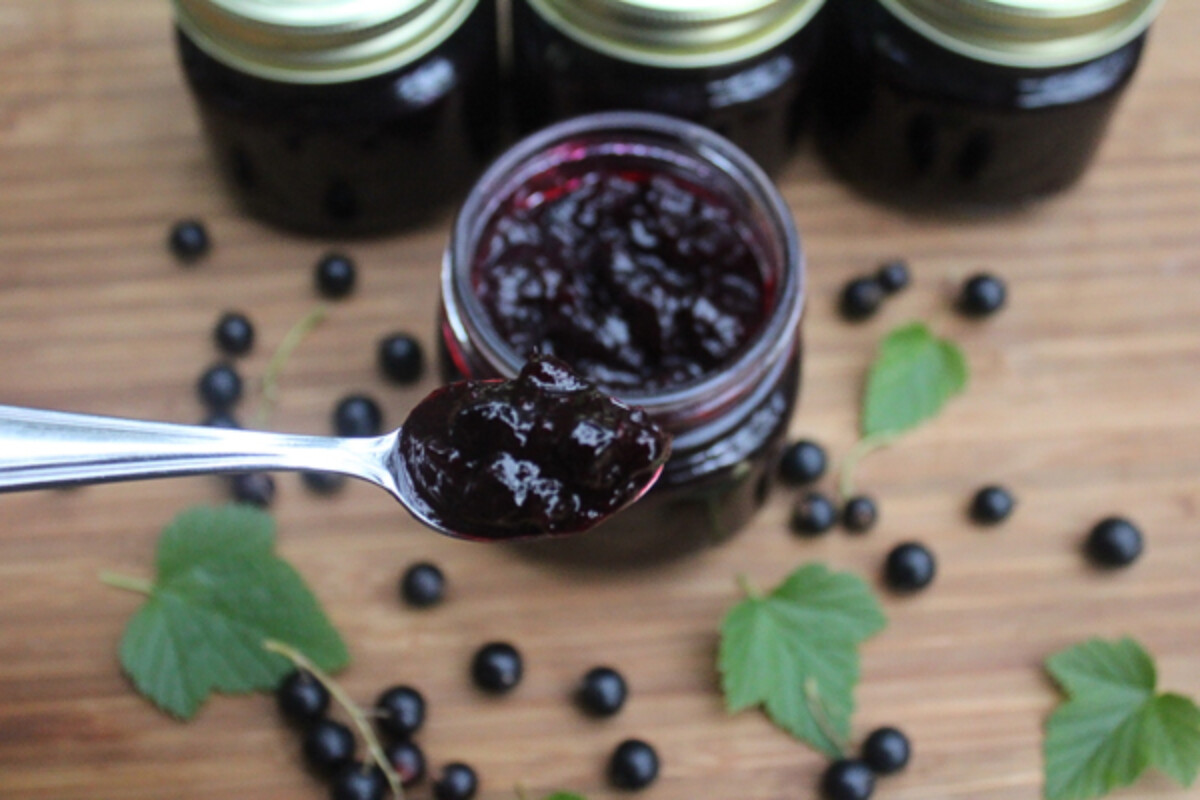
You don’t have to can this jam. It keeps in the refrigerator for a month or two, so a small batch can simply go in the fridge. If you’d like it shelf-stable for the pantry, it’s a quick water bath process, and my beginner’s guide to water bath canning covers the whole setup if you’re new to it.
To can it, ladle the hot jam into prepared jars, leaving 1/4 inch of headspace. Wipe the rims, apply two-part lids finger-tight, and process in a boiling water bath for 10 minutes. Half-pint and pint jars use the same 10-minute time. Once the jars are cool, check that every lid has sealed, and refrigerate any that didn’t.
Altitude Adjustments
Adjust your water bath processing time for elevation:
- Below 6,000 feet: Process for 10 minutes
- Above 6,000 feet: Process for 15 minutes
And remember, elevation changes your gel temperature too, not just the processing time. That’s the key to a blackcurrant jam that sets soft and spreadable instead of stiff.
Yield and Batch Size
This recipe is written as a big batch, which suits how generously the bushes produce.
- Three pounds of blackcurrants, about 9 cups, with 2 1/2 pounds of sugar makes roughly 6 to 7 half-pint jars.
- The recipe divides in half cleanly if you’d rather make a smaller batch.
- Keep the pot no more than two-thirds full at the start, since this jam foams up a great deal as it cooks.
Storage Options
However you finish it, here’s how long blackcurrant jam will keep:
- Refrigerator: 1 to 2 months in a covered jar.
- Freezer: Up to 6 months. Use a straight-sided, freezer-safe jar and leave extra headspace for expansion, rather than the 1/4 inch used for canning.
- Canned: 12 to 18 months in a cool, dark pantry once sealed.
Recipe Tips and Variations
A few things I’ve learned making this jam year after year, plus some ways to branch out:
- Respect the sugar. Blackcurrants are the one fruit I don’t skimp on. If you cut too much sugar, the jam turns sharp and bitter rather than brightly tart.
- Go seedless if you like. To make a smooth blackcurrant jelly instead, strain the cooked fruit through a jelly bag before adding sugar. And don’t toss the leftover pulp, since it makes a lovely fruit leather stirred together with a little unsweetened applesauce.
- Mix in other fruit. A handful of blueberries or a few red currants rounds out the tartness nicely if you’re a little short on blackcurrants.
- Use frozen currants. Frozen blackcurrants work just as well as fresh. Cook them straight from frozen, no need to thaw first.
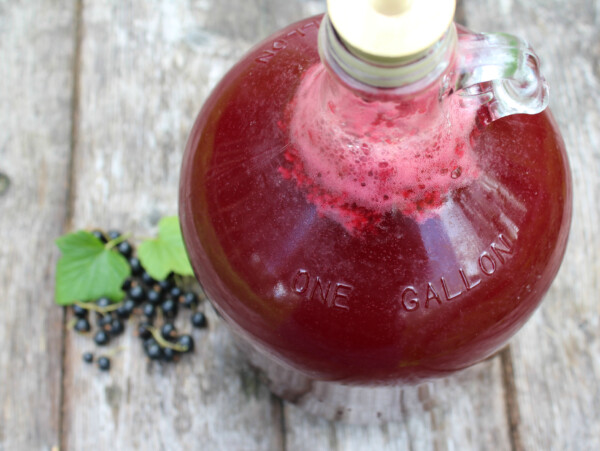
- Look beyond jam. If your bushes really produce, blackcurrants make a wonderful blackcurrant mead or a rich homemade cassis.
Ways to Use Blackcurrant Jam
Blackcurrant jam is a classic on toast and warm scones, and it’s the traditional filling for jammy dodgers and linzer cookies. Its deep, spiced flavor really comes alive alongside savory food, as a glaze for roast lamb, duck, or game, or spooned next to a sharp cheese on a board. I also stir it into yogurt and oatmeal, swirl it through cakes, and thin a little with hot water for a homemade version of the blackcurrant cordial so beloved across the pond.
Once you’ve got a few jars put away, there’s no shortage of ways to enjoy them. My roundup of ways to use up a jar of jam has plenty more ideas for working through the harvest.
Blackcurrant Jam FAQs
Blackcurrants are extremely high in natural pectin, so a batch cooked too long sets into a stiff paste once it cools. The usual cause is cooking all the way to the standard 220°F gel point, which is too far for this fruit. Finish blackcurrant jam around 216 to 218°F instead, and adjust down for your elevation, since gel stage drops about 1 degree for every 500 feet above sea level.
No. For jam, leave all the skins and pulp right in the pot, since they give the finished spread its body and texture. You only strain the fruit if you want a smooth, seedless blackcurrant jelly instead, which is a separate process that filters out the solids.
Blackcurrants don’t make a good low-sugar jam. They’re quite astringent, and the sugar balances that sharpness, so cutting too much leaves the jam bitter rather than pleasantly tart. If you want to reduce it, cut no more than a quarter of the sugar and taste before committing to a full batch.
No pectin is needed, since blackcurrants are naturally very high in pectin and set firmly on their own. Lemon juice is optional and used only for flavor, not for the set or for safe canning, since the fruit is already high in acid.
Yes. Frozen blackcurrants work just as well as fresh, which is handy since freezing lets you gather enough fruit over time or preserve a big harvest until you’re ready to cook. Cook them straight from frozen, with no need to thaw first.
More Ways to Preserve Blackcurrants
Did you make this blackcurrant jam? Leave a ⭐⭐⭐⭐⭐ star rating on the recipe card below and tell me in the 📝 comments how your batch turned out!
And make sure you stay in touch with me by following on social media!
Blackcurrant Jam Recipe for Canning
Equipment
- Canning Jars, Lids, and Rings
Ingredients
- 9 cups blackcurrants, stemmed
- 5 cups sugar
- 3 tbsp lemon juice, optional
Instructions
- Pick over the blackcurrants, removing the stems and any spent flowers. Add them to a thick-bottomed pot and simmer on low until they release their juice, about 10 minutes. Don't skim off the skins or pulp, since they give the jam its texture.
- Add the sugar and lemon juice, if using. Simmer, stirring frequently, until the heavy foaming stops and the jam turns silky with big, glossy, slow-popping bubbles, about 20 to 30 minutes. Keep the pot no more than two-thirds full to prevent boil-overs.
- Finish below the usual gel point. Blackcurrants are so high in pectin that they over-set, so pull the jam around 216 to 218°F rather than 220°F, adjusting down for your elevation. Cook just a minute or two past the texture change, then jar.
- Ladle into jars leaving 1/4 inch headspace, apply two-part lids finger tight, and process in a water bath canner for 10 minutes. Half-pint and pint jars use the same time. Alternatively, store in the refrigerator and use within a month or two.
Notes
No Pectin or Added Acid Needed: The fruit is high in both pectin and acid. Lemon juice is optional and used for flavor only, not for the set or safe canning. Jam vs Jelly: Leave the skins and pulp in for jam. Strain the cooked fruit through a jelly bag for a smooth, seedless jelly instead. Frozen Currants: Cook straight from frozen, with no need to thaw first. Processing and Altitude: Process 10 minutes below 6,000 feet, or 15 minutes above 6,000 feet. Half-pint and pint jars use the same time.
Nutrition
Nutrition information is automatically calculated, so should only be used as an approximation.
Jam Recipes
Find the perfect recipe
Searching for something else? Enter keywords to find the perfect recipe!









I ran short of the six pounds of black currants called for in the recipe, so I substituted 1 pound 4 ounces of blueberries from the garden. Plus I added the suggested lemon juice. I ended up with 6 pints of delicious jam. Thank you!
That sounds delicious! I’m so glad it worked out for you.
Thank you very much for this recipe and your concise description of the process, especially the details about elevation & sugar. I’ve scanned a lot of recipes and made yours twice now, and it comes out great. I shared some with a local jam maker at my farmer’s market, and gave her some currant starts (only varieties approved in NH–Willoughby or Crandall).
You’re very welcome. We’re so glad you enjoyed the recipe.
This came out absolutely perfect the first time! I’m making my second batch right now. Thank you for this recipe!
You’re so welcome. We’re so glad you enjoyed it.
Good morning
I have several black currant bushes I make wine and mead with the currants.
This year got 20 lbs. cleaned currant and fruit mead using 15 lbs.honey.
My question is I froze the spent berries about 6 lbs. if I buy black currant juice can I make a jam
Using the spent berries
Thank you so much I appreciate
John pitoniak
I haven’t ever done that before but it’s definitely worth a try. Let us know how it works out.
Can I substitute yellow currents for red?
That should work just fine. Let us know if you decide to try it.
I halved the recipe and it is too sour and a tad bitter. Great pointers on cooking for consistency. The last time I made it, it tasted OK but hardened up like a hockey puck. This time the consistency was good, following your great directions, but needed sugar and I’ll hold the lemon juice next time.
My black currants and sugar never foamed. I stirred pretty much the whole time which may be why. But I was waiting for foaming when I realized it’s probably getting over cooked. It’s delicious but judging from the residual in the pan I’m sure I got it way too thick. I had only a meat thermometer which could only show well over 200 degrees. Leave it to me to bungle it. Last year I did successfully make BC syrup which was delicious on vanilla bean ice cream.
I love your jam recipes! This is the second one I’ve tried. Your sour cherry jam is to die for, as they say in TX. I’d like to let you know, though, that the correct term is to adjust the temperature for one’s elevation, not altitude. Altitude has to do with how far above ground level you are. Elevation is how far your ground is from sea level. Minor correction. Doesn’t detract a anything from your great recipes.
I love your jam recipes! This is the second one I’ve tried. Your sour cherry jam is to die for, as they say in TX. I’d like to let you know, though, that the correct term is to adjust the temperature for one’s elevation, not altitude. Altitude has to do with how far above ground level you are. Elevation is how far your ground is from sea level. Minor correction. Doesn’t detract a anything from your great recipes.
Hi there ,
Love the recipes! Thank you xx
Strangely I live almost at sea level in the UK , and had the same issue with blackcurrant jam thickened too much …so not an elevation/altitude issue…… any other ideas ….?? Amount of pectin naturally in the fruit higher in blackcurrants?? Type of pan ? Amount of water ? Fairly novice jam maker so keen to learn and understand! Xx
How long did you cook it for and did you check the temperature?
Do you need to take the spent flowers off the berries before making jam?
Yes I would remove the spent flowers from the berries.
Altitude! You’ve just solved a mystery for me. I knew about adjusting water bath processing times for altitude but it hadn’t occurred to me to adjust for the boiling point. This explains another batch of black current jam that set up so solid it was hard to spread.
Excellent recipe!
So glad you figured it out and enjoyed the recipe.
your approach to jam making is so like mine! Maybe because we both live in VT. I never thought about the altitude issue, and always wondered why my setting point is lower than recommended, but I tend to go with my gut instinct rather than a recipe per se. BTW, I’m just in the process of making your sour cherry jam. The black currant jam will be in the next few days.
your approach to jam making is so like mine! Maybe because we both live in VT. I never thought about the altitude issue, and always wondered why my setting point is lower than recommended, but I tend to go with my gut instinct rather than a recipe per se. BTW, I’m just in the process of making your sour cherry jam. The black currant jam will be in the next few days.
That’s wonderful. So glad you’re enjoying the recipes.
Making this now! What would the processing time be for full pints?
The National Center for Home Food Preservation actually shows the same processing time for pints as half-pints.
Just picked black current from both my neighbors and my own bushes today.
Your jam recipe looks great!
A nephew raised in England, now living in USA
Loves current jam; a staple jam in England.
One jar for him!😊
Hope you enjoy that recipe. How nice of you to share with your nephew.
I love this recipe, incredible. I used the lemon juice, though I wish I had tasted it after each tablespoon. Little tart but excellent results. Thank you.
I love this recipe, incredible. I used the lemon juice, though I wish I had tasted it after each tablespoon. Little tart but excellent results. Thank you.
Any ideas on something to make with the pulp after the juice has been strained out.?.I hate to just compost it. Thank you.
Most of the flavor is in the juice, so I just compost it.
I don’t like wasting either,I ended up making fruit leather with it. I added some apple sauce to it.,unsweetened.
How do you make your fruit leather I am new to this I have got a black current Bush and like you I don’t want to waste it
Nice idea!
O my gosh now that I found a place that sells them will be buying some can’t wait to try them in my jam i am going to make them in also give me a great reason to go shopping because I don’t have a big stock pot
Hi! When you say “you’ll have a pot of juice with floating berry skins”, does the berry innards remain at the bottom? Do you skim off the skins?
I just mean that they fall apart very quickly. If you want a jelly, you can filter out all the solids. For a jam though, don’t skim off any of the skins or pulp, just leave it all in there and it adds wonderful texture to the finished jam.