Affiliate disclosure: This post may contain affiliate links. Please see our Privacy Policy.
Chickens with feathered feet look like they’re dressed for winter, with fluffy boots that run all the way down to their toes. Most of them are calm, friendly breeds, and they’re beautiful in any flock. Here’s every feather-footed breed worth knowing, plus how to keep those boots clean and dry.

Table of Contents
- Notes from My Homestead
- What Causes Feathered Feet
- Caring for Chickens with Feathered Feet
- Choosing a Feather-Footed Breed
- List of Chickens with Feathered Feet
- Standard Chickens with Feathered Feet
- Brahma
- Cochin
- Faverolles
- Silkie
- Sultan
- Marans
- Croad Langshan
- Bantam Chickens with Feathered Feet
- Pekin
- Barbu d’Uccle
- Booted Bantam
- Brahma Bantam
- Silkie Bantam
- Serama
- Chickens with Feathered Feet FAQs
- More Chicken Breed Lists
- Raising Chickens
Most chickens have bare, scaly legs, but a small group of breeds grows feathers all the way down. On some birds the feathering is a light fringe along the outside of the leg, and on others it covers the toes completely.
Feathered legs show up mostly in the big Asiatic breeds, a few French breeds and a handful of bantams. Many of these birds are soft and puffy all over, so there’s a lot of overlap with my list of fluffy chicken breeds.
They’re lovely birds, and most are gentle with people. The trade off is a little extra care, since foot feathers pick up mud and hold on to moisture.
Notes from My Homestead

One season we babysat a friend’s bantam flock while she was away traveling, and her whole crew moved in and free ranged in our yard. They were so much fun to watch, and such beautiful little birds.
I’d never kept chickens that ornamental before, especially cute little bantams. Our own flock was practical and hard working, and having her birds around made me excited to add some variety, and a little more beauty, to our coop.
If you’re choosing birds for a cold climate, my list of cold hardy chicken breeds includes most of the big feather-footed breeds. For egg color, Marans are the standout here, and my guide to dark brown eggs covers them.
For more small birds like the ones my friend kept, my list of bantam chicken breeds has clean-legged options too.

What Causes Feathered Feet
The trait has a name: ptilopody. Only a small share of chicken breeds have it, and in most of them it traces back to Asian birds that came to Europe and North America in the 1800s.
It starts with how the leg develops in the egg. A 2016 study of chickens and pigeons found that a gene that normally helps shape the wing switches on in the developing leg. The leg partly takes on a wing’s identity, so the skin grows feathers instead of scales.
The amount of feathering varies a lot. Cochins and Brahmas have heavy feathering down the outer toes, Faverolles and Langshans have lighter feathering, and some Marans have just a light fringe. Even within a breed, some birds carry more feathers than others.
A few breeds also have vulture hocks, stiff feathers that stick out backward from the hock joint. Sultans, Booted Bantams and d’Uccles have them, and in those breeds they’re part of the standard.
Caring for Chickens with Feathered Feet
Feathered feet need a dry place to stand. Wet, muddy foot feathers stay cold, and in winter they can freeze into little balls of ice that lead to frostbite. A covered run and a coop floor with plenty of dry bedding make a big difference.
Our homestead sits on heavy, wet clay, which isn’t ideal ground for chickens. Most years, the girls still find raised, fluffy spots in the yard to dust bathe, and feather-footed birds will happily use a chicken dust bath too.
Check the legs now and then for scaly leg mites, which burrow under the scales and lift them up. Feathered shanks make the scales harder to see, so part the feathers and look closely, especially on older birds.
Foot feathers also break off, especially on birds that scratch a lot or sleep on dirty bedding. They grow back with the next molt, so a few ragged boots are nothing to worry about in a backyard bird.
If you’re shopping for a coop, the walk-in coops from Carolina Coops use a deep litter system, which keeps a thick layer of bedding under your birds’ feet. We keep our flock through Vermont winters without heat lamps, and I explain how in my guide to raising chickens off the grid.
Choosing a Feather-Footed Breed
Feather-footed breeds cover a lot of ground, so start with what you want from your birds. For eggs, Faverolles and Brahmas lay steadily through the winter, and Marans give you the darkest eggs on this list.
For a family flock, Cochins, Silkies and Pekins are calm, easygoing birds that don’t mind small hands.
If your ground stays wet, choose a breed with lighter foot feathering, like a Croad Langshan or a clean-legged Marans. Cochins and Sultans, with their heavy boots, do best where the run stays dry.
And if space is tight, the bantams give you the same feathered feet in a much smaller bird.
List of Chickens with Feathered Feet
These are the breeds that reliably have feathered legs and feet. I’ve split them into standard-size birds and bantams, since the bantams are a whole group of their own.
These standard-size chickens have heavily feathered legs and feet:
- Brahma
- Cochin
- Faverolles
- Silkie
A few more standard breeds have feathered legs, though some lines carry lighter feathering than others:
- Sultan
- Marans
- Croad Langshan
And these bantams have feathered feet in a small package:
- Pekin
- Barbu d’Uccle
- Booted Bantam
- Brahma Bantam
Silkie bantams round out the list, along with a few feather-footed Serama lines.
Standard Chickens with Feathered Feet
These full-size breeds carry feathers down their legs on purpose. Breeders select for it, and a bird with bare legs would be a fault in most of them.
Most are heavy, calm birds that handle cold well, so they’re a natural fit for a northern homestead.
Brahma
Brahmas are the biggest birds on this list, and their feathered legs make them look even taller. The feathering runs down the outside of the shank and onto the outer toes.
They’re gentle giants, calm and slow-moving, and easy to handle once they’re used to you. Light, Dark and Buff are the classic colors.

That size and dense feathering keep Brahmas comfortable in the cold, and hens keep laying brown eggs right through winter. Heat is harder on them, so give them deep shade in summer.
Big birds need a roost that’s low and wide, so they don’t land hard on those feathered feet. My Brahma breed guide has more on their size and colors.
Cochin
Cochins have heavy foot feathering that fans out over the toes, and their soft, loose body feathers hang down to meet it. On a good Cochin, you can barely see the legs at all.
That much feathering is beautiful, but it’s also the hardest to keep clean. Cochins do best on dry ground, and they’re a poor fit for a muddy run.

They’re calm, friendly birds that don’t mind being handled, and the hens go broody often. Brown eggs come at a slow but steady pace.
Cochins came from China in the 1840s, and they caused a sensation in England and America. The bantam version, which many people call a Pekin, is further down this list. My Cochin breed guide has more on their history and colors.
Faverolles
Faverolles have lightly feathered legs and feet, along with a fluffy beard and muffs. They’re also one of the few breeds with five toes, and the extra toe sits up above the fourth.
Salmon is the usual color in the United States. Hens are a soft salmon and cream, while roosters have black beards and breasts with straw-colored hackles.

Faverolles are curious, chatty and easy to handle, and they’re a good pick for kids. Since I have little ones, a docile breed was a must when we added them to our flock.
They’re cold hardy, and the hens keep laying light brown eggs through the winter. My Salmon Faverolle breed guide has the full rundown.
Silkie
Silkies have feathered feet as part of their all-over fluff, and they have five toes like Faverolles. Their foot feathers are soft and silky like the rest of them, so they mat easily when they get wet.
Because Silkie feathers aren’t waterproof, a rainy day can leave them soaked to the skin. Keep them under cover in wet weather, and they’ll stay healthy and happy.

Silkies are calm, sweet birds that love to sit in a lap. The hens go broody often, and plenty of keepers use them to hatch eggs from other breeds.
They lay small cream-colored eggs, but not many of them. My Silkie breed guide has much more on this breed.
Sultan
Sultans have just about every fancy feather trait there is: a crest, a beard, muffs, five toes, heavily feathered legs and vulture hocks.
They’re pure white, small and gentle, and they come from Turkey, where people once kept them in palace gardens. Today they’re rare, and most people keep them as pets or show birds.

Sultans need dry footing more than most. Their foot feathering is long, and the vulture hocks drag in wet bedding, so keep their coop clean and their run covered.
They’re better in heat than in cold, and they don’t lay many eggs. They’re a calm, friendly breed for someone who wants a showpiece more than a layer.
Marans
Marans are the one breed on this list famous for its eggs. They lay dark chocolate brown eggs, and the French lines usually have lightly feathered legs.
In the United States, you’ll find both feathered and clean-legged Marans. The American standard calls for lightly feathered shanks, but many hatchery birds have bare legs.

We added Marans to fill out the dark end of our rainbow egg basket. They’re friendly and will follow you around the yard clucking, but ours didn’t love being picked up, much to my kids’ disappointment.
Black Copper is the most common color, and Cuckoo, Blue Copper and Wheaten are popular too. My Marans breed guide covers egg color in detail.
Croad Langshan
Croad Langshans are tall, glossy black birds with lightly feathered legs. In the sun, their feathers shine green, and they stand taller than most heavy breeds.
The breed comes from China, and Major Croad brought the birds to England in 1872, which is where the name comes from.

Langshans are calm, hardy birds that forage well and handle both heat and cold. Their foot feathering is light, so they’re an easier keeper in a wet climate than a Cochin.
Hens lay brown eggs, sometimes with a plum or pinkish tint. They’re good layers and good table birds, which makes them a classic dual purpose breed.
Bantam Chickens with Feathered Feet
Bantams are small chickens, often a quarter the size of a standard bird or less. Some are miniatures of large breeds, and others are true bantams with no large version at all.
Feather-footed bantams make popular pets, since they’re small, gentle and easy to hold. They need the same dry footing as the big birds, just in a smaller coop.
Pekin
Pekins are round little bantams with heavily feathered feet and a soft, low body. They tilt forward with their tail up, so they look like a fluffy ball with legs you can barely see.
In Britain, the Pekin is a separate true bantam breed, while in the United States the same bird usually goes by bantam Cochin. Either way, they’re gentle and easy to hold.

Pekin hens go broody often and lay small cream eggs. Their foot feathers sit close to the ground, so a dry run makes a big difference.
Pekins come in more colors than most bantams, from buff and black to mottled and cuckoo. Lavender, like the bird above, is a popular choice for pets.
Barbu d’Uccle
The Barbu d’Uccle is a true bantam from Belgium, with feathered legs, vulture hocks and a full beard. Barbu means bearded, and the beard and muffs give the face a round, fluffy look.
They come in many colors, including mille fleur, porcelain, mottled and black. Mille fleur, orange-red with black and white spangles, is the one most people know.

D’Uccles are friendly and curious, and many will happily ride on a shoulder. Hens lay small cream eggs and go broody fairly often.
As true bantams, d’Uccles fly better than the big feather-footed breeds, so a covered run keeps them home. They’re a good fit for a small coop.
Booted Bantam
Booted Bantams look a lot like d’Uccles, but without the beard. They have long feathers on the legs and feet plus vulture hocks, and their red face and wattles show clearly.
It’s an old European bantam, and in the Netherlands it goes by Sabelpoot, which roughly means saber leg. It’s a true bantam that comes in mille fleur, porcelain, white, black and other colors.

They’re calm, friendly little birds that are easy to handle. Hens lay small white or cream eggs, and the breed is rare enough that you may need to find a breeder.
American poultry standards treat the Booted Bantam and the d’Uccle as separate breeds, and the beard is the easiest way to tell them apart.
Brahma Bantam
Bantam Brahmas have the same look as the big ones, with feathered legs and outer toes, in a bird a fraction of the size. They come in the same Light, Dark and Buff colors.
They’re gentle, easy for kids to hold, and much less intimidating than a full-size Brahma rooster. Hens lay small light brown eggs.

Like their big cousins, they’re cold hardy, and they need shade and water in hot weather.
They’re a good way to get the Brahma look in a backyard that doesn’t have room for full-size Brahmas, and they eat a lot less feed.
Silkie Bantam
The American standard lists Silkies as bantams only, so in the United States a Silkie bantam is simply a Silkie. In Britain and much of Europe, the standards include both large and bantam Silkies.
These are incredibly affectionate chickens, and people often keep them as pets. (Sometimes even house pets!)

Bearded and non-bearded Silkies both have feathered feet. Some also come frizzled, with curled silky feathers, and people often call those Sizzles.
Since Silkies can’t fly, keep their roost bar low, close to the floor of the coop.
Serama
People often call Seramas the smallest chicken breed, and they stand upright like tiny toy soldiers. The American standard calls for clean, smooth legs, but some crossbred lines carry feathered feet, and judges disqualify those birds at shows.
They come from Malaysia, and breeders select them for their upright posture, full chest and confident attitude. Despite the swagger, they’re friendly little birds that are easy to tame.

Seramas are heat tolerant but don’t handle cold well, so they need a sheltered, draft-free coop in winter. Hens lay tiny cream or white eggs.
They’re small enough that some people keep them indoors as house pets, in a large cage with a little outdoor time.
Chickens with Feathered Feet FAQs
These are the questions I hear most about feather-footed chickens.
Brahmas, Cochins, Faverolles, Silkies, Sultans, Croad Langshans and some Marans have feathered legs. Among bantams, look at Pekins, Barbu d’Uccles, Booted Bantams and Brahma bantams.
It’s genetic. A gene that normally shapes the wing switches on in the developing leg, so the skin grows feathers instead of scales. Breeders kept the trait for its looks.
They need dry footing, clean bedding and a covered run in wet weather. Check under the foot feathers now and then for scaly leg mites, and watch for ice balls on the feet in winter.
Most are, as long as their feet stay dry. Brahmas, Cochins, Faverolles and Langshans are all cold hardy, but wet foot feathers can freeze.
Yes, as long as the ground isn’t muddy all the time. A dry yard or pasture suits them fine, but a wet, muddy run is hard on their foot feathers.
If you’re comparing breeds, these lists are a good next stop.
More Chicken Breed Lists
More ways to narrow down the right birds.

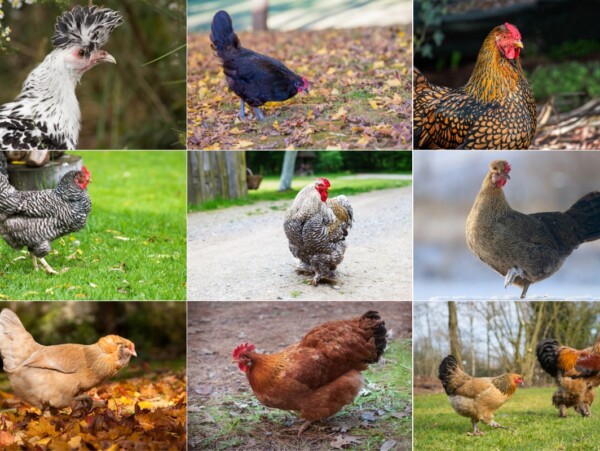

Did you find this list of chickens with feathered feet helpful? Tell me in the 📝 comments below which feather-footed birds are in your flock, and if there’s a breed you’re looking for that you don’t see, leave me a note and I’ll see what I can find for you. I’m here to help!
And make sure you stay in touch with me by following on social media!
Raising Chickens
Everything else you need for a healthy backyard flock.

Find the perfect recipe
Searching for something else? Enter keywords to find the perfect recipe!