
Affiliate disclosure: This post may contain affiliate links. Please see our Privacy Policy.
Fluffy chicken breeds look more like stuffed animals than barnyard birds, with pom-pom crests, feathered boots and soft, round bodies. Most of them are calm, gentle chickens too, so they’re a joy to keep around kids. Here’s how to pick the right fluff ball for your flock.

Table of Contents
- Notes from My Homestead
- List of the Fluffiest Chicken Breeds
- What Makes a Chicken Fluffy
- Silkie
- Orpington
- Brahma
- Polish
- Sultan
- Cochin
- Houdan
- Faverolles
- Mille Fleur d’Uccle
- Pekin
- Ameraucana
- Appenzeller Spitzhauben
- Frizzle
- Choosing the Right Fluffy Breed
- Caring for Fluffy Chickens
- Fluffy Chicken Breeds FAQs
- More Chicken Breed Lists
- Raising Chickens
Chickens come in a lot more shapes than the classic farmyard hen. Some have hair-like down instead of normal feathers, some wear a crest like a feathered hat, and some have legs covered right down to the toes.
Fluffy breeds are mostly about looks, but plenty of them have sweet personalities to match. Silkies, Cochins and Orpingtons are all known for being calm and easy to handle, which makes them good picks for families and first flocks.

The trade off is eggs. Most fluffy breeds lay a modest number, so if a full egg basket is the goal, start with my roundup of the highest laying chicken breeds. For a mix of both, my beginner egg layers include a few soft, friendly birds that still lay well.
Many of these breeds also have feathered legs, and I’ve written a separate guide to feather-footed breeds that goes deeper on caring for them. For everything else, my A to Z guide to chicken breeds covers the rest.
Notes from My Homestead

My daughter is the main chicken keeper on our homestead. When she became obsessed with fluffy chickens, adding a few fancy breeds to our practical, hard-working flock was all her idea.
Buff Orpingtons were among our earliest birds, and I still think they’re some of the prettiest chickens around. Their colors are simple, but you have to love a fluffy bottom waddling across the yard. They’re so docile that they’ve always been wonderful with our kids.
List of the Fluffiest Chicken Breeds
These are the breeds people usually mean when they say fluffy. I’ve grouped them by where the fluff is, since a Silkie’s down and a Polish chicken’s crest are two very different things.
The first group is fluffy all over. These birds carry soft, loose feathers from head to toe, and most have feathered feet as well:
- Silkie
- Cochin
- Pekin
- Brahma
Big, soft-feathered dual purpose birds look fluffy too, and so do the breeds with beards and muffs that give them puffy cheeks:
- Orpington
- Faverolles
- Ameraucana
- Mille Fleur d’Uccle
Then there are the chickens with fluffy heads. These crested breeds wear a pouf of feathers on top:
- Polish
- Houdan
- Sultan
- Appenzeller Spitzhauben
I’ll also cover Frizzles, which are a feather type more than a breed. With the right cross, you can get a frizzled version of most chicken breeds.

What Makes a Chicken Fluffy
A handful of feather genes make a chicken fluffy, and many fluffy breeds carry more than one. A Silkie, for example, has silky feathering, a crest and feathered feet all at once, and some have a beard too.
Silkie feathering happens when the feathers lack the tiny hooks that normally zip each strand to its neighbors. The strands float loose instead, so the whole bird feels like down. The gene is recessive, so both parents have to carry it.
Frizzling curls each feather outward and up toward the head. It comes from a separate gene, and one copy is enough to make a frizzled bird. Two copies can leave a chicken with thin, brittle feathers.
Crests are the pouf of feathers on top of the head. Beards and muffs are the fluffy feathers under the beak and along the cheeks, and they give Faverolles and Ameraucanas their round, puffy faces.
Loose, soft feathering is the last piece. Asiatic breeds like Cochins and Brahmas, and the English Orpington, grow long, soft feathers that stand away from the body, so these birds look bigger than they really are.
Silkie
Silkies are the breed most people picture when they think of a fluffy chicken. Their feathers look and feel more like fur, and the fluff covers them from the crest on top of the head down to the feathered toes.
They’re unusual birds in other ways, too. Silkies have black skin and dark bones, five toes on each foot instead of four, and blue earlobes. They can’t fly, since their loose feathers can’t catch the air the way normal feathers do.

Silkies come in white, black, blue, buff, splash, partridge and more, in bearded and non-bearded types. The American standard lists them as a bantam breed only.
Silkie hens go broody constantly, and they’ll happily sit on eggs from other breeds. They only lay around 100 small cream eggs a year, so keep them for their personalities. My Silkie chicken breed guide has much more on the breed.
Orpington
Orpingtons are big, soft, round chickens, and their fluff is all body. William Cook developed the breed in Orpington, England, in the 1880s, and its thick, loose feathering makes the birds look even larger than they are.
Buff is the color most people know, but Orpingtons also come in black, blue, white, lavender and splash. The hens are calm, easy to pick up, and quick to follow you around the yard for a treat.

That gentle nature has a downside in a mixed flock. Pushier breeds sometimes pick on Orpingtons, so they do best with other calm birds like Cochins and Salmon Faverolles.
Orpington hens lay a fair number of light brown eggs, and they’re good broody mothers. We let our hens go broody and raise their own chicks, so that’s a big plus here. My Orpington chicken breed guide covers the colors and history.
Brahma
Brahmas are giants, and they’re fluffy from head to toe. A full-size Light Brahma rooster can weigh 12 pounds, and the feathered legs and thick plumage make him look bigger still.
American breeders developed the Brahma in the mid 1800s from big Asian birds, and most accounts say those birds came in through Shanghai. Light Brahmas are white with black hackles and tails, and Dark and Buff Brahmas are popular too.

For all their size, Brahmas are gentle, slow-moving birds. They don’t mind being handled, and they’re a good fit for families as long as the kids are big enough to hold a heavy chicken.
Their small pea comb and dense feathers make Brahmas very cold hardy, and the hens often keep laying brown eggs through the winter. That matters in a Vermont winter like ours. My Brahma chicken breed guide has the details on size and colors.
Polish
Polish chickens are the classic chickens with fluffy heads. A huge round crest covers most of the face, and it looks a lot like an oversized feathered hat.
The crest grows from a bony knob on top of the skull. Polish come in bearded and non-bearded types, and white crested black, golden laced, silver laced and buff laced are common colors.

That crest blocks a lot of their vision, so Polish startle easily. Talk to them as you walk up, and they’ll stay calmer. Some keepers trim the feathers around the eyes so the birds can see better.
Polish hens lay white eggs, a decent number for an ornamental breed, and they rarely go broody. They’re friendly, curious birds that are easy to keep in a small flock.
Sultan
Sultans are rare, all-white chickens with fluff in every direction. They have a crest, a beard and muffs, heavily feathered legs and five toes, plus stiff hock feathers that breeders call vulture hocks.
The breed comes from Turkey, where its name meant fowl of the sultan, and people kept them as ornamental birds in palace gardens. They reached England in the 1850s.

Sultans are calm and gentle, and most people keep them as pets and show birds. They’re small for a standard breed, and they don’t lay many eggs, so they make better companions than layers.
All that foot feathering doesn’t do well in mud or wet snow. Sultans need a dry coop and a clean run, and they’re happier in a mild climate than in a hard winter.
Cochin
Cochins look like big feather pillows. Their soft, loose feathers puff out all over, and their feathered legs and feet make them look like they’re wearing snow boots.
Cochins came to England and America from China in the 1840s, and these huge, strange birds set off a poultry craze people called hen fever. Today they come in buff, black, blue, partridge, white, barred and more.

They’re calm, friendly and easy to handle, so they’re a good fit for kids. Cochins rarely fly, and they don’t mind a smaller run, though they still enjoy room to wander.
Cochin hens lay a modest number of brown eggs, go broody often and make devoted mothers. Bantam Cochins are just as fluffy in a smaller size. My Cochin chicken breed guide has more.
Houdan
Houdans are French chickens with a crest, a beard and muffs, so the whole head looks fluffy. They also have five toes and a small V-shaped comb that sits in front of the crest.
The breed comes from the town of Houdan, west of Paris, where farmers raised it for both meat and eggs. Most Houdans are mottled, black with white tips on the feathers, and there’s a solid white variety too.
They’re calm, friendly birds with plenty of personality, and they’re easy to handle. Houdan hens lay white eggs, and they rarely go broody.
Like Polish chickens, Houdans have a crest that can block their view and get soggy in wet weather. A dry coop and a waterer that keeps the crest out of the water make life easier for them.
Faverolles
Faverolles have fluffy faces, round bodies and feathered feet, and they look plump and soft from every angle. Their beard and muffs give them a whiskered look that’s hard not to love.
The breed comes from the village of Faverolles in northern France, where farmers developed it in the 1800s as a table and egg bird. Salmon is the color most people know, and Faverolles also come in white, blue, black and more.

Faverolles are gentle, curious birds that love attention, and they’re a good fit for families with young kids. Bossier breeds can bully them, so pair them with other calm chickens.
We added Salmon Faverolles to our flock because they’re cold hardy enough for our Vermont winters and gentle enough for little ones. Hens lay light brown eggs through the winter, and my Salmon Faverolle breed guide covers them in depth.
Mille Fleur d’Uccle
The Mille Fleur d’Uccle is a true bantam, a tiny chicken with no large version. It has a beard, muffs and feathered legs and feet, so even a bird this small looks like a ball of fluff.
Breeders developed d’Uccles in Uccle, Belgium, in the early 1900s. Mille fleur means a thousand flowers in French, and the pattern lives up to the name, with orange-red feathers tipped in black and white.
They’re friendly, easy to handle and small enough to tuck under one arm, which makes them a good fit for kids and small backyards. My list of bantam chicken breeds has more tiny birds like this one.
D’Uccle hens lay small cream or white eggs and go broody fairly often. The breed also comes in porcelain, mottled, black and other colors besides mille fleur.
Pekin
Pekins are tiny, round bantams with a forward tilt and a fluffy tail held high. Their soft feathers hang down over their legs, so the whole bird looks like a little ball on feathered feet.
In Britain, the Pekin is a bantam breed of its own. In the United States, hatcheries usually sell the same birds as bantam Cochins, with the same soft feathering and gentle temperament.
They’re slow-moving and easygoing, and they rarely mind being picked up, so kids love them. Pekin hens lay small cream or tinted eggs and go broody often.
They make patient mothers, and they’re small enough to keep in a backyard coop with room to spare. Lavender, buff, black and mottled are a few of the many colors.
Ameraucana
Ameraucanas aren’t fluffy all over, but their faces are. A full beard and muffs make their heads look round and puffy, and they have a small pea comb that sits low on the head.
They’re best known for laying blue eggs, and the American Poultry Association accepted the breed in 1984. Look for the beard, muffs and slate legs, since plenty of hatchery Easter Eggers go by the same name.
Our Ameraucanas are the best foragers we’ve ever raised, and they cut our feed bill when they’re out free ranging. They’re active and alert, less cuddly than a Silkie but easy to keep. My Ameraucana breed guide has the full story.
The American standard recognizes eight Ameraucana colors, including black, blue, buff, wheaten and white. Every one of them has the same bearded, muffed face.
Appenzeller Spitzhauben
The Appenzeller Spitzhauben is a Swiss breed with a crest that points forward, like a little feathered bonnet. The name comes from the pointed bonnets women wore in the Appenzell region.
Most are silver spangled, white with black tips, and they have a small V-shaped comb under the crest. Their bodies are sleek, so all the fluff is on top.
They’re active, alert foragers that would rather roam than sit in a run. Hens lay white eggs, and they handle cold weather well for a crested bird.
They’re rare in the United States, so you’ll usually find them through specialty hatcheries and breeders rather than at the farm store.
Frizzle
If you see a chicken with wild, curly feathers sticking out in every direction, it’s probably a Frizzle. Each feather curls outward and forward instead of lying flat, so the bird looks like it just walked through a windstorm.
Frizzle is a feather type that can show up in almost any breed, so you’ll find frizzled Cochins, Polish, Silkies and Pekins. People often call a frizzled Silkie a Sizzle.

Because their feathers don’t lie flat, Frizzles don’t hold heat as well as smooth-feathered birds. Give them a draft-free coop in winter and shade in summer.
If you hatch your own, pair a frizzle with a smooth-feathered bird, and about half the chicks should come out curly. My guide to hatching chicken eggs covers the rest.
Choosing the Right Fluffy Breed
The right fluffy breed depends on what you want from your flock. For cuddles and kids, Silkies, Cochins and Pekins are easy choices, since they’re calm and slow and don’t mind being held.
For eggs with your fluff, look at Orpingtons, Faverolles and Brahmas. They’re big, soft dual purpose birds that still lay a fair number of brown or tinted eggs.
For cold winters, the heavy, dense-feathered breeds do best, especially Brahmas, Cochins, Orpingtons and Faverolles. Crested breeds and Silkies need more shelter, since a wet crest or soaked fluff chills them quickly.
For a small backyard, bantams like d’Uccles and Pekins give you all the fluff in a fraction of the space, and they eat a lot less feed.
For a deeper look at breeds and how to care for them, Storey’s Guide to Raising Poultry by Glenn Drowns is a good reference to keep on the shelf.
Caring for Fluffy Chickens
Fluffy breeds are easy keepers for the most part, but all that extra feathering needs a little help. The big one is keeping them dry, since wet fluff mats down and can’t keep a bird warm.
Silkie feathers aren’t waterproof, so a rainstorm soaks them to the skin. Crested breeds get soggy crests from drinking, and a covered run plus a nipple or cup waterer helps a lot with both.
Thick feathers also hide lice and mites, so part the feathers and check your birds now and then. A good chicken dust bath helps them keep pests down on their own.
Heat is the other concern. Dense feathers trap warmth, so fluffy breeds need shade and plenty of fresh water in summer. If you live somewhere hot, compare these birds with my list of heat tolerant chicken breeds before you order chicks.
Silkies and other birds that can’t fly well do best with low roosts and a ramp into the coop. Gentle breeds are also happiest with other calm birds. When we kept Leghorns, they were quick to pick on the gentler hens.
If you’re starting from scratch, my guide on how to raise chickens covers coops, feed and the basics, and there’s a separate guide to raising baby chicks.
Fluffy Chicken Breeds FAQs
Here are quick answers to the questions people ask most about fluffy chickens.
The Silkie. Its feathers lack the tiny hooks that hold normal feathers together, so loose, hair-like fluff covers the whole bird, right down to its feet.
Crested breeds like Polish, Silkies, Houdans, Sultans and Appenzeller Spitzhauben have a pouf of feathers on top of the head. Bearded breeds like Faverolles, Ameraucanas and d’Uccles have fluffy cheeks and chins instead.
Silkies come bearded or non-bearded, in colors like white, black, blue, buff, splash and partridge. Frizzled Silkies, which many people call Sizzles, have curled silky feathers.
Most are moderate layers. Orpingtons, Faverolles and Brahmas lay a fair number of brown or tinted eggs, while Silkies, Sultans and Pekins lay small eggs and fewer of them.
They need a dry coop, shade in summer and regular checks for lice and mites. Crested and silky breeds can’t see or fly as well as other chickens, so low roosts and a calm flock help.
If you’re still choosing birds, these lists can help you narrow it down.
More Chicken Breed Lists
Find the right birds for your backyard.

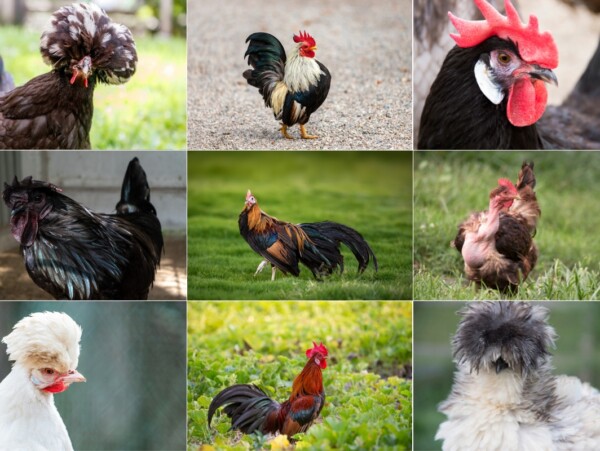

Did you find this list of fluffy chicken breeds helpful? Tell me in the 📝 comments below which fluffy birds you keep, and if there’s a breed you’re looking for that you don’t see, leave me a note and I’ll see what I can find for you. I’m here to help!
And make sure you stay in touch with me by following on social media!
Raising Chickens
More help for keeping a happy backyard flock.
Find the perfect recipe
Searching for something else? Enter keywords to find the perfect recipe!










I rescued this chicken. She was rogue for about two weeks in the neighborhood down here in San Antonio Texas before I grabbed her off the top of the privacy fence during the middle of the night in a freezing winter storm. She chose to stay here. I keep her indoors at night and she forages during the day freely in the backyard. I’d like to send you pictures. I’m inclined to believe she is an Altsteirer mix or Styrian Hen. I have some additional concerns regarding molting and whether or not I should get her a friend (other than the dog).
Thank you for your help.
The forums on backyard chickens dot com are great for these kinds of questions, and you usually get good answers there. I’d recommend loading pictures of her there and they’re really good at chicken ID (and other specific questions). Best of luck!