
Affiliate disclosure: This post may contain affiliate links. Please see our Privacy Policy.
Mullein (Verbascum thapsus) is a common wild weed that’s both edible and medicinal. This fuzzy-leaved herb should be in every herbalist’s medicine cabinet, and it’s easy to forage in the wild once you know what to look for.
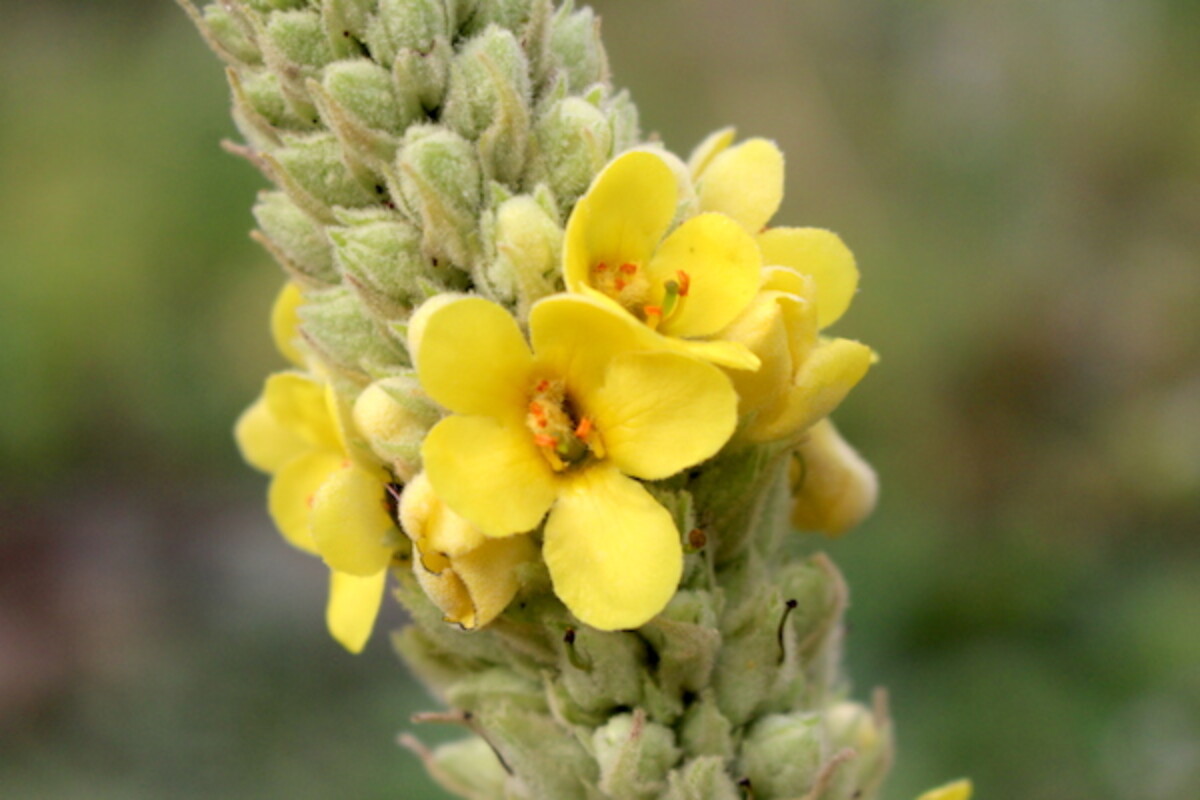
Mullein is one of those wild weeds that’s hard to miss once it’s in flower. In the first year, the plants are an inconspicuous basal rosette that stays low to the ground, and you could easily walk over it, or mow over it on your lawn, without noticing. At that point, it’s just waiting, storing energy in its taproot for the big show the following year.
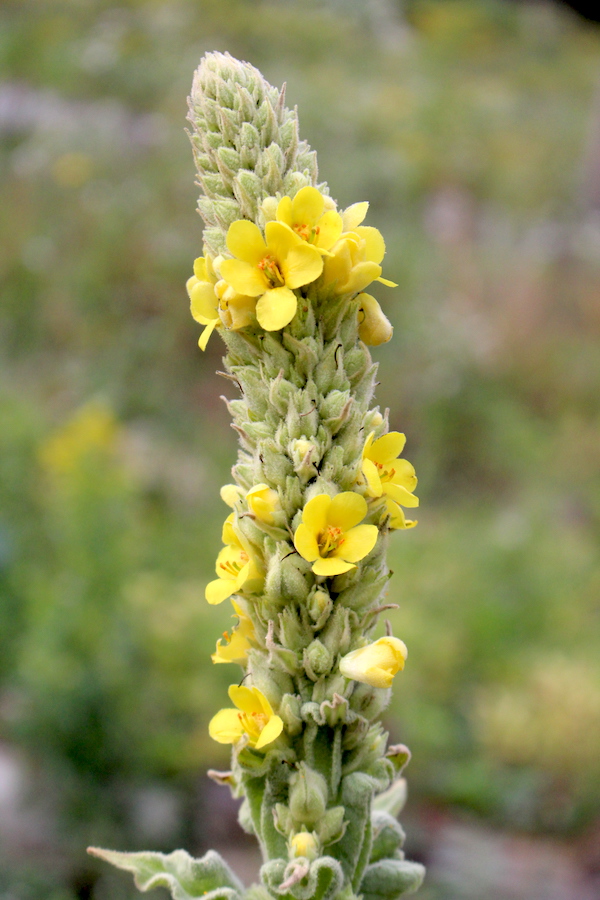
In the second year, this biennial plant explodes into a 6 to 8-foot tall stalk of bright yellow flowers, and those beautiful flowers are where much of the medicine lies. The flowers are eaten as is, but they’re also made into herbal-infused oils for all manner of issues, most notably ear infections. The leaves are used in respiratory teas, and they’re especially effective for bronchial complaints.
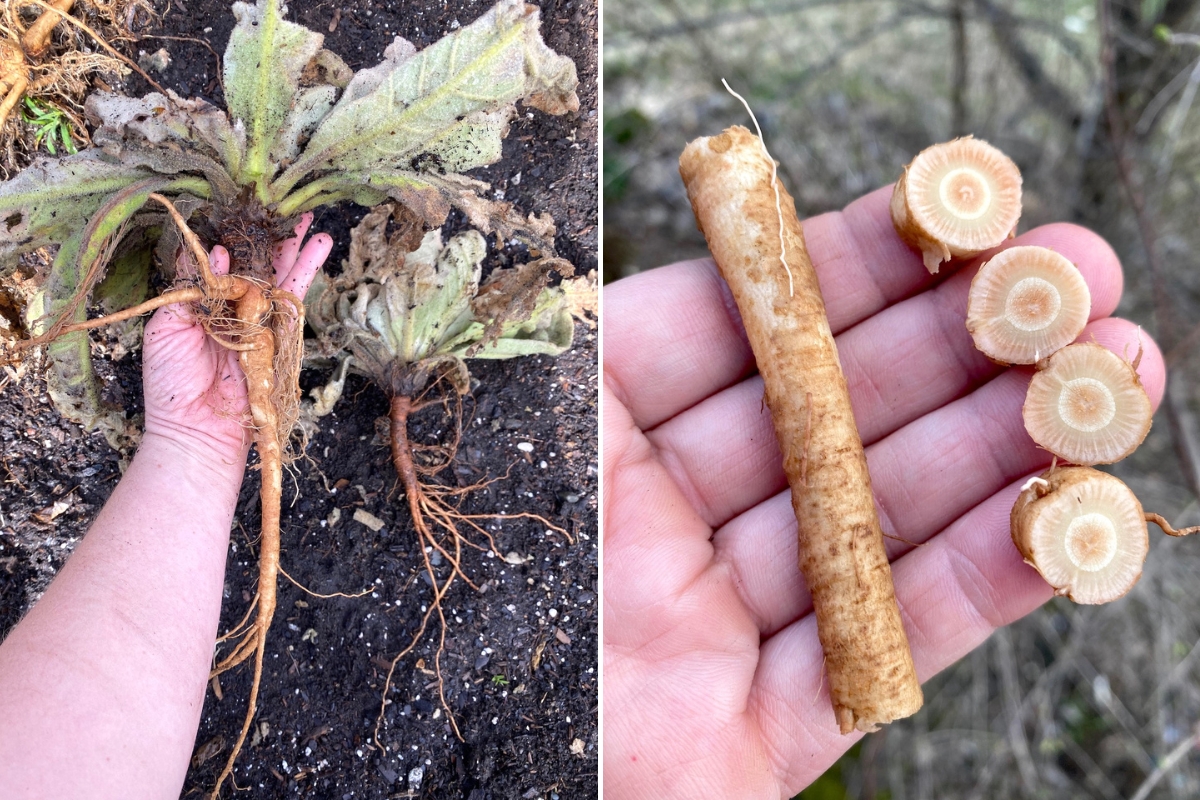
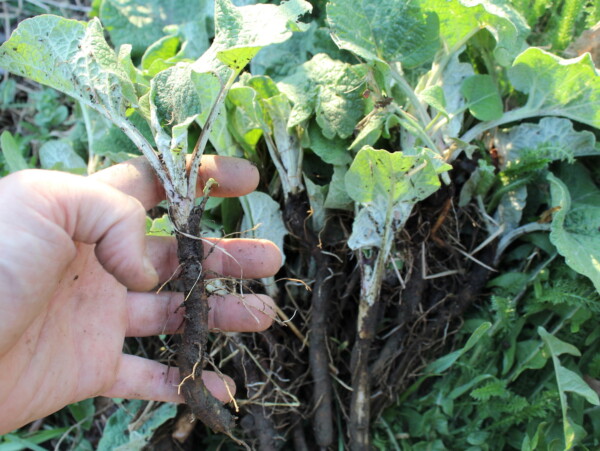
As far as eating goes, I think the best part is the root. The thick taproot is best harvested in the autumn of the first year, so you’ll need to be able to identify the plant before it goes to flower if you want to harvest the root. The root is also supposedly a great remedy for back pain, at least according to folk herbalists, and it’s made into a herbal tincture for that reason.
Notes from My Homestead

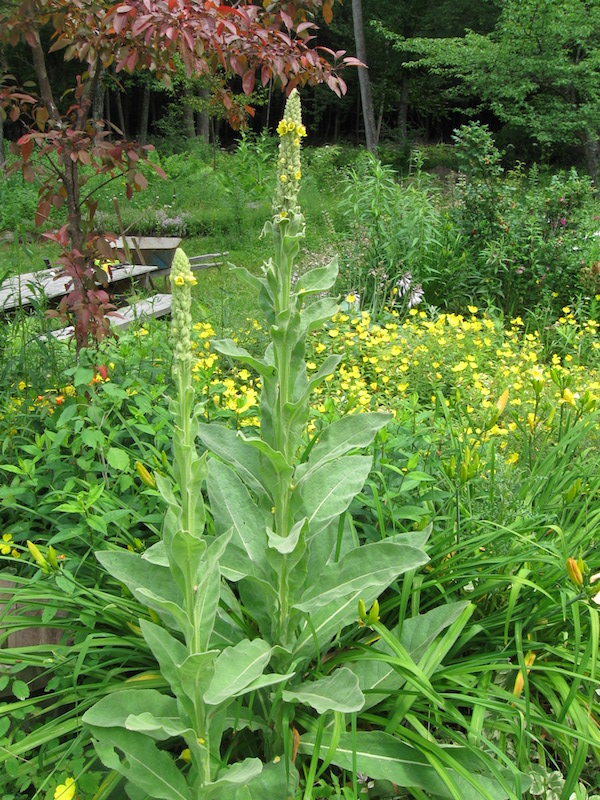
Mullein was one of the first medicinal weeds I learned to recognize here in Vermont, probably because it’s impossible to miss once those towering yellow flower spikes shoot up in midsummer. I’ve got it growing in my perennial bed on purpose, and it also volunteers happily along the gravel edge of our driveway where almost nothing else wants to live. The bees love it, and I love that I can step out the back door and have medicine within arm’s reach.
I’m particularly fond of the roots, which is an unusual opinion among mullein fans, but that first-year taproot makes a potent tincture. If you can’t find mullein in the wild, you can also grow it from a few Mullein Seed Packets. See how lovely it looks in my perennial bed below?
What is Mullein?
Verbascum, often called mullein, is a genus of over 250 species of plants native to Europe, Asia, and North Africa. Mullein is of the Scrophulariaceae or figwort family. Most species are biennial or perennial plants, but a few are annuals. Most species are herbaceous weeds, but some may be more shrub-like.
In the United States, Mullein often refers to the biennial Common Mullein (Verbascum thapsus), which has naturalized throughout the Americas and Australia. Common Mullein is also known as Great Mullein, Greater Mullein, Feltwort, Bullicks Lungwort, Hag Candlewick, Poor Man’s Blanket, Wooly Mullein, Lady’s Blanket, Velvet Mullein, Moses’ Blanket, or Blanket Mullein.
Is Mullein Edible?
Mullein leaves, flowers, and roots are edible. The seeds are toxic and should not be consumed.
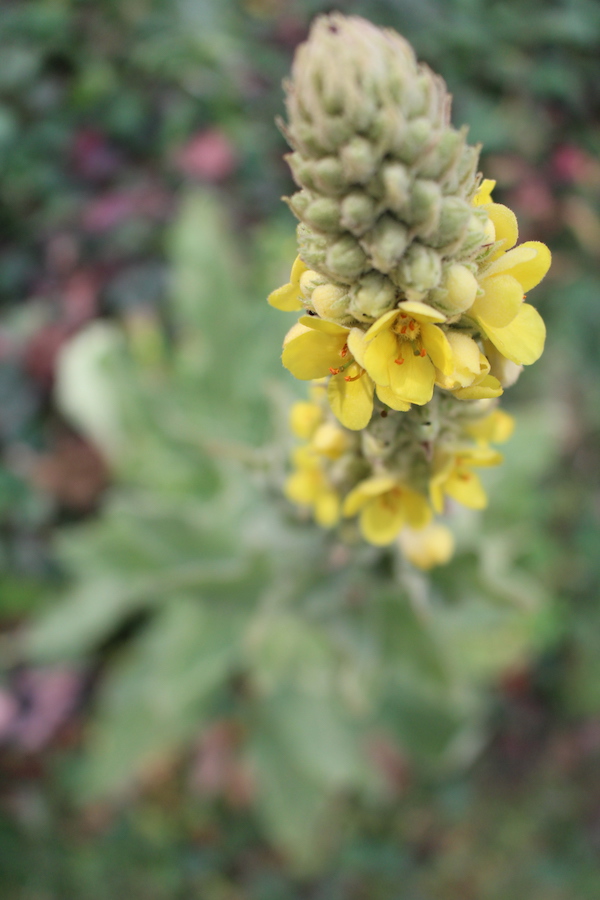
The leaves can be eaten raw but are not very good, and the hairy leaves may irritate some. The flowers are tasty enough as edible flowers, and can be added to salads for a bright splash of color. I’m particularly fond of the roots as food, though most people only eat them for their medicinal properties rather than their flavor.
Most frequently, the leaves, roots, and flowers are used for tea for medicinal purposes. If you’re new to working with wild medicinal plants, mullein is a great beginner herb alongside familiar weeds like plantain, yarrow, and red clover.
Mullein often grows in waste places, but you should avoid harvesting it in contaminated areas like roadsides.
Mullein Medicinal Benefits
Mullein is an essential herb in many folk traditions. One of the first historical mentions was by the famous Greek physician Dioscorides who recommended Mullein for pulmonary diseases 2000 years ago. The leaves were often smoked for this purpose.
Throughout the years, oil infused with Mullein flowers has been used to treat various conditions, including earaches, frostbite, eczema, warts, boils, and other external conditions. Different preparations have been used to treat hemorrhoids, colds, flu, sunburn, and croup. Many of these preparations show up across my favorite herbal salve recipes, where mullein is often combined with calendula, plantain, or eucalyptus.
In traditional Austrian medicine, Mullien was used internally as a tea and externally in baths, ointments, and compresses. These preparations were used to treat skin, gastrointestinal, respiratory, vein, and muscle issues.
Colonists brought Mullein to North America, where Native Americans quickly utilized it. They continued the tradition of smoking the leaves and powder roots and making tea. Some groups, like the Zuni, also found other uses. The Zuni used poultices of powdered roots to treat skin infections, sores, and rashes. They also used an infusion to treat athlete’s foot.
Some tribes of the Makaland region of Pakistan also use Mullein as a vermicide. A 2012 study supported this usage. Researchers tested a Mullein extract on roundworms and tapeworms and found it to be effective.
Herbalists’ use of Mullein to treat other lung ailments and other infections has, in some cases, been validated by modern studies. One 2002 study found that Mullein has antiseptic properties and is effective against pneumonia, staph, and E. Coli bacteria. If you’d like to add mullein to a broader cold-and-flu protocol, my herbal immunity tea is a good starting point.
A tincture of mullein root is supposed to be especially good for back pain, according to folk herbalists, but there are no studies to confirm its efficacy (yet). Still, it’s one of more than 20 herbal tinctures I keep on hand for everyday use.
Where to Find Mullein
Mullein has a wide natural range, including Europe, Asia, and North Africa, with the greatest diversity of species in the Mediterranean. It has also naturalized throughout the rest of the temperate world. Mullein now occurs in New Zealand, Australia, South America, North America, Japan, Hawaii, Hispaniola, and other areas with suitable climates.
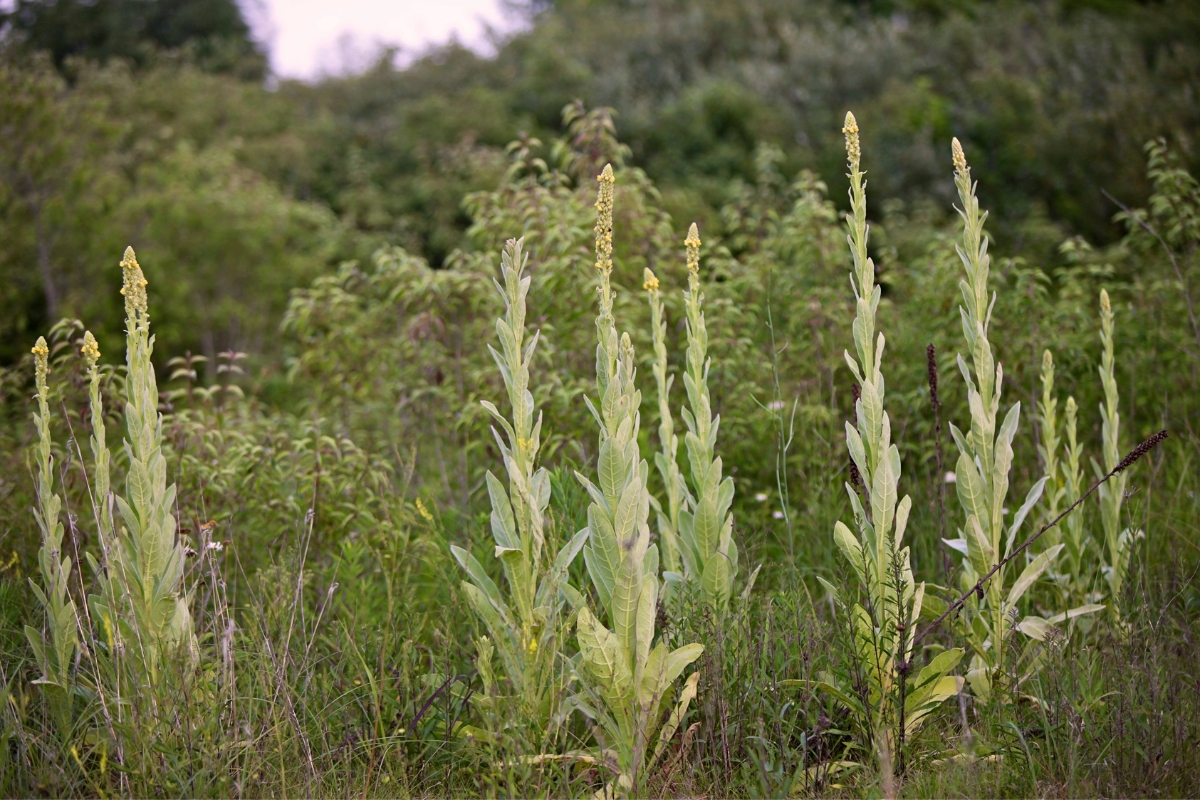
Mullein is a quick colonist of disturbed or bare soils. It thrives in areas with full sun and poor to average sandy, gravelly, or chalky, well-drained soils. You may find it in pastures, meadows, forest clearings, ditches, and roadsides. That makes it a regular companion to other pioneer weeds like Canada thistle and fireweed.
Mullein tolerates drought well, and grows well in marginal soils.
When to Find Mullein
You can find Mullein plants during the late spring and summer. Overwintered plants will send out leaves from their taproot when the weather warms up. Seeds will germinate around the same time and will produce leaves but typically no flowers during their first season. It’s a great addition to a spring foraging list if you’re scouting first-year rosettes to harvest roots in fall.
Mullein seeds will only germinate when exposed to light. This is one of the reasons you may notice Mullein plants popping up in recently disturbed soils. Some studies have indicated that fallen Mullein seeds may last up to 100 years in the soil before germinating.
In the fall, the leaves and flower stem will die back with the frost. The large taproot overwinters and allows the plant to send out new growth in the spring.
Identifying Mullein
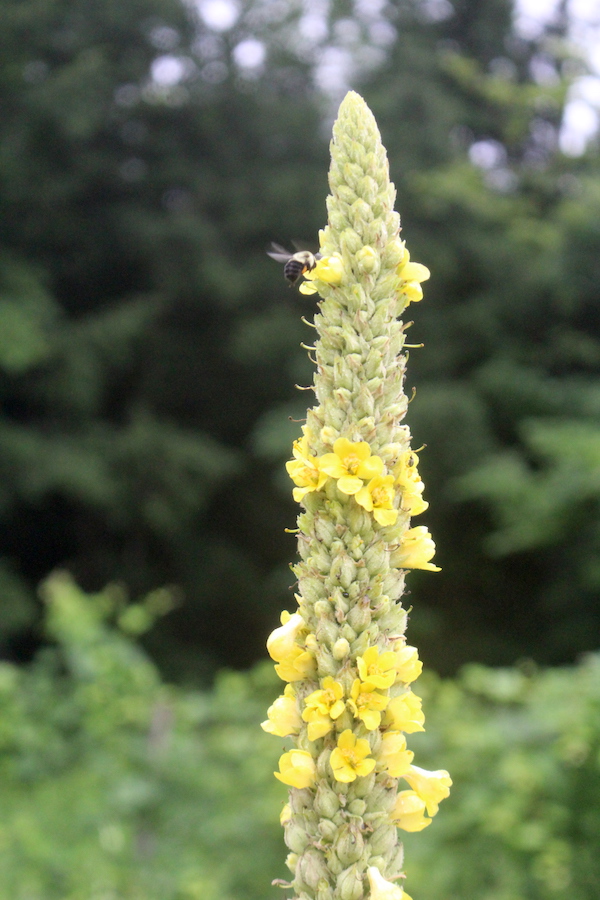
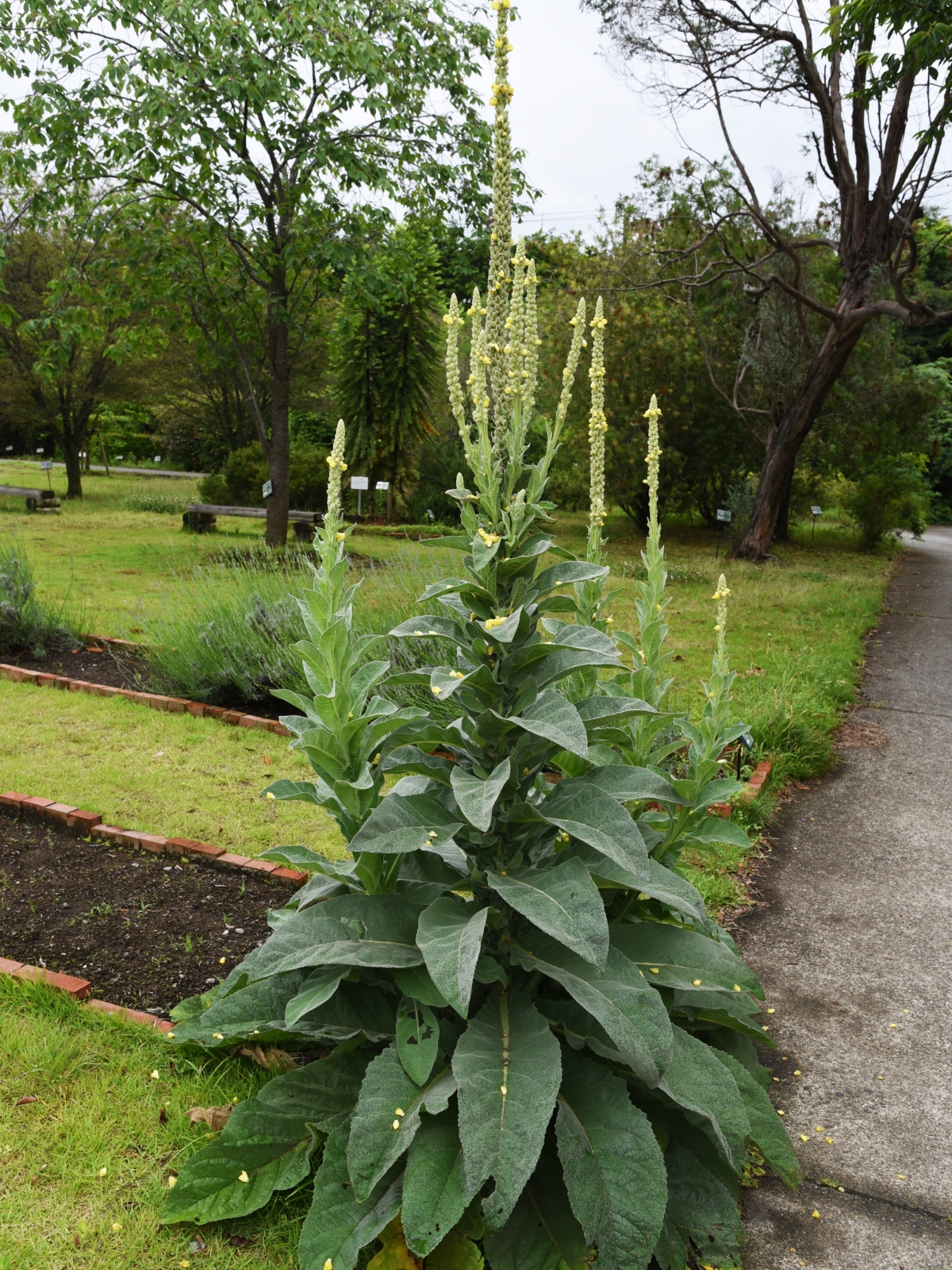
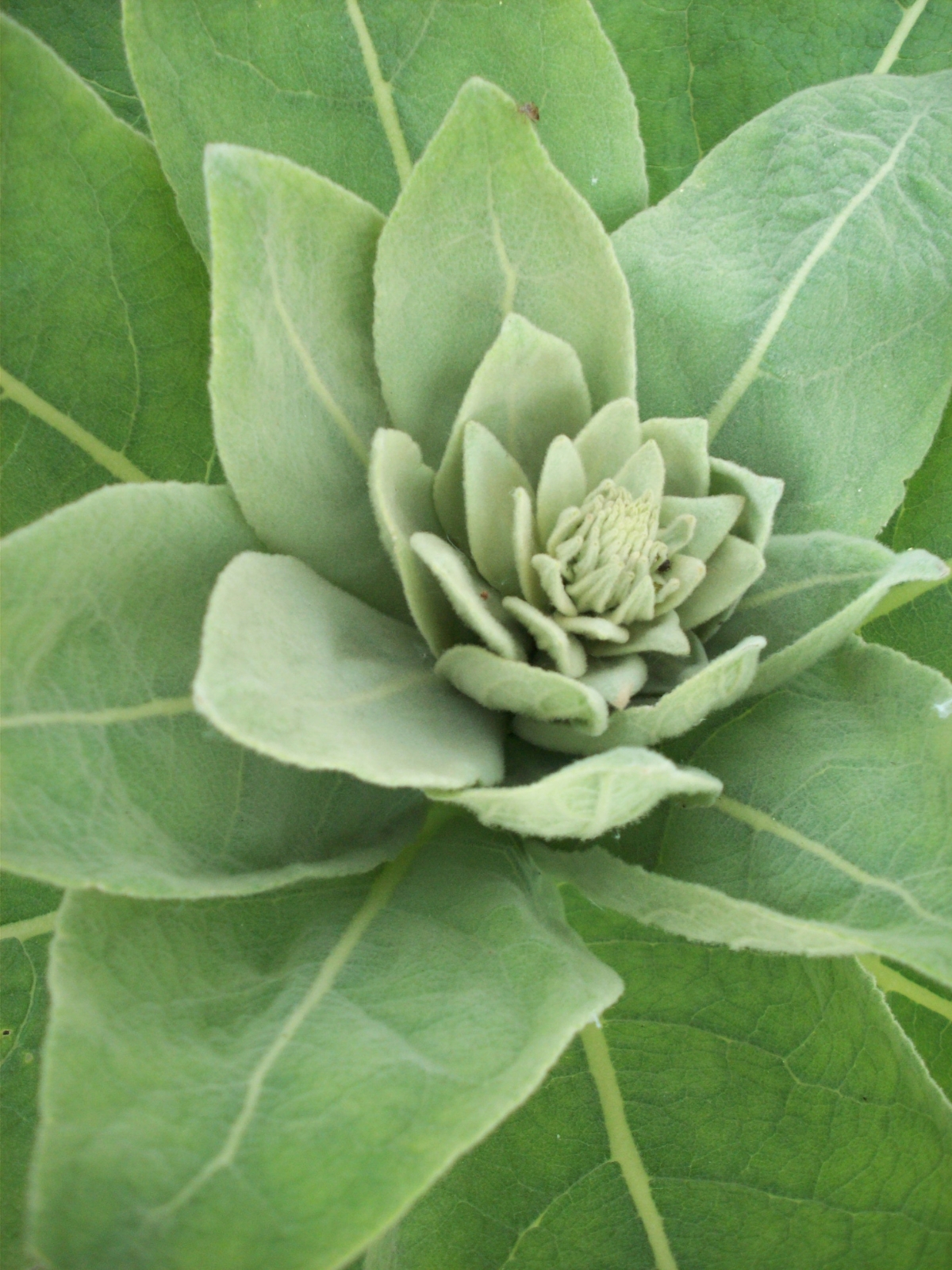
Mullein is quite easy to spot, especially in its second year. Mullein forms a large basal rosette of distinctive fuzzy leaves against the ground. Two-year-old plants send up stems up to 7 feet tall that are densely packed with flowers. Different species may have different colors of flowers, but Common Mullein has yellow flowers.
Mullein Leaves
Mullein leaves are light green, oblong, and velvety. They may reach one foot in length. The leaves at the base have stalks and lay against the ground, forming a basal rosette. The upper leaves are stalkless, with bases continuing down the stem as thin ridges or wings.
Mullein Stems
Two-year-old Mullein plants put out an erect, wooly stem that may reach 2 to 7 feet tall. The stem may be so wooly it appears white.
Mullein Flowers
Mullein flowers are tightly packed along the tall stem and are either stalkless or have very short stalks. The flowers are typically ¾ to 1 inch in diameter and feature radial symmetry. Typically the flowers have five petals, five stamens, and one pistil.
The color of Mullein flowers varies somewhat with species. Common Mullein (V. thapsus) has yellow flowers. In contrast, Phoenician Mullein (V. phoeniceum) has deep violet or purple flowers, Moth mullein (V. blattaria) may have yellow or white flowers, and Nettle-leaf mullein (V. chaixii), has white flowers with purple centers.
Mullein Roots
Each Mullein plant grows a deep taproot and system of fibrous roots allowing it to overwinter and withstand drought.
Mullein Seeds
After flowering, Mullein produces small ¼-inch ovoid seed capsules. These capsules split open and release large numbers of tiny, ridged, brown seeds less than 0.04 inches in length. These seeds are toxic.
Mullein Look-Alikes
Mullein is sometimes mistaken for Lamb’s Ear (Stachys byzantina), especially when young. Lamb’s Ear differs in a few ways:
- Lamb’s Ear grows in a clump rather than a rosette.
- Lamb’s Ear leaves are softer, more silver in appearance, and have more distinct hair than the velvet or fuzz of Mullein leaves.
- Lamb’s Ear is shorter, typically remaining under 2 feet tall at most.
- Lamb’s Ear has pinkish-purple flowers.
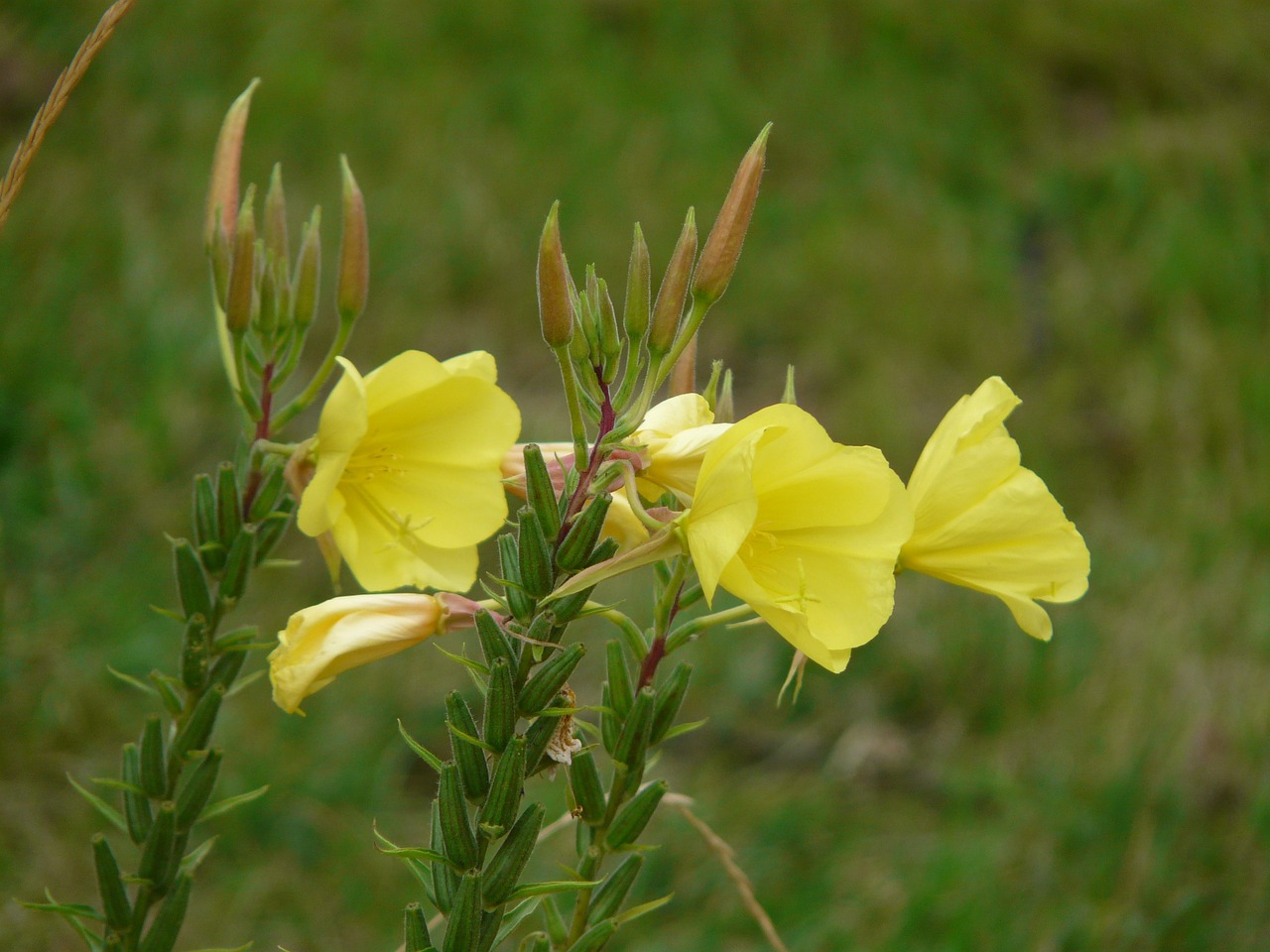
Another look-a-like is Common Evening Primrose (Oenothera biennis). Common Evening Primrose can be distinguished in the following ways:
- Common Evening Primrose doesn’t have fuzzy leaves or stems.
- Common Evening Primrose has narrow, pointed leaves.
- Common Evening Primrose flowers open in the evening rather than during the day.
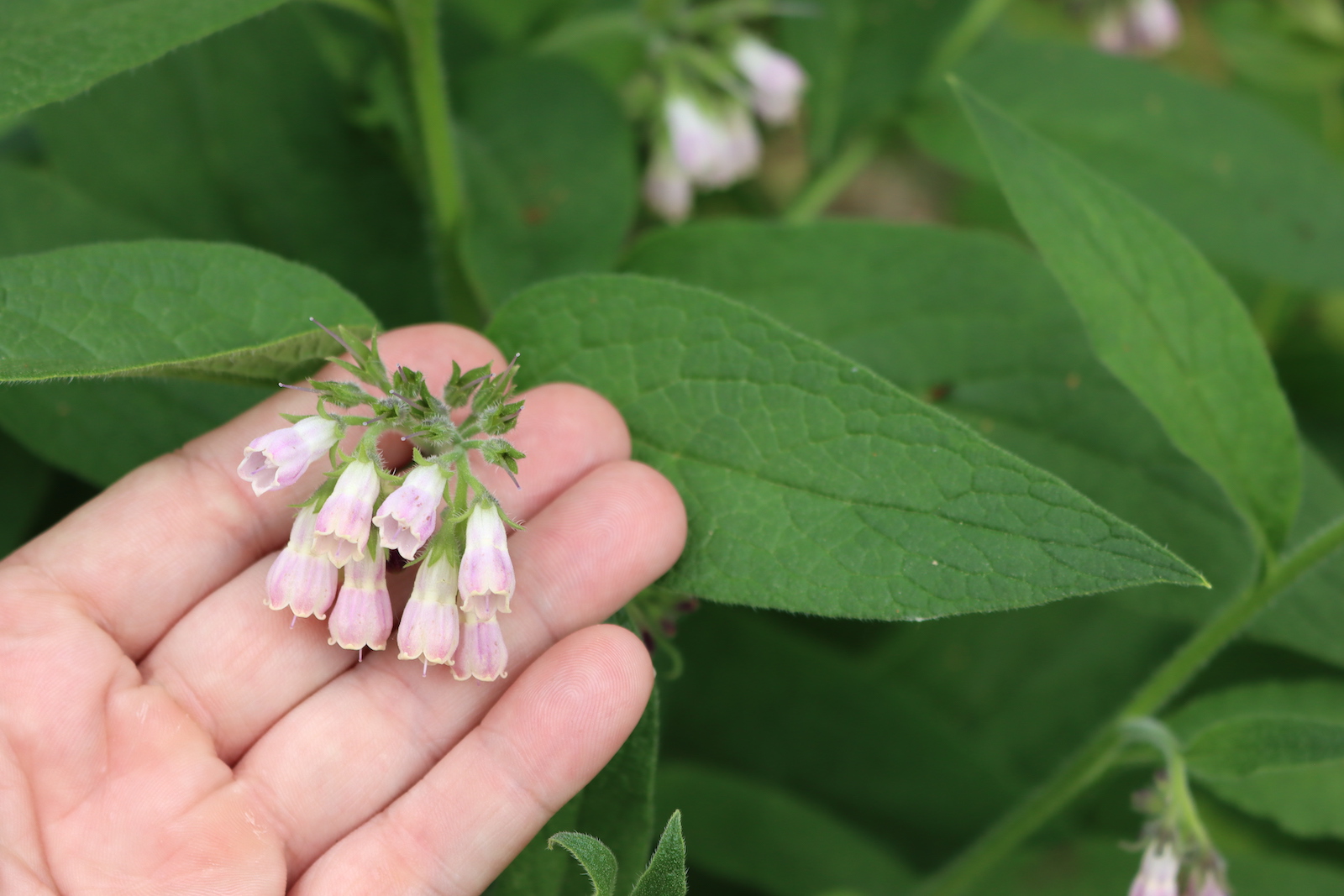
Lastly, Mullein may be mistaken for Common Comfrey (Symphytum officinale). They can look a bit alike when plants are young, but they’re easy to distinguish once in flower. Thankfully, it also differs in a few easy-to-spot ways:
- Comfrey leaves are less fuzzy and feel scratchy rather than soft.
- Comfrey is generally shorter, growing to heights of 3 feet or less.
- Comfrey doesn’t produce a tall, single-flower spike, but rather small sprays of pink flowers.
- Comfrey flowers are bell-shaped.
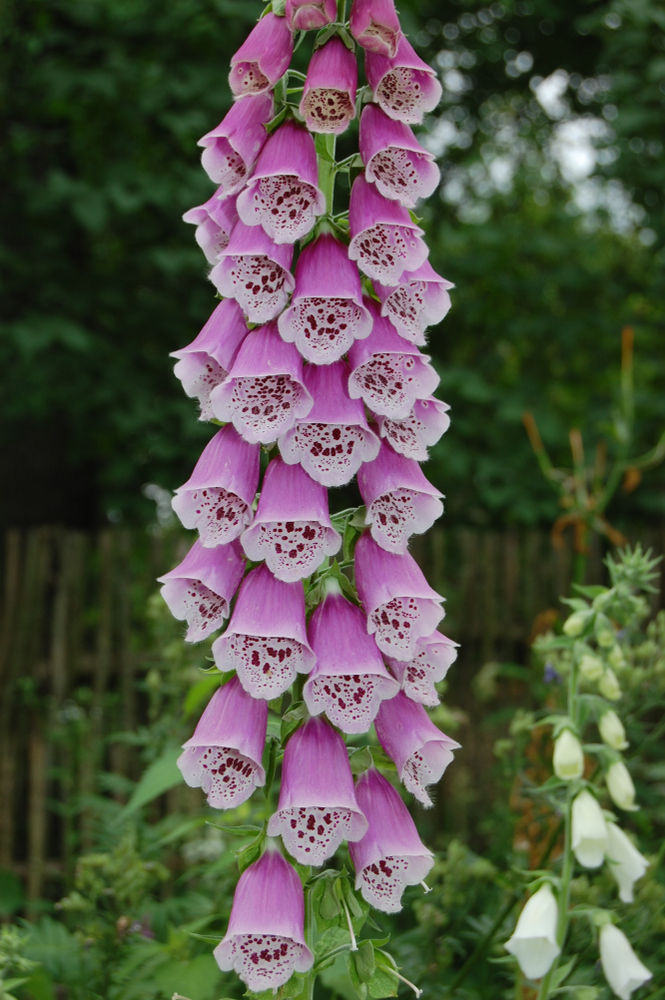
The most important look-alike to know is toxic Foxglove (Digitalis purpurea), especially in the first-year rosette stage when mullein is still low to the ground. Foxglove contains cardiac glycosides and is dangerous if consumed, so this distinction matters. Here’s how to tell them apart:
- Foxglove leaves are covered in gray-white pubescent and glandular hairs, giving them a soft, wooly texture that can feel similar to mullein at first touch.
- Foxglove leaves form a tight basal rosette in the plant’s first year and feature barely noticeable rounded teeth on the margins, while mullein leaves are entire (smooth-edged).
- The leaves are arranged spirally on the plant’s flowering stem in Foxglove’s second year.
- Foxglove produces a long, showy spike of flowers that can look similar to mullein’s flower spike from a distance.
- Each Foxglove flower is 1 ½ to 2 ½ inches long, tubular or bell-shaped, and features dark spots inside the lower lip. Mullein flowers are smaller (¾ to 1 inch), flat, and have no spotting.
- Foxglove flowers are typically purple, pink, or white — never yellow like Common Mullein.
- Foxglove does not have a large taproot.
Ways to Use Mullein
While Mullein is edible, and you can eat it in a survival situation, it isn’t a very palatable wild herb. Instead, it’s best to use Mullein for medicinal preparations. For a full rundown of the ways I use it around my homestead, see my guide to 10+ ways to use mullein.
You can use Mullein flowers to create an infused oil. You can use Mullein leaves, roots, and flowers in baths, ointments, and poultices. For internal use, you can use them to create teas, infusions, and tinctures. Mullein roots and leaves can also be dried and smoked for medicinal purposes.
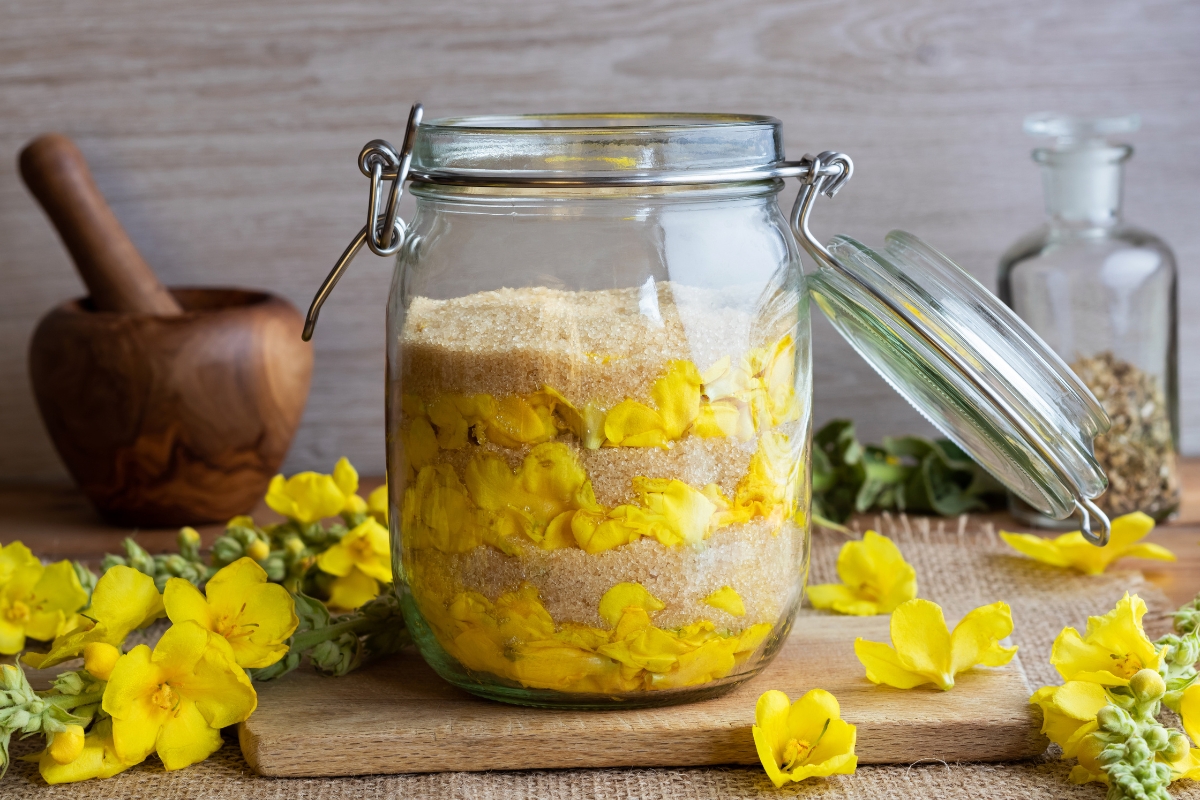
Mullein flowers are often infused into oil, but they can also be packed in sugar to make mullein syrup. The sugar draws the liquid out of the petals, and the whole mixture will turn into a thick syrup that’s good for coughs.
Historically, dry Mullein stems have also been used to make torches or candles by the Romans, Native American groups, and other cultures. To create one, you must dip the dried stem in wax several times, building up a thick layer. People used these torches for survival or ritual purposes.
Native Americans also used this interesting plant to procure other food. Mullein seeds contain saponins, which are paralytic to fish. Native Americans ground the seeds and used them to catch fish.
Additionally, Mullein has also been grown for ornamental purposes. Several ornamental cultivars are available with more showy flowers than many of their wild counterparts. It’s also beloved by pollinators, which is one reason it shows up on my list of pollinator-friendly medicinal herbs.
Mullein Recipes
If you’re looking for a few creative ways to use mullein, I’ve got you covered:
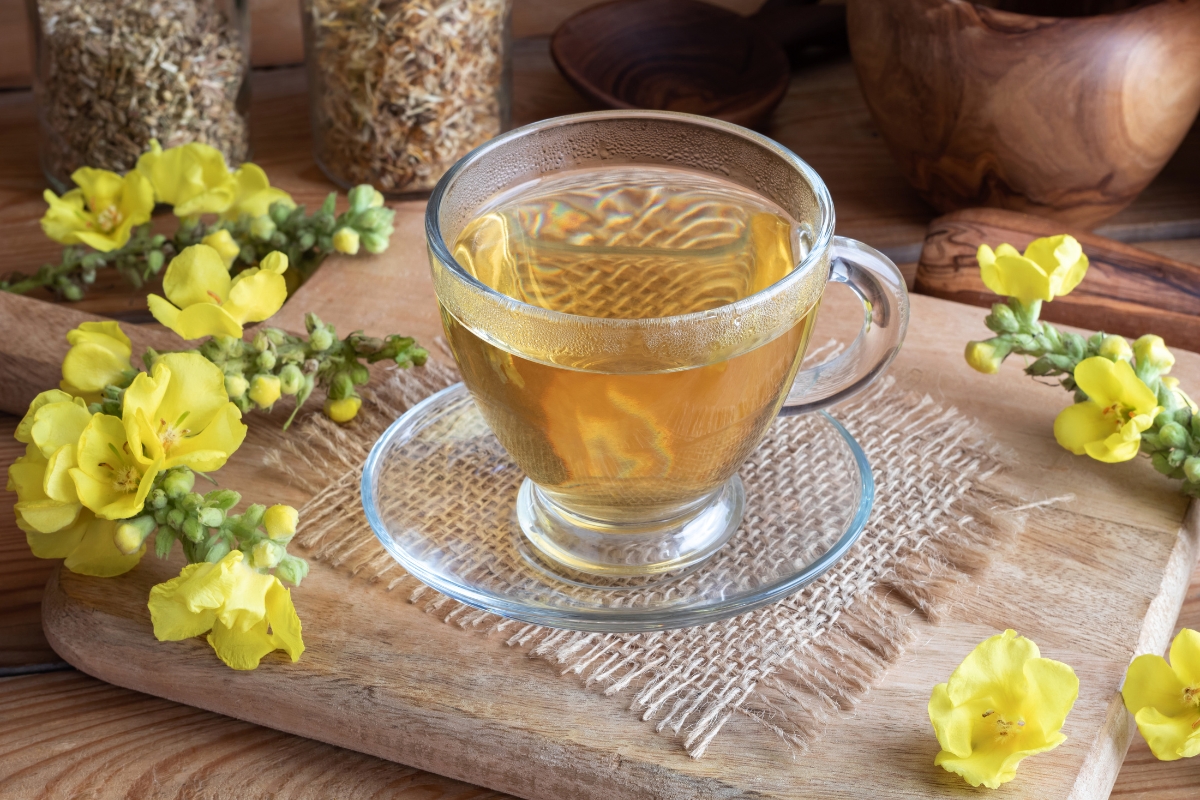
- Make a soothing cup of Mullein Tea with the leaves and flowers for sore throats and coughs.
- Preserve mullein’s medicinal strength year-round by making a mullein tincture from fresh roots or dried leaves.
- Use mullein flowers to create a traditional herbal-infused oil, excellent for earaches.
- Combine mullein with other healing herbs in an all-purpose herbal healing salve.
- Celebrate fall by creating your own herbal Mullein torches with these simple directions from Witch in the Wood Botanicals.
- You can also add Mullein to tea mixtures like this RSV Tea Formula from The Herbal Academy.
Mullein FAQs
Yes, the leaves, flowers, and roots of mullein are all edible. The seeds are toxic and should not be consumed. Most often, the edible parts are used in teas and medicinal preparations rather than as food, because the raw leaves aren’t very palatable.
Mullein leaves can technically be eaten raw, but they’re not very good and the hairy leaves may irritate the mouth and throat. Mullein flowers, on the other hand, are tasty enough to sprinkle on salads as edible flowers. The roots are better cooked or prepared as a tincture.
In the first year, mullein forms a large basal rosette of fuzzy, velvety, oblong light-green leaves up to a foot long, held close to the ground. In the second year, it sends up a tall wooly stem (2 to 7 feet) densely packed with small yellow flowers. Its signature look is the dramatic vertical flower spike rising above a rosette of soft, fuzzy leaves.
Foxglove (Digitalis purpurea) is the most important look-alike to know because it contains cardiac glycosides and is dangerous if eaten. In the first-year rosette stage, foxglove leaves have a soft wooly texture similar to mullein, but they have slightly toothed margins (mullein leaves are smooth-edged). Once flowering, the plants are easy to tell apart: mullein has small flat yellow flowers packed along a single spike, while foxglove has 1½ to 2½ inch tubular purple, pink, or white flowers with dark spots inside.
Yes, dried mullein flowers can be used to make an infused oil, though fresh flowers are recommended for a more powerful infusion. If you don’t have access to fresh flowers, dried works and is what most herbalists use in the off-season. See my guide to making a herbal-infused oil for the full method.
Did you find this Mullein foraging guide helpful? Tell me in the 📝 comments below how you use mullein on your homestead!
And make sure you stay in touch with me by following on social media!
More Foraging Guides
Find the perfect foraging guide
Searching for something else? Enter keywords to find whatever you need!









We use this plant as a trap crop. It attracts insects which are harmful to the garden. They gather on the stock. Then you clip off the stock and throw it in a lidded garbage can.
Thanks for sharing. There are lots of great plants that make good trap crops.
Hi,
I was hoping to read about the mullein look- alike, foxglove, so that I could learn how to tell the difference better. Foxglove is very toxic and the two look a lot alike at certain stages. I was surprised it wasn’t in this article.
How to use and make tincture out of Mullien roots?
Here is a general post for making herbal tinctures. https://practicalselfreliance.com/herbal-tincture/
Hi Ashley and Company
Needed to look up this plant Mullein while I see one at the driveway. Want to transplant it to a better garden area. Letting it grow wild to get larger for next year. A tall stalk is growing and a small off shoot of leaves close to the ground up next to it. Best to move both together. Digging deep to reach the roots.
Thank you for this website to learn about wild medicinal plants.
Marga and Co
Mullein is a biennial. In the first year the plant produces a rosette of leaves. It will send up a flowering stalk the following year and then the entire plant dies after flowering. If it is flowering this year, I would collect the seeds and plant those rather than trying to dig up this one since it will be dead once it finishes flowering.
How to safely gather seeds? New at this
You say to use fresh picked Mullein flowers for oil infusion. Can you use dried?
The fresh flowers are recommended for a more powerful infusion but you can use dried if you don’t have access to the fresh flowers.
Thank you
You’re very welcome.