Affiliate disclosure: This post may contain affiliate links. Please see our Privacy Policy.
Natural tick repellants can help keep ticks away during tick season (March to November), and there are a few homemade formulations shown to be effective if used correctly.
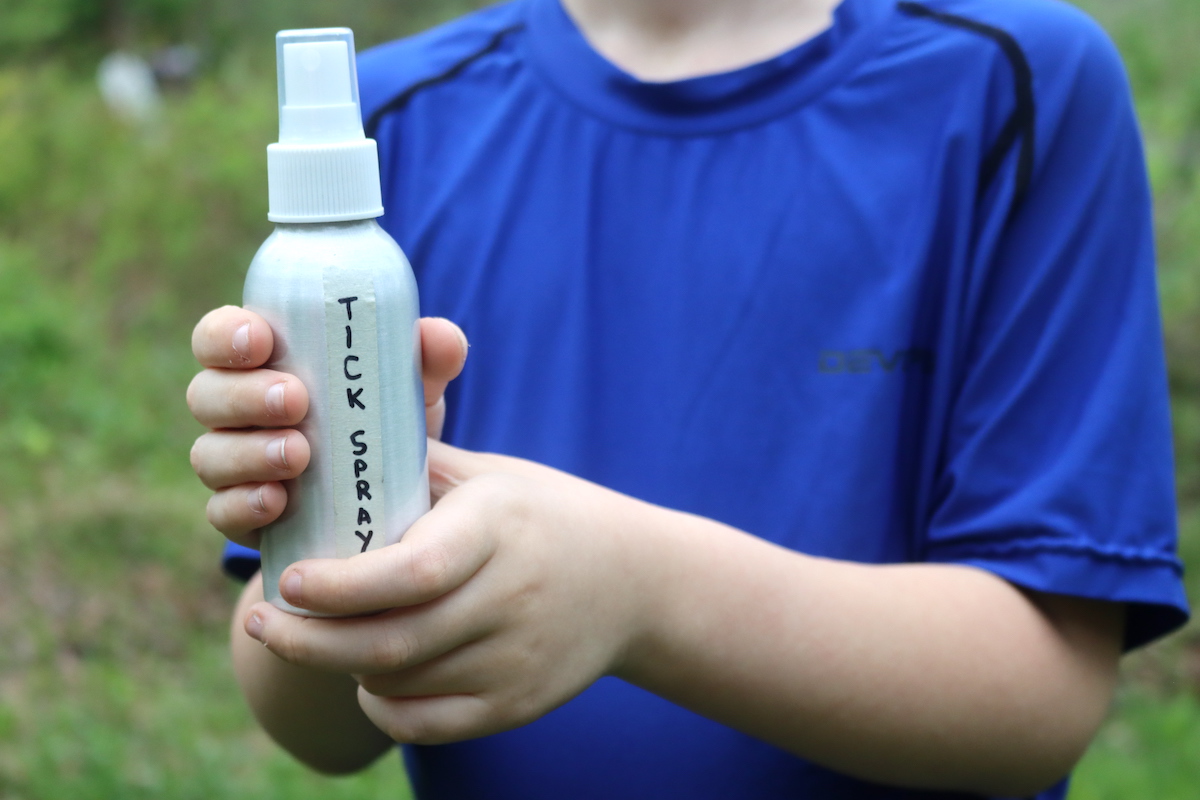
I’m going to put this out there from the start…I’m not all about the magic of essential oils. Sure, they smell nice (or not), and that’s about it for me. But it turns out, that’s kind of all that matters when you’re making tick repellant (or any homemade bug repellant). Some things smell nice to them, and others they can’t stand.
Ants (and cats) hate the smell of cinnamon, mosquitos hate lemongrass and citronella, and spiders hate citrus and peppermint. Ticks, it turns out, also hate certain smells.
There’s no magic essential oil that makes you invisible to ticks, but there are smells (and thus essential oils) that ticks hate.
Most synthetic tick repellants (Deet, etc.) work by trying to confuse the ticks into thinking you’re not there. The idea is to make you invisible to ticks. That works to some extent, in that ticks do operate by smell, but they also seek targets based on CO2. Yes, they’re actually keying into your breathing.
If you put a CO2 emitter (or a cube of dry ice, which is pretty much the same thing) out in a field…it’ll draw all the ticks to the yard.
Natural repellants actually work in the opposite way. They make sure the ticks can smell you, and then those same wee little beasties run the other way. They actually repel ticks instead of just trying to hide your presence.
A 2012 study found that they’re just as effective as Deet and other synthetic repellants, with one caveat: They wear off over time and need to be reapplied.
The study in question actually tested them over a period of 7 days (but with only one application). At the end of the week, DEET was still going strong (hooray for forever chemicals), but the natural tick repellants were wearing off.
I don’t know about you, but I expect my bug spray to last for an afternoon, not a week. Re-applying isn’t exactly a big deal, and anything that lasts all week long is probably impacting more than just ticks during that time (like my endocrine system).
The homemade tick repellant that we make also works really well for mosquitos (and pretty decently for black flies, but black flies are extra hard to repel). I give myself (and my kids) a few sprays of it every 2 to 3 hours when we’re outside in the garden, or every time we stop for a rest break when we’re hiking.
That keeps us covered for both ticks and mosquitos all day long.
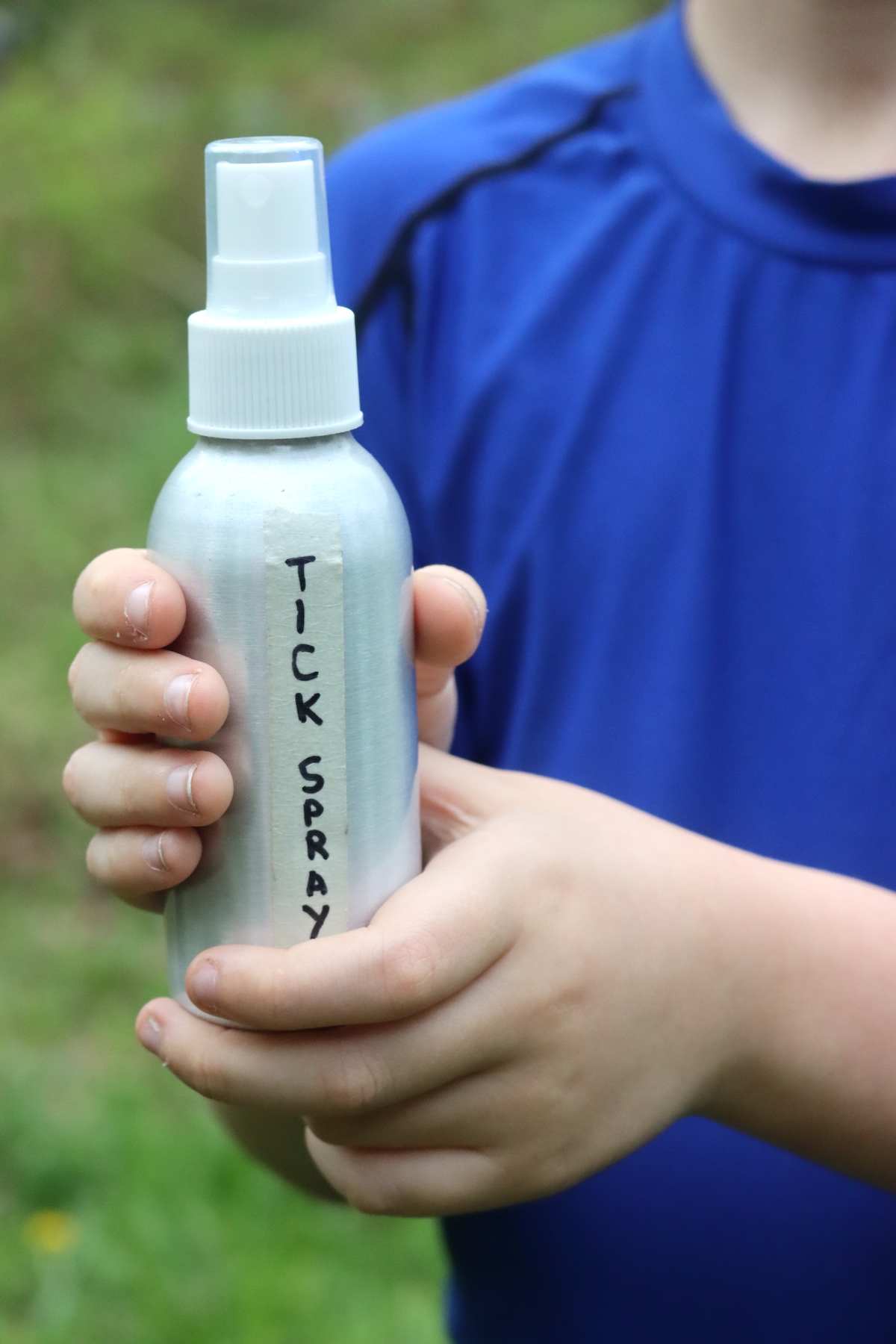
Ingredients for Natural Tick Repellant
If you look at ingredient labels on store-brand natural tick repellants, they all have many of the same ingredients. Most contain some mix of tick-repelling essential oils, including:
Other essential oils, like Orange Oil and Thyme Oil, have also been shown to be effective bug repellants.
They’re often in slightly different proportions or slightly different mixes, but they’re all generally similar. Off-the-shelf natural tick-repellant brands include:
- Badger Bug Spray ~ Citronella Oil (4%), Cedar Oil (2%), Lemongrass Oil (2%), Rosemary Oil (1.5%), Geranium Oil (1%) and Peppermint Oil (1%)
- Buzz Away ~ Geranium Oil (6%), Cedar Oil (1.5%), Citronella (1%), Peppermint (0.5%) and Lemongrass (0.25%)
- Herbal Armor ~ Citronella Oil (10%), Peppermint Oil (2%), Cedar Oil (1.5%), Lemongrass (1%) and Geranium (0.05%)
- Nantucket Spider ~ Clove Oil (2%), Geranium Oil (2%), Peppermint Oil (2%), Rosemary Oil (2%), Cedarwood Oil (1%), Spearmint Oil (1%) and Cinnamon Oil (0.5%).
- Wondercide ~ Cedar Oil (4.2%) and Rosemary Oil 1.5%
- Three Mom’s Organics “Tick Wise” ~ Cedar Oil (3.6%), Geranium Oil (2.6%), Citronella Oil (1.5%), Peppermint Oil (0.9%), Lemongrass Oil (0.3%) and Rosemary Oil (0.3%)
- Grandpa Gus’ Tick Repellant ~ Geranium Oil (4.75%), Lemongrass Oil (0.2%) and Peppermint (0.05%)
The trick here, unfortunately, is that there’s no one magic mix that works for every single body type. The smell of the spray is mixing with your own natural smell, and what works 100% of the time for one person, is only mostly effective for another. There’s a bit of trial and error here, and part of making something yourself is finding a mix that works for you.
The nice thing here is that you can always open up the top of the spray bottle and add a few more drops of something to adjust your mix at anytime. A single bottle of essential oil is enough to make jugs of bug repellant, so you’ll have plenty to experiment.
Be aware that you may be sensitive to certain oils, and there’s always the potential for an allergic reaction (even if something is otherwise benign). I’ve found that I can’t use cedar oil anywhere near my face, but it’s fine on the rest of my body.
Other people in my family take issue with lavender. Be sure to test it out first on clothes, and then on somewhere small and away from your face at first (like your arm).
This is the mix that my family uses, and it works exceptionally well for us:
- One Ounce Water
- 25 drops of Geranium Oil
- 15 drops of Lemongrass Oil
- 10 drops of Rosemary Oil
- 5 drops of Peppermint Oil
- 5 drops of Citronella Oil
- 5 drops of Cedar Oil
I’ve found the most effective tick repellant is Geranium Oil, which is the main ingredient in our repellant. Peppermint, cedar, and citronella can be hard on the skin (and cause tingling due to menthol and other compounds), so we use less of those than most commercial tick-repellant mixes.
We tend to use essential oils from NOW Organics because they’re always high quality and smell great, and with the popularity of essential oils these days, there are a lot of low-quality cut-rate options out there that smell terrible (and are made with who knows what). They actually now make a “Bug Ban” essential oil mix that’s pre-made, which is nice. It combines citronella, lemongrass, rosemary, and thyme.
If you have a brand you know, love, and trust, that’s great! Use that.
Often, natural tick repellants will include a bit of isopropyl alcohol as a preservative. If you’re hoping to keep the repellant for more than a month or two, that’s not a bad idea. Generally, I just use water because I’m mixing up enough for my family to use this week, and we mix up a fresh bottle as we run low.
If you are preserving it, the mix needs to be at least 35% alcohol for long-term preservation. If you’re using 90% isopropyl, make sure you use around half alcohol and half water, and you’ll be more than covered. (If you have a weaker rubbing alcohol, like 70% isopropyl, which is also common, you’ll need a bit more to ensure you stay well above 35% in the finished spray.).
Grain alcohol also works, as does witch hazel, but you’ll need to check the alcohol percentage and do a bit of math to ensure you get to at least 35% in the finished spray.
But as I say, we just use our fresh well water, without alcohol. That works just fine if you’re using it within less than a month. If you have funky city water, may consider using distilled water instead.
How to Make Natural Tick Repellant
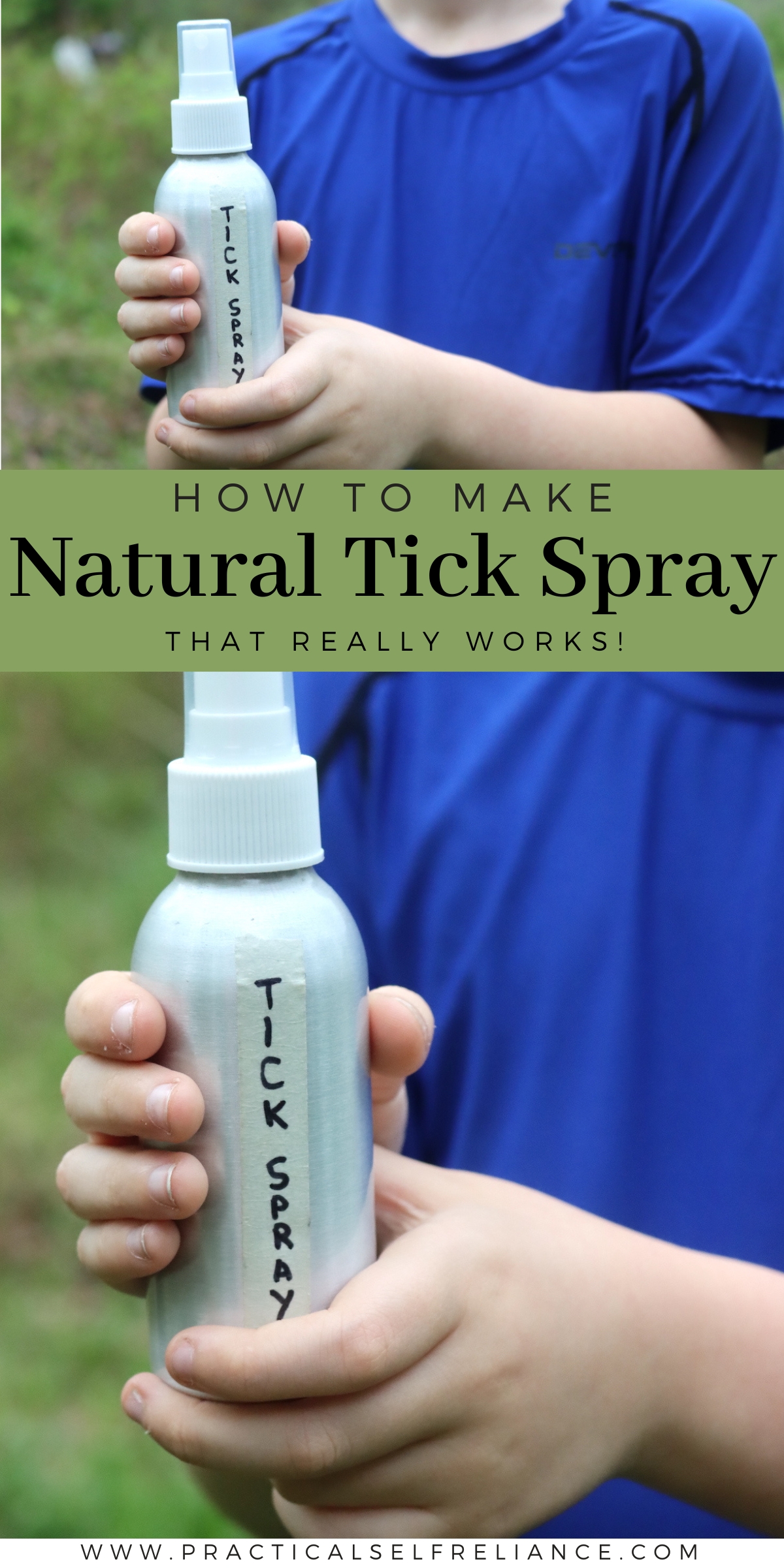
To make your tick-repellant spray, start with a convenient spray bottle. I generally use small 2 to 4-ounce spray bottles, as they fit in a pocket, and I can keep them with me out in the garden or out hiking. The size of your container determines the amount of essential oil to use.
First, add the essential oils to the container, then fill the rest with water (or a mix of water and rubbing alcohol, if you want a preservative).
I’ve sized this recipe to make a single ounce of homemade tick repellant, just to keep the math easy. Multiply by 2 for a two-ounce spray bottle, or 4 for a four-ounce spray bottle, and so on.
- One Ounce Water
- 25 drops of Geranium Oil
- 15 drops of Lemongrass Oil
- 10 drops of Rosemary Oil
- 5 drops of Peppermint Oil
- 5 drops of Citronella Oil
- 5 drops of Cedar Oil
For reference, one ML of essential oils is about 20 drops, and there’s roughly 30 ML in a fluid ounce. To create a 1% mixture, you’ll need about 6 drops of essential oil per ounce of water. If you’re making a large batch, a teaspoon of essential oils is about 100 drops (or 50 drops for a half tsp, or 25 for a quarter tsp., etc.), and you can measure by the teaspoon rather than counting out drops.
Most ready made natural tick repellants use between 5 and 15% oils, most averaging around 8% or so. In one ounce of liquid, that’s about 50 drops of essential oils total on average (with a range of 35 to 90 drops).
A single one-ounce bottle of essential oil contains roughly 600 drops, and we tend to buy the more economically 4-ounce bottles of essential oils (rather than the small 1 oz, since they’re often almost the same price). With just a few bottles of essential oil, I have enough ingredients to literally create gallons of tick repellant. (And a 2-ounce bottle lasts my family all week, even with 10 to 16 hours of outdoor time daily in the summer months).
For most people, a small bottle would last you most of the summer, and one-ounce bottles of essential oil would make years’ worth of tick repellant. (Essential oils are generally rated at max potency for 3 full years.)
Some mixes contain 5 to 10% carrier oil, such as castor oil, to help dilute the essential oils. That’s optional, and can help if you have sensitive skin. We don’t use it, as it makes the spray greasy which is no fun on skin, and can stain clothes. I know some people insist on carriers for essential oils, so if you do, go right ahead.
Again, others use 35 to 50% alcohol in their mixtures. We don’t. I just use water and use the spray up within a few weeks (as alcohol can be hard on the skin, too).
Natural Tick Repellant
Equipment
- Spray Bottle
Ingredients
Base
- 1 oz water distilled if your tap water is funky
- Rubbing alcohol Optional preservative base, replace part or all of the water with alcohol (see notes)
Essential Oils
- 25 drops geranium essential oil
- 15 drops lemongrass essential oil
- 10 drops rosemary essential oil
- 5 drops peppermint essential oil
- 5 drops citronella essential oil
- 5 drops cedar essential oil
Instructions
- Use a clean spray bottle with a tight cap. (Small 2–4 oz bottles are great for pockets and hiking packs.). This recipe is sized to make 1 ounce of spray, so multiply accordingly based on the size of your bottle.
- Drip all essential oils directly into the empty bottle. Adding oils first helps them disperse better when you add the liquid.
- Pour in 1 oz water (or your water/alcohol mix if using a preservative). Or more, if you're making a multiple batch.
- Tighten the lid and shake vigorously for 20–30 seconds.
- Write what’s in it and the date you made it (especially if you’re experimenting with oil blends).
- Shake before each use. Spray lightly and evenly over socks and shoes, pant legs (especially cuffs), waistband area, sleeves and cuffs, and exposed skin (after patch testing).
- Reapply every 2–3 hours while outside, and anytime you sweat heavily, swim, or get soaked.
Notes
-
2 oz bottle: double everything
4 oz bottle: quadruple everything
Other Tick Prevention Strategies
Beyond homemade tick repellants, there are a few other things that have been proven to prevent ticks on your body and around your home.
- Tick Tubes ~ These are actually just toilet paper tubes packed with cotton that’s soaked in pyrethrin (derived from chrysanthemum). Rodents take the cotton for bedding material, and carry it back to their nests. Since rodents are one of the main hosts for ticks, you’re basically using field mice to run around and catch ticks in your yard, which they then carry back to their nest to die on pyrethrin. This is actually more effective than eliminating rodents in the area around your house.
- Oil of Lemon Eucalyptus ~ The name is deceiving, and this is not actually a natural oil, but a synthetic lab-produced product. It smells kind of like Lemon and Eucalyptus, but that’s where the similarity ends. It’s been shown to be incredibly effective against ticks, provided it’s reapplied regularly. It’s another option that’s generally considered non-toxic.
And, of course, all the usual things you should always do to prevent ticks:
- Wear Light Colored Clothing ~ This makes it easier to spot ticks on you before they bite.
- Change Your Clothing Daily (and After Exercise) ~ Ticks are finding you based on smell, remember.
- Wash (and Dry) Clothes Daily ~ To kill any ticks on them.
- Check for Ticks Daily
- Shower Daily