
Affiliate disclosure: This post may contain affiliate links. Please see our Privacy Policy.
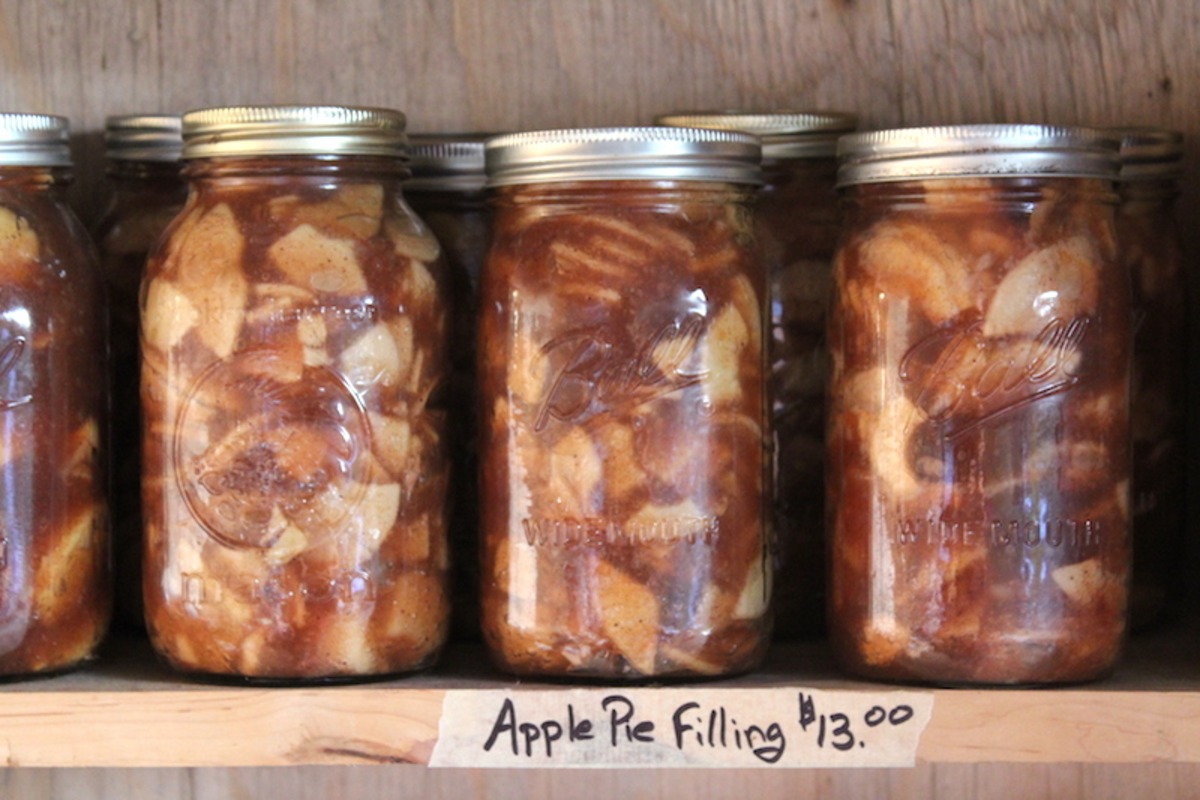
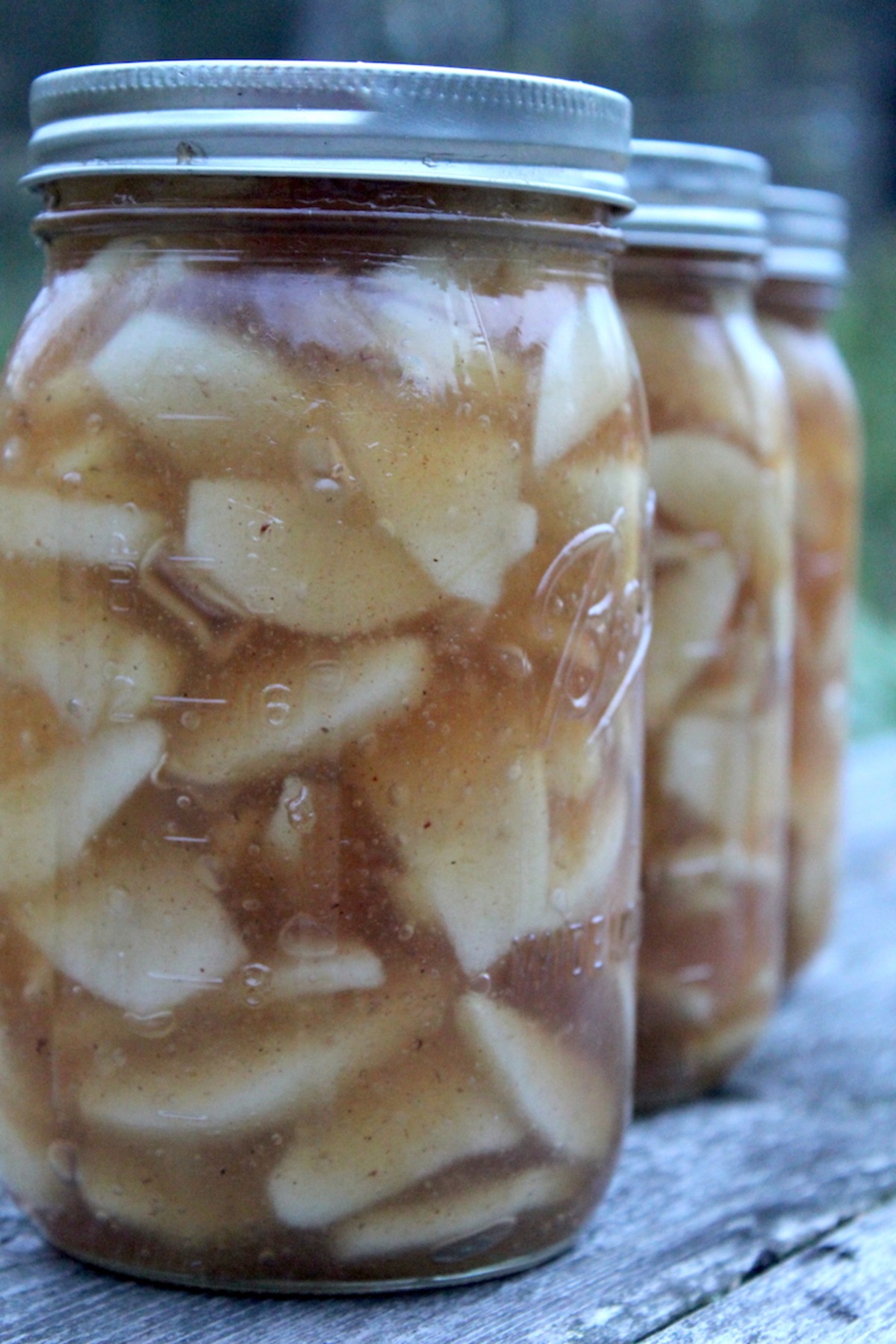
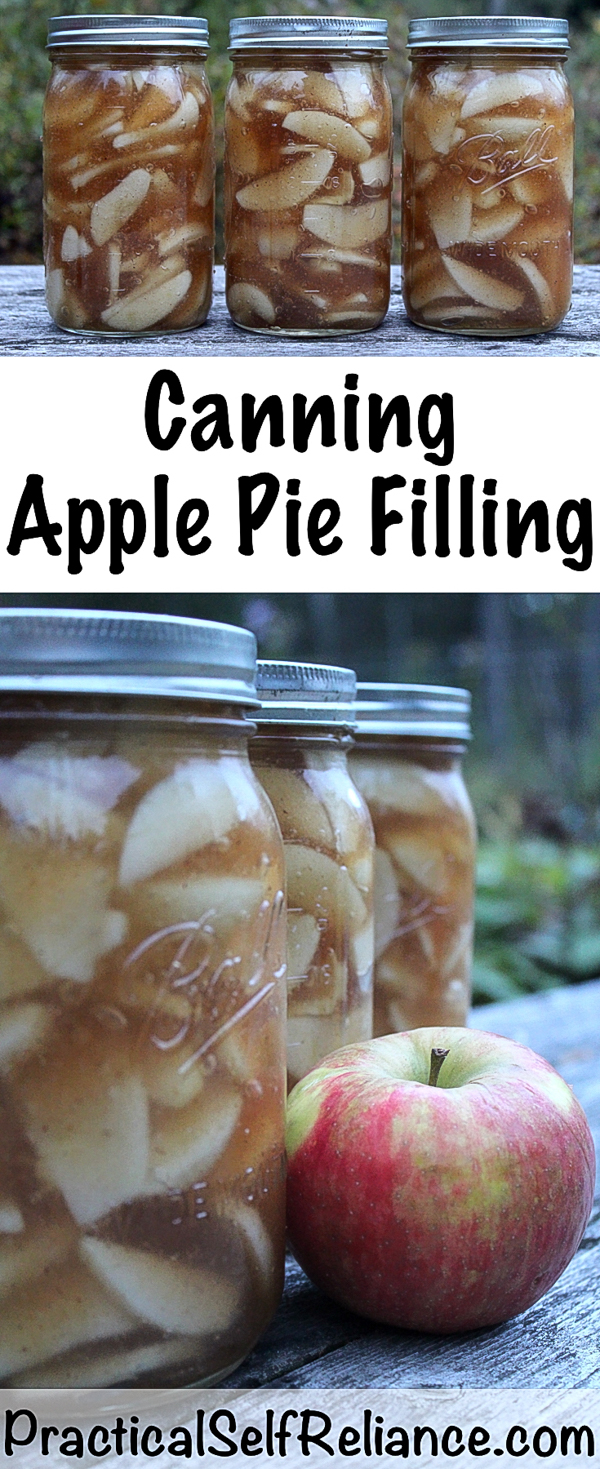
Canning apple pie filling means a homemade apple pie is never more than a crust away. The apples are already peeled, sliced, spiced and thickened in the jar, so all that’s left is to pour and bake. It’s fall’s apple harvest, waiting on the pantry shelf for pie night all winter.
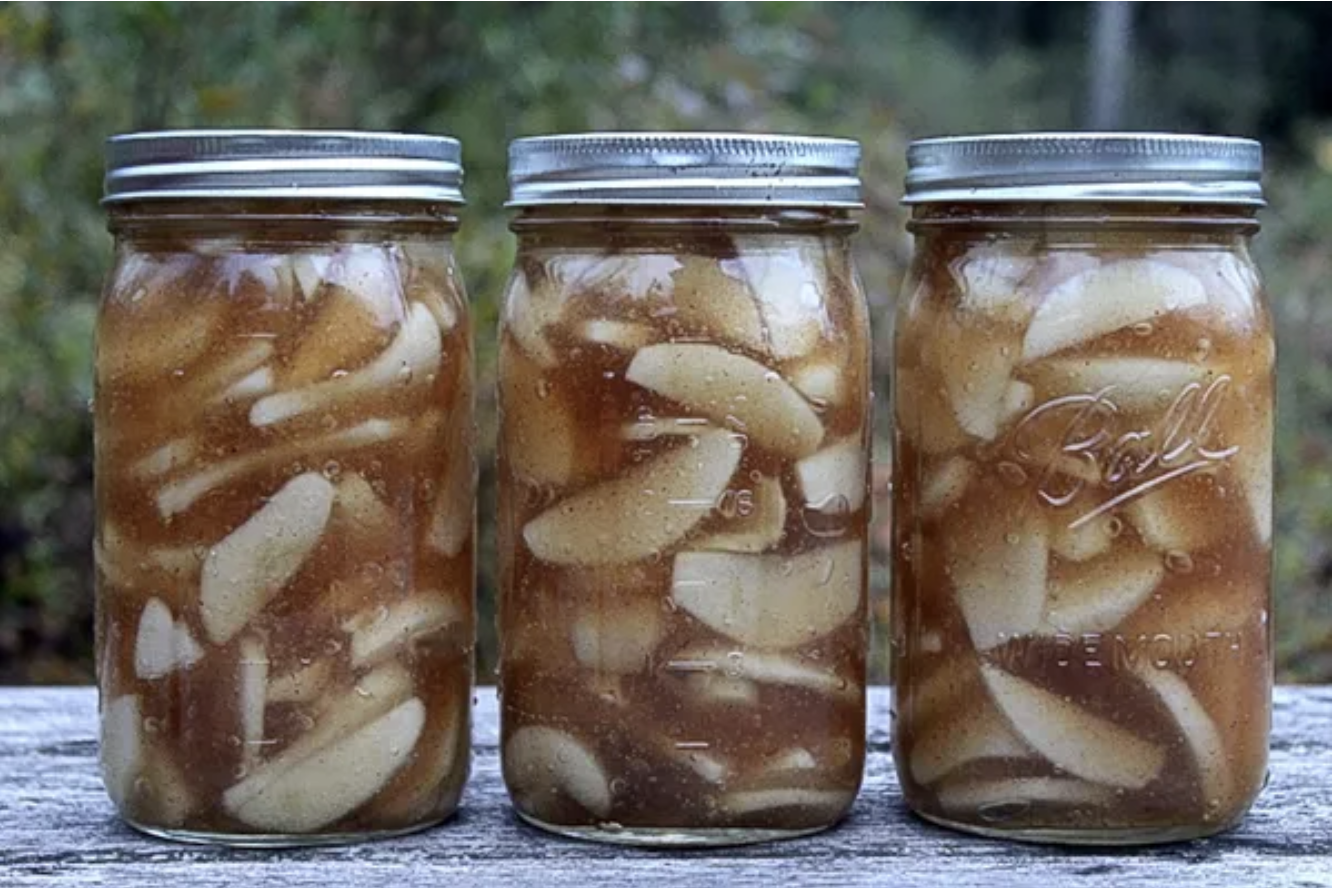
Table of Contents
- Notes from My Kitchen
- Choosing the Best Apples for Pie Filling
- What Is Clear Jel?
- Apple Pie Filling Without Clear Jel
- Ingredients for Apple Pie Filling
- Safe Recipe Changes
- How to Make Apple Pie Filling
- Canning Apple Pie Filling
- Altitude Adjustments
- Storing Canned Apple Pie Filling
- Yield Notes
- Ways to Use Apple Pie Filling
- Canning Apple Pie Filling FAQs
- More Apple Canning Recipes
- Canning Apple Pie Filling Recipe
- Fruit Canning Recipes
Apples are the one fruit we never run short of here in Vermont. By October the trees are loaded, and there are only so many apples a family can eat fresh before the rest need a plan.
Some go through the cider press, and some go into the apple storage rack for winter eating. A good share of the rest ends up in jars as applesauce, apple butter and apple jam.
Apple pie filling is different from the other apple preserves, because it’s a finished dessert in a jar. The peeling, slicing and spicing all happen in one afternoon in the fall.
A quart of apple pie filling isn’t cheap at the orchard store anymore. Homemade costs a fraction of that, especially when the apples come from your own trees.
For summer fruit, there’s canning peach pie filling and canning cherry pie filling. For the rest of the apple harvest, there’s a whole list of apple canning recipes, plus more ways to preserve apples, from drying to cold storage.
Notes from My Kitchen

When it’s time for pie, our apples usually come from the Newtown Pippin tree. It bears so heavily that one tree gives us around 20 gallons of cider a year, and it’s still the apple we use for pie most often.
Some families love a soft, custardy apple pie, but I’m firmly in the crisp camp. I want distinct slices with a little bite, and that matters even more in a jar, since the apples cook twice, once in the canner and again in the oven. So I fill these jars with firm apples and a little of the cider we press ourselves.
Choosing the Best Apples for Pie Filling
Firm, crisp apples are the ones to use, because they keep their shape through the canner and again in the oven. The National Center for Home Food Preservation (NCHFP) suggests Stayman, Golden Delicious and Rome, and any apple that stays firm when it cooks will work.
I’ve had good luck with Honeycrisp, which came out firm even after canning and then baking into a pie. Granny Smith is another good choice, and a mix of tart and sweet apples gives the filling a more classic pie flavor.
Soft apples like McIntosh break down in the jar, so they’re better saved for applesauce. My pie apples guide has a longer list of varieties that hold up, and there are plenty more heirloom apples worth tracking down for pie.
What Is Clear Jel?
Clear Jel is a modified cornstarch, and it’s the thickener the tested pie filling recipes use. It holds up in the canner and again in the oven, where flour and regular cornstarch break down and turn runny.
There are two kinds, and you need the regular, cook-type Clear Jel. Instant Clear Jel thickens without cooking, so it isn’t suitable for a canned pie filling. The wrong type is the most common reason a canned pie filling doesn’t set.
Most grocery stores don’t carry it, so look online or at an Amish bulk food store. I buy mine online in tubs of Hoosier Hill Farm Clear Jel, and one tub covers a few full batches.
Apple Pie Filling Without Clear Jel
Flour, cornstarch, tapioca and pectin can’t stand in for Clear Jel in a canned pie filling. They break down in the jar, and they keep heat from moving through the filling the way it should in the canner.
If you can’t find Clear Jel, can the apples in syrup instead, following my recipe for canning apple slices. On pie day, drain the syrup into a pan, thicken it with cornstarch or flour, and toss the slices back in before they go into the crust.
It’s a little more work at baking time, and the slices aren’t as handy for spooning over pancakes. Still, it’s a tested process, and any thickener works once the jar is open. For a fresh, uncanned filling, I like arrowroot.
Ingredients for Apple Pie Filling
The questions I get most are about the liquid and the sweetener. I use a mix of water and apple juice, because all juice tastes too intense and all water comes out watery.
The sugar and spices are yours to adjust. The bottled lemon juice never goes down.
- Apples: Firm, crisp apples that hold their shape when they cook, peeled, cored and sliced 1/2 inch thick. Use fresh apples, since the tested recipe calls for fresh fruit.
- Granulated sugar: Sweetens the filling and gives the sauce its glossy, bakery-style look. It’s there for flavor, so you can cut it without affecting canning safety. The bottled lemon juice is what keeps the filling safe.
- Clear Jel: Regular, cook-type Clear Jel, never Instant. It’s the thickener USDA recommends for canned pie filling.
- Cold water: Dissolves the Clear Jel before the pot heats. Use cold or room temperature water, never the hot blanching water, or the Clear Jel will clump.
- Apple juice: Gives the sauce more apple flavor than water alone. I use cider we’ve pressed ourselves or a plain, preservative-free store juice like Simply Apple.
- Bottled lemon juice: Bottled lemon juice has a consistent acidity, and it’s part of what makes this filling safe to can. Don’t use less than the recipe calls for.
- Cinnamon: The classic apple pie spice. Use more or less to taste, or swap in an apple pie spice blend.
- Nutmeg: Optional, and a little goes a long way.
Safe Recipe Changes
Spices: Change them any way you like. Add allspice or ginger, use more cinnamon, or swap in an apple pie spice blend. Stick to dry spices.
Sugar: Use less if you’d like. The sugar is there for flavor, and cutting it doesn’t affect canning safety, since the bottled lemon juice is what keeps the filling safe. NCHFP suggests canning one quart first, baking a pie with it, and adjusting the sugar and spices from there.
Other sweeteners: There’s no tested version of this recipe with honey, maple syrup or a sugar substitute. Can the filling with sugar, or with less sugar, and stir the other sweetener in when you make the pie.
Clear Jel: Use less for a looser filling, but never more. Extra Clear Jel makes the filling too thick for the heat to get through the jar.
Lemon juice: Never use less. If your apples aren’t very tart, NCHFP adds 1/4 cup more bottled lemon juice for every 6 quarts of slices.
Thickeners: Don’t swap in flour, cornstarch, tapioca, pectin, chia or xanthan gum. None of them are safe stand-ins for Clear Jel in the jar.
Just made this recipe. It worked out perfectly. I never blanched my apples first before, but it really worked to solve the problem of the apples rising to the top and the gel settling on the bottom. This will be my go-to recipe from now on!
How to Make Apple Pie Filling
The filling comes together fast once the sauce goes on the heat, so get everything ready first. Clear Jel thickens in minutes, and the filling needs to go into the jars hot.
Most of the work is the peeling and slicing. Once you’ve blanched the apples, the sauce, the jars and the canner all go quickly.
Prepare the Canner and Jars
Fill a water bath canner and start heating it, since the jars go in as soon as you fill them. For a hot pack like this one, the water should be about 180 degrees F.
Wash the jars and lids and keep the jars hot. I use wide-mouth quart jars for pie filling, because a thick filling is easier to ladle in and de-bubble through a wide mouth.
Peel and Slice the Apples
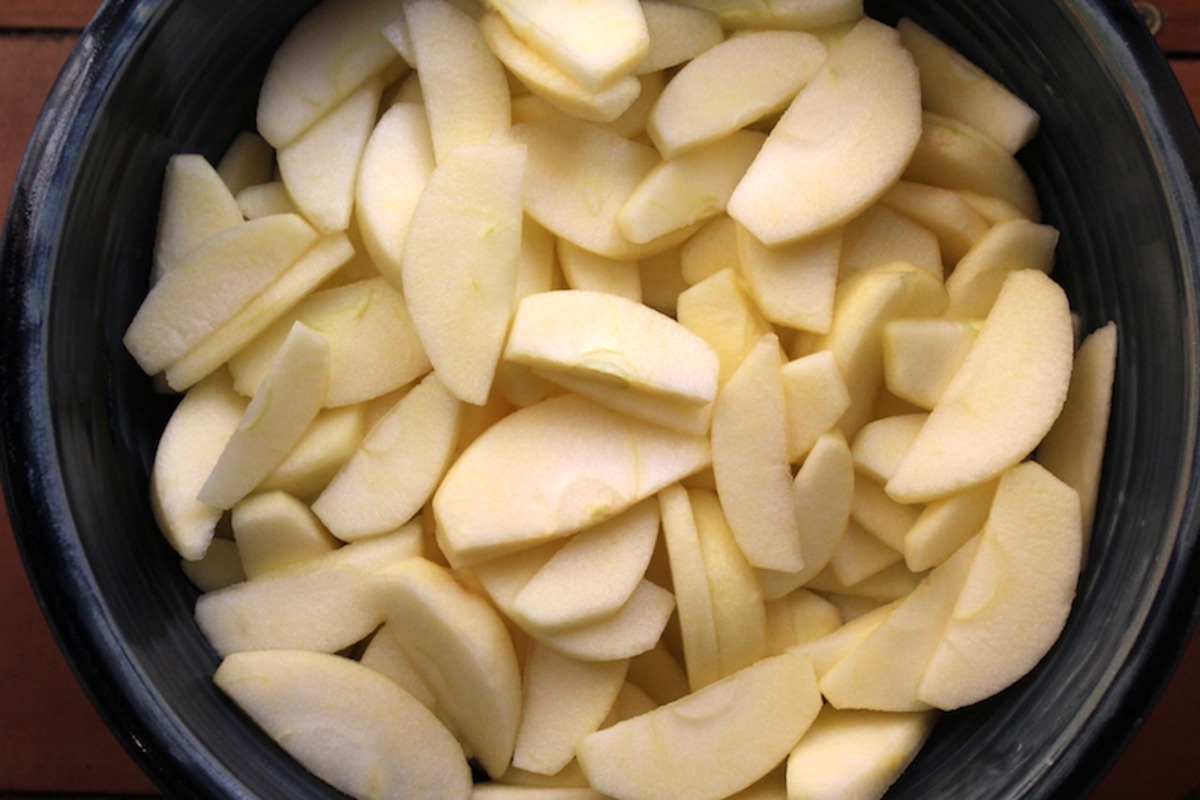
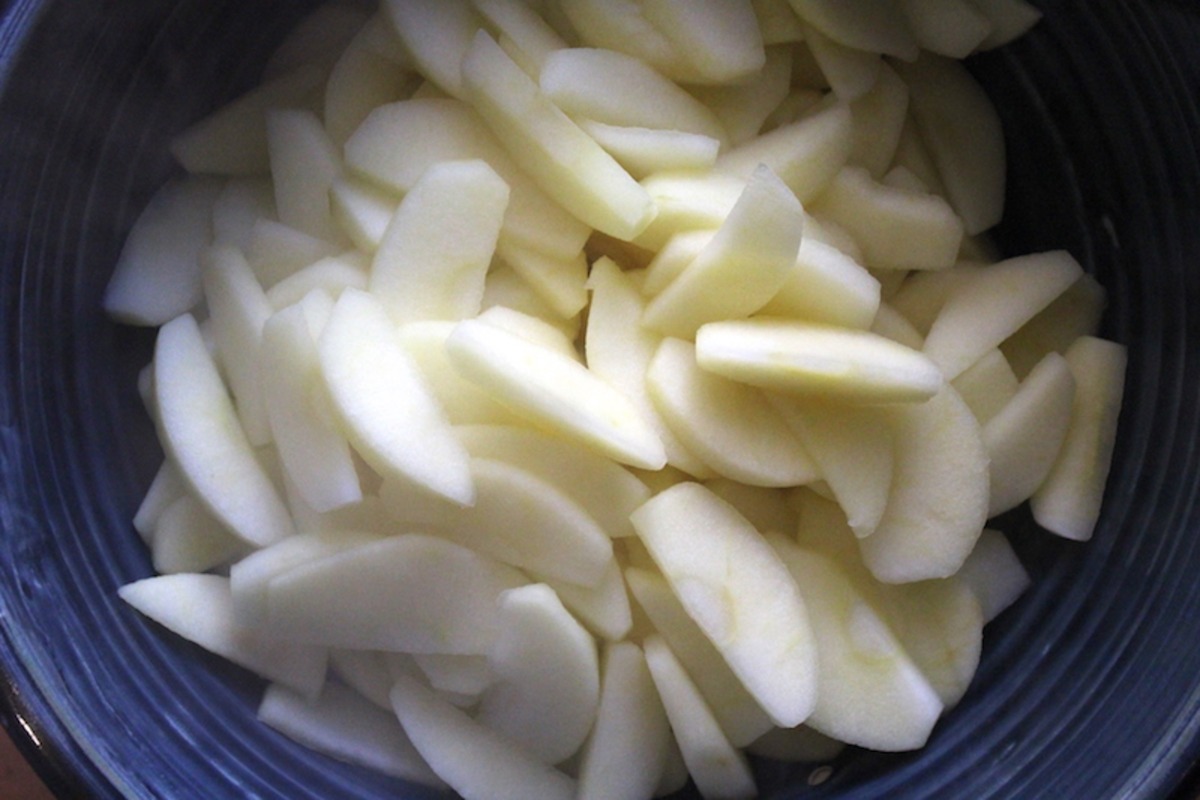
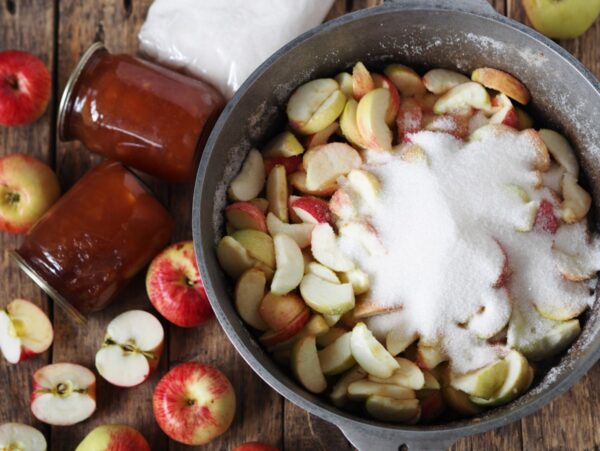
Wash, peel and core the apples, then slice them about 1/2 inch thick. That’s the size the tested recipe uses, and slices that thick hold their shape in the jar.
An apple peeler corer speeds up the peeling. If yours slices too, check the thickness, since thin spiral slices pack tighter and fill fewer jars.
To keep the slices from browning while you work, hold them in water with a little ascorbic acid. It only affects the color, and brown apples taste just the same.
Blanch the Apples
Bring a large pot of water to a boil. Blanch the slices in batches of about 6 cups to a gallon of water, so the pot comes back to a boil quickly, and boil each batch for 1 minute once it does.
The slices bubble hard as they blanch. That’s air coming out of the apple, which shrinks the slices a little so more fit in each jar, and it keeps them from floating to the top later.
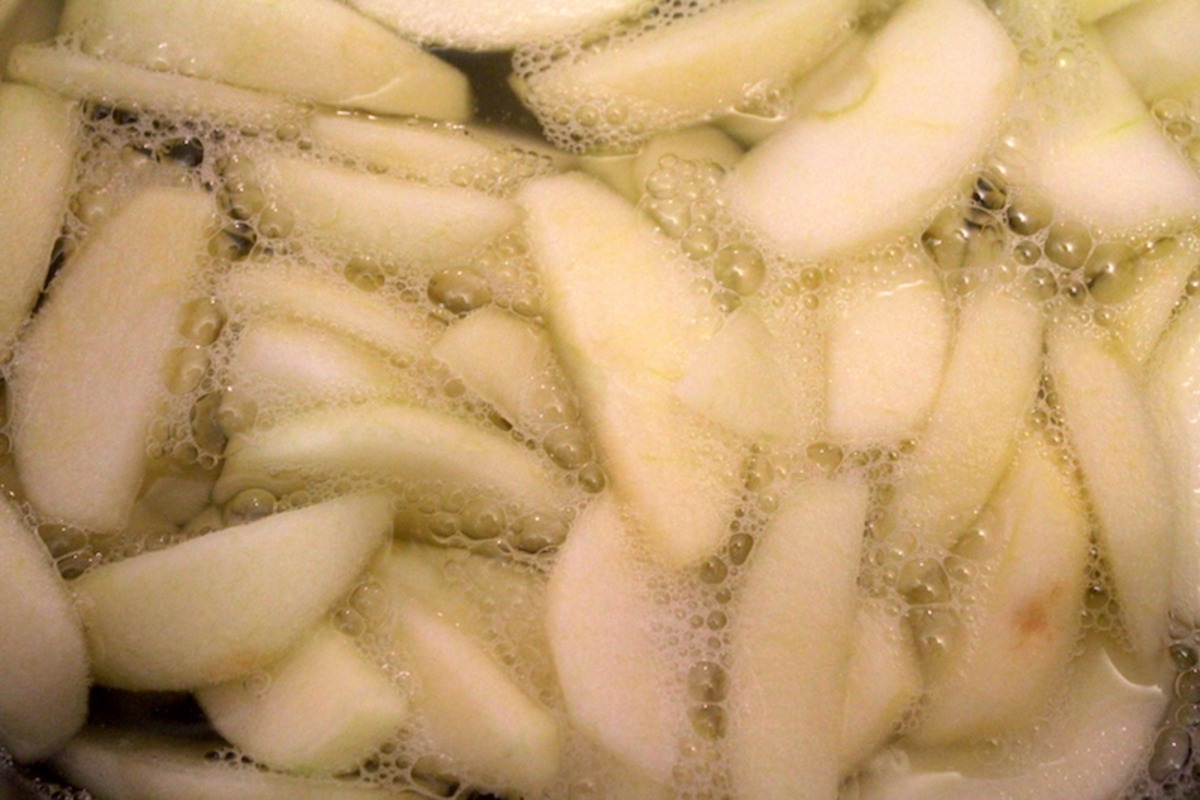
Drain each batch well and keep the apples hot in a covered bowl or pot while you blanch the rest. Measure the slices after blanching, since that’s how the tested recipe measures them, and keep them hot until they go into the sauce.
Don’t use the blanching water for the sauce, though. Clear Jel clumps when it hits hot liquid, so the sauce always starts cold.
Make the Clear Jel Sauce
In a large pot, whisk the sugar and Clear Jel together until they’re evenly mixed. Then whisk in the cold water, apple juice and spices until the mixture is completely smooth, before you turn on the heat.
Set the pot over medium-high heat and stir constantly, scraping the bottom and corners as you go. Keep stirring until the sauce turns thick and glossy and comes to a full, rolling bubble.
Add the bottled lemon juice and keep it boiling for 1 more minute, still stirring. In my experience, the sauce thickens fast as soon as the lemon goes in, so don’t walk away.
Fill the Jars
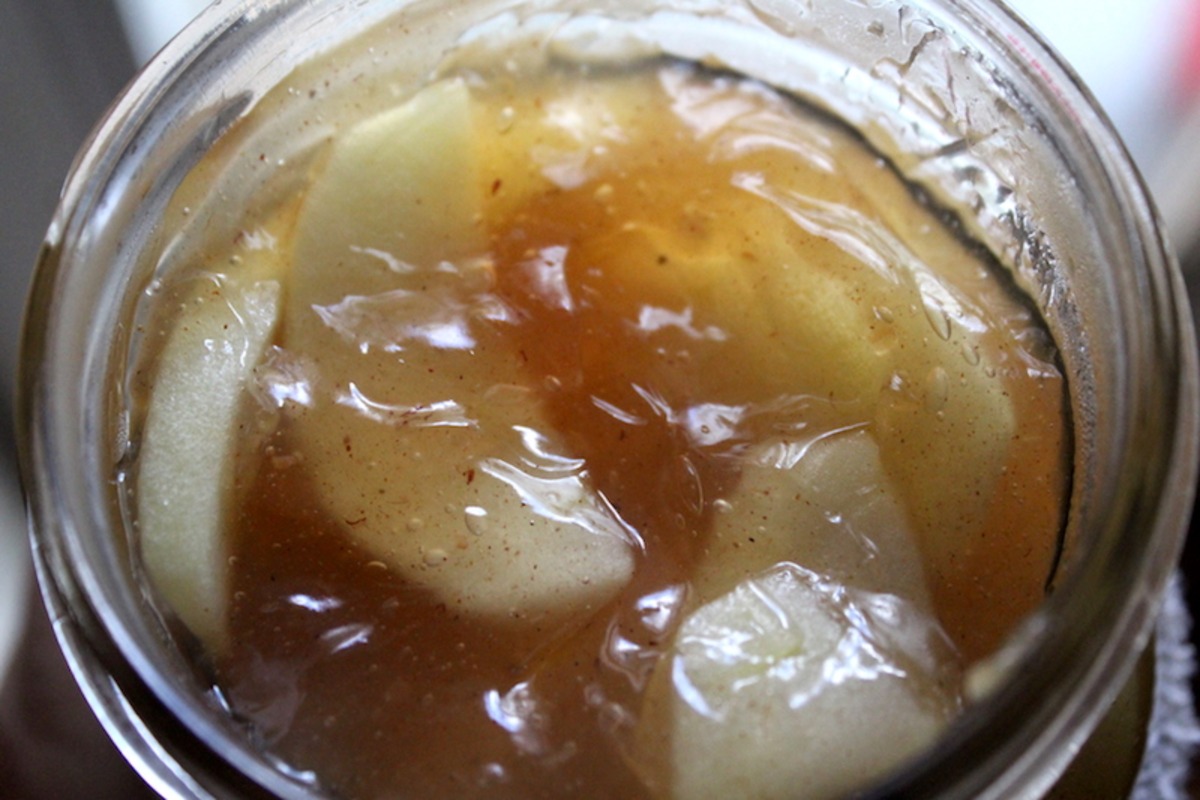
Take the pot off the heat and fold in the hot, drained apples right away, until the sauce coats every slice. Ladle the filling into the hot jars with a canning funnel, leaving 1 inch of headspace.
Work out the air bubbles with a bubble remover or a chopstick, and top up the headspace if it drops. Wipe the rims, add the lids, and screw on the bands fingertip tight.
Work quickly. The filling starts to set as it cools, and it needs to go into the jars and the canner while it’s hot.
Canning Apple Pie Filling
Load the jars into the canner as soon as you fill them, with the water about 180 degrees F. It should cover the jars by at least 1 inch, or 2 inches when your altitude time runs over 30 minutes. Bring the canner to a full rolling boil, then start the timer.
Process half pints, pints or quarts for 25 minutes, adjusting the time for your altitude with the chart in the Altitude Adjustments box.
When the time is up, turn off the heat, take the lid off the canner, and let the jars sit in the water for 10 minutes. Then lift them out with a jar lifter and set them on a towel to cool.
Pie filling is prone to siphoning, where some of the filling bubbles out under the lid, and that rest in the canner helps keep it in the jars.
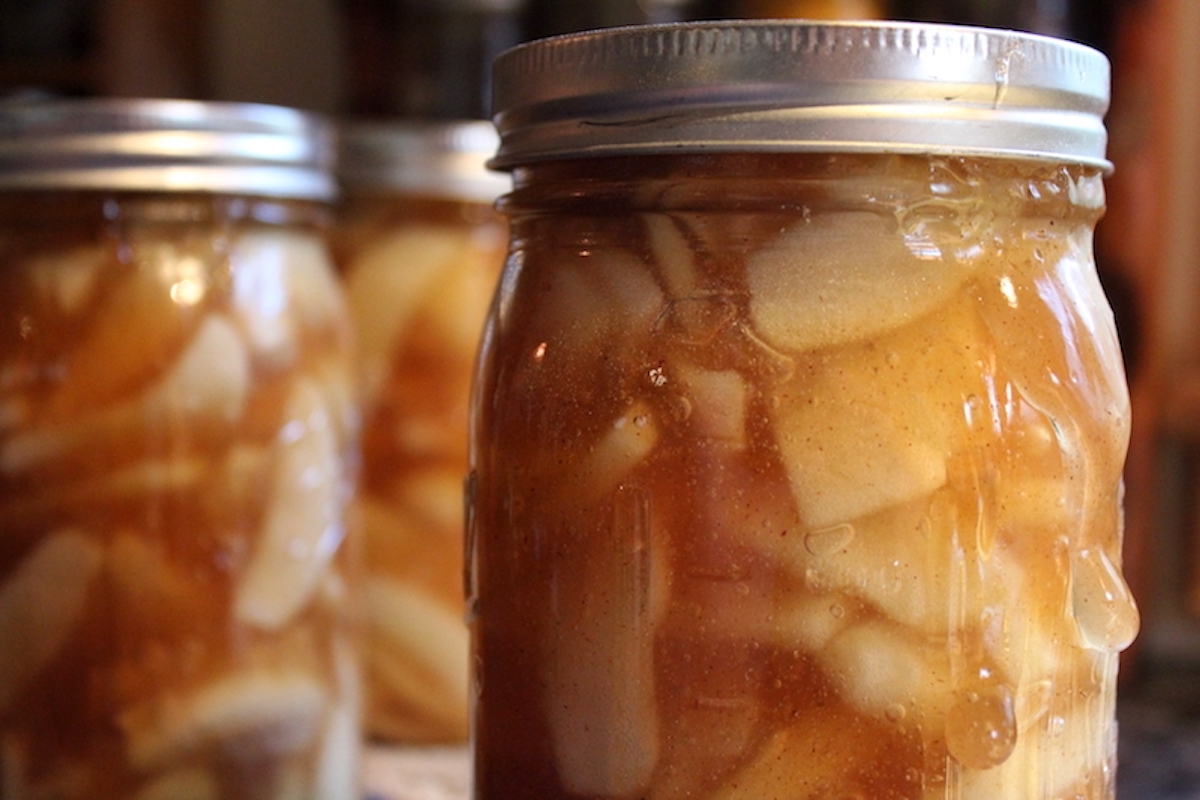
Let the jars cool undisturbed for 12 to 24 hours. A jar that lost some filling is still fine, as long as it sealed. Wash off the sticky outside, and it’s ready for the shelf.
If siphoning keeps happening, check the headspace, work the air bubbles out carefully, and make sure the bands are fingertip tight, not loose.
Altitude Adjustments
These processing times are for water bath canning, and they go up at higher elevations.
- 0 to 1,000 feet: 25 minutes for half pints, pints and quarts
- 1,001 to 3,000 feet: 30 minutes for half pints, pints and quarts
- 3,001 to 6,000 feet: 35 minutes for half pints, pints and quarts
- Above 6,000 feet: 40 minutes for half pints, pints and quarts
Storing Canned Apple Pie Filling
Once the jars have cooled, press the center of each lid. A sealed lid won’t flex. Take the bands off so a failed seal can’t hide, and refrigerate any jar that didn’t seal.
Sealed jars keep on a cool, dark pantry shelf. I use mine within about a year, while the texture is still at its peak. I’ve had jars sit a full year with no change I could notice, though a few I forgot about for three or four years had lost their gel.
Once a jar is open, keep it in the fridge and use it within about a week.
Yield Notes
A full 7-quart canner batch takes 6 quarts of blanched apple slices. About 9 pounds of apples as purchased, roughly 24 medium apples, gives about 6 quarts of raw slices, and they shrink a little in the blanch, so have a few extra apples on hand.
The recipe card gives amounts for 1 quart or a full 7-quart batch. For anything in between, multiply the 1-quart amounts by the number of quarts you’d like. Each quart of filling takes 3 1/2 cups of blanched apple slices.
Each 1-quart batch also fills 2 pints.
Ways to Use Apple Pie Filling
NCHFP figures one quart per 8- to 9-inch pie. I like a fuller pie, so I use a quart and a pint for a 9-inch pie, and a 10-inch or deep-dish pie takes 2 quarts.
There’s no need to change how you bake. Pour the filling into a crust in your pie plate and bake it the way you usually would. Firm apples stay firm through the second round of cooking.
It works anywhere you’d like a sweet, spiced apple topping. Spoon it over pancakes, waffles, oatmeal or ice cream, use it as a cheesecake topping, or bake it into a crisp or a cobbler.
It also makes quick apple pie shortbread bars, and it’s good between cake layers or in thumbprint cookies. After a pie, I keep the leftover half quart in the fridge for topping breakfast all week.
Canning Apple Pie Filling FAQs
These are the questions readers ask most, from frozen apples to jars that lose filling in the canner.
No. The NCHFP apple pie filling calls for fresh apples, so use fresh fruit. Frozen apples are better baked into a fresh pie or a crisp.
I wouldn’t. A full 7-quart batch is already a lot of thickened filling to get into jars before it starts to set, and the last few jars get hard to de-bubble. I’d make a second batch instead.
That’s siphoning, and pie filling is prone to it. Quick temperature changes, short headspace, trapped air bubbles and loose bands all cause it. Leave a full inch of headspace, de-bubble well, and let the jars rest in the canner for 10 minutes after processing. A jar that siphoned is fine to keep as long as it sealed.
Check the Clear Jel first. Instant Clear Jel isn’t suitable for a cooked, canned filling, so the label needs to say regular or cook-type. I’ve never had cook-type Clear Jel fail to thicken.
Sealed jars keep on the pantry shelf, but they have the nicest texture within about a year. Jars left for several years can lose their gel. Once a jar is open, refrigerate it and use it within about a week.
More Apple Canning Recipes
Three more ways to put up the apple harvest.
If you tried this Canning Apple Pie Filling recipe, or any other recipe on Practical Self Reliance, leave a ⭐ star rating and let me know what you think in the 📝 comments below!
And make sure you stay in touch with me by following on social media!
Canning Apple Pie Filling
Ingredients
For 1 Quart
- 3 1/2 cups blanched apple slices, peeled, cored and sliced, see notes
- 7/8 cup sugar
- 1/4 cup Clear Jel, cook-type, not instant
- 1/2 cup cold water
- 3/4 cup apple juice
- 2 Tbsp bottled lemon juice
- 1/2 tsp cinnamon, optional
- 1/8 tsp nutmeg, optional
For a 7-Quart Canner Batch
- 6 quarts blanched apple slices, peeled, cored and sliced, see notes
- 5 1/2 cups sugar
- 1 1/2 cups Clear Jel, cook-type, not instant
- 2 1/2 cups cold water
- 5 cups apple juice
- 3/4 cup bottled lemon juice
- 1 Tbsp cinnamon, optional
- 1 tsp nutmeg, optional
Instructions
- Prepare a water bath canner, wash the jars and lids, and keep the jars hot.
- Wash, peel and core the apples, then slice them about 1/2 inch thick. To keep them from browning while you work, hold the slices in water with a little ascorbic acid, then drain.
- Bring a large pot of water to a boil. Blanch the apple slices in small batches (see notes), boiling each batch for 1 minute once the water returns to a boil. Drain, measure the blanched slices, and keep them hot in a covered bowl or pot.
- In a large pot, whisk the sugar and Clear Jel together. Whisk in the cold water, apple juice, cinnamon and nutmeg until completely smooth, before turning on the heat.
- Cook over medium-high heat, stirring constantly, until the sauce thickens and comes to a full bubble. Add the lemon juice and boil 1 minute more, stirring constantly.
- Remove the pot from the heat and fold in the hot, drained apples right away.
- Fill the hot jars promptly, leaving 1 inch headspace. Remove air bubbles, wipe the rims, and add the lids and bands fingertip tight.
- Load the jars into the canner with the water at about 180 degrees F. Keep the jars covered by at least 1 inch of water (2 inches for times over 30 minutes), bring the canner to a full rolling boil, and process half pints, pints or quarts for 25 minutes, adjusting for altitude (see notes).
- Turn off the heat, take the lid off the canner, and let the jars sit in the water for 10 minutes before lifting them out.
- Let the jars cool undisturbed for 12 to 24 hours, then check the seals. Refrigerate any jar that didn’t seal.
Notes
- 0 to 1,000 feet: 25 minutes
- 1,001 to 3,000 feet: 30 minutes
- 3,001 to 6,000 feet: 35 minutes
- Above 6,000 feet: 40 minutes
Nutrition
Nutrition information is automatically calculated, so should only be used as an approximation.
Fruit Canning Recipes
More fruit to can for the pantry shelf.
Find the perfect recipe
Searching for something else? Enter keywords to find the perfect recipe!









When do you add the spices?
They go in with the sauce. Whisk the sugar and Clear Jel together, then whisk in the water, apple juice and spices until it’s smooth, before you turn on the heat.
Can monkfruit sweetener be used instead of sugar?
Monkfruit is not currently recommended for canning because it hasn’t been tested yet (info here: https://ucanr.edu/sites/default/files/2022-06/368658.pdf). You can, however, make the filling without sugar and then stir it in before you bake the pie. Best of luck!
What happens if some of the filling spills over after the canning process. I tried for 1 inch head space and debubbled. If they have a seal, would you consider them to be good?
Thank you!
Yes, they’re perfectly safe and fine so long as they sealed and were processed the appropriate time. Liquid spilling after canning is called siphoning, and you can read more about the issue here and how to prevent it:
https://creativecanning.com/canning-liquid-loss-siphoning/
It’s not a safety thing, just a sticky mess, but wash the jars and they’re fine. Enjoy!
I started to follow you just 2 months ago. I started my canning journey 11 years ago. Canning jams and pickles. This year, I started pressure canning, veggies and meals in jars, soups, ect… I have made several of your recipes and you are my go to for canning recipes. Its such a great feeling knowing what is in my family’s food. I have apple pie filling processing as i write this. Thank you for your recipes. You have made me a great canner!
I am so glad to hear it!
Can this recipe be adapted for quart jars? How long for the water bath and at what elevation? Thanks.
This recipe can be canned in either pints or quarts, and the canning times are the same for both jar sizes. Altitude adjustments are as follows:
0 to 1,000 feet: 25 minutes
1,001 to 3,000 feet: 30 minutes
3,001 to 6,000 feet: 35 minutes
Above 6,000 feet: 40 minutes
Can you substitute fruit pectin for the clear jel? I am not sure the difference.
Clear jel and fruit pectin are two completely different things. Clear jel is actually a type of corn starch, but a specific one designed to be safe for canning.
What kind of Apple juice do you use?
When I use juice, it’s either cider we’ve pressed, or a simple preservative free apple juice from the store. Simply Apple is a really nice store bought juice around here.
An absolutely delicious recipe. We have an abundance of apples and I think this is my 5th year canning this pie filling recipe. And super easy. I’ve shared with several friends and they also have had great success with the recipe. The filling is also great as an addition to a spice dump cake.
So glad to hear it!
I’m trying to use up my Kieffer pears. Any reason why I couldn’t use the same ratios but with pears instead?
Pears have a slightly different recipe with a bit more lemon juice. You can find the pear pie filling recipe here: https://creativecanning.com/canning-pear-pie-filling/
I love this recipe, it turns out wonderful every time. 16 pints today. Used this last year and it has been wonderful both times.
So glad you liked it!