
Affiliate disclosure: This post may contain affiliate links. Please see our Privacy Policy.
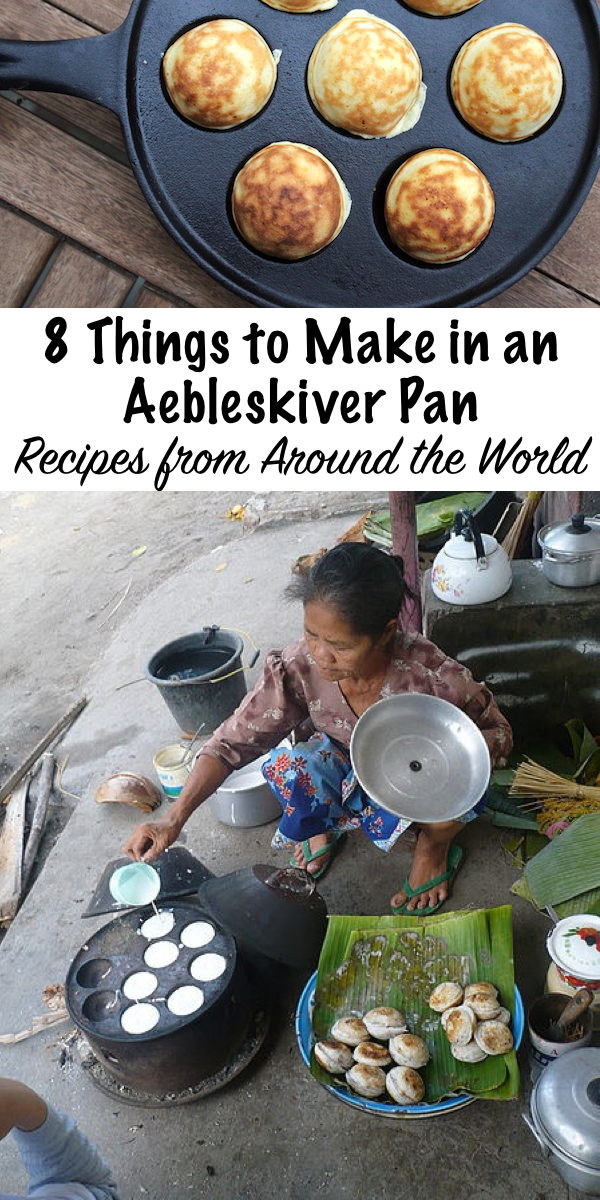
Single-purpose specialized kitchen tools are more often than not a waste of kitchen space, and hardly ever used. While don’t have a big kitchen with a lot of space for extra tools, but I do have a cast iron aebelskiver pan. I blame my irrational love for all things cast iron, but in reality, there are a lot of different things you can cook in an aebelskiver pan.
Cultures around the world have their own version of aebelskiver, many savory, and some exotic versions stuffed with things as crazy as a pickled octopus. Just about all of them are cooked on a pan that’s pretty much identical to a Danish aebelskiver pan. Beyond that, I’ve found that the little divots are convenient for a number of staple foods we cook all the time, from cornbread to baked doughnut holes.
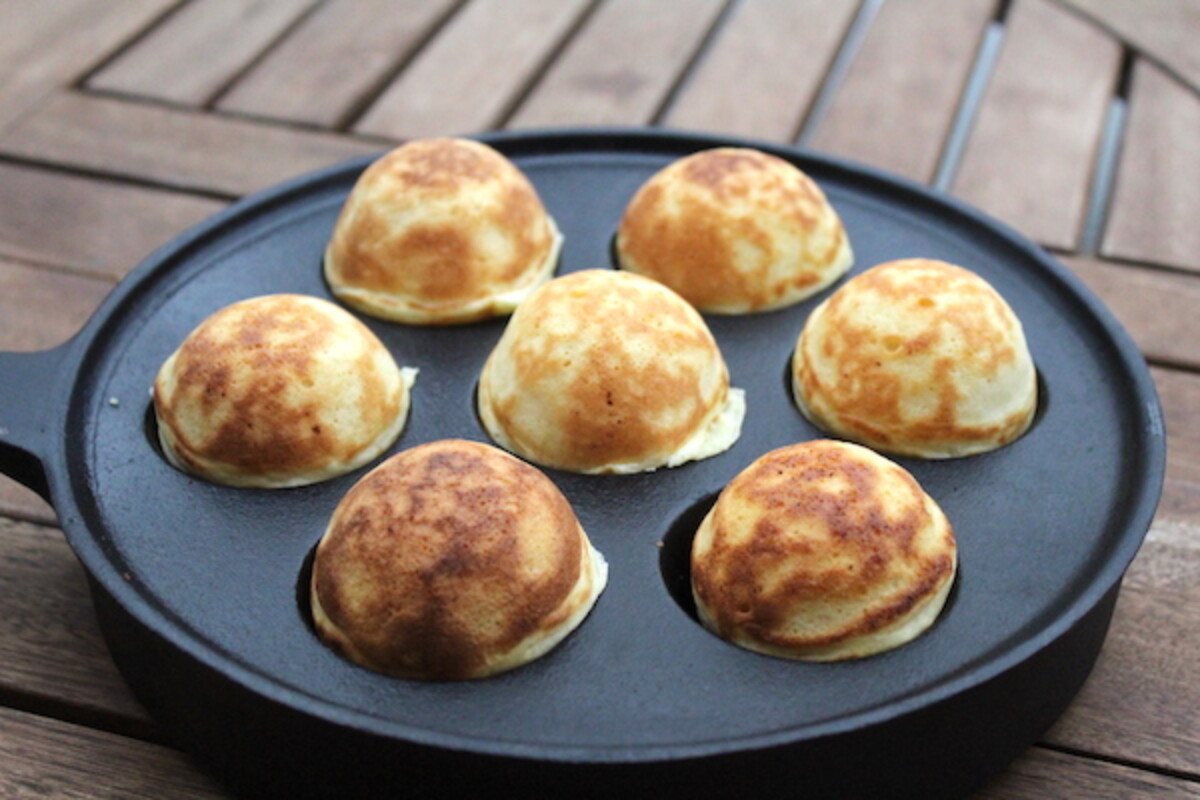
Aebelskivers (obviously)
So starting with the obvious, learn how to properly make aebelskivers. The traditional method involves slowly turning the dough around in a well-greased divot using a knitting needle, but a bamboo skewer works just as well. In the end, the traditional version is pillowy and delicious.
Here are detailed directions for how to make aeblskivers if you’re still wondering how on earth you flip them without making an unholy mess.
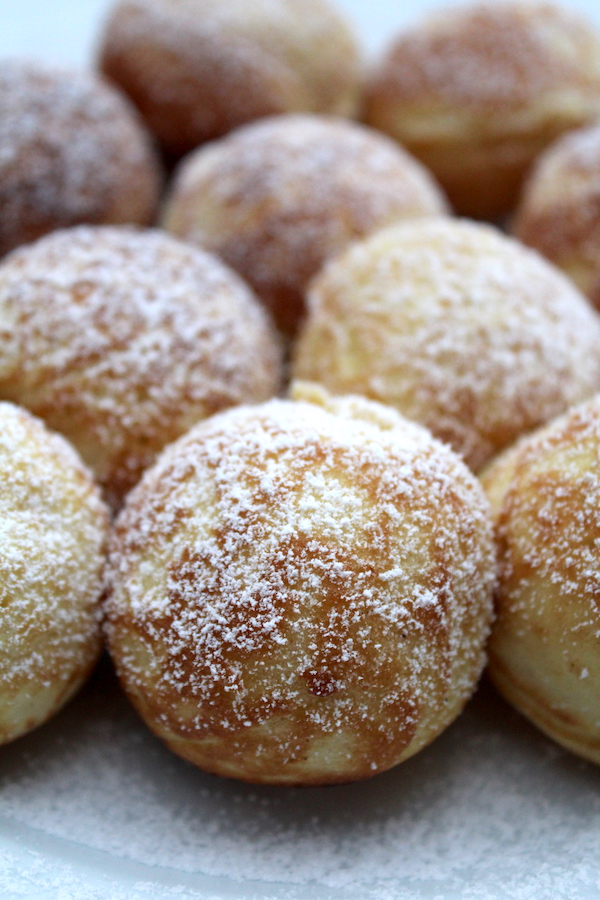
Even if you’re just making aebelskivers, they don’t have to be the same every time. Try any of these creative variations:
- Cherry Pie Aebelskivers
- Aebleskivers with Raspberry Sauce
- Chocolate Stuffed Aebleskivers
- Savory Potato Aebleskivers
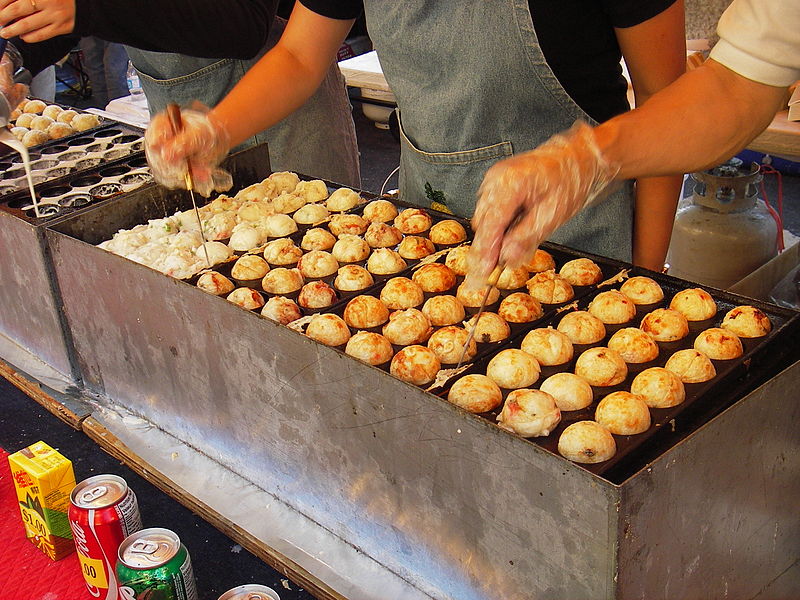
Takoyaki
Japan’s version of a round puffed snack, takoyaki are savory instead of sweet. They’re stuffed with all manner of traditional fillings including diced octopus, pickled ginger and scallions. The batter contains wheat flour and savory seasonings such as seafood stock and soy sauce and doesn’t include buttermilk like aebleskivers.
A home Takoyaki pan looks a bit different because it’s square around the edges instead of round like an aebleskiver pan, but they make the same shaped food in the end. There’s a simple takoyaki mix available here if you’re curious. For serving, takoyaki are topped with a special sauce called takoyaki sauce which is similar to Worcestershire sauce.
Here’s a simple recipe for traditional Japanese takoyaki to try in your new pan. You can also move a bit away from the traditional savory recipe and try these nutella filled takoyaki.
Poffertjes
A traditional dutch recipe, Poffertjes are a bit different than aebleskiver. They’re leavened with yeast instead of baking soda and whipped egg whites, and they’re often made with buckwheat flour (instead of plain white flour).
Poffertjes don’t get as fluffy or round as aebleskiver, and they come out more disk-shaped in the end. Here’s a basic poffertjes recipe to try in your pan.
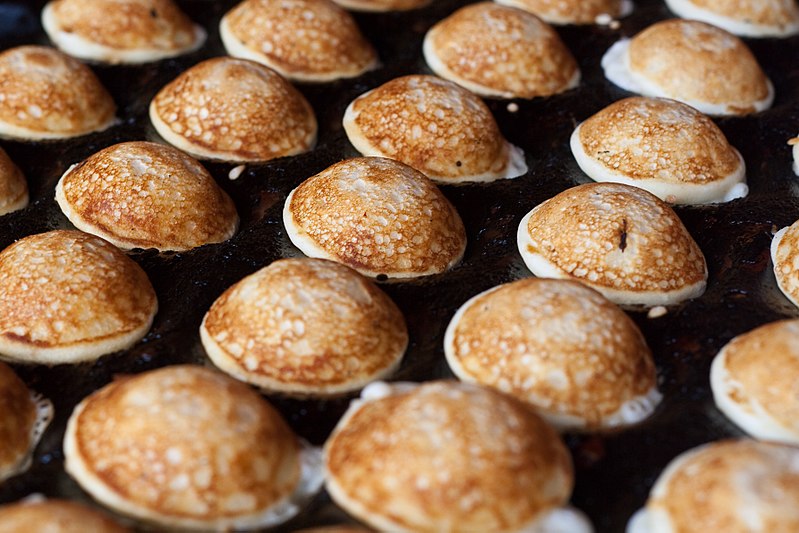
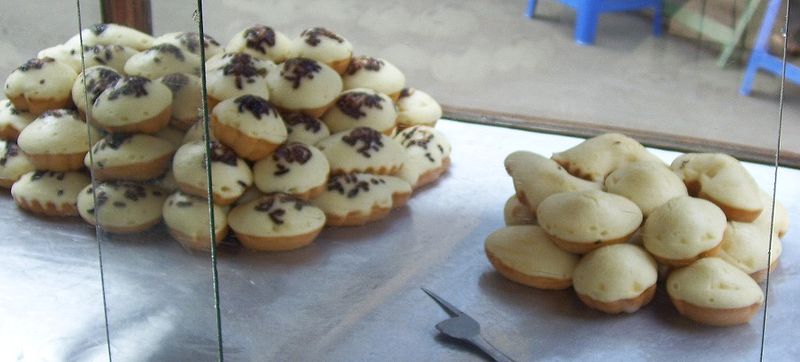
Kue cubit
Also called Indonesian Pinch Cake, Kue Cubit is a sweet cake made with white flour, milk and sugar. There are no whipped egg whites or buttermilk, so the cakes are more cake-like than Aebleskiver.
They’re commonly sold by street vendors near schools since they’re popular with children.
Here’s a basic Kue Cubit Recipe.
Serabi or Khanom khrok
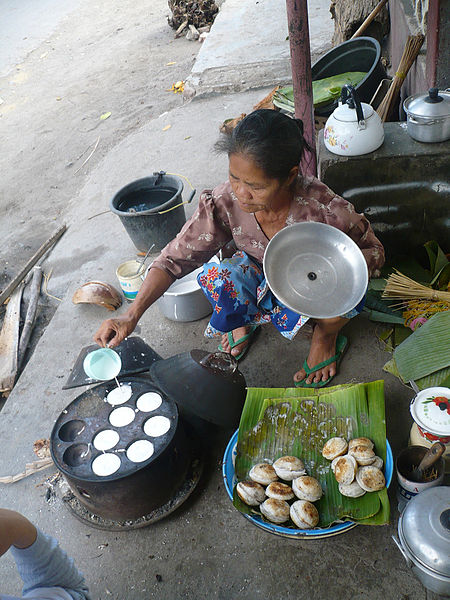
Made throughout southeast Asia, many different countries have their own variation of these sweet coconut and rice pancakes. In Thailand, they’re known as Khanom khrock and in Indonesia, they’re called Serabi.
They’re all made with some combination of rice flour and coconut milk or shredded coconut, and sometimes topped with a coconut sugar based syrup. Here’s a recipe for the Thai Version Khanom Khrok.
Neyyappam
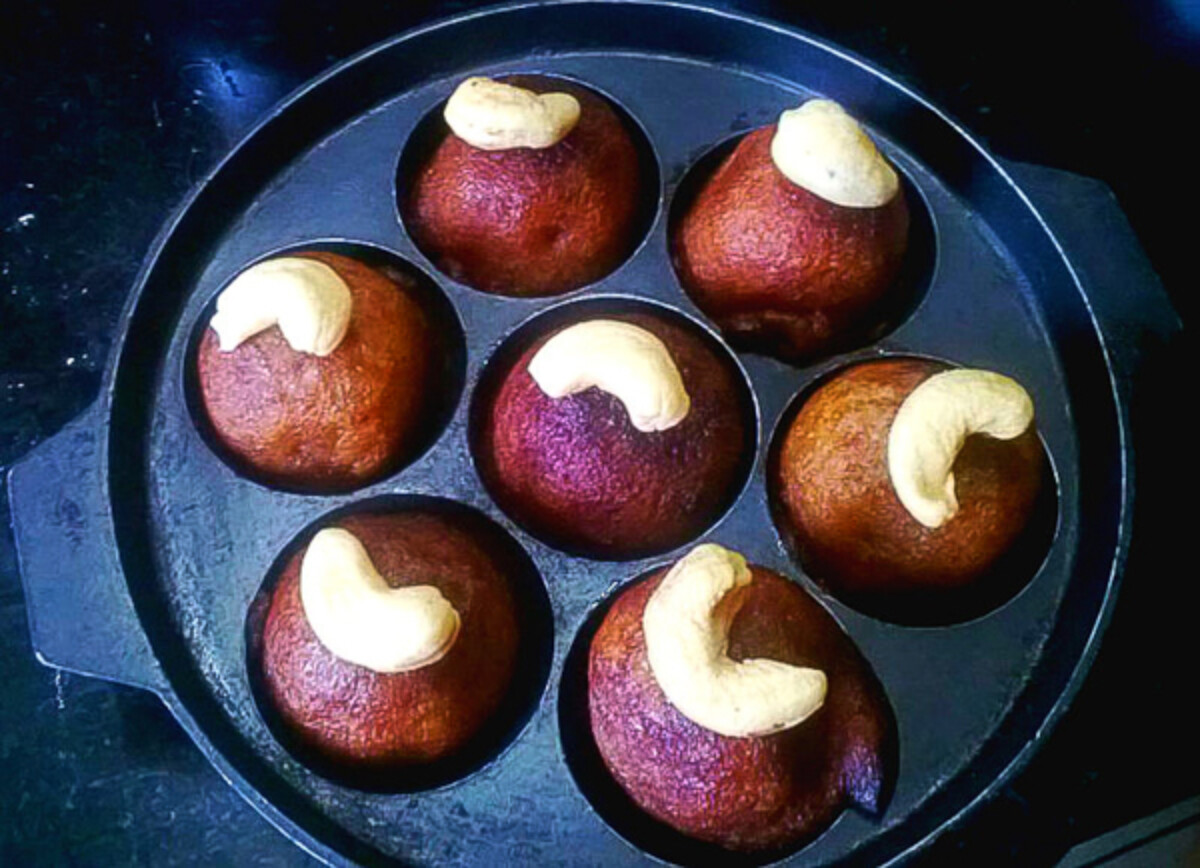
Similar to the Serabi made in Indonesia, Neyyappam are made with rice flour and coconut. While Sarabi uses coconut milk, these use pieces of coconut fried in ghee (clarified butter).
Sometimes a banana is mashed into the batter, and that variation is called Unni appam or Guri appam. This recipe for Neyyappam looks particularly delicious.
Paddu
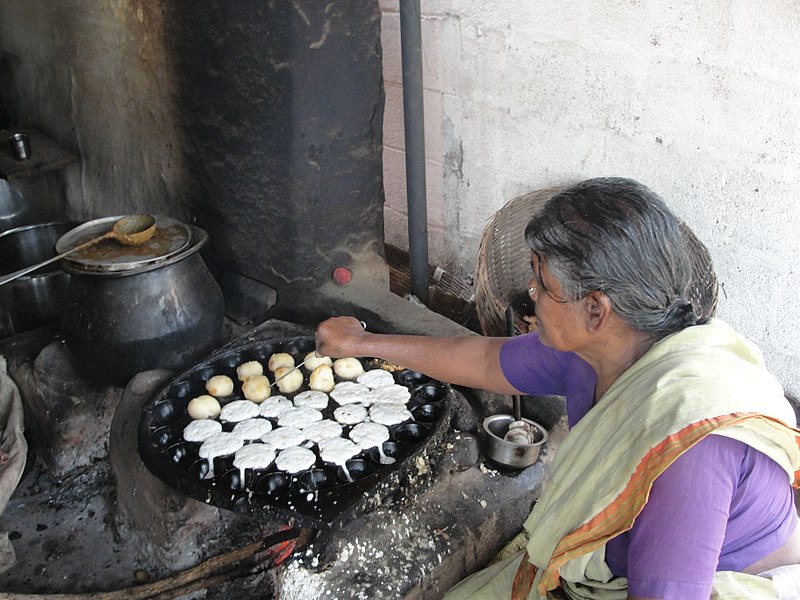
This Indian dish is made on the same type of pan as aebleskivers, but that’s where the similarity ends. The batter is made from rice and lentils rather than flour, and they’re dipped in a savory dipping sauce made from yogurt, onions and herbs.
These have a lot of local names, and are also known as paddu, appe, guliappa, gulittu, yeriyappa, gundponglu or ponganalu. The various names make it hard to really pin down a single recipe, but here’s a paddu recipe to get you started.
Mini Dutch Baby Pancakes
The little depressions in an aebleskiver pan make perfect teeny tiny dutch baby pancakes. A dutch baby is a puffy egg-based pancake that’s baked in the oven in a cast-iron pan.
A large cast-iron makes huge dutch babies that need to be cut to be served for breakfast. We’ve taken to making them in small 4” cast iron pans for single servings, but I love the idea of using an aebleskiver pan to make pop in your mouth-sized dutch babies.
Here’s my dutch baby pancake recipe that I generally make with an extra-large cast iron that I keep just for that purpose. It’ll make several batches of mini dutch babies in an Aebleskiver pan. They cook faster in the mini version, about 8-12 minutes depending on how much batter you put in.
Anything I’ve missed? Leave your ideas in the comments.










.jpg)


I have a question for you. I found an old recipe handwritten by my Norwegian grandmother, dated 1954. It is for a creation called “Platte”. . . A mixture of egg, cream, milk, flour, baking powder, sugar, and butter; to be baked on your platte iron. Serve with syrup or jelly. Makes 25-30 cakes. Then there is tiny note written by my mother (her daughter) which says “Cast iron pan with small circles in it for individual cakes.”
Could it be referring to an ebelskiver pan? Have you ever heard of “Platte?” Where would be a good place to buy an ebelskiver pan?
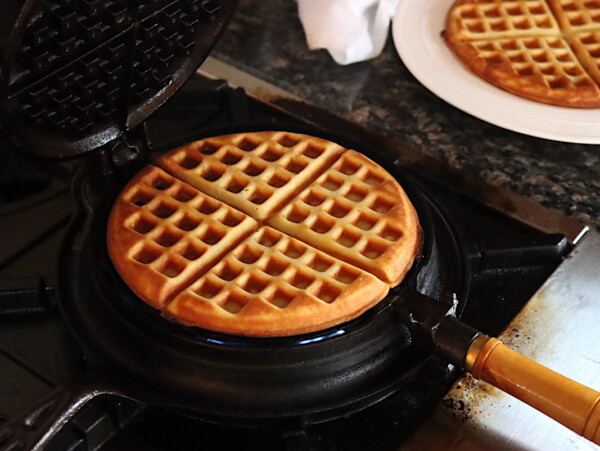
I have an antique plett pan, they’re so fun. I know just what they are. They’re basically small, silver dollar style pancakes/crepes. The pan itself has flat indentations (unlike aebleskivers which make spheres and fluffier). Here’s an example of the pan: https://www.amazon.com/Norpro-3117-Cast-Iron-Plett/dp/B0000VLYA4
Here’s a picture of what your recipe makes: https://www.castironchef.com/oles-swedish-pancakes
Enjoy!