
Affiliate disclosure: This post may contain affiliate links. Please see our Privacy Policy.
Abandoned ducklings are unfortunately all too common, whether from domestic or wild ducks. Ducks can sometimes be unpredictable mothers, and discovering lone ducklings left to fend for themselves is a heart-wrenching experience. Their vulnerability pulls at your heartstrings, especially knowing how quickly they can become prey or drown.
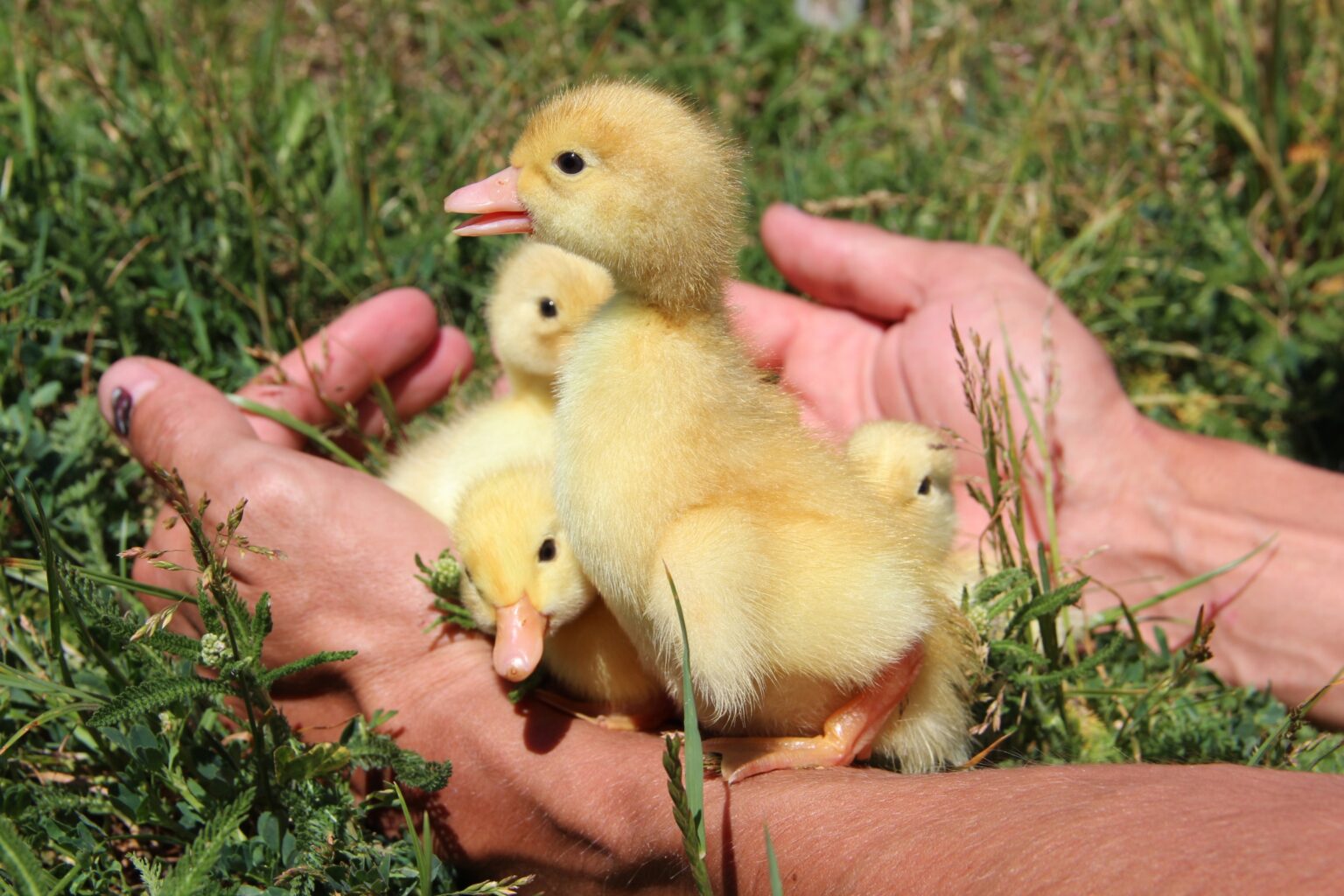
Table of Contents
Both wild and domestic ducks will abandon ducklings, and they usually don’t make it more than a day or two. Wild ducklings are vulnerable to predators and drowning without a mother to guide them. Domestic ducklings are attacked by other birds in the coop without a mother hovering over them.
Some ducklings are sometimes abandoned almost by accident.
In our case, a mother duck hatched out a clutch of 12 and stopped sitting. She still had 4 eggs left in the nest, but something told her that an even dozen was enough!
A young (1-year-old) duck without a nest of her own decided to sit on the nest once their mother had left, and managed to hatch out 4 more ducklings from the surplus eggs they’d abandoned. Unfortunately, she wasn’t very interested in mothering them.
A duck that already has babies will often adopt abandoned ducklings, so long as they’re about the same age as her own. Perhaps her mothering instinct is strongest right after her babies hatch, or perhaps she just can’t tell them apart.
With a 2+ week difference in ages, the current mothers are not willing to take on extra responsibilities.
Not only do they not adopt the new babies, but they’ll actually go out of their way to attack and try to kill them. Two ducklings were found dead, and two more were hiding in a corner trying to avoid the cranky group of mother ducks.
Time to intervene and hand raise some fluffy cuteness, but what to do with abandoned baby ducks?
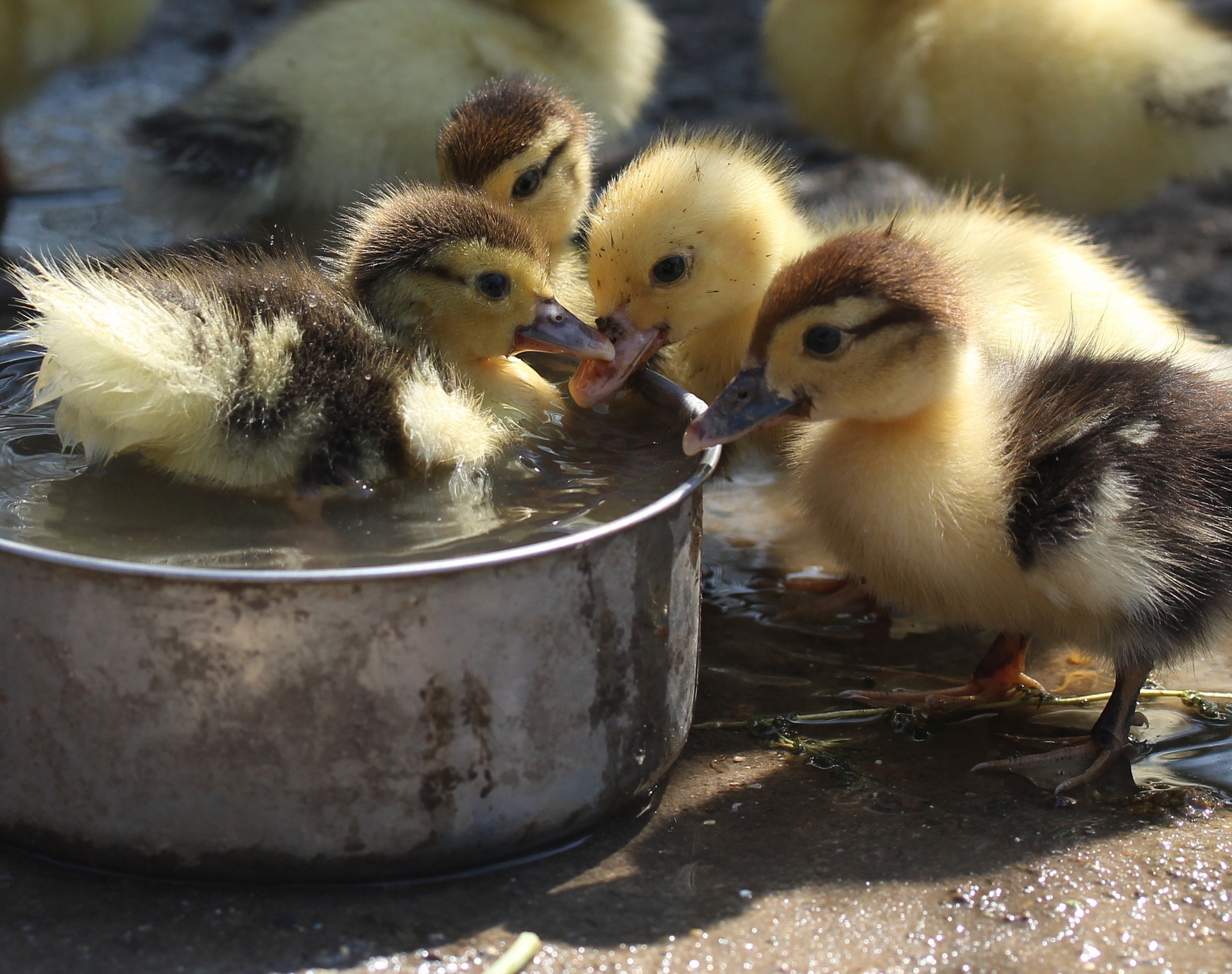
How to Care for Ducklings
So long as they’re well cared for, ducklings can be re-introduced back into the flock with no issues.
It takes about 6-8 weeks for ducklings to become self-sufficient. If you’re caring for abandoned ducklings, make sure you plan on housing for at least that long.
Housing
When it comes to housing, simplicity works wonders, but safety is key. Ducklings need a space where they can feel secure, warm, and dry. A cardboard box will do in a pinch, but we quickly learned that something a little more durable, like a Rubbermaid tote, works much better. Ducklings are surprisingly messy, and a tote keeps the bedding in place, making cleaning much easier.
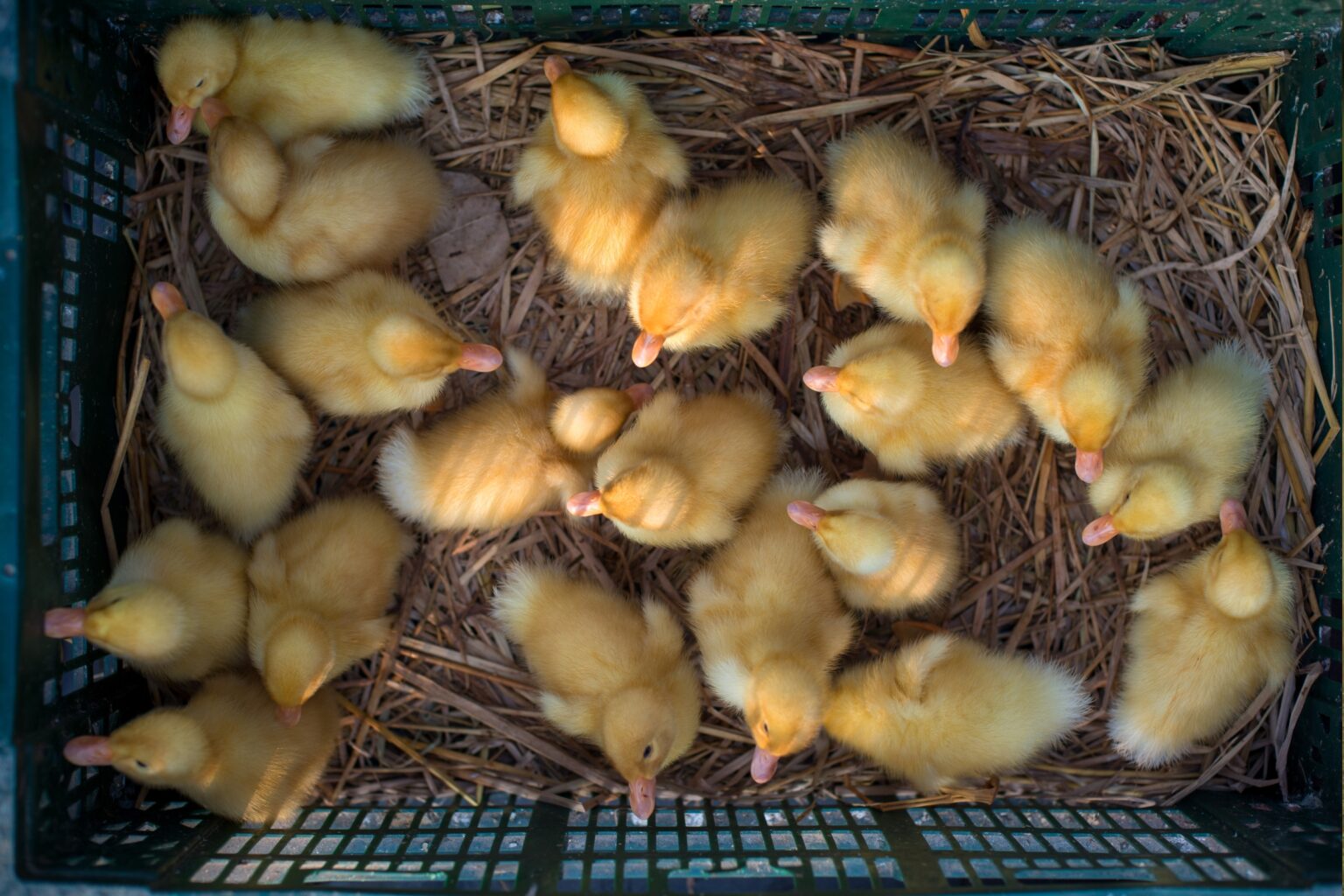
Now, when it comes to bedding, this is where we really learned the hard way. Ducklings are naturally wet creatures, especially when they splash around in their water. They’ll get everything soaked in no time! Make sure you provide a good, thick layer of bedding—about 1-2 inches deep—to soak up the moisture and keep them dry and warm. Straw, hay, or dry grass work best, but you can also use leaves. The key is ensuring the bedding is absorbent enough to keep them from getting cold and wet.
Paper towels are also an option for the first few days, especially for cleaning up, but be ready to change them daily since they get soaked quickly.
Feeding Ducklings
When it comes to feeding ducklings, the most important thing I learned is that they’re hungry little creatures, and their nutritional needs are different from chickens.
While chicken feed can work in a pinch, it’s not ideal since it’s typically lower in protein. Some commercial chicken feeds are sometimes medicated, which can be harmful to ducklings, so if you find yourself in a situation where chicken feed is all you have access to, make sure it’s unmedicated.
That said, the best option for ducklings is a high-protein game bird starter crumble or a mixed flock starter crumbler. This feed is formulated to meet the specific needs of young waterfowl and will give your ducklings the protein and nutrients they need to grow strong and healthy. It’s a great choice, and I found it made a huge difference in the growth rate and overall health of our ducklings.
Ducklings should have free access to food and water at all times. Set up a feeder that they can access throughout the day, so they can nibble whenever they’re hungry. They’ll regulate their own intake, and as long as the feed is available, they’ll be just fine.
In addition to their main feed, ducklings enjoy snacking on things like chopped greens, bugs, and even small pieces of fruit, but keep those treats in moderation. A little greenery like dandelion leaves or kale can be a great addition to their diet and give them some extra nutrients, but their main food should be the high-protein crumble to ensure they grow properly.
Water (& Drowning Concerns)
Don’t forget water—ducklings are obsessed with water, and it’s essential for digestion and keeping their little bodies hydrated. Make sure they have access to clean water at all times. I found it was helpful to keep their water in a shallow dish or a small trough, so they could drink and splash around without making too much of a mess, though they always seemed to find a way to get wet no matter what!
Ducks are water-loving creatures, and they go through far more water in a day than chickens do. However, when it comes to young ducklings, water needs to be managed carefully. For lone ducklings, the water should be very shallow, and it’s important to set it up so they can’t climb into it or get stuck. At this stage, safety is key.
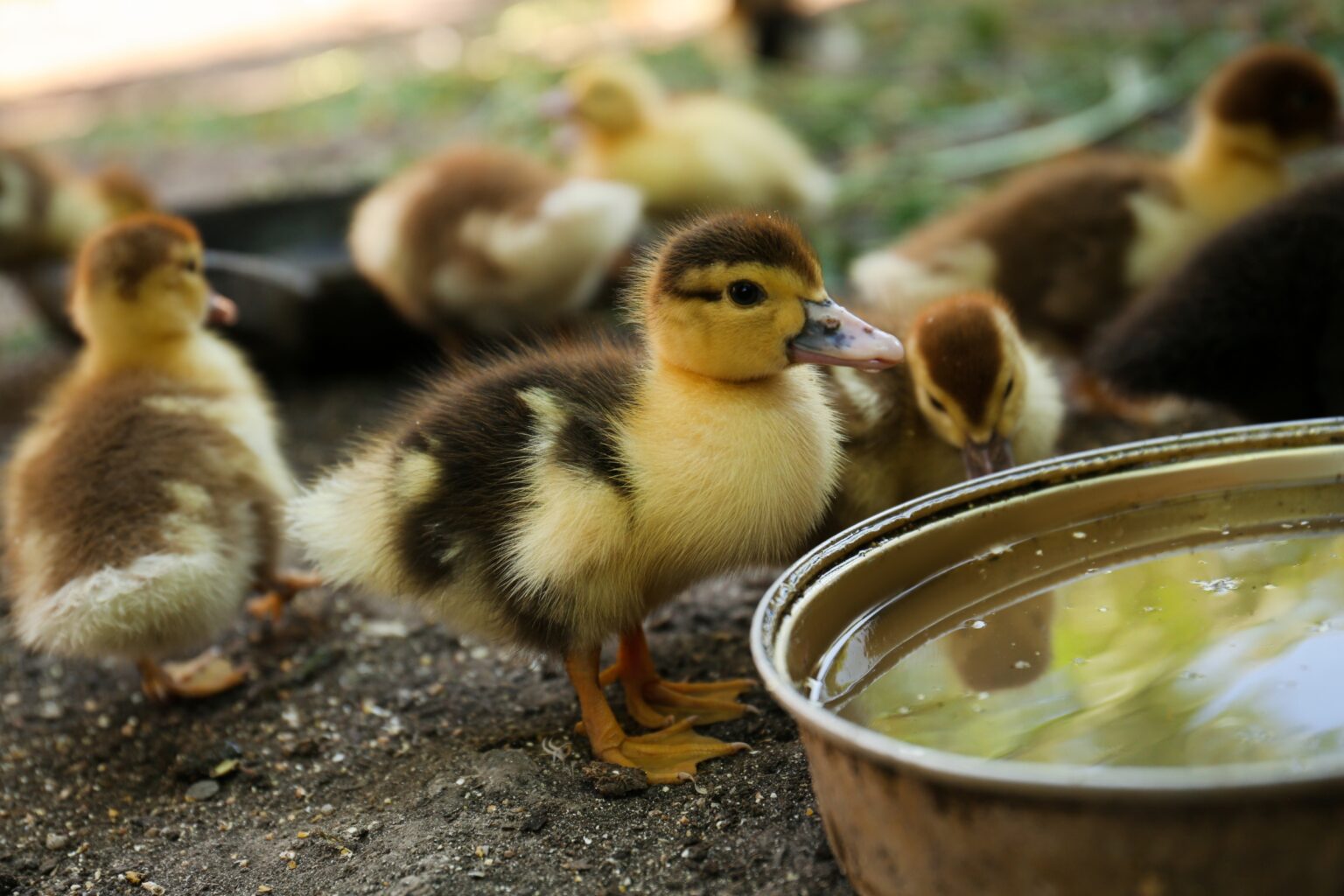
Very young ducklings are especially at risk of drowning because they don’t yet produce the natural oils that adults use to keep themselves dry and buoyant. While they may get a small amount of oils from their mother through contact, this doesn’t provide the protection they need for swimming. Even though a mother duck can take her ducklings for brief swims, she knows their limits and ensures they don’t get too wet.
For this reason, you should avoid giving ducklings access to deeper water until they’re mostly feathered in. I learned this lesson the hard way when I found our 4-week-old ducklings had become waterlogged and drowned in only 6-8 inches of water. It’s heartbreaking, and it’s one of those lessons you don’t forget.
In the beginning, their water should be just enough for drinking and dipping their beaks in—nothing deep enough for them to crawl into or swim in. As they grow and start developing their natural oils and strength, you can gradually increase the water depth, giving them more freedom to explore safely.
Remember, as much as ducks love the water, their safety should always come first. Keep water shallow and supervised until they’re ready to fully enjoy it.
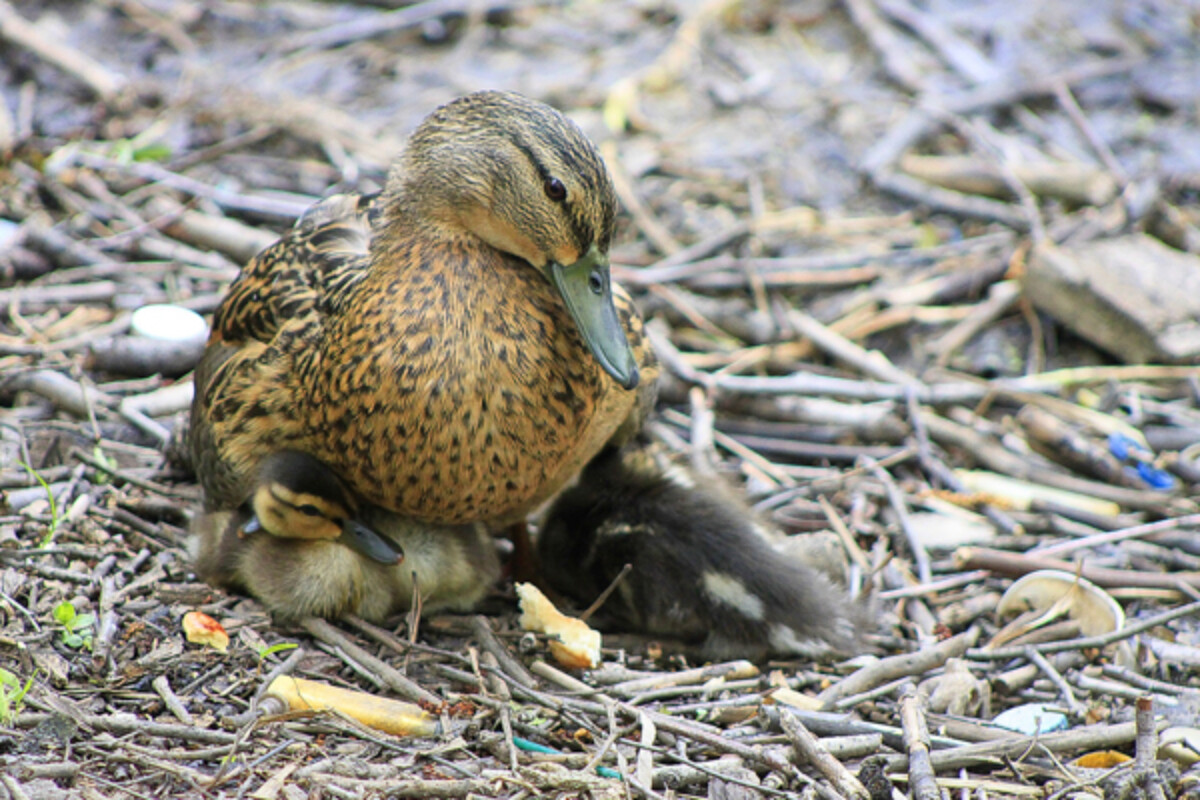
Heat
You’ve probably read all over the internet about heat lamps being a must for ducklings, but here’s the thing: they don’t always need them. We learned that lesson after our first year brooding ducklings. In those early days, I had the heat lamp going around the clock, making sure they stayed warm, but that heat lamp quickly drained our off-grid homestead’s batteries. After a few cloudy days, we were left with no power—and worried ducklings.
Since then, we’ve brooded ducklings without the need for a heat lamp, and I can confidently say, it works just fine. Over the years, we’ve raised ducklings in a box in the garage throughout June, July, and August—and we’ve never lost a single one. The warmth of the garage, combined with good bedding, was all they needed to stay comfortable and happy.
That said, if you have access to power and want to provide a little extra warmth, a heat lamp could be a nice touch. Plate style heaters that the ducklings walk under are much safter than bulb style heaters (which can be a fire hazard), and they’re what I’d recommend.
In a pinch, you can use a hot water bottle, wrapped in a towel and replaced frequently. It’ll keep them warm in chilly weather, provided they in an indoor location with protection from the elements.
Time and Care
Ducklings are fast growers! Depending on the breed, they’ll usually reach full size in about 8-12 weeks. But during those first six weeks, they’ll need your attention and care. They can’t be reintroduced to the flock until they’re big enough to hold their own, which means you’ll need to keep them safe and fed until they’re ready.
For us, the time spent brooding those first few weeks became an unforgettable bonding experience. I can still picture their little faces peeking up at me, their tiny beaks chirping as I filled their water bowl. It wasn’t just about keeping them alive; it was about giving them a strong, healthy start in life.
Once they’re ready, the ducks are integrated into the flock, and you get to watch them thrive.













HI Ashley, so today I got a phone call from my husband and a duckling had been sitting outside, almost stepped on by several people all morning. Obviously it was abandoned, I’m guessing because it has either a deformity (born with) or a broken leg. Doesn’t seem to be in pain, though I probably will still take him to the vet on payday. I took the duckling home and now have it in a large sized box with a 2 inch bowl of water. What should I feed the duckling? and should I let the duckling run freely sometimes? it wont seem to be drinking the water it has, I even have a dropper and it wont drink out of that when I try… any suggestions?
-Olivia
Ducks drink like crazy, and if it’s not drinking then I’d say he won’t make it long. I kept a duck with a broken/deformed leg for years, and it healed (to where he was able to walk well) after several weeks in a tote in my garage. But if he’s not eating/drinking, you may be out of luck. I hope it works out for the little guy, best of luck!
Well, much has happened since my post last night. The “juvenile” duck we saw was actually a mother and a breed i’d never seen before. Definitely not a mallard which is the common duck type around here. Anyway, the mother was in distress because her ducklings had fallen into the sewer! I pulled the sewer cover and my wife was able to kneel down into the sewer and retrieve the ducklings. There were 10 of them! We put them all in a box and took them to the vicinity of the mother. As soon as they were out of the box they ran to their mother and all was well. The only concern is that we don’t live near a significant water source. Hopefully, she’ll be able to navigate the situation. Thanks anyway!
Awesome, I’m so glad this ended well for everyone!
Today we discovered a juvenile duck in our yard and it is walking back and forth between our yard across an alley to our neighbor’s yard. It’s clearly not full grown as it has a bit of white-ish fuzz on the back of it’s head. It doesn’t seem to know what to do but since we live at least a mile from any significant water source we assume the duck flew to this location. Should we just leave it and it will eventually fly off? Is this duck just hanging out right now and waiting for an opportune time to leave? Or is it completely lost without it’s mother and will die? We contacted the city but it takes a day before the respond. Thanks for your help.
Hi, thanks for your advice. I rescued 2 wild ducklings 3 weeks ago. The mother had 7 originally, 5 disappeared thanks to foxes I think, then she abandoned the final 2. Seconds before a farm cat got them, we picked them up, and have had them in our kitchen, in a cat carrier for nearly 3 weeks. It’s been fun and an adventure. They take a lot of tlc, but are extremely cute. They poo very often!, and I change the bedding 3 times a day. Their favourite it definitely lettuce, but cucumber is also popular. All has to be chopped up fine, but it gets munched very quickly. Protein pellets soaked in water seems popular too. They have a swim for about 1-3 minutes outside, then you can see them wanting to get out, so they come back to the warm kitchen. I give them a little rub down of they look cold. They like cuddles, and also wandering around on the floor, following me, 2 /3 times a day. Kit hen towel is essential!! They have the option when older to join the other wild ducks, on the farm, or can stay on our makeshift pond if they want. Anyone thinking about ducklings, should be aware of the time and commitment, but I know they had no chance of survival without a bit of intervention…. So extremely worthwhile.
I’m so glad you rescued them. It sounds like they’re living really great lives with you!
Hi Wendy,
I recently rescued a baby mallard duck, I think its around about a week old. Ive had it 4 days now but he’s still quite afraid of me which I expected. How long did your babies take to warm up to you?
Thank you (:
Hi
Good Luck, it will be a lovely time, watching it grow and develop.
I think it ws about a month when my 2 would follow me a bit around the kitchen.
I hot through loads of lettuce and cucumber feeding them, but it felt good to know that without my help they had no chance at all.
Have fun and enjoy it.
We hand raised a wild duckling that was rescued from a dog attack. We have 4 other domestic ducks close to same age but slightly older. Because of age difference we waited until the wild duck was mature before placing him with the others. They have been together all summer now on our pond but the wild one has never been accepted. He is constantly being pecked and chased. He hangs by himself. He is put up at night in a safe coop with the other ducks. I feel sorry for him but don’t know what to do to help him. Will he ever be accepted?
Hello! I am looking for advice for how to best care for two mallard ducklings.
At our cottage, we had a mallard duck nest in a very unfortunate spot 10 feet off the ground and with multiple outdoor cats nearby. The mother left her nest with 8 ducklings but left 4 behind. We were able to hatch two, which was a huge surprise! They are now two weeks old. The attempt to reintegrate them with their mother (who has since lost all her babies) was not successful. They were afraid of her and ran away and hid under my daughter who they have imprinted on. When the mother did swim off with one, the male duck immediately started pecking at it. We have a good setup for baby ducks but would need to build a pen if we were to continue much longer.
I contacted a wildlife rescue near me and they are willing to take them but with me being a softie, I don’t know what is the best place for them. The rescue is on a small inner-city lot and the director mentioned that the ducks don’t get a pool until they are older and almost ready to be released. Until then, the ducklings are put in boxes based on size. Currently, the ducklings get out 5 times a day and do a supervised swim at least three and complain loudly when left. I know that they are wild ducks and belong with their own kind, I’m just wondering about the best timing for that. We are willing to care for them for any amount of time that would be best for them whether it be another week or until flight. Thanks for any advice!
Thanks for this information. My wife and children came across 3 abandoned ducklings near a river by our house. The thought is they are under 2 weeks old. With some help it was determined they weren’t wild and someone most likely dumped them there. We lost one within 12 hours. It was pretty lethargic and it’s head kept falling to the side and it eventually passed. We are on night 2 now. If we can keep the other 2 alive they will be heading to my inlaws farm by next weekend.
Sorry to hear that one passed away. I hope the other two are thriving!
Hi we have an abandoned mallard duckling now about 8 weeks old., she is doing well but we are wondering if she would survive if we put her in the wild.
She’ll likely migrate on her own once she can fly, so I’d let her make that choice and just put her in a place without a roof.
Trisha- we have just taken in a mallard duckling. My kids saved it when they saw it’s mama trying to drown it over an extended period of time. Our neighbours said they witnessed the same thing before my kids noticed it. She has 3 other ducklings as well which she seemed to be nurturing towards. Anyways, we now have this mallard duckling. Please share what you’ve done to care for yours. Ours seems fairly young, but seems to be able to fly. Thanks!
So my chickens were sitting on 2 duck eggs.. for the longest time it seems…. Muscovy duck eggs mixed with mallards… they both hatched but one was pecked to death.i got to the other one just in time, though it had a head wound… I think it will be okay but I don’t know how to care for it properly. We have other ducklings and mamas but they are a week and a half older than this little one. Any suggestions?
We’ve kept them in a cardboard box in the house until they were 3-4 weeks old. At that point, they can be slowly re-integrated.
I’m raising domestic muskovies. My drake was killed before the hens hatched out any eggs. I’ve got 15 ducklings being shipped in to restore the flock. Is there a chance the hens might raise the new ducklings, or am I stuck with using a brooder until they are old enough to join the flock?
There is a chance…but in my experience, they’re more likely to kill them until they’re at least 4ish weeks old.
Dear Ashley, we have found and took in four abandoned wild duck eggs. Three just hatched today! They are snuggling in with our newly hatched baby chickens right now. What can we do to best take care of these wild ducklings? We live off in the woods, surrounded by ponds, lake, wildlife and a lot of greens, both planted and wild. Do the tips you listed here apply to these wild ducklings also? I’m wondering if we can prepare food purely out of natural forest ingredients instead of buying it anywhere. I also wonder when can I introduce them to water ponds and how to monitor that etc. We have no experience with ducks at all, least of all wild ones, and would be so grateful for your thoughts on this. Thank You!
You might have trouble providing them with enough food in captivity unless you give them a large area to forage (but then without their mother as a guide they’re more at predator risk). Domestic ducks eat a lot more than chickens, and wild ducks are often fully grown and flying at 6 weeks…so that’s a lot of food. They’re moving and foraging all day long, led by their mother. If you’re trying for natural forest ingredients, lots of tender wild greens (goosefoot, chickweed, etc), pond plants, and a boatload of slugs, snails, and worms might work, but you’ll have to see how they take to them.
As to exposing them to the water, that’s tricky, as without their mother to guide them out after a while they’re liable to get waterlogged and actually drown as their down will get soaked after a while. Their fluff is waterproof for a time, but not nearly as much as adults.
I really hope it works out for you, best of luck!
HI, I just came home and a duck is in my pool with 10 babies. now today I have 2 that are apparently abandoned, the mom hasn’t been here all day. I hopefully catch them and put them up for the night in my garage. My question is once they get bigger can I put them in with my chickens?
Those babies may not be able to get out of the pool, and that may be why they’re left in there. Left long enough they’ll become waterlogged and drown, so if they’re not able to climb out on their own maybe help them. If they’re wild ducks, I’m not sure how they’d take to being with chickens (or if they’d just fly away once they can). For domestic ducks, we kept ours with chickens without issue so long as you’re careful about introductions (adult chickens can and often will just kill young birds, chicken/duck or otherwise, so I’d wait until they’re a bit more grown).
My daughter had 4 ducks up to last year. Two of them got killed by a predator and the third died just a few days ago. What would be the best way to introduce the lone duck to other ducks? Also I was wondering if perhaps if it could be taken to a lake or pond as to see if it could survive on its own.
Was your daughter providing food and shelter for the ducks? If so, I’m not sure how well the duck would do in the wild by itself. When introducing other ducks, it depends on how that’s being done. Do you plan to bring other ducks to the property and if so will they be ducklings or full grown?
We were watching a mama duck and her ducklings while we were fishing and as we were leaving and it was dark we realized that the chirping sound we had been hearing was a duckling. We went looking for it and it was hiding all alone chirping. When it saw our flashlight it came closer but was still too scared. We payed duck sounds on the phone and it walked right up to my hand and I was easily able to grab it without any protest or crying. It hid in my hands and cried whenever it wasn’t in anyone’s hands. It’s currently trying to jump out of the box to get to me. I’m not sure what to do?
If you are not able to care for it, then you can find a local animal sanctuary that might be able to assist.
MOTHER DUCK ABANDONED HER 11 DUCKLINGS 2 WEEKS AFTER HATCHED. MOTHER PICKED OUR ENCLOSED COURTYARD AT WORK AND THERE IS NO WATER SOURCE. OUR AGENCY IS CLOSED DUE TO COVID 19 BUT I COME HERE DAILY TO PROVIDE WATER AND CRACKED CORN. SO FAR- THEY ARE SURVIVING TOGETHER. THEY ARE 4 WEEKS NOW- AND I HAVE A SMALL POOL SET UP WHICH THEY ARE ABLE TO GET IN AND OUT WITH NO PROBLEM. MOTHER DUCK FLEW IN YESTERDAY BRIEFLY AND ALL 11 DUCKS RAN TO HER AND SHE ONLY STAYED A MINUTE AND LEFT AGAIN. I HAVE 2 QUESTIONS: ONE- WHY DOES MOTHER DUCK LEAVE AND COME BACK- AND SECONDLY- WE HAVE A FEW CROWS THAT HANG OUT- AT WHAT AGE WILL THE DUCKLINGS NOT BE PREY TO THE CROWS. THE ONLY WAY OUT FOR THE DUCKS IS WHEN GAIN THEIR FLYING SKILLS TO GO OVER BUILDING WALL SO I EXPECT THEM TO BE HERE FOR AWHILE. THANK YOU
Please answer this question as we have a very similar problem too
Hi Mary, you can see my response to Mary’s question.
I am not certain why the mother is leaving and coming back. As far as the ducklings, they should be full grown at 8 to 12 weeks. Once they are full grown they should be safe from the crows as they generally only attack ducklings and not adult birds.
I found an abandoned baby Mallard duck. Appears to be maybe about a week old. I brought it home and have been feeding it chicken mix from the local feed store. However, I’m worried that I won’t be able to care for it for another 6 weeks until it’s old enough to be safely released. Are there any sanctuaries k cam bring it to? I’m located in the Chicagoland area.
I am not familiar with your area but a quick Google search of animal sanctuaries in your area should give you the answer.
I have a couple, also rescued. Now that the weather is wet, is it ok for them to be out in it? Think they’re bored in the kitchen!
Hi Vicki. It depends on their age. It takes about 6 to 8 weeks before they are self-sufficient.
Hi, I rescued a single duckling today that I found drowning in a canal near me. It was alone and when I found the mother with other ducklings, the mother swam off despite me placing the duckling very close to her and allowing space for her to approach. I’ve since brought it home and am caring for it as best I can. Due to the current situation with Covid-19, wildlife centres aren’t taking any animals, so at least for the time being I need to care for the duckling. I’m anxious that by looking after it, the duckling will imprint onto me and it won’t be possible to integrate it back into the wild. Do you have any information regarding this?
I’ll start by saying I’m not an expert on wild ducks, since all my abandoned ducklings were domestic ducks rejected by their mothers. That said, I did have a the duck’s I’ve had imprint on me abandoned me within seconds of seeing their own kind. I’d tend them to adulthood, and they’d follow me like a dog (even coming when I called) and then literally as soon as they catch sight of other ducks it’s like they’ve never met me. I wouldn’t worry too much about it not being able to be released again, ducks know they’re ducks and adapt readily.
My duck is down to her last duckling and I have taken it upon myself to care for it as it’s sibling was killed just last night. It is about 5 weeks old already. I separated it from its’ mother yesterday and closed up a stable for them today. When I went outside to reunite them earlier, it was like she didn’t even recognize her baby, it was heartbreaking. If I put the baby in a stable and coax her in there, do you think she will try to hurt it?
If she didn’t immediately recognize it and try to protect it, I would worry. I’ve watched ducks kill unprotected ducklings in minutes, in my case it was another rival mother duck and their actual mother wasn’t tending them. Literally pecked it to death before I could run the 30 feet to where they were to save it. Really heartbreaking…
Personally, if she’s not devoted to the one I wouldn’t give it back to her.
My sister has a duckling in her pool. The mother has abandoned it. She is feeding it mealworm, grass, peas, and grass. Problem is we can’t get it out of the pool to take it to the local wildlife sanctuary. It starts to dive deep and we are afraid it will drown. It won’t get out of the pool without its mother, but she hasn’t returned in days. There is a ramp for it to get out. How can we catch it to take to the sanctuary?
That’s really strange, usually, ducks come out periodically…Ours that drowned did so after a few hours, so clearly this one has some level of waterproofing on their feathers and is doing something to stay buoyant and waterproof if it’s been days. My best suggestion would be either floating a few pieces of wood in the pool to give the duck a place to rest, or if you’re really intent on the sanctuary, try using a pool net. Good luck!
The same thing happened to us just yesterday! We managed to get the little guy out with a pool net and made him a little enclosure with a bowl of water and a bowl of mealworms and grass but really don’t know what else to do. How did your little duckling fare and do you have any more advice?
Hello. I’m glad I found your blog post. We lost a mother duck before her babies hatched, and i am wondering if you’ve ever had luck hatching the eggs. We live off grid as well so a heat lamp is not an option. They still have about 10 days left of incubation and I’m not sure if they are even still alive. We’ve been keeping a hot water bottle over them at night and moving them to the green house during the day.
Thanks for your time.
-Zac
You’re doing exactly what I’d suggest lacking electricity. If you did have a small amount of electricity, we’ve used this brooder plate with good success too. Unlike a heat lamp, which is around 250 watts, this thing is only 25 so it doesn’t kill our off-grid system.
The other thing that duck eggs need is humidity, since the mother gets her breast feathers wet occasionally while brooding. Put a tiny bit of water on your fingers and sprinkle them each day and that’ll help. They’re supposed to be turned each day too…
Hatching duck eggs is tricky they say, but you might just get lucky though. We had a mother reject one duckling once. We took him and put him in a tote in the garage, along with an unhatched egg he was huddling on. The joke was that egg would keep him company. He sat on the egg, and about 10 days later, he had a friend in there. We didn’t turn it or tend it in any way, and all it had was the warmth of another newborn chick.
Good luck, I really hope your brood makes it.
Thank you! We’ve been turning them every few hours. (Perhaps not necessary) and I heard about humidity so I have a moist paper towel sitting over some of the females feather that are still covering the eggs. Perhaps I’ll have good news for you in about 2 weeks.
I really hope so. Crossing my fingers for you!
Well Zac, what happened?
We have a wild musk ivy duck mom who let her 2 day old babies to a dock on our canal and 4 of them ended up in the water chirping their little heads off. We got them out and they’re back with mommy but WHY would she take them there?? We might not be there next time to save them!!!
There really is no way of knowing why she would have taken them there. Thankfully you were there to rescue them.
It’s instinctual for the parents to lead ducklings to water to avoid predators. Swimming pools or bodies of water without a gently sloped ramp or shoreline are death traps
Will mom duck remember her babies once we reunite them after about 6 weeks?
Did the mother abandon them? What was the reason for separating them?
No the mother did not abandon them. The drake was trying to kill them and had success in killing one and then the neighbors dog killed one. We captured the last 5 and now have them in a pen in our shop so nothing can get to them. They are about 8 or 9 days old and have been away from the mom for 7 days today. The mom went crazy for the first day. We didn’t know if we should have put the mom with them or let her go back to our pond. She has not come looking for them for the last 4 days and the babies seem to be doing well. We put them in a pool 3 times a day to let them swim and get exercise. Any suggestions on what we should do. Also, when should we release them back to our pond. The pond only has the mom and the drake and fish. Thank you.
I probably would have put mom with them but they should be ok without her. Now that you have separated them you will probably need to care for them until they are self-sufficient. At that point, you would just want to reintroduce them to the other ducks in the same manner as you would any other new animal. I would initially place them in the area but be sure that they are protected in case the drake or the mother tries to attack them and gradually introduce them back in.
Thank you for your advise.
You’re welcome.