
Affiliate disclosure: This post may contain affiliate links. Please see our Privacy Policy.
Abandoned ducklings are unfortunately all too common, whether from domestic or wild ducks. Ducks can sometimes be unpredictable mothers, and discovering lone ducklings left to fend for themselves is a heart-wrenching experience. Their vulnerability pulls at your heartstrings, especially knowing how quickly they can become prey or drown.
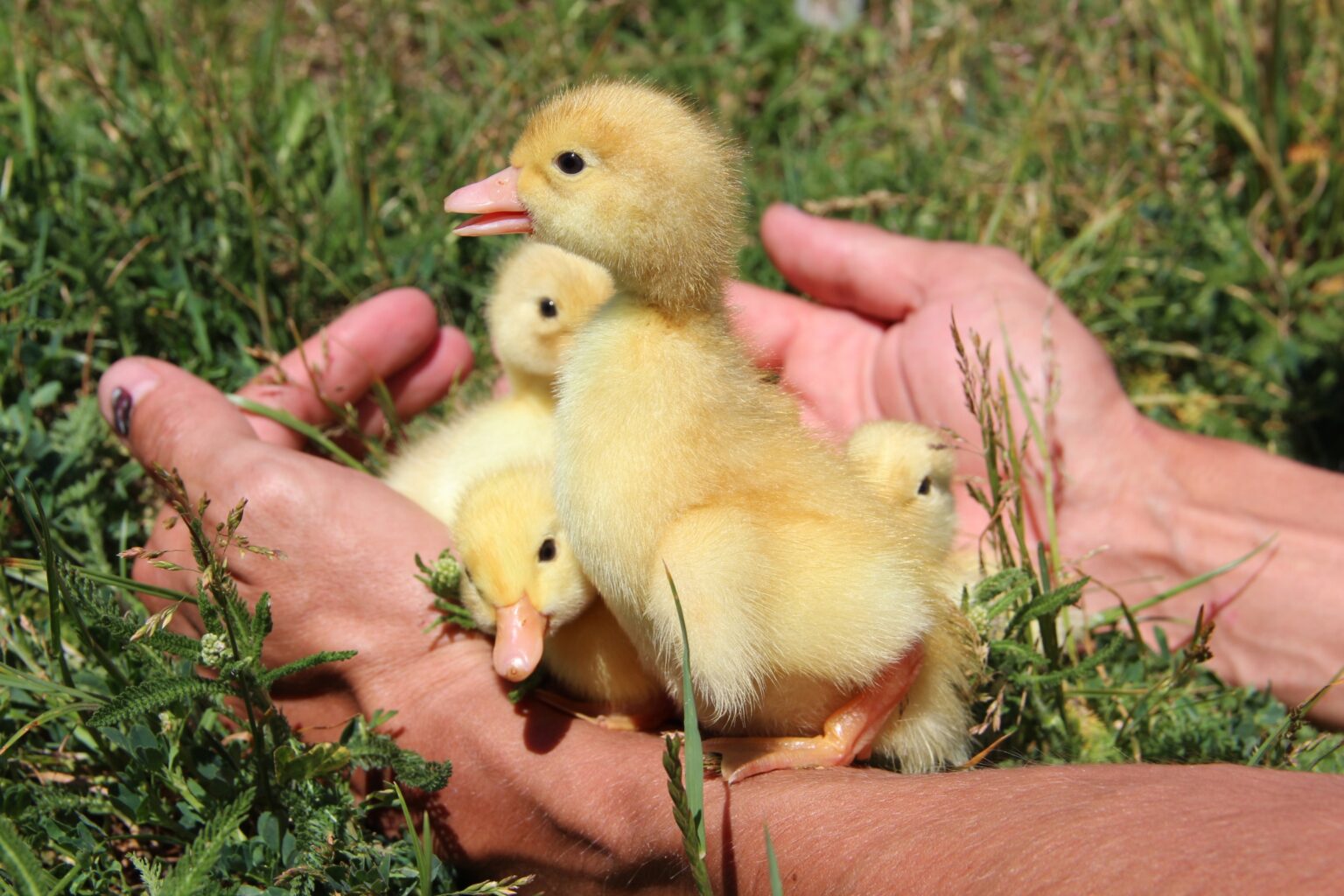
Both wild and domestic ducks will abandon ducklings, and they usually don’t make it more than a day or two. Wild ducklings are vulnerable to predators and drowning without a mother to guide them. Domestic ducklings are attacked by other birds in the coop without a mother hovering over them.
Some ducklings are sometimes abandoned almost by accident.
In our case, a mother duck hatched out a clutch of 12 and stopped sitting. She still had 4 eggs left in the nest, but something told her that an even dozen was enough!
A young (1-year-old) duck without a nest of her own decided to sit on the nest once their mother had left, and managed to hatch out 4 more ducklings from the surplus eggs they’d abandoned. Unfortunately, she wasn’t very interested in mothering them.
A duck that already has babies will often adopt abandoned ducklings, so long as they’re about the same age as her own. Perhaps her mothering instinct is strongest right after her babies hatch, or perhaps she just can’t tell them apart.
With a 2+ week difference in ages, the current mothers are not willing to take on extra responsibilities.
Not only do they not adopt the new babies, but they’ll actually go out of their way to attack and try to kill them. Two ducklings were found dead, and two more were hiding in a corner trying to avoid the cranky group of mother ducks.
Time to intervene and hand raise some fluffy cuteness, but what to do with abandoned baby ducks?
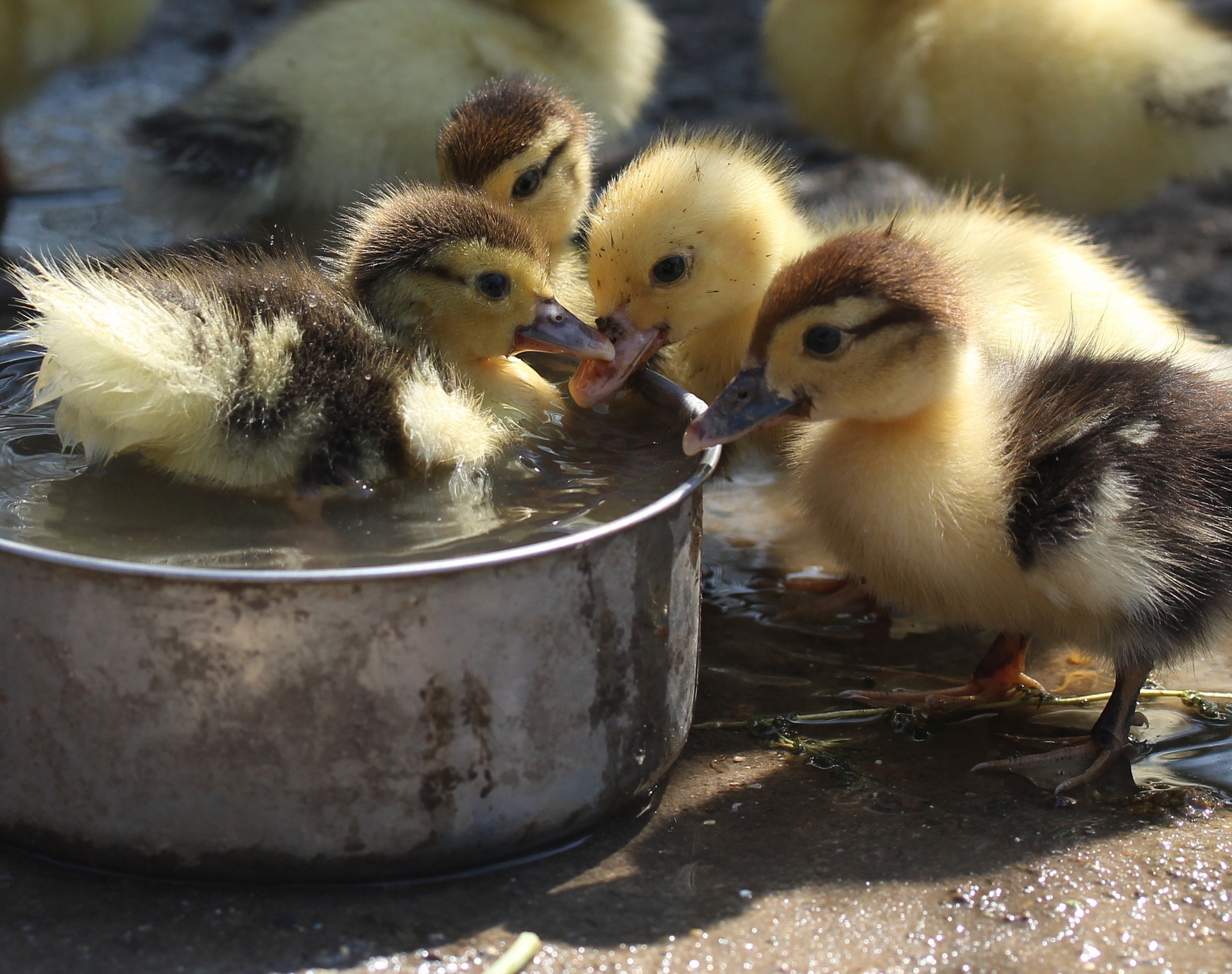
How to Care for Ducklings
So long as they’re well cared for, ducklings can be re-introduced back into the flock with no issues.
It takes about 6-8 weeks for ducklings to become self-sufficient. If you’re caring for abandoned ducklings, make sure you plan on housing for at least that long.
Housing
When it comes to housing, simplicity works wonders, but safety is key. Ducklings need a space where they can feel secure, warm, and dry. A cardboard box will do in a pinch, but we quickly learned that something a little more durable, like a Rubbermaid tote, works much better. Ducklings are surprisingly messy, and a tote keeps the bedding in place, making cleaning much easier.
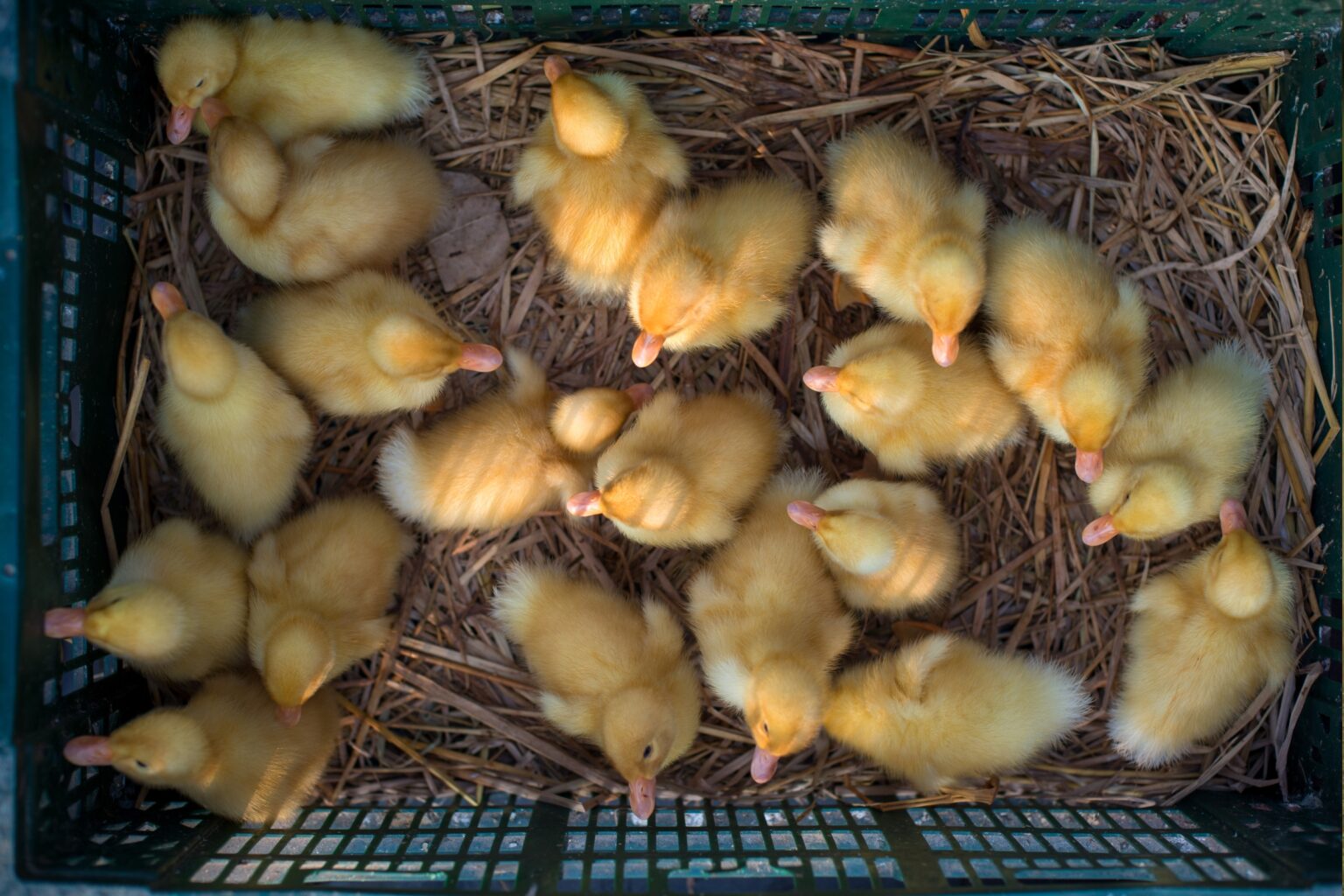
Now, when it comes to bedding, this is where we really learned the hard way. Ducklings are naturally wet creatures, especially when they splash around in their water. They’ll get everything soaked in no time! Make sure you provide a good, thick layer of bedding—about 1-2 inches deep—to soak up the moisture and keep them dry and warm. Straw, hay, or dry grass work best, but you can also use leaves. The key is ensuring the bedding is absorbent enough to keep them from getting cold and wet.
Paper towels are also an option for the first few days, especially for cleaning up, but be ready to change them daily since they get soaked quickly.
Feeding Ducklings
When it comes to feeding ducklings, the most important thing I learned is that they’re hungry little creatures, and their nutritional needs are different from chickens.
While chicken feed can work in a pinch, it’s not ideal since it’s typically lower in protein. Some commercial chicken feeds are sometimes medicated, which can be harmful to ducklings, so if you find yourself in a situation where chicken feed is all you have access to, make sure it’s unmedicated.
That said, the best option for ducklings is a high-protein game bird starter crumble or a mixed flock starter crumbler. This feed is formulated to meet the specific needs of young waterfowl and will give your ducklings the protein and nutrients they need to grow strong and healthy. It’s a great choice, and I found it made a huge difference in the growth rate and overall health of our ducklings.
Ducklings should have free access to food and water at all times. Set up a feeder that they can access throughout the day, so they can nibble whenever they’re hungry. They’ll regulate their own intake, and as long as the feed is available, they’ll be just fine.
In addition to their main feed, ducklings enjoy snacking on things like chopped greens, bugs, and even small pieces of fruit, but keep those treats in moderation. A little greenery like dandelion leaves or kale can be a great addition to their diet and give them some extra nutrients, but their main food should be the high-protein crumble to ensure they grow properly.
Water (& Drowning Concerns)
Don’t forget water—ducklings are obsessed with water, and it’s essential for digestion and keeping their little bodies hydrated. Make sure they have access to clean water at all times. I found it was helpful to keep their water in a shallow dish or a small trough, so they could drink and splash around without making too much of a mess, though they always seemed to find a way to get wet no matter what!
Ducks are water-loving creatures, and they go through far more water in a day than chickens do. However, when it comes to young ducklings, water needs to be managed carefully. For lone ducklings, the water should be very shallow, and it’s important to set it up so they can’t climb into it or get stuck. At this stage, safety is key.
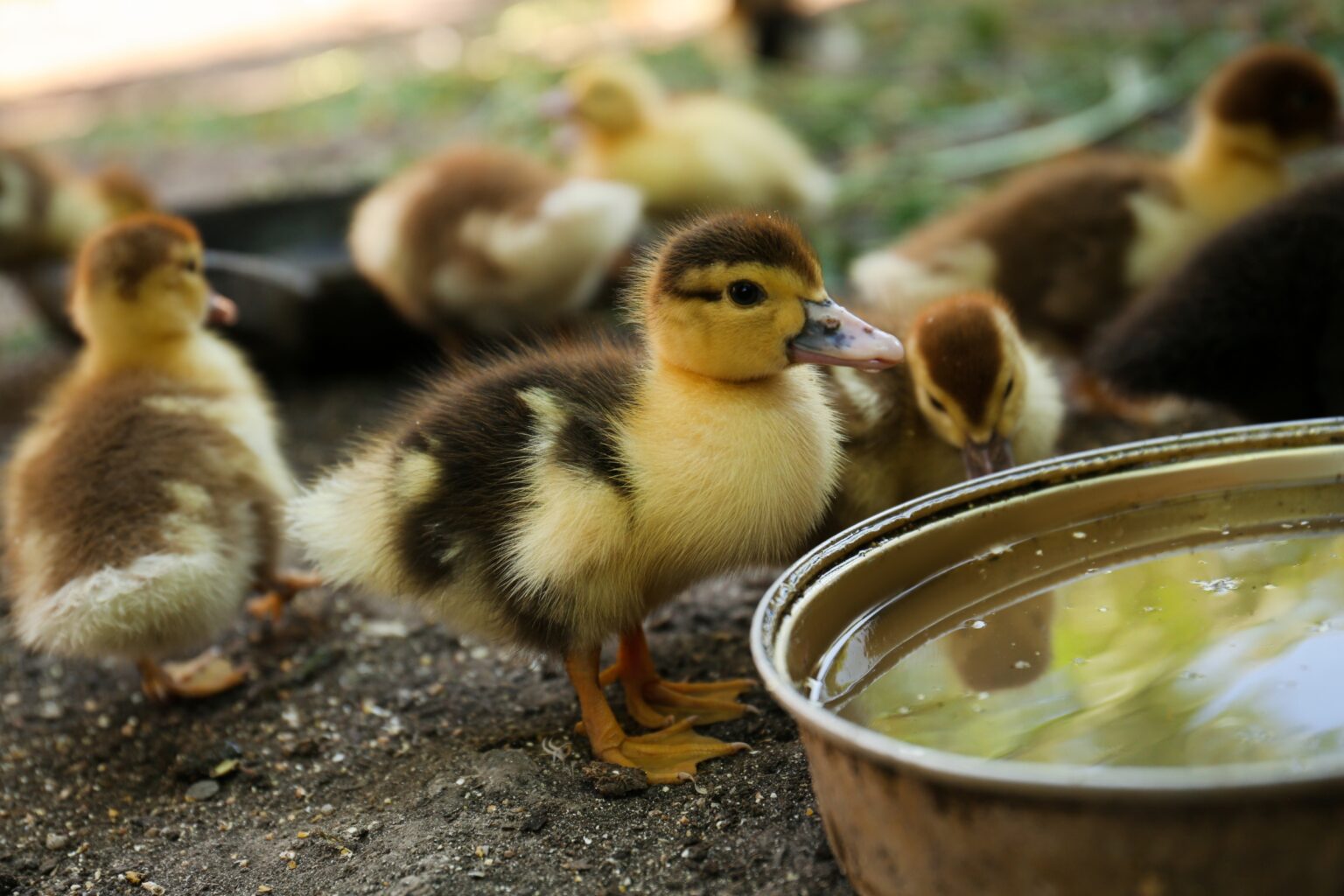
Very young ducklings are especially at risk of drowning because they don’t yet produce the natural oils that adults use to keep themselves dry and buoyant. While they may get a small amount of oils from their mother through contact, this doesn’t provide the protection they need for swimming. Even though a mother duck can take her ducklings for brief swims, she knows their limits and ensures they don’t get too wet.
For this reason, you should avoid giving ducklings access to deeper water until they’re mostly feathered in. I learned this lesson the hard way when I found our 4-week-old ducklings had become waterlogged and drowned in only 6-8 inches of water. It’s heartbreaking, and it’s one of those lessons you don’t forget.
In the beginning, their water should be just enough for drinking and dipping their beaks in—nothing deep enough for them to crawl into or swim in. As they grow and start developing their natural oils and strength, you can gradually increase the water depth, giving them more freedom to explore safely.
Remember, as much as ducks love the water, their safety should always come first. Keep water shallow and supervised until they’re ready to fully enjoy it.
Heat
You’ve probably read all over the internet about heat lamps being a must for ducklings, but here’s the thing: they don’t always need them. We learned that lesson after our first year brooding ducklings. In those early days, I had the heat lamp going around the clock, making sure they stayed warm, but that heat lamp quickly drained our off-grid homestead’s batteries. After a few cloudy days, we were left with no power—and worried ducklings.
Since then, we’ve brooded ducklings without the need for a heat lamp, and I can confidently say, it works just fine. Over the years, we’ve raised ducklings in a box in the garage throughout June, July, and August—and we’ve never lost a single one. The warmth of the garage, combined with good bedding, was all they needed to stay comfortable and happy.
That said, if you have access to power and want to provide a little extra warmth, a heat lamp could be a nice touch. Plate style heaters that the ducklings walk under are much safter than bulb style heaters (which can be a fire hazard), and they’re what I’d recommend.
In a pinch, you can use a hot water bottle, wrapped in a towel and replaced frequently. It’ll keep them warm in chilly weather, provided they in an indoor location with protection from the elements.
Time and Care
Ducklings are fast growers! Depending on the breed, they’ll usually reach full size in about 8-12 weeks. But during those first six weeks, they’ll need your attention and care. They can’t be reintroduced to the flock until they’re big enough to hold their own, which means you’ll need to keep them safe and fed until they’re ready.
For us, the time spent brooding those first few weeks became an unforgettable bonding experience. I can still picture their little faces peeking up at me, their tiny beaks chirping as I filled their water bowl. It wasn’t just about keeping them alive; it was about giving them a strong, healthy start in life.
Once they’re ready, the ducks are integrated into the flock, and you get to watch them thrive.












Regarding the 2+ week difference that is not a hard and fast rule. I’ve had Broody ducks who will pick out a duckling they didn’t hatch at a 1mile distance even if it is the exact same breed and hatched at the exact same time
And other broodies who will take on any duckling of any age at any time. Most will recognise that a duckling 2weeks or more younger older is not theirs and reject it.
But some will take them. In my opinion, they often know it’s not theirs, but they just are so broody they want to love up every duckling they clap eyes on
I also had a wild mallard who lost all her own ducklings and she ended up adopting another mallard duckling that was 1-2 weeks old and shortly after taking on a clutch of domestic ducklings which were several weeks older. She raised the lot and took on several other ducklings of various ages, shapes and sizes.
At around 3 months old the domestic ducklings (now ducks) were still happily following their mallard mum everywhere…by then, they were 2-3 times her height. Meanwhile at around 4-5 weeks of age their domestic mum had discovered a new drake and went off to start a new nest…I guess secure in the knowledge that “mallard mum” was giving her ducklings the best care ever…..
I found that of the wild mallards they either wouldn’t take anything even the same age, or they would take anything that even vaguely resembled a duckling and give it marvellous committed care. Domestics were more likely to take other ducks ducklings, but less committed to their care (though there were always some exceptions who were exceptional mothers).
I had one domestic who would nest like a champion, totally committed to the nest. The ducklings would hatch and she would stay on them till all were dry and up and walking……. Then, it was like she never got broody in the first place, she was just up and off, no acknowledgement whatsoever of the ducklings from that point on. Luckily when she hatched ducklings and I discovered this I had another domestic duck who was taking on any duckling, including those much younger or older than her own. All I had to do was show her a duckling of any size, age colour or shape and it was automatically hers as far as she was concerned.
While there are some generalisations you can make, there are plenty of ducks who will ignore or break all the rules. Like us they are individuals and have their own thoughts and ideas on what they want to do and how.
So don’t assume that no broody will take on ducklings a lot younger or older, many, most won’t but you may get one who absolutely will. Just monitor them very carefully, not just for a few minutes. It a few hours after putting them together.
HI I have a single duckling that was found in the neighborhood very small and alone. We brought the duckling home and have raised it for about a month on oatmeal and duckling ration. It’s imprinted on me but it is quickly outgrowing life in and out of the house. We have 3 mature hens but no ducks. I’m wondering if I can introduce the duckling to the hen house (does a duck need other ducks?) or if it makes sense to try to introduce it to one of the city park duck flocks. It appears to be a domestic breed and most of the ducks in the city flocks are domestic breeds but we have not been able to find any ducklings of comparable age anywhere or ducklings at all for that matter. Not sure how to proceed. Advice?
Ducks don’t necessarily need other ducks but it could be problematic to introduce the duck to your hens if it is a male. Male ducks who do not have female ducks around or not enough female ducks will attempt to mate with hens and could kill the hens in the process.
Hi..I am heartbroken. Over the last 2 days I’ve watched a mommy duck disregard her littlest and looked like weakest baby. I live on a lake and watched the little baby try desperately to keep up with her and her 6 siblings. The baby was often abandoned by the mom left to swim alone in the lake with other ducks…fish and turtles. I noticed that when the mommy n babies would come to eat this baby would stay in the water and if it did attempt to come up in the yard it took everything it had..at one point they trambled on it n left it literally floating in the lake with the current taking it. It did try to swim and I noticed it didn’t really eat so since the mom abandoned it we tried to rescue it. We were able to get it and I took it to the wildlife sanctuary and was told if I left it they would euthanize it due to state law not allowing them to raise it. We took care of it during the night..trying to feed it and give it water but it ate and drank very little. This morning..it was very weak and I attempted to try n get it to eat and drink while waiting to take it to another rescue. It passed away and I’m blaming myself. Do you think because I took it in is why it died or do you think it probably was sick and that’s why the mom had no interest. We gave it love and I feel at least it didn’t drown or attacked by predators but still heartbroken.
I’m sorry this happened. It’s so sad. It’s hard to say what the outcome would have been if you hadn’t stepped in. It sounds like you had the best intentions and did the best you could for this little one.
I’m still feeding this duck. she is fat and healthy with nice colored feathers. When the other ducks come around I don’t feed them. I feel sorry for the duck that started out with 6 babies. Now she is down to 3 babies. The 3 are very skinny. if the mother ducks would quit chasing my duck out of the pond I would feed them. I am afraid to stop feeding her, but she does need to be on her own if she is going to fly out of here. Lately the mother duck with the 2 teenagers as I call them flies off and leaves them for the day, but she comes back later. If she would not come back our duck and the teenagers get along fine. The other duck that had the six babies experienced an attack by Crows while they walked from pond to pond. The Crows carry them off and eat them when they are little. I’m hoping the mother duck leaves the 2 teenagers permanently so that maybe our duck would fly off into the wild with them. At what age will mother ducks leave there young to be on there own? I think our duck is almost 3 months old.
I am not sure exactly when they will leave the mother. They can survive on their own around 2 months. I have read that the drakes usually leave the mother first and that the girls will leave when they mate but may come back to the same spot when it is time to have their babies.
For whatever reason a clutch of ducklings emerged from an old hollowed tree base…. No mother. I’ve been reading up on helping them grow and thrive…. My question is~ Will they know they are wild and want to leave at some point?
Someone else asked a similar question. This was Ashley’s response. “I’ll start by saying I’m not an expert on wild ducks, since all my abandoned ducklings were domestic ducks rejected by their mothers. That said, I did have the duck’s I’ve had imprint on me abandoned me within seconds of seeing their own kind. I’d tend them to adulthood, and they’d follow me like a dog (even coming when I called) and then literally as soon as they catch sight of other ducks it’s like they’ve never met me. I wouldn’t worry too much about it not being able to be released again, ducks know they’re ducks and adapt readily.”
we have a good size pond next to our condo. there are 4 other ponds in the complex. we were out of state and came back with a small baby duck swimming around aimlessly. we waited a few days no other mother ducks came around. I cut up tiny pieces of apple she ate. after about a week I bought some dried grub worms from Amazon. She loves them. Still no ducks came around, after about a month a mother duck came into the pond 6 small babies and is chasing our duck out of the pond. then a few days later another mother duck and her 2 larger babies came into the pond. her babies look about the size of our duck. she to joins in chasing our duck out of the pond. Now when I feed the duck I have to chase the other ducks to the other end of the pond so that our duck can have something to eat. I am trying to not feed the other ducks hoping they will go back to the other ponds. They are not. I was hoping our duck would get to the point to where it could fly and she is almost there. I do not know if she will fly away south for the winter with the rest of the wild ducks if the are not accepting her now. Our duck is stronger and fatter than the 2 teenage ducks her age but when they come near she gets out of the pond. Is she going to survive? She knows me because I have been her mother for over a month. what should I do?
It sounds like you’re already doing everything that you can do. I would just continue doing what you’re doing. Let us know how she does.
What I am worried about is before winter will she take off with the rest of the wild ducks on there migration. Here in Nevada it get vary cold down to 10 degrees and colder. I think she is ready to start Flying, but she hasn’t yet.
If she is stronger and fatter than the other ducks then maybe it’s time to stop feeding her and allow her to find food for herself and assimilate with the other ducks.
Hello and nice to meet you!
I have 2 motherless mascovy ducklings (maybe a week old) who are doing wonderfully. I have 2 wild/domestic ducks who I have been feeding for 2 months. They heard the baby ducklings and now won’t even find shelter from the storm over head. I can’t possibly know if they may have had babies and lost them or not but they really seem to want these babies. They run other ducks off now and seem to be protecting. What would be your thoughts on giving them the babies?
I don’t see any reason why you couldn’t try it. I would just introduce them to each other gradually and keep an eye on them just like you would when introducing any new animal.
We have 2 males and 2 female domestic fucks we keep on a fenced compound. After several weeks mamas go to their nests or not. 3 days ago the wife and I found 3 very week little ones. One was stepped on and perished. Mom didn’t care. We brought the other 2 inside in a rubber tub with a heat lamp and sod shavings. My wife, a nurse, fed them and held them and while weak we did see they were pooping and urinating. For no apparent reason one died and my wife took it very hard. The remaining one appeared on to be getting stronger and my wife spent hours with it gave her a name and we were both excited it would seek drinking water and eat crushed cream corn and dry starter food we gave the newborn chicks. Well tonight we lost the last one and my wife was hysterically crying which broke my heart.
What did we do wrong? What could we have done differently? The little one was fine and griping an hour before my wife yelled my name and I rushed in to find her holding the little lifeless baby crying she’s dead. We were having a load thunderstorm and powerful thunder scared us…is it possible that that loud thunder scared her to death? What do I tell my wife whose got a heart of gold and selflessly cares for others to assure her we did the best we could and take away her pain?
Sorry for the long story. We raise chickens, have goats and horses so we’re not novices but never ducks
Thank you
I am so sorry that you lost your little ducklings. It sounds like you did all that you could to help them. It’s quite possible that they were just too far gone when you discovered them. Take comfort in knowing that they were being well cared for when they passed with lots of love.
Hello! Mama mallard left her 11 babies last week in the lake outside my condo. We are down to 3 babies and I’m so heart broken! I do my best to chase off predators, I feed them everyday. I really want to take them in to protect them until they are old enough, but I can’t get them close enough. I tried catching them with a fishing net. We even made a little wooden box to see if they would go inside. I’m so sad watching them get taken by herons. What more can I do?
It really sounds like you have done everything that you can. Have you had any luck with them going in the box?
Hello, my younger brother recently bought a duckling from a swapmeet but the issue is that we can keep a duck as it is a lot of work and we already have pets, big dogs which will likely kill it. Weve keep it in a cage for a while now. My issue is that I’ve read online that if we feed this duck it wont know how to survive in the wild. I dont want to raise a duck knowing that if released itll surely die. Please help
I would check your local area to see if there is a local farm that might be able to take it in.
Hi there, Finding this page has been wonderful. Thank you for the time and effort you spend writing answers to us all.
I have three Indian Runner ducks – a drake and two girls who are nesting together. We are at about day 28 (not too sure when to start counting from – is it when the last egg was laid?) and today we found two eggs removed several metres from the nest. One had died – a very small embryo so probably some time ago, but the other held a live duckling with the egg cracked where it’s head and bill was. It was alive and taking breaths. Why would they throw out an egg that looked like a perfectly good duckling? What would you recommend we do when this happens? Do you forsee any problems having two mums? And should we separate our drake from them as we are unsure if he will harm them – does this happen? So far he still appears to be protector to the girls…
Drakes usually don’t harm ducklings, at least not in my experience. Why a duck rejects an egg (or a duckling) is a bit of a mystery, and it could just be by chance. Maybe the duckling was fine and the egg just got kicked out by accident, or maybe the mother knew it wasn’t developing properly somehow. I’m not sure the answer is really known even by science. Sorry about your ducklings, if they’re far enough along it’s sometimes possible to finish their development with a heat lamp for the last few days even if a mom rejects them, but then you’d have to raise the hatchling by hand instead of returning it to the nest (as she’d likely just reject it again).
We’ve had plenty of ducks co-nest and when there are two mums the ducklings actually seem to do better. The mums work together and they’re able to bring up more little ones together than they do alone.
A few years ago my husband found a newly hatched duckling near our kitchen door. No mother duck in sight. He gave the little wild duck to me and I raised it. In order for it not to be alone we also got a little Peking duckling for company after about 3 weeks. A friend then asked us if we could adopt his male Pekin duck and another acquaintance gave us his Indian runner duck. After 2 months the wild duck was able to fly while the other ducks were unable. The wild duck would fly away and come back visit us daily. This went over the years and even now it still comes to visit us and recently even with her babies. In the meantime the Pekin and Runner duck group got bigger as the female Pekin duck laid eggs and they hatched. Some ducklings looked brown and some looked yellow when hatching. The group of ducks got bigger and bigger and more females also means more delicious duck eggs which we use for cooking and baking or giving away.
Nevertheless during lockdown here I had the idea to put a couple of the duckeggs into the incubator as I thought this might make some families with kids happy to raise some cute ducklings during the tough lockdown rules here in Melbourne.
We had two ducklings hatch one week ago and when I told my already 21 year old son who still lives at home as he studies that I want to give them to another family he protested so intensely that he convinced me that we needed to raise the ducklings as we are offering them the happiest life and other people would not do that. I must admit generally my son is very good with animals and so I decided, if he really wants to raise these ducklings, I will allow it in the house. Now I find myself in the situation that these two super cute ducklings, one yellow and one brown are imprinted on me. During the day they always call when I am not in sight. We let them run around in the kitchen and my son takes over care of them from 6 PM to the morning. Am I happy with this? Not completely as although these ducklings are one of the cutest things on this planet, it really takes a lot of my time to look after them. Cleaning up their poops, washing the towels and also making sure they feel save and happy.
I have a question. Does it harm little ducklings when I let them call for their adopted mum (me) for a longer time, lets say half an hour? Sometimes I simply have to go out of the house into the garden or for our allowed exercise. (we are here in Melbourne in lockdown). Will that do any specific damage if little ducklings are let calling for their mum for an extended period of time? Naturally I feel sorry for them when I hear them call. I tried it with preparing them a cozy area with a cuddly teddy bear, but they simply do not buy into it and when they realise I am not in sight call for me so heartbreakingly loud and intense, that I simply seem to not be able to keep away.
Thank you so much for that advice. It is so many years since I have rescued ducklings I had forgotten how! My great niece found a duckling on the road, no sign of mother or other ducklings. The duckling is doing well, I have her/him in a case with wheat bag, hottie and a blanket over top to keep warm, I am hoping that is enough – we are southern hemisphere and it is the first month of spring so I am guessing it will be warmer than outside!
I soaked chicken pellets in a bit of water to make them a bit easier to eat. Will this be ok? I can get some chick crumb tomorrow.
Also it has only one leg, There is no sign of trauma and it is very active without it, but guessing this is why it couldn’t keep up with mum. I would like to release it in the wild in a few weeks, but will wait till I am sure it is steady on it’s foot.
Hi Katrina. How is that duckling doing so far?
Our Frizzle Bantam laid on a Muscovy duck egg and it hatched this afternoon!! I have to say, this is going to be interesting because Ruby the teeny tiny chicken has taken the duckling as her own, as she should because she hatched it faithfully. I do worry though because it’s going to be a matter of days until this duckling is bigger than her step Mama. Muscovy ducks are huuuuuge, Frizzle Bantams not so much. Its like an adorable fairy tale <3
They are safe in our sunroom btw
Well that sounds like it could get interesting for sure.
Hello.. a few days ago I rescued 6 baby wild ducklings running up the median Lake Ontario State Parkway. My husband wouldn’t let me keep them saying it was illegal. So I returned them to a safe location in a pond area directly off the parkway. I was hoping the mother was looking for them nearby somewhere? That evening one had disappeared. 3 days later I could find none. I did not know about water logging predators and such. I really thought it was a little Paradise for them to grow and be strong enough to survive. I was wrong. I wish I had seen this before. At least now I know? I’m assuming the checks were three weeks old maybe and obviously born sometime in July a late hatch perhaps? I feel so bad about this. I just wanted to help them but I guess I never should have touched them to begin with OR risk my life to scoop them up from I meant traffic. Sincerely Wendy
I enjoyed reading your column. I live in a community with man-made ponds. We have our share of both wile and domestic ducks. We have been taking care of a neighbors home while they are on vacation. One of the ducks started nesting under a small shrub and laid 11 eggs. Yesterday, we found the mother duck killed and gutted. We presume it was a raccoon, as they are common in the neighborhood. We know she had only been off the nest for less than one day. We think the mother duck had been sitting on the eggs for about 10-14 days before she was killed.
My son and I built a brood box out of an old Styrofoam cooler. We added a 25 watt light bulb encased in metal screening material, a cup of water , and cut a hole on the lid and added an 8″ X 10″ Plexiglas viewing window. Lastly, we placed an analog meat thermometer to keep tract of the temperature. The temperature is holding steady at 99 degrees F.
We have raised baby ducks in the past with good results. We are hopeful that the eggs will hatch and that we can introduce them into the pond next to our home.
Hopefully you got to them in time. It certainly sounds like you are doing all that you can to help them along.
Hi so glad I found your post!
My dad bought two ducks, one white and a mallard. She laid 7-9 eggs and 7 have hatched successfully. Then he bought another duckling (yellow) at his local tractor supply. They say it’s about 3 days old. The original white mama duck has ducklings that are about 2 days old. We are afraid that she will hurt this yellow duckling or the mallard will hurt the yellow duckling. Should we try it??
It really depends on the mother…some will attack them, others won’t. Good luck, I hope it works out.
I have brought in an abandoned wild mallard duckling. He has only one usable eye. The other eye never opened. Can a wild mallard duck survive in the wild when old enough to be released?
That is a good question, and honestly, I have no idea. Good luck, I hope he makes it!
Will adult chickens adopt an abandoned duckling? Or will they kill it? I dont want to risk it without know.
It really depends on the chickens, but my chickens tried to kill even the chicks of other mother chickens, so I wouldn’t chance it.
Thank you for running this forum! I have a mallard sitting on a nest in one of our bushes. Today there was one egg that seems to have been ejected from the nest. It is possible that it rolled away from the nest, but unlikely. It seems more likely it was pushed out of the nest. The egg is cracked, and the baby’s beak is not near the crack, so I am guessing this was a result of hitting the concrete rather than the bird trying to hatch. The bird seems to be very developed. I can see feathers and I hear it making peeps. I brought it inside and put it on a heating pad on a medium-low setting. Should I attempt to put it back in the nest? I am afraid that if Mom rejected it, she will do so again and damage the shell again.
Once a mother has rejected an egg she almost certainly won’t take it back. Our domestic ducks reject eggs all the time, and who knows what their reasoning is. I’ve successfully hatched them by keeping them under a brooding heat lamp if all they need is another few days. There are instructions online on how to repair cracked shells if the egg has cracked pre-maturely. I’ve never had to do it, but I’m pretty sure you can actually just tape up the crack to help retain moisture (I seem to remember seeing a tutorial to the effect). I hope it works out for the little guy!
Hi! Just wondering how everything turned out with the cracked egg…
Phoenix az mallards breed in backyards with pools all the time. It tends to be the only water around. Just make the steps small enough with extra bricks so ducklings can go in and out easily. We love our yearly friends and they fly off when they want. They also come back when they want. We love our wild friends and provide lots of food and shallow water bird baths for them. Jaime
Hi I have a large horse farm with lots of other dogs and cats around and I found a very young probably knew Lauren would duck. By himself no mother no siblings I don’t know where he came from. I have him in my small dog crate I have gotten organic duck starter food which I mix with water and he seems to be happy with it and he’s drinking well should I introduce any fresh vegetables?Should I take him out of the dog crate to exercise and so he can move around more and just keep them in a confined space I’m really enjoying him he would’ve died the first night if we hadn’t found him some thing would’ve killed him. Can he go out with my chickens once he’s grown up? When do I introduce a pool?
Fresh veggies and greens are great for ducks, and I’d give them to him if it were me. As to space, he’ll likely be fine in a small space for the first week or two, but then yes, a bigger space so he can move. We’ve had 6-week old ducklings drown in a kiddy pool, so until he’s FULLY grown I’d keep any pool at 1 inch deep or so if he’s unattended. We’ve had success raising chickens and ducks together, but the chickens will likely attack him if he’s introduced too young. I’d wait until he’s grown or near grown. There are instructions for introducing new chickens/birds to a cook, I think just putting them in after dark so the chickens wake up with their new neighbor tends to work out the best, but do some reading on methods of introduction (but still, I’d wait until he’s grown).
Mother duck and her babies were found in our pool, they all left w the mother however, after getting out of the pool, one was left behind.My kids decided they needed to rescue it and put it in an empty bathtub with blankets for the night.I discovered this hours later and felt that the best thing to do is leave the baby outside because its mother will still be looking for it. It was dark and late but I put it in a box and returned it to a place near the pool. In the morning box is empty, no sign of a problem but the kids are very upset and sure that I killed it. I honestly have no idea if I did the right thing. Just looking for an educated opinion, do you believe there was a chance they are all back together or do you suspect I left it to be killed? 🙁