Affiliate disclosure: This post may contain affiliate links. Please see our Privacy Policy.
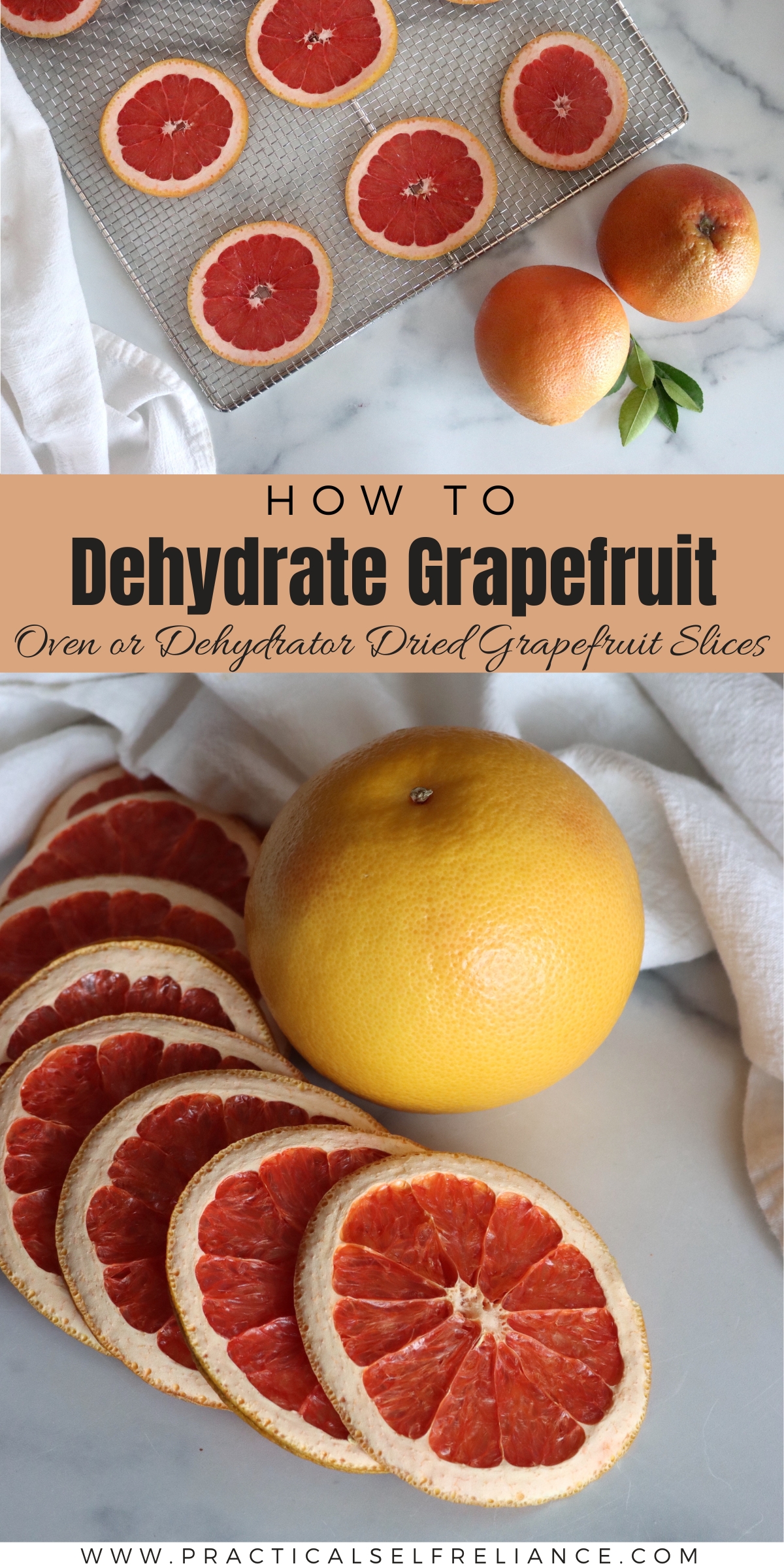
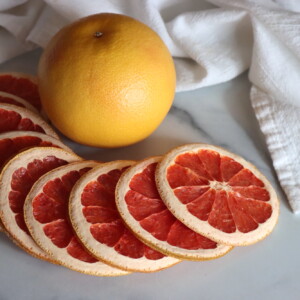
Drying grapefruit at home is a simple way to preserve grapefruit slices for pantry storage. Once dried, grapefruit wheels can be used in teas, cocktails and crafts, or made into a versatile citrus powder.
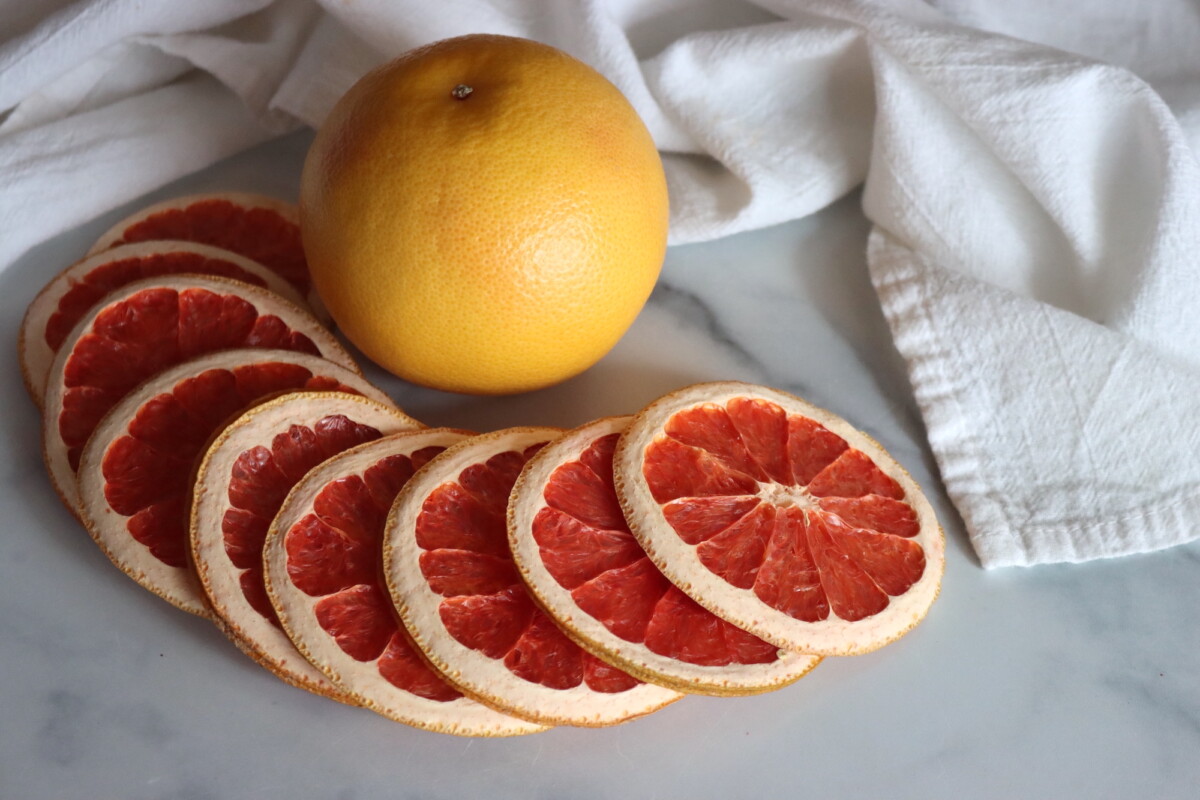
Table of Contents
- Best Grapefruit for Dehydrating
- Preparing Grapefruit for Drying
- 1) Wash and scrub
- 2) Decide: peel on or peel off
- 3) Reduce bitterness (optional, but worth it with thick pith)
- 4) Slice evenly
- 5) Remove seeds and blot dry
- 6) Optional: light seasoning
- Temperature for Drying Grapefruit
- How Long to Dehydrate Grapefruit?
- Fresh to Dried Yield
- Ways to Use Dried Grapefruit
- Dehydrator Recipes
- Dehydrating Grapefruit Recipe
- Ways to Preserve Grapefruit
- Dehydrator Recipes
Dehydrating grapefruit is one of those simple projects that makes winter citrus season last a whole lot longer. When the fruit bowl is overflowing and grapefruit are at their sweetest, I slice a few and dry them down for snacks, tea, and the prettiest little garnish wheels for drinks and desserts.
The best part is you don’t need anything fancy. A sharp knife and a dehydrator (or even a low oven) will do the job, and you can decide exactly how you want them finished, from soft and chewy to crisp and brittle.
If you’ve ever avoided grapefruit because of the bitterness, I’ve got you covered there too. A quick pith trim or a short blanch takes the edge off and makes the finished slices much more snackable.
Best Grapefruit for Dehydrating
You can dehydrate just about any grapefruit, but a few small details make a big difference in flavor, texture, and how pretty the finished slices look.
- Start with ripe, heavy fruit – When I’m picking grapefruit for dehydrating, I choose ones that feel heavy for their size. That usually means they’re juicier and sweeter, which helps balance grapefruit’s natural bitterness once the flavor concentrates during drying.
- Thin-skinned grapefruit dry more evenly – Thick rinds and a heavy layer of white pith take longer to dry and can make the slices taste more bitter. If you have thick-skinned fruit, it’s still totally workable, but I’ll often trim a little pith off the outside edge of each slice (or blanch the slices briefly) before drying.
- Seedless varieties are easier – Seeds aren’t a safety issue, but they’re annoying in finished chips and garnish wheels. If I’m drying slices specifically for snacking, I strongly prefer seedless.
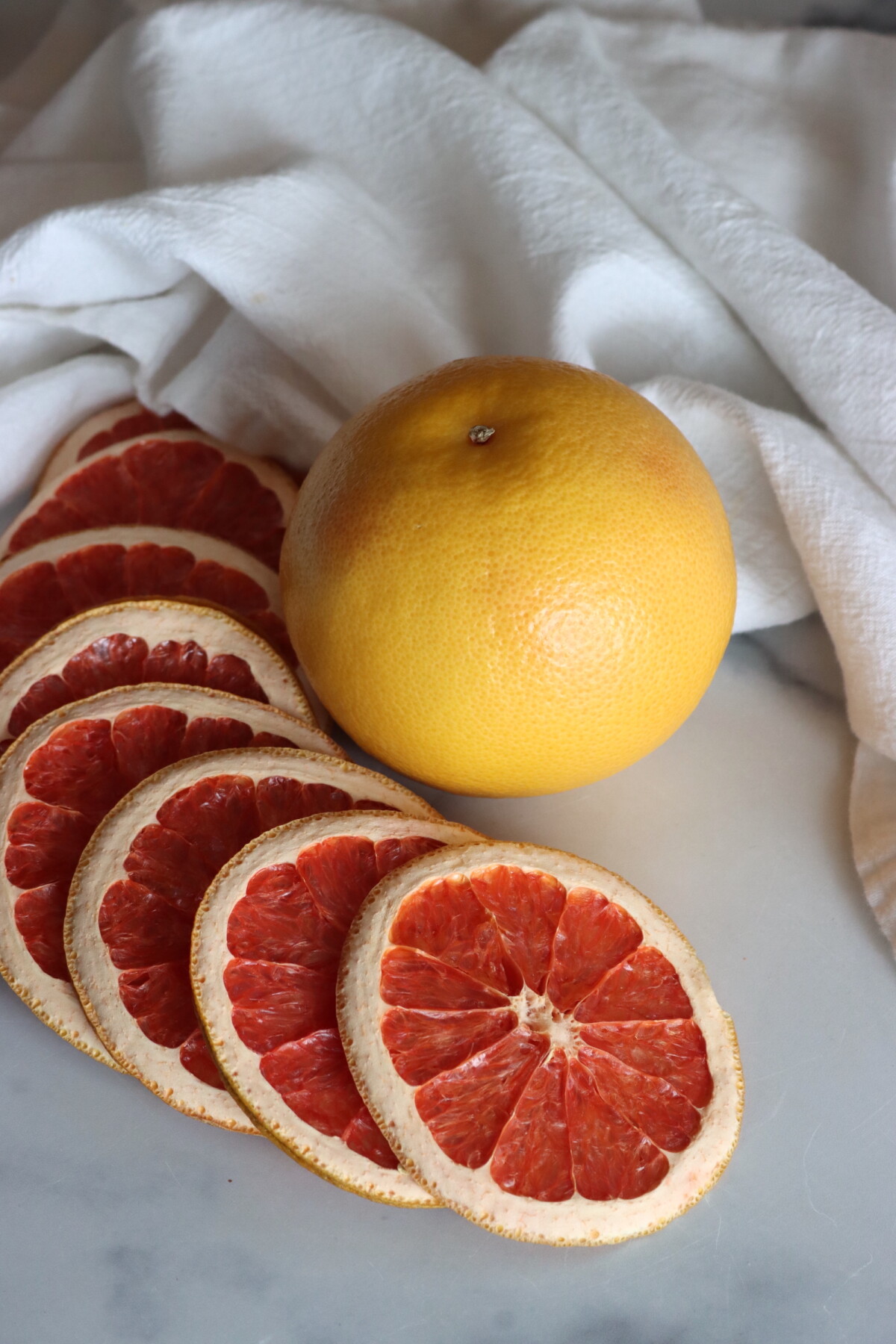
- Sweeter varieties make the best snacks – For eating straight, I reach for grapefruit that leans sweet rather than sharp. Ruby red or other red/pink types tend to dry into a more candy-like slice, while pale yellow/white grapefruit usually come out more assertively bitter and tart.
- Use organic (or well-scrubbed) fruit if you’re leaving the peel on – Since most people dehydrate grapefruit as whole rounds with the peel intact, I either buy organic or scrub the fruit really well under hot water and a brush. Many grapefruit are coated with wax to reduce moisture loss, and that coating can slow drying and hold onto off flavors.
- Size matters depending on your goal – If I’m making garnish wheels, medium grapefruit that slice into neat, uniform rounds work best. For snacks, I like fruit that isn’t overly huge, because very large rounds take longer to dry and can stay tacky in the centers unless you slice them extra thin.
If you only have one kind on hand, don’t overthink it. Dehydrating grapefruit is forgiving. Just adjust for thick pith with a quick trim or blanch, and slice evenly so everything dries at the same rate.
Preparing Grapefruit for Drying
The process is pretty straightforward, and it’s similar to making any type of dehydrated citrus.
1) Wash and scrub
- Rinse grapefruit under warm water and scrub the peel with a produce brush.
- This helps remove surface wax and anything clinging to the rind (and it helps the slices dry more evenly).
2) Decide: peel on or peel off
- Peel on: Best for garnish wheels and most pantry uses. Holds the slice together and looks pretty.
- Peel off: Less bitter, but fussy. For most people, trimming pith is the easier solution.
3) Reduce bitterness (optional, but worth it with thick pith)
Choose one:
- Trim pith: Shave a bit of the white pith off the outside edge before slicing, or trim it from the rounds with a paring knife. Even a little makes a big difference.
- Quick blanch: Simmer slices 1–2 minutes, drain, then pat very dry. This takes the edge off without wrecking the flavor.
4) Slice evenly
Uniform thickness = everything finishes drying at the same time.
- Chewy snacks: about 1/4-inch rounds
- Crispier chips & garnish wheels: about 1/8-inch rounds
A sharp knife works fine, but a mandoline gives the most consistent slices.
5) Remove seeds and blot dry
- Pop out any visible seeds.
- Lay slices on a towel and blot off surface juice to reduce sticking and speed drying.
6) Optional: light seasoning
Keep it subtle so it doesn’t slow drying.
- Snacky: a light sprinkle of sugar
- Savory: a pinch of salt
- Spicy: salt + a tiny pinch of chili powder
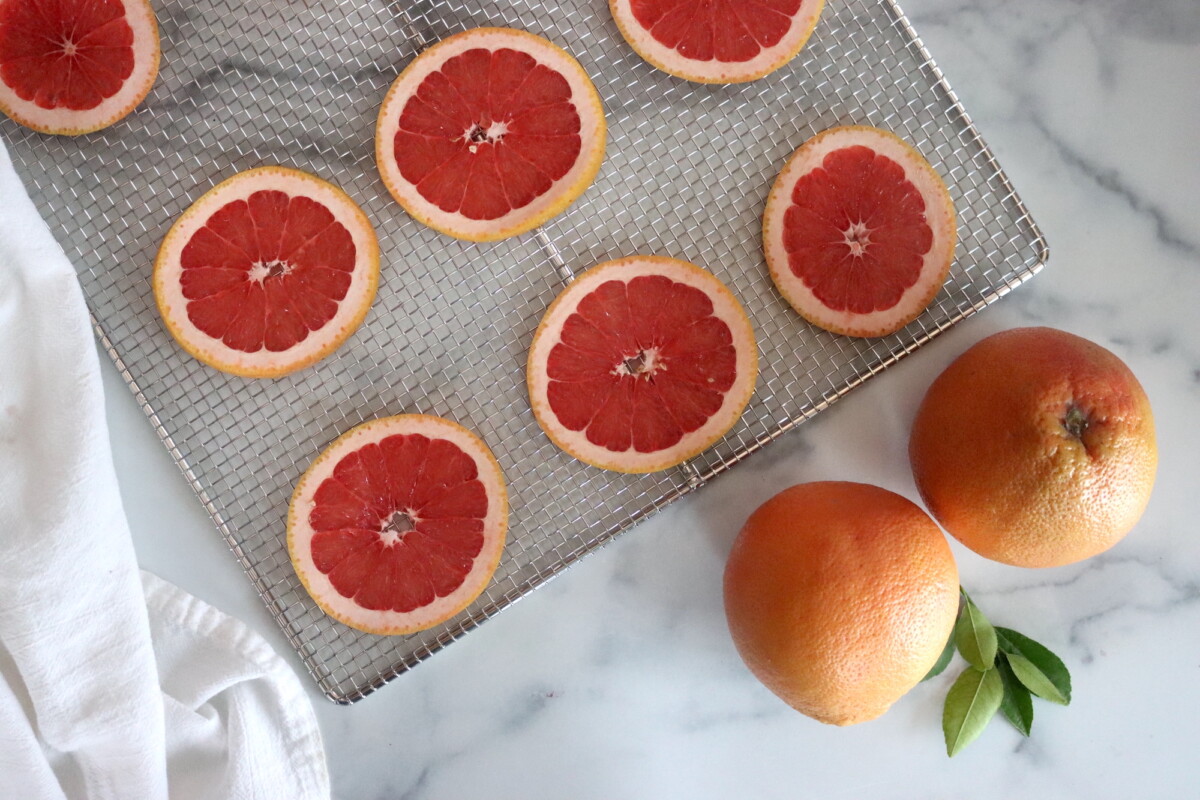
Once prepped, arrange slices in a single layer on dehydrator trays (or oven racks), leaving a little space between pieces for airflow.
Temperature for Drying Grapefruit
The recommended temperature for drying grapefruit is between 125° to 135° F.
Many of the nicer home dehydrators will allow you to adjust temperatures for dehydrating. Although jerky requires some of the highest temperatures (around 165° F), fruit generally is dried around 135° to 140° F. Herbs, spices, and mushrooms have even lower drying temperatures, so opting for one of these adjustable dehydrators is a good idea if you plan on dehydrating a variety of food items.
Excalibur and Cosori are two brands of dehydrators that have this feature among other benefits. A lot of economy dehydrators such as the stacking Nesco dehydrator default to a temperature of 165° F, since this is the minimum safe temperature for jerky.
Although this will effectively dry grapefruit slices, drying fruits and other items at this temperature will result in loss of flavor and occasionally color.
Ovens will also present similar concerns, as they generally cannot be set at temperatures below 170° F for food safety reasons. If an oven is your only appliance available though, it will still accomplish the task.
To help with oven-drying citrus slices, investing in a good set of oven-safe cooling racks to use over your baking sheets will really help. They allow airflow all around the citrus slices like dehydrator trays do, reducing the need for flipping when dehydrating.
These stainless steel oven-safe racks with trays underneath are a good set. They can be used for a variety of dehydrated needs from fruits and veggies to jerky.
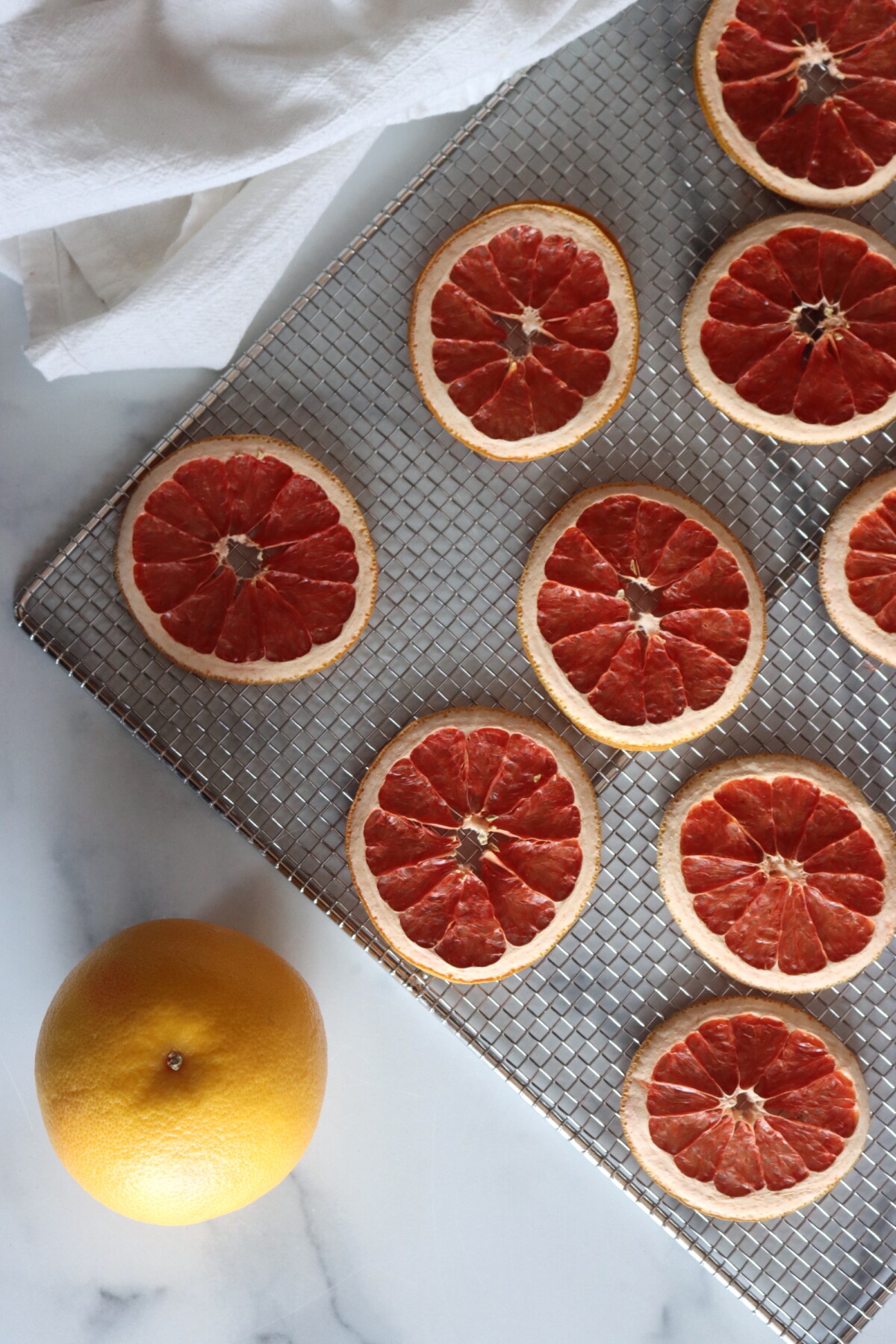
How Long to Dehydrate Grapefruit?
Grapefruit slices can take anywhere from 4 to 12 hours to dehydrate properly in a dehydrator set to 125° to 135° F.
You can effectively dehydrate grapefruit at 135° F for 3 to 7 hours (adjusting for humidity), although some prefer to dehydrate at a lower temperature closer to 125° F to preserve the color of the fruit, which lengthens drying time quite a bit.
Time will also vary on your exact grapefruit variety, the thickness of your slices, and the humidity of your current location. Juicer grapefruits will take longer to dehydrate and so will more thickly sliced wheels.
Ambient humidity also influences drying time. It’s simply harder to take moisture out of food at times when there’s more moisture in the air, like during thunderstorms or the muggy summer months.
This is why drying times can vary so much from person to person (or recipe to recipe). People dehydrating in dryer states out west will have shorter drying times than those dehydrating the same food in the deep south.
Fortunately, Excalibur provides some advice on dehydrating citrus based upon the ambient humidity. For citrus fruits dried at 135° F, it recommends:
- 10 to 30% Humidity: 3 Hours
- 31 to 50% Humidity: 4 Hours
- 51 to 70% Humidity: 5 Hours
- 71 to 80% Humidity: 6 Hours
- Above 80% Humidity: 7 Hours
However, you may wish to dry grapefruit at a slightly lower temperature to help preserve their color. Drying at 125° F will keep grapefruit from browning too much, but it will lengthen drying time to 5 to 12 hours.
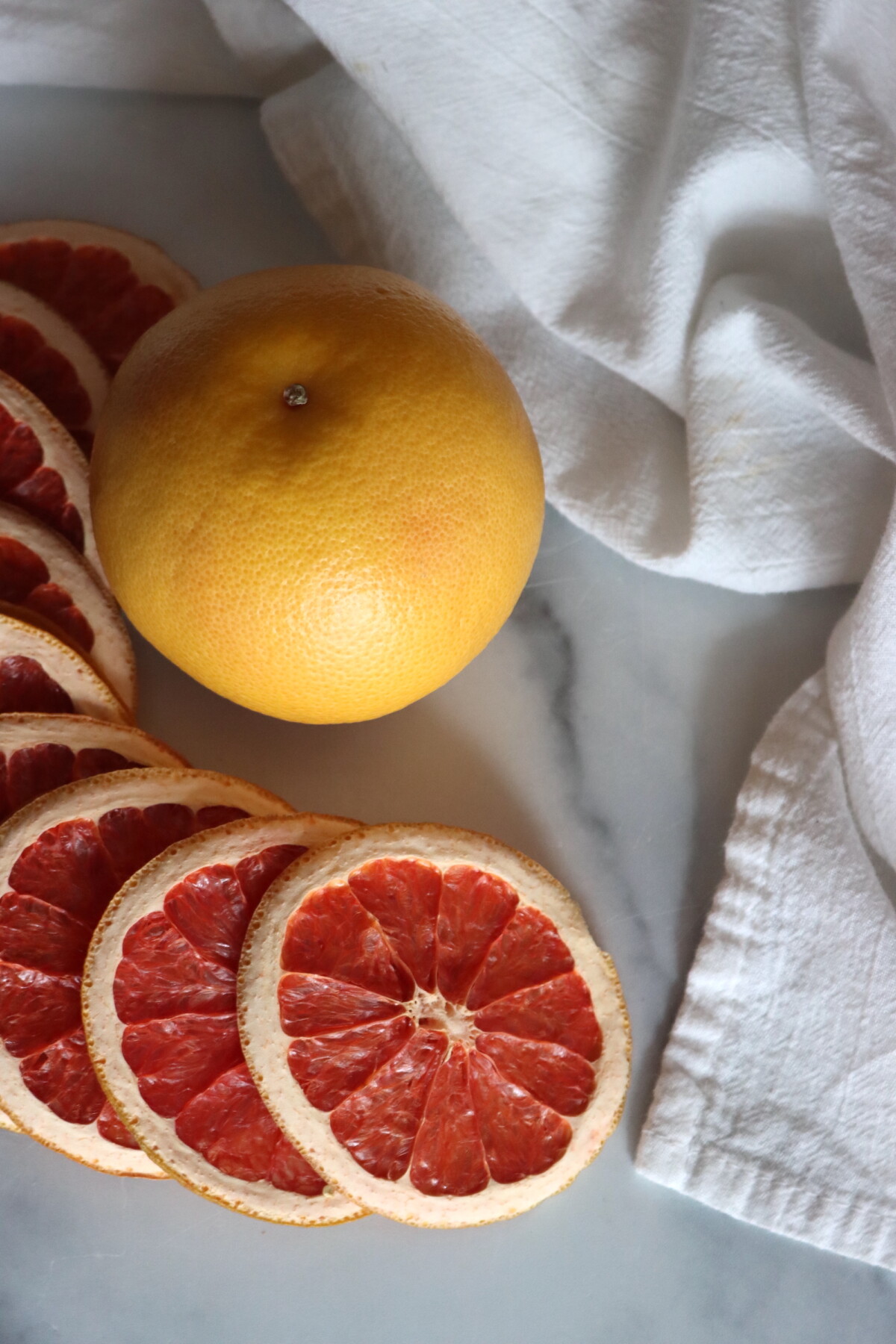
How to Dehydrate Grapefruit in a Dehydrator
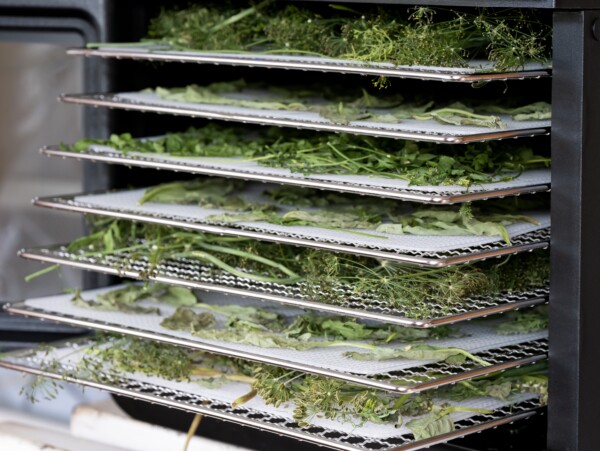
To dry grapefruit wheels in a dehydrator, set the temperature to 125° to 135° F. Place slices on the dehydrator trays in a single layer, leaving room between slices.
Dehydrate for 4 to 12 hours, adjusting for slice thickness and humidity.
When done, the grapefruit wheels should be completely dry and crisp.
How to Dehydrate Grapefruit in the Oven
Oven dehydrating will fulfill your dehydrating needs, but you’ll likely lose a lot of the flavor and nuance in your dried citrus. Slices may also darken up quite a bit when dried at higher temperatures.
The reality is, most ovens cannot be set to temperature any lower than 170° F for food safety reasons, so you have less temperature control. Yet, if it’s the only option you’ve got, it will still work.
To dehydrate citrus in the oven, the most effective method will be to use oven-safe cooling racks on top of baking sheets. These will allow even airflow all around your citrus fruits. Be aware, not all cooling racks are oven-safe. These stainless steel racks and sheets tolerate oven temperature quite well.
Set your oven as low as it will go and dehydrate slices for 2 to 6 hours. At 170° F, 3 to 5 hours will be the average. If dehydrating at 200° F the time may be less.
Use your convection fan (if your oven comes equipped with one) to help with airflow. You can also prop the door of your oven open with a wooden spoon to allow surplus moisture to escape, just be sure to watch out for nosy pets and children. Run your hood vent as well to help with airflow.

Fresh to Dried Yield
Grapefruit has one the highest water contents of all the fruits and vegetables, weighing in at up to 91% water. This means a lot of that weight will be lost in the dehydration process.
In dehydrating, the aim is to reduce the water content of fruit to about 20% to eliminate bacteria growth and spoilage.
This being known, you can expect your grapefruit to dehydrate down quite a bit once it is dried. Dehydrated grapefruit will weigh around 20% of its original weight once dehydrated.
Ways to Use Dried Grapefruit
Now you’ve gone to all the trouble of dehydrating those grapefruit slices perfectly, how should you use them?
You can dip dried grapefruit slices in chocolate for a nice treat for guests and friends, pairing with other dried fruits or nuts and cheese.
Or perhaps you’d like to add dried grapefruit to hot water, a tea bag, and some grated ginger for a warm and comforting grapefruit tea. These dried citrusy delights also make a lovely garnish for cocktails. Consider layering one atop one of these spicy grapefruit & tequila cocktails, a grapefruit rose paloma, or a grapefruit margarita.
Dried grapefruit slices can also adorn pretty cakes and desserts like this grapefruit olive oil cake.
For even more ideas, grapefruit can be ground up and used as a citrus powder for sweet and savory uses. Blend with sugar for a citrusy-sweet application or combine with sea salt for a savory one. And if you’re feeling crafty, consider gilding dried grapefruit slices for a sparkly decoration or turning into homemade citrus ornaments.
Personally, I love its wonderful aroma in simmer pots, and it looks lovely too!

Dehydrator Recipes

Dehydrating Grapefruit
Equipment
- Dehydrator
Ingredients
- Fresh Grapefruit
Instructions
- Begin by giving your grapefruit a good wash to remove any dirt or waxy residue. Pat dry with a towel.
- Slice fruit into sections ¼ to ⅛ of an inch thick. Remove seeds with the tip of a knife.
- Arrange slices on dehydrator trays in a single layer, being sure that you leave enough room between the slices for good airflow. (If using an oven, use oven-safe wire racks over baking sheets for the best airflow.)
- (Dehydrator) Set dehydrator to 125° to 135° F and dehydrate for 4 to 12 hours adjusting for humidity and slice thickness.
- (Oven) Set your oven as low as it will go and dry for 2 to 6 hours. An oven set to 170° F will often take 3 to 5 hours for slices to fully dehydrate.
- Grapefruit slices are done when they are crisp and free of all moisture.
Notes
Conditioning
If wishing to store grapefruit for a longer period of time, conditioning is a step that should be followed. You may condition fruits by filling an airtight container ⅔ of the way full and sealing. Allow the fruit to stand for 7 to 10 days, shaking the container once per day to help evenly distribute the moisture content. If you see signs of condensation appear inside the container, you should promptly remove your grapefruit slices and dehydrate some more. If no moisture forms after 10 days, your food is safe for long-term storage.Dehydrating Times
Ambient humidity can be a large factor in lengthening dehydrating time. Be sure to adjust for humidity based off of the following chart for dehydrating citrus slices at 135° F:- 10 to 30% Humidity: 3 Hours
- 31 to 50% Humidity: 4 Hours
- 51 to 70% Humidity: 5 Hours
- 71 to 80% Humidity: 6 Hours
- Above 80% Humidity: 7 Hours
Ways to Preserve Grapefruit
There are several other means of preserving grapefruit aside from dehydrating. Consider whipping up some marmalade, freezing, or winemaking.
- Grapefruit Marmalade
- Freezing Fruit: A to Z Guide
- 50+ Winemaking Recipes for Homemade Wine (from Any Fruit!)
- Natural Citrus Seed Pectin for Canning
Dehydrator Recipes
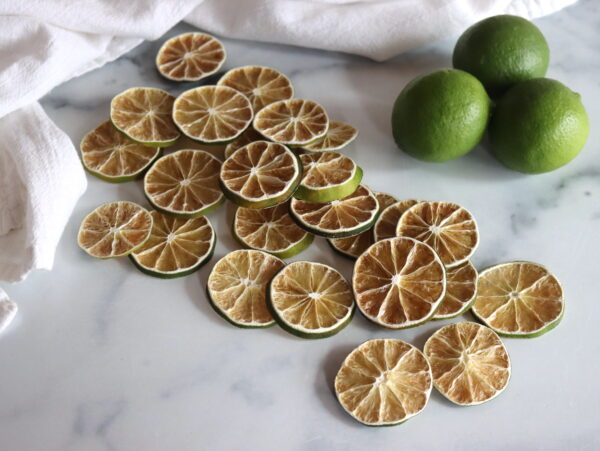
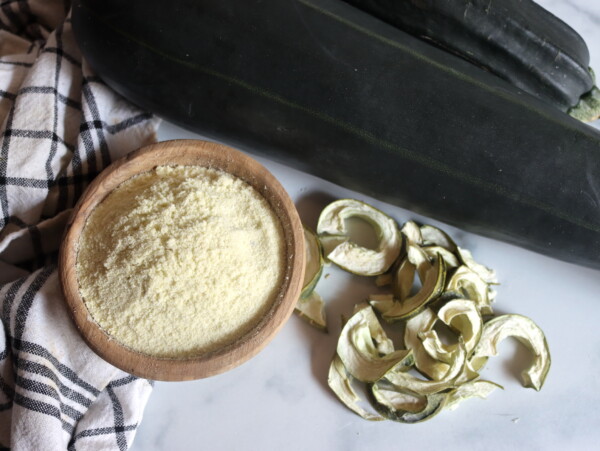
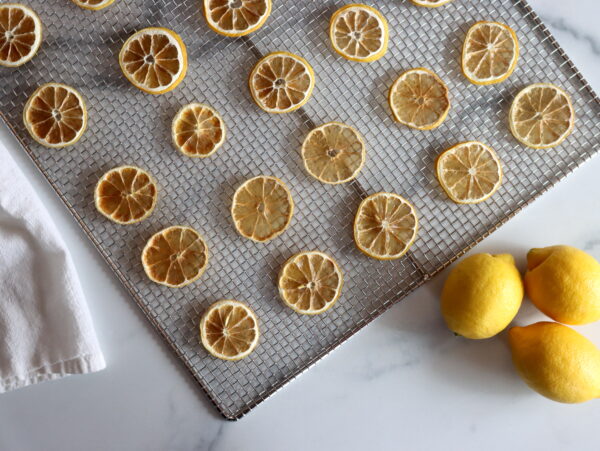
Looking for more dehydrator recipes?