
Affiliate disclosure: This post may contain affiliate links. Please see our Privacy Policy.
Some days I just want a pickle, and nothing compares to a perfectly crisp home-canned pickle. They top my burgers and hot dogs all summer long, but more importantly, in the wintertime, they remind me that summer will come again.
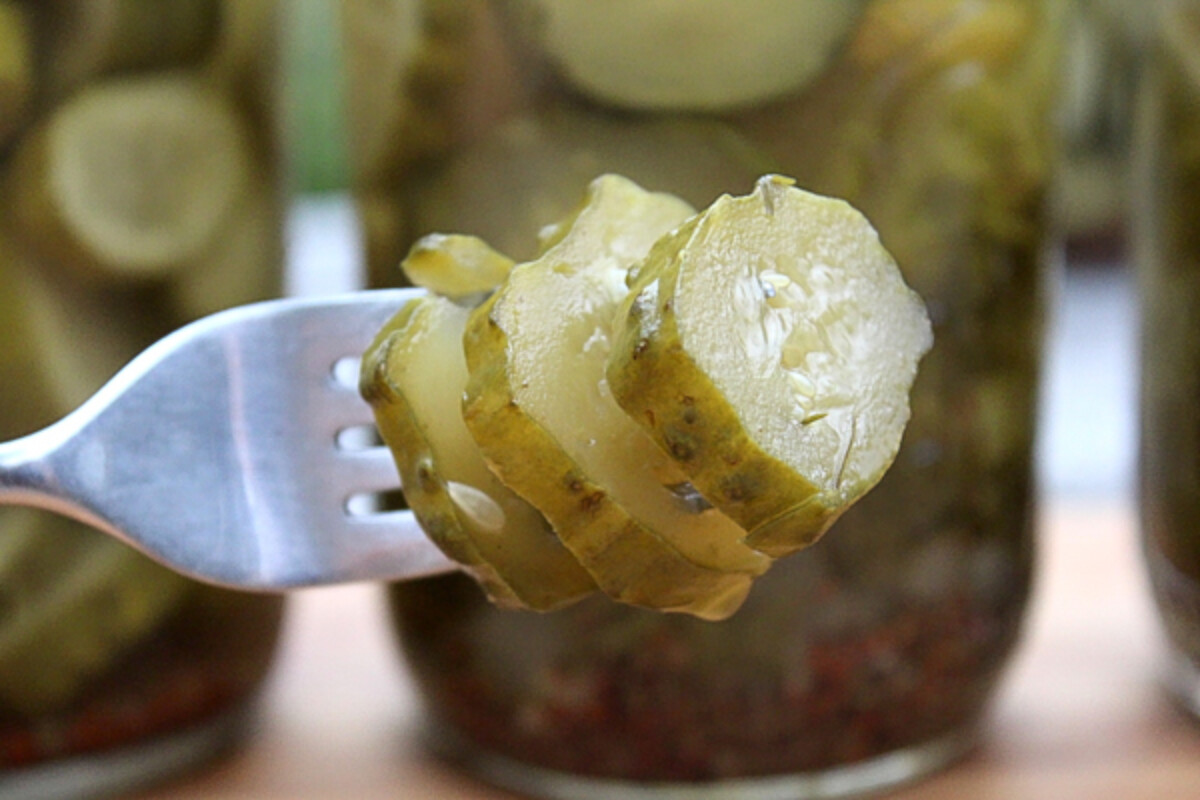
The very best pickles cant be bought in a grocery store. If you want a good pickle, you’ll have to ask grandma for a jar or learn how to make them yourself. I kick myself every time I don’t can quite enough for a full year. In those years, I find myself scanning the supermarket shelves, hoping for anything that might qualify as a real pickle.
I’m always disappointed. How can they get away with charging $8 for a jar of wilted, slimy excuses for pickles? On top of that, they’re loaded with preservatives that have no business in pickles. Every time I reach this point I vow that next summer there will be more pickles.
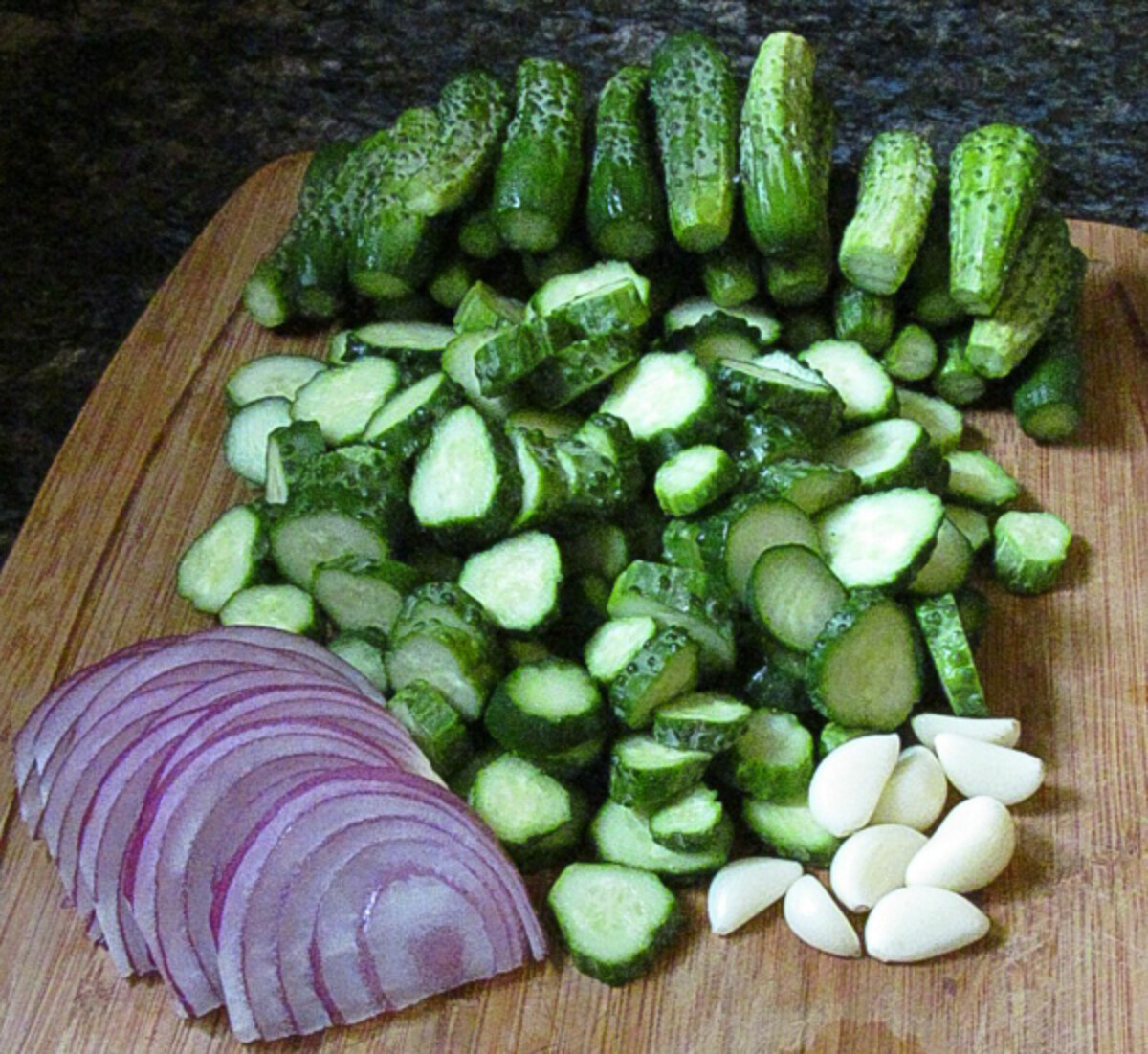
My secret to the perfect pickle is to select small cucumbers, about the size of your pinky finger. Whether you’re making slices of whole dills, the size of the cucumber is key. Anything bigger is best suited to pickle relish or hog feed. (If you have really super tiny baby cucumbers, try making miniature gherkins (cornichons), which are made with a very different recipe.
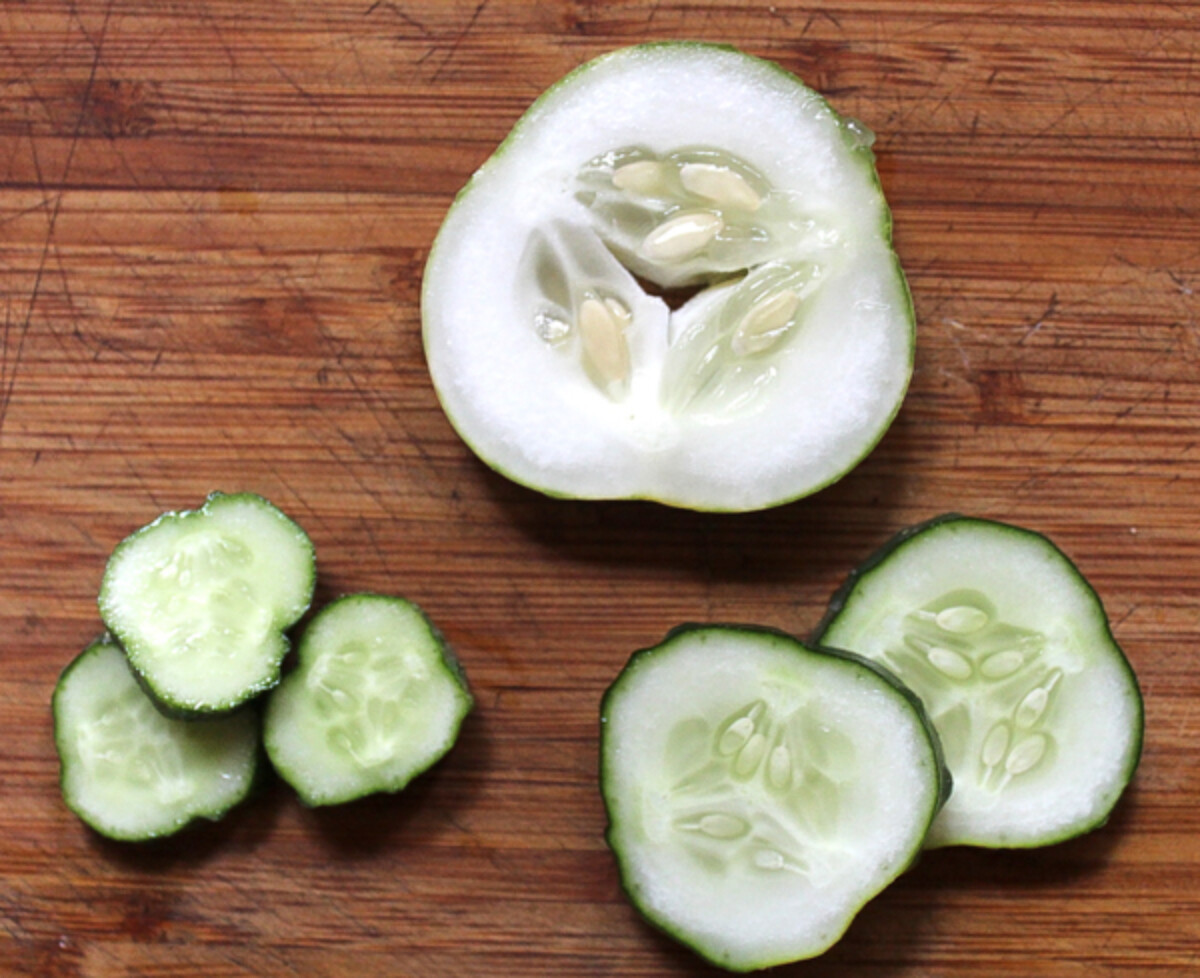
When you select cucumbers for canning pickles, the seeds should be barely visible. The picture below has a cross-section of 3 different cucumbers. The top one has fully formed seeds, and they’re already beginning to fall out a bit. If you can this cucumber, the center would fall out and the outside would never be crisp. If all you have is giant cucumbers, try making refrigerator dill pickles.
The bottom two cucumbers are both acceptable for canning but choose the smaller slices on the left for best results.
If you have very large cucumbers and your heart is set on canning, you can also try making either dill pickle relish or bread and butter pickles. Both of those recipes are designed to accommodate large overripe cucumbers. The cucumbers are layered with salt for about 2 hours before canning, which draws out extra moisture and removes bitterness from the overripe cucumbers. Added sugar in both recipes also helps mask any residual bitterness, and a bit of turmeric makes up for the fading color as the cucumbers are past prime.
Jar size also makes a big difference for home canned pickles. You can have the best pickle recipe in the world and the freshest tiny cucumbers, but if you can in quart jars they’ll be overcooked. Always can in pints rather than quarts. Quarts require longer processing times and are liable to produce mushy pickles.
There’s an old-school practice of soaking pickles in pickling lime before canning, and this helps keep them crisp during the canning process. It’s a complicated process, and involves a lot of time and mess, soaking and rinsing. Not to mention a lot of lime.
These days, most canners substitute something called pickle crisp. It doesn’t have anything funny in it, just calcium chloride. The calcium helps to reinforce the cell walls in the cucumbers, and that keeps them from popping during the canning process. The end result is firmer pickles without a lot of extra work.
It doesn’t take a lot of calcium chloride to get the job done. Roughly 1/8th tsp per pint or 1/4 teaspoon per quart. Just spoon it into the bottom of the jars along with the spices. Pickle crisp is optional, but it will help ensure crisp home-canned pickles.
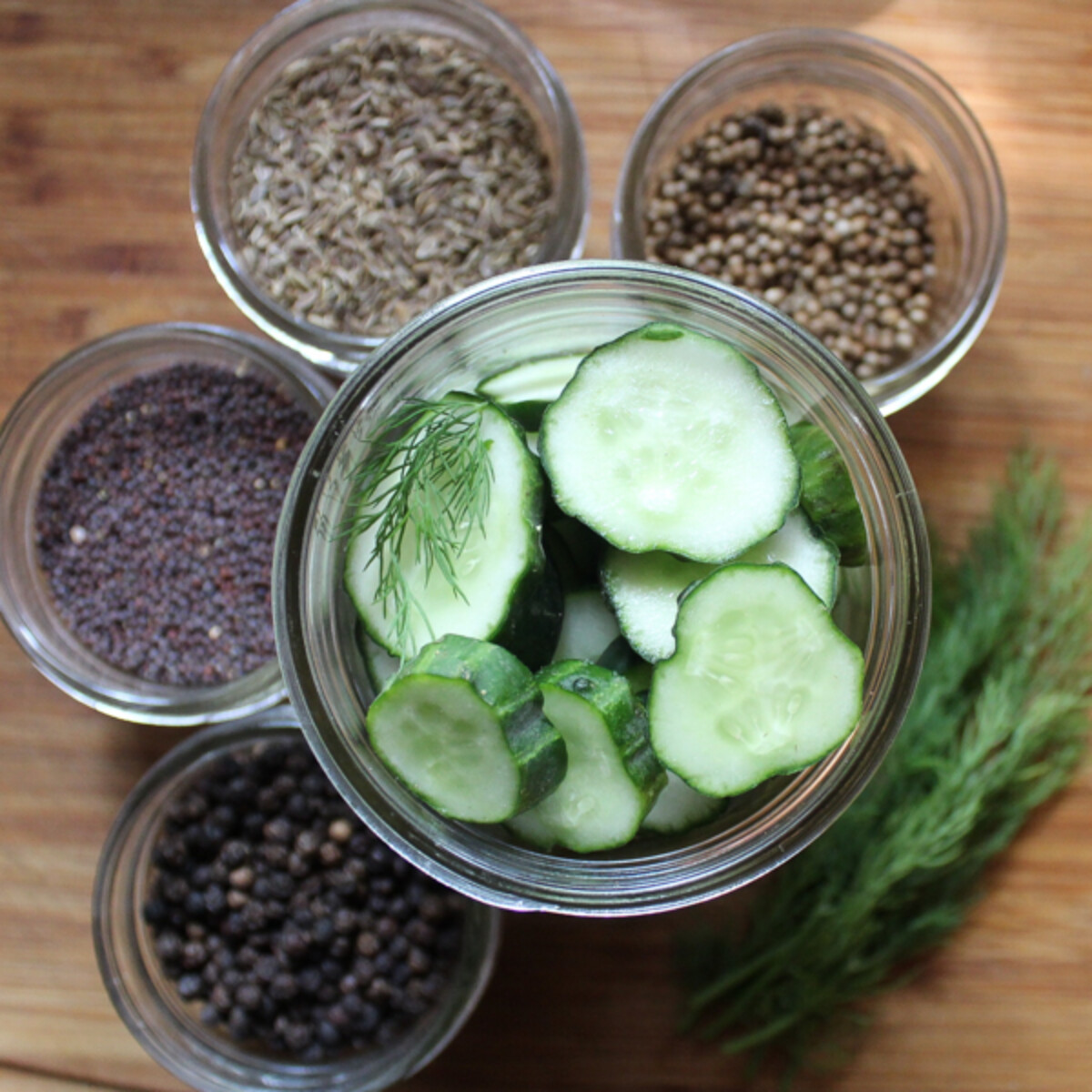
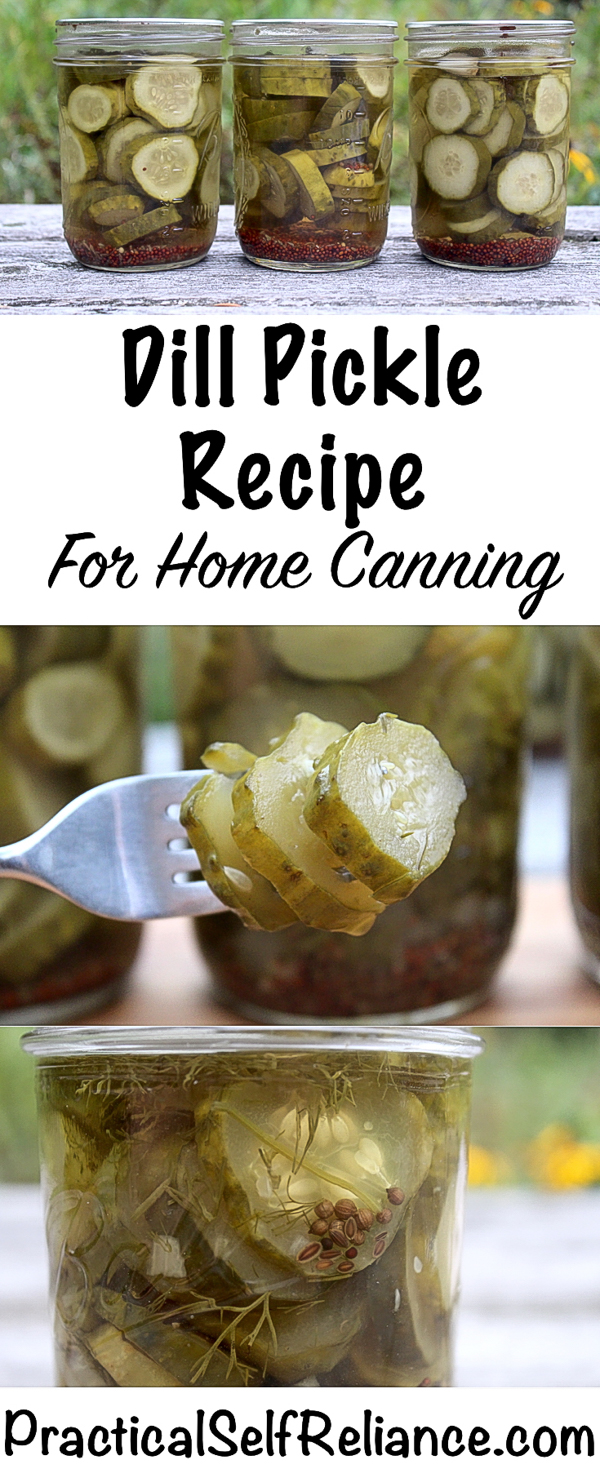
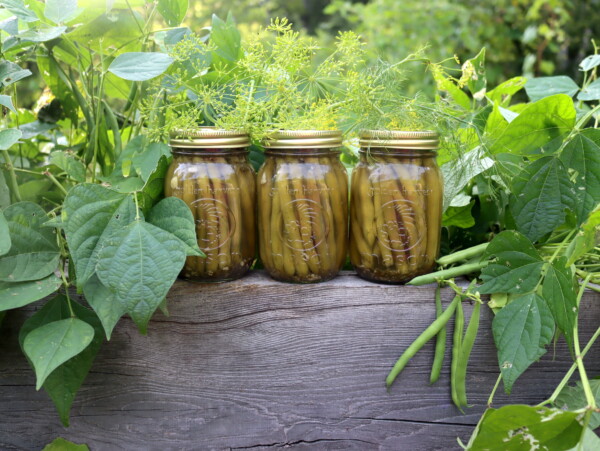
Making pickles at home is simple, assuming you have the right ingredients. I include fresh dill, mustard seeds, dill seeds, coriander seeds and black peppercorns. If for some reason I can’t find fresh dill, extra dill seed will work. Fresh dill tends to come in large bundles from the grocery store or farmers market, and if you have extra, try making dill pickled green beans, known as dilly beans here in Vermont.
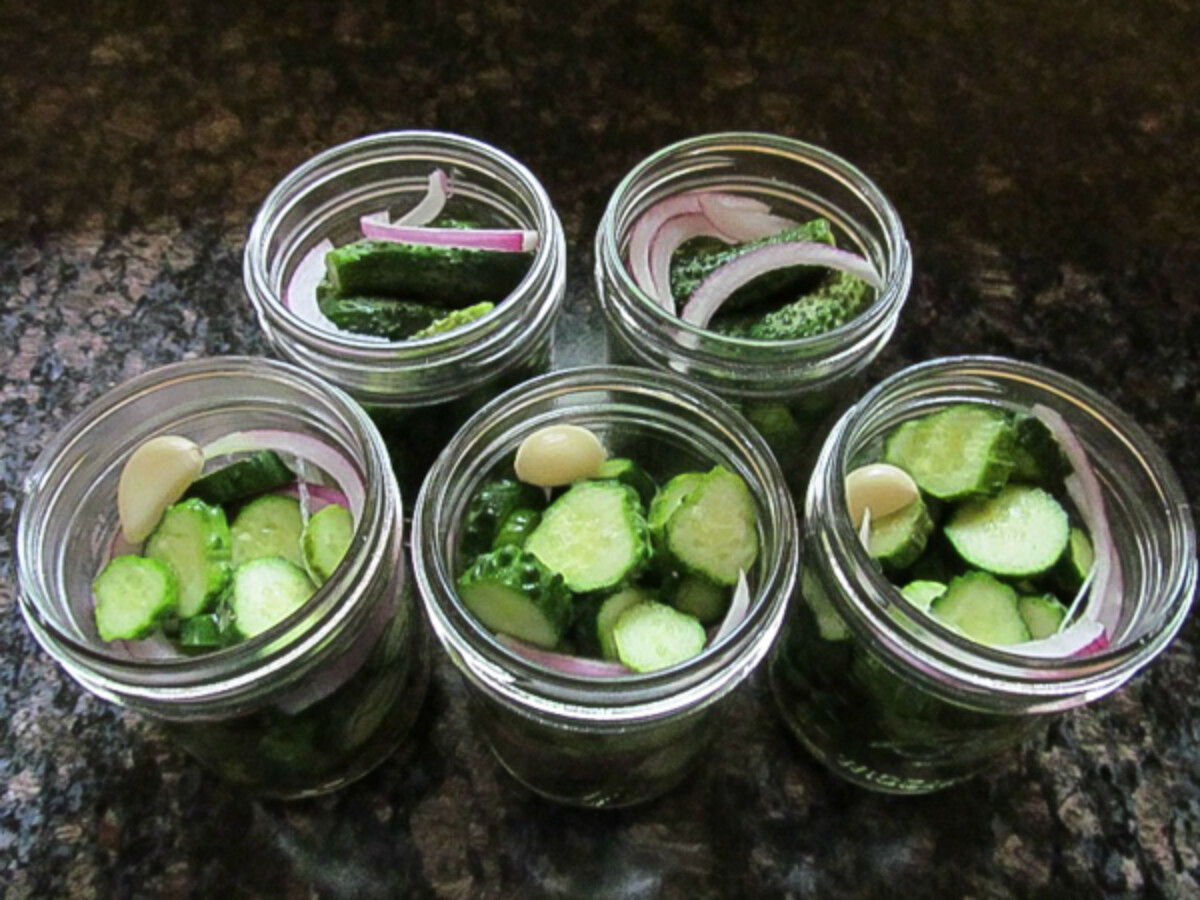
Start by packing spices, cucumbers, onions and garlic tightly into jars, leaving 1 inch of headspace. Cover with hot brine, and water bath can. Wait at least 2 weeks for flavors to infuse, and ENJOY!
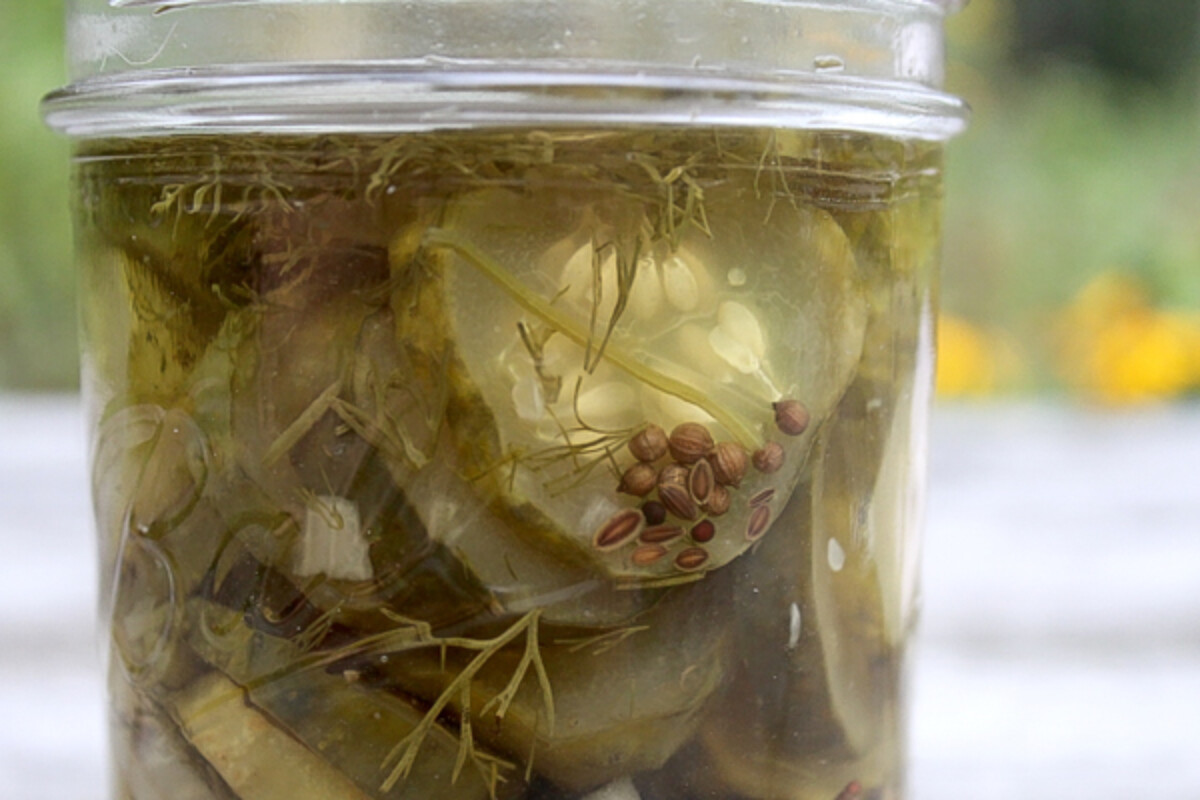
If you’re giving them out as gifts, consider some cute labels. Chalkboard labels are all the rage these days, but I stick to ball canning’s dissolvable labels because they’re easy to remove so that you can reuse the jar once it’s empty.
If you really want to save money on pickling, buy your canning supplies in bulk. While rings and jars can be reused, lids should be new each time to ensure a good seal. We buy our canning lids in bulk online and bring our canning unit costs down considerably. If you’re looking for a quick fix, you can also try a pre-made dill pickle spice mix, just make sure your cucumbers are fresh and tiny.
Pickle Canning Recipes
Looking for more ways to preserve cucumbers in a jar?
Dill Pickle Recipe for Canning
Ingredients
- 4-5 lbs Cucumbers, Small ones only
- 4 Cups Water
- 4 Cups Cider Vinegar or white vinegar, 5% acidity
- 1/2 Cup Pickling & Canning Salt
- 1 Large Onion , Thinly Sliced
- 10-15 cloves Garlic
- 5 large Dill Heads or fresh dill sprigs
- 5 tsp Mustard Seeds
- 5 tsp Dill Seeds
- 5 tsp Coriander Seeds
- 5 tsp Black Peppercorns
- 5/8 tsp pickle crisp optional – 1/8 tsp per pint
Instructions
- Start your water bath canner in a pot big enough to hold 5 one pint mason jars. The water (and the pot!) should be deep enough once the jars are added there is at least 1 inch of water above the top of the jars. Bring the pot to a boil.
- Prepare a brine by bringing 4 cups water, 4 cups vinegar and 1/2c salt to a boil.
- While the brine and canner are coming up to a boil, gently wash cucumbers to remove any dirt and nip off both ends. Either leave the cucumbers whole or slice into 1/2 inch slices.
- At the bottom of each wide mouth pint mason jar, add 1 teaspoon of mustard seeds, dill seeds, coriander seeds, black peppercorns and the dill heads or fresh herb sprigs.
- Pack tightly with pickles and a few slices of onion. Top 2 with 2-3 garlic cloves. Be sure to leave 1 inch of headspace above the pickles.
- Cover with brine to just submerge the vegetables, being sure to leave 1/2 inch of headspace above the top level of the brine.
- Cap and band mason jars to just finger tight and place into boiling water in your water bath canner. Process for 10 minutes for pints (or 15 min for quarts) below 1000 feet of elevation. (15 minutes for pints at 1,000-6,000 feet)
Notes
- This recipe makes slightly more brine than you need to can 5 pints of pickles, to make sure you have enough to properly fill all the jars. Store any extra in a mason jar at room temperature for later use.
- The spices can also be adjusted without affecting canning safety, based on your preferences.
- The salt is not necessary for preservation in this recipe, and can be adjusted to your tastes. Salt levels in pickles are a very personal thing, and I’ve seen recipes that use A LOT more salt, and just a few that use less. Around 1/2 cup is a good middle ground, but if you like them REALLY salty add 3/4 cup (alternatively, use 1/4 cup for lower salt pickles).
- DO NOT use table salt, it has additives that don’t work well for canning. Lacking pure canning salt, use kosher salt.
- DO NOT adjust the vinegar/water ratio to lower the amount of vinegar. The acidity in the vinegar is what preserves the pickles and makes them suitable for water bath canning. For a more sour pickle, you can increase the amount of vinegar (but never reduce it).
Nutrition
Nutrition information is automatically calculated, so should only be used as an approximation.











Very Great Content!!!
Thank you very much. So glad you’re enjoying it.
Forgive me if this has been asked or I missed it in your post, but have you ever added sugar to the brine. If so, do you have a recommendation?
Thanks
There is no sugar added to these but we do have a bread and butter pickle recipe here. https://practicalselfreliance.com/bread-and-butter-pickles-canning-recipe/
informative content, thank you for sharing information
You’re very welcome.
You mention using a small amount of turmeric in the text preceding the recipe but I do not see it in the recipe. How much would one use per pint jar? I canned a very small batch last year but the pickles slices never turned the usual pickle color and remained pretty much white. It was kinda off-putting for me visually but they tasted great! This year I’d like to try the turmeric trick so they will be more appealing…lol!
I would try about 1/8 tsp per pint and see how that works for you.
Very Informative, Keep Sharing.
Thank you, we’re so glad you think so.
Lovely Content . Keep it up.
Thank you so much. So glad you like it.
Nice Content!!!
Thanks! So glad you enjoyed the post.
Great!!!
Keep sharing content.
Thank you.
I wish I had read the article on pickling before I let my pickles get too be!!!!!!!!!!!!!!!!! Next year I will do better!
It is very easy for them to get away from you. I think it has probably happened to us all.
My husband canned pickles for the first time we followed another persons directions and now fear we didn’t boil long enough. We packed quart jars tight, left 1/2.” Head space and boiled only 5 minutes. Did we need to boil longer than 5 minutes? If so, do we need to place back in boiling water? Or will they be safe to eat as long as lids sealed?
If you are below 1,000 feet elevation then you should be processing quarts for 15 minutes.
I have some cucumbers that went beyond size and are likely bitter. Can these be used in the refridgerator version or will the pickles also be bitter? I have a mock cinnimon apple ring recipe that they can be used in but it is a long and difficult process.
There is a good chance they might be bitter, but it doesn’t hurt to try it and see.
What will happen if you use table salt
The jars will be cloudy and it might cause an off-flavor. They have added anti-caking agents that keep the salt flowing out of a shaker, but that’s not great in pickles. I believe people do sometimes use it, but it’s not recommended. From the national center for food preservation: https://nchfp.uga.edu/how/can_06/salts_pickling.html
I was unsure about posting a reply after reading so many positive replies but I (broken-heartedly) dumped 8 pints of pickles down the garbage disposal because I found them to be inedible. They were sour, salty and pungent with spices. I’m going back to my old Ball canning guide for a dill pickle recipe.
I’m so sorry you didn’t enjoy them, everyone has different tastes. I do hope you find a pickle recipe that works for you.
Overall, I think this is a great recipe. I had question on the salt. I just made my first batch, using a 1/2 cup of salt. They are a little salty for me. Is it ok to lower the salt down to 1/3 cup or is the 1/2 cup needed to preserve the pickles longer in the jar?
You can definitely use less salt if they are too salty. The salt in this recipe is not needed for preservation. I would recommend waiting the full two weeks for all of your flavors to come together before making a final decision though.
This is the second year in a row that I will be using this Recipe, I just put the last jar from last year in the frige and I am so sad I will be out of these pickles for a short time. I have tried a bunch and all of my pickles are going up with this one this year, I can’t wait for the new batch!
So glad you enjoyed the recipe.
I have pored over your blog over the last several years after a friend recommended it. I’ve learned so much. Besides the information, recipes and techniques, I think the thing I appreciate the most is your emphasis on safety. I read so many blogs and recipes that never mention bacteria or the negative side of canning and preserving foods. If they don’t mention any kind of safety precautions, I automatically dismiss anything else on their page. Just thought I’d mention that and let you know I appreciate it.
Thank you for sharing that. I am so glad that you have been enjoying the posts.
I can’t find the coriander seeds can I use the ground instead and on the salt is that 1/2 cup of . salt can I use just canning salt if it doesn’t say pickling thanks Mary beahm
Yes, you can use the ground. Just be aware that the measurement may be a bit different on the coriander. The canning salt should be fine to use.
Ashley you have become my go to person for canning recipes! I have waited all winter so the cucumber to come to market to try these pickles! Made them today and doubled the amounts and ended up with a good stash! Thanks so much!
You’re welcome. So glad you enjoyed the recipe.
I’m using English Cucumbers. Do I need to do anything different? I heard some cukes need to be soaked for several hours with salt and onion, prior to beginning. Any advice?
I am not sure about the soaking but English cucumbers are considered a slicing cucumber and meant to be eaten fresh. You can use them for pickling but it’s possible that they may be softer and not as crunchy.
How long will these last? After 2 weeks do I transfer the jars to the refrigerator?
This is a canning recipe. If properly canned and stored in a cool, dry place they will retain optimum quality for at least a year but will be safe to eat for quite a bit longer than that. The two-week waiting period is just for the flavors to really infuse into the pickles. Once you open a jar, they should be kept in the fridge. If they are still sealed, then they can be stored in the pantry.