
Affiliate disclosure: This post may contain affiliate links. Please see our Privacy Policy.
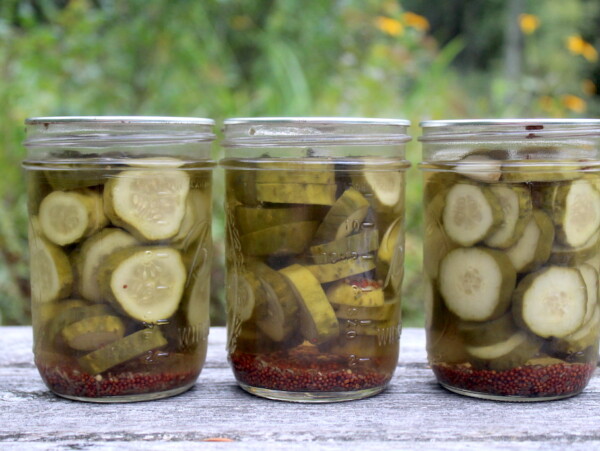
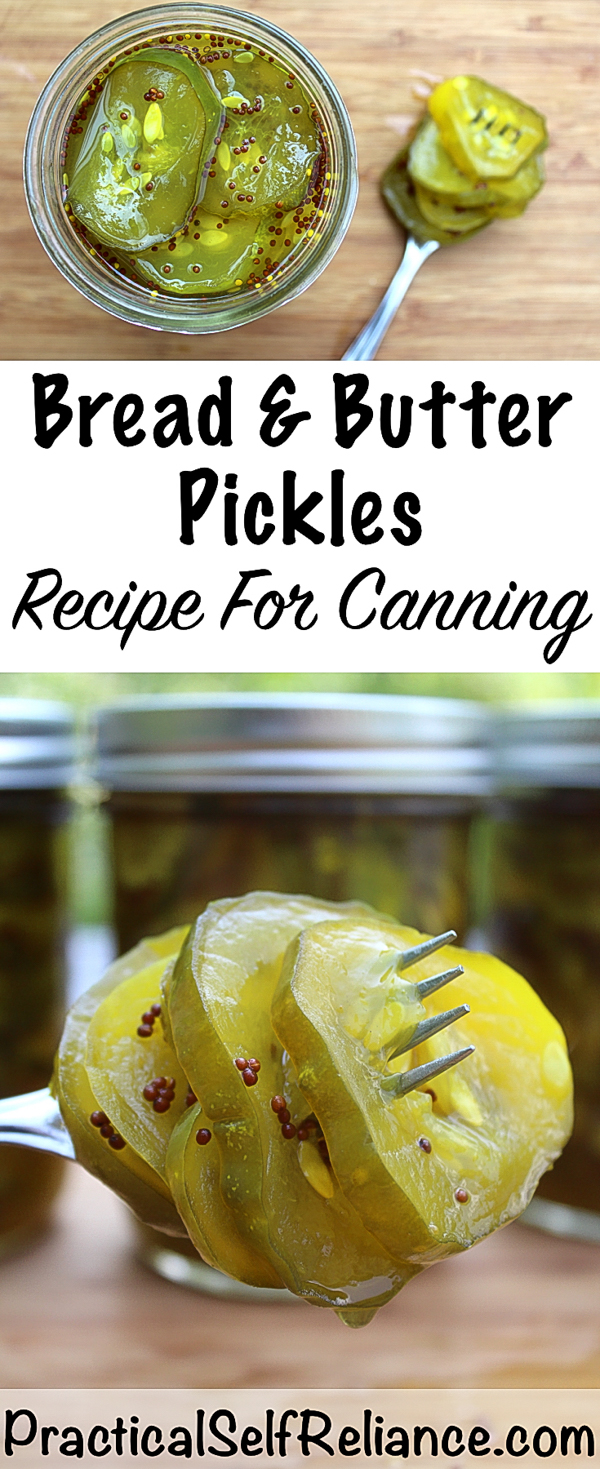
Bread and butter pickles turn oversized garden cucumbers into sweet, tangy slices spiced with mustard seed, celery seed, and turmeric. The cucumbers and onions soak in salted water first, which firms them up and pulls the bitterness out of the big ones before anything hits the brine.
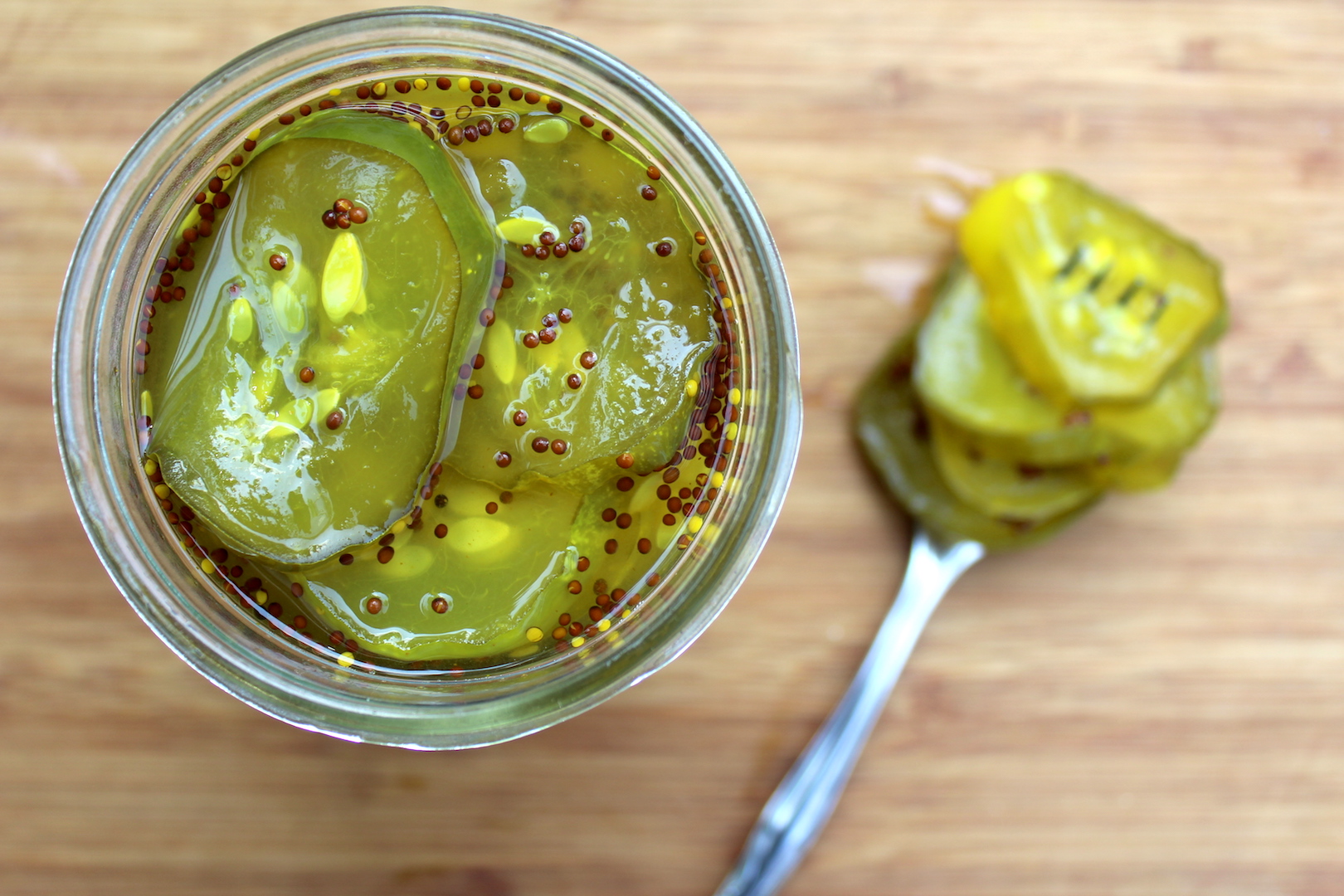
Table of Contents
- Notes from my Kitchen
- Ingredients for Bread and Butter Pickles
- How to Make Bread and Butter Pickles
- Keeping Bread and Butter Pickles Crisp
- Canning Bread and Butter Pickles
- Altitude Adjustments
- Yield Notes
- Storage Options
- Recipe Tips
- Bread and Butter Pickle Variations
- Bread and Butter Pickle FAQs
- Ways to Preserve Cucumbers
- Traditional Bread and Butter Pickles Recipe
- Pickling Recipes
The name goes back to the 1920s, and honestly I think the story behind it is half the reason I enjoy making these. A pair of Illinois cucumber farmers were struggling through some lean years, so they started trading jars of sweet pickles to the local grocer for the staples they couldn’t otherwise afford. Since those pickles were literally buying the family’s bread and butter, that’s what everybody started calling them.
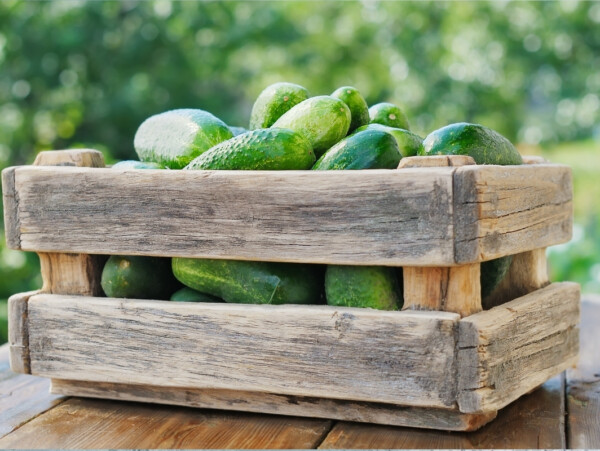
What makes the story useful, though, is knowing what those farmers had to work with. Their field had gotten well ahead of them, and what was left out on the vines were gigantic cucumbers, way too big and too far gone to make anything resembling a decent sweet gherkin. So what do you do with a pile of cucumbers that nobody wants?
Every part of this recipe is answering that question. The salt soak firms up the slices and leaches out the bitterness that comes with size, and the spoonful of turmeric puts the gold back into cucumbers that have gone pale and washed out.
This is the traditional version straight out of my Ball Complete Book of Home Preserving, and it comes out tasting exactly the way a bread and butter pickle is supposed to taste, except that you put it up yourself. It’s a tested canning recipe, which means the vinegar, the proportion of vegetables to brine, and the processing time have all been verified safe for water bath canning.
It’s also the recipe I reach for when the vines have gotten away from me, which around here is most of August. Small cucumbers make a crisper pickle, and that’s true no matter what you do with them, but the salt soak means the giants I find hiding under the leaves don’t have to go out to the compost pile. I slice them evenly, add a little Pickle Crisp, and they hold up just fine.
The brine is really what sets these apart from a dill pickle. Most pickle brines run somewhere around half vinegar and half water, but this one is all vinegar with no water in it at all, and rather than watering that sharpness down, the recipe balances it back out with sugar.
Even so, they don’t come across as candy sweet. The vinegar keeps the sugar honest, and whatever bite the cucumbers hang onto after their soak cuts through the rest of it. The spicing stays simple, and the turmeric is doing considerably more for the color than it is for the flavor.
Notes from my Kitchen

I didn’t used to like sweet pickles. For years I put up nothing but no-sugar dills with the tiniest cucumbers I could find, and everything oversized went into sweet dill pickle relish. Then I wound up with more dill on the pantry shelf than we could eat, went hunting through the Ball book for something to break it up, and made a batch of these mostly to prove a point about not liking them.
They converted me. All that vinegar keeps them from ever going syrupy, and now I put up more bread and butter pickles than any other kind, which is not something I saw coming. I’ve still never nudged the sugar up the way a lot of readers do, since the recipe as written is already right where I want it. If you grew up on the sweeter grocery store kind, go ahead and add more. It won’t change how the jars keep.
Ingredients for Bread and Butter Pickles
The pickled vegetables are the classic mix of cucumbers and onions, preserved in a vinegar-heavy brine. Don’t reduce the proportion of vinegar in this recipe, as that’s what keeps everything preserved.
- Pickling cucumbers (any size): Pickling varieties have thinner skin, bumpy or spiny surfaces, and a shorter, fatter shape than slicing cucumbers. This is the rare pickle recipe where the oversized ones are welcome, since the salt soak handles the bitterness that comes with age. Cut everything into quarter-inch rounds and keep the thickness even across the batch, because pieces of wildly different thickness don’t all heat through the same in the canner. Trim the ends and don’t bother peeling.
- Onions (any variety): Plain white or yellow onions are what I use, though sweet onions work too. Slice them thin so they match the cucumber rounds. They soften into the brine and end up almost as good as the cucumbers.
- White vinegar (5% acidity): The acidity is what makes these safe to water bath can, and 5% is not negotiable. Distilled white vinegar keeps the color clean and the flavor sharp, but apple cider vinegar has a more mellow flavor that I like (and it’s still safe for canning at 5% acidity). Never use homemade or unlabeled vinegar for canning, since you can’t know its strength.
- Canning and pickling salt: Pickling salt is pure sodium chloride with no iodine and no anti-caking agents, which is why it won’t cloud your brine or darken the pickles. Every bit of it goes into the soak and gets rinsed away, so it’s working on texture and bitterness rather than preservation.
- Granulated sugar: Sugar balances the all-vinegar brine, and it isn’t the preservative here either. That means you can move it up or down to taste without affecting shelf stability.
- Mustard seed, celery seed, and turmeric: Whole mustard and celery seed give little pops of flavor and keep the brine clearer than ground spices do. The turmeric is mostly there for color, so cut it back if the yellow is stronger than you like.
- Pickle Crisp (optional): Ball Pickle Crisp is calcium chloride, and it’s written right into this recipe as an optional addition. An eighth teaspoon goes into each pint jar at packing time. It firms up the texture without touching the acidity.
If your cucumbers are small and firm and you’d rather have a snappy pickle than a sweet one, they’re better spent on lacto-fermented pickles or a batch of dills. And if the harvest has truly gotten out of hand, my roundup of ways to preserve cucumbers covers everything else you can do with them.
Our first attempt at canning pickles, they turned out perfect! Excellent instructions that were easy to follow. We used quart jars and the pickles were so crisp and flavorful!
How to Make Bread and Butter Pickles
The process runs in three parts: soak the vegetables in salted water, boil up the brine, then pack and process. Plan on about three hours start to finish, though most of that is the cucumbers sitting in the bowl while you do something else.
Soaking the Cucumbers and Onions
Wash the cucumbers, trim the ends, and slice them into rounds a quarter inch thick. Slice the onions thin so everything in the jar is a similar size. Uniformity matters more than you’d think here, and not only for looks. Thin slices go limp while thick ones stay firm, and pieces that vary too much don’t all heat through the same in the canner.
Combine the cucumbers, onions, and pickling salt in a glass or stainless steel bowl and mix well. Skip aluminum and other reactive metals, which pick up an off-flavor from the salt and acid.
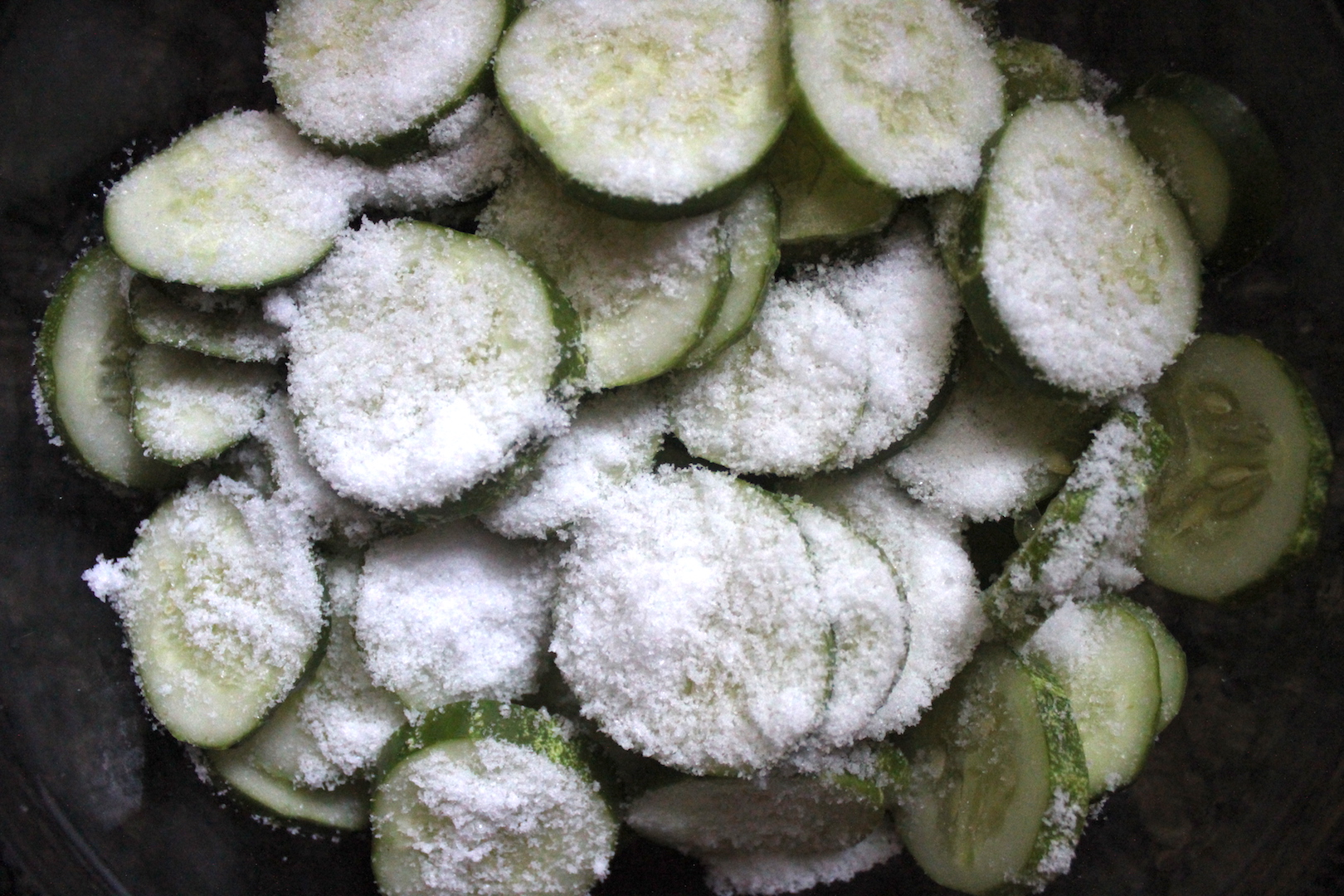
Cover everything with cold water and let it stand at room temperature for two hours while the salt draws out the bitter compounds and firms the slices up.
When the time’s up, tip everything into a colander in the sink and rinse under cool running water. Rinse more thoroughly than feels necessary. Salty pickles are the most common complaint I hear on this recipe, and a quick rinse is almost always the reason. Drain thoroughly so you’re not carrying extra water into the brine.
Keeping Bread and Butter Pickles Crisp
Small cucumbers make a crisper pickle than big ones, and that never stops being true. The gap narrows a lot with these four things, though, and a jar of big-cucumber slices done right beats a jar of small ones done carelessly.
- Work with fresh cucumbers: Same-day picked hold their texture best, whatever the size. Anything already going soft in the crisper drawer comes out softer still.
- Trim the blossom end: That end carries an enzyme that keeps softening the cucumber after it’s picked. Cut a sliver off and throw it away.
- Slice to an even thickness: A quarter inch across the whole batch. Thin slices go limp while thick ones stay firm, and a jar with both is a jar of mixed textures.
- Use the Pickle Crisp: It’s optional in the recipe, but an eighth teaspoon per pint is what evens out the difference between big cucumbers and small ones.
Making the Pickling Brine
While the vegetables are soaking, get your water bath canner heating and your jars, lids, and rings ready. The jars need to be hot when you pack them, so leave them in the simmering water until you’re ready to fill.
Combine the vinegar, sugar, mustard seed, celery seed, and turmeric in a large stainless steel saucepan and bring it to a boil over medium-high heat, stirring until the sugar dissolves. You’ll notice there’s no salt going in. All of it went into the soak, and there’s no need for more.
The one thing that doesn’t move is the vinegar. An all-vinegar brine at 5% acidity is what makes these safe for a water bath canner, and cutting it with water or swapping in something milder would change that. The sugar and spices are yours to play with.
Packing the Jars
Stir the drained cucumbers and onions into the boiling brine and bring the whole pot back up to a boil. This is a hot pack, which means the vegetables go into the jars already heated through. It drives air out of the cucumber tissue, keeps the slices from floating, and gives you a better looking jar six months down the road.
Work quickly once it’s boiling. Pack the vegetables into hot jars to within a generous half inch of the top, then ladle hot brine over them to cover, leaving a half inch of headspace. If you’re using Pickle Crisp, add an eighth teaspoon to each pint jar now.
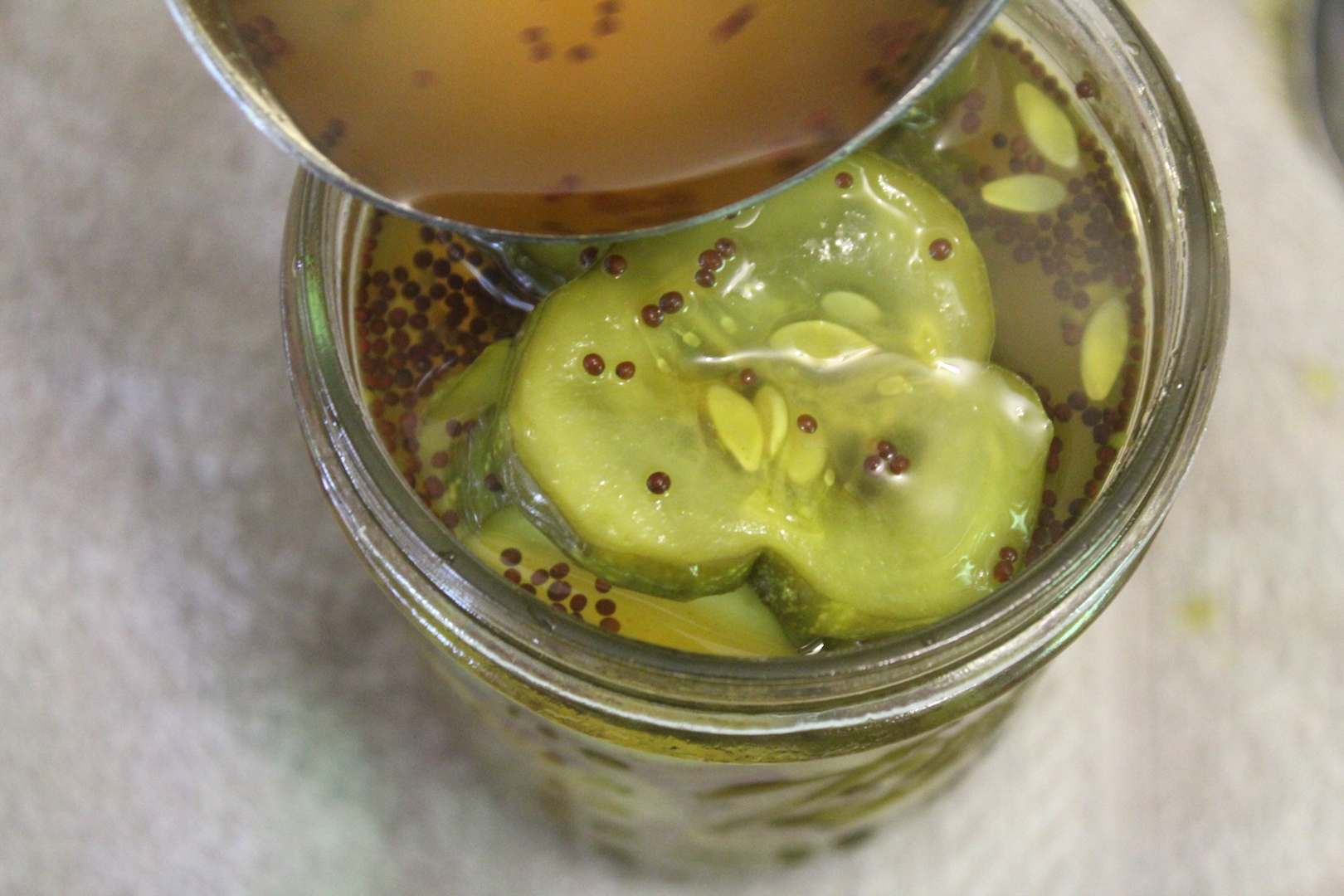
Run a bubble tool around the inside of each jar, top up with more brine if the level dropped, and wipe the rims clean. Center the lids and screw the bands down until you feel resistance, then go just past that to fingertip tight.
Canning Bread and Butter Pickles
You don’t have to can these. Packed into jars and cooled, they’ll keep in the refrigerator for a couple of months and taste every bit as good. Canning is what makes them shelf-stable, and if this is your first batch, my beginner’s guide to water bath canning walks through the whole setup.
Lower the filled jars into the canner, making sure the water covers them completely. Bring it to a boil and process for 10 minutes, counting only once the water has come back to a full rolling boil. Pints and quarts take the same time here, so a bigger jar doesn’t mean a longer boil. If the water stops boiling partway through, bring it back up and start the timer over.
When the time’s up, turn off the heat, take the canner lid off, and leave the jars sitting in the water another five minutes. That pause lets everything cool gradually, which helps the seals set, cuts down on jars cracking from thermal shock, and keeps brine from siphoning out. Then lift the jars onto a towel and leave them alone to cool.
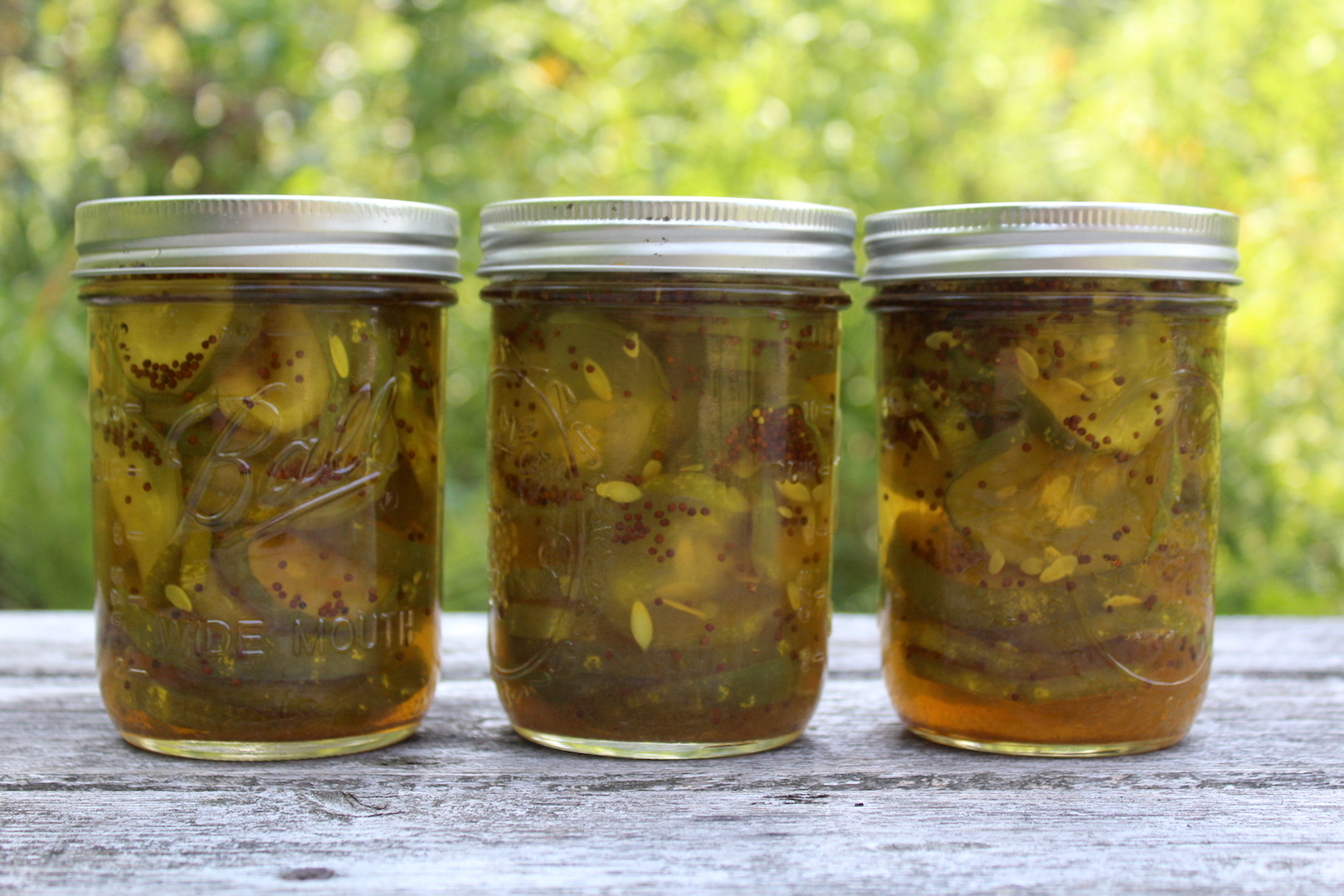
Check the seals once the jars are fully cool, and move any that didn’t take into the refrigerator. Sealed jars hold their quality for a year to 18 months in a dark cupboard. Give them at least two weeks before you open one, and they’re better after a month. The flavors need that time to settle into each other, and a jar opened the next day tastes like sharp vinegar and not much else.
Altitude Adjustments
Water boils cooler as you climb, so processing times go up with elevation. These are the National Center for Home Food Preservation times for bread and butter pickles, and they apply to pints and quarts alike.
- 0 to 1,000 feet: Process for 10 minutes for pints and quarts
- 1,001 to 6,000 feet: Process for 15 minutes for pints and quarts
- Above 6,000 feet: Process for 20 minutes for pints and quarts
One more thing worth knowing before you go shopping: cucumbers pack much tighter once they’ve been through the soak, so ten cups of slices makes fewer jars than you’d guess looking at the bowl.
Yield Notes
- Cucumbers: Figure roughly 3 to 4 pounds of whole cucumbers, but it varies quite a bit based on the cucumber size and how you pack them into the measuring cup.
- Finished yield: About 5 pint jars, or a little over 2 quarts.
- Big cucumbers: Fewer of them get you to ten cups of slices, so the pound count drops when you’re working through the oversized ones.
- Leftover brine: You’ll usually have a little. Cool it and keep it in the fridge for quick refrigerator pickles with whatever else is in the garden.
Storage Options
However you finish them, keep the jars somewhere dark. Light fades the color and dulls the flavor faster than anything else.
- Refrigerator, uncanned or open jar: 2 to 3 months
- Canned, in the pantry: 12 to 18 months for best quality, refrigerate after opening
Recipe Tips
- Rinse harder than you think: If a finished batch tastes salty, the rinse after the soak was too quick. Give it a few more weeks in the jar and it usually mellows.
- Spears work too: Rounds are traditional, but there’s nothing stopping you from cutting the cucumbers into quarters lengthwise instead. Keep the thickness even.
- Ground spices in a pinch: Whole mustard and celery seed are worth seeking out, but ground versions work at roughly half the volume. The brine comes out cloudier.
- A slicer saves your afternoon: Getting uniform quarter-inch rounds by hand is slow going. A mandoline slicer turns a big harvest into a manageable job.
Bread and Butter Pickle Variations
Before the fun part, the boundary. The vinegar, the ratio of vegetables to brine, and the processing time all stay exactly as written, because those three things are what make the jars safe on the shelf. Everything else is fair game. The sugar and salt aren’t preserving anything here, so adjust them freely, and the spices are entirely a matter of taste.
The Ball book publishes three named versions alongside the traditional one. For British bread and butter pickles, swap cider vinegar for the white and packed brown sugar for the granulated, then add a teaspoon of ground ginger along with the turmeric. It makes a darker, rounder pickle with more caramel to it.
Zesty bread and butter pickles trade the celery seed for prepared horseradish and the turmeric for grated fresh gingerroot, two tablespoons of each. Losing the turmeric means losing the golden color, so don’t be surprised when they come out pale. They cut hard against the sweetness, which is the point.
Garlic bread and butter pickles are the third, and they’re my pick of the three. Slice the cloves thin and add them to the jars before you fill them, three cloves per pint or six per quart. Slicing matters more than it sounds, since whole cloves sit as dense lumps that heat differently from everything around them. That goes for the single clove in the traditional version too.
Readers have sent in good ones too. Sliced jalapeños give you a couple of rings per jar and a real kick, and sliced bell peppers work the same way for color and sweetness. Red pepper flakes or cracked black pepper are the simplest route to sweet and spicy if you’d rather not slice anything.
If you’re adding peppers, slice them rather than dropping them in whole, and make up a little extra brine so everything in the jar stays fully covered. Keep it all vinegar with no water added, and the acidity has plenty of room to spare for a handful of peppers.
You can also swap summer squash in for the cucumbers, pound for pound. That isn’t me improvising, it’s standing guidance from the National Center for Home Food Preservation that summer squash substitutes for cucumbers in any tested pickle recipe. Slender zucchini and yellow squash both work, sliced the same quarter-inch, which is a useful thing to file away come August.
Zucchini bread and butter pickles are darn good too. And if the squash pile is the real problem, my zucchini canning recipes have more ideas.
Bread and Butter Pickle FAQs
Give them at least two weeks, and they’re better after a month. The vinegar, sugar, and spices need time to work into the cucumber slices, and a jar opened the day after canning tastes sharp and unbalanced. Nothing goes wrong if you wait longer, and a batch that sits until fall is usually the one people ask me about.
Yes, and that’s a large part of why I make this recipe. The two-hour soak in salted water pulls the bitterness out of oversized cucumbers, which is the thing that usually ruins them for pickling. Slice everything to an even quarter inch so the pieces heat uniformly in the canner, and add an eighth teaspoon of Pickle Crisp per pint jar. Small cucumbers still give you a crisper pickle, but the gap closes a lot.
You can. The recipe is written to fill five pints, but quarts process for the same 10 minutes, so the jar size doesn’t change your timing. Leave the same half inch of headspace and make sure the brine covers everything. If you’re using Pickle Crisp, double it to a quarter teaspoon for a quart jar. Pints do heat through a little faster, so they tend to come out marginally firmer.
You do if you want them shelf stable. Boiling the brine and packing it into hot jars will often produce a seal, but that’s open kettle canning and it isn’t a tested or safe method, no matter how many years it seemed to work. If you’d rather skip the canner entirely, pack the jars, cool them, and keep them in the refrigerator instead, where they’ll last about two months.
The usual culprits are cucumbers that were already past their prime, slices cut too thin or unevenly, or a soak that got cut short. The blossom end matters too, since it carries an enzyme that keeps breaking the cucumber down after harvest, so trim a sliver off each one. An eighth teaspoon of Pickle Crisp per pint jar also firms things up without affecting the acidity.
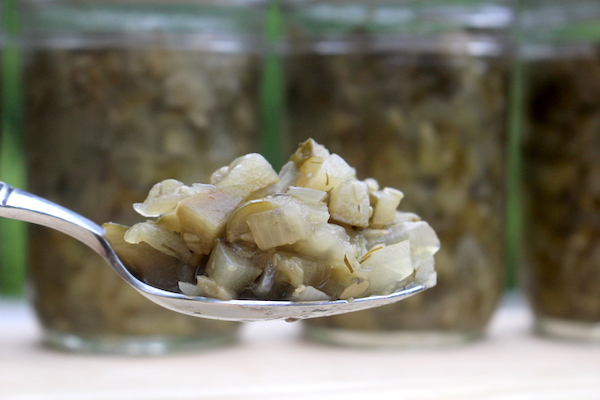
If the cucumber vines are still producing faster than you can keep up, here are a few more ways to get them into jars.
Ways to Preserve Cucumbers
Did you make these bread and butter pickles? Leave a ⭐⭐⭐⭐⭐ star rating on the recipe card below and tell me in the 📝 comments how your batch turned out!
And make sure you stay in touch with me by following on social media!
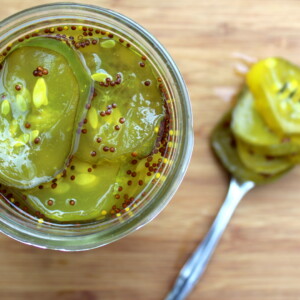
Traditional Bread and Butter Pickles
Equipment
Ingredients
- 10 cups cucumbers, pickling type, trimmed and sliced in 1/4 inch slices
- 4 medium onions, thin sliced, about 1 cup yield each
- 1/2 cup pickling or canning salt, for soaking cucumbers
- 3 cups white vinegar, or cider vinegar, 5% acidity
- 2 cups Sugar
- 2 tbsp mustard seeds
- 1 tsp celery seed
- 1 tsp ground turmeric
- pickle crisp, optional 1/8 tsp per pint or 1/4 tsp per quart
Instructions
- Wash the cucumbers and trim 1/16 inch off the blossom end of each one. Slice into even 1/4 inch rounds. Thinly slice the onions.
- Combine the cucumbers, onions, and pickling salt in a non-reactive glass or stainless steel bowl. Mix well, cover with cold water, and let stand at room temperature for 2 hours.
- Prepare a water bath canner, jars, and lids while the cucumbers are soaking. Keep the jars hot until you’re ready to fill them.
- In a large stainless steel saucepan, combine the vinegar, sugar, mustard seed, celery seed, and ground turmeric. Note that all the salt in this recipe goes into the soak and is not added to the pickling brine.
- Bring the pickling brine to a boil over medium-high heat, stirring to dissolve the sugar.
- Transfer the cucumbers and onions to a colander, rinse thoroughly under cool running water, and drain well.
- Add the drained vegetables to the boiling brine and return the mixture to a boil.
- Pack the hot vegetables into hot jars to within a generous 1/2 inch of the top. Ladle hot brine over them to cover, leaving 1/2 inch headspace. Add 1/8 tsp Pickle Crisp per pint jar if using.
- Remove air bubbles, adjust headspace with more hot brine if needed, and wipe the rims clean. Center the lids and screw the bands down to fingertip tight.
- Process in a water bath canner for 10 minutes, then turn off the heat and leave the jars in the canner for another 5 minutes before removing them.
- Allow the jars to cool completely before checking seals and removing bands for storage.
Notes
Nutrition
Nutrition information is automatically calculated, so should only be used as an approximation.
Once the pickle jars start lining up on the shelf, it’s hard to stop. Here’s what else is going into the canner this season.
Pickling Recipes
Find the perfect recipe
Searching for something else? Enter keywords to find the perfect recipe!











I like this one, but the turmeric is a bit too much. I cut it in half and prefer the color and flavor that way. Also, can pickle crisp be used in these? I know that’s an option in your dill recipe (which I love) but I didn’t see it mentioned here. I’m not sure if there is a difference due to the sugar content. Anyway, thank you for these!
Yes, you can definitely use pickle crisp in these, that works just fine. And the turmeric can be reduced as much as you like, no problem. Enjoy!
Do you have to water bath
If you want them to be shelf stable, then yes. You can make these as a refrigerator pickle without canning and that works fine.
I decided to try your recipe for my first time using my new Presto Precise Digital Canner, using water canning method.
After reading the recipe and some of the comments, I followed yours, and added some garlic, 1sp horseradish, and 1 tsp grated ginger, and some peppercorns to brine……….. So far the process with my new canner has gone well, they all have sealed, and it was perfect amount for 5 pts. I will be looking at more of your recipes, and subscribed to your newsletter and site:)
That’s great. We’re so glad you enjoyed the recipe.
Can I let the cucs sit in the salt longer than 2 hours?
It would probably be ok to leave them for a little while longer.
I have the same Ball recipe in front of me, but your directions state at the beginning to have the cucumbers and salt together for a couple of hours. The Ball recipe says to add cold water to cover and let stand for two hours. Curious why you didn’t do the cold water? I’ve seen other recipes do what you do as well, just curious. Thanks.
I’m not sure why different recipes show one method or the other but this is a method that we use for other vegetables when we need to remove the bitterness.
Thank you for the recipe. I’ve just made them and am excited to try them in a couple of weeks.
You’re very welcome.
Can I not use the onions? I know it’s not good to change the recipe sometimes, but I’m allergic.
Yes, it’s totally fine to omit the onions.
I don’t like ginger but i do like horseradish and I like turmeric but never tried those 2 spices together. Is it ok to use turmeric with horseradish or are they terrible together?
I think turmeric and horseradish would be fine together.
Sadly, we cannot use onions or garlic in our house due to food intolerances. Would I be able to omit the onion, possibly subbing with sweet red peppers? I realize the flavor would be different, but do you think it would be awful? I’m really struggling to find a decent pickle that doesn’t use onions, garlic or even dill (yes we have an intolerance to that, as well as celery). Any info would be great!
You can either leave them out or swap them for something else. I’m not sure what the flavor would be like with the red peppers but if you try it let us know.