
Affiliate disclosure: This post may contain affiliate links. Please see our Privacy Policy.
Kefir yogurt turns the kefir culture you already keep for cheesemaking into a pot of thick, mild yogurt, with no separate starter to buy or maintain. If you’ve got active kefir on hand, you can make a spoonable, set yogurt with nothing more than milk, gentle heat, and a little of that culture.
It tastes milder than store-bought yogurt, without the fizz or sharp tang of a glass of kefir, and it sets up smooth and creamy.
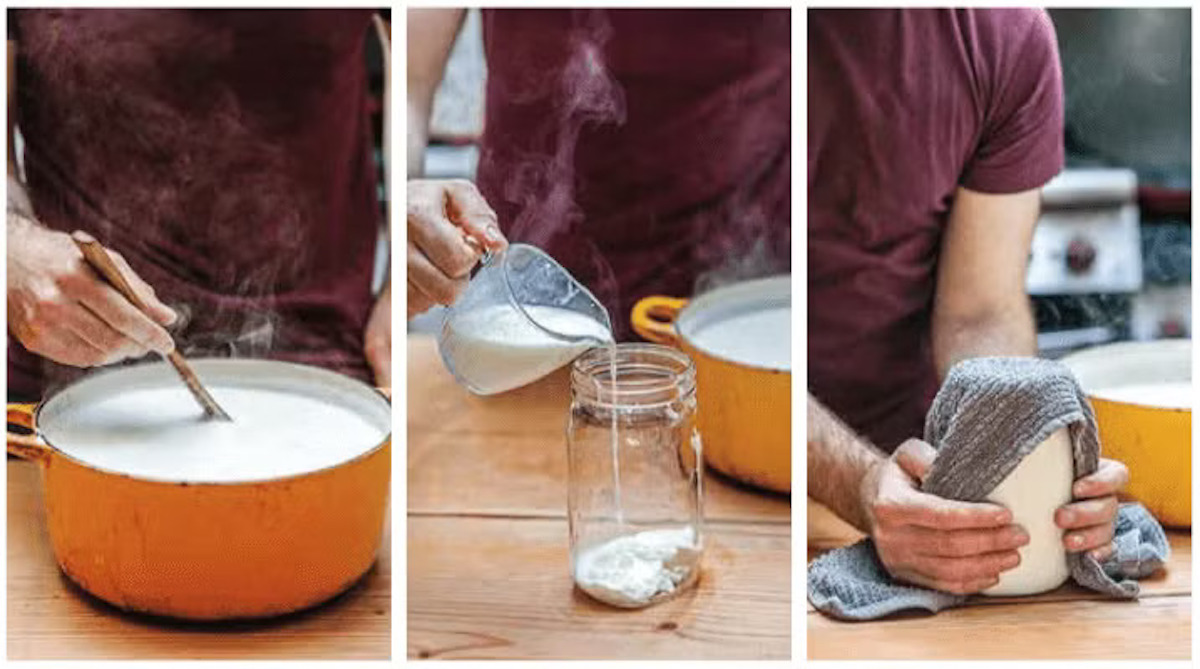
Table of Contents
- Notes from My Homestead
- What Is Kefir Yogurt?
- Will Warm Incubation Kill the Kefir Cultures?
- Ingredients
- How Much Kefir to Use
- How to Make Kefir Yogurt
- Troubleshooting Kefir Yogurt
- Storage
- Ways to Use Kefir Yogurt
- Kefir Yogurt FAQs
- Cultured Dairy Recipes
- Homemade Yogurt with Kefir Starter Recipe
- Yogurt & Cheese Recipes
Most of us think of kefir and yogurt as two different things. Kefir is a thin, tangy, slightly fizzy drink, and yogurt is the thick, spoonable stuff you eat for breakfast. The two are made with different cultures fermented at different temperatures, but here’s the part that surprises people: the same kefir culture can make either one. The difference comes down almost entirely to how you handle the milk, not which microbes you start with.
This method is adapted from David Asher’s The Art of Natural Cheesemaking, which is a well-worn book on our shelf for its simple, low-intervention approach to dairy. If you keep a kefir culture going for cheesemaking, this is a handy way to get yogurt out of it too, so you’re not also babysitting a separate yogurt culture.
This recipe is adapted from The Art of Natural Cheesemaking by David Asher (Chelsea Green Publishing, 2015). Recipe and photos used with permission from the publisher.
Notes from My Homestead

I keep a milk kefir culture going year-round, mostly because it doubles as an all-purpose cheesemaking starter. Once you have one healthy culture on the counter, it feels silly to also maintain a separate yogurt culture that needs its own feeding and attention. Using the kefir for yogurt too means one less thing to keep alive.
The flavor is the part I keep coming back to. This makes a gentle, mellow yogurt rather than the bracingly sour kind, which is exactly what gets eaten around here.
What Is Kefir Yogurt?
Kefir yogurt is simply yogurt that uses kefir as the starter culture instead of a packet of freeze-dried yogurt culture or a spoonful of store-bought yogurt. You heat the milk, cool it, stir in a little active kefir, and incubate it warm until it sets. The result is a true yogurt, thick and spoonable, not a thin kefir drink.
What makes this work is that kefir is a wonderfully mixed culture. It contains both room-temperature (mesophilic) microbes and heat-loving (thermophilic) ones. When you incubate it warm, the heat-loving Lactobacillus and Streptococcus bacteria take over and behave exactly like a yogurt culture, because that is what they are. If you’d rather ferment a kefir culture cool and let the other microbes lead, that’s a different product, and I cover it in my guide to mesophilic yogurt made at room temperature.
Will Warm Incubation Kill the Kefir Cultures?
This is the most common question I get about kefir yogurt, and it’s a good one. Traditional kefir is fermented at room temperature, somewhere around 70°F, because that’s where kefir’s full community of bacteria and yeasts thrives. Yogurt, on the other hand, sets best between 100 and 110°F. So if you incubate kefir warm, aren’t you killing off most of what makes kefir special?
The honest answer is that warm incubation does change which microbes are active. At yogurt temperatures, kefir’s heat-loving bacteria flourish and set the milk into yogurt, while the cooler-loving bacteria and the yeasts go quiet. That’s actually the point. Quieting the yeasts is what removes the fizz and gives you a smooth, mild yogurt instead of a tangy, effervescent drink.
You are not preserving the full diversity of a room-temperature kefir, and you shouldn’t expect to. What you get is a real yogurt, cultured by the yogurt-type bacteria that happen to live in your kefir. If keeping that broader microbial mix is your goal, ferment cool instead and make drinkable mesophilic yogurt or plain kefir.
Ingredients
The whole recipe is just two things, milk and kefir.
- Whole milk: Use whole milk for the thickest, creamiest result, pasteurized or raw. Avoid ultra-pasteurized milk, which has been heated so hard it doesn’t culture or thicken well. If the kefir is made with raw milk and you use raw milk here, you’ll get a true raw milk yogurt.
- Active kefir: Use kefir that’s fresh and lively, ideally prepared the day before, so it’s at its most vigorous. Strained kefir grains, finished kefir, or even a bit of plain yogurt will all work as the starter.
How Much Kefir to Use
The simple ratio is 1/4 cup of kefir per quart of milk. A full gallon batch makes about 3 quarts of yogurt once the milk cooks down, so that works out to about 3/4 cup of kefir total.
- The easy method: Put 1/4 cup of kefir into each quart jar, add a splash of the cooled milk and stir, then top off each jar with the rest of the milk. This spreads the culture evenly without measuring into one big pot.
- Less is more: Resist the urge to add extra kefir. Too much starter tends to make the yogurt thin, foamy, or sharply tart, and it can carry through too much of that raw kefir flavor.
Thanks for your contribution to the best yogurt I’ve ever made!
How to Make Kefir Yogurt
The technique matters more than the culture here. Almost everything that makes thick, good yogurt comes down to how you cook and handle the milk.
Cook the Milk
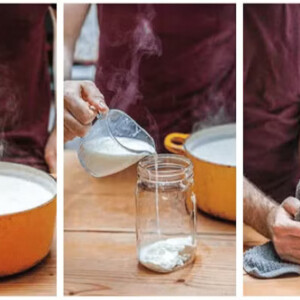
Slowly warm the milk to 185°F over medium heat in a heavy-bottomed pot, stirring as it heats. Hold it at 185°F for 30 minutes to an hour, stirring nonstop the whole time. This step does the heavy lifting: it concentrates the milk for a thicker yogurt, denatures the proteins so they set into a firmer curd, and drives off oxygen so the right fermentation can take hold. Stirring constantly keeps the milk from scorching on the bottom or forming a skin on top, both of which steal from the final texture. The longer you hold it at 185°F, the thicker your yogurt will be.
Cool the Milk
Take the pot off the heat and let the milk cool to 110°F, stirring now and then so a skin doesn’t form. This part is not optional. If you add the kefir while the milk is still hotter than about 110°F, you’ll kill the very cultures you’re counting on to set the yogurt. A thermometer makes this easy, but the old test works too: if you can hold a clean finger in the milk for only about 10 seconds before it’s uncomfortable, you’re in the right range.
Add the Kefir
Once the milk has cooled to 110°F, add 1/4 cup of kefir to each clean quart jar. Pour in a roughly equal splash of the cooled milk and stir to blend the culture in, then fill each jar the rest of the way with the remaining milk and stir again. Working jar by jar like this is the trick that confused so many readers of the original recipe: the 1/4 cup is per quart jar, and three jars add up to the 3/4 cup in the ingredient list. Cap the jars loosely.
Incubate Until Set
Keep the jars warm, between 100 and 110°F, while the yogurt sets. An insulated cooler filled with warm water, a yogurt maker, or an oven with just the light on all work well. Avoid letting the temperature drop too low, which lets the yeasts wake back up and can turn the batch fizzy instead of set. Start checking after about 12 hours, then every several hours after that. Kefir is a less predictable starter than a packaged yogurt culture, so set times vary quite a bit. Once the milk has thickened to your liking, move the jars to the refrigerator to stop the fermentation. The longer you leave it at incubation temperature, the tangier it gets.
Troubleshooting Kefir Yogurt
- Foamy, fizzy, or tastes like raw kefir: Usually too much starter, or the incubation ran too cool and let the yeasts take over. Use less kefir next time and hold a steadier warm temperature.
- Too thin: The milk likely wasn’t cooked long enough at 185°F, or it was ultra-pasteurized. Cook longer next time and switch to a milk that isn’t ultra-pasteurized.
- Too tart: It incubated longer than your taste prefers. Chill it sooner once it sets.
- Never set: The kefir may have been weak or added to milk that was still too hot. Use fresh, active kefir and double check that the milk has cooled to 110°F before adding it.
Storage
Kept in the refrigerator, kefir yogurt will stay good for about two weeks. The flavor mellows and sometimes sharpens a little over the first few days. You can also save a few spoonfuls of finished yogurt to use as the starter for your next batch, though kefir grains will give you the most reliable results over the long run. If you want to keep milk on hand for batches through the year, you can even freeze dry milk for long-term storage.
Ways to Use Kefir Yogurt
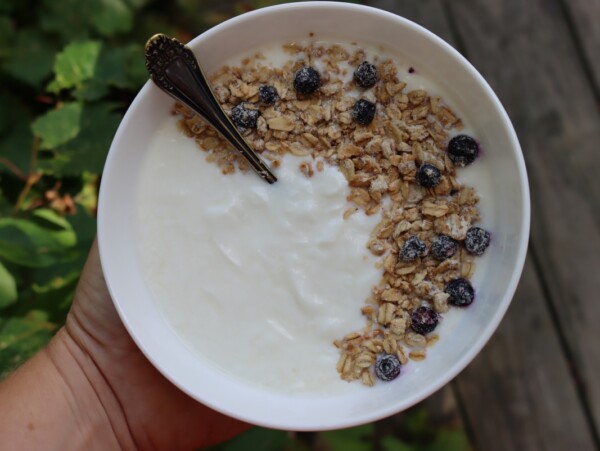
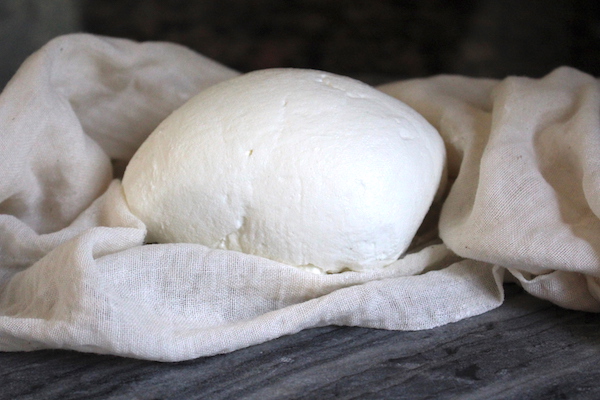
This is an everyday yogurt, so use it anywhere you’d use a mild plain yogurt: spooned over fruit and granola, blended into smoothies, dolloped onto soups and curries, or whisked into dressings and marinades. For something thicker, strain it through cheesecloth into yogurt cheese, which gives you a spreadable, tangy soft cheese a lot like labneh.
If you’re enjoying turning one kefir culture into a whole dairy routine, the same starter will carry you through plenty of other projects. Try cultured mozzarella, crème fraîche, cultured butter, cultured buttermilk, or fresh paneer and farmer’s cheese. You’ll find the whole collection in my 50+ cheesemaking recipes, and if you’re just getting started with cultured dairy, my water kefir tutorial is a fun, dairy-free ferment to keep alongside it.
Kefir Yogurt FAQs
Use about 1/4 cup of kefir per quart of milk. A gallon of milk makes roughly 3 quarts of yogurt, so that comes to about 3/4 cup of kefir total. The simplest way is to put 1/4 cup of kefir into each quart jar, stir in a splash of the cooled milk, then fill the jars the rest of the way. Adding more kefir than this tends to make the yogurt thin, foamy, or overly tart.
Warm incubation does change which microbes are active. At 100 to 110°F, the heat-loving Lactobacillus and Streptococcus bacteria in the kefir take over and set the milk into yogurt, while the cooler-loving bacteria and yeasts go dormant. That is intentional, since quieting the yeasts is what removes the fizz and gives you a smooth, mild yogurt. You won’t keep the full diversity of a room-temperature kefir, but you do get a true yogurt cultured by the kefir’s yogurt-type bacteria. To keep that broader mix, ferment cool and make a mesophilic yogurt instead.
It usually sets in 12 to 24 hours, though it can take up to 36 hours depending on how vigorous your kefir is and how warm you keep it. Kefir is a less predictable starter than a packaged yogurt culture, so start checking after about 12 hours and then every few hours until it has thickened to your liking. The longer it incubates, the tangier it becomes.
No, it’s noticeably milder. Because the warm incubation quiets the yeasts and cooler-loving bacteria, you don’t get the fizz or the sharp, sour bite of a glass of kefir. Kefir yogurt tastes like a gentle, mellow plain yogurt with a smooth, creamy texture. If you prefer a sharper flavor, simply let it ferment a little longer before chilling.
Yes. Any active, live kefir works, including store-bought, as long as it contains live cultures and no thickeners or additives. A few spoonfuls of plain live yogurt will also work in place of kefir. Whatever you use, make sure it’s fresh and active for the most reliable set.
Cultured Dairy Recipes
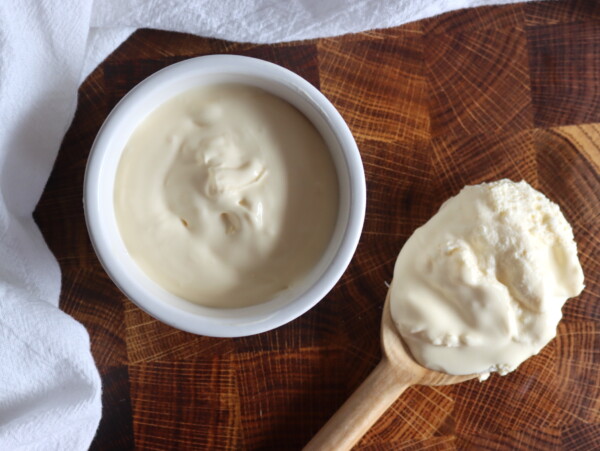
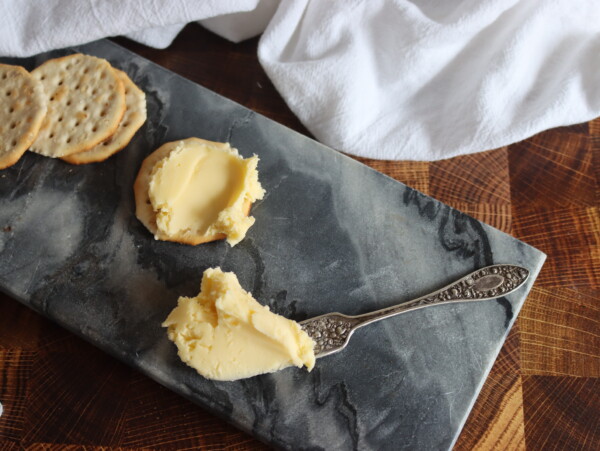
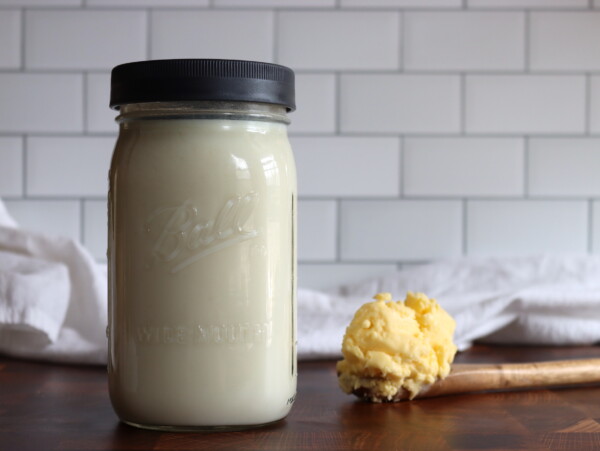
Did you make a batch of kefir yogurt? Come back and give the recipe a ⭐⭐⭐⭐⭐ star rating and tell me in the 📝 comments how it turned out!
And make sure you stay in touch with me by following on social media!
Homemade Yogurt with Kefir Starter
Ingredients
- 1 gallon Whole milk, pasteurized or raw, preferably unhomogenized
- 3/4 cup active kefir, 180 mL, prepared the day before, or yogurt (1/4 cup per quart jar)
Instructions
- Slowly warm the milk to 185°F (85°C) over medium heat. Stir the milk as it warms.
- Cook the milk at 185°F for 30 minutes to 1 hour. Stir it nonstop. The longer the milk is cooked, the thicker the yogurt will be.
- Cool the milk to 110°F (43°C): Take the pot of milk off the heat, and stir it until the temperature falls to that point. Don't add the culture before it cools to 110 F or you may kill the culture.
- Add 1/4 cup (60 mL) of kefir to each quart jar (3/4 cup total for 3 jars). Pour an equal splash of cooled milk into each jar and stir, then fill the jars with the remaining milk.
- Cap the jars loosely and move them to your warm incubation spot.
- Incubate at 100-110°F. Start checking at 12 hours, then every few hours until set, typically 12 to 24 hours (up to 36 with a slow culture).
Notes
Nutrition
Nutrition information is automatically calculated, so should only be used as an approximation.
Yogurt & Cheese Recipes
Find the perfect recipe
Searching for something else? Enter keywords to find the perfect recipe!













I really appreciate all the information on kefir. I’m just learning how to make it and your page has been very helpful. Thank you!
So glad it’s helpful to you!
Would love to try this recipe and wondering if I could use goat milk instead of whole milk.
Yes, goat milk will work just fine. Enjoy!
I did a kefir yogurt once before until today. I think I added way too much kefir and it turned out rather foamy and very tart. Today, I’m doing far less; just one big soup spoon full or about 1/8 cup for 16 oz of milk. The first batch tasted like it was straight up kefir from the original bottle and not like yogurt at all. Then I ran across an article that said less kefir is more! I’m hoping that your words that it is milder than other yogurts holds true. It sure didn’t the first time, but I think that was my fault. I don’t make big batches because I only have 30% of my stomach remaining from stomach cancer. I can’t eat much at one time. I always enjoy the experience of others because trying it often times proves to be very beneficial. Thanks for your contribution to the best yogurt I’ve ever made!
I make regular yogurt all the time. I just recently heard about Kefir yougurt. I like the idea of including all those various microbes in a yogurt. However, Kefir is incuabted at room temperature. 71ºF. But these instructions say to incubate at 100-110ºF. Won’t you just kill a lot of the various microbes and only end up with the usual common yougurt microbes. Therefore it seems a waste of kefir.
You aren’t killing the other microbes, they’re still there, you’re just selecting for the yogurt centric microbes instead. They proliferate much faster, giving you yogurt instead. You’d have to go to around 120-130 F to actually start killing any of the existing kefir microbes.
how long do you culture it? I didn’t see that in the recipe.
The culturing time for kefir yogurt can be quite variable, both dependent on the vigor of your culture and your tastes in yogurt (some like it a bit more cultured than others). In general though, the culture time usually falls in the 12 to 36 hour range.
Very cool article! I was wanting to find out if adding a little homemade kefir to warm milk along w a scoop of yogurt would increase the probiotics in the new batch of yogurt or if the cultures would even cohabitate. It never occurred to me i could skip the scoop of yogurt entirely and get a more richly diverse probiotic yogurt from just the kefir! But it makes sense, completely! I will definitely be trying and likely switching over to kefir yogurt:) Thank you for this thoughtful post and a super informative website:)