
Affiliate disclosure: This post may contain affiliate links. Please see our Privacy Policy.
Lemon or lime curd is one of the few ways to safely can up eggs at home. There’s plenty of high acid juice in it, which means that it’s safe for water bath canning.
This recipe follows the National Center for Home Food Preservation’s Lemon Curd, Canned. Lime curd works just as well, and they’re both great homemade gifts for the holidays. Other citrus curds, like orange or grapefruit, don’t have a tested canning process, so stick with lemon or lime.
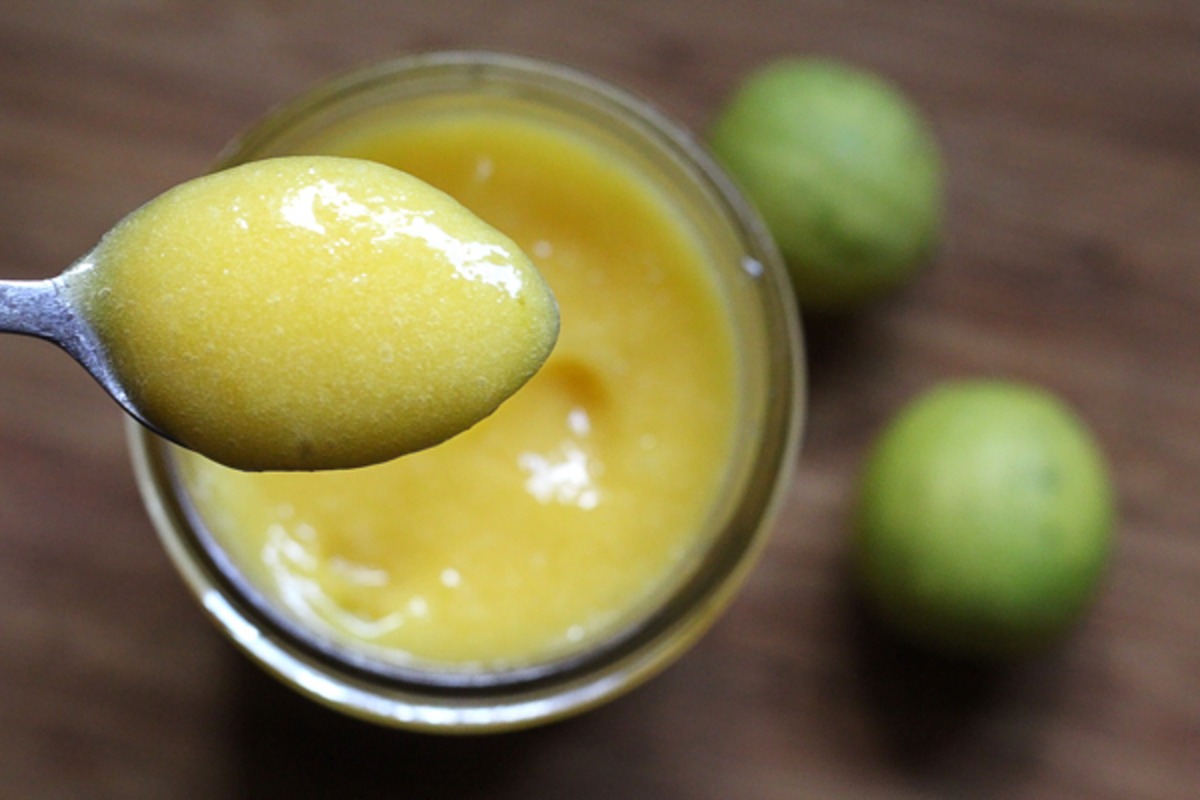
Living in Vermont really has its perks, and I love it most of the year. Clearly, others do too, and just about every corner store seems to cater to tourists with cute gifts for passers-by wanting to take home a bit of the Green Mountain State.
I can all my own jams, but I still love perusing the cute gift shelves in coffee shops for ideas. A few weeks ago I spotted a jar of locally made lemon curd canned up and shelf-stable.
Wait just a minute…canning lemon curd? Really? That’s a thing? Lemon curd has both eggs and butter, and I thought both of those were on the no-fly list for home canning?
Apparently not, and once you think about it, it makes sense. Lemon curd is wicked acidic, and you’re slowly pasteurizing the eggs as the mixture thickens. All that lemon juice then keeps it acidic enough for water bath canning.
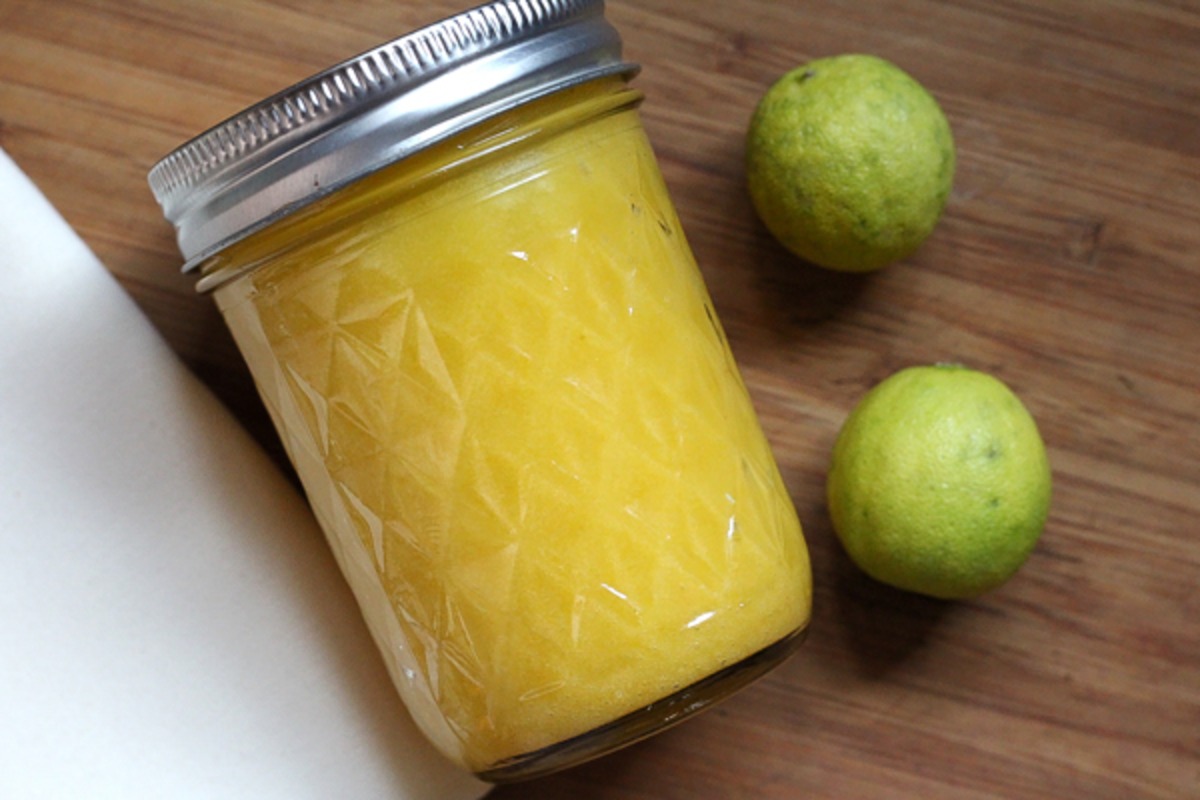
My husband is particularly fond of limes, and when I came across a bag of key limes, I decided to try a lime version. Fair warning though, lime curd isn’t as photogenic as lemon curd.
It doesn’t matter whether you use lemon or lime, the curd will still be yellow because of the egg yolks. As far as gifts are concerned, stick with lemon unless you know someone is a die-hard lime fan.
For lime curd, use the fresh limes for the zest only. The juice is half bottled lemon juice and half bottled lime juice, 1/2 cup of each. A straight lime curd comes out harsh, and the blend actually tastes more like lime.
Start by bringing a water bath canner up to 180 degrees F, and don’t let it get any hotter before the jars go in. The curd needs a slow buildup to boiling in the canner, and this step can’t be skipped.
You’ll need a dependable thermometer that can read up to 180 degrees to ensure you’re starting at the right temperature. Get the water warm and then keep it there while you prepare the citrus curd.
While the canner heats, mix the sugar and zest in a small bowl and let them stand for about 30 minutes. Next, bring the water in the bottom of a double boiler to a gentle boil. The top bowl should sit above the water without touching it, so the steam does the cooking.
Take the top bowl off the double boiler and whisk together the egg yolks and whole eggs. Whisk in the sugar and zest until smooth, then add the bottled lemon juice and the cold unsalted butter pieces. Use bottled juice here, not fresh. Bottled juice has a standard acidity, and fresh lemons vary, so NCHFP doesn’t recommend fresh juice for canned curd.
Set the bowl over the gently boiling water and cook slowly, stirring gently the whole time. It won’t look like much at the start, but as the mixture heats it’ll begin to thicken nicely.
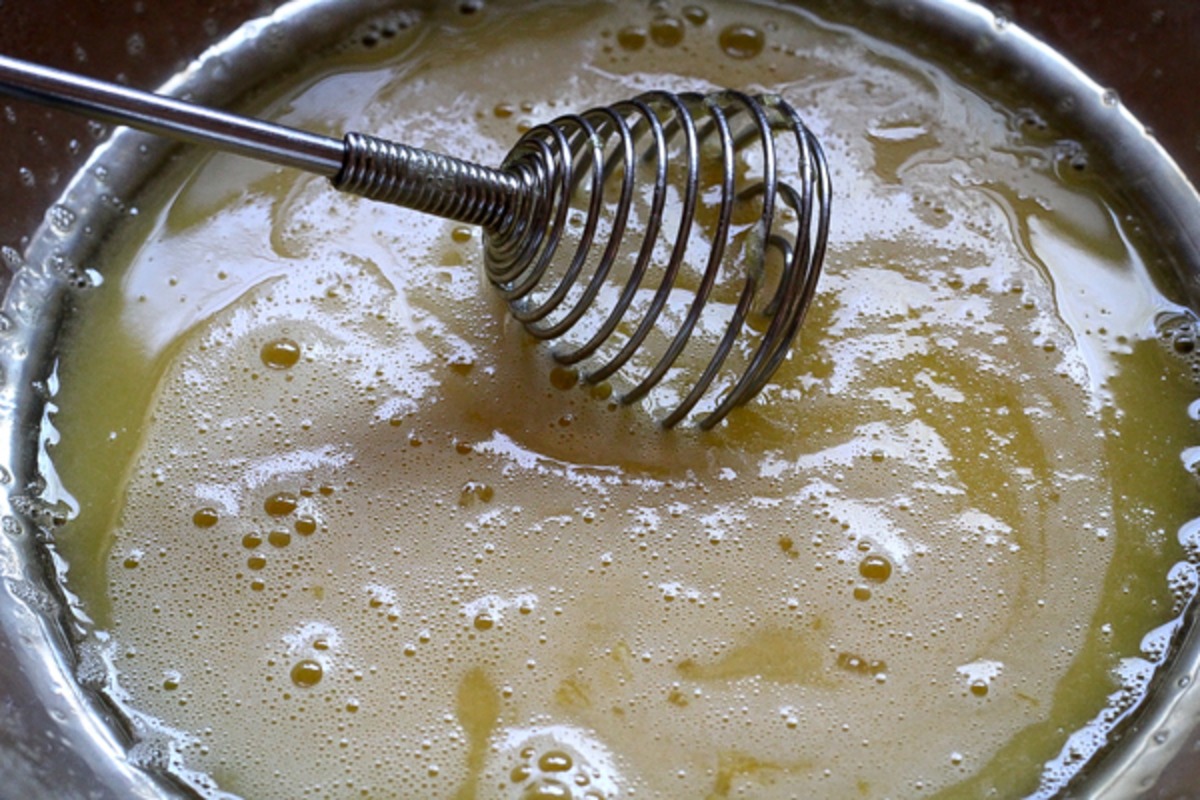
Keep stirring over the double boiler until it reaches a temperature of 170 degrees F. This is easy to measure with a digital thermometer, and you’ll need one anyway for ensuring the water is the right temperature for the canning process. Once it’s 170 degrees, remove the bowl from the double boiler and continue to stir for another 5 minutes while the mixture continues to thicken.
If the curd seems stuck below 170 degrees, the water in the bottom pan isn’t simmering. Turn it up to a gentle boil and keep stirring. The curd has to reach 170 degrees before it goes in the jars, so don’t can a batch that won’t get there.
Then strain the curd through a fine-mesh strainer into a glass or stainless steel bowl. That takes out the zest and any bits of egg that cooked too quickly.
Now it’s time to get the curd into the jars. Pour the hot curd into hot half pint jars, leaving 1/2 inch headspace. NCHFP only gives a process for half pints, though smaller jars can use the half pint time.
Place the filled jars in the water bath canner, still at 180 degrees F. Turn up the heat and bring the water to a boil with the lemon curd jars inside the canner. It should take 25 to 30 minutes to bring the water to a boil, and this preheat time is important to the canning process.
Once the water reaches a full boil, start the timer. Process the jars for 15 minutes at a full boil, adjusting for altitude with the chart below. That’s on top of the 25 to 30 minutes it takes the canner to come to a boil.
When the time is up, turn off the heat, take the lid off the canner, and let the jars sit in the water for 5 minutes before lifting them out. That short rest helps prevent siphoning.
Altitude Adjustments
These processing times are for water bath canning half pints, and they go up at higher elevations.
- 0 to 1,000 feet: 15 minutes
- 1,001 to 6,000 feet: 20 minutes
- Above 6,000 feet: 25 minutes
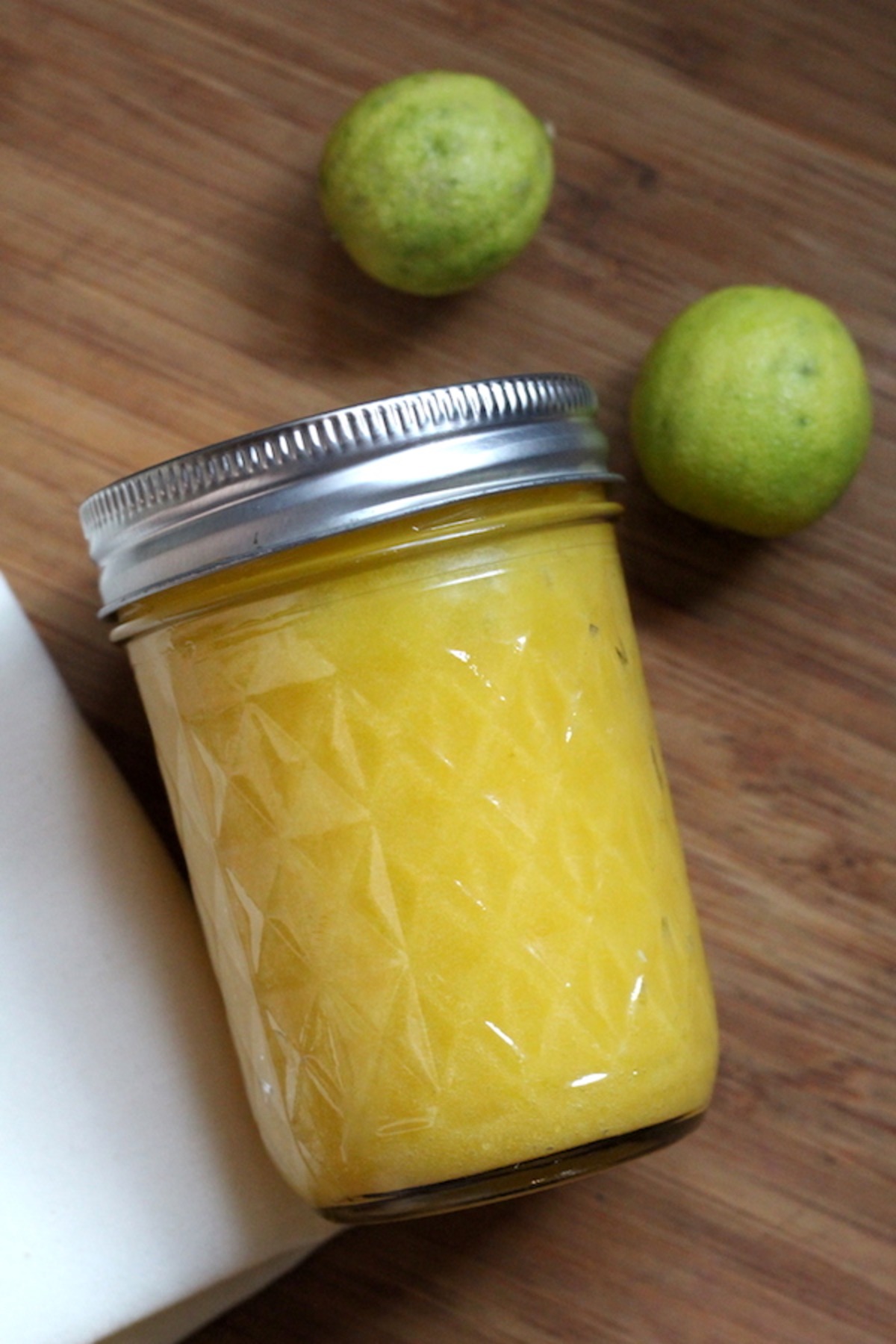
Remove the jars and allow them to cool to room temperature before checking seals. Store any unsealed jars in the refrigerator and use them within 4 weeks, or freeze the lemon curd and it’ll keep for a year.
While jams and jellies store easily for 12 to 18 months without issue, lemon curd is a bit different. It’s best to use the sealed jars within 3 to 4 months because after that point they’ll start to separate and discolor.
Canning lemon curd allows you to preserve it long enough to give as an edible gift, but it won’t preserve it forever. Be sure the recipient knows not to lose the jar at the back of the pantry.
This recipe yields 3 or 4 half pint jars. If your eggs are on the smaller side, you may be a bit short for the 4th jar, so put that one in the fridge for immediate use rather than canning.
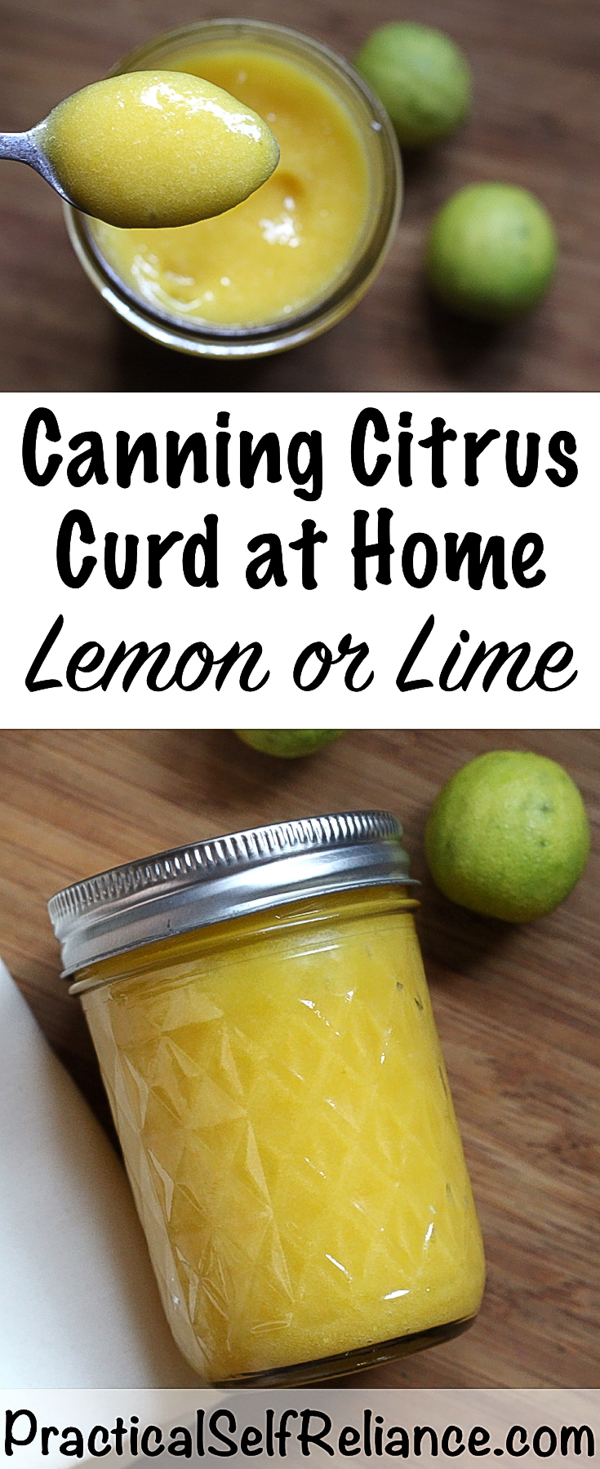
Canning Lemon Curd (or Lime Curd)
Ingredients
- 2 1/2 cups superfine sugar, see notes
- 1/2 cup fresh lemon zest, optional
- 1 cup bottled lemon juice
- 3/4 cup unsalted butter, chilled, cut into small pieces
- 7 large egg yolks
- 4 large whole eggs
Instructions
- Heat the water in your water bath canner to 180 degrees F, and hold it there, not boiling, while you make the curd. Keep 4 half pint jars hot.
- Mix the sugar and zest in a small bowl and let them stand for about 30 minutes.
- Bring the water in the bottom of a double boiler to a gentle boil. The top bowl should sit above the water without touching it.
- In the top bowl, off the heat, whisk the egg yolks and whole eggs until well mixed. Slowly whisk in the sugar and zest, then blend in the bottled lemon juice and add the cold butter pieces.
- Set the bowl over the gently boiling water and stir gently and constantly until the curd reaches 170 degrees F. If it stalls below 170, the water underneath isn’t simmering, so turn it up to a gentle boil.
- Take the bowl off the heat and keep stirring gently until the curd thickens, about 5 minutes. Strain it through a mesh strainer into a glass or stainless steel bowl, and discard the zest.
- Fill the hot jars with the hot curd, leaving 1/2 inch headspace. Remove any air bubbles, wipe the rims, and add the lids and bands.
- Place the jars in the 180 degree canner and bring the water to a full boil, which takes 25 to 30 minutes.
- Once the water reaches a full boil, process the jars for 15 minutes, adjusting for altitude (see notes).
- Turn off the heat, take the lid off the canner, and let the jars sit in the water for 5 minutes before lifting them out.
- Let the jars cool to room temperature before checking the seals. Refrigerate any jar that didn’t seal and use it within 4 weeks.
Notes
- 0 to 1,000 feet: 15 minutes
- 1,001 to 6,000 feet: 20 minutes
- Above 6,000 feet: 25 minutes
Nutrition
Nutrition information is automatically calculated, so should only be used as an approximation.
More Ways to Preserve Lemons
Here are more easy ways to preserve lemons:
- 20+ Ways to Preserve Lemons
- Canning Lemons (3 Ways)
- Lemon Wine
- Salt Preserved Lemons
- Natural Citrus Seed Pectin for Canning (From Lemon Seeds)










I made the lime curd and it was very good. I’m just wondering if you can cut back on the sugar?
You should be able to safely reduce the sugar in the recipe if you wish. The acidity in the recipe is what makes is safe to can.
Thanks for the recipe! I love lemon curd. 25-30 minutes seems like a long time to get from 180 to boiling. Are you slowly increasing the temperature? Thanks!
Keep in mind that you are talking about a larger quantity of water in your water bath canner. The more water you have, the longer it takes to boil. According the the National Center for Home Food Preservation “A boiling-water canner loaded with filled jars requires about 20 to 30 minutes of heating before its water begins to boil.”
So delicious!! But next time I will strain out the zest. It really took away from the silky smoothness. I dont like the zest in it. Buy thr flavor!! Oh my word! Si with the time!
You mean 180 Fahrenheit right?
Yup! I’m not even sure how you’d get to 180 C in a home kitchen (without some really specialized autoclave equipment).
Do you think a blueberry butter and lemon curd mix could be canned successfully?
That sounds delicious, but honestly, I have no idea if it’s be safe for canning.
Hello, did your lemon curd ever have a metallic taste after you processed it using the boiling water method? It happened once when I used the two-piece Ball jar lid. Thanks!
I’ve had this happen very occasionally with my pickles (but not with lemon curd) and my best guess is that it had to do with a damaged ring. Not the canning lid itself that’s new, but an old damaged ring that somehow gave the contents of the jar a metalic taste during the canning process. Or at least that’s my best guess?
Interesting, I believe that may have been it. I’ve since switched to a different single piece lid and the metallic issue has not happened since.
Can this recipe be doubled/tripled to make a bigger batch? Sometimes you can and can’t. Thank you! I can’t wait to try this out!
Can this recipe be doubled/tripled to make a bigger batch? Sometimes you can and can’t. Thank you! I can’t wait to try this out!
This recipe, in particular, I wouldn’t try doubling/tripling. If the egg overheats it can curdle, and I’d think a larger batch wouldn’t heat as evenly and might overcook in spots. That said, I haven’t tried it, mainly because my inclination is it wouldn’t turn out as good.
I doubled this and it turned out great. Also, I used fresh Myer lemon juice.
Do I have to use jarred lemon juice or can I use the juice from the lemons? The lemons I want to use are from a neighbor tree
The “approved” canning recipe uses jarred lemon juice because it’s a standard acidity. Personally, I use fresh lemons because if I’m going to pull off the zest then it seems a waste to then pull out canned lemon juice. There is some risk, however, that it’s not acidic enough, but it’s also possible that your juice is more acidic than canned juice. You just don’t know, and that’s the point. In theory, you could dissolve a small amount of citric acid granules into the juice to increase the acidity as an insurance policy.
In the end though, it comes down to your best judgment. By the book method is to use canned lemon juice to ensure a safe acid level. If you choose to do something else, there is more risk.
Do adjustments need to be made to this re how if canning at altitude of 4000?
Good question! for 1000 to 6000 feet add 5 minutes to the canning time, and above 6000 feet add 10 minutes.
I live at about 11000 feet. Because the boiling point is lower at this altitude, do I need to do the adjustment on the temperature (i think it is like 2 degrees for every 1K up)?
Here is a chart for adjusting processing times based on altitude. https://nchfp.uga.edu/how/general/selecting_correct_process_time.html
Has anyone tried adding strawberries to this recipe? We have made strawberry lemon curd just never have canned it and would like to try it…
I’ve never added other fruits to it and then canned it. Technically, that’s not approved by the National center for food preservation since they’re less acidic than lemons. Flavor-wise though, I’m sure strawberry juice in there would be fantastic, but I can’t say whether or not it’d be safe for canning. If you do try, I’d suggest adding some citric acid to increase the acidity of the strawberry juice.
I was wondering if it would be possible to make a pineapple, orange, or grapefruit curd using this recipe and canning them.
I was wondering if it would be possible to make a pineapple, orange, or grapefruit curd using this recipe and canning them.
For now, the national center for food preservation has only tested and approved this recipe for lemons and limes. They’re some of the most acidic fruits, with a pH somewhere between 2 and 3. Pineapple juice is less acidic (pH 3.5), as are orange and grapefruit juice (pH 3.3 to 4.2). It’s possible that they’re still safe for canning at that pH, but I can’t say for sure, and they’re not tested. Given their higher pH I wouldn’t do it personally.
I have been thinking about making a cranberry curd for canning, since cranberries are pH 2.3 to 2.5. I may try it for myself, but since it’s not a tested recipe, there’s no way to know for sure it’s safe. The NCFP specifically warns against using any fruit besides lemon or lime when canning curds.
Can you use the same technique with smaller jars?
In theory that should work safety-wise, but I don’t know if it’d affect the quality. I haven’t tested it with other jar sizes. Bigger jars are no good since it may not heat enough in the center, but smaller jars should be just as safe for canning. The problem is, they may overcook, but I don’t know personally since I haven’t tried it.
Can fresh lemon juice be used in this recipe?
The acidity of fresh lemon juice can vary from a pH of 2.0 all the way up to 2.8. Bottled lemon juice is standardized and is guaranteed to be acidic enough to make this safe for home canning. If you’re canning it, the safest bet is to use bottled lemon juice. For the freezer or fresh use, fresh lemon juice is great!
Would it be safe to use a different lemon curd recipe if I used the canning technique you describe?
In theory, it could be, but there’s no way to be 100% sure since it’s not a tested recipe. For other recipes, I’d stick to storing them in the freezer to be on the safe side.
How much does this recipe make?
The recipe yields 3-4 half pint jars. If your eggs are on the smaller side, you’ll end up a tad short for the 4th jar, and that one can be kept in the fridge for immediate use, or stored in the freezer instead of canning. Don’t can up that last jar if the headspace is too large.
Hi,
Can this be pressure canned instead?
Am a bit OCD so feel safer that way and long tine to heat anyway. I wanted to pressure can husk cherries but much shorter cook time.
Thank you.
1/2 CUP lemon zest?
Yup, seems absurd I know.