
Affiliate disclosure: This post may contain affiliate links. Please see our Privacy Policy.
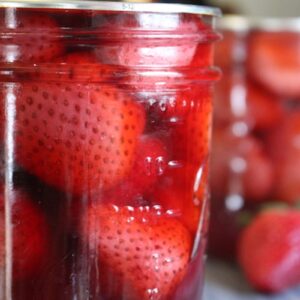
Canning strawberries is an easy way to put up the berry harvest.
While strawberry jam may be tasty on toast, canning whole strawberries means you preserve the whole fruit for use in pies, toppings, tarts, and treats all year long.
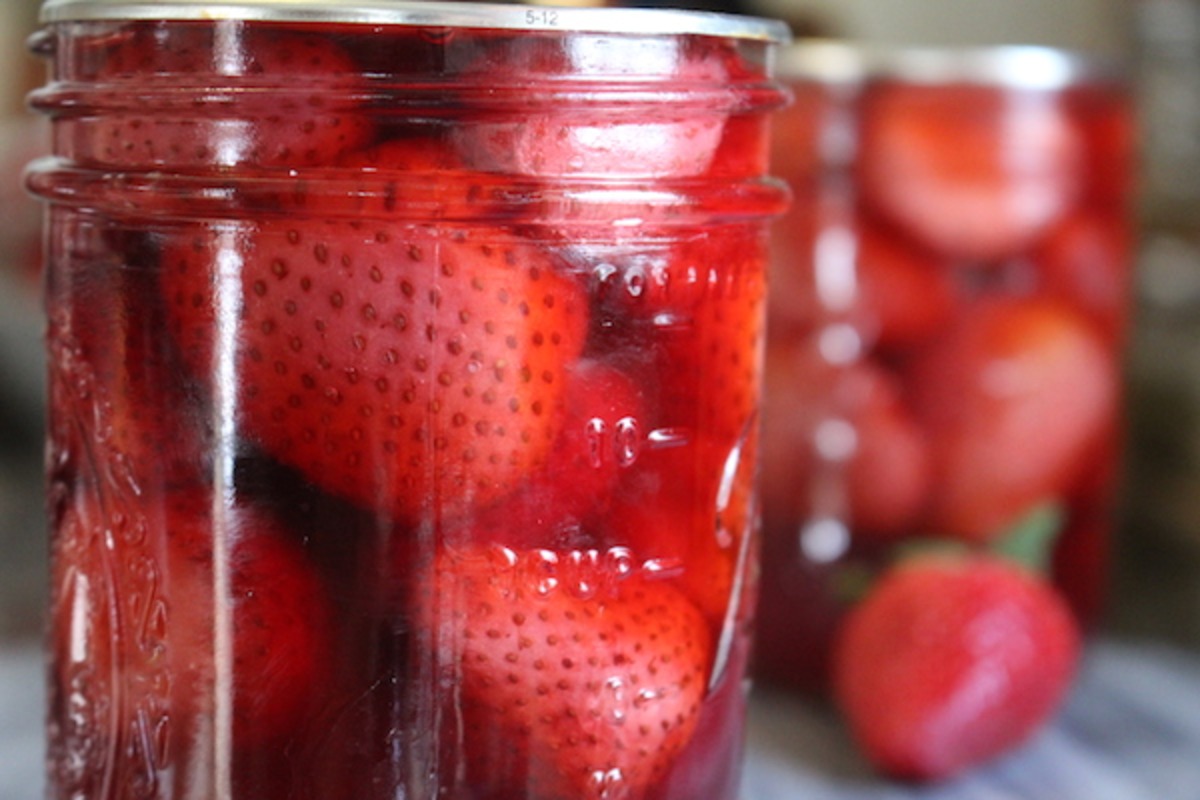
Most people preserve strawberries by canning them as a strawberry jam, dehydrating strawberry slices, or freezing whole berries for more versatility. Living off the grid, our freezer space is limited, and shelf-stable food preservation methods are always preferred.
We can up a lot of strawberry jam in the summer months, and this low-sugar strawberry jam has just the right amount of sweetness to make the flavors really pop. I’ve also been experimenting with a no-sugar strawberry jam, and it comes out wonderfully if the fruit is sweet and flavorful from the start.
Beyond jam, a lot of our harvest goes into homemade strawberry wine that puts a smile on my face and spring in my step all year long.
And still, there are strawberries and more strawberries. Our everbearing strawberries are really prolific, and even with two little ones in the house, there are plenty more strawberries to preserve once we’re done with jam and wine.
I load up tray after tray of strawberry slices into the dehydrator, but still, I can’t keep up.
There are some times of the year where preserving strawberries seems like a full-time job, and that’s when canning strawberries whole in their own juice comes to the rescue.
How to Can Strawberries
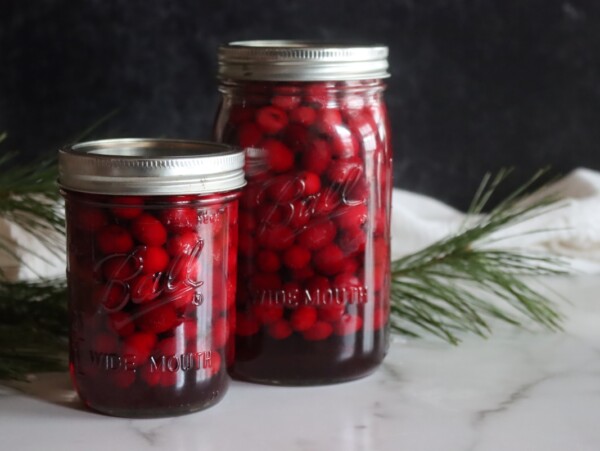
Canning strawberries is simple and only takes two ingredients: cleaned, hulled whole strawberries and a bit of sugar.
This method follows the tested process for whole strawberries in the Ball Blue Book Guide to Preserving and the Bernardin Guide to Home Preserving. NCHFP doesn’t have a strawberry recipe, so those two books are the source here.
I dust the berries with sugar and let them sit to release their juice. They macerate at room temperature for up to 6 hours, and if they need to sit longer than that, they go in the fridge overnight. This allows you to can the strawberries in their own juice, so the flavor isn’t washed out by canning water.
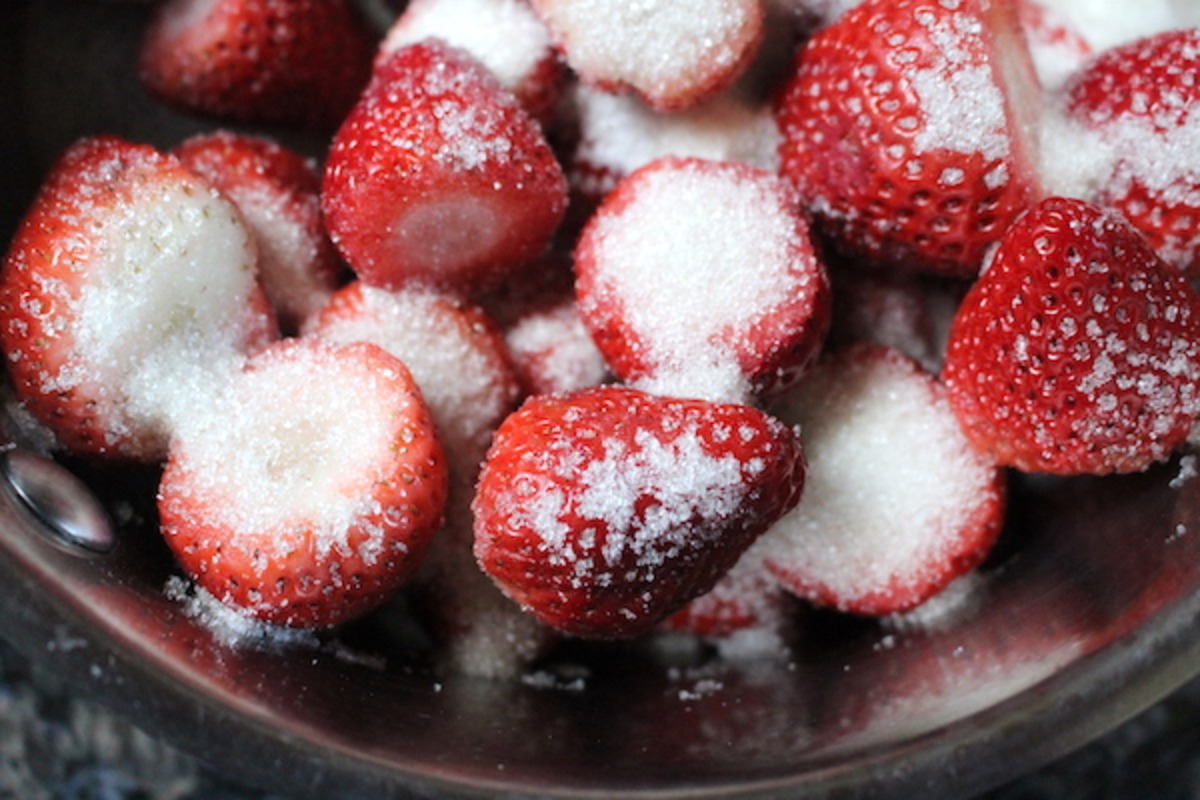
Choose firm-fleshed berries for canning, the same varieties that are rated as good for freezing. Very soft-fleshed fruits will disintegrate during the canning process, and you’ll end up with more of a strawberry compote than whole canned strawberries.
Once the strawberries have had time to release a bit of juice, prepare a water bath canner and canning jars. Wide-mouth pints or quarts tend to work best. These go in hot, so heat the canner water to about 180 degrees F.
Bring the whole strawberries and strawberry juice to a simmer, trying to stir as little as possible so that you don’t break up the berries. Simmer the berries for about 1 minute so that they’re heated through, and then pack them tightly into canning jars leaving 1/2 inch headspace.
Strawberries are hot packed only. The tested method heats the berries in their juice before they go in the jars, and there’s no tested raw pack for them.
Pour the boiling strawberry juice over the top, still leaving 1/2 inch headspace. Remove air bubbles, adjust the headspace, and seal the jars with two-part canning lids. Process pints for 10 minutes or quarts for 15 minutes in a water bath canner, adjusting for altitude (see the chart below).
When the time is up, turn off the heat, take the lid off the canner, and let the jars sit in the water for 5 minutes before lifting them out. That short rest cuts down on siphoning, so more of the juice stays in the jars.
The berries will shrink a bit during the canning process, so really work to get them in there if you don’t want half-filled jars.
Altitude Adjustments
These processing times are for water bath canning, and they go up at higher elevations.
- 0 to 1,000 feet: 10 minutes for pints and 15 minutes for quarts
- 1,001 to 3,000 feet: 15 minutes for pints and 20 minutes for quarts
- 3,001 to 6,000 feet: 15 minutes for pints and 20 minutes for quarts
- Above 6,000 feet: 20 minutes for pints and 25 minutes for quarts
How Many Strawberries Will Fit in a Canning Jar?
The size of the strawberries will affect the number of whole strawberries you can fit in a canning jar. It takes somewhere between 2 and 3 pounds of strawberries to fill a quart jar, or about 4 cups of whole strawberries, hulls removed.
Similarly, for wide-mouth pint mason jars, it takes 1 to 1 1/2 pounds of berries to fill a jar or about 2 cups prepared.
Canning Strawberries without Sugar
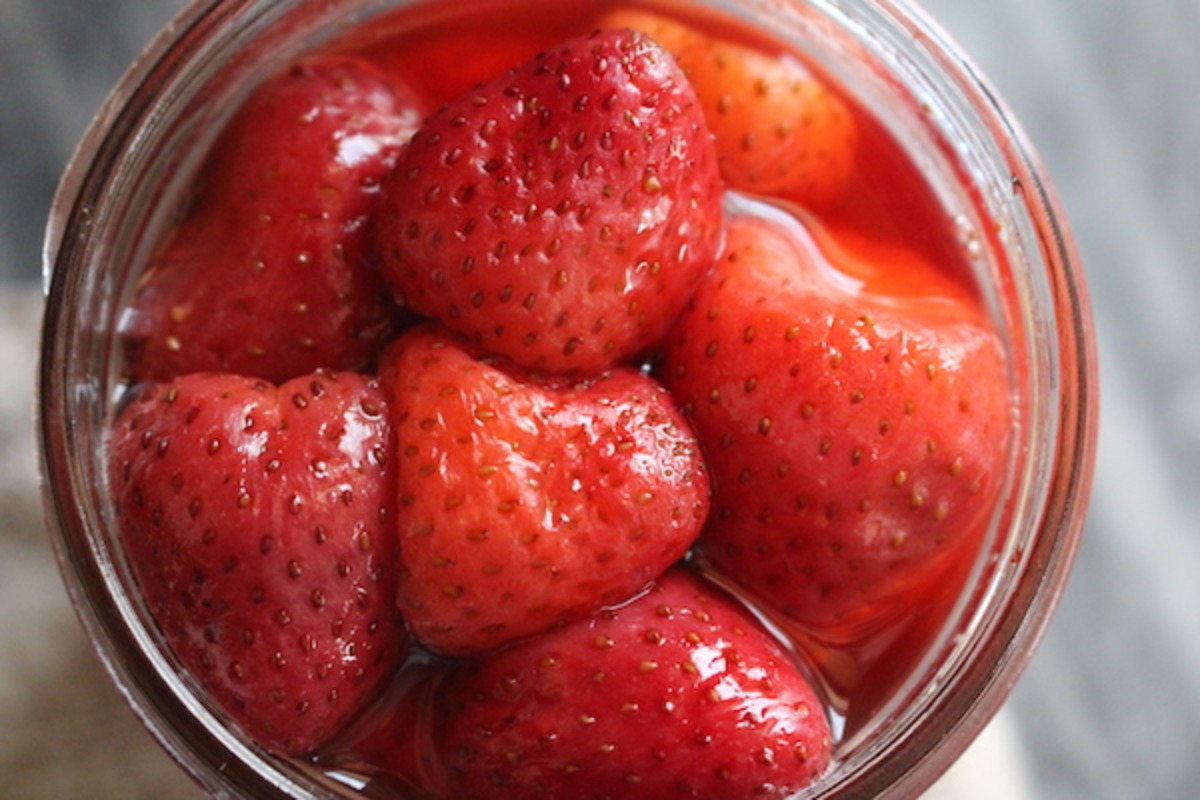
Just like any high-acid fruit, strawberries are perfectly safe to can without added sugar. The problem is, canning them directly in water means that sugar and flavor will leach into the water, washing out the flavor of the fruit.
If you want to can the strawberries directly in water, add about 1/4 cup of water to a pot per 2 pounds of strawberries and bring it to a simmer. Cook the berries for a few minutes until they release ample juice, and then pack into canning jars. This extra cook time will also mean softer fruit, which may lose shape more than sugared berries.
Another option is to take a small portion of the strawberries and mash them in a pan, then simmer them to extract their juice. Pour the simmered strawberries through a jelly bag to filter out the solids, and then use this freshly made strawberry juice as a no sugar-added strawberry canning liquid.
This is the method I use for canning blackberries since they hold their shape best when not macerated in sugar.
Canning strawberry juice (without added strawberries) is also an option, and it’s delicious. Similarly, home-canned strawberry lemonade concentrate is one of my kids’ favorites. Both use extracted strawberry juice, so you can juice strawberries for your canning liquid in this recipe and then keep a bit extra for canning alone.
Maintaining Strawberry Quality During Canning
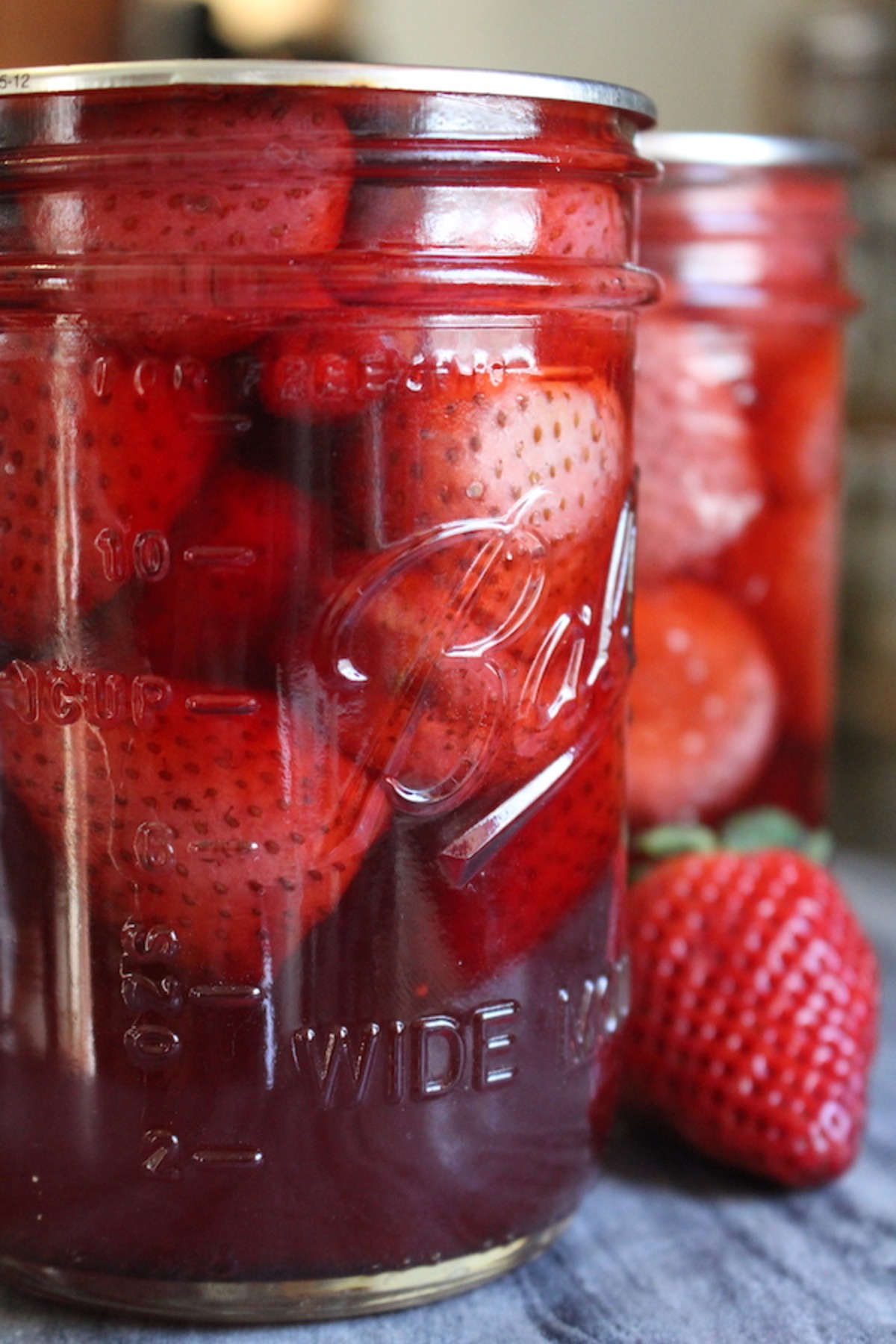
Strawberries are a soft fruit, and they will soften and discolor during long storage. If stored for more than a few months, canned strawberries will darken.
Quality and flavor are best with berries canned with some amount of sugar, but beyond that, you’ll have better berries in the long term if you add a bit of citric acid to the canning liquid.
While citric acid is not strictly necessary for safely canning strawberries, it will help them maintain color and flavor during storage. Add 1/4 to 1/2 tsp citric acid per quart of fruit to keep them looking good through long storage.
Canning Strawberries
Equipment
Ingredients
- 4 cups strawberries, washed and hulled, see notes
- 1/2 cup sugar, optional, see notes
- 1/4 to 1/2 tsp citric acid, optional
Instructions
- Wash and hull the strawberries and place them in a large pot. Sprinkle the sugar over the top and stir to distribute.
- Cover the pot and let the strawberries macerate in the sugar at room temperature for up to 6 hours. If they need to sit longer, put them in the fridge overnight.
- Prepare a water bath canner and canning jars, and heat the canner water to about 180 degrees F.
- Put the pot on the stove and stir in the citric acid, if using. Bring the strawberries and their juice to a simmer, stirring as little as possible, and cook for about 1 minute until the berries are heated through.
- Pack the hot berries tightly into the jars and cover them with the hot juice, leaving 1/2 inch headspace.
- Remove air bubbles, adjust the headspace, and seal with two-part canning lids.
- Process in a water bath canner, pints for 10 minutes or quarts for 15 minutes, adjusting for altitude (see notes).
- Turn off the heat, take the lid off the canner, and let the jars sit in the water for 5 minutes before lifting them out.
Notes
- 0 to 1,000 feet: 10 minutes for pints and 15 minutes for quarts
- 1,001 to 3,000 feet: 15 minutes for pints and 20 minutes for quarts
- 3,001 to 6,000 feet: 15 minutes for pints and 20 minutes for quarts
- Above 6,000 feet: 20 minutes for pints and 25 minutes for quarts
Nutrition
Nutrition information is automatically calculated, so should only be used as an approximation.
How to Use Canned Strawberries
The main downside to canning strawberries as whole fruits is the loss of both color and texture. The berries tend to bleed their brilliant red juice into the surrounding liquid, and that liquid soaks up a bit of their flavor too.
Home-canned strawberries work well in dishes that use both the juice and the fruit. Here are a few tasty ways to make use of your canned strawberries:
- Strawberry Pancake Topping ~ Start by straining fruit from the canning liquid and then cook the juice down on the stove into a rich strawberry syrup. Place the whole fruit on the pancakes and then drizzle the thickened strawberry syrup over the top.
- Strawberry Pie Filling ~ Similar to using them as pancake topping, strain the fruit into a pie dish and thicken the canning liquid with a bit of corn starch before pouring it over the top of the fruit in the dish.
- Strawberry Cheesecake Topping ~ The same process as making strawberry pie filling, but make the thickened pie filling in advance and then let it cool in the refrigerator before using it to top a cheesecake.
More Strawberry Preservation Recipes
- 30+ Ways to Can Strawberries ~ Jam, syrup and more…
- Strawberry Vinegar
- Strawberry Mead
- Wild Strawberry Jam
- Fermented Strawberry Soda
- Fermented Strawberries with Honey & Whey












I was looking for a way to contact you to see whether the strawberries should be refrigerated for the 6 hrs that they are macerating in sugar, or left at room temperature. And have you tried cold packing them directly w/o heating them prior to packing the jars? I was curious about the rationale. Thanks for sharing your instructions.
I macerate them at room temperature for up to 6 hours. If you need to leave them longer than that, put them in the fridge overnight. Either is fine, really. I don’t cold pack them, though. The only tested method I’ve found heats the berries in their juice first, which shrinks them so the jars stay full and gets everything hot going into the jars.
Looking forward to canning Strawberries this season as I usually freeze them, but they thaw soggy.
Can strawberries be raw packed since they are so delicate? Maybe keeping them from getting mushy? Mine are currently frozen and I have a ton that I need to move out to make space. Tks much
If you’re moving them from the freezer to canning, they’re going to be mushy and fall apart. After freezing, they’re better for compote, jam or strawberry lemonade concentrate. But yes, you can do whole strawberries raw pack, they’re 15 minutes for pints and 20 minutes for quarts (adjust for altitude).
Can you recommend an alternative sweetener as I am a diabetic? It’s strawberry season where I’m at and I would love to try this. Thanks in advance !
What do you plan to use the strawberries for after you can them?
No particular plans but I’m up for anything! I love buying in bulk and then doing or making something. Any and all ideas are welcome.
You could just can them in juice.
Is it okay to use lemon juice instead of Citric acid?
The citric acid is completely optional so you can either omit it or add lemon juice if you wish.
We love thosecold strawberry pies with gel and raw strawberries but not the baked pies as much. Just wondering–coukd pickle crisp help them hold their texture?
I have only heard of it being used in pickled foods and I would imagine it would leave a bit of a salty taste in your strawberries.
After boiling the strawberries and then filling my jars, what should I do if I don’t have enough juice? Just add water to finish to required head space
I usually can everything up and then if the final jar isn’t full enough, I will just put it in the fridge for immediate use or freeze. You could add a little water but you want to be careful that you don’t dilute the flavor too much.
will this work with frozen strawberries?
You can try it with frozen berries but they may not hold their shape well after freezing. If that isn’t important to you then it should work just fine.
I just came across your canning instructions but I already threw a gallon sized baggies in the freezer not knowing what I can do with this batch , is it too late to can them now that that have been frozen?
The strawberries can still be canned but they will probably not hold their shape well after being frozen.
Can red food coloring be added to help retain the color of the berry’s?
I guess you could do that but most of us choose to preserve our own food in order to stay away from those kinds of additives.
There are natural food colorings but they’re a bit on the pricey side.
I’m not sure where I went wrong with this recipe…. Used Quart jars, packed nearly to the top with strawberries, then liquid added to 1/2” headspace. Both of the jars released a ton of juice while in the water bath, and when I pulled them out, they overflowed even more onto my counters and floor. Checked the lids, the rubber seals were still there and fine. Sterilized the lids in very hot not boiling water. I also found the one minute simmer cooked them too much and made them soft. Any thoughts? I wonder if the berries could be put straight into jars after the first six hour sit, heating only the liquid and then adding that in before canning? The strawberries I’m left with are almost ghostly white now. Lost everything to the liquid that I unfortunately also lost. Thanks for any suggestions! I’m new to canning still and would hate to lose this much product again. 💔
I’m so sorry that happened. It sounds like you may have had some siphoning. Here are a couple of things that can help with this issue in the future. Be sure to remove all of the air bubbles, allow the jars to cool completely in the canner before removing them and you may want to try tightening your lids a little bit more.
Could you let the berries and sugar sit overnight in the fridge and can the next morning?
Yes, that should work just fine.
I don’t know anything about names of strawberries. What strawberries can I use and where can I buy them to can your recipe in my jars. It sounds great. We love them but only know how to freeze them. Thanks Virginia
You can use any strawberries that are available to you. You can grow your own, purchase them from the farmer’s market or a local farmer or you can even buy them at your local grocery store.
Thanks for your post. What variety of strawberries do you grow and how many plants do you have? I’d like to get more produce from my strawberry bed so I have more berries to play around with.
Here is a post on growing strawberries from seed which has lots of resources for seeds. https://practicalselfreliance.com/growing-strawberries-from-seed/
Here is another post that talks about bareroot strawberries. https://practicalselfreliance.com/growing-everbearing-strawberries/ Between the two posts, you should be able to find what you’re looking for.
I used my steam juicer to extract the juice from some of the berries to use with the whole ones. Better colour retention and flavour . Thanks for the great recipe.
We now use our steam juicer and love it. I used it to make blackcurrant jelly, cherry jelly, and all manner of wines too. Absolutely love mine!
A great explanation on preserving the wonderful and abundant strawberries. The point I had no idea about was point 7: Process in a water bath canner for 10 minutes (pints) or 15 minutes (quarts), adjusting canning times for altitude.
What does this water bath canner define? I can only imagine like a bain-marie where the jar is in a dish surrounded by boiling water. Not certain and any clarification would be appreciated. thanks again, Louis from Tasmania.
That is a really good question, and it’s an American preservation term. I really do need to write a good introduction to water bath canning and what that entails, but I haven’t yet. For now, this basic overview from Ball Canning takes you through it: https://www.freshpreserving.com/water-bath-canning
Thanks for the link Ashley. One last Q, Extra “bands” can be tied together to cover the bottom of the pot??? I can only imagine the bands to be the rubber seals up there under the lid. Do enlighten me if you can. Cheers.
There’s a good explanation of that homemade canning trivet here: https://www.healthycanning.com/improvised-canning-rack-bottom-trivet
Could I add brandy to it to make like a brandy strawberry?
Yes! Follow the instructions I give in this recipe for canning whole blackberries (I use brandy there).
Ashley,
Thank you for sharing all b your information on canning vale strawberries. We have a bumper crop this year and have no room in the freezer for any more strawberries! My cookbook tells me how to can other berries, but says in brackets “not strawberries”. I found your instructions and our 5 cups are now sitting in dust with a lid on the bowl. I appreciate you sharing your knowledge and experience.
Wonderful Connie, I hope you enjoy them! Ours were great early this spring right when the rhubarb popped up, and they cooked up into a wonderful pie together.
Thrilled to have found your blog – Luv the way you articulate the difference between canning strawberries and making strawberry juice. Must admit that up until now, I had not come across a way of canning strawberries, so I was into making very strawberry jam that was cooked for the shortest period of time and added natural pectin to thicken the jam (I use raw apples or gooseberries as a source of natural pectin)
Have 20kgs of fresh strawberries from an organic farmer….. so there goes my weekend trying out this recipy!
Nice! We pulled several of these jars out from last year to make strawberry rhubarb pie this spring and they were perfect. They actually held their shape remarkably well, even after a lot of time in the jar. They do lose color over time, but the flavor is still great.
Ohh, so thankful to have found this.
We’re a large family and keep our freezers stocked with meat as best as possible. If I can can something to keep it on the shelf I sure try. I canned a bunch of jelly and strawberry lemonade concentrate but while they’re in season I want to preserve more.