Affiliate disclosure: This post may contain affiliate links. Please see our Privacy Policy.
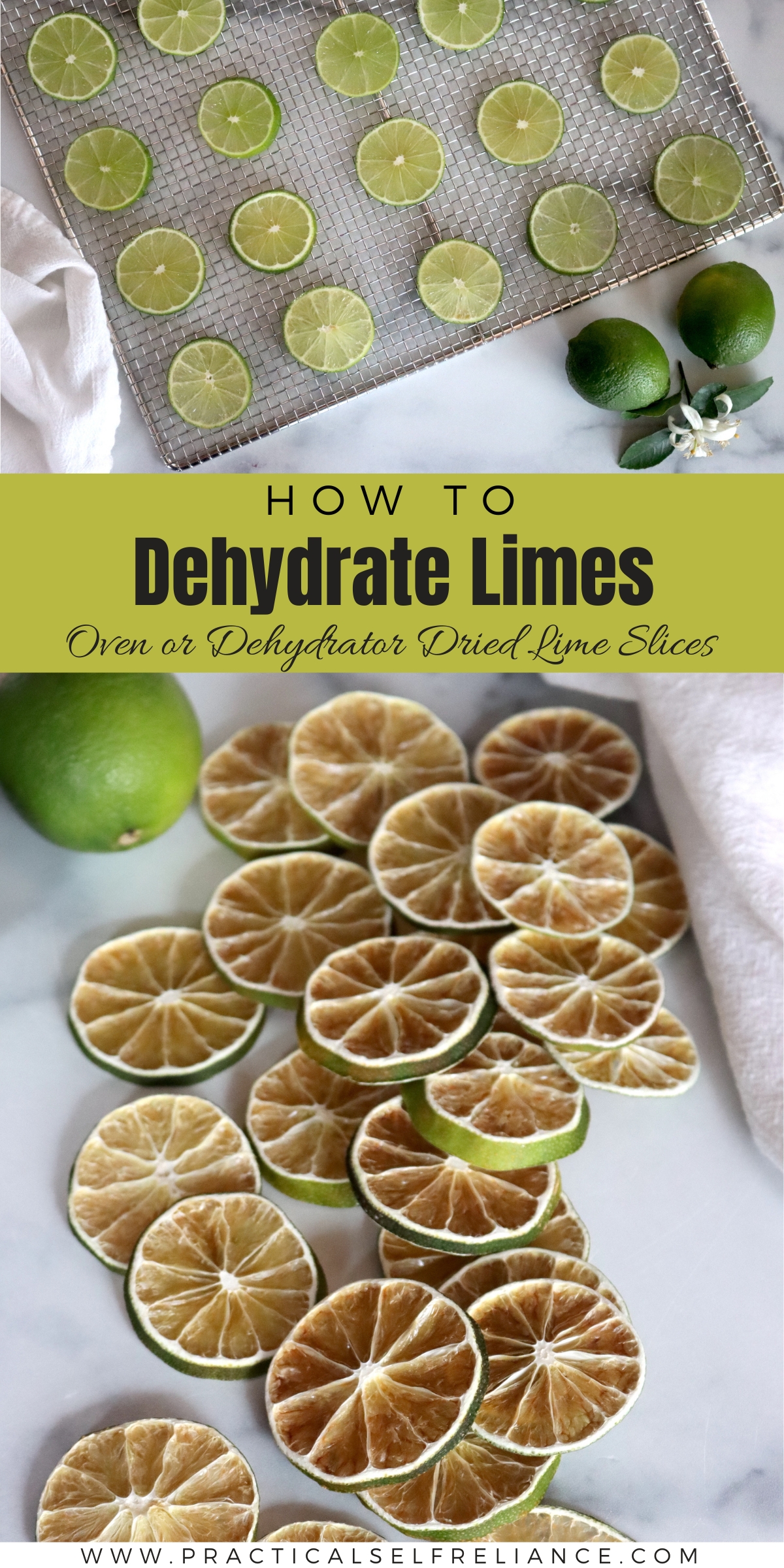
Drying limes at home is a simple way to preserve citrus wheels for flavoring teas, cocktails and garnishing baked goods.
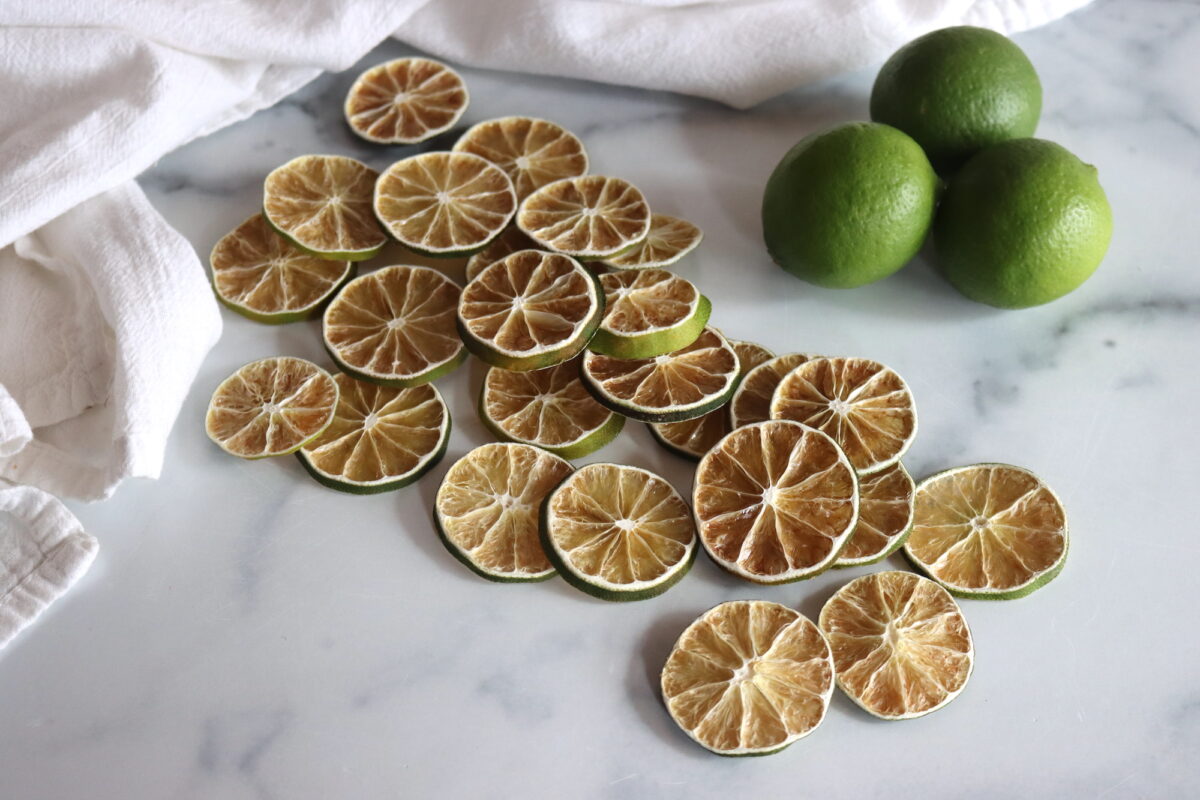
Table of Contents
- Best Limes for Dehydrating
- Preparing Limes for Drying
- 1) Wash and scrub
- 2) Decide: slices, wheels, or zest
- 3) Slice evenly
- 4) Remove seeds and blot dry
- 5) Optional: reduce bitterness
- 6) Optional: light seasoning
- Temperature for Drying Limes
- How Long to Dehydrate Limes?
- Fresh to Dried Yield
- Ways to Use Dried Limes
- Dehydrator Recipes
- Dehydrating Limes Recipe
- Ways to Preserve Limes
- Dehydrator Recipes
Dehydrating limes is the kind of small kitchen project that pays you back all year. A few fresh limes turn into a jar of punchy, shelf-stable citrus you can drop into tea, use as a cocktail garnish, or toss into soups and marinades when you want that bright lime flavor but don’t have any fresh limes on hand.
I started doing this when I’d buy limes for one recipe and then watch the extras slowly shrivel in the fruit bowl. Now I slice and dry the leftovers the same day, and I always have lime on hand for everything from thai curries to mocktails.
The best part is that limes dry quickly, and you can choose whether you want crisp, pretty wheels or slightly thicker slices that hold up well for cooking.
Best Limes for Dehydrating
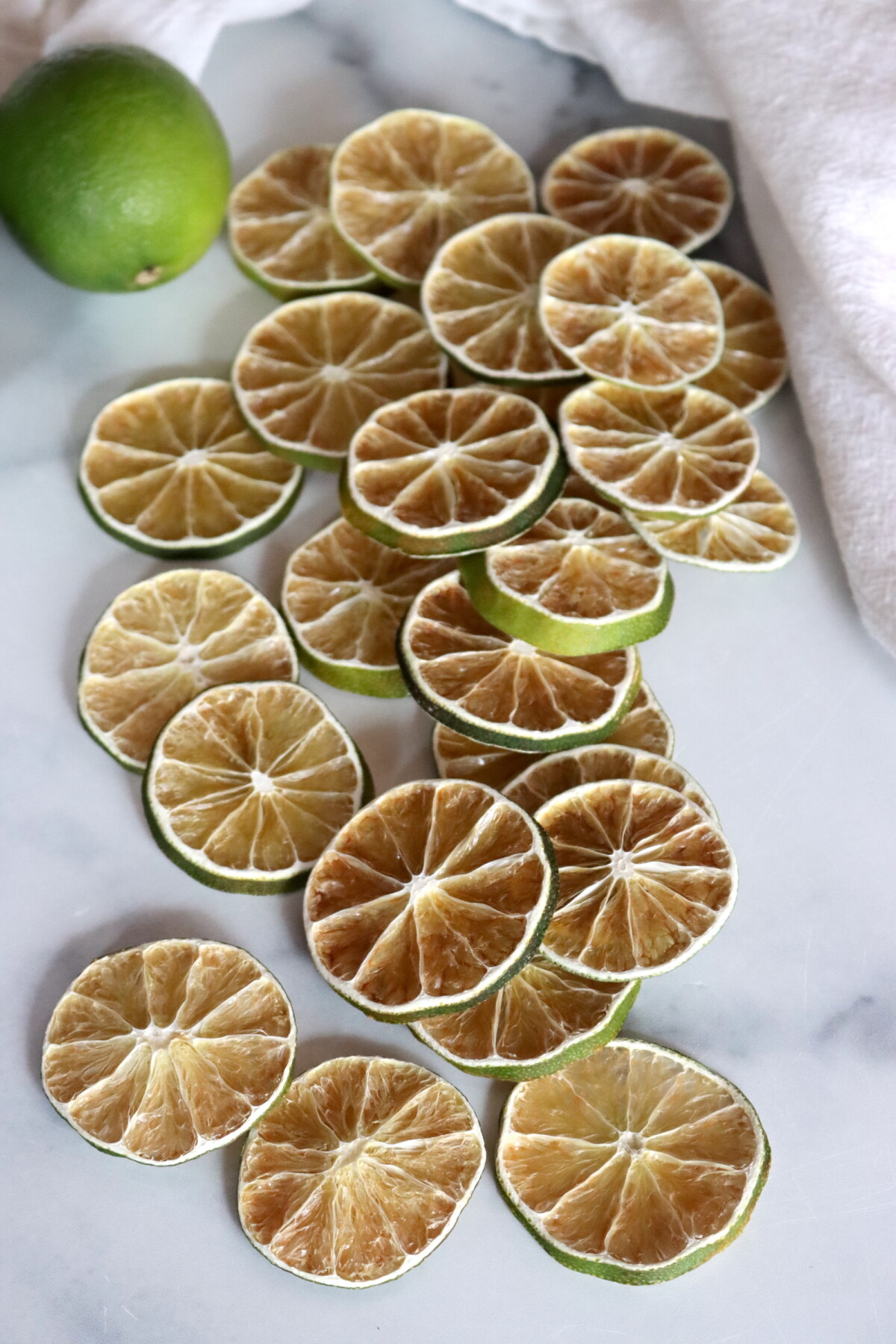
- Choose limes with strong aroma and smooth skin. The oils in the peel carry a lot of the lime flavor once it’s dried, so I look for fruit that smells noticeably “limey” even before it’s cut.
- Medium limes usually work better than giant ones. Very large limes can be thicker-skinned and a little pithy, which takes longer to dry and can taste more bitter. Standard Persian limes dry more predictably.
- Seedless is easier (when you can get it). Seeds aren’t a big deal, but they’re annoying in finished slices, especially if you’re making garnish wheels.
- Avoid limes that are drying out. If they feel light, hard, or wrinkly, they’re already losing moisture. They’ll still dehydrate, but you’ll get less flavor and they can dry unevenly.
For zest (separately dried), any good-quality lime works, but aroma matters most.
For garnish wheels, choose limes that are evenly round and slice into neat circles.
Preparing Limes for Drying
The process is more or less the same as when making any type of dried citrus, though limes tend to dry a bit faster because they have less juice.
1) Wash and scrub
- Rinse limes under warm water and scrub the peel with a produce brush.
- Since you’ll usually dry them peel-on, this step matters.
2) Decide: slices, wheels, or zest
- Wheels/slices (most common): Great for drinks, tea, cooking, and garnish.
- Zest: Big flavor in a tiny jar. I’ll often zest a few limes before slicing the fruit.
3) Slice evenly
Uniform thickness is the key to even drying.
- Garnish wheels: about 1/8-inch thick
- More substantial slices (for cooking/tea): 1/8 to 1/4-inch
A mandoline is ideal if you have one, but a sharp knife works fine.
4) Remove seeds and blot dry
- Flick out any seeds you see.
- Blot slices with a towel to remove surface juice so they don’t stick and they dry faster.
5) Optional: reduce bitterness
Limes don’t usually have the thick pith problem grapefruit does, but the peel can concentrate bitterness a bit when dried.
- If your limes are very thick-skinned, you can trim a little pith from the outside edge before slicing.
- For extra-mellow slices, a quick 1-minute blanch can help, then pat very dry.
6) Optional: light seasoning
- For cocktails: plain looks best
- For snacking: a tiny sprinkle of sugar or salt works well (go light so it doesn’t slow drying)
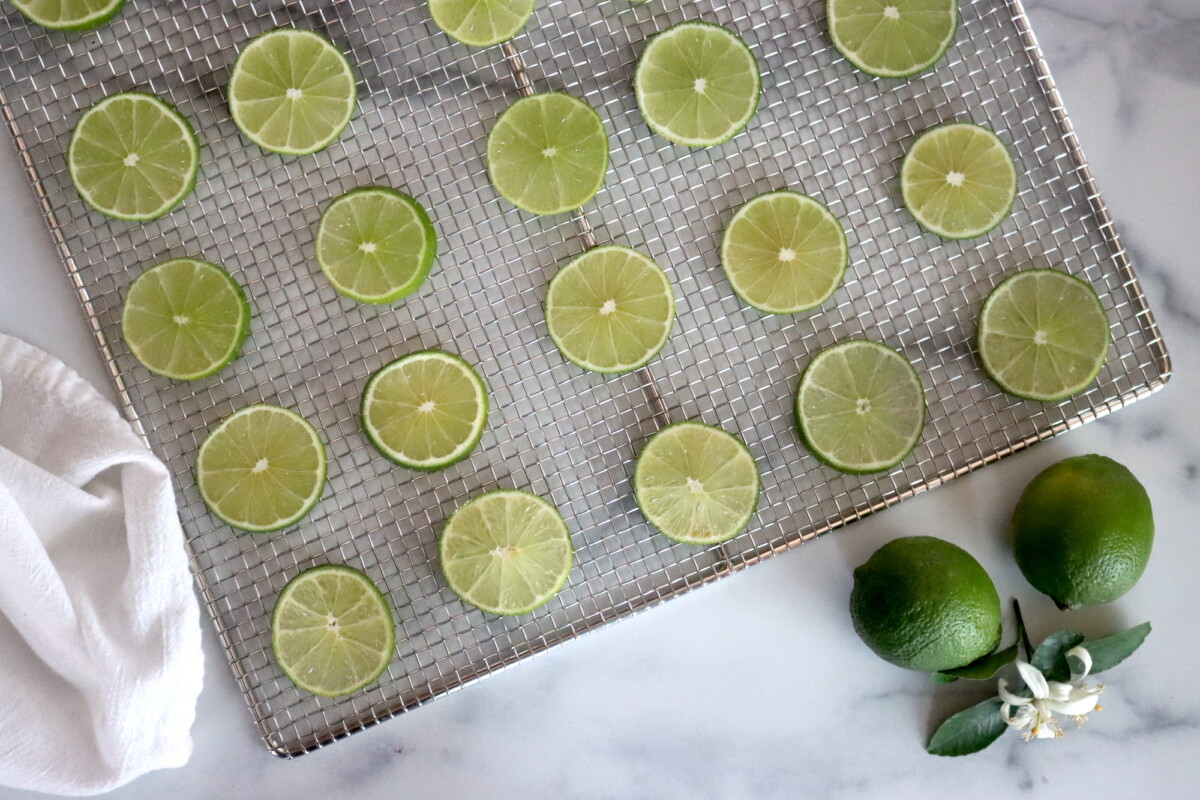
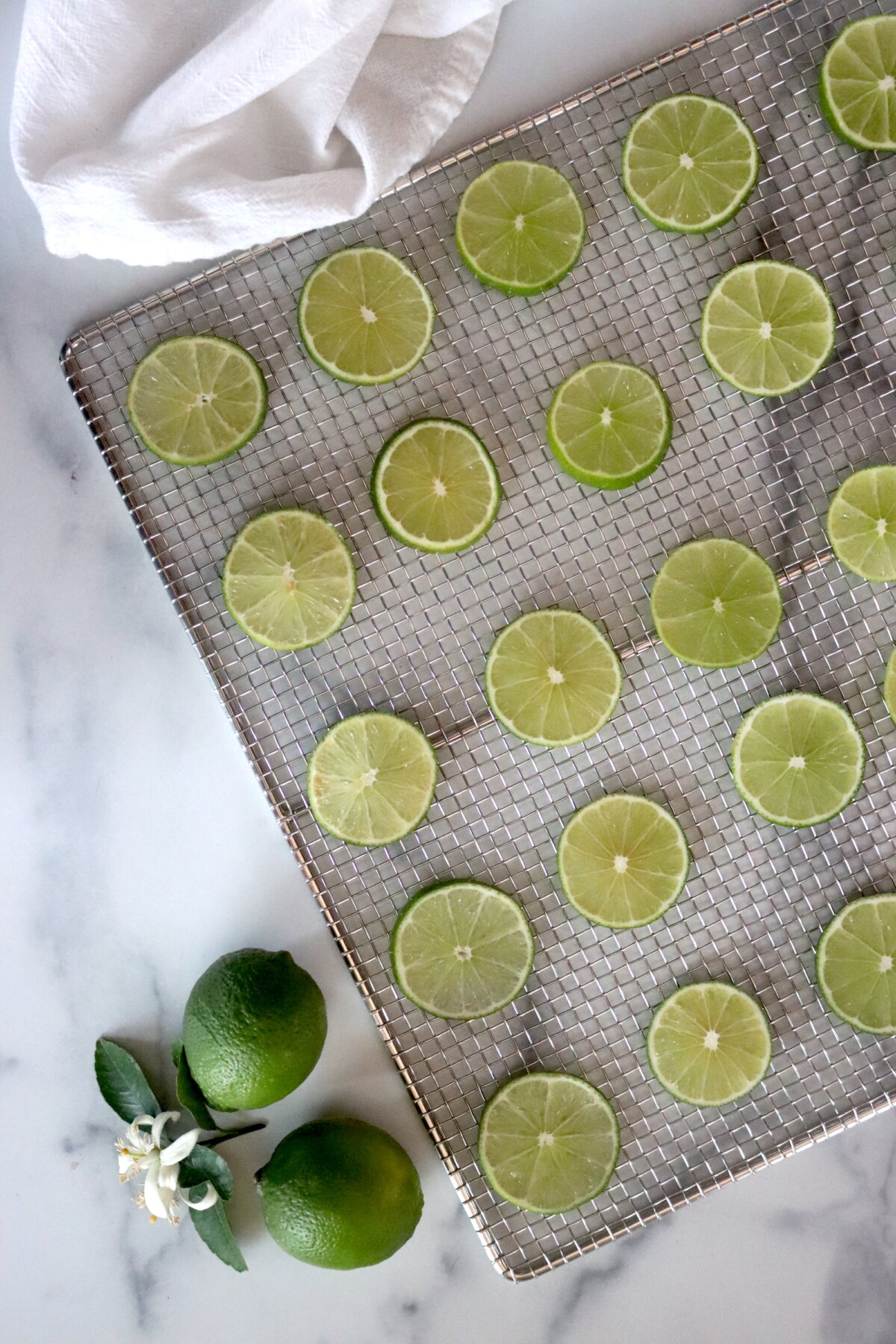
Once they’re prepped, lay lime slices in a single layer on dehydrator trays (or oven racks), leaving a little space between pieces for airflow.
Temperature for Drying Limes
Limes are recommended to be dried at 125° to 135° F. While most citrus dries well at 135° F (57° C), many find that smaller limes tend to darken at this higher temp, so some elect for a temperature setting closer to 125° F (52° C). The drying time may be longer at this temperature, but you’ll have a more pleasing end result.
Luckily, most modern home dehydrators allow for you to adjust the temperature settings today. This is an incredibly nice feature if you plan on preserving items that require lower drying temperatures like spices, herbs, or drying mushrooms.
Both Excalibur and Cosori dehydrators possess adjustable temperature and time settings. Many economy models don’t allow for temperature manipulation and instead default to the necessary 160° or 165° F for jerky-making (jerky requires the highest temperature of all the dehydrated foods).
These dehydrators will effectively dry your citrus, but you’ll lose more flavor in the process and your limes may darken more at these higher temperatures.
Similarly, you can use an oven to dehydrate citrus wheels, but considering most ovens won’t allow you to set temperatures below 170° F for food safety reasons, you’ll also end up with a different quality.
If an oven is the only option, I’d recommend using wire racks over baking sheets to dehydrate as these allow for good airflow all around your food. These oven-safe racks with trays underneath are made of stainless steel and work quite well for dehydrating.
How Long to Dehydrate Limes?
Generally, limes will take around 3 to 7 hours to dehydrate in a dehydrator that has been set to 135° F. It may be shorter if you live in a low-humidity state or slightly longer if your humidity is terribly high.
Additionally, many like to dehydrate their limes at slightly slower temperatures closer to 125° F, as these smaller citrus fruits can be a bit more delicate. When dehydrating at these temperatures, drying time will also need to be increased.
Dehydration time can hinge on several factors including slice thickness, the juiciness of your citrus variety, and the ambient humidity in your own home. The fact is, it’s harder to remove moisture from food in places where there’s already a great deal of moisture in the air. As a result, drying times are longer when it’s humid.
Excalibur provides a dependable guide that charts times based on the ambient humidity. For citrus fruits dried at 135° F, it recommends:
- 10 to 30% Humidity: 3 Hours
- 31 to 50% Humidity: 4 Hours
- 51 to 70% Humidity: 5 Hours
- 71 to 80% Humidity: 6 Hours
- Above 80% Humidity: 7 Hours
However, this guide also recommends drying at 135° F. So when drying at lower temps like 125° F, times may be slightly longer, especially for high-humidity locations.
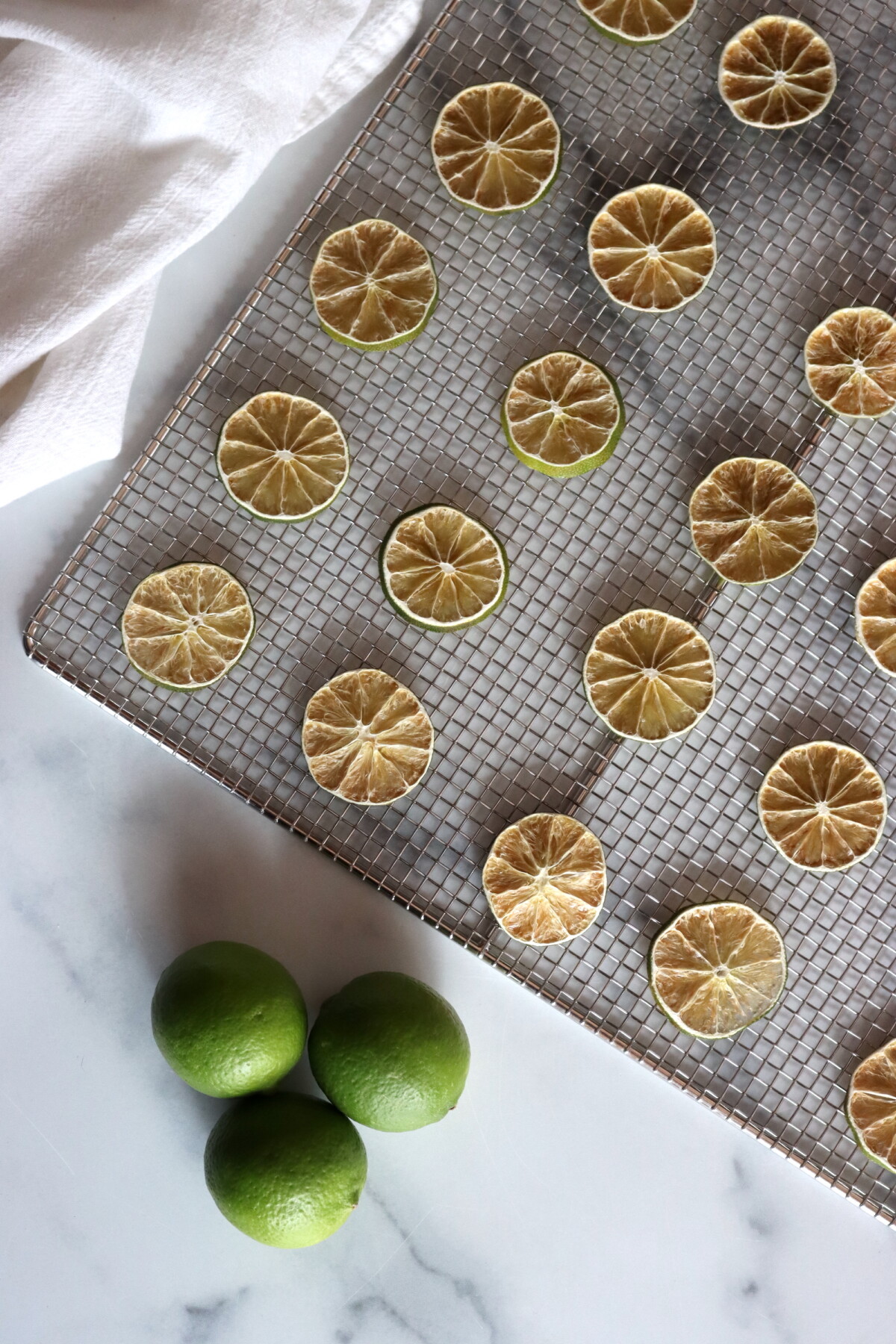
Your lime slices are adequately dry when they are free of all moisture. They should not be sticky or pliable, but crisp. When dry, they should easily snap in half.
How to Dehydrate Limes in a Dehydrator
To dehydrate limes in a dehydrator, set the temperature at 125° to 135° F. If you wish to shorten drying time you can dry at 135° F — if you wish to retain lime coloring, opt for 125° F.
Position lime slices on dehydrator trays leaving enough space between slices for good airflow. Dehydrate for 3 to 7 hours, adjusting for humidity.
Limes dried at 125° F will take a little longer to dehydrate fully, sometimes as much as 8 to 10 hours.
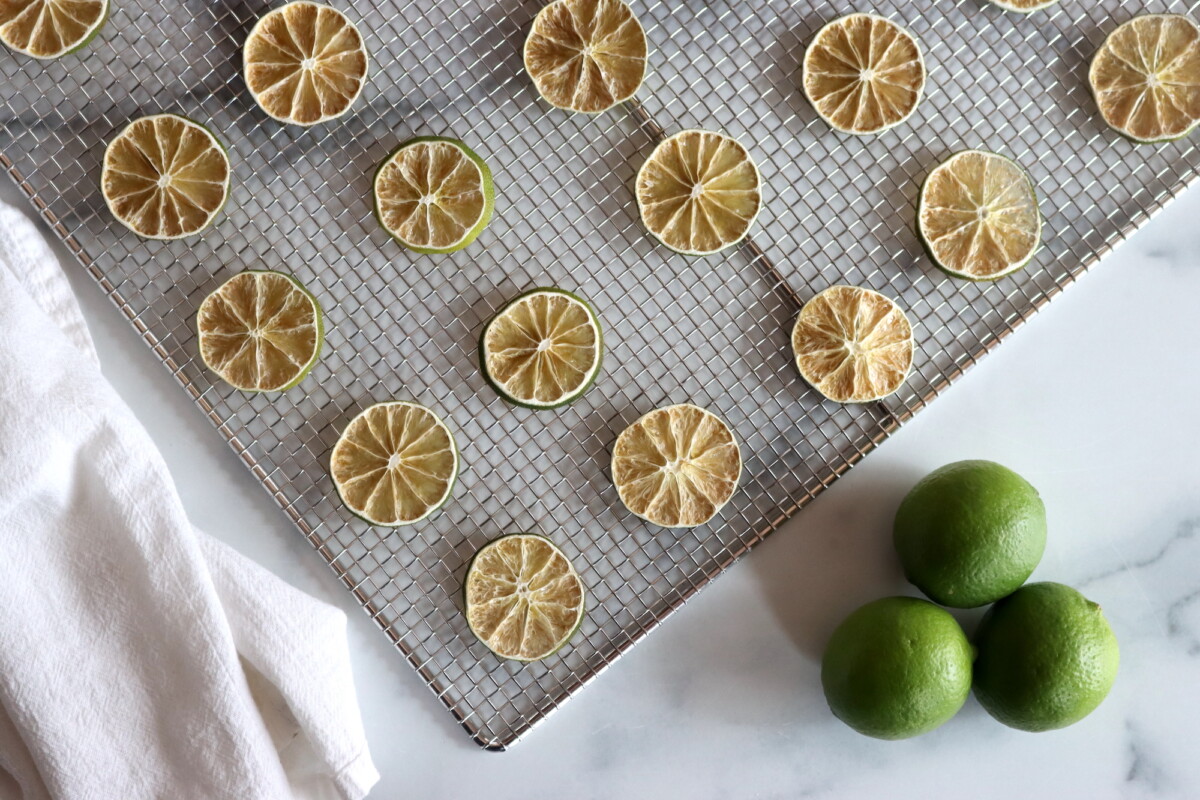
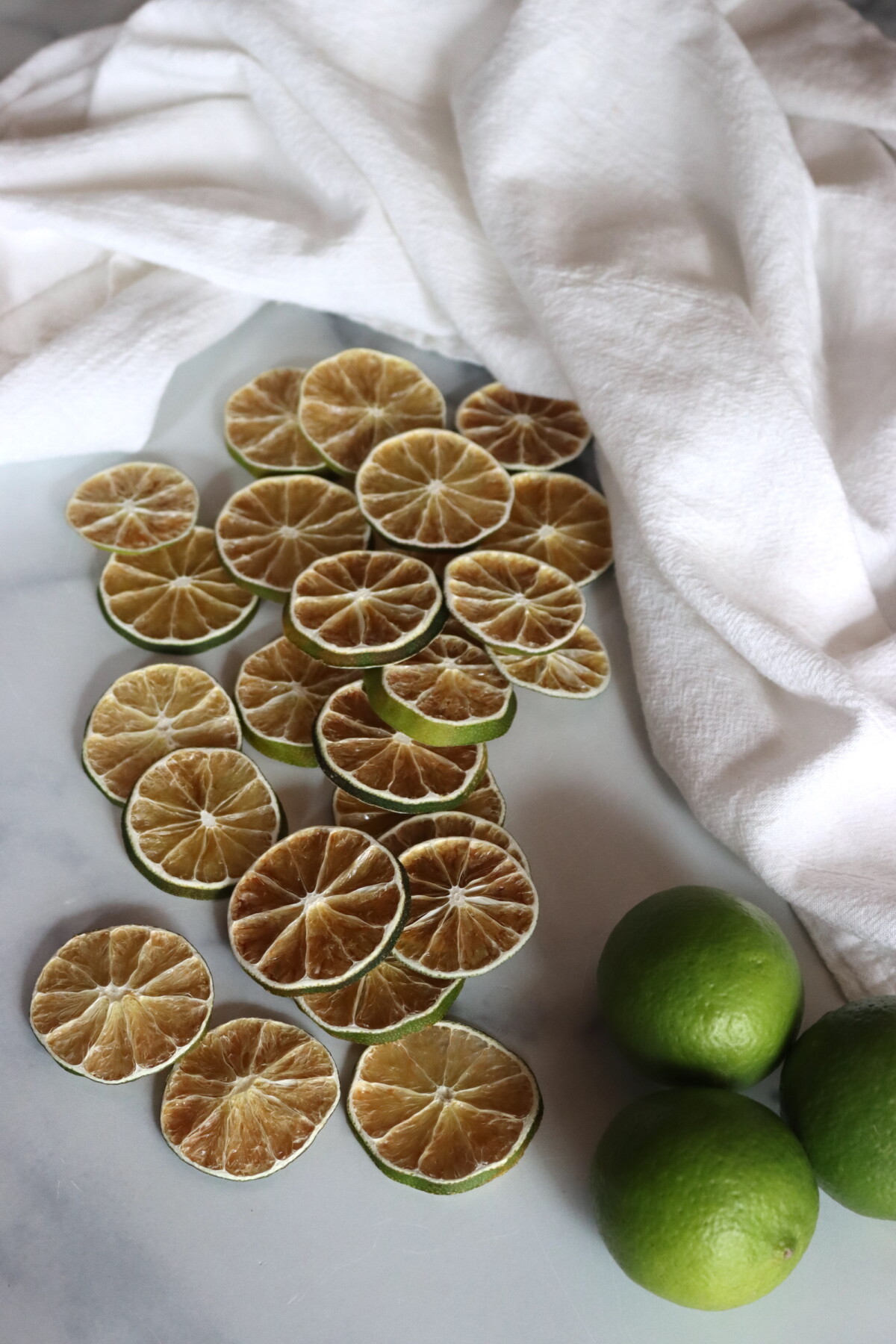
Lime wheels are done when they are crisp and completely dry.
How to Dehydrate Limes in the Oven
Drying lime slices in an oven won’t lead to the same quality as with a dehydrator, but it will still successfully dehydrate your citrus. Many ovens are not able to be set below 170 F, so drying time will be much shorter.
Be sure to run your convention fan if you have one as this will help with airflow. Additionally, investing in some oven-safe wire racks to use atop baking sheets will help a lot (not all wire racks are oven-safe). These stainless steel racks and sheets are perfect for oven dehydrating.
To dehydrate lime wheels in an oven, set your oven as low as it will go and dehydrate lime slices for 2 to 3 hours. If your particular oven doesn’t go below 200° F, the time will likely be less.
If your oven has no convection fan, you can also prop the door open with a wooden spoon and run your vent hood to allow excess moisture to dissipate. Just be careful if pets and children are present.
Fresh to Dried Yield
When dehydrating fruit, the goal is to have just 20 percent moisture content when dry. This loss in moisture results in citrus that is much lighter as raw limes are around 88% water.
As a result, you should expect limes to weigh just 20% of their original weight once dehydrated. Actual end yield will vary based on the variety of lime used and its particular moisture content.
Ways to Use Dried Limes
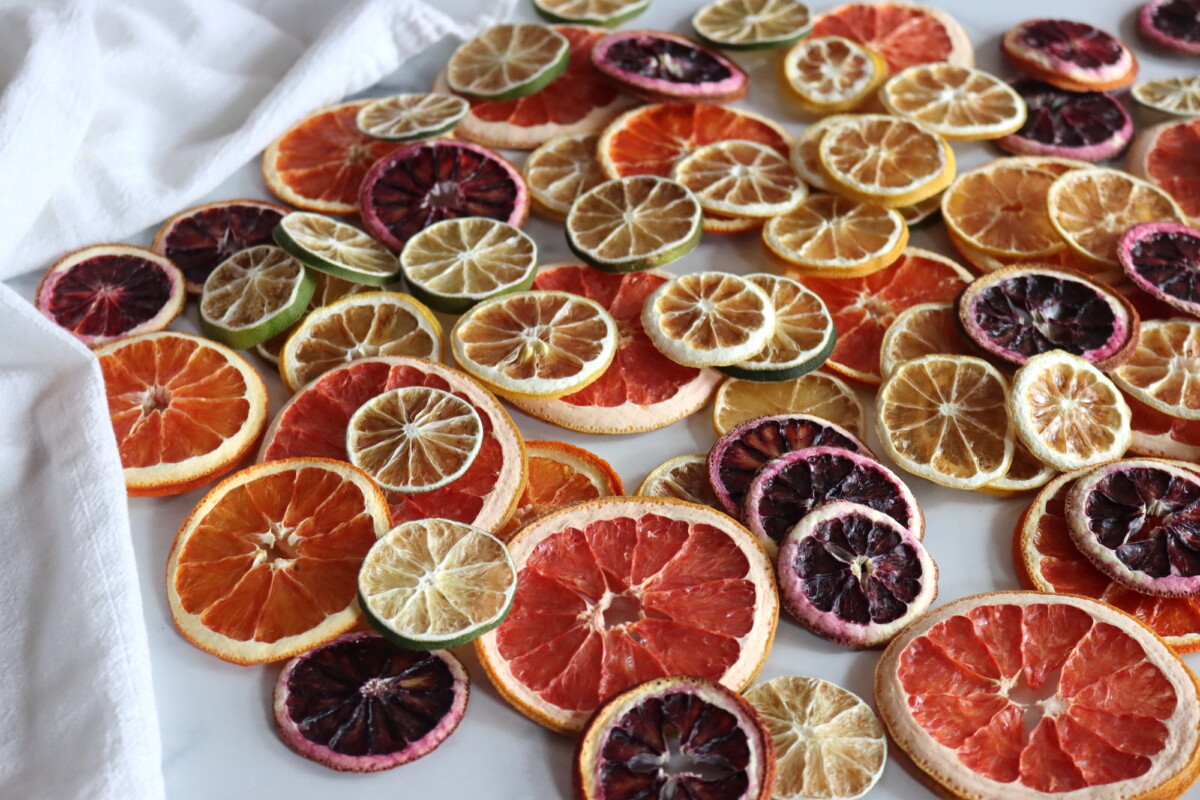
Dehydrated limes can be added to a flurry of beverages and dishes. Some of the most popular ways to make use of dehydrated lime wheels is to top beverages like soda water, hot teas, or cocktails.
Consider garnishing your next mojito or a tropical hibiscus cocktail with a dried lime wedge for extra flavor and allure.
Lime wheels also make a dazzling decoration for desserts and cakes. Try using them as a decoration in tropical treats like this lime chiffon cake with mango whipped cream.
You can also grind up dried limes to add to savory dishes like soups and fish or desserts like this lime cake made from dried limes.Simply pulse dried limes to make a citrus powder. This handy medley applies to many recipes, be it blended with sugar for rimming a cocktail glass or mixed with spices for seasoning meats.
Dehydrator Recipes

Dehydrating Limes
Equipment
- Dehydrator
Ingredients
- Fresh Limes
Instructions
- Begin by washing your limes well to remove any dirt, debris, or wax coating. Pat dry.
- Slice limes into wheels ¼ to ⅛ of an inch thick. Remove any seeds from the slices.
- Place limes on dehydrator trays (or wire racks and baking sheets for oven-drying) in a single layer. Leave enough room between the slices for air circulation.
- (Dehydrator) Set dehydrator to 125° to 135° F. Dry for 3 to 7 hours, adjusting time for humidity and slice thickness. Lime slices dried at 125° F may take as long as 8 to 10.
- (Oven) Set your oven as low as it will allow (this will generally be around 170° F). Dry for 2 to 3 hours, flipping lime slices if needed.
- Limes are done when they are crisp and devoid of moisture.
Notes
Conditioning
Conditioning fruits is a necessary step to be sure spoilage and mold growth don’t ruin your dehydrated food. As outlined by the University of Georgia Cooperative Extension Service, you can condition fruit by moving to an airtight container after the fruit slices have cooled. Seal and allow to sit for 7 to 10 days, shaking the jar once a day. This will allow the moisture to evenly distribute between all the pieces. If you see condensation or any signs of moisture inside the container, your citrus needs to be dehydrated some more. If you see no signs of moisture after 10 days, feel free to move dried fruits for long-term storage.Dehydrating Time
Dehydrating time depends on your local humidity — food items will dehydrate slower when the moisture content in the air is higher. Take ambient humidity into consideration when factoring drying times. Use this chart below as a guide:- 10 to 30% Humidity: 3 Hours
- 31 to 50% Humidity: 4 Hours
- 51 to 70% Humidity: 5 Hours
- 71 to 80% Humidity: 6 Hours
- Above 80% Humidity: 7 Hours
Ways to Preserve Limes
There are several other ways to preserve limes besides dehydrating. Consider canning limeade concentrate, making lime marmalade or lime curd, or using limes for wine-making.
- Canning Limeade (& Limeade Concentrate)
- Canning Cherry Limeade Concentrate
- Lime Marmalade (Old Fashioned Recipe without Added Pectin)
- Canning Lemon Curd (or Lime Curd)
- 50+ Winemaking Recipes for Homemade Wine (from Any Fruit!)
- Freezing Fruit: A to Z Guide
- Natural Citrus Seed Pectin for Canning
Dehydrator Recipes
Looking for more dehydrator recipes?