
Affiliate disclosure: This post may contain affiliate links. Please see our Privacy Policy.
Oregano tincture is one of the few herbal remedies you can make in February with a jar from the grocery store spice aisle. Most tinctures wait for seasonal or wild-foraged herbs, but this one’s easy to make anytime.
Fresh or dried, it’s a jar, a bottle of vodka, and about six weeks.
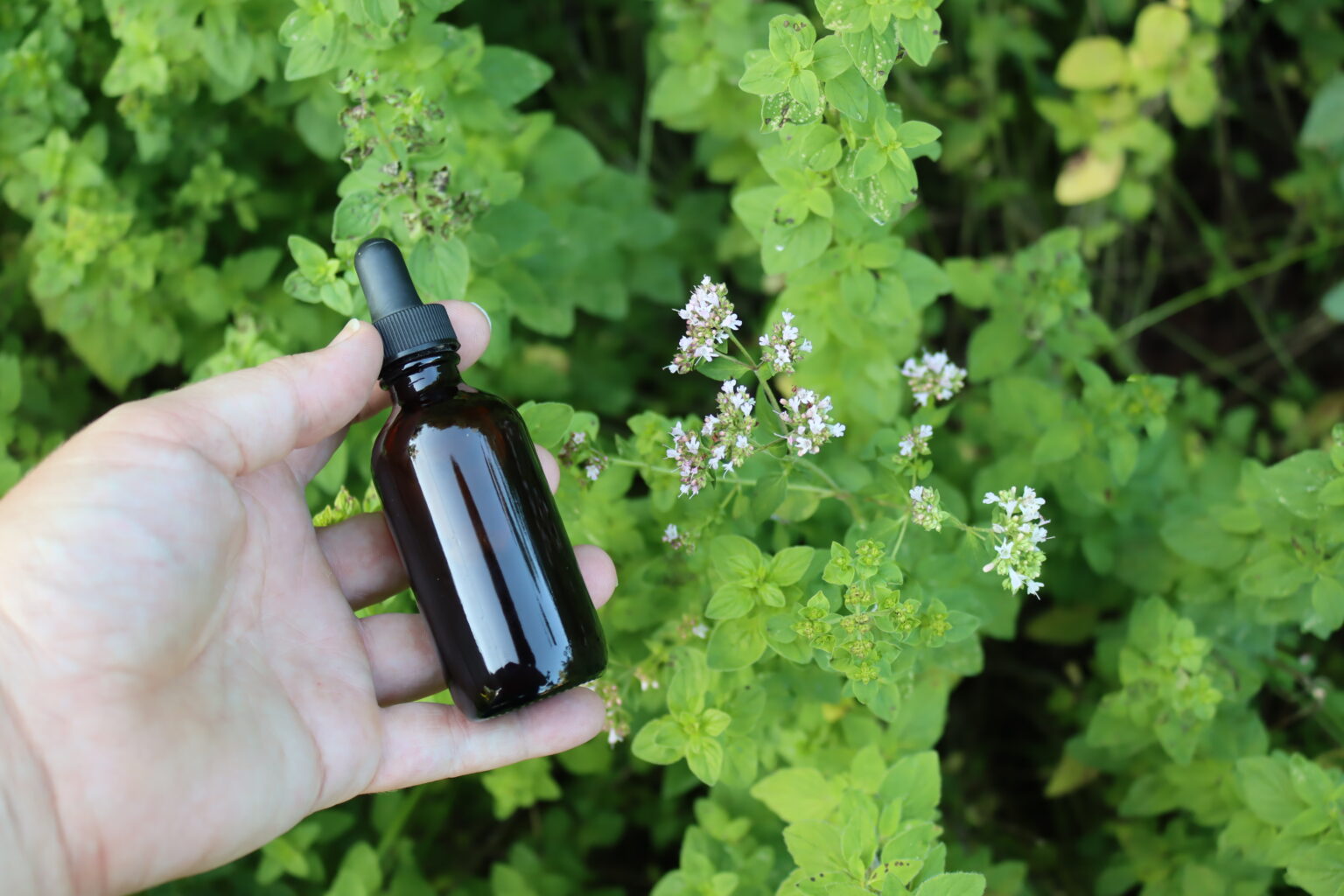
Table of Contents
- Notes from My Herb Garden
- Oregano Tincture Uses
- Choosing Your Oregano
- Ingredients for Oregano Tincture
- Equipment for Oregano Tincture
- How to Make Oregano Tincture
- A Note on Alcohol Percentage
- Oregano Tincture Dosage
- Storage and Shelf Life
- Recipe Tips and Variations
- Oregano Tincture vs Oregano Oil
- Tincture Formulations
- Ways to Use Oregano
- Oregano Tincture FAQs
- Growing and Drying Medicinal Herbs
- Oregano Tincture Recipe
- Herbal Tincture Recipes
Oregano (Origanum vulgare) is usually considered a culinary herb, but it’s also a potent medicinal herb. It’s been in the medicine chest around the Mediterranean for a couple of thousand years, and these days, it’s still one of the most studied antimicrobial herbs. The compounds behind that, carvacrol and thymol, are the same ones you smell when you crush a leaf.
Oregano oil is the version most people know, and it’s strong stuff. Plenty of folks can’t take it, either because it burns going down or because their stomach objects. A tincture is gentler, it mixes into water or tea easy enough, and that’s the main reason I keep one on the shelf.
Oregano is one of a handful of easy to grow medicinal herbs, hardy from zone 4 to zone 10, and it does fine in a pot on a balcony. If you don’t grow it, the dried oregano at the supermarket works, which is not something I can say about many medicinal plants.
The method is the same one behind every other tincture on this site. Chop the plant material, cover it with alcohol, wait, and strain. If you’ve made herbal tinctures before, you’re already probably familiar with the process here.
Notes from My Herb Garden

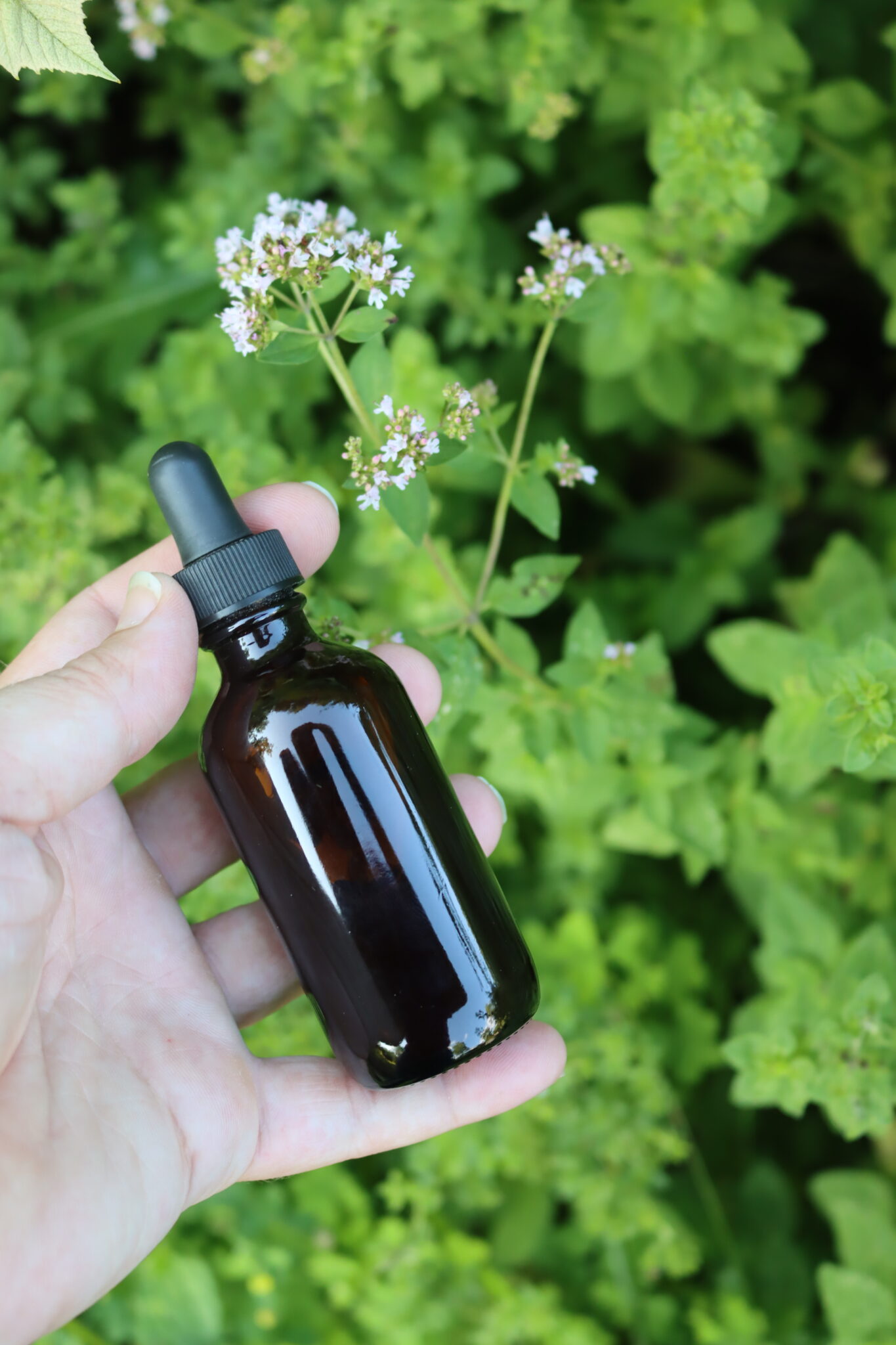
When people ask me where to start with a medicine garden, oregano is on the short list, with one warning attached. Plant it in a pot, or somewhere you don’t mind it taking over. It spreads by runners, the same as mint and lemon balm, and it will run. Mine also got much bigger than I expected the first year, and took over the whole garden bed. That’s ok, it’s useful, and it takes a good trimming to make a year’s worth of tincture for my family.
The other thing I’ve learned is to label the bottles the day I fill them. I use a small piece of masking tape and a marker, which peels off clean when I want the bottle back for something else. Six weeks is long enough for a row of identical amber bottles to get confused in your memory. Luckily, you can usually ID this one by smell, but still, being dilligent with labeling takes out the guesswork.
Oregano Tincture Uses
Herbalists use oregano tincture both on the skin and internally. Traditionally, it’s been used for:
- Skin irritations, minor wounds, and skin infections
- Insect bites and stings
- Fungal complaints like athlete’s foot and nail fungus
- Colds, flu, and respiratory complaints
- Digestive trouble and gut infections
- General immune support
One thing to get straight before the research, because it changes how much of it applies. Almost every study on oregano was done on the essential oil, which is steam distilled and far more concentrated than anything you make in a jar. A tincture is a different preparation at a different strength, and nobody has run the trials on it.
So read what follows as evidence about the plant, not as a claim about the bottle on your shelf.
The antibacterial side is where the work is strongest. A 2003 laboratory study found oregano killed E. coli by breaking down the outer membrane of the cell, which is the same way some conventional antibiotics work.
A 2013 laboratory study found it active against clinical strains of E. coli and Pseudomonas aeruginosa, a bacterium that causes lung infections in people whose immune systems are already struggling.
Fungal complaints are the other well-covered use. A 2025 review of the laboratory research on oregano and fungus found consistent activity against Candida and several molds, and pinned it on carvacrol and thymol. That’s the traditional use for thrush, athlete’s foot, and nail fungus, and it’s the one I’d say has the most behind it.
For skin, a 2018 study tested seven Mediterranean herbs against the two bacteria behind acne and found oregano the strongest of them. The researchers then formulated it and tried it on mice, where it healed better than the antibiotic they compared it to. Mice aren’t people, and that trial hasn’t been run.
The digestive use has the only human data I could find, and it comes with a caveat. In a 2014 study of 104 patients with bacterial overgrowth in the small intestine, a herbal formula cleared the problem for 46 percent of them, against 34 percent for the standard antibiotic. Oregano oil was one ingredient in that formula, alongside thyme, sage, lemon balm and several others, so none of that credit belongs to oregano alone.
Oregano is also unusually high in antioxidants. A 2001 study measured 39 culinary and medicinal herbs and put two oregano species at the top of the list. Researchers are looking at the plant for blood sugar and for cancer too, but that work is nearly all in test tubes so far, and the reviewers themselves say human studies still need doing.
Herbalists also use it for general immunity and as a winter standby, which is folk tradition rather than research. That’s true of a lot of what sits in my cabinet, and it doesn’t bother me. It’s worth knowing which is which.
Choosing Your Oregano
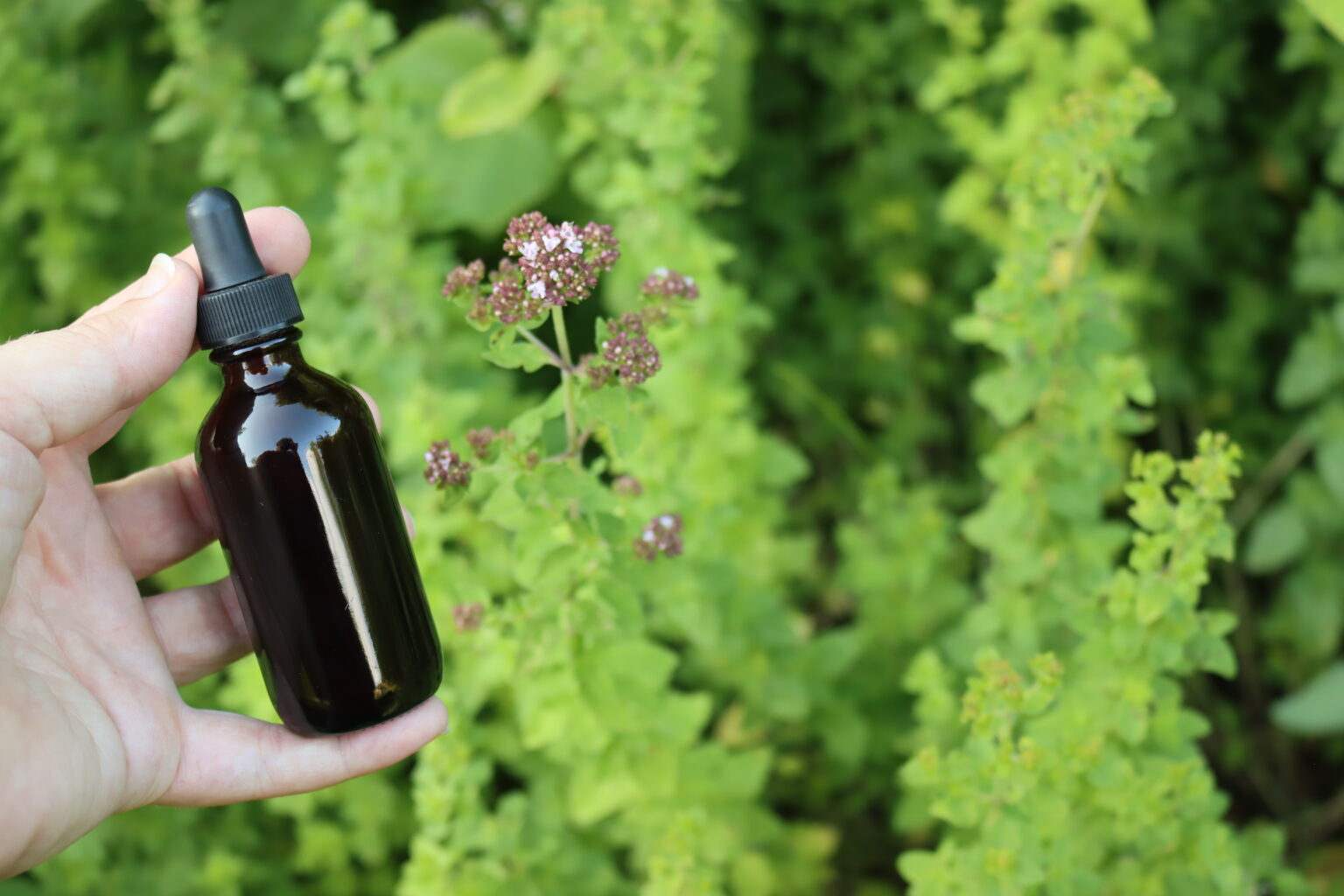
Fresh or dried both work, and the choice matters more than it does with most plants, because it changes the alcohol you need. Dried oregano takes plain 80-proof vodka. Fresh oregano brings water with it, so it wants something stronger.
Dried is the more sensible choice here, and it’s what I use for this one most of the time. The plant material is more concentrated by volume, so a jar of it is a stronger jar, and the carvacrol content doesn’t fall off the way a delicate aromatic would. Oregano dries well, which is why it’s been a pantry herb for centuries.
If you’re growing it, cut whole stems instead of picking leaves. Trimming the tops keeps the plant bushy instead of tall and leggy, and you use the leaves, the stems, and the flowers, so there’s almost nothing to throw away.
Harvest before or during flowering, when the oils are strongest. If you’re putting up a year’s worth at once, drying herbs properly is what keeps the batch worth tincturing next winter.
Store-bought dried oregano is fine, and I’d rather you use it than skip the project. Buy it somewhere with turnover, since anything that’s been on a shelf for three years has lost most of what you’re after. If you want a known source, Mountain Rose Herbs carries cut-and-sifted oregano leaf.
One note on names. Mexican oregano is a different plant in a different family, and so is Cuban oregano. They’re both lovely herbs, but not the same as standard garden oregano. You want Origanum, which is what the jar labeled plain oregano almost always is.
Ingredients for Oregano Tincture
Two ingredients. The usual substitutions people ask about all work: brandy, rum, gin, or whiskey in place of vodka, and dried oregano in place of fresh at about half the jar volume. Glycerine instead of alcohol works too, and that version is in the tips below.
- Oregano, fresh or dried: Leaves, stems, and flowers, all of it. Chop it. Whole sprigs stuffed in a jar give the alcohol almost no cut surface to work on.
- Vodka: A mid shelf bottle, and 80 proof is enough for dried oregano. For fresh, go higher. I use a plain neutral spirit for most of my tincture making, and here it lets the oregano taste like oregano, which is worth something in a remedy this sharp. Brandy softens it if you’d rather. Never use rubbing alcohol, which is toxic to drink in any amount.
Equipment for Oregano Tincture
You almost certainly have most of this already. Oregano is clean work, unlike some tinctures, so nothing here gets ruined.
- A pint mason jar: A pint is the right batch for a household. This isn’t a tincture most people go through quickly.
- A mesh strainer and cheesecloth: Dried oregano throws a lot of fine dust, so line the strainer. Mesh alone lets it straight through.
- Amber dropper bottles: A 1 ounce bottle is the standard size and the one I’d buy. Bigger bottles hold more but the dropper itself is about the same, so a dose comes out the same either way.
How to Make Oregano Tincture
This is the folk method, which is how I make almost everything. Fill a jar with plant material, cover it with alcohol, and leave it alone for six weeks.
Harvesting and Preparing the Oregano
Cut stems from an unsprayed plant, ideally in the morning after the dew has dried. Rinse them only if they’re dusty, and shake them well if you do. Water in the jar works against you.
Chop everything, stems included, as fine as you’re willing to. This is the step people skip and it’s the one that matters most.
Alcohol pulls from cut surfaces, so a jar of chopped oregano is a much stronger tincture than a jar of whole sprigs. Dried oregano is usually already broken up enough to go straight in.
Combining With Alcohol
Pack the jar about two-thirds full with fresh oregano, or about half full with dried. Dried takes less because it swells, and a jar packed full of it will drink every drop of alcohol you own and still want more.
Pour the alcohol over the top until the jar is full to within an inch of the rim. Everything has to stay under the surface. Oregano floats, so press it down, and add more alcohol if any of it comes up. Anything sitting in air will mold.
Cap it tight, label it with the contents and the date, and put it in a cupboard. Somewhere you’ll see it, not somewhere you’ll forget it.
Shake it daily the first week and every few days after that. Check the level as you go, because dried oregano keeps absorbing for a while and you may need to top it off.
Straining and Bottling
Six to eight weeks is the target, and four is the floor. There’s no rush at the far end. A jar that sat three months is fine, and a jar that sat a year is fine too. Alcohol doesn’t let anything go wrong in there.
Line the strainer with cheesecloth and pour the tincture through into a clean jar. Gather up the cloth and squeeze the spent oregano hard, because it holds more liquid than you’d guess from looking at it.
If you used dried oregano, let it settle overnight and pour it off the sediment, or run it through fresh cheesecloth a second time. Fine dust clogs a dropper.
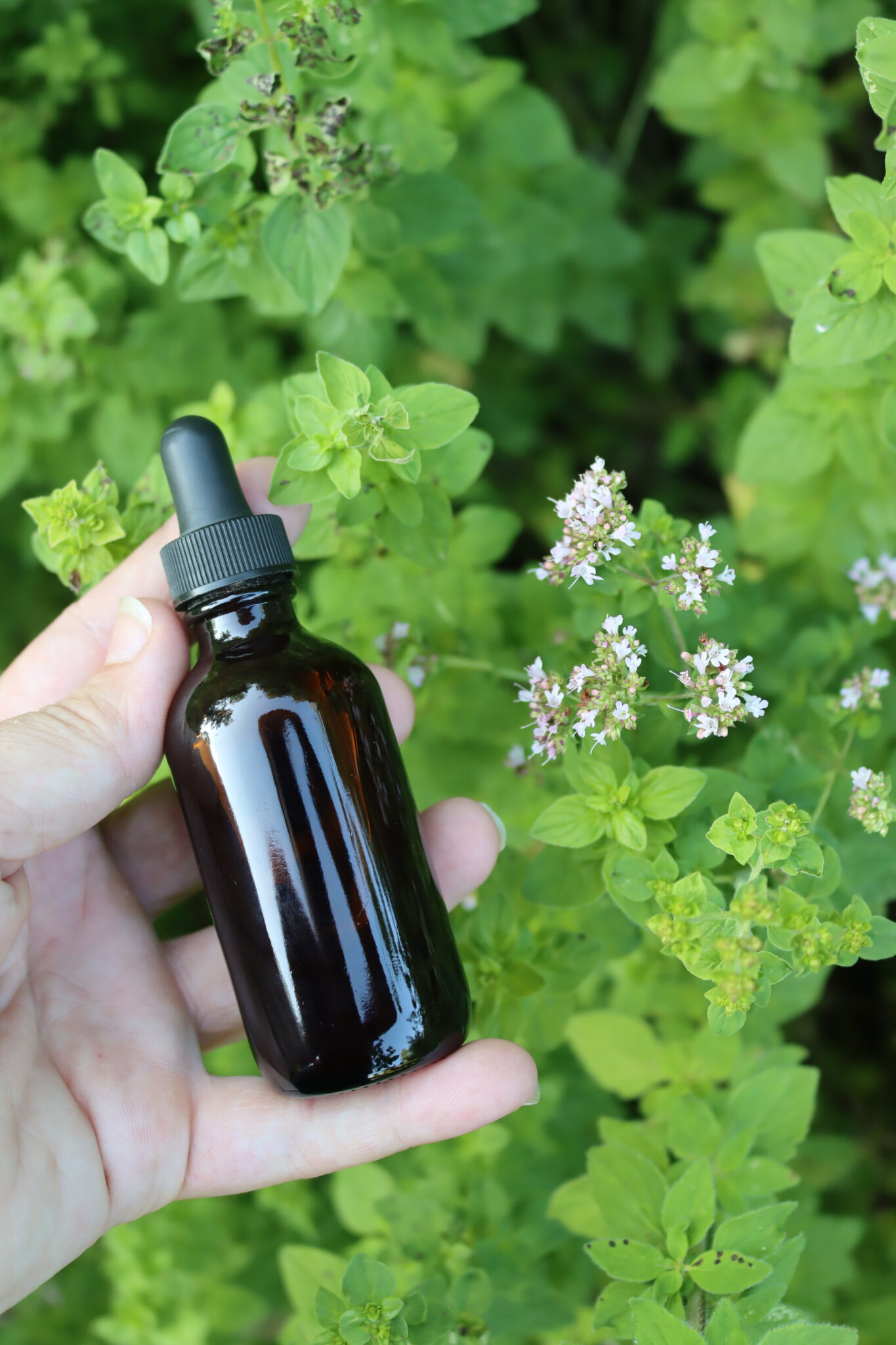
Decant into amber bottles and label every one with the contents, the date, and the dose.
A Note on Alcohol Percentage
Proof and percent are not the same number. This trips people up constantly, and it’s worth thirty seconds. Proof is double the percentage, so 80 proof vodka is 40 percent alcohol. When a source says 60 percent, it means 120 proof, not 60 proof.
Dried oregano is happy at 40 percent. Plain 80 proof vodka off the shelf is what most herbalists use for dried plant material, and it’s what I use here. The dried herb brings no water of its own, so nothing dilutes what you pour in.
Fresh oregano needs more, and every vodka in the store is 40 percent or under. That’s a real problem readers run into. Fresh plant material is mostly water, and that water thins the alcohol in the jar. The Herbal Academy’s tincture making course recommends 70 to 95 percent for fresh herbs and 45 percent for dried. The answer at the liquor store is pure grain alcohol, which is what I use for fresh plant material.
Folk method or weight to volume. Everything here is the folk method, where you fill the jar by eye. Herbalists working by weight use 1 part fresh plant material to 2 parts alcohol, or 1 part dried to 5 parts alcohol. Either approach works, and the folk method is what I use at home.
Oregano Tincture Dosage
I’d suggest consulting a clinical herbalist for an exact dosage specific to your body and needs.
Generally, the dosage for oregano tincture is 1 to 2 droppers full (1 to 2ml), one to three times per day. Once per day may be enough for general wellness, but up to three times per day may be better for fighting acute infections.
It’s sharp on its own. Take it in a small glass of water, in juice, or in tea, which is most of the point of a tincture over the oil.
Topically, you can dilute it with a little water and apply it directly. Readers ask me about nail fungus in particular, and whether that’s an oral or a skin use. I’m not a clinical herbalist, and I can’t give you a specific recommendation, but if I were treating a nail on myself, I’d use it topically, as a soak.
Oregano interacts with a few common medications, and this part isn’t optional. Don’t take oregano tincture internally if you’re on lithium, blood thinners, or diabetes medication. It may slow blood clotting or push blood sugar too low. Talk to your doctor first if you’re on anything at all, and it’s always possible to react to a new remedy, so start small.
Storage and Shelf Life
Keep the bottles cool and dark, away from the stove and out of any window. A cupboard does the job. Amber glass helps, but light is still what degrades a tincture fastest, so the cupboard matters more than the bottle color.
An alcohol tincture holds its potency for 2 to 5 years, with the long end going to tinctures made at a higher alcohol percentage and strained clean. Oregano is a winter tincture in my house, so a pint lasts me two or three cold seasons, and I make a fresh jar before it ever gets close to the far end of that.
Recipe Tips and Variations
Alcohol-free version. Cover dried oregano with 3 parts vegetable glycerine to 1 part water to make a glycerite instead. With fresh oregano, skip the water and use glycerine straight. Shake daily for 6 weeks and strain the same way. Glycerine is sweet, which helps a lot with this one, and the shelf life drops to about 1 to 2 years.
Vinegar works here, unusually well. Oregano and vinegar already belong together, so an oregano herbal vinegar is worth making on its own terms. Use it in dressings as much as in the medicine cabinet. Keep it in the fridge and use it within a year.
Try a different spirit. Brandy takes the edge off and is what I’d suggest if the vodka version is too harsh for you. Whiskey is good in a winter formula. Gin is the interesting one, since the juniper and the oregano land in a similar register.
Sweeten the dose, not the jar. Anything you add to the bottle shortens its life. Stir honey into the glass of water instead, which also gives you a little of what infused honey is good for on a sore throat.
Don’t wash fresh oregano unless you have to. Every bit of water you add to the jar comes off your alcohol percentage. Shake the stems, pick off anything you don’t like the look of, and get on with it.
Oregano Tincture vs Oregano Oil
These get talked about as if they’re the same thing and they aren’t close. Oil of oregano is an essential oil, steam distilled from the plant and concentrated many times over. It’s sold in drops for a reason.
A tincture is an alcohol extract of the whole herb, far weaker by volume, and it pulls a different set of compounds than distillation does.
That’s why the research question above matters. The studies were nearly all run on the oil, so they tell you about the plant’s chemistry without telling you what a spoonful of tincture does. Anyone quoting oregano oil trial results at you about a tincture is skipping a step.
In practice, the tincture is the easier one to live with. The oil is hot enough that it needs diluting in a carrier before it goes anywhere near skin or a throat, and plenty of people can’t take it internally at all.
A tincture goes into a glass of water and behaves. If oregano oil hasn’t worked out for you, this is the version to try.
Tincture Formulations
Oregano is a strong, sharp herb, and it does better with company than alone. For skin, pair it with something soothing like calendula. For a cold coming on, elderberry and echinacea are the two I’d put with it. For an unhappy stomach, chamomile takes the edge off oregano’s sharpness. Its closest relative in the cabinet is thyme, which carries the same thymol and does similar work in a respiratory blend.
Combining herbs well is its own skill, and there’s more to it than putting two good ones in the same bottle. If you want to go deeper, mastering herbal formulations is an excellent resource.
Ways to Use Oregano
A tincture is one jar off a plant that gives you a lot more than that. The same trimmings that go in here dry down for the spice rack, and an oregano herbal infused oil gives you a base for a salve when the complaint is on the skin rather than inside. That’s my usual route for anything fungal, since a salve stays where you put it.
It’s also a natural in the winter remedies. Oregano belongs in fire cider alongside the horseradish and garlic, and it holds its own among the natural remedies for cold and flu that I actually keep made up. If you’re building out a cabinet rather than making one thing, the range of herbal preparations is worth a look, because the same plant behaves differently in alcohol, oil, vinegar, and honey.
And it’s still a kitchen herb. Nothing about tincturing it changes that, and a plant that spreads the way oregano does will give you plenty for both.
Oregano Tincture FAQs
These are the questions readers ask most on this post, and the alcohol percentage one comes up more than all the others put together.
You mostly don’t, and you don’t need to if you’re using dried oregano. Plain 80 proof vodka is 40 percent alcohol and that’s what most herbalists use for dried plant material. For fresh oregano, which brings its own water into the jar, ask for pure grain alcohol instead. That’s what I use with fresh herbs. Remember that proof is double the percentage, so a source calling for 60 percent means 120 proof.
Yes, and it’s what I use most of the time. Dried oregano is more concentrated than fresh, so fill the jar about half full instead of two thirds, and expect it to drink up alcohol as it swells. Buy from somewhere with turnover, since oregano that has sat on a shelf for years has lost much of what you want. Strain it twice, because dried herb leaves fine dust that clogs a dropper.
Both are traditional, and which one depends on the complaint. For a cold or a digestive problem it’s taken internally, diluted in water or juice. For anything on the skin, including nail fungus and athlete’s foot, it’s used topically. I’m not a clinical herbalist and can’t give you a specific recommendation, but if I were treating a nail on myself I’d use it topically as a soak.
A reader asked me this and I don’t have a definitive answer. It might help, but I’m not aware of anyone having tested it properly. A tight lid on a mason jar is enough to keep the alcohol from evaporating, which is the thing that actually matters over six weeks, so I wouldn’t go out of my way.
It’s fine. Six to eight weeks is the target but there’s no upper limit that matters, and the alcohol keeps everything stable in there. Strain it whenever you get to it. Once bottled, an alcohol tincture holds its potency for 2 to 5 years stored cool and dark, and it loses strength slowly rather than going off.
Growing and Drying Medicinal Herbs
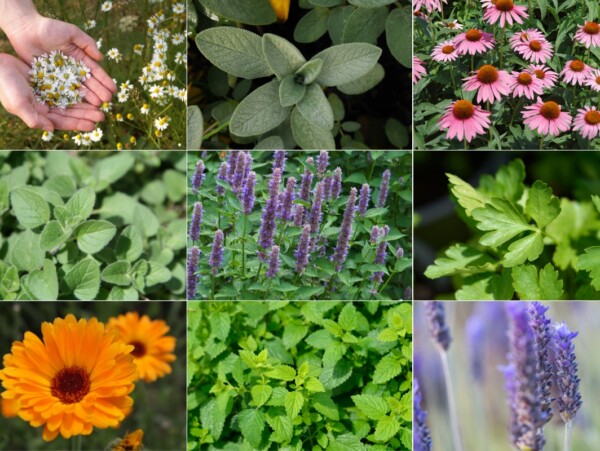
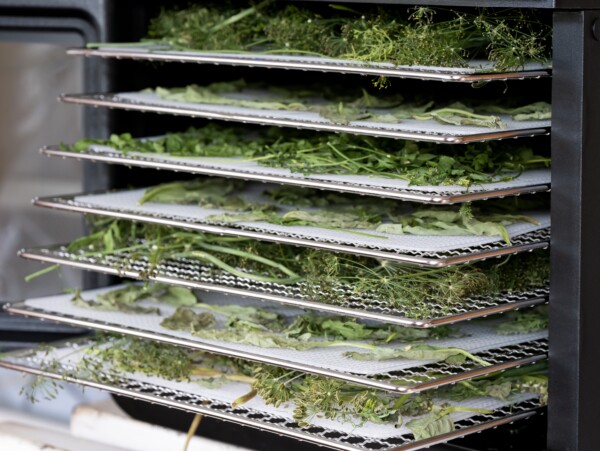
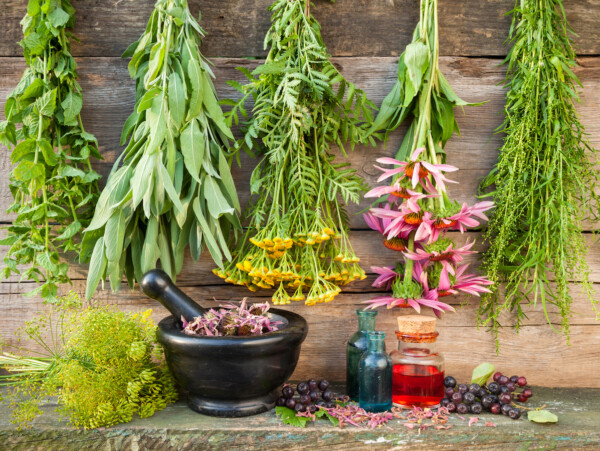
Where the oregano comes from in the first place, and what else to plant beside it.
If you tried this Oregano Tincture recipe, or any other recipe on Practical Self Reliance, leave a ⭐ star rating and let me know what you think in the 📝 comments below!
And make sure you stay in touch with me by following on social media!
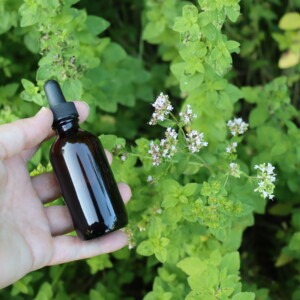
Oregano Tincture
Equipment
Ingredients
- 1 cup dried oregano, or chopped fresh oregano, see notes
- 1 1/2 cups vodka, 80 proof for dried oregano, see notes for fresh, plus more to cover
Instructions
- Cut whole stems of oregano from an unsprayed plant, or measure out dried oregano.
- Rinse fresh oregano only if it is dusty, then shake it dry so no extra water goes into the jar.
- Chop the leaves, stems, and flowers as finely as you reasonably can, since alcohol pulls from cut surfaces.
- Pack the chopped oregano into a clean pint mason jar, about two thirds full for fresh or about half full for dried.
- Pour vodka over the oregano until the jar is full to within an inch of the rim, pressing down any pieces that float so nothing sits above the alcohol.
- Cap the jar tightly, label it with the contents and the date, and set it somewhere cool and dark.
- Shake daily for the first week and every few days after that.
- Check the alcohol level over the first week and top it off if the oregano swells above the surface.
- Infuse for 6 to 8 weeks, or at least 4 weeks.
- Line a fine mesh strainer with cheesecloth and pour the tincture through into a clean jar, then squeeze the spent oregano to release the last of the liquid.
- Strain a second time through fresh cheesecloth if you used dried oregano, to catch the fine dust that would otherwise clog a dropper.
- Decant into amber dropper bottles and label each one with the contents, the date, and the dose.
Notes
A Note from Your Family Herbalist
I’m a family herbalist, trained by more than 20 years of hands-on work with medicinal plants and rounded out with coursework through the Herbal Academy of New England. That means I know my way around the plants in this post, and I’ve personally made and used the remedies I write about, often many times over. But there’s a real difference between knowing what works on my homestead and knowing what’s right for you.
Medicine is a personal affair. Every body is different, every medical history is different, and herbs interact with medications, pregnancy, nursing, and existing health conditions in ways no general blog post can anticipate. Even mild medicinal plants like chamomile cause allergic reactions in some people, so what sits comfortably on my own medicine shelf might not be the right choice for yours.
For guidance tailored to your situation, there are three directions I’d point you:
- See a local clinical herbalist. A practicing clinical herbalist can take your full health picture into account, recommend the right herb and dose for you, and adjust the protocol as you go. Ask around at your nearest food co-op, herb farm, or natural-foods store; most communities have at least one.
- Talk to your doctor before adding any new herb to your routine, especially if you take prescription medications, are pregnant or nursing, or are managing a chronic condition. A good doctor will welcome the conversation.
- Educate yourself, the way I have. The Herbal Academy of New England runs the courses I credit with sharpening my own practice. Their Introduction to Herbal Medicine course is where I’d start. I’ve also taken and recommend their Mushroom Course and their Botany and Wildcrafting Course. All three are well-paced and easy to follow at home.
Herbal Tincture Recipes
Three more to start while this one steeps, and there are herbal tincture recipes for most of the medicine cabinet.
Find the perfect recipe
Searching for something else? Enter keywords to find the perfect recipe!









Thank you for your instructions on the oregano tincture. I appreciate your knowledge and will use your instructions as I reap this new crop. I did an oil of oregano last year for the first time.
So glad it’s helpful to you!
So easy to make and so effective!
If you wanted to treat a nail fungus, would you use this orally or externally? I wasn’t sure if this could be used interchangeably over skin issues and or orally as a tincture.
I’m not a clinical herbalist, so I can’t give you any specific recommendations here, but if I were using it to treat nail fungus on myself, I’d use it topically as a soak.
While steeping tinctures in vodka, would it be beneficial to vacuum seal the jars?
That’s a good question, and I don’t really have a definitive answer here. Possibly? I’m not sure anyone has really put work into testing this.
What happens if I left the bottle in the shelf for 3 months? Is it still usable?
Yes it should be just fine.
Dropper bottles come in various sizes. What is the measurement of the dropper you are recommending?
A 1 oz. dropper bottle tends to be the standard. It is my understanding that even larger dropper bottles tend to be fairly equivalent in the dropper dosage even though the bottles themselves are larger. It would be something fun to experiment with though to see how different they are.
Where do you find vodka at higher than 40% alcohol? I went to the liquor store and every vodka was 40% or less. I’m still going ahead with it but I’d like to do it right!!!
If you’re working with dried herbs 40% is perfectly fine and what is used by most herbalists. If you’re working with fresh plant material, I typically use a pure grain alcohol such as Everclear.