
Affiliate disclosure: This post may contain affiliate links. Please see our Privacy Policy.
No yeast at home? Try culturing your own wild yeast on potatoes! All you need is one medium-sized potato, a bit of water and a smidge of patience.

Believe it or not, commercial yeast has only been available in well-stocked grocery stores for the past 100 years or so. Leavened bread, however, has been baked for millennia.
It’s convenient to be sure, but yeast packets are not the only way to leaven bread.
In times past, bakers cultured their own wild yeast for raising bread. Sourdough is one version, and it’s a community of yeast and lactic acid bacteria (like in yogurt) that give the bread a characteristic sour taste.
But what if you don’t like sourdough (or don’t have the patience to maintain one)?
There are literally dozens of ways to culture a wild yeast starter, using everything from raisins to beer to wild apples.
This simple method cultures wild yeast on boiled potatoes and was originally used by vodka distillers making high-quality potato vodka. The idea is to just culture yeast, without encouraging the lactic acid bacteria that are part of sourdough.
(If you’d rather just skip the potato yeast culture experiment and master homemade sourdough, I’d recommend The Art of Sourdough E-Course. It’ll take you through everything you need to know to bake high-quality sourdough bread without commercial yeast.)
DIY Potato Yeast Starter for Bread
Potatoes are high in starch, which is ideal for culturing yeast. They also contain plenty of micro-nutrients, making them a better yeast starter than sugar alone.
There are a number of different potato yeast starter recipes circulating on the internet at the moment, ever since yeast disappeared from store shelves this spring.
Guess what…they all work.
Some add sugar, others add a bit of flour and some are just a mashed potato and the starchy water used to boil it.
Mash it all together, and then leave it open on the counter for 2-3 days. Yeast floating by in the air will settle on your starchy yeast trap, and quickly go to work reproducing.
The simplest method, and the one originally used for vodka production, was just a single potato.
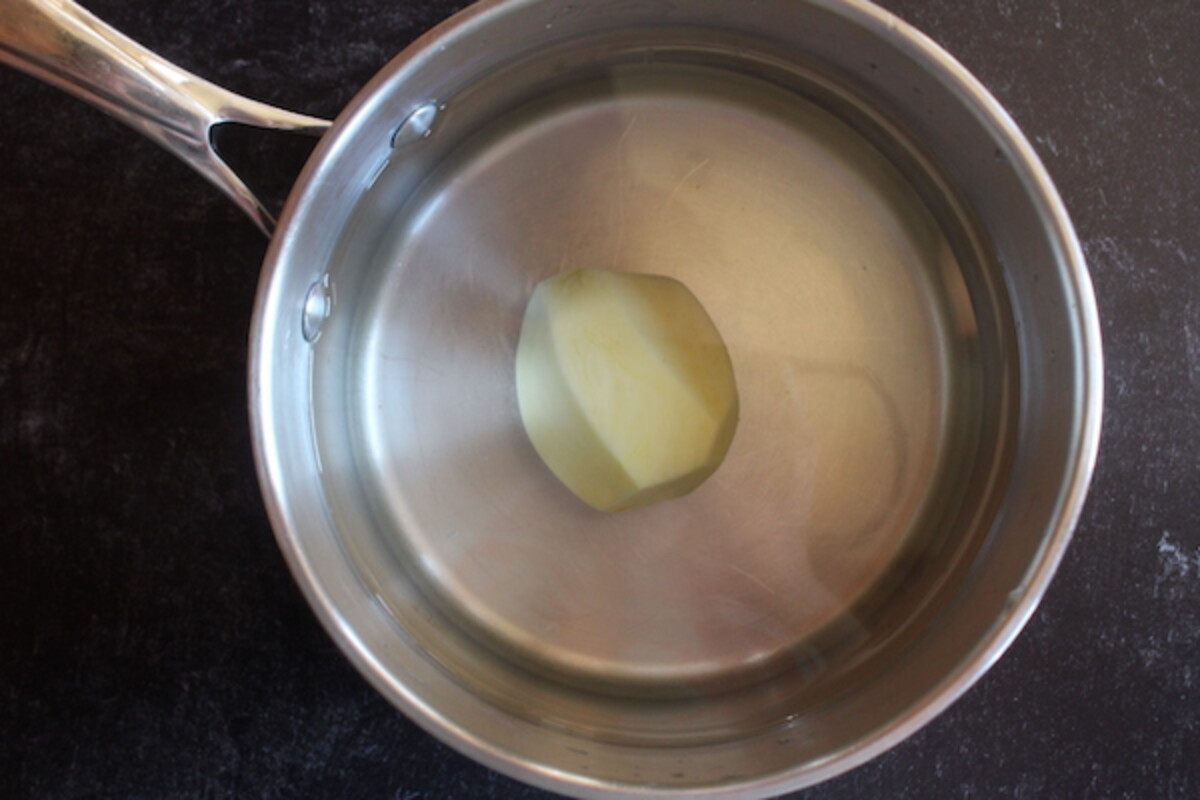
Peel the potato and place it in a pot of water. Bring the water to a boil, and then simmer for 35-45 minutes, until the potato is completely soft. Test it with a fork to ensure that it’s cooked and soft all the way to the center.
Pour the cooking water into a container, and allow it to cool. Meanwhile, thoroughly mash the potato.
Place the mashed potato into a one-quart mason jar, and then pour the starchy potato cooking water in to fill the jar. If you’re a bit short on cooking water, just add clean, chlorine-free drinking water.
Set the jar on the counter (open or covered with a towel), and wait.
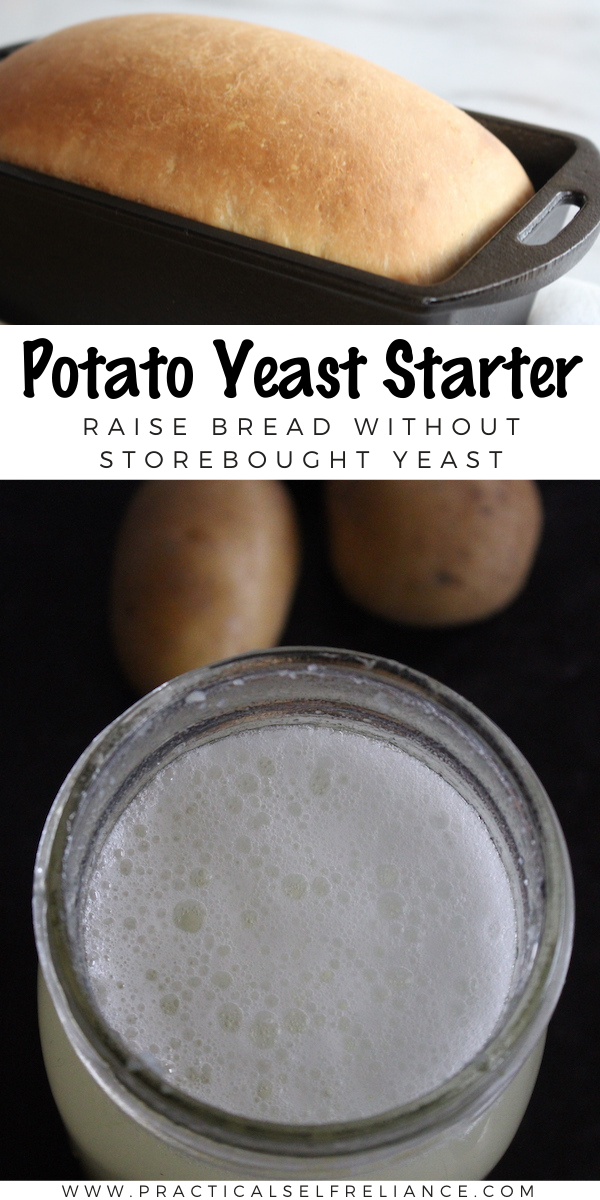
In about 24 – 36 hours, you should see the first tiny bubble on the surface. (Look closely at the potato layer below, and you’ll see tiny bubbles forming there too.)
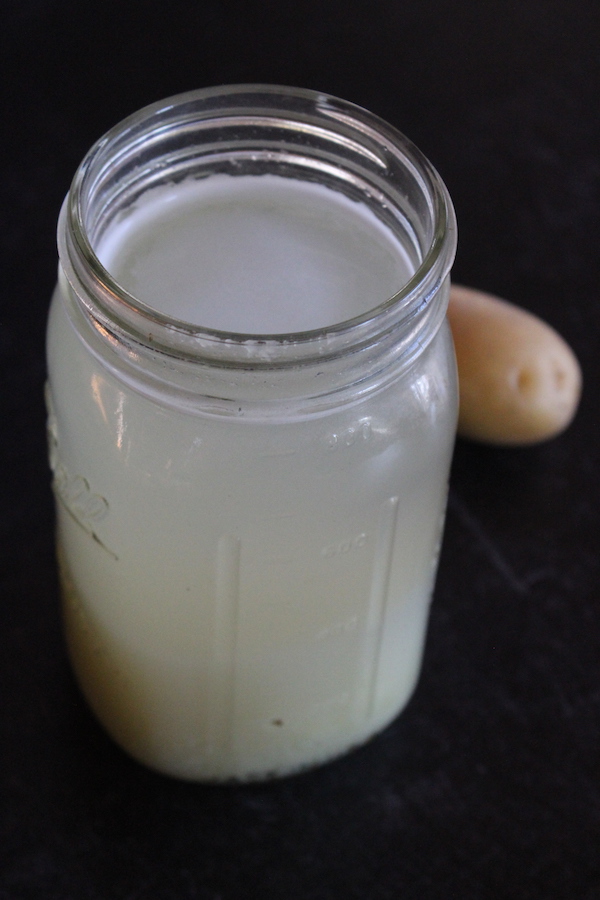
Cap up the jar, give it a vigorous shake to distribute the yeast and then open it up and leave the jar on the counter again.
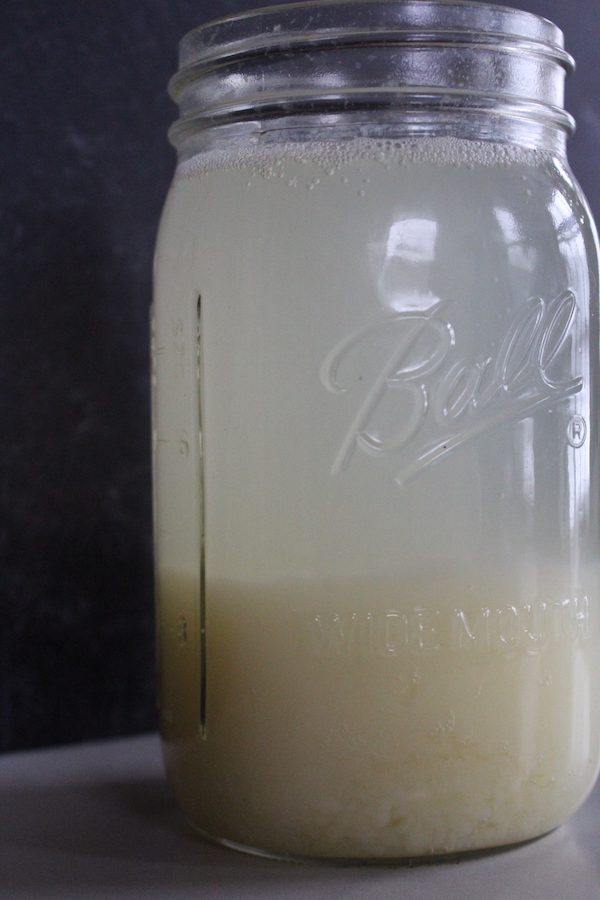
In another 24 to 36 hours the jar should really be bubbling. At this point, you can bake your first loaf of bread (or wait another 2-3 days, your choice).
Alternate Potato Yeast Starters
The idea of culturing yeast on boiled potatoes isn’t just for emergencies or vodka bootleggers. Perhaps you’ve heard of Amish Friendship Bread? It’s a loaf of bread that’s like a chain letter that you pass onto unwitting friends.
Friendship bread starts with a home cultured starter, slow cultured over many days. After you bake the bread, a portion of the starter is passed on to friends with instructions so they can bake their own.
These days, a friendship bread starter is made with a few tablespoons of dried potato flakes and a pinch of storebought yeast.
Historically though, I doubt the Amish were buying instant mashed potatoes to make their starter. More likely the original recipe comes from a simple potato yeast starter, and these days potato flakes and yeast approximate the traditional (slower) method.
As I said, there are a number of variations for culturing yeast on potato starch, and they all work fine. Some are faster (the ones with sugar) and others are a bit slower, but they’ll all get you natural yeast for baking bread.
One method involves adding salt to the mix, which actually inhibits yeast a bit and selects for sourdough. That’s more properly a “potato sourdough starter” rather than a straight yeast starter.
To try that method, add 1 tsp salt and 1 tsp sugar to a quart jar containing potato water and a mashed potato. That said, it’s not one I’d suggest. If you want a sourdough culture, it’s much easier to just make a normal one with flour and water.
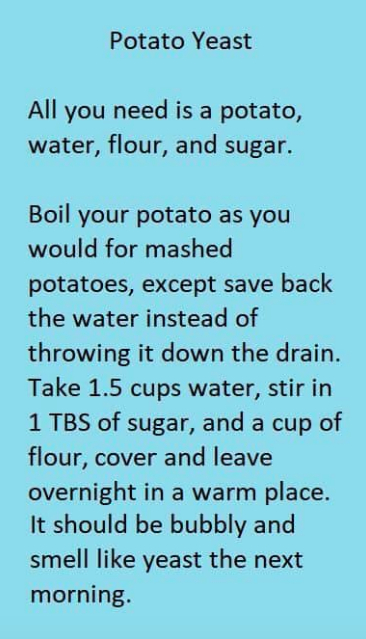
Another simple method adds both flour and sugar to the starter. This method has been shared on social channels like crazy, and yes, it does work:
Still, I chose to go with the simple potato method. Why? Because it’s the easiest to incorporate into existing bread recipes.
Baking with a Potato Yeast Starter
To use a potato yeast starter, simply pour off the starchy water at the top and use it in place of the water in your bread recipe. You can use it in any bread recipe, but know that wild cultured yeast will likely be a good bit less vigorous than commercially cultured yeast.
The ones they culture in labs take our impatience into account and raise the bread in just a few hours. Wild yeast, however, work on their own time table. Expect rise times to take 2-3 times longer with home cultured yeast, unless it happens to be very warm in your house.
Since we’re already working with potato, I’ve chosen to expand on the theme and make potato bread!
Most potato bread recipes actually only use the starchy potato water, rather than actual potatoes themselves. The resulting bread is soft and tender and makes an excellent sandwich loaf.
I happened to find a potato bread recipe from King Arthur Flour that uses both mashed potatoes and potato water. That allowed me to incorporate the cultured mashed potatoes at the bottom of the jar, and get more of the yeast culture into the final loaf.
Since the potatoes in the jar are soaking wet, I reduced the liquid in the recipe by 1/4 cup. I also doubled all the rise times.
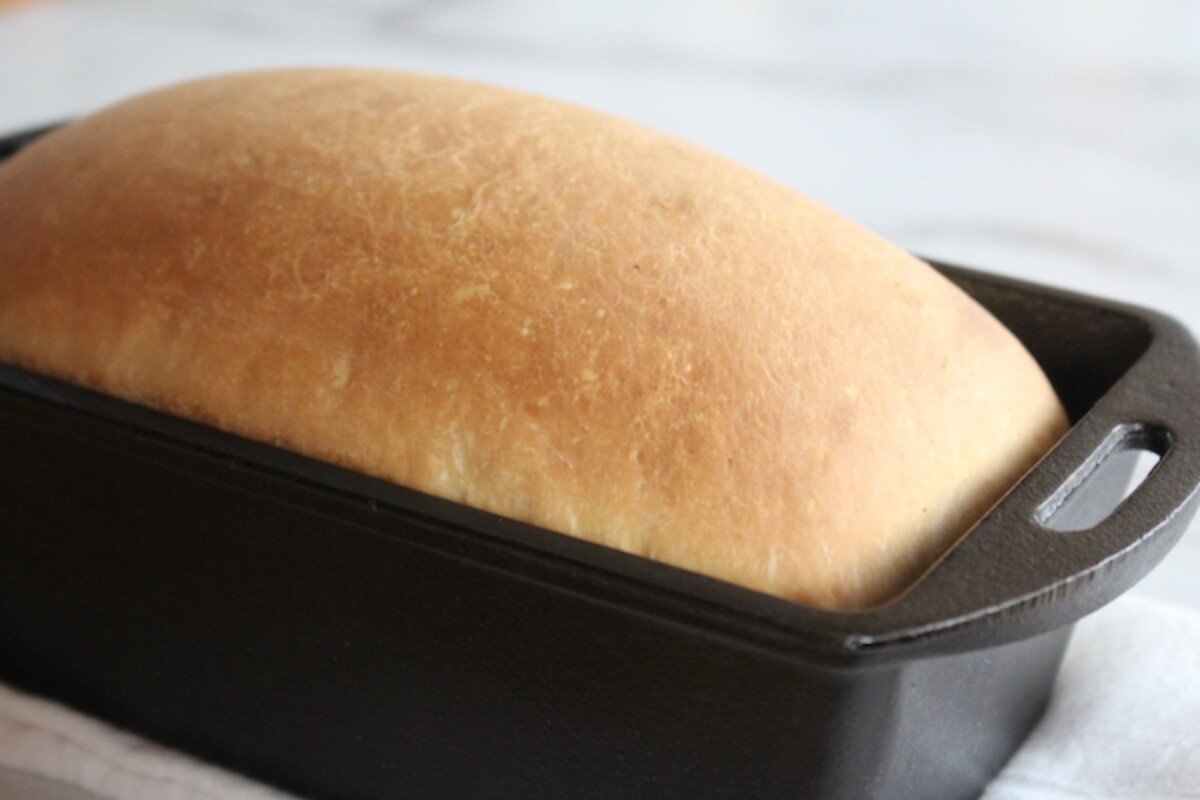
Just look at the beautiful rise on that loaf…
Maintaining A Potato Yeast Starter
While you can just make a new potato yeast starter for each loaf of bread, it’s a lot simpler if you just maintain the culture.
To make my potato bread loaves, I started by pouring off 2 cups of the yeast/potato water to continue the culture and then used 1 cup potato water and 1 cup mashed potatoes from the bottom of the jar for the recipe.
The culture will need to be fed at this point, and the simplest way is to just boil another potato, mash it and allow it to cool completely. Add the yeast culture to the potato, and then top with cooled potato cooking water.
Alternately, if your bread recipe doesn’t use the mashed potato at the bottom of the jar, just add 1-2 tablespoons of sugar to the jar and fill with more water.
If you’re not planning on baking again in the next few days, store the starter in the refrigerator for later. The culture should last a few weeks in the refrigerator, just bring it back to room temperature before using it.
Troubleshooting
Like any new kitchen project, there are lots of ways this can go wrong.
The finished yeast starter should smell pleasant, very lightly of yeast, like rising bread. Possibly ever so slightly sour like sourdough, but mostly like yeast.
If your culture smells nasty….something went wrong.
Just like a home cultured sourdough starter, if the setup is wrong or it’s not tended, it’s always possible that you culture something besides yeast. To help ensure success, keep these things in mind:
- Make sure the container is open to the air, not capped. Yeast need surface area to land on, and you won’t be able to culture them in a closed container.
- Be sure to vigorously stir the jar (or briefly cap it to shake vigorously). This helps distribute the yeast and their food/substrate, and it also oxygenates the water which will help prevent anaerobic bacteria.
- Peel the potato. The peel will give off-flavors to the culture. Also, make sure it’s really thoroughly cooked through to the center before mashing.
- Use unchlorinated drinking water. Chlorinated tap water can prevent the yeast from culturing, but may not prevent other bacteria tolerant of low levels of chlorine.
- Once the culture is vigorously bubbling, put it in the refrigerator. If left on the counter for weeks on end, it will mold and spoil. Your goal is to catch the yeast, and then bake immediately, or push “pause” to hold the culture in a ready state in the fridge until you’re ready to use it.
Use your best judgment. As always, when in doubt, throw it out. Stay safe and don’t eat any food you believe may be spoiled.
If for some reason you just can’t get it to work, try a traditional sourdough starter (with flour and water).
(And If you do choose to go that route, I’d recommend The Art of Sourdough E-Course for sourdough beginners looking for great video tutorials covering every aspect of making sourdough bread.)
More Useful links for These Challenging Times
Looking for more things to help with the current crisis? Read on…
- Best (and Worst) Survival Food Kits
- Survival Gardening: Our Real Life Trial Run
- How to Make Soap
- 20+ Immune Boosting Herbs (and Mushrooms)
More Easy Bread Recipes
Looking for more baking inspiration?
- 100% Rye Sourdough Starter
- Sourdough Rye Hearth Bread
- Yeasted Banana Bread
- Amish White Bread
- Whole Wheat Honey Bread










Hi Ashley
I love your blog on the potato yeast. With that said my question is does it matter what kind of potatoes you use? I only have Yukon gold potatoes, is that okay?
I don’t think it matters that much what type of potato you use, they all should work. Really starchy potatoes probably work slightly better. But we eat Yukon gold potatoes, so that’s what I had on hand and used.
Does it have to be sugar to feed the yeast? Can honey or molasses be used instead?
Yup, those will work. Honey, molasses, maple or any other real calorie-containing sweetener will work (just not Splenda, stevia, etc).
Do you cover the starter when you finally put it in the fridge? Also, if you don’t use the potato in the bottom of the starter, can you keep feeding the original starter with sugar indefinitely? And, after you feed the starter with sugar, should the starter be put in the fridge or left outside? Covered or uncovered? Thanks!
Question- if you store the starter in the refrigerator, do you store it capped or uncapped?
In the refrigerator I store it loosely capped, so that a bit of air can escape through the loose cap.
If I use part of the potato water yeast in a recipe and replenish the starter with fresh water and sugar, do I have to wait another 2-3 days to use it again?
Yes, I’d suggest waiting a few days to allow the yeast to replenish themselves.
I’ve made the potato yeast and it actually looks and smells great, however I can’t find any recipe that doesn’t call for a packet of yeast along with the starter… Which I don’t have any yeast that’s why I made this. I did make a sourdough starter with flour and water, and then made the potatoes yeast in a seperate container… But I also have a bread maker so how can I incorporate this too? (No extra yeast to add other than the potato culture and possibly using a bread maker/or just go oven baked?) Also, I have a bottle of Guinness… How would that help having extra yeast- Yay/nay? I’ve Never made bread other than with a bread maker before.
If I choose to put the starter in the fridge, do I keep the container open a crack or close it completely? And will the potato in the bottom of the jar ever need to be replaced? I don’t plan on using the potato mass in any recipe, just the yeasty water.
Hello, thank you for all the great information!
My yeast starter bubbled fine for the first 24 hours, then I put the lid on and shook it vigorously. It’s been over 24 hours since I shook it but there are not a lot of bubbles, definitely not even close to what your photo looks like. It doesn’t stink but I’m not sure it smells like yeast. How do I tell if I was successful at catching yeast without using it in bread?
Also, how important is it for the potato water to cool completely before adding it into the jar with the potato mash?
So the super frothy photo at the top is right after shaking the jar (and I should clarify that). You’ll just a smattering of bubbles for the most part, even on day 2. Like a carbonated soda 5 minutes after you’ve poured it.
One thing to remember, after you cap & shake the starter, remember to uncap it and leave it out again. Just to clarify, because I’ve had comments from some that capped it and left it capped after that.
Timetables can vary a bit, since your wild yeast is going to be a bit different than mine, and some houses are warmer than others. So assume that yours could take a bit less time, or maybe 24-48 hours longer. If you want to speed things along a bit, add a tablespoon of sugar into the jar.
For the initial temperature, everything can go into the jar hot (water and mashed potato and all). It won’t start catching and supporting yeast until it’s cool, that’s all. While it’s hot anything that lands will just cook, but that’s not an issue at all in the long run.
Do you recommend self rising or all purpose flour?
Thank yoi for your time.
I always use either all-purpose or bread flour. Self-rising is flour with baking powder added, which is good for things like cornbread and cakes, but only if the recipe calls for it. If you use self-rising flour to make yeasted bread, you’ll get a strange cakey texture and it won’t be quite right.
Hi! I made the one where you boil the potato, save the water, and add sugar and flour and it literally looks like mashed potatoes. Is this right??
I started this 5 days ago and just used it with the King Arthur potato bread recipe. It came together well so far (proofing now). But is the starter supposed to stink? Mine smells like rotten eggs! I’m a bit nervous to eat the bread, I don’t want to accidentally poison myself just because I couldn’t find yeast at the store. Is it normal for the mixture to be very stinky?
It should not be stinky! It should smell very slightly of yeast, that’s it. Something happened to yours that’s not quite right. Did you have the jar open to the air (the correct way) or closed? If it was closed, the potato can spoil instead of being colonized by wild yeast.
If your jar was open, something else must have colonized before the yeast took hold? That’s my best guess.
The jar was open to the air. Maybe it wasn’t clean enough when I put the mixture in? Should I have boiled the jar first to completely sanitize it?
Sanitizing the jar first couldn’t hurt.
Even flour/water sourdough starters go off sometimes, and I’ve had plenty of them fail, it’s an imprecise process. This potato yeast process I just tested recently, so I have no actual knowledge of the success/failure rate beyond the fact that the couple variations I tried all worked.
What about the risks of botulism poisoning? Does cooking kills the toxin?
I’d suggest you do your own research to verify, but my understanding is that botulism requires an anaerobic environment (ie. a sealed container not exposed to the open air). That’s why it’s such a problem for canning when done improperly, where the jar improperly sterilized and then is sealed.
This is a short duration open ferment, with the jar open to the air to catch yeast. You’re briefly capping the jar once a day to vigorously shake and oxygenate the water, thus if done properly this is not an anaerobic culture.
If for some reason you have a bunch of spoilage bacteria floating around in your kitchen, rather than yeast, it’s possible that the potatoes may spoil instead of catch yeast. That was not my experience, but I’ve had a few people mention that their culture smells nasty. It should smell like yeast, basically the smell of warm rising bread. If it smells nasty, then something went wrong. Perhaps it wasn’t oxygenated properly? Perhaps chlorinated water was used that prevented yeast from colonizing (but allowed something else that can tolerate low levels of tap water chlorine). Hard to say.
As always, use your best judgment in the kitchen and when in doubt, throw it out. Don’t take my word for it, I’m just some random person on the internet. Use your senses and pay attention to what’s happening as you’re culturing/cooking, because in the end, you’re the one that has to decide to eat it or not.
Would there be any way that you can help me with the measurements ? I have made the starter with the potato and it is waiting for the first bubbles. I am complete out of yeast. I have found several recipes that use the starter but the require yeast too. I remember my grandmother using this starter back in the 70’s. I don’t know if she used yeast. I think not. But I really need some help and have no idea the measurements or other ingredients.
Thanks for your help !
When using a bread recipe do you omit the active dry yeast and replace it with the starter?
Yes. Replace the water in the recipe with the water from this starter, and then no commercial yeast. Know though, that your rise times will be much longer (2-3 times) what the recipe suggests.
If the email verification was sent out I did not get it or I thought that it was phishing, What should I look for when the email arrives that I know it is from you?
If you’re asking about subscribing, it’ll say “confirm your subscription to Practical Self Reliance” and it’ll come from Ashley Adamant.
Dearest Ashley, Firstly i would like to take my hat off to you for being the most educative person i have found on the net. IM not much of a tech head, so i i am a bit bias about your website, but everything you offer in terms of education, is exactly what i need, use and do. I hope you don’t mind, but i have shared your link on my blog about self-sustaining in Portugal mountains. You are an inspiration to so many, i just wish more people would have life like ours, it would answer so many peoples problems of the world… I had a calling years ago when i was in hospital with a short surgery that turned into a massive ordeal and found myself in hospital for a week and suffered serious injuries due to the surgery, in my recovery i had a full on experience, I’m not religious person, but i can say there was some sort of magickal power watching over me and guiding me, it was powerful. In that moment i knew i had to make changes, and i did, my partner and i moved away from UK and began LIVING!!! now with 2 children we run a small farm, with animals and lots of food, and huge amounts of wide open spaces in the wilderness of nature with only a few old Portuguese people still farming the old ways, in fact only 3 of them, whom i see everyday, and only see them for weeks sometimes months at a time. Im very grateful for this life, i wouldn’t change any of it for the world, even though we have struggled and are struggling financially to fund tools and home repairs. Im an artist and paint portraits and wildlife to help fund my farm life, my husband does a few odd jobs for a few people here and there like chopping wood and clearing land. You are my go to for most of my farm life experiences and you have guided me so much i want you to know how much i appreciate you and what you do. I can’t wait to check out more of what you do, and in future i will be posting up some more of your advice on my blog, if thats cool with you? Blessings to you and your family at this time, if you want to check out my blog here is the link… https://portugalmountains.blogspot.com if you want to subscribe or share my page with others, you are more than welcome… Onelove
So happy you’re enjoying the blog, and it sounds like you went through quite an ordeal to get to where your family is now. I’m happy you’re living and enjoying life, even though this life can be hard financially. Thanks for the blog link, I’ll check it out! You’re always welcome to post links, quotes or tidbits from my articles, but just not whole articles cut and pasted.
Its me again, so i tried your potato recipe, and it was going well, until i topped it up with un-chlorinated water minus after i decanted it into a quart jar, then the bubbles stopped and now, 24 hours plus later, still no bubbles, did i kill the yeast, and will it recover or shall i start again..?
Hi! I enjoy your posts. Do you have printer friendly versions of them? There are so many adverts that it’s difficult to refer to my screen when following directions for sourdough starter etc. I’d like to refer to an easier to follow print out
Thanks!
I’ve had that question a lot, and I’m working on a solution, but beleive it or not it’s actually really hard to make a printer friendly version of wordpress sites (ads or not). The best advice I’ve found is here, where you may be able to convert it to reader mode and get a printer friendly version (but how well this works depends on your computer/browser setup) : https://www.howtogeek.com/423643/how-to-use-google-chromes-hidden-reader-mode/
How much do we use in replacement of dried yeast? Is is a tap equivalent?
That’s tricky, since it’s going to vary based on the yeast you catch. I used a cup of the starch water, as well as the mashed potato at the bottom since the potato bread recipe called for mashed potatoes. For most recipes, I’d say replace the water in the recipe for starch water from your starter. Still, your rise times will be 2-3 times whatever the bread recipe says.
Please share your bread recipe. I like your instructions for how to make the starter from potato water. I still would like the exact recipe.
I agree! Please add step by step recipe for the starter, then the bread recipe and maybe a printable version for the Amish friendship bread as this would be a great thing for these times as gifts for friends or neighbors!
How well does this work with a gluten free flour mixture?
Honestly, about as well as any yeast works with a gluten-free flour mix. Without the gluten, it’s hard for the bread to rise properly, but most mixes have starches added to balance that out. If you have a good gluten-free bread recipe, it should work the same as regular yeast. Keep in mind, your rise times using this yeast will likely be 2-3 times that or commercial yeast (regardless of the flour used).
Hi ,
Sorry I may sound dumb here , I’m a newbie so that’s my excuse.
1. I’ve boiled 1 potato in pre boiled water to remove any chloride or other impurities.
2. I have left the potato water in the saucepan to cool
3. I’ve mashed the potato and placed it in the bottom of a 500gr Glass Coffee Jar (Cleaned thoroughly)
4. I have poured the warm potato water into the Jar and topped it up the the first bring with boiled warm/cooled water
5. I am leaving it on the bench uncovered for 24hrs. Shake
6. Then if not bubbly enough wait 48 hrs?
7. Then I use take out two cups of yeast water from the coffee Jar and 1 cup of mashed potato from the bottom of the Jar and use that in my first loaf of bread ?
Ok so can i place the ingredients in my bread machine and use it straight away, ?
Is it 1 cup of the Starter water in place of dried yeast ?
This is what I’m unsure of
Then there is still a cup of the original mashed potatoe still in the Jar and about half the Jar with the original Starter water.
Now do i leave that in there when i add 1 more small mashed potato and fill the rest of the Jar up with the new potato water?
If so do I just keep shaking every day and place in the fridge after baking a loaf each day ?
Do I boil a new potato and water and add it to original starter water and shake every day .
Hey, no worries, happy to help. Your process is correct in what you’ve outlined.
Home cultured yeast can’t be used in a bread machine, and neither can most grocery store yeast. Bread machines use a rapid rise cycle and you have to use specialty rapid rise yeast to get good results. That special yeast is selected to perform well in a 45 minute rise time in a warm bread machine environment. The yeast I grew, and most yeast you’ll find growing in the air, needs more like 4 to 8 hours to raise dough, and then a few more hours to proof in the pan. You can do the knead cycle in the bread machine and save your hands a lot of work, but then take it out and do the rising on the counter and bake in the oven.
As to maintaining your culture, fill the jar with more water, and feed the starter. Another boiled potato (and potato water) works great, assuming you’ve completely cooled the water because now you’ve got living creatures in there and you don’t want to cook them. You can also use a tablespoon of sugar to keep them going (or a combination of both). If you’re going to bake once a week, use the starter and then feed it and put it in the fridge. When you want to use it, take it out of the fridge 24-48 hours before using it. Always double-check that it smells good (like yeast and not nasty) and that nothing funny is growing on it (use your best judgment). Once you use it, feed it again and put it back in the fridge.
Good luck! (And remember, if it smells or looks nasty, you didn’t catch yeast, don’t use it!)
Kathleen, have you found a good gluten free bread recipe using this potato yeast?
Wow if you ever write a book I will definitely buy it. Your articles are amazing.
I agree. If you ever decide to make a book I’ll pre-order!
When it goes in the refrigerator having been fed and between uses, should it be capped? What about if I have a cup of poured-off potato water I will be using soon but not immediately? Capped in refrigerator? Uncapped in refrigerator? Is it safe if left on the counter for a few hours? This will be the first batch I use so it has been out growing (hopefully) for the last 2 days. Thanks!
Can instant potato flakes be used?
Yes, some people use potato flakes. This is actually commonly used in Amish friendship bread starter recipes.