
Affiliate disclosure: This post may contain affiliate links. Please see our Privacy Policy.
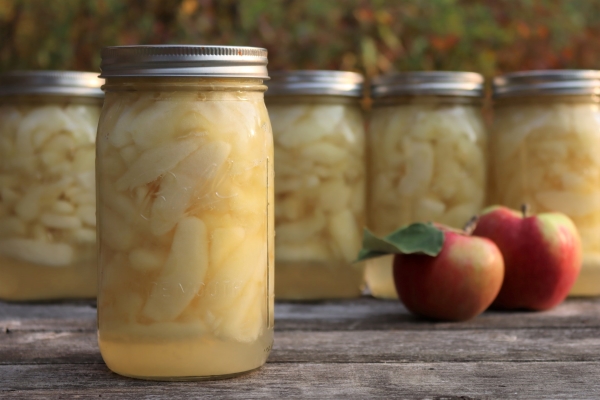
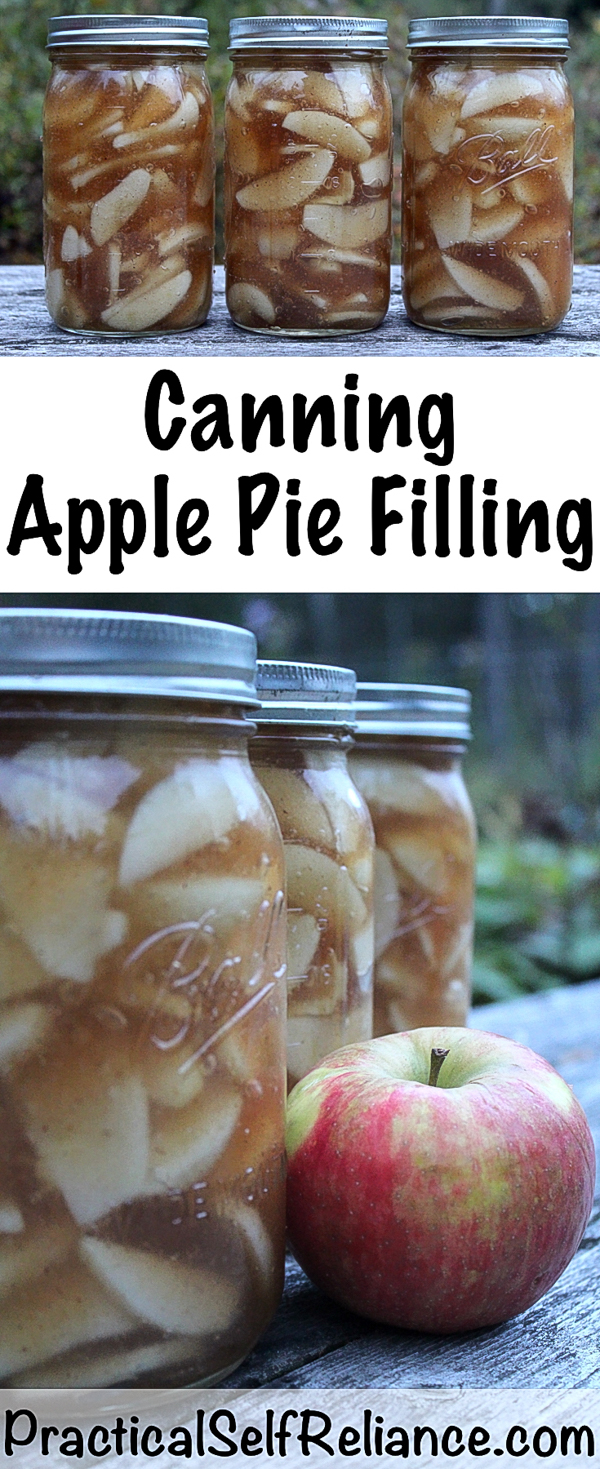
Canning apple pie filling at home means you’re just minutes away from having a pie in the oven. The apples are already peeled, chopped, seasoned and thickened. That allows you to just pour the pre-made apple pie filling into your favorite crust and bake.
Next time you need something quick for a potluck, you can still bring a homemade apple pie.
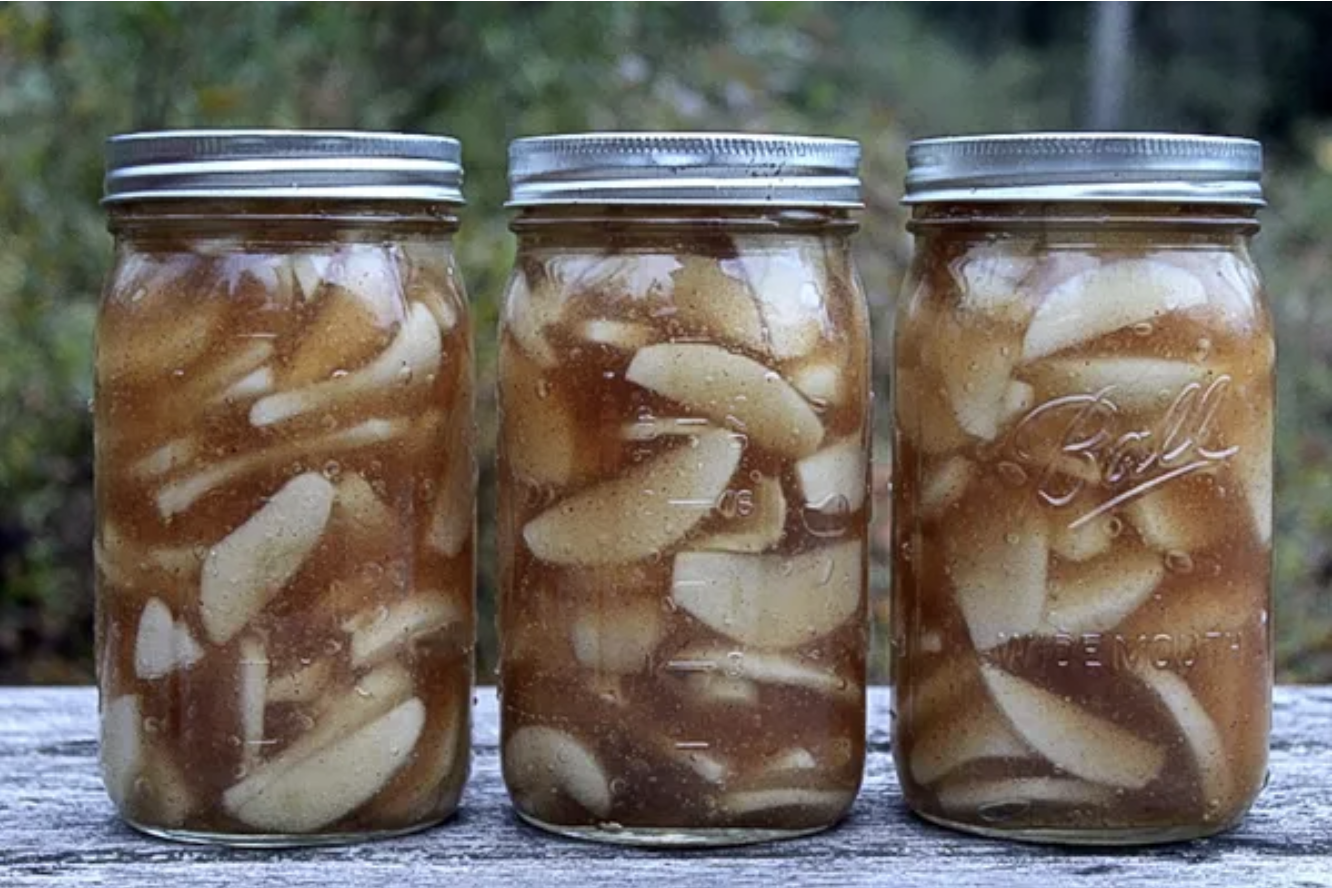
Table of Contents
Canning apple pie filling is my favorite way to turn a mountain of fall apples into instant desserts all winter long. One quart is basically “pie night in a jar,” and it’s just as good spooned over oatmeal, pancakes, and ice cream.
Apple pie filling is one of those pantry projects that feels a little bit magical: you do the peeling once, you do the mess once, and then you get to coast for months. The key is following a tested method, because pie fillings are thickened and that changes how heat moves through the jar.
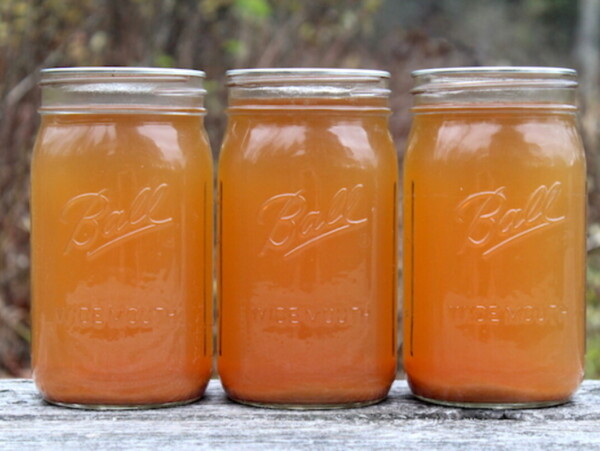
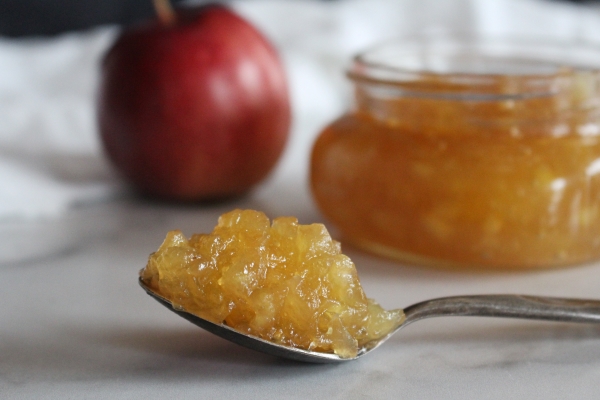
It’s fancier than simply canning applesauce, a bit more versatile than apple jam, and more filling than canning apple juice or canning apple cider. And it has a brighter, fresher flavor than long cooked apple butter.
This version uses cook-type Clear Jel (the only thickener recommended for home-canned pie fillings) and bottled lemon juice for consistent acidity.
This tested apple pie filling canning recipe was developed by the National Center for Food Preservation, and it follows modern safe canning guidelines. They also have recipes for canning peach pie filling and canning cherry pie filling, but this one’s my favorite!

A Quick Look at the Recipe
- Recipe Name: Canning Apple Pie Filling
- Recipe Type: Pie Filling with Clear Jel
- Canning Method: Waterbath Canning
- Prep/Cook Time: 30 Minutes
- Canning Time: 25 Minutes for Pints and Quarts
- Yield: 7 quarts (see notes for pint instructions)
- Jar Sizes: Half Pint, Pint or Quart
- Headspace: 1 inch
- Ingredients Overview: Apples, Sugar, Juice, Clear Jel, and Spices.
- Safe Canning Recipe Source: National Center for Food Preservation
- Difficulty: Moderate. Working with clear jel has a learning curve, and it’s easy to make a mistake and clump or set the clear jel to early. Read the tips and directions thoroughly before beginning.
- Similar Recipes: The process is very similar to making other canned pie fillings, including Cherry Pie Filling and Peach Pie Filling.
SUMMARIZE & SAVE THIS CONTENT ON
Ingredients for Canning Apple Pie Filling
This recipe has all the classic elements of a homemade apple pie, and the main difference is the thickener. While you can use flour, corn starch or tapioca starch when making pies generally, those can’t be used in canning.
The only tested thickener for canning is Clear Jel, a specific type of corn starch that is thin when hot, and gels nicely when cooled. It can be heated and cooled repeatedly, and it’ll continue to gel when it cools and liquify when hot. This allows heat to penetrate the jars during canning, and ensures that the pie will still set when it’s baked again later.
Here’s what you need for canning apple pie filling:
- Apples: Choose firm, crisp apples that hold their shape when heated. Honeycrisp, Braeburn, Golden Delicious, and Jonagold are all solid options, and I especially like mixing a tart apple (like Granny Smith) with something sweeter for a more “real pie” flavor. Slice them about ½-inch thick so they don’t turn mushy in the jar.
- Granulated sugar: Sugar sweetens the filling and helps create that classic glossy pie-filling syrup. You can adjust the sugar to taste, but keep in mind that less sugar will make the apple flavor taste sharper and the spices more pronounced.
- Clear Jel: Use regular (cook-type) Clear Jel, not instant. Cook-type Clear Jel is designed to thicken properly through the heat of canning and still bake well later. Other thickeners (flour, cornstarch, tapioca) aren’t tested and cannot be safely used in canning. If you’re purchasing clear jel, it usually comes in containers measured by the pound rather than volume. One pound of clear jel equals about 3 cups, so plan accordingly.
- Cold water: This is the liquid Clear Jel needs to hydrate smoothly before the pot ever hits the burner. Starting with cold water helps prevent lumps, which is especially important with Clear Jel because clumps won’t dissolve once the mixture begins to thicken.
- Apple juice: Apple juice gives the filling a fuller, fruit-forward taste (instead of a sauce that just tastes like sugar and cinnamon). Store-bought juice works fine, but homemade apple juice or fresh-pressed cider makes a noticeably more “apple-y” jar. Don’t use all apple juice, it makes the flavor kind of overwhelming, and not in a good way. A mix of water and apple juice or cider is best.
- Bottled lemon juice: Bottled lemon juice is used because its acidity is standardized. Fresh lemons can vary, and in this recipe the lemon juice isn’t just flavor, it’s part of the tested balance for a safe, shelf-stable filling.
- Cinnamon: Cinnamon is the main “apple pie” spice here, adding warmth without overpowering the fruit. Feel free to tweak the amount to your liking, especially if you prefer a more boldly spiced filling.
- Nutmeg (optional): Nutmeg adds that bakery-style depth that makes the filling smell like a pie the moment it warms up. A little goes a long way, which is why the amount is small—enough to round out the flavor without turning the filling into “nutmeg pie.”
Safe Recipe Changes
I like the recipe as written, but there are a few safe changes you can make if you’d like it a bit different.
You can safely adjust the spices (more cinnamon, add nutmeg, swap in a little allspice or ginger, etc.). I know some people are fond of a particular apple pie spice mix, and that’s perfectly fine. Use whatever dry spices suit your families taste.
The sugar is not for preservation, and it’s just there for flavor. You can adjust the sugar to suit your taste, especially after you’ve canned a test quart and baked a pie with it. Either add more sugar, or less, it’s up to you.
I find that this pie filling is quite sweet, so I don’t imagine you’ll need more sugar, but it’s perfectly fine to make a reduced sugar batch.
The clear jel can be reduced to make a less thick filling, but you cannot increase the total amount. The filling comes out quite thick, so increasing it isn’t really something I can imagine doing anyway.
Don’t substitute any other thickeners into this recipe. Cook Type Clear Jel is the only safe, tested thickener for canning pie fillings. It can be hard to find, unless you have an amish market nearby. I buy mine online in tubs from Hoosier Hill Farm and it’s just a few dollars a batch.
The lemon juice can be increased, but it cannot be decreased. You need to keep the minimum amount there the same.
So the main things you should not do are reduce the bottled lemon juice or increase the Clear Jel beyond what the recipe calls for. Those two need to stay in proportion to the total amount of apples in the recipe.
Just made this recipe. It worked out perfectly. I never blanched my apples first before but it really worked to solve the problem of the apples rising to the top and the gel settling on the bottom. This will be my go to recipe from now on!
Making Apple Pie Filling for Canning
Start by getting your canning setup ready: heat a boiling-water canner, wash your jars and lids, and keep the jars warm since hot pie filling should always go into hot jars.
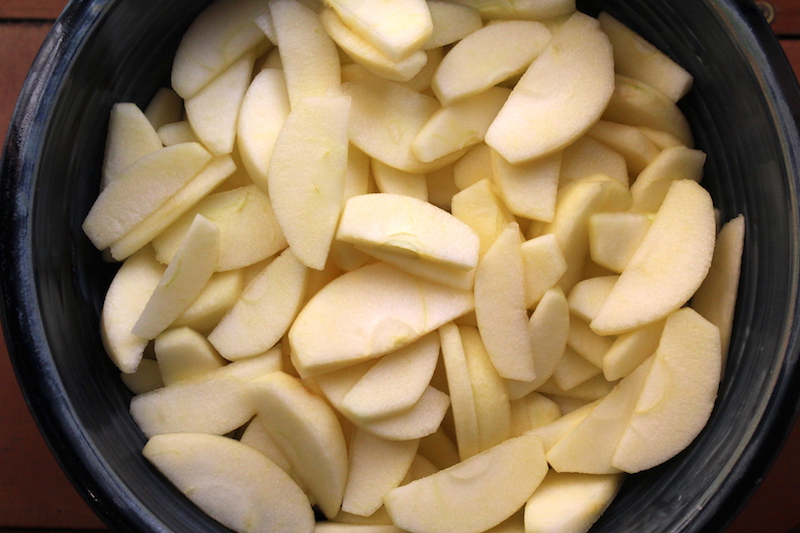
Peel, core, and slice the apples into pieces about ½-inch thick so they hold their shape and stay pleasantly “pie-like” after processing. If you want to keep the slices looking bright, you can hold them in an ascorbic-acid solution to prevent browning while you work. A splash of lemon juice in water works too.
This step is purely cosmetic and won’t affect safety. Brown apples aren’t as pretty in a jar, but they’re just as tasty.
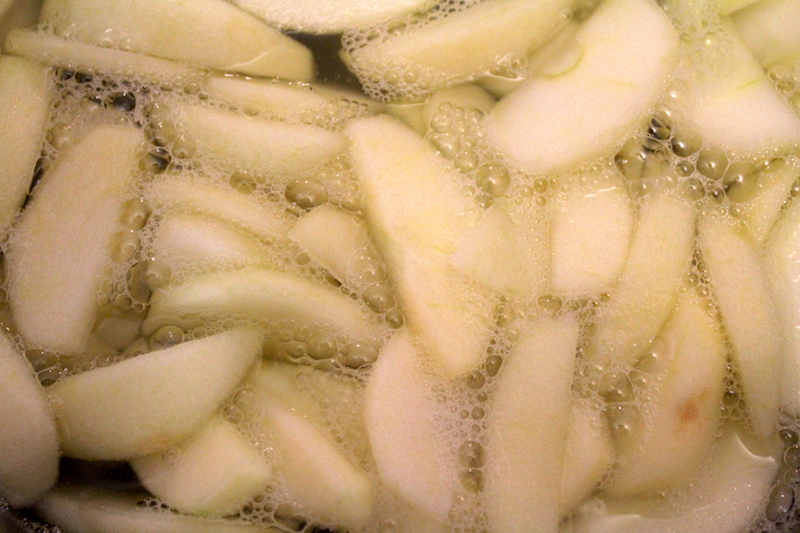
Bring a pot of water to a boil and blanch the apple slices for one minute, working in batches, then drain and keep the apples warm in a covered bowl or pot so they’re ready to go into the thickened syrup.
As they blanch, you’ll notice they bubble a good bit. That’s air being driven out of their tissues, which shrinks them so they can fit in the jar better and removes air so they float less.
To make the sauce, whisk the sugar and Clear Jel together in a large pot first, then add the cold or room temperature water, apple juice, and spices and whisk until completely smooth before turning on the heat.
Clear jel can clump if it’s dissolved in hot liquid, so don’t use your apple blanching water here. You need cool or room temperature water to get everything dissolved, and then you can start heating it once it’s whisked smooth.
Cook the mixture over medium-high heat, stirring constantly, until it thickens and comes to a bubble. Once it’s bubbling, add the bottled lemon juice and continue boiling for one minute, stirring the entire time.
Remove from the heat, and turn back to your blanched apples that you’ve held warm while you made the sauce.
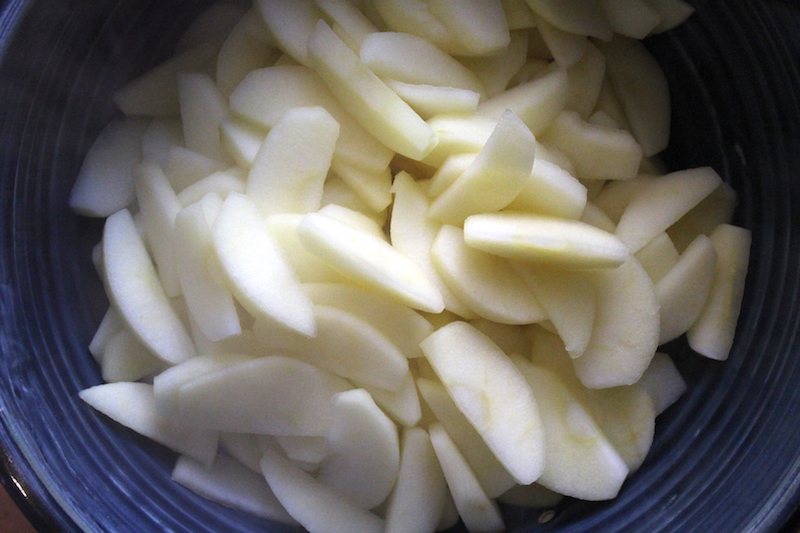
Take the pot off the heat, fold in the warm, drained apples, and immediately ladle the hot filling into prepared quart jars, leaving one inch of headspace. De-bubble, adjust headspace if needed, wipe rims, apply lids and then tighten on rings to fingertip tight.
Work quickly, as the clear jel will start setting up as it cools. It needs to be piping hot when it goes into the jars to pack evenly without bubbles.
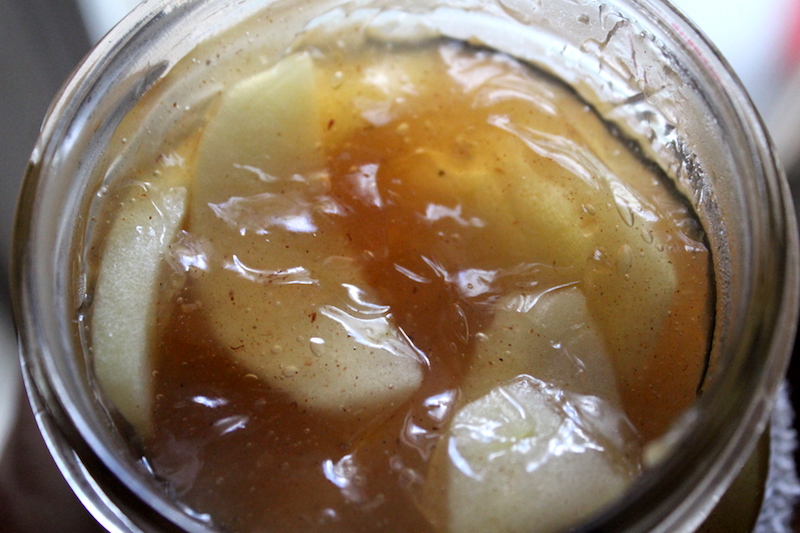
If you’re not canning, this pie filling can then be stored in the fridge and it should keep for about a week or so. That said, I think it’s much nicer to process the batch in a waterbath canner so you can store it on the pantry shelf until you need it.
Canning Apple Pie Filling
If canning, prepare a waterbath canner, jars, lids and rings before beginning.
Once everything is ladled into jars and they’re de-bubbled and capped with two part canning lids they can be loaded into a pre-heated canner. The canner should be simmering, around 180 degrees F.
Bring the canner up to a full rolling boil before you start your timer.
Process jars, both pints and quarts, for 25 minutes adjusting for altitude (see below).
When the processing time is up, turn off the heat, remove the canner lid, and let the jars rest in the hot water for about 10 minutes to help reduce siphoning, then lift them out and set them on a towel to cool undisturbed for 12 to 24 hours.
Pie fillings are prone to sciphoning or liquid loss as they come out of the canner, so this extra step to allow them to cool slightly before you bring them out into the air is really helpful.
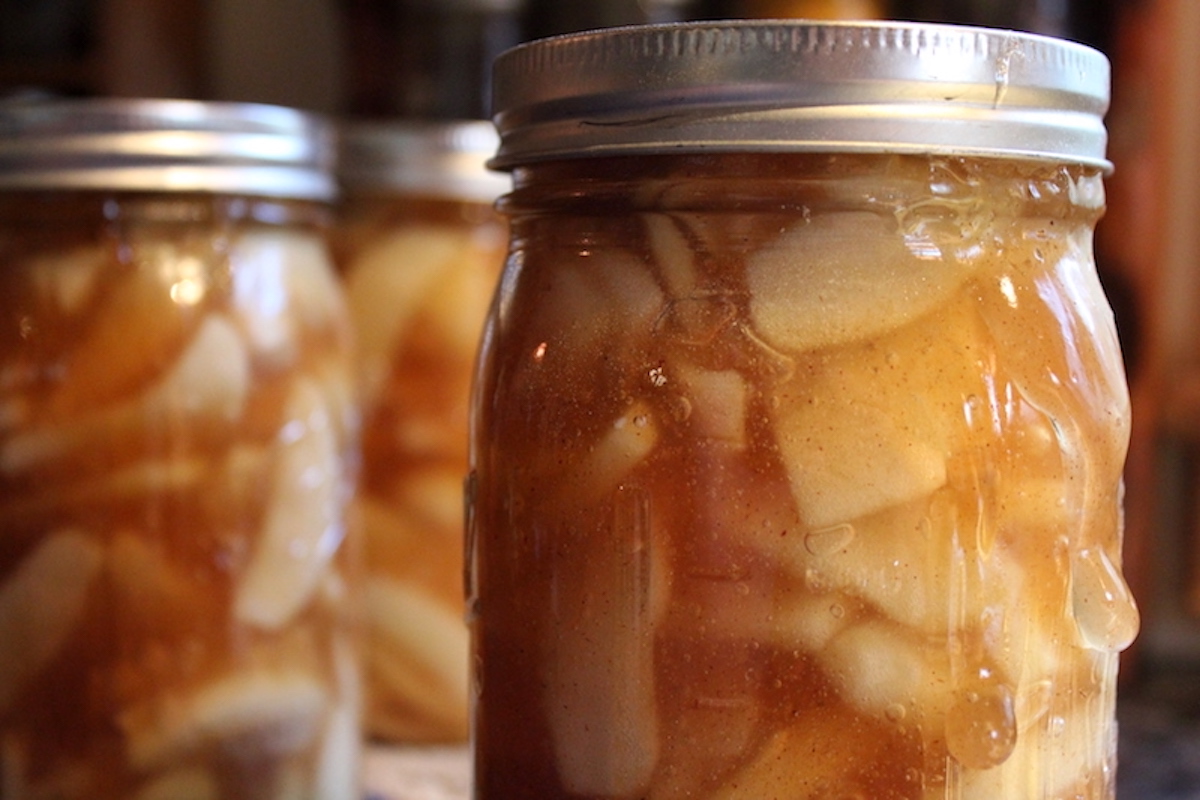
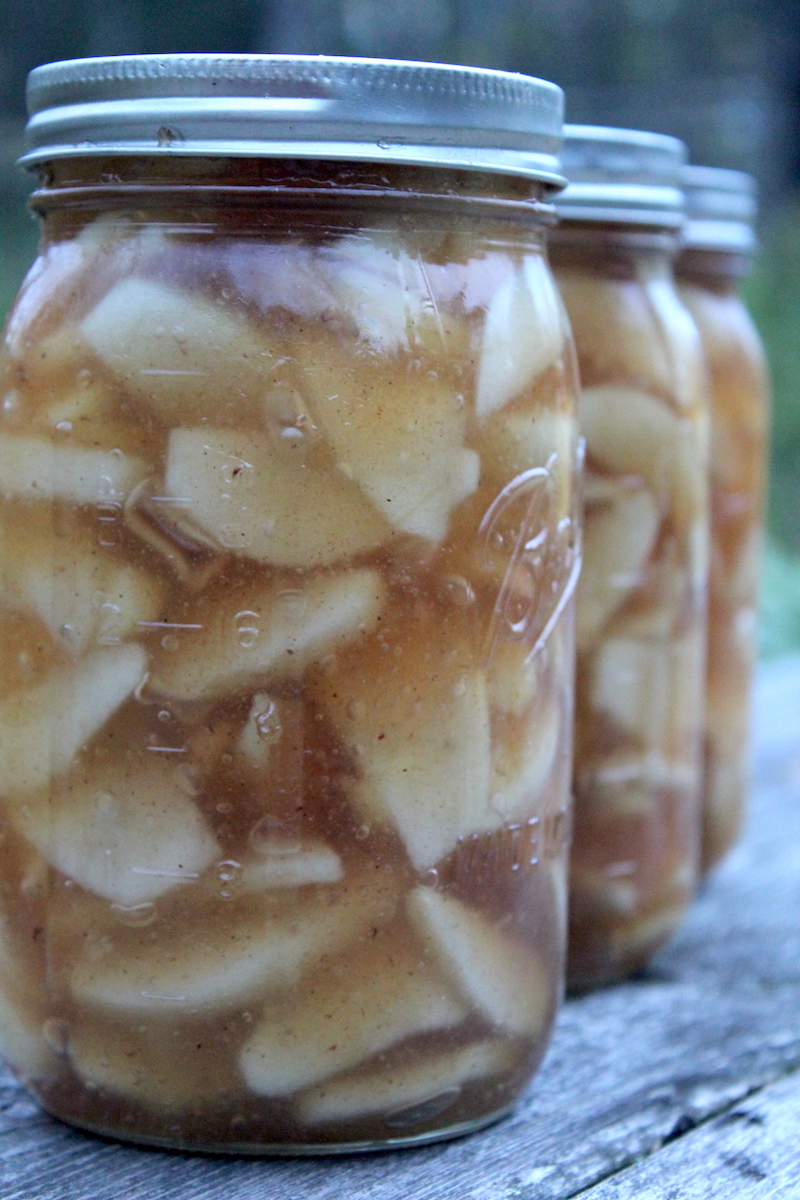
After they’ve cooled, check the seals and refrigerate any jars that didn’t seal. Properly processed and sealed jars can be stored on the pantry shelf, where they’ll maintain peak quality for 8 to 12 months.
Altitude Adjustments
Process hot-packed pints or quarts for:
- 0–1,000 ft: 25 minutes
- 1,001–3,000 ft: 30 minutes
- 3,001–6,000 ft: 35 minutes
- Above 6,000 ft: 40 minutes
Yield Notes
This recipe is written so that you can make either a 1 pint batch or a full 7 pint canner batch. If you’d like to make something in between, simply multiply the 1 quart batch by the number of quarts you’d like to make.
The NCHFP measures the sliced apples in quarts, which is honestly, a strange way to do it.
I have found that 9 pounds of apples as purchased (or about 24 medium apples) will yield 6 quarts sliced (or about 6 pounds prepared). That’s the amount required for a full 7 quart canner batch.
Your yield might be slightly different, if you’re more or less efficient peeling and coring the apples. Still, the finished yield holds true. A quart (4 cups) of peeled, sliced apples weighs about a pound. You’ll need slightly less than a pound of prepared sliced apples (7/8ths pound, 0.875 lb, 14 ounces or about 400 grams) to equal the 3 ½ cups for every quart of pie filling you hope to make.
Storage
If properly canned and sealed, pie fillings can be stored on your pantry shelf and will be safe to eat indefinitely (so long as they’re sealed).
While canned food doesn’t spoil, but it does decline in quality over time. Most canning recipes say that it’s best to consume the food within 12 to 18 months for best quality.
I have found, however, that pie fillings with clear jel don’t hold their quality quite as long as jams and jellies. For best quality, use within 8 to 12 months of canning.
They’ll hold longer if they’re kept in a cool, dark pantry, out of direct sunlight and away from heat.
Using Canned Apple Pie Filling
One quart makes roughly one 8-inch pie, and I’ve found that you need a quart plus a pint for an average 9 inch pie. If you have a really big deep dish pie, you might use 2 quarts.
For the most part, I can apple pie filling in quarts. When I use it for pie, I use a quart and a half in the pie, and then save the extra bit left from the second quart in the fridge to use to top ice cream, oatmeal and waffles throughout the week.
Apple pie filling isn’t just for baking pies, and it works really well anywhere you’d like a sweet apple-y filling or topping. It’s perfect between layers on a birthday cake, and it makes for an extra special sunday pancake day. Many recipes use it as a cheesecake topping, and of course, you can always use it in cobblers and crisps.
I like using it in my apple pie shortbread bars, and it’s tasty in thumbprint cookies too.
FAQ for Apple Pie Filling
Yes. Regular (cook-type) Clear Jel is the only thickener used in tested recipes for canning apple pie filling. It stays thinner while hot (so heat can move through the jar) and then gels as it cools, which is exactly what you want for safe canning and a filling that still bakes up properly later.
Cornstarch (as well as flour and tapioca) isn’t recommended for canning apple pie filling because it changes how heat penetrates the jar and it isn’t used in tested canning methods. If you want a different thickener, add it after opening the jar when you’re reheating the filling.
Yes. Sugar is there for flavor and texture, not preservation, so you can reduce it to match your taste. Just know that a lower-sugar filling will taste more tangy/bright and the spices may come through more strongly.
Pie filling is one of the most siphon-prone products because it’s thick and holds heat. To reduce siphoning, keep jars and filling hot, maintain proper headspace, don’t over-thicken, and let the jars rest in the canner with the heat off for about 10 minutes before removing them. Also be careful about your headspace, and if siphoning continues to be a problem, increase the headspace to 1 1/4 inches and wipe the rim carefully.
If properly processed and sealed, it’s shelf-stable, but for best quality (texture and consistency) I recommend using Clear Jel apple pie filling within 8 to 12 months. Store jars in a cool, dark pantry and refrigerate after opening.
A quart is usually right for an 8-inch pie. For a standard 9-inch pie, I typically use 1 quart plus 1 pint, and deep-dish pies may take 2 quarts depending on the pan.
Apple Canning Recipes
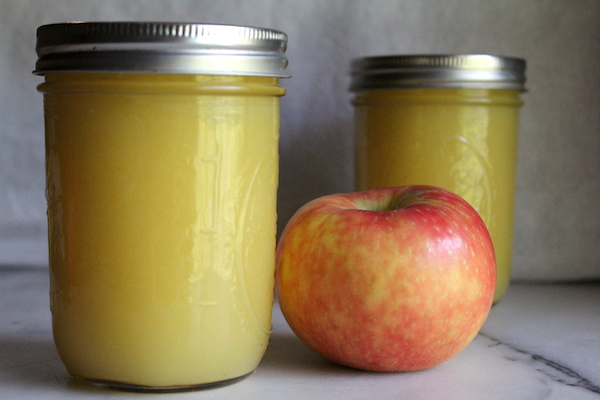
If you tried this Apple Pie Filling Canning Recipe, or any other recipe on Practical Self Reliance, leave a ⭐ star rating and let me know what you think in the 📝 comments below!
And make sure you stay in touch with me by following on social media!
Canning Apple Pie Filling
Ingredients
For 1 Quart
- 3 ½ cups Apples, peeled, cored and sliced, see notes
- ½ cup sugar
- ¼ cup Clear Jel, cook-type, not instant
- ½ cup cold water
- ¾ cup apple juice
- 2 Tbsp bottled lemon juice
- ½ tsp cinnamon, optional
- ⅛ tsp nutmeg, optional
For a 7-Quart Canner Batch
- 6 quarts Apples, peeled, cored and sliced, see notes
- 3 cups sugar
- 1 ½ cups Clear Jel, cook-type, not instant
- 2 ½ cups cold water
- 5 cups apple juice
- ¾ cup bottled lemon juice
- 1 Tbsp cinnamon, optional
- 1 tsp nutmeg, optional
Instructions
- Before you start cooking, prepare a boiling-water canner, wash jars and lids, and keep the jars hot. Apple pie filling is thick and sets quickly, so you want everything ready to go before the Clear Jel mixture finishes thickening.
- Wash the apples, then peel and core them. Slice into pieces about ½-inch thick so they stay nicely “pie-like” in the jar. If you want to prevent browning while you work, hold the slices in a solution of ascorbic acid and water (or water with a splash of lemon juice), then drain well. This step is optional and only affects appearance.
- Bring a separate pot of plain water to a boil and blanch the apple slices for 1 minute, working in batches so the pot stays at a boil. Drain each batch well and transfer the warm apples to a covered bowl or pot to keep them hot while you finish blanching the rest. Keeping the apples warm helps everything stay hot-packed and ready for the jars.
- In a large, non-reactive pot, whisk the sugar and cook-type Clear Jel together until evenly combined. Add the cold (or room-temperature) water and apple juice, then whisk thoroughly until the Clear Jel is completely dissolved and the mixture looks perfectly smooth. Don’t shortcut this step. Once Clear Jel starts heating, any dry pockets can turn into little gel lumps that won’t smooth back out.
- Set the pot over medium-high heat and cook, stirring constantly, scraping the bottom and corners as you go. As the mixture heats, it will begin to look more translucent and noticeably thicken. Keep stirring until it comes to a full bubble (not just a lazy simmer). When the mixture is bubbling, add the bottled lemon juice, stir well, and continue boiling for 1 minute, still stirring constantly.
- Remove the pot from the heat and immediately fold in the drained, warm apple slices. Stir gently but thoroughly so all slices are coated and the filling is evenly distributed. Work promptly from this point forward so the filling stays hot.
- Ladle the hot apple pie filling into hot jars, leaving 1 inch of headspace. Use a bubble remover (or a plastic knife/chopstick) to work out trapped air pockets around the fruit, then re-check headspace and adjust if needed. Wipe the jar rims with a clean, damp cloth to remove any syrup or starch residue, then apply two-piece canning lids and screw bands on fingertip-tight.
- Load the jars into the preheated canner. The water should be hot/simmering when the jars go in; then bring the canner up to a full rolling boil. Once boiling, start the processing timer and process pints or quarts for 25 minutes, adjusting for altitude as needed.
- When the processing time is complete, turn off the heat and remove the canner lid. Let the jars rest in the hot water for about 10 minutes before removing them, which helps reduce siphoning (pie fillings are especially prone to it). After the rest, lift the jars out with a jar lifter and place them upright on a towel, leaving space between jars. Don’t retighten bands and don’t disturb the jars while they cool.
- Allow jars to cool undisturbed for 12 to 24 hours. Check seals, then remove bands, label, and store sealed jars in a cool, dark pantry. Refrigerate any unsealed jars and use them first. Refrigerate after opening any jar.
Notes
Safe adjustments
You may adjust dry spices (cinnamon, nutmeg, apple pie spice blends, etc.) to taste. You may also adjust the sugar up or down since it’s there for flavor, not preservation. You may reduce the Clear Jel slightly for a looser filling, but do not increase it beyond the recipe amount. You may increase lemon juice for extra tartness, but you may not decrease it; the minimum amount must remain the same.Altitude Adjustments
Process hot-packed pints or quarts for:- 0–1,000 ft: 25 minutes
- 1,001–3,000 ft: 30 minutes
- 3,001–6,000 ft: 35 minutes
- Above 6,000 ft: 40 minutes
Yield and Scaling
The recipe is written as one-quart amounts and a full seven-quart canner batch. To make any amount in between, multiply the one-quart ingredient amounts by the number of quarts you want. For the full canner batch, I’ve found that about 9 pounds of apples as purchased (roughly 24 medium apples) yields the 6 quarts sliced apples. A quart of peeled, sliced apples weighs about a pound, and each quart of finished pie filling uses 3 ½ cups sliced apples, which is roughly 14 ounces (about 400 g) prepared apples.Using Canned Pie Filling
One quart fills about an eight-inch pie. For a typical nine-inch pie, I usually use a quart plus a pint, and deep dish pies may take two quarts. Any extra opened filling keeps well in the refrigerator for 7 to 10 days.Nutrition
Nutrition information is automatically calculated, so should only be used as an approximation.










Awesome instructions! My apple tree isn’t old enough to bear fruit yet, do you have to do anything special to store bought apples prior to the recipe, considering everything that’s done to them for preservation?
Other than washing them to remove any wax/pesticide, they should be the same as homegrown. Even that may not be entirely necessary if you’re peeling the apples, but it never hurts to wash them anyway. So to answer your question simply, there’s nothing different between storebought and homegrown for this recipe.
I don’t know what I did wrong but I did not get nearly 7 qts I got just over four qts… I measured out over 12 cups of apples so I’m not sure what I did wrong is this going to be a problem with too much fell when I pour them in to my pie?? First time doing this and just spent over two hours peeling dicing and all the prep for four qts…..
I am wondering if it has to do with the kinds of apples you used. Maybe they cooked down too much.
The recipes says it makes 7 pints, not 7 quarts. Sounds like you got just about what it said. Maybe a little over.
Recipe please for pie with canned apple filling. Temp and time.
If I wanted one jar of filling per 10″ pie, what sized jar would I need?
For a 10” pie, I’d actually suggest two one-quart jars of filling. It can’t be canned in jars bigger than quart, so you’re not going to make it with just one jar. For a 9” pie, I use a quart and a pint.
Hi Ms. Ashley, I’m in a discussion with my husband, we’re going to try your peach pie recipe with the Clear Gel for the first time. We decided to do some apple pie filling later this fall, too. My husband is calculating how many additional jars we’ll need and is wondering how are you able to fit a quart and a pint of apple pie filling into a 9” pie plate? Does the Clear Gel thicken the apple pie filling so you can mound it up? My Lodge cast iron pie plate holds 3 cups of water and is about 1/4” left from the top. He doesn’t think it will be possible to put 6 cups of filling. Help me before I strangle him. :o)
Yes, the pie filling will mound up in the pie plate but you can certainly just use a quart if you wish.
As long as it’s sealed, it is good. The syrup is heavier than the apples. I use a recipe similar to what you’re describing.
Fantastic step by step guidance, advice and recipe! My biggest hurdle was getting the clear jel powder delivered in time before the apples went bad. Cannot wait to explore the rest of your site. Thank you again for taking the time to share.
New to canning. Used this recipe but I think I did something wrong. I followed the measurement on everything but ended up with 3 at. And 8 1/2 pints. I put the 1/2 in the frige and it was not thick. They look pretty. But just worried that having more means it won’t be quite right.
Apples are tricky, and depending on the variety some shrink during blanching more than others, and measuring sliced apples is tricky too since there’s air in the measuring cup. Having slightly more (or slightly less) than the yield I mention is totally fine. Enjoy!
Figured out my problem. Wrong clear gel used. Will have to wait for mail order to get the correct one this time.. Apples will hopefully last the two weeks it is going to take. Love the recipe.
I’ve trued adding the clear gel to cold liquid and hot, but am experiencing clumping on both. I don’t notice in the final stage after adding the apples but am I doing something wrong.
I’ve seen many recipes that call for water instead of apple juice Would this switch up the taste if we substituted the apple juice for the water?
I use a bit of each, and I’ve found that using all apple juice resulted in a pretty intense taste. Using all water, was as you might expect, watery.
I found a recipe for canning apple pie filling, but not sure about it. You don’t cook the apples, it says to prepare them and fill canning jars with the raw apples and push them down as much as you can, then pour the syrup on top of them, and process. I’ve done this but my pie filling has about an inch of liquid at the bottom of the jars. Are they still good, and what causes the liquid at the bottom?
The next time I make apple pie filling I’m using your recipe, sounds so much better than the one I just used.
Thank you
So the recipe you describe is canning apple slices in syrup rather than an apple pie filling (even though the author may call it apple pie filling). It’d still need thickening when it goes into the pie, and often they provide instructions that have you strain the liquid into a pan when you open them and thicken it with cornstarch. Then pour the apple slices in, toss to coat in the thickened sugar/apple syrup and then put that into the pie. It’s less ready to use canned good, and not so great for spooning on top of pancakes and such. I like the ready to use type, which is why I do it the way I do.
Can I use fruit pectin in place of sure-gel?
I am wondering this as well!
Can I use apple cider instead of apple juice?
Yes, you sure can.
I was wondering if I could use xanthan gum as a replacement for the Clear Jel… Would that work?
Honestly, I have no idea if it’d work. It’s not something that’s been tested for canning safety, so I wouldn’t recommend it if you’re canning. I do use arrowroot to make apple pie fillings (when not canning) and I’d imagine that’d work well, but like I said for xantham gum, it’s not tested for canning safety.
My son hates sliced apples… Autism is a funny thing sometimes. My last 2 batches went untouched by him, which made him sad because he helped pick the apples…. So… If I use a good pie apple, do you think dicing them would make them disintegrate?
They really hold together surprisingly well and the Honeycrisp apples I used came out quite firm, even after canning AND baking into a pie. If you use a good apple that’s not a pie apple and has a firm texture, dicing would work perfectly well. Good luck!
Aqua
Would it make much of a difference if I used a mixture of brown sugar and white sugar?
As far as I know, you can use brown sugar in place of the white sugar (or some portion of it) in this recipe and it’s still an approved recipe. Similarly, maple or honey should work too. I haven’t tried those, but they theoretically shouldn’t have any effect on whether or not it’s a safe canning recipe, and they should only impact flavor (as I said though, this is just as far as I know).
This recipe is perfect ty for sharing only one I will use now
You’re welcome. So glad you enjoyed it.
I found this recipe a couple of years ago and have been using it ever since in fact made 13 quarts today never had a siphoning problem thank goodness great recipe
I found this recipe a couple of years ago and have been using it ever since in fact made 13 quarts today never had a siphoning problem thank goodness great recipe
Does this also work for pears? Can’t wait to try this out. Your recipe looks very thorough.
I imagine it would work for pears, since they’re very similar to apples and can be canned as slices without issue. Don’t use asian pears, the canning instructions on those are different. More info on that here: https://practicalselfreliance.com/canning-asian-pears/
Can this recipe be doubled?
I honestly wouldn’t suggest it. While I do double a lot of recipes in my canning kitchen, this one was tricky to get everything into the jars before things got too thick to work with. The clear gel sets up pretty quick, and it’s really hard to de-bubble the last few jars. If you double it, I imagine you’d either end up burning it on the stove try to keep it warm while you worked or have an impossible time with bubbles on the last few jars. That’s just a guess.
If you do end up trying it for whatever reason, I’d love to hear how it goes for you, but personally I’d just do a second batch while the first batch is in the canner.
Thank you for this recipe, I took the chance and tripled this recipe . I had numerous pots cooking away, It came out actually really nice.
I’m glad you liked it!
I was able to double it no problem!
Good to know!
I have doubled it every time with great results. As the author states; it is tricky, it helps to have someone blanching while one is stirring the base. I blanched using 8 cups in each blanch.
Thank you for this!! I just canned 5 Litres (Quarts) of crabapple pie filling and each jar had leakage while cooling. This was my first attempt at canning pie filling, so the sight of leakage caused a lot of worry and second guessing myself. Absolutely no warnings about siphoning in the recipe used or instructions about leaving the jars to sit in the water bath for time before removing. Your post and photos have given me plenty of reassurance…..most grateful to you!!! I now look forward to canning another batch and perfecting the process.
Wonderful, so glad I could help!
How long does this last on the shelf?
In theory, ball canning lids are now guaranteed for 18 months. I’ve had it on the shelf for a full year and didn’t notice a difference in quality, so I’d guess it’d keep for quite a long time.
Hi there, Is there enough lemon juice in this recipe to be sure to prevent botulism? Will it get the ph high enough? Thanks!
This canning recipe is a tested recipe approved by the national center for food preservation. I have not personally tested it for safety, but this is the recipe that they put out as having the right acid levels and process time.
I love this recipe. Works great for me!
It is a bit sweetie than I’d like, could I reduce the sugar and it still work?
Thanks for sharing your awesome recipes. Will be trying the blueberry one next!
Yes, this one is quite sweet. The USDA says you can reduce sugar in pie filling recipes as much as you’d like and not impact safety. The only thing you really can’t touch is the lemon juice quantity, but you can cut the sugar all you want.
Is lemon necessary? I dont have lemon on hand and live out of town. Will it just make my apples change colors?
Pre-treating the apple slices to prevent browning is not necessary, that’s just cosmetic. However, the 1/2 cup of lemon juice in the recipe is required and cannot be skipped. That helps acidify the mix to make it safe for canning, and from experience, I can say that it also helps to activate the clear jel. That stuff really jels quick as soon as the lemon goes in.