
Affiliate disclosure: This post may contain affiliate links. Please see our Privacy Policy.
Canning peaches is surprisingly easy to do at home. All you need is a few jars, a big pot, and a little sugar and you’re on your way. Home-canned peaches stored in glass mason jars also taste dramatically better than store-bought peaches in tin cans, and if you have your own peach tree, they’re almost free.
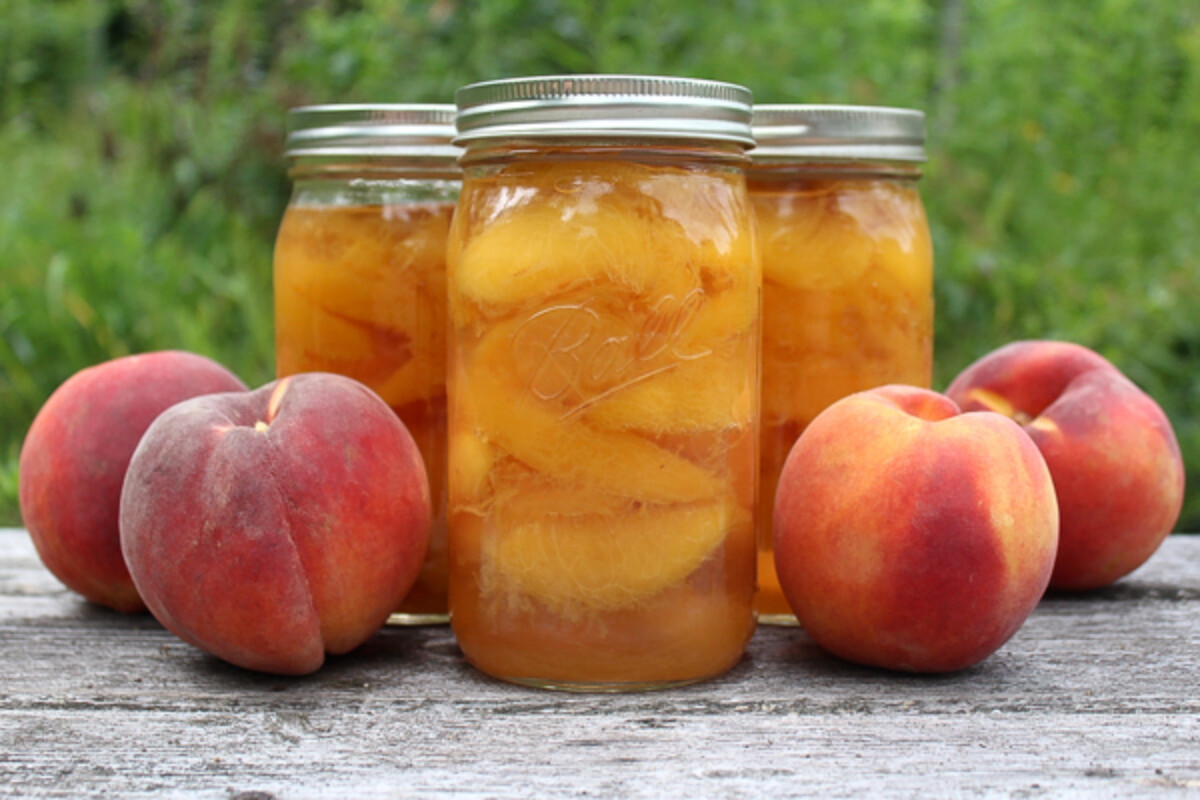
Table of Contents
We’re just getting in our first peach trees this year, and it’ll be a while until we have our own homegrown peaches. We’re in zone 4, and it’s hard to find peach varieties for cold climates. Plant breeders have been hard at work, and there are now several varieties that produce well in our area.
In the meantime, our local food coop imports Amish peaches from Pennsylvania by the caseload. Every year I buy a case and can up a big batch for wintertime peach cobbler.
Peaches, or more specifically, peach jam was the first thing I canned with a mentor in my youth. Call it a gateway fruit if you want, but I was hooked. My first batch was admittedly a bit lackluster.
I was a kid, and I got to choose how much sugar went into the batch. At that point in my life, more sugar made everything better and I just about ruined the batch. You could barely taste the fruit, and peach-colored candy is a better description of the results.
Fast forward a few decades and I still can’t handle over-sweetened canned goods, jam or otherwise. I use very light syrup when canning peaches, but there are plenty of choices based on your preferences.
Peach Varieties Safe for Canning
All known varieties of yellow-fleshed peaches are safe for water bath canning at home. No exceptions. White-fleshed peaches are another matter.
Scientists at the National Center for Home Food Preservation recently discovered that some varieties of white-flesh peaches may not be safe for canning. While yellow peaches are a high acid food, some varieties of white flesh peaches have a more delicate flavor and far less acidity. Fruits must have a pH below 4.6 to be safe for canning, and white-fleshed peaches may not quite make it.
There’s currently no tested safe method for canning white-fleshed peaches, but theoretically, they should be fine for canning using the same methods as other low acid fruits. Home-canned mangoes are one example of another low acid fruit that’s not acidic enough on its own, but it should, in theory, be safe with added lemon juice.
Pressure canning is also another option if you have a bumper crop of peaches. While you don’t need to pressure can yellow peaches, some people prefer to pressure can in general and there is an approved method.
Yellow peaches are pressure canned at 6 pounds of pressure for 10 minutes anywhere below 2,000 feet in elevation. White peaches would require either higher pressure to be safe, and that might just pulverize the tender fruit.
As always, if you’re canning at home, use your best judgment. If you have white peaches to preserve, the only approved method is freezing, so maybe skip the canner altogether to be on the safe side?
Choosing Peaches for Canning
Just about any yellow fleshed peach can be preserved by canning, but some will do better than others. Here are a few things to consider when choosing peaches for canning:
- Freestone or Clingstone – Most grocery store peaches are freestone these days, and the flesh comes away easily from the pit. Older varieties and backyard trees may be clingstone, which makes it nearly impossible to can peach halves. Clingstone peaches are a bit more work, but they often have amazing flavor in return, just plan on canning them as slices.
- Size – Larger peaches have more flesh per peach, and will save you quite a bit of time in peeling. If you’re planning on canning peach halves instead of slices, aim for small to medium-sized peaches so that the halves will fit in a jar.
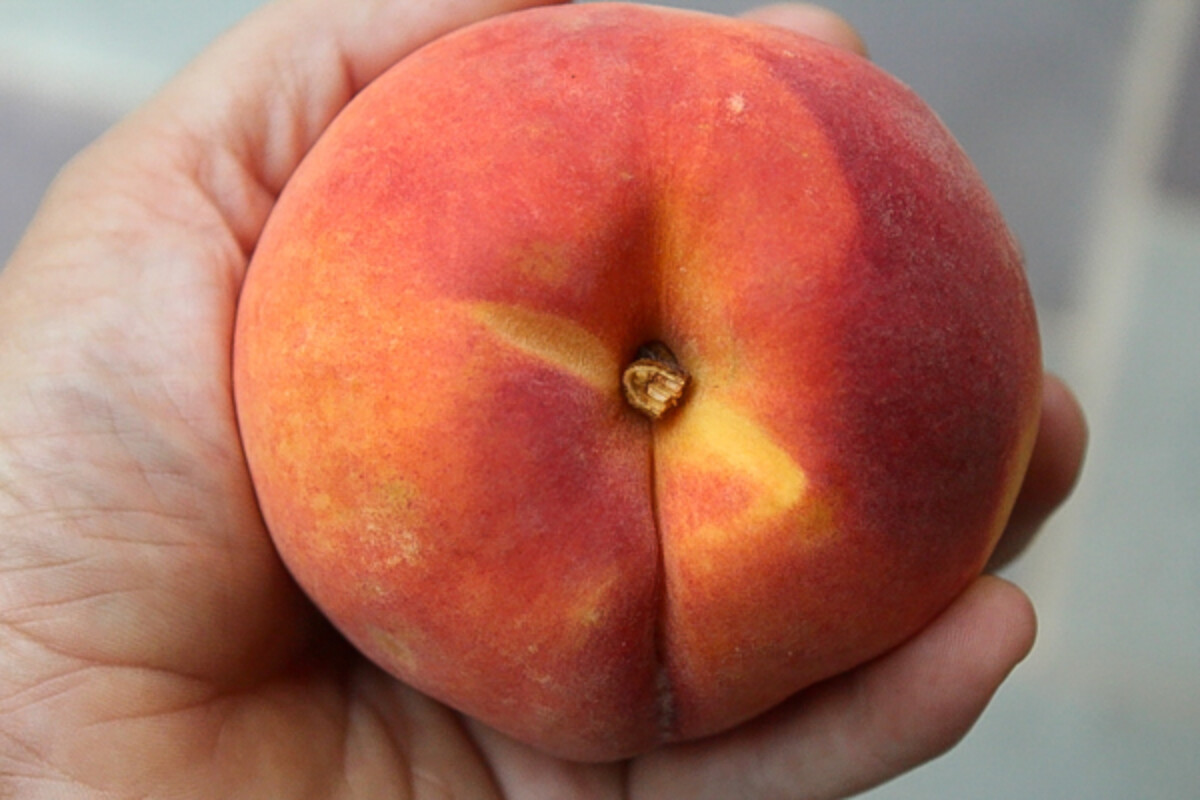
- Ripeness – Very ripe peaches have soft flesh and are lower acid than firm peaches. Choose peaches that are just barely ripe. The flesh should still be firm but they’ve lost all the green around the stem. Just ripe peaches will hold together better, and result in a much better texture in your home-canned peaches.
Syrup for Canning Peaches
Peaches are quite sweet on their own, and the fact that they’re high acid means they can be water bath canned in just about any liquid. Plain water works, but will wash out the flavor. Fruit juice or very light syrup work better, since they’re about as sweet as the peaches and won’t leach any of the sugars from the peaches, and they won’t make them any sweeter either.
If you’re not up for a low sugar recipe, light and medium syrups work just fine too. Here’s how to make a number of different syrups for canning peaches:
- Water Pack – Simple enough, just make sure the water is boiling hot before it goes into the jars.
- Juice Pack – Fruit juices such as apple or white grape juice are a natural way to can peaches without refined sugar. Just like water pack, be sure that the juices are boiling hot when packing the jars.
- Very Light Syrup – This mimics the natural sugar content of peaches and will result in the most natural flavor. For a 9-pint canner load, use 3/4 cups sugar and 6 1/2 cups water. For a 7-quart canner load, add 1 1/4 cups sugar to 10 1/2 cups water.
- Light Syrup – For the most part, light syrup is used to add just a hint of sweetness to fruits that are very sweet already. Peaches are a great choice for light syrup, and that’s often how they’re packed in the grocery store. For a 9-pint canner load, use 1 1/2 cups sugar and 5 3/4 cups water. For a 7-quart canner load, add 2 1/4 cups sugar to 9 cups water.
- Medium Syrup – If you like your canned peaches really sweet, choose medium syrup. They’ll be pretty over the top, don’t say I didn’t warn you…For a 9-pint canner load, use 2 1/4 cups sugar and 5 1/4 cups water. For a 7-quart canner load, add 3 3/4 cups sugar to 8 1/4 cups water.
Canning Peaches with Honey or Maple
Since peaches can be canned in just about any liquid, the amount or type of sugar in the syrup doesn’t affect their safety. Honey canned peaches are a popular choice because the honey flavor complements the flavor of the peaches. We make our own maple on our Vermont homestead, so that’s an obvious choice for us.
Whether you’re using honey or maple to sweeten the canning syrup, use about 2/3rds as much as you would sugar. Honey and maple are both much sweeter than sugar, and you’ll need less volume to get the same amount of sweetness compared to white sugar.
For example, if you’re making a 9-pint canner batch of canned peaches with very light syrup, use 1/2 cup of honey instead of 3/4 cup of sugar added to 6 1/2 cups of water. Since the sugar level isn’t crucial to the safety of the canned peaches, feel free to approximate. Roughly 2/3rds will give you a similar level of sweetness, but there’s no need to be exact.
Hot Pack or Raw Pack Canning
There are two main ways to pack peaches for canning, or any fruit for that matter. Peaches are safe and approved for both methods, and they each have their pros and cons. While I raw pack my canned pineapple without issue, peaches aren’t as forgiving. Hot pack peaches make dramatically better quality canned peaches.
- Hot Pack Canned Peaches – Peaches are quickly boiled in their canning syrup to heat them and pre-cook them before canning. This drives off some of the air that’s naturally in the fruit’s tissues. Removing that extra air prevents the peaches from floating, and helps keep the canned peaches from browning over time. In many areas, this is the only method approved for entry into a state fair because the peaches retain their quality better over time, and they’re more attractive in the jar.
- Raw Pack Canned Peaches – For a raw pack, the peeled and pitted peaches are packed into jars raw. The canning liquid, usually syrup of some kind, is brought to a boil and poured over the raw peaches before the jars are sealed and processed in a water bath canner. It’s much easier to pack the jars since the fruit isn’t hot, and this is a good option if the peaches will be eaten in the next 2-3 months. If you’re storing raw pack peaches for longer periods of time they may brown or deteriorate. Even if they discolor, they’re still safe to eat for just as long as hot pack peaches.
How Many Peaches Fit in a Canning Jar?
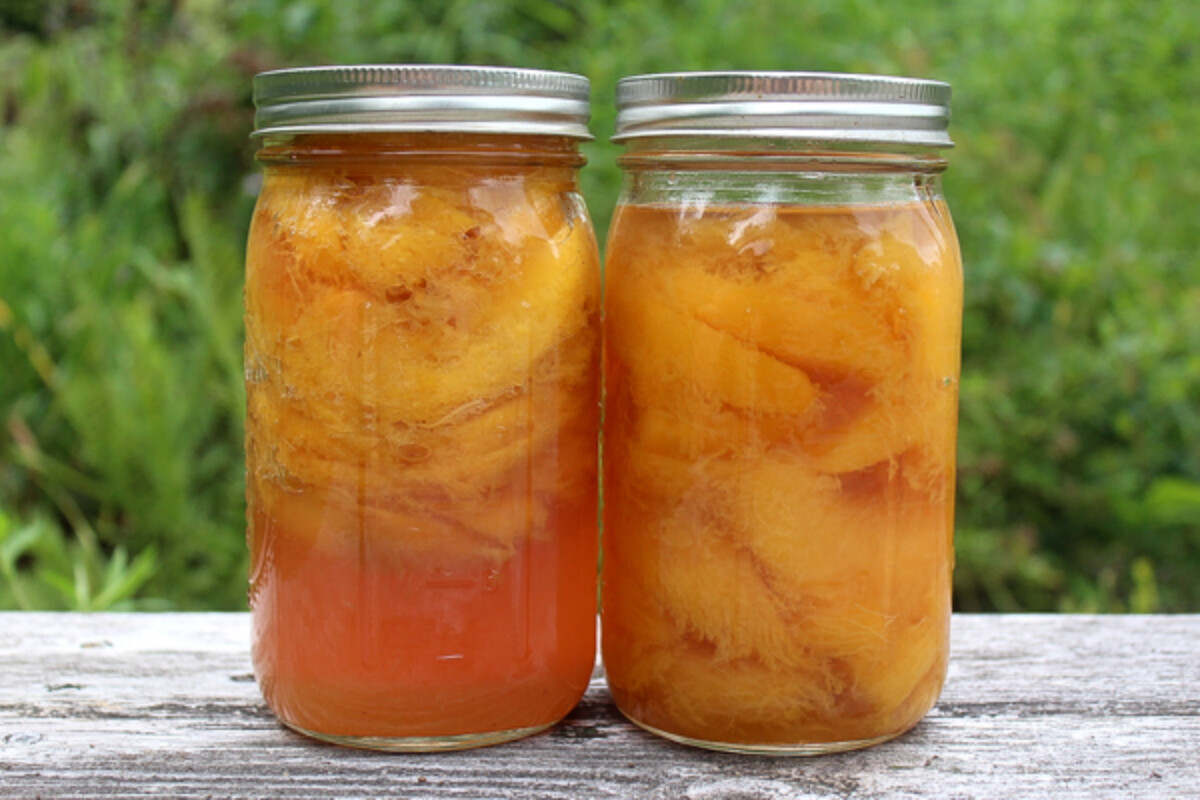
Obviously, the number of peaches that’ll fit in a canning jar varies based on how big the peaches are. Roughly speaking though, it takes around 17 to 18 pounds of peaches to make a 7-quart canner batch or around 10 to 12 pounds for a 9-pint canner batch. That works out to about 2-3 pounds per quart jar or 1 1/4 pounds per pint jar.
That said, if you’re canning halved peaches, slightly less will fit in a jar. Sliced peaches pack more densely in a canning jar, and you may be able to fit slightly more.
Regardless of how you’ve sliced the peaches, be sure to pack them into the jars as densely as you can. Peaches shrink during the canning process, and if you don’t really cram them into the jars you’ll end up with sad looking half-filled jars.
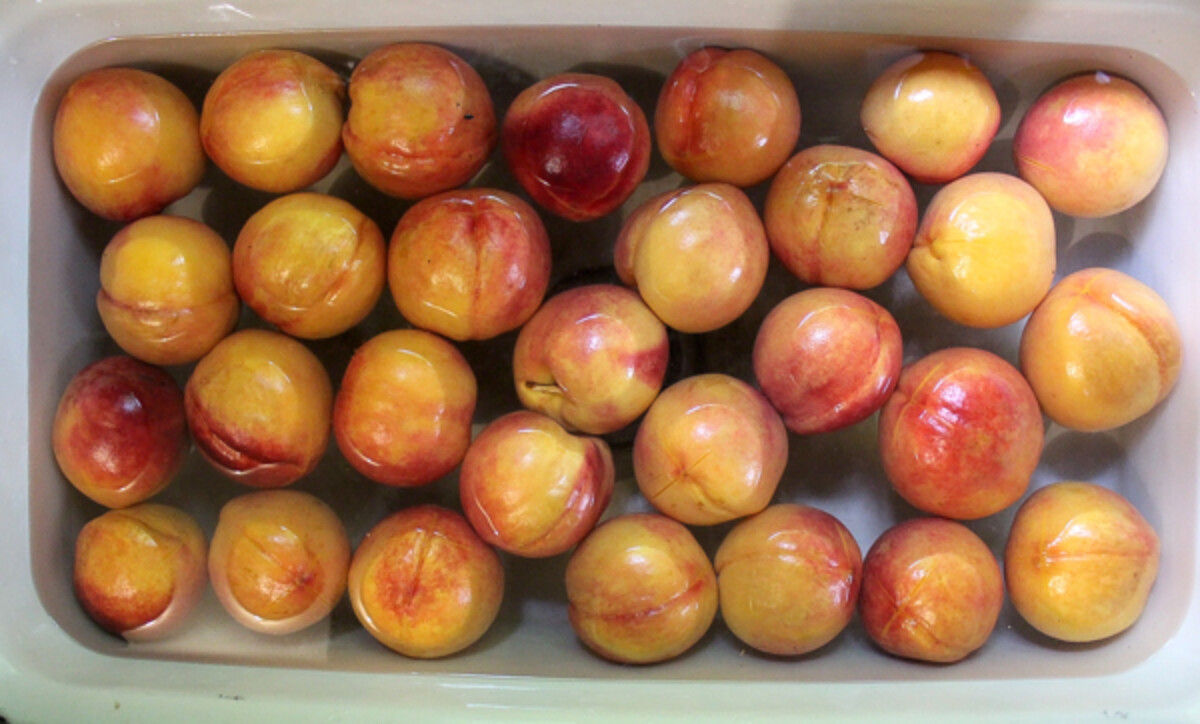
My giant farmhouse sink holds just over one canner load (7 quarts) worth of peaches, and I use that sink to cold water bath them after a quick blanching for peeling. This time I had gigantic peaches, so it took about 28 peaches or 4 huge peaches per jar. It’d take 5-6 average-sized peaches to fill a quart jar.
Peeling Peaches for Canning
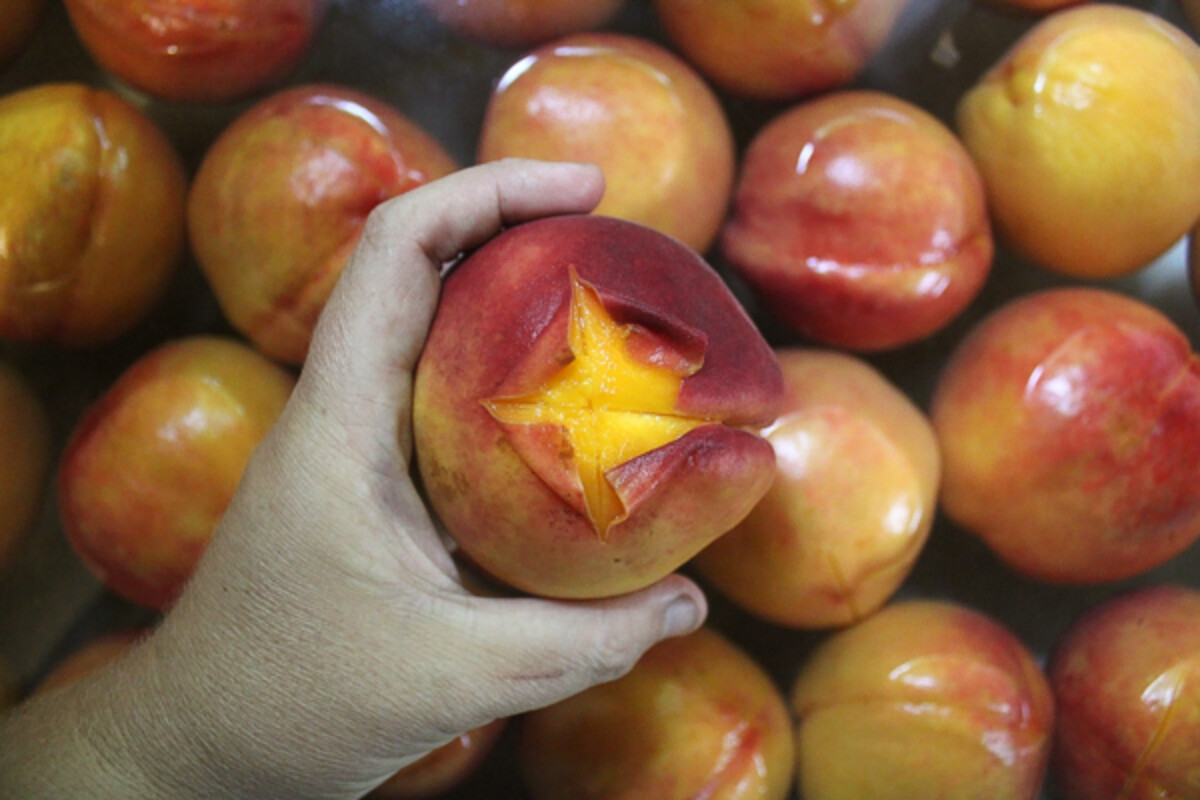
The first step to canning peaches is removing their fuzzy skins. Bring a pot of water to a boil on the stove, and then dip each peach in the boiling water for 2-3 minutes. With very ripe peaches, it’ll take less time and firmer peaches require more cooking to peel.
If the peach skins just aren’t listening, try making a shallow X on the bottom of each peach with a sharp knife before placing the peach in boiling water. This will help the skin start to peel easier.
Scoop the peaches out of the boiling water with a slotted spoon and drop them into a sink or bowl full of ice water. Once they’re cool, the skins should remove easily with your fingers.
How to Can Peaches
Now that we’ve gone through just about every variation and option available, how do I do it?
In my kitchen, I can peaches in very light syrup using the hot pack method. Most often, I use quart jars because that’s just about the right size for a cobbler to feed my family of 4. Here’s my simple recipe for canning peaches at home, but hopefully you’ve learned a thing or two about how to modify the recipe to suit your family’s needs.
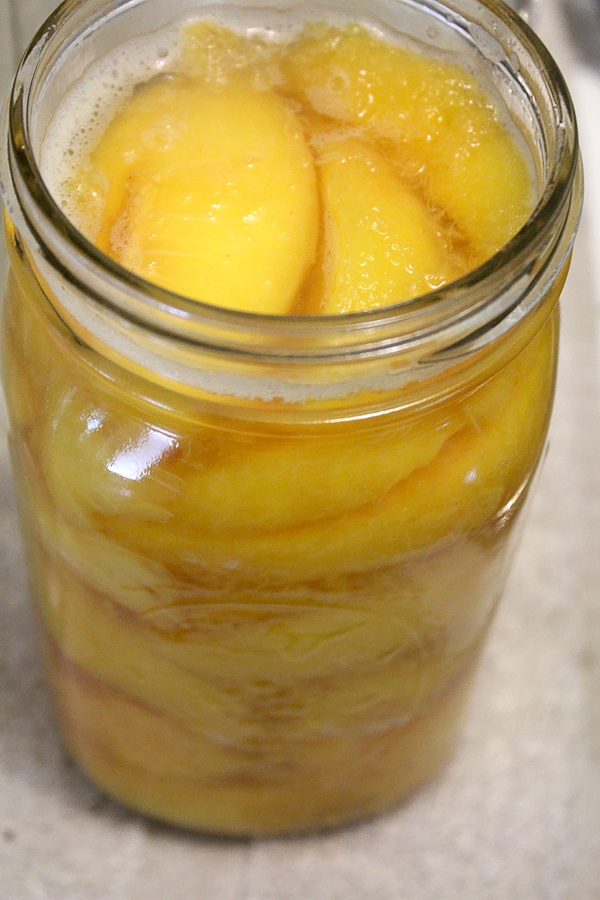
Start by peeling and slicing the peaches. Make a syrup by bringing the right proportion of sugar and water to a boil in a large pot.
For very light syrup, you’ll need 10 1/2 cups water and 1 1/4 cups sugar. Add the peaches into the boiling syrup, wait until the syrup returns to a boil, and then cook the peaches for a few minutes.
Pack the hot peaches tightly into quart or pint mason jars, and top the jars with boiling syrup. Remove the air bubbles, and be sure to leave 1 inch of headspace. Attach 2-part canning lids and process in a water bath canner for 25 minutes for quarts and 20 minutes for pints (under 1000 feet elevation).
Peach Canning Recipes
There are plenty of ways to preserve peaches at home, and these peach canning recipes will keep your pantry stocked!
Canning Peaches
Equipment
Ingredients
- 18 pounds peaches
- 1 1/4 cups sugar
- 10 1/2 cups water
- boiling water, for peeling peaches
Instructions
- Bring a pot of water to a boil and submerge peaches for 30-90 seconds. Remove with a slotted spoon and cool in ice water. Peel the peaches with your hands, the skins should slip off easily. If they don’t repeat the boiling process.
- Slice the peaches in half and remove pits. They can be canned as half peaches, or sliced, it’s up to you.
- Bring 10 1/2 cups water and 1 1/4 cups sugar to a boil in a stockpot. Stir to dissolve the sugar. Add peaches and cook for 1-2 minutes.
- Ladle hot peaches into prepared quart canning jars (or pints if you prefer). This recipe should yield a full 7-quart canner batch.
- Top the peaches in the jars with syrup, leaving 1/2 inch headspace. Remove air bubbles and seal with 2 part canning lids.
- Process in a water bath canner, 20 minutes for pints and 25 minutes for quarts under 1000 feet in elevation. If you prefer to pressure can, process for 10 minutes at 5 pounds pressure in a weighted gauge pressure canner. (Use 6 pounds in a dial gauge pressure canner.)
Nutrition
Nutrition information is automatically calculated, so should only be used as an approximation.
Ways to Preserve Peaches
Looking for more ways to preserve peaches?











I’m about to can peaches for the first time this week. About how long does this whole process take? I’m sure it will take me a bit longer since I’m new to it, but I’m curious about how much time I need to set apart in my day. Thank you for all this helpful information!
That will depend on how many batches you have to do, whether you are doing water bath canning or pressure canning and other factors. I would just suggest setting aside a day to do it, starting first thing and then there are other things that you can be working on while the jars are processing.
A tip from someone who grew up canning…instead of making a syrup, fill half of your quart jar with sliced peaches. Pour 1/4-1/3 cup sugar on top of the peaches (your choice for how sweet peaches are and how sweet you would like your fruit to be). Finish filling your jar with peach slices. Pour plain boiling water on top of peaches. Continue process as listed in recipe. This eliminates the too much/not enough syrup issue. My family received this tip 40 years ago from a Columbia Gorge peach grower.
How does the recipe vary for higher elevations?
The National Center for Home Food Preservation is a great resource for recipe variations for higher elevations. They have great charts for processing times. Here is a link for the chart on peaches. https://nchfp.uga.edu/how/can_02/peach_sliced.html
I’m new to canning, last night I canned peaches on my own for the first time, In the recipe book I used it said to water bath can for 30 minutes. I let my water get to a boil, then I took the lid off and it stopped boiling, and placed the cans in, I put the lid on and took them out 35 minutes later. But I’m wondering if it’s a problem that it wasn’t at a rolling boil the whole time, I wasn’t checking, but for all I know it might not have reached a boil for 10 minutes, which would mean they were only processed for a fraction of the time they were meant to. Are they unsafe to consume? If I consume them in the next week would it be safe?
Your processing time should start when the water is boiling. If you are unsure of the processing time, I would put them in the fridge and eat them as quickly as possible. You could also put them in the freezer as well if you can’t eat them all within the next week.
I love how easy you keep your answers! Thank you!
I’ve been slow to the idea of canning as it’s 2 of us, but, the way things are going, I thought I’d learn. I love the simplicity of your method. I’ve read recipe after recipe, and I noticed you didn’t mention keeping the jars warm to avoid cracking. Or did I miss it? Thanks so much! I’m going to use your method!
I just finished canning my batch of peaches and wasn’t thinking (or reading obviously) and only hot water processed them for 10 minutes. I sterilized the jars and did a hot pack. All the jars are sealed now…do you think their okay? Is there anyway to save these?
You may have been looking at the processing time for pressure canning. It is recommended that you reprocess jars within 24 hours so if it has been longer than that then you probably shouldn’t.
My aunt used to pour the hot peaches (boiled in the syrup) into hot jars, put the hot lids on and let them sit on the counter to seal. No one died yet.
Not following proper canning procedures can be very dangerous. It can lead to botulism which has in fact killed people. This is not a chance that I am willing to take when there is a simple solution that can prevent it.
My jars are in ml, and the “quarts to cups of sugar” ratios are horrible… i honestly didnt end up bothering and just used the syrup from my canned apricot recipe… please add the measurements in ml and grams so its not ridiculous to try and scale it down
How do you stop the jars from breaking when you pour the hot juice in?
Canning jars are designed to withstand high temperatures but it’s a good idea to warm your jars in advance so that they don’t get such a temperature shock.
i was told presser canning fruit would last 10 years wile water pack only 12 months, if that is true why?
I have never heard of a distinction between pressure canning and water bath canning in regards to the shelf life. According to the National Center for Home Food Preservation, home-canned food is at its best quality within a year. It can still be safe to eat after that but the quality tends to diminish over time. They make no distinction between pressure canned or water bath.
I need quick help hopefully…I just received a box of peaches I hope to can…question 1 is they are still very firm so do I wait for them to soften as I would to eat it fresh? It would currently be pretty crunchy. Second question is, with boiling in syrup and then boiling for 25 min or whatever it was are they going to be mush upon time I want to eat them? Final question, once removing the skin doesn’t the peach mutilate attempting to twist it off the seed? Thank you! Hope to have help in time!
You want them to be just ripe meaning that they are still firm but have lost all the green around the stem. This will help them retain a better texture once canned. As far as the pit goes, that depends on what kind of peach you choose. The freestone varieties will remove much more easily.
You wrote: “We make our own maple on our Vermont homestead.”
Is the maple syrup processing operation equivalent to the canning process?
How do you ensure that the maple syrup is not contaminated with bacteria when it is bottled and sealed?
Here is a post all about making maple syrup. https://practicalselfreliance.com/making-maple-syrup/ You basically are going to boil it down for an extended period of time. You will know that it is finished when it is 7.5 degrees above the boiling point of water. Here is another one about canning the syrup. https://practicalselfreliance.com/canning-maple-syrup/ If canned and stored properly, it should last indefinitely.
Thanks for sharing the recipe, nice and easy!
Thanks for sharing the recipe, nice and easy!
You’re welcome! So glad you enjoyed it.
Do you ever use the leftover canning syrup/peach juice after you’ve filled and processed the peaches? I’m wondering if I should try to make syrup or jelly with it.
Do you ever use the leftover canning syrup/peach juice after you’ve filled and processed the peaches? I’m wondering if I should try to make syrup or jelly with it.
I have seen lots of ideas to freeze it and use it in flavorings for beverages or pouring it over ice cream, cake or pancakes.
Do you put all the peaches into the boiling syrup at once or in batches? That’s a lot of peaches and very little syrup
You will put all of the peaches into the boiling syrup. The peaches will release some liquid on their own.
I’m excited to try this tomorrow! I only got 13-14 lbs of peaches but will modify the recipe accordingly. I was wondering if you’ve had any experience making brandied peaches. I saw this NYT recipe (https://cooking.nytimes.com/recipes/1012720-brandied-peaches) and want to give it a go but am unsure about canning with alcohol. Thanks!
That recipe should be fine for canning. It’s just a bit of brandy in the canned peaches for flavor. (You can also just preserve peaches in brandy, which is what I thought the recipe would be, and then with just 2 ingredients they’d keep without canning at all).
HO DO I ADJUST CANNING TIMES FOR ELEVATION? I’M AT ABOUT 5OOO FEET ASL.
Here are the processing times for peaches at different elevations:
** O to 1,000 Feet Elevation
Hot pack – Pints – 20 Min
Hot Pack – Quarts – 25 Min
Raw Pack – Pints – 25 Min
Raw Pack – Quarts – 30 Min
**1,001 to 3,000 Feet Elevation
Hot pack – Pints – 25 Min
Hot Pack – Quarts – 20 Min
Raw Pack – Pints – 30 Min
Raw Pack – Quarts – 35 Min
**3,001 to 6,000 Feet Elevation
Hot pack – Pints – 30 Min
Hot Pack – Quarts – 35 Min
Raw Pack – Pints – 35 Min
Raw Pack – Quarts – 40 Min
**Above 6,000 Feet Elevation
Hot pack – Pints – 35 Min
Hot Pack – Quarts – 40 Min
Raw Pack – Pints – 40 Min
Raw Pack – Quarts – 45 Min
I have a question. You mentioned in this article that very ripe peaches have less acid. Is it necessary then to add lemon juice or something when canning? I had to work and now my peaches are very ripe and I have to can them quickly or freeze them.