
Affiliate disclosure: This post may contain affiliate links. Please see our Privacy Policy.
Canning plums is a simple way to preserve plums for year-round use. Plums can be preserved as halves or wholes (with pits or without), and canned in your choice of water, juice, or syrup.
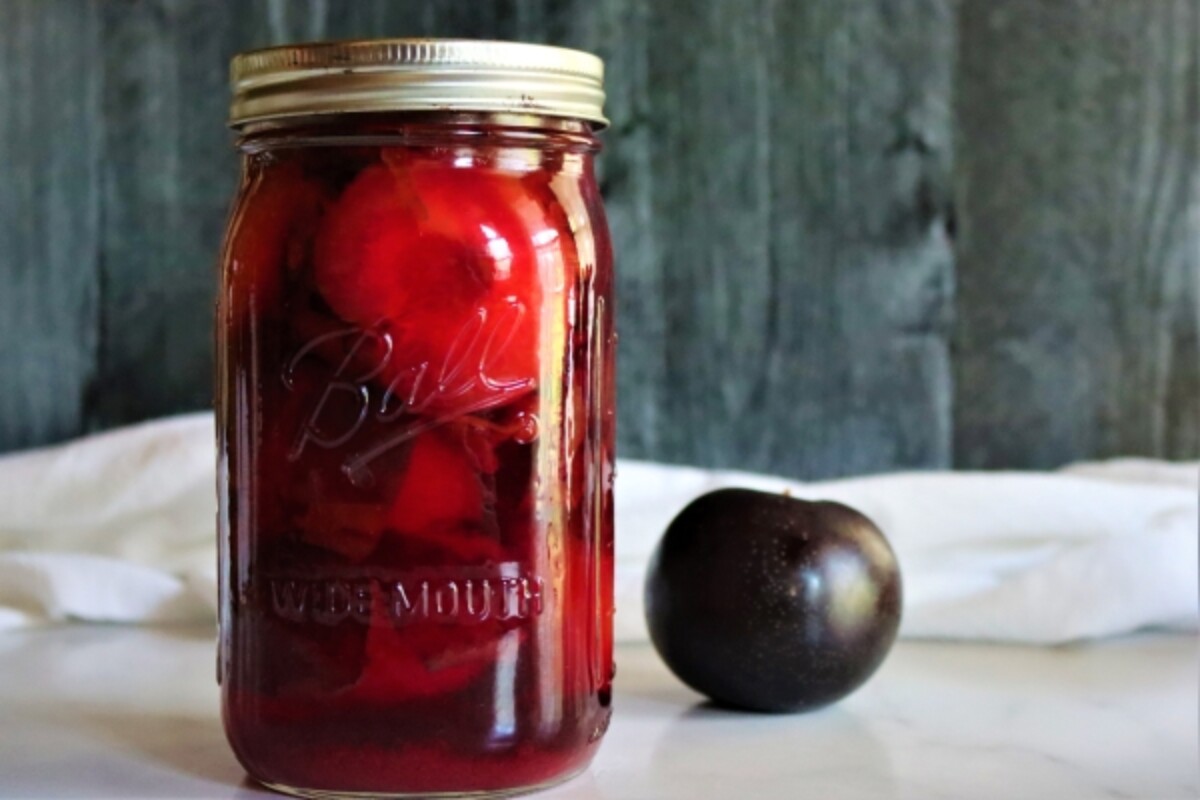
Plums are one of our best crops, and dependably produce buckets of fruit every year. We make plum jam, plum butter, and even plum wine from our homegrown plums (and from thickets of wild plums at the edge of the woods).
Their season is short, but I still find time to bake up a plum torte or two in the busy harvest season. They’re spectacular, and I’ve been looking for a way to preserve plums that’d allow me to make them during the winter too.
This past year, I came across a few cans of Oregon Canned Whole Plums at the store, and realized that canning plums may be the solution to enjoying my favorite plum recipes year-round!
Choosing & Preparing Plums for Canning
Believe it or not, plums actually hold up remarkably well during canning. I found that they had a firmer texture than my home-canned peaches, and they maintained their shape whether canned as whole or halves.
Plums can actually be canned whole, with the pit intact, if you choose. That’s a good option for clingstone fruit that just won’t pit cleanly. Keep in mind though, if you don’t pit the plums before canning, you’re just packing away a chore for later.
For small clingstone fruit, like wild plums and damsons, I use a cherry pitter and it’s incredibly effective.
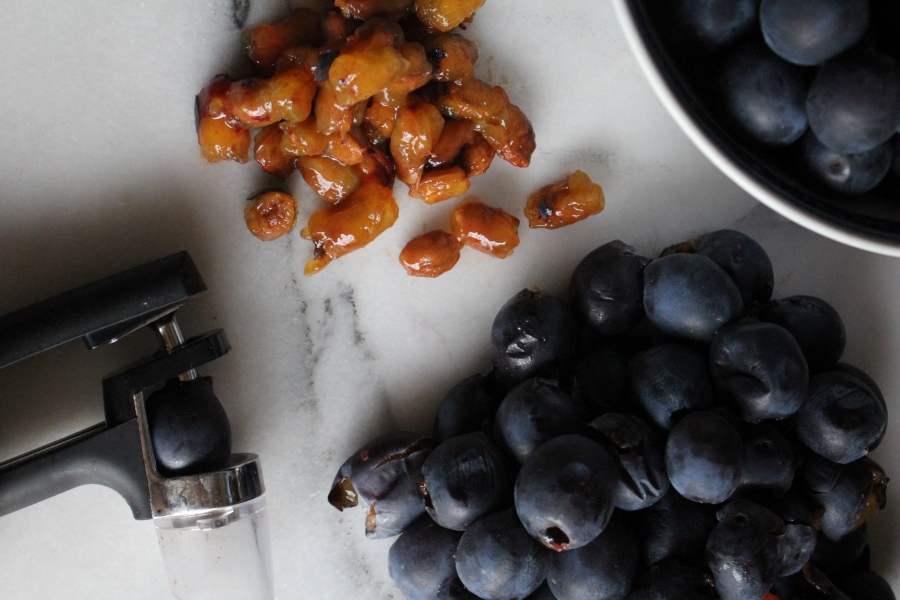
When canning whole plums, prick the outsides of the fruit skin with a toothpick, fork, or knife to prevent the skin from popping. A little space for expansion means they’ll hold their shape better in the jar.
For freestone plums, you can simply cut the fruit in half and remove the pit before canning.
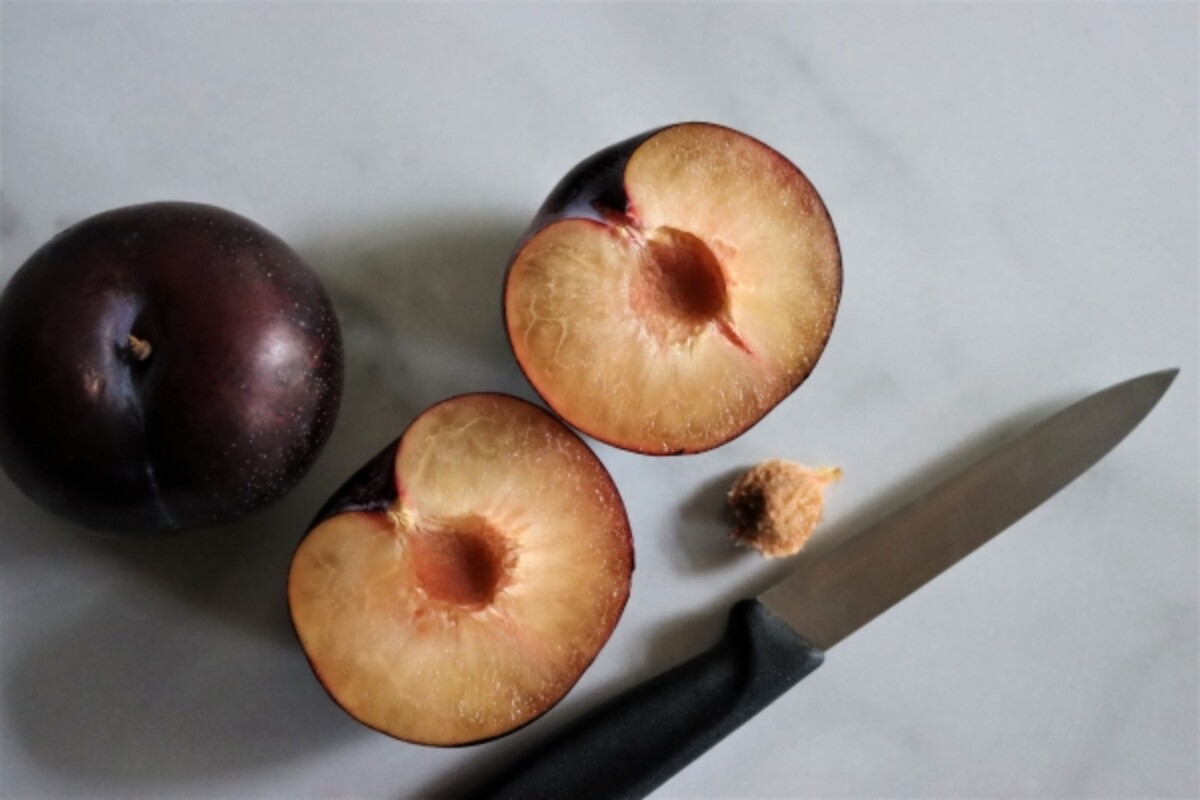
Whether canning whole plums or plum halves, be sure to choose fully ripe fruit at the peak of freshness. They should be in prime condition for fresh eating, sweet and a bit soft. Not so soft, however, that they just completely fall apart in your hand as you bite them. (ie. Perfectly ripe, but not overripe.)
Hot Pack or Raw Pack Methods
Plums are approved for canning as either a hot pack fruit, or a raw pack fruit. Generally speaking, hot pack fruit has a better quality than raw pack fruit, but it’s a bit more work.
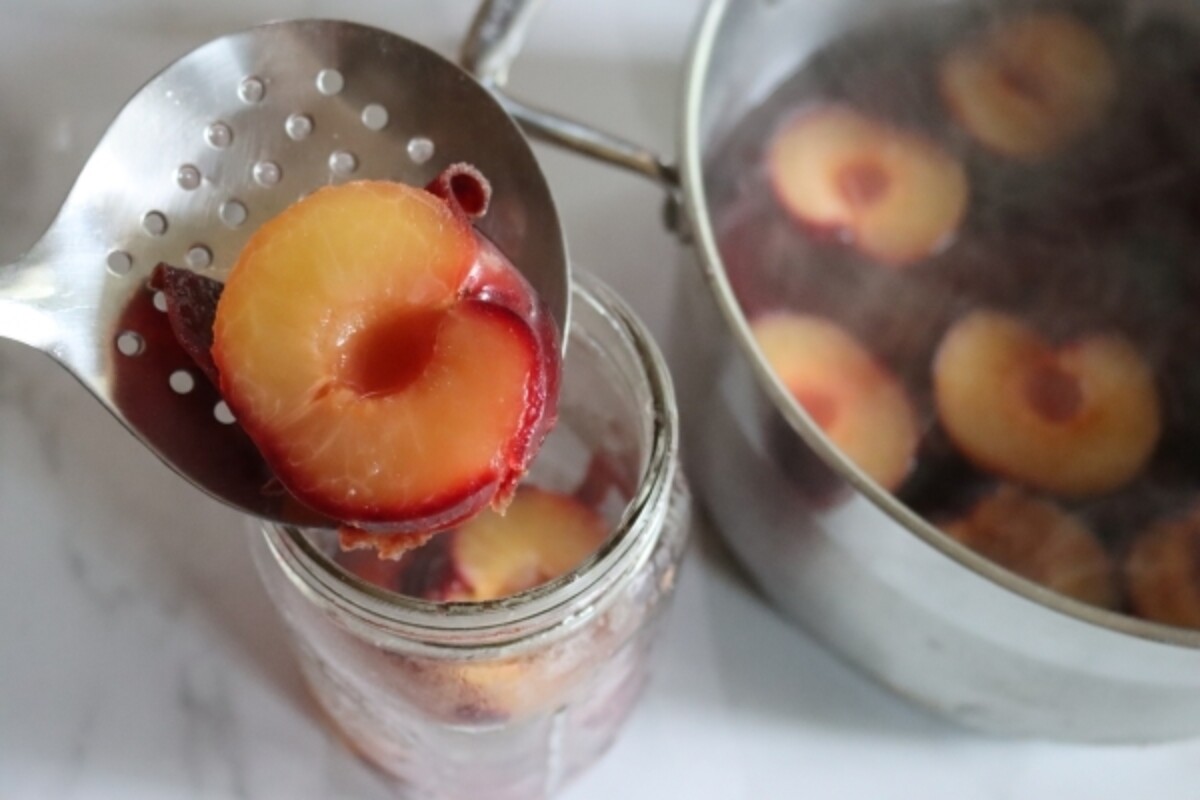
Hot Pack ~ This involves blanching, or partially cooking the plums before packing them into the jars. They’ll lose some air from their tissues, which will help prevent floating in the jars and allow them to pack tighter. The downside is that you’ll be loading the fruit while it’s hot, which is a bit messier than just loading raw fruit.
To hot pack plums, bring the canning liquid (syrup, water or juice) to a boil. Add plums, return to a boil and cook 2 minutes before turning off the heat. Lid the pot and allow them to sit for 20 to 30 minutes, so they can slowly heat through. Then pack the hot plums into canning jars and top with hot canning liquid (leaving 1/2 inch headspace).
Raw Pack ~ Simply packing the prepared raw plums, either whole with pinpricks on the skin, or halves with pits removed, is much easier. The downside is the fruit will shrink considerably during canning, and you’ll have half-empty jars on the pantry shelf.
They’ll also float, and lose their shape more than hot packed fruit. (I know, it seems counter-intuitive, but pre-cooked hot pack plums actually hold their shape better in canning.)
For simplicity, I often find myself raw packing fruits, and that’s how I do it when canning pineapple or canning oranges. Stone fruits, however, are actually much better done hot pack, and I always do my peach canning with a hot pack.
I’m canning these plums hot pack, but feel free to use whatever method you prefer, as both plum canning methods are approved by the National Center for Food Preservation.
Syrup for Canning Plums
As with most fruits, the liquid for canning plums can be a wide variety of syrups or juices, depending on your preference.
It’s perfectly fine to can plums in just plain water, and that’s a great option for people hoping to can without added sugar. The problem with canning in plain water is the fruits will leach some of their natural sugars into the canning liquid, and water canned plums will taste washed out and less sweet than fresh fruit.
I generally can in extra light syrup, which roughly approximates the natural sweetness of fruits. That way, the fruit won’t lose sweetness from the canning liquid, but you’re not packing on the sugar either. For a 9-pint canner load, use 3/4 cups sugar and 6 1/2 cups water. For a 7-quart canner load, add 1 1/4 cups sugar to 10 1/2 cups water.
More sugar is fine if that’s your preference, and the NCFP has all the measurements you need for light through heavy syrup.
Canning in fruit juice, such as apple or grape, is also an option, as are alternative sweeteners like maple and honey.
Whatever you choose, ladle it hot over the fruit into the jars, leaving 1/2 inch headspace.
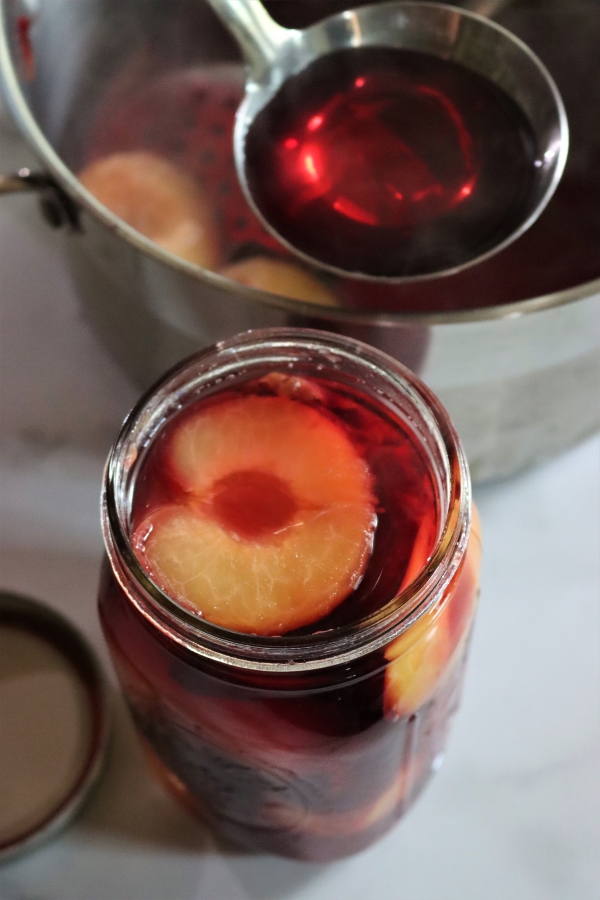
How to Can Plums
Once the fruit is packed into jars, be it hot pack or raw pack, it should be covered in a hot canning liquid of your choice. Be sure to leave 1/2 inch headspace, this will help ensure that the plums don’t push up into the canning lid and prevent sealing.
Cap the jars with 2 part canning lids and process them in a water bath canner for 20 minutes (pints) or 25 minutes (quarts) if you’re below 1000 feet in elevation. The total canning time will need to be adjusted for higher elevations.
- For 1,000 to 3,000 feet ~ Process 25 minutes for pints and 30 minutes for quarts.
- For 3,000 to 6,000 feet ~ Process 30 minutes for pints and 35 minutes for quarts.
- Over 6,000 feet ~ Process 35 minutes for pints and 40 minutes for quarts.
Once the canning time is complete, remove the jars to cool on a towel on the counter. Wait 24 hours before checking seals, and store any unsealed jars in the refrigerator for immediate use. Store sealed jars in the pantry, and they should retain quality for 12 to 18 months.
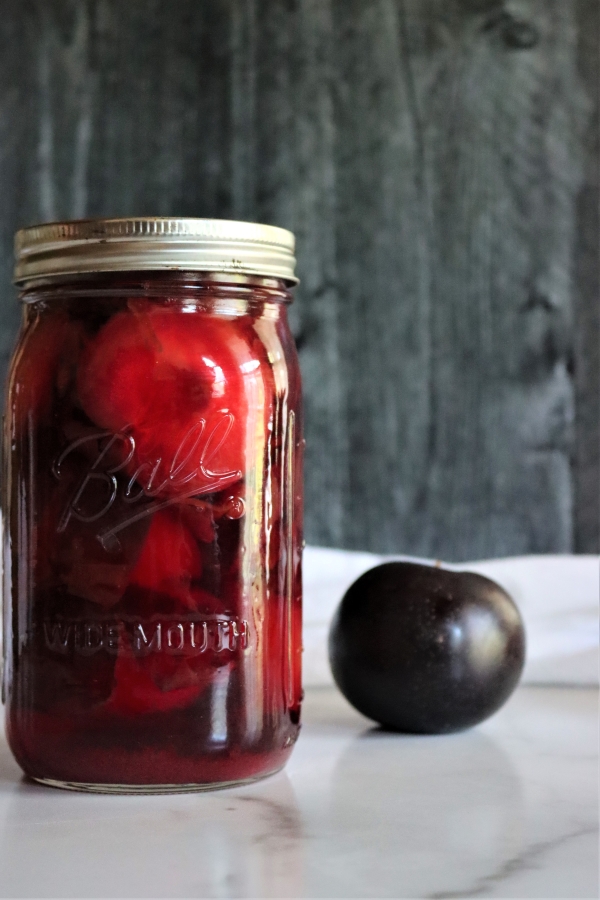
Ways to Preserve Plums
Looking for more plum preservation recipes?
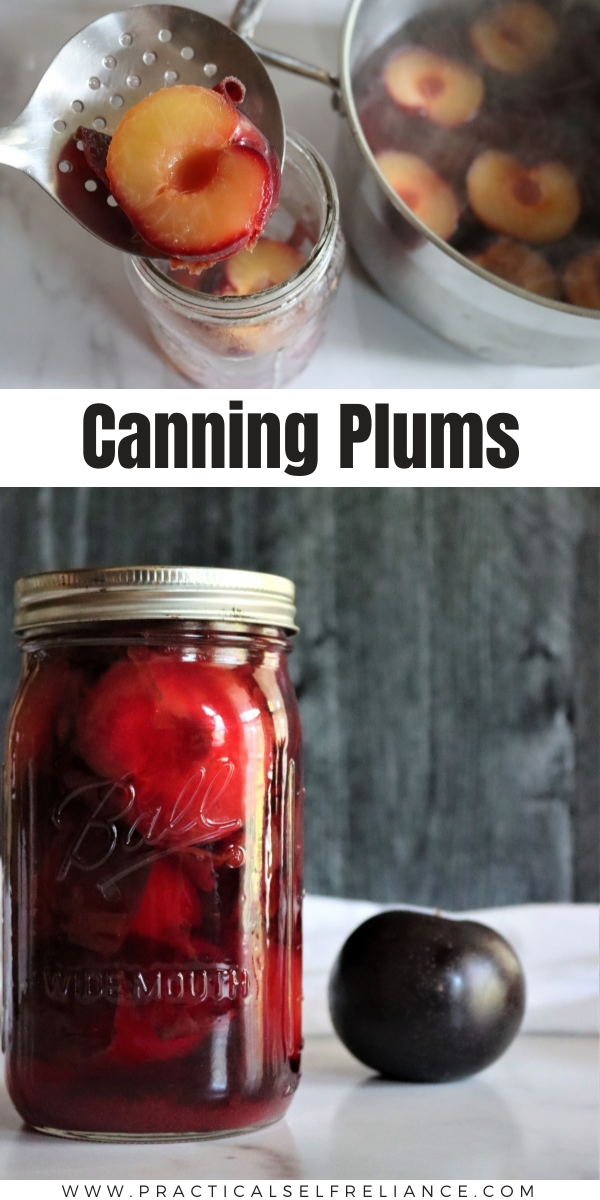
Canning Plums
Ingredients
- Plums, Roughly 2 lbs per quart jar, or 1 lb per pint
- Canning Liquid, Water, syrup or juice ~ See notes
Instructions
- Prepare a water bath canner.
- Prepare the plums for canning by either slicing them in half and removing their pits for plum halves, or pricking the outside with a toothpick for whole plums with pits.
- Prepare a canning liquid, either water, juice, or syrup (see notes) and bring it to a boil over high heat.
- Hot Pack ~ For hot pack plums (recommended), place the prepared fruit in the boiling liquid and cook for 2 minutes. Turn off the heat and place a lid on the pot. Allow the plums to sit in the hot liquid for 20 to 30 minutes to gently heat through. Then pack the hot fruit into canning jars.
- Raw Pack ~ If you choose raw pack instead of hot pack, simply pack the prepared fruit into canning jars.
- For both hot and raw pack, ladle the hot canning liquid over the top of the plums. This should cover them completely but leave 1/2 inch headspace.
- Remove bubbles, adjust headspace, and cap with 2 part canning lids to finger tight.
- Process in a water bath canner for 20 minutes (pints) or 25 minutes (quarts) at altitudes under 1000 feet (see notes below for higher elevations).
- When canning time is complete, remove the jars to a towel on the counter to cool and wait 24 hours before checking seals. Store any unsealed jars in the refrigerator for immediate use, and sealed jars in the pantry.
- Properly processed and sealed jars should maintain quality on the pantry shelf for 12-18 months.
Notes
- For 1,000 to 3,000 feet ~ Process 25 minutes for pints and 30 minutes for quarts.
- For 3,000 to 6,000 feet ~ Process 30 minutes for pints and 35 minutes for quarts.
- Over 6,000 feet ~ Process 35 minutes for pints and 40 minutes for quarts.
Fruit Canning Recipes
Preserving more than plums this season? Keep your canner full with these whole fruit canning recipes:











Thanks for this excellent resource! I’ve been roasting plums (which is delicious) and I wonder if I can just hot pack these without sugar using juice from the roasting– (it seems they are juicy enough).
Yes, you can skip the sugar entirely! Plums can be canned in plain water or juice. Just keep in mind that the roasting juices alone won’t be enough to fill the jars. You’ll need to top them off with water or an unsweetened juice like apple or white grape so the plums are fully covered. Pack them hot, leave 1/2 inch headspace, and process pints for 20 minutes or quarts for 25 (adjusted for your altitude). Roasted plums are softer than the ones in the recipe, so expect them to be a little more tender after canning. Enjoy!
I followed this recipe and my plums turned out beautifully. Thank you again
So glad your plums turned out beautifully! Enjoy!
wonderful recipe thank you for the instructions
You’re quite welcome!