
Affiliate disclosure: This post may contain affiliate links. Please see our Privacy Policy.
Comfrey (Symphytum sp.) is one of those old-fashioned homestead plants that seems to do a little bit of everything. Herbalists prize it for salves and poultices, gardeners love it for compost and mulch, and once it’s growing in your yard, chances are it’ll be there for good.
I’ve always thought of comfrey as one of those classic homestead plants that earns its keep. Herbalists have used it for generations in salves, poultices, and infused oils for bumps, bruises, sore muscles, and sprains, while gardeners value it as a compost activator, mulch plant, and nutrient accumulator. It’s the kind of herb that bridges old-fashioned home remedies and practical backyard use, and it shows up again and again in any good list of medicinal plants worth knowing.
That said, comfrey is also a plant that needs a little nuance. While it has a long history of internal use in older herbals, modern guidance is much more cautious, and today it’s generally recommended only for external use. In this guide, I’ll walk through how to identify comfrey, where it grows, how it’s traditionally been used, and a few important safety notes to keep in mind before you put it to use.
What is Comfrey?
Comfrey (Symphytum spp.) is a genus of flowering herbaceous perennials in the Borage or Boraginaceae family. The genus includes about 59 different species and some cultivars. You may hear comfrey called other common names, including Knitbone, Boneset, Consound, Slippery-root, Blackwort, or Bruisewort.
Comfrey is native to parts of Europe and Asia but is an aggressive spreader and has naturalized in places outside its native range, including North America. It’s easy to establish in a home garden too, and it sits comfortably alongside other easy to grow medicinal herbs that reward you year after year with minimal fuss.
Is Comfrey Edible?
Historically, Comfrey was used in internal herbal preparations and as a green vegetable. It saw exceptionally high use as food during the 1840s Irish Potato Famine.
However, today, we consider comfrey only safe for external use. Comfrey is mildly toxic and contains pyrrolizidine alkaloids that can cause liver toxicity, especially when consumed in large quantities or through repeated doses.
While it isn’t edible for humans, comfrey is an excellent plant for some livestock. You can safely feed comfrey to cattle, chickens, and goats, either fresh or dried.
Comfrey Medicinal Benefits
Today, we usually call this plant Comfrey, but in the past, many herbalists would have known it by other tell-tale names like Knitbone, Boneset, or Bruisewort. Herbalists commonly used the leaves in plasters, salves, and casts to help heal fractures, bruises, and sprains. Comfrey’s Latin name Symphytum hints at that historical usage as well. It comes from the Greek symphis, meaning growing together of bones, and phyton, a plant.
Our earliest written record of comfrey is probably from Roman naturalist Pliny the Elder’s (AD 23–79) Naturalis Historia, in which he mentions the plant as good for bruises and sprains. Greek Physician Dioscorides also mentioned Comfrey in his De Materia Medica, written between 50 and 70 CE. He notes many uses for comfrey roots, including “as a compress they also seal fresh wounds.”
Herbalists of the past would also use Comfrey internally, though today, we don’t consider that to be safe. They would use the leaves and roots of comfrey in teas and tinctures to treat osteoarthritis, colitis, diarrhea, gout, ulcers, and stomach problems. The famous English herbalist John Gerard wrote in his 1597 The Herball, Or, Generall Historie of Plantes that “the slimie substance of the roote made in a possett of ale could be used to treat back pains.”
While we no longer recommend using Comfrey internally, modern research has verified many of its topical uses. One trial found that an ointment made with comfrey leaves and flowers reduced the healing time for fresh abrasions by about 2.97 days.
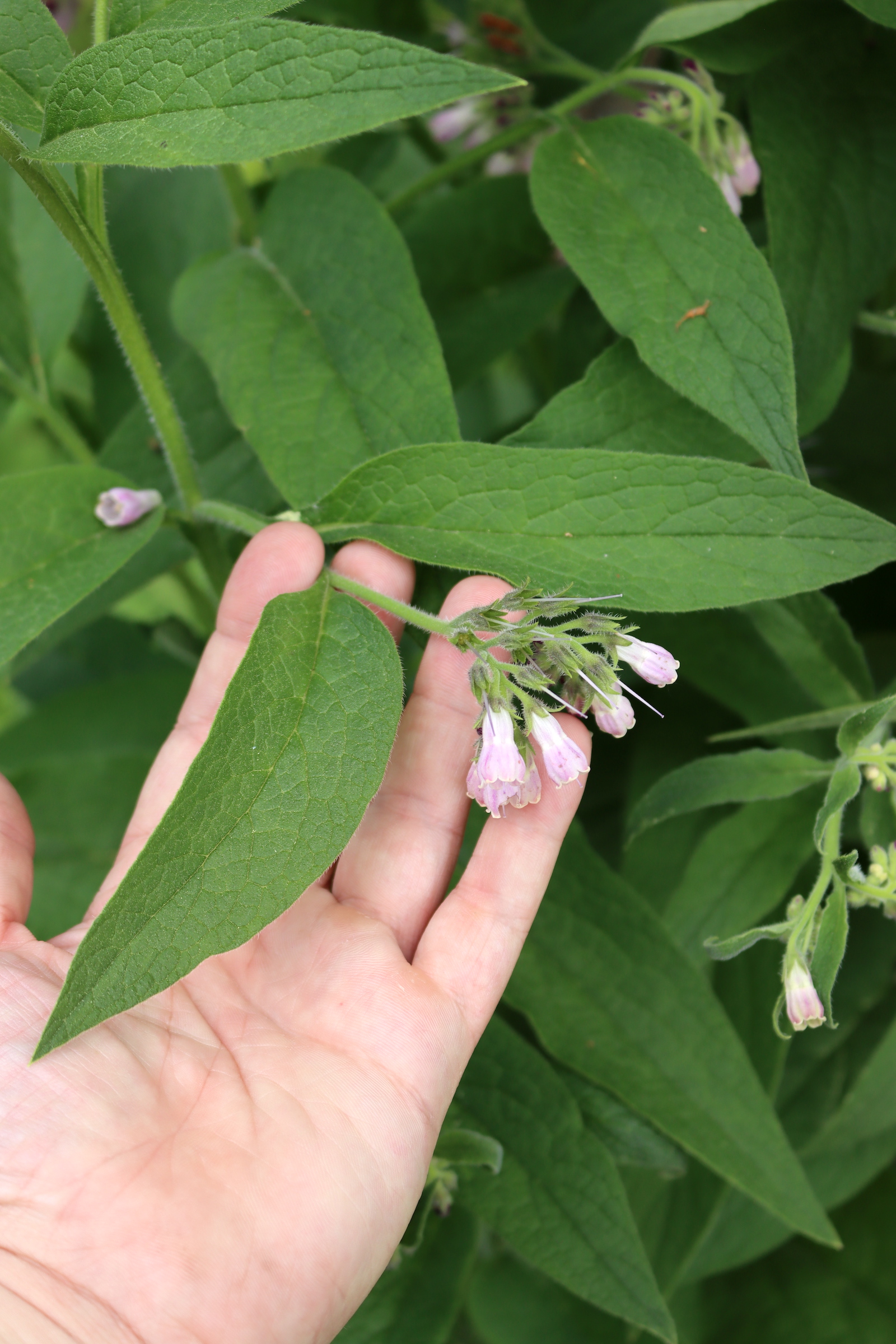
The effectiveness of comfrey for abrasions and other skin wounds may come from its allantoin content. Allantoin is a compound found in comfrey’s roots and leaves, which encourages new skin cell growth and is frequently used in skin care products.
Comfrey can help issues that are more than skin deep, too. A study from Phytomedicine found that an ointment with comfrey extract helped to reduce pain, swelling, and movement limitation in patients with sprained ankles. The British Journal of Sports Medicine also tested an ointment made from comfrey root extract and found it helped reduce back pain.
A study from the Journal of Chiropractic Medicine also tested comfrey ointment on patients with osteoarthritis of the knee. They found that the comfrey ointment reduced pain and stiffness and improved physical functioning.
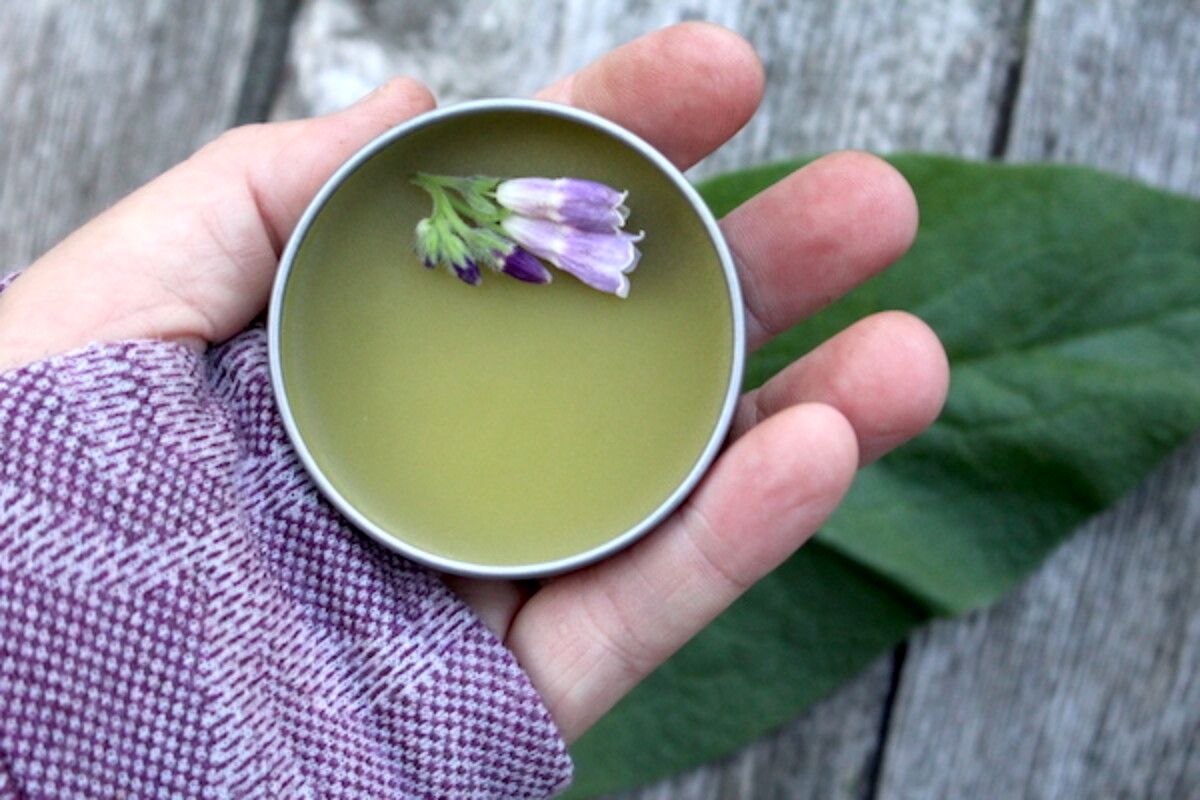
Today, comfrey remains a valuable plant in the herbalist’s cabinet for salves, poultices, ointments, and other external applications. If you’re building out a home apothecary, it fits right in alongside other staples from my roundup of 20+ herbal salve recipes.
Where to Find Comfrey
Native to parts of Europe and Asia, Comfrey was a common herb for Europeans to bring with them as they colonized North America. Once established, Comfrey spreads aggressively and has naturalized in many areas outside its original range.
You will usually find comfrey growing in moist open areas where it will receive full sun. You may spot comfrey growing in old abandoned gardens and homesteads, along streams and ditches, and in moist grasslands.
When to Find Comfrey
Comfrey is a perennial that begins putting on new growth in early to mid-spring. Depending on where you live, you may see new leaves poking up between March and May, right about the time you’d start thinking about spring foraging in general. You can harvest comfrey leaves any time during the summer. Remember to pick what you need before hard frosts knock them back in the fall. If you’re looking for flowers, look for comfrey during late spring or summer, usually between May and July.
While you can harvest Comfrey roots any time of year, many herbalists recommend harvesting the roots in the fall. During the fall, the plant will send nutrients to the roots for the winter as the rest of the plant dies back.
Identifying Comfrey
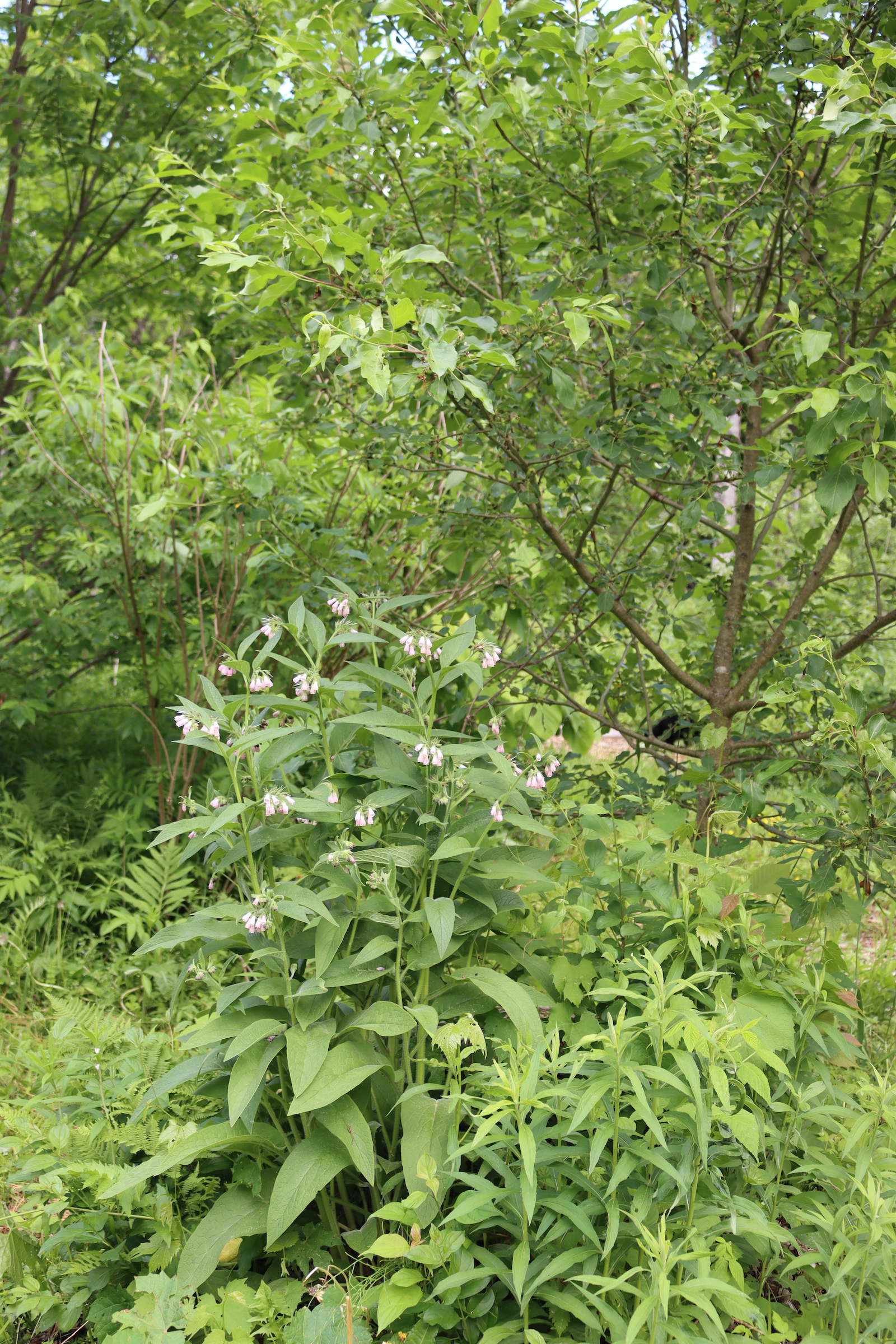
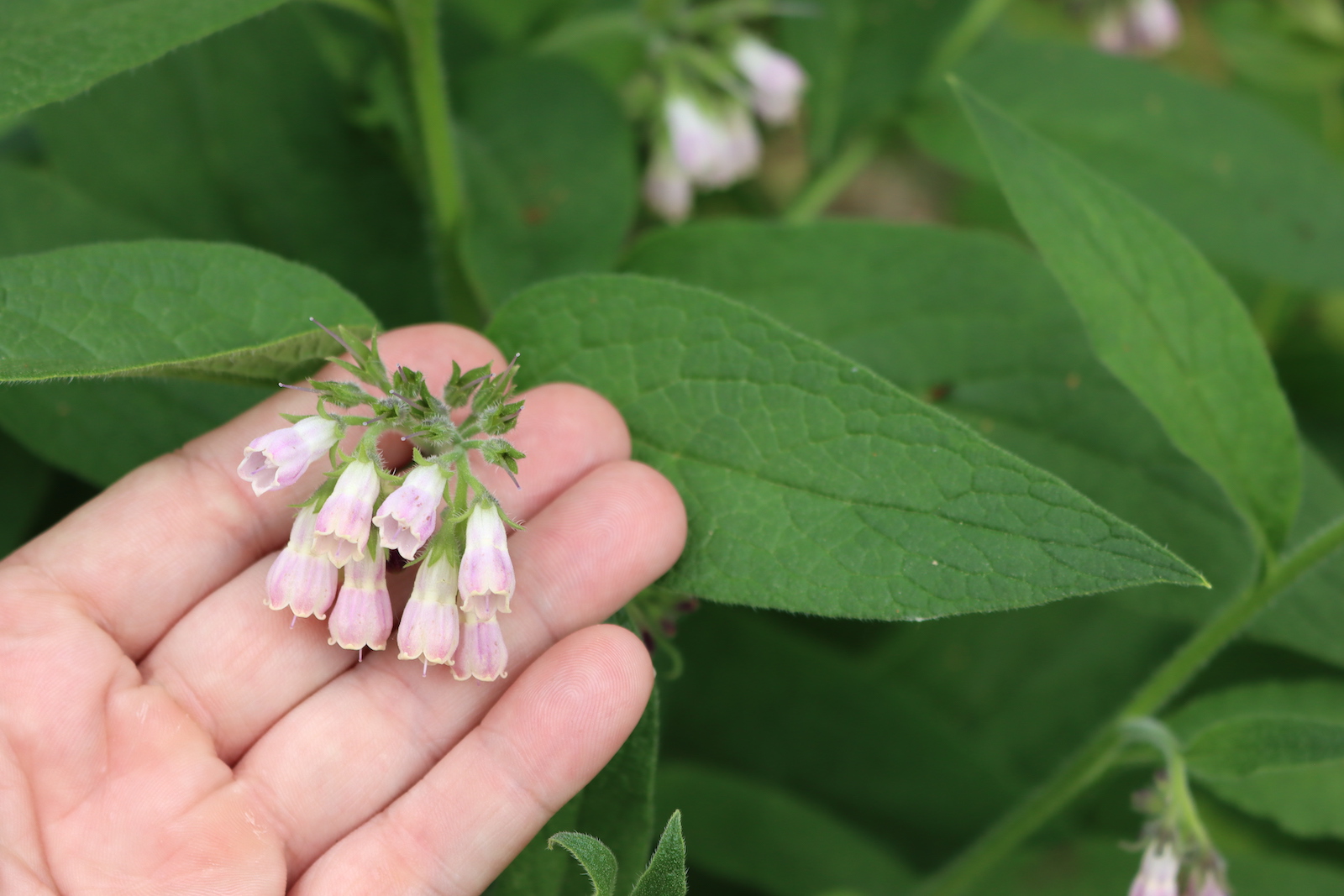
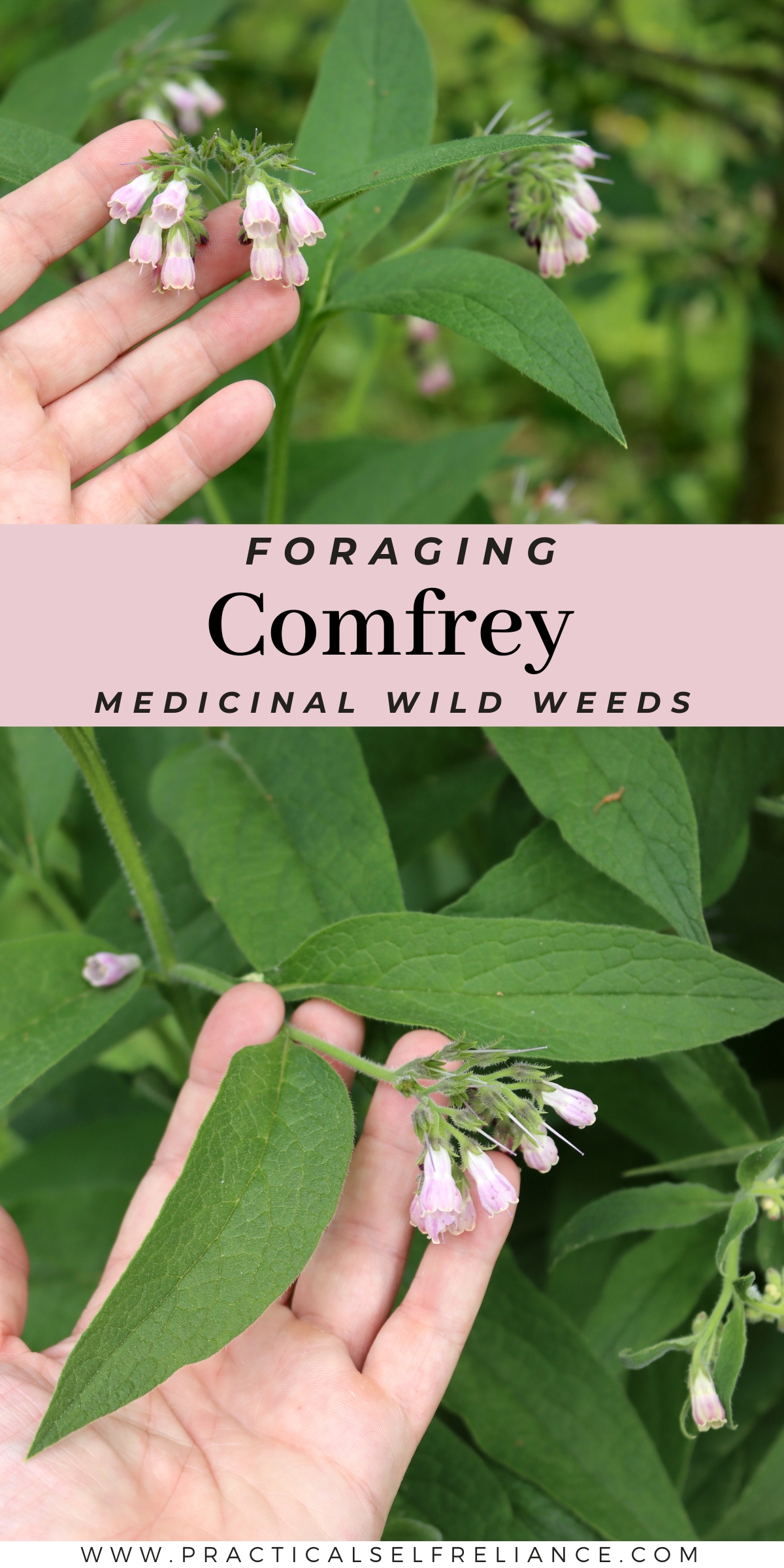
Comfrey is usually a rather large perennial herb with strong stems and taproots. Its prickly, downward-pointing leaves help identify it, as do its nodding, bell-shaped flowers. It spreads through seed and by dislodged root pieces to form dense colonies on streambanks and other moist areas.
Comfrey Leaves
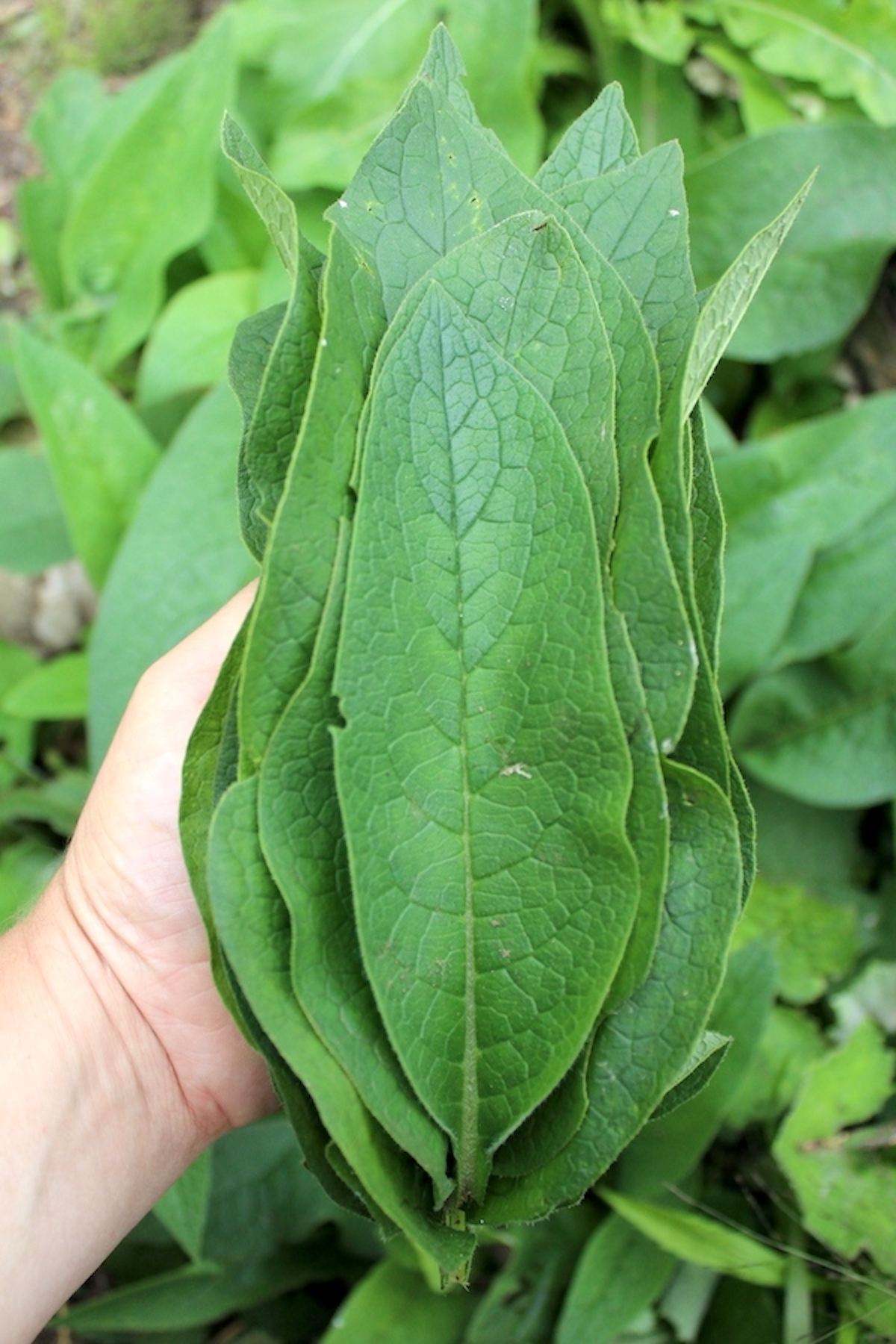
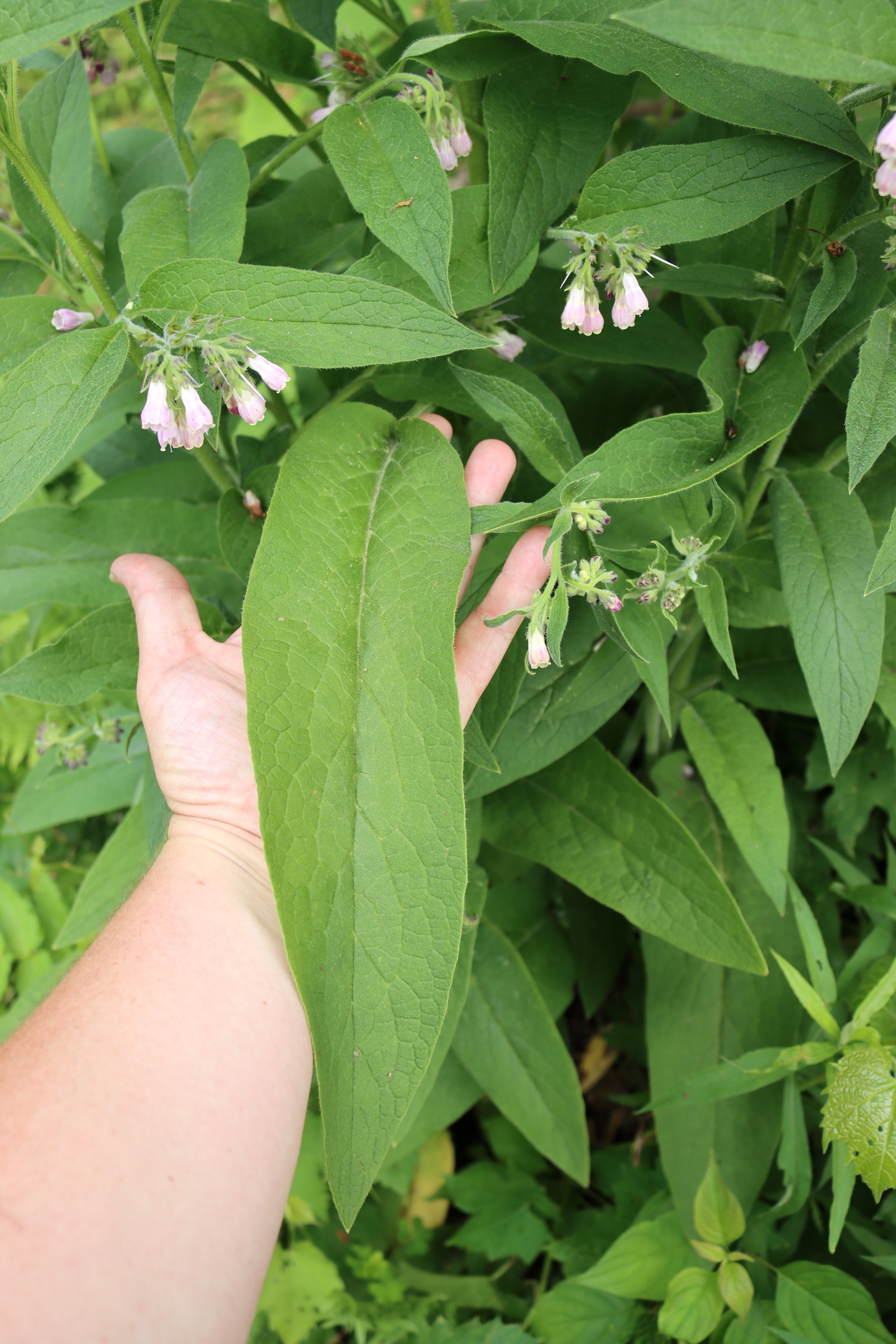
Comfrey has large, green, downward-pointing, oval to lanceolate leaves. The leaves are usually 1.5 to 10 inches long, rough-feeling, and covered in prickly or bristly hairs.
Comfrey’s lower leaves are usually alternately arranged, while its upper leaves are often oppositely arranged. The lower leaves also typically have some petioles or stems, while the upper leaves lack petioles and may extend down the main stem.
Comfrey Stems
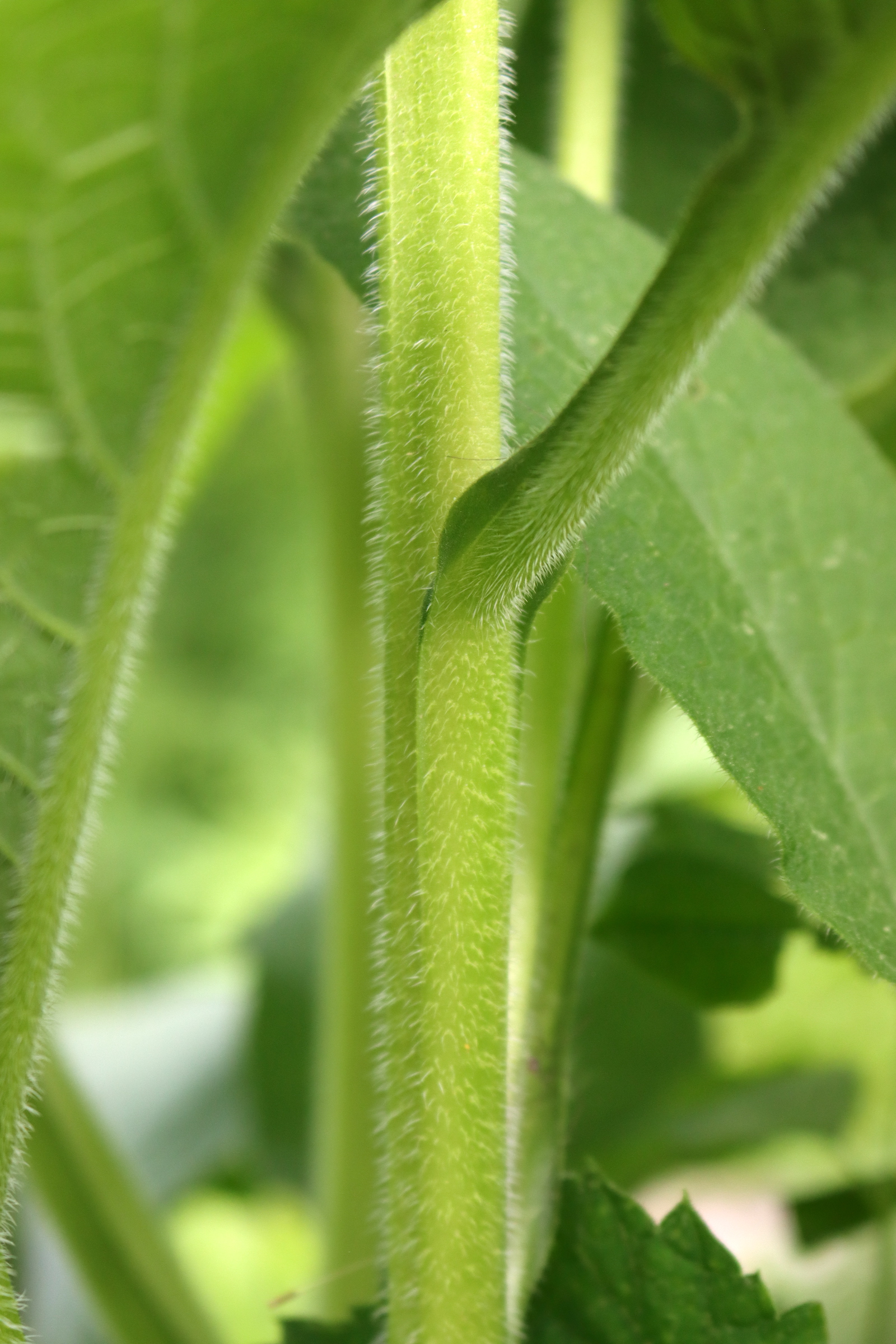
Comfrey often grows several stems that may reach 1 to 5 feet tall. The stems are usually strong, green, and covered in bristly hairs.
Occasionally, they may tip over on larger plants.
Comfrey Flowers
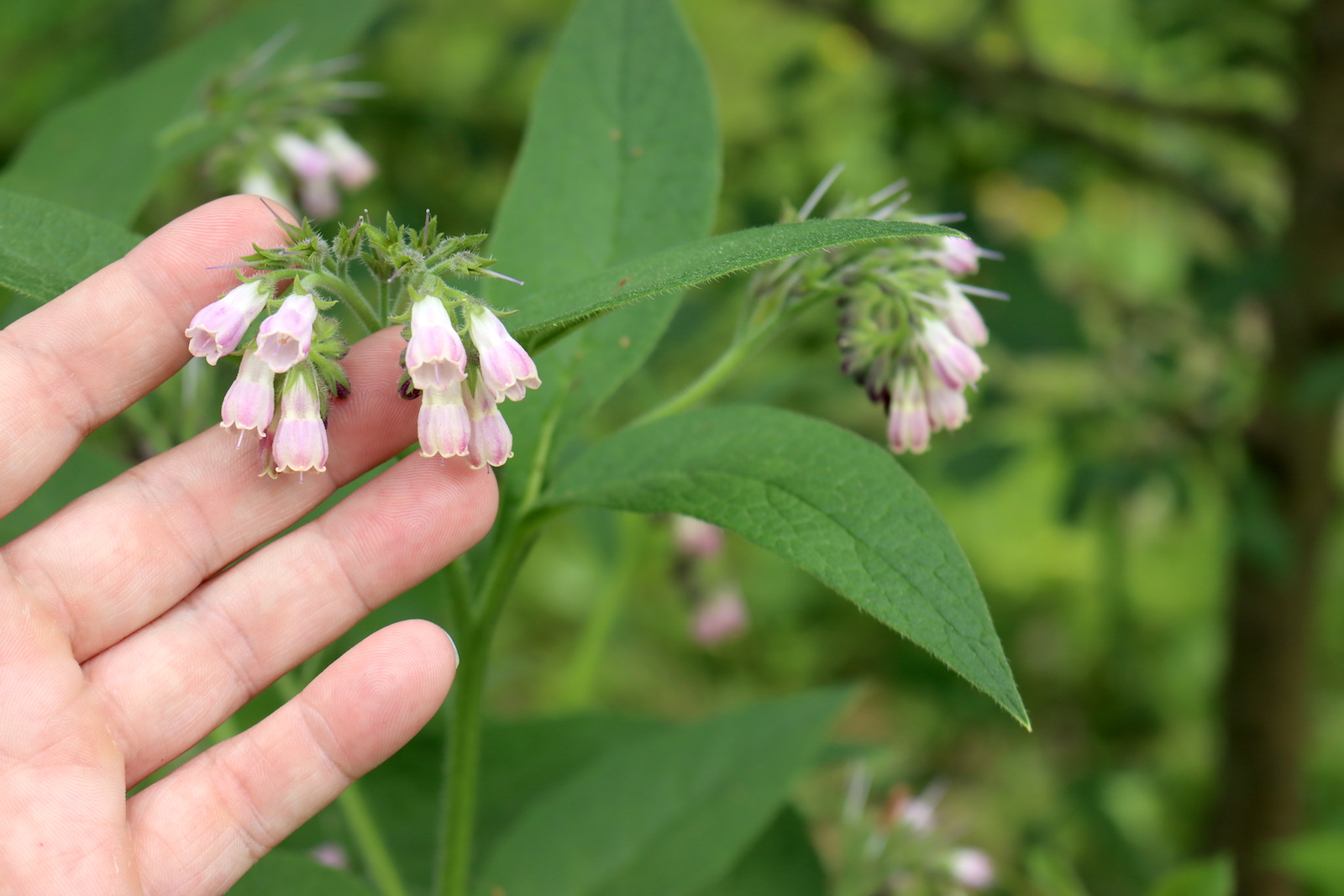
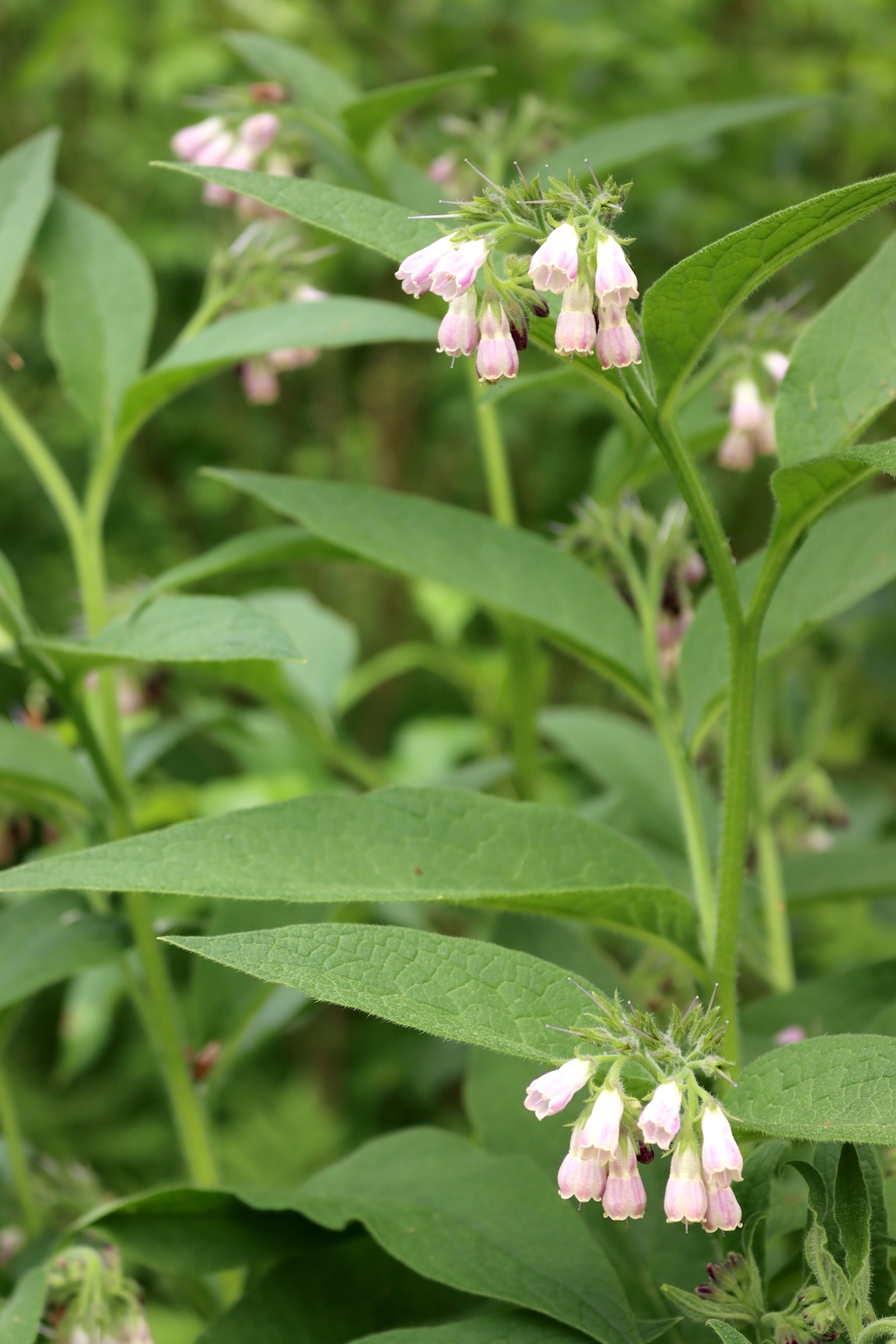
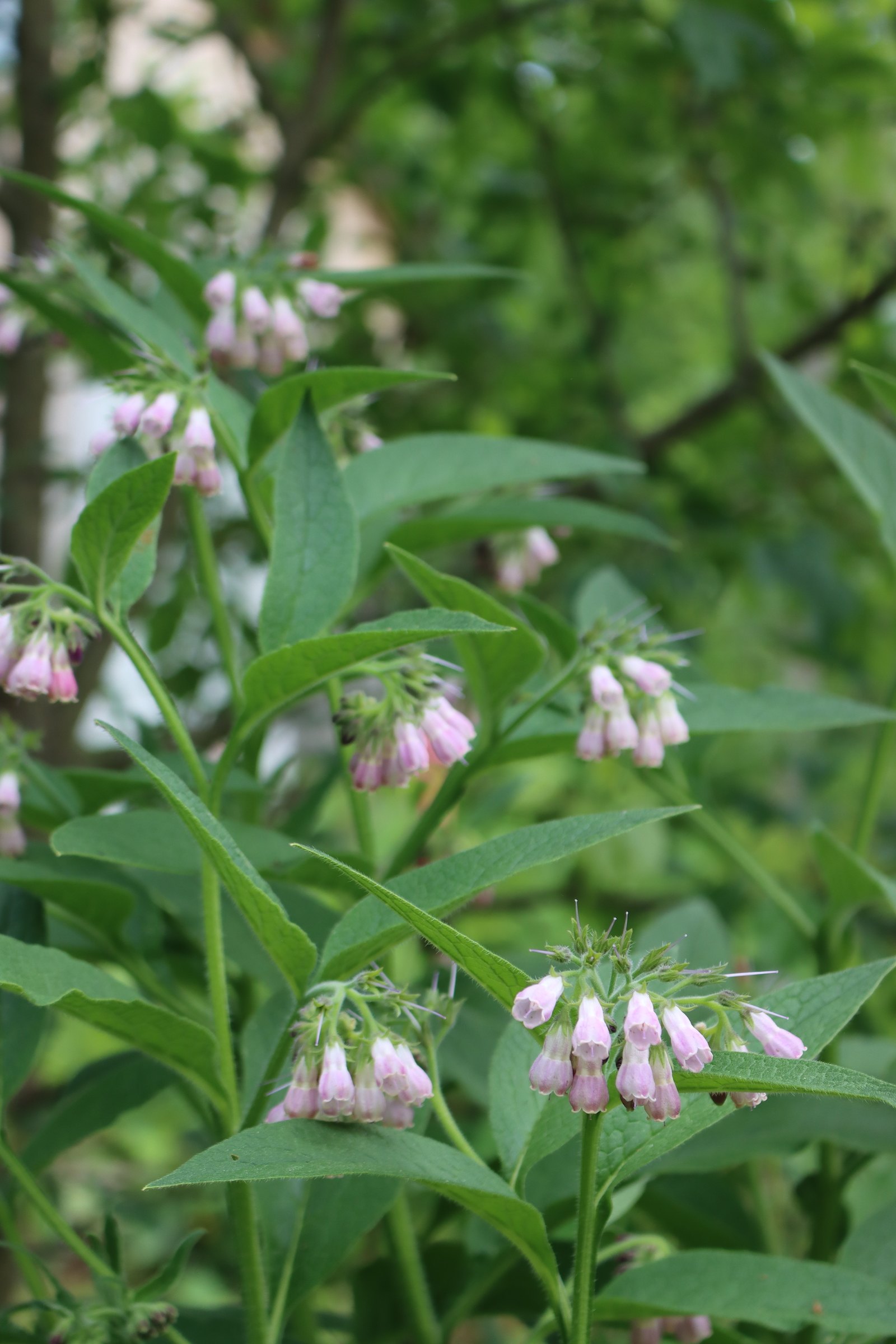
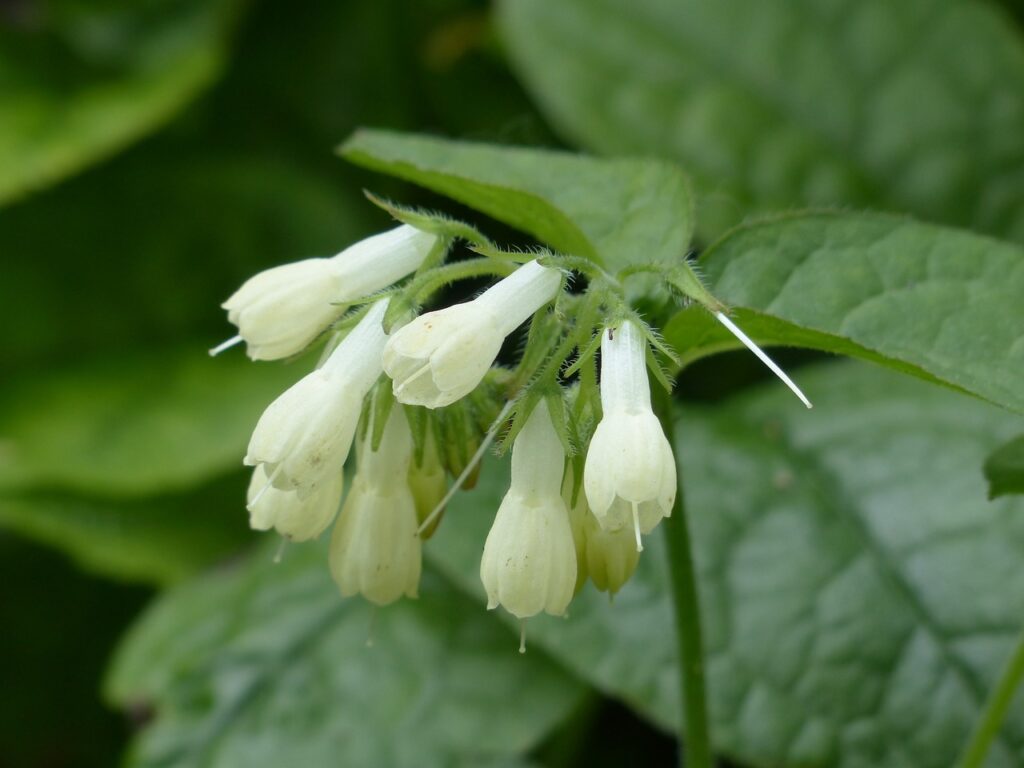
Between May and July, Comfrey produces drooping clusters of bell-shaped flowers. The flowers are usually less than ½ inch long and have five shallow lobes. Their stalks and calyxes are covered in bristly hairs.
Depending on the species and cultivar, Comfrey flowers may be cream, yellowish, pink, purple, pinkish-purple, or blue. We find them usually with purple/pink flowers, but other colors aren’t impossible. They’re a favorite of bumblebees and honeybees, and the plant earns its spot in my roundup of 30+ medicinal flowers worth growing for both the pollinators and the apothecary.
Comfrey Roots
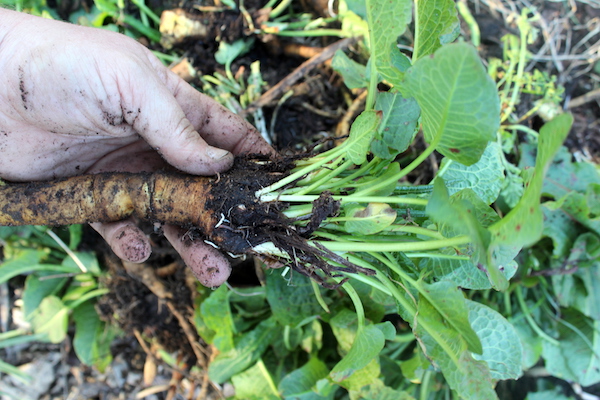
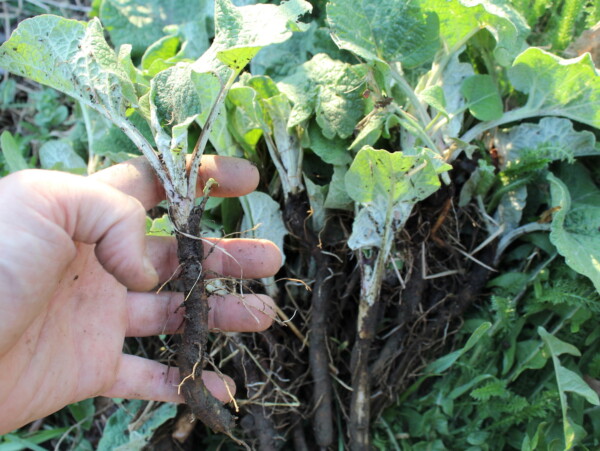
Comfrey has large, stout taproots that, in some cases, can grow to be 6 feet long. The thick roots are white on the inside and covered with black bark. Comfrey is easy to propagate by root sections, and tilling, flooding, or other root disturbances can easily dislodge root sections and spread the plant.
Comfrey Look-Alikes
Comfrey is easy to confuse with another member of the Borage family, Southern Wild Comfrey (Andersonglossum virginianum). However, you can differentiate the two in the following ways:
- Southern Wild Comfrey grows in upland forests and other shady areas.
- Southern Wild Comfrey grows 1 to 2 feet tall.
- Southern Wild Comfrey has oval leaves at the base and a few sparse lance-shaped leaves on the flowering stem.
- The top of the flowering stem is bare of leaves and has a couple of branches with clusters of nodding flowers.
- The leaves and stems of Southern Wild Comfrey are moderately hairy but not as rough and bristly as Comfrey.
Comfrey is also mistaken for toxic, young Foxglove (Digitalis purpurea) plants. Here’s how you can tell them apart.
- Foxglove leaves are covered in gray-white pubescent and glandular hairs, giving them a soft, wooly texture.
- Foxglove leaves form a tight basal rosette in the plant’s first year and feature barely noticeable rounded teeth on the margins.
- The leaves are arranged spirally on the plant’s flowering stem in Foxglove’s second year.
- Foxglove produces a long, showy spike of flowers.
- Each Foxglove flower is 1 ½ to 2 ½ inches long and features dark spots inside the lower lip.
- Foxglove does not have a large taproot.
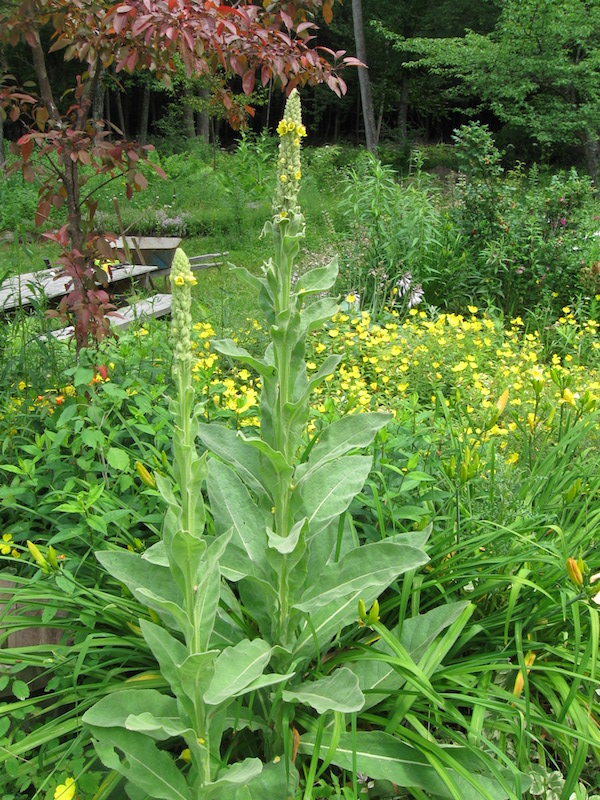
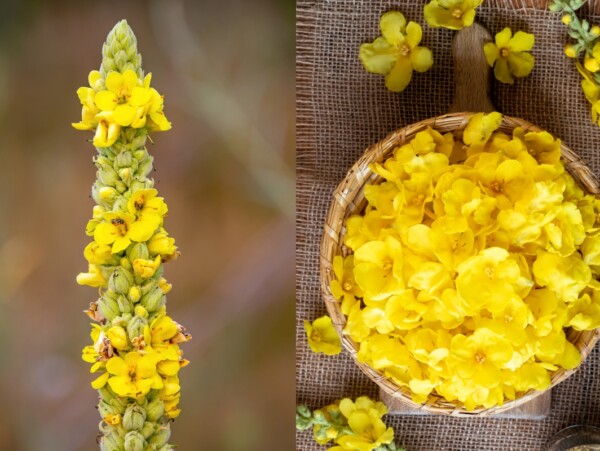
Lastly, Comfrey can be confused with another herbal ally, Common Mullein (Verbascum thapsus). However, it too differs in a few easy-to-spot ways:
- Mullein leaves are densely covered in white hairs, soft to the touch, and occasionally look almost silver due to the hairs.
- Mullein’s lower leaves are often large, up to 20 inches long.
- Mullein leaves are arranged spirally on the plant’s flowering stem.
- Mullein has symmetrical, five-petaled, saucer-shaped flowers that form on a tall flower spike.
Ways to Use Comfrey
Comfrey is a remarkable plant for minor wounds, sprains, arthritis, and other aches and pains. Even if you’re a beginner herbalist, it’s easy to make your own Comfrey salve, ointment, poultice, or balm, and they’re great to have on hand!
If you’re not ready to use your comfrey immediately, the best way to store it is to dehydrate or dry it. You can dry comfrey root pieces, leaves, and flowers for later use in your herbal preparations. You can also powder the dried leaves and use the powder as an amendment for gardens or houseplants.
Herbalists aren’t the only fans of Comfrey. This friendly plant has gathered a large following of permaculturalists as well, who consider the plant to be an excellent bio-accumulator. Comfrey’s large, deep taproots can help break up compacted hardpans and bring nutrients up from deep in the soil. Comfrey plants are particularly rich in potassium and also contain nitrogen and phosphorus, which is part of why I tuck it into fruit tree guilds alongside my other perennial homestead plants.
Trimming Comfrey doesn’t kill it, so you can cut back the entire plant as a “chop and drop” mulch to provide nutrients and mulch in your food forest or other gardens. You can also collect your comfrey cuttings in a bucket to create a wonderful potassium-rich liquid fertilizer to encourage flower and fruit growth. You can also use comfrey leaves to bulk up your compost bin, where they act as a natural accelerator thanks to their high nitrogen content.
You can also use comfrey to feed your livestock. Try giving fresh or dried comfrey to goats, cattle, and chickens. Comfrey flowers are also an excellent food source for honeybees, and they earn a place in my list of pollinator-friendly medicinal herbs. As comfrey spreads readily by seed or root cutting, it’s easy to get a patch going next to your hives.
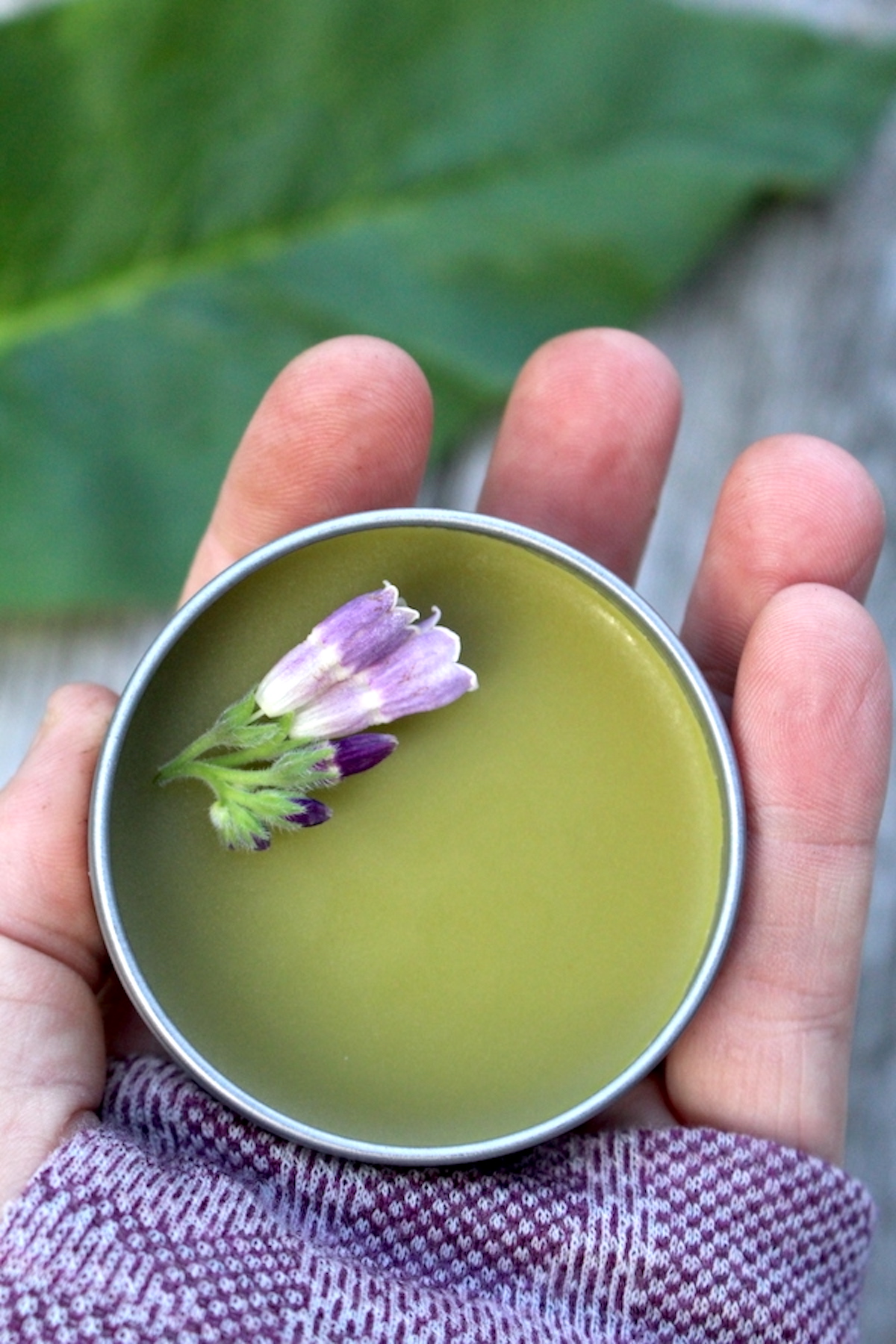
Comfrey Recipes
- Try our easy-to-make Comfrey salve for back pain, sprains, bruises, and fractures. It’s great to have on hand!
- The Herbal Acadamey’s Comfrey Cream recipe is another good choice for similar injuries and soreness.
- If you need Comfrey for quick use, try these Comfrey Poultice instructions from BushFlow Herbals.
- Create an easy-to-use comfrey oil to add to all your favorite skin care recipes with this article from EarthDance.
- Put your comfrey finds to good use in the garden with this Comfrey Fertilizer recipe from the BBC Gardener’s World Magazine.
Comfrey FAQs
Yes, modern herbalists consider comfrey safe for external use on intact skin in salves, oils, and poultices, and several peer-reviewed studies back up its effectiveness for bruises, sprains, and muscle pain. Avoid applying comfrey to deep or open wounds, though, since the allantoin in the plant promotes rapid skin cell growth on the surface and may seal a wound before it’s finished healing underneath. Most herbalists also recommend limiting external use to short courses rather than daily long-term application.
No, we no longer recommend eating comfrey. While comfrey was historically eaten as a green vegetable and brewed into teas, modern research has shown it contains pyrrolizidine alkaloids that can cause liver toxicity, particularly with large doses or repeated use. These compounds are present in both the leaves and roots, with higher concentrations in the roots. Today, comfrey is considered safe for humans only as an external remedy, though it’s still a fine feed for livestock like goats, chickens, and cattle.
Common comfrey can absolutely take over once it’s established, especially in moist soil. It spreads both by seed and by root fragments, so tilling or digging up an established patch will generally just create more plants. If you want the benefits of comfrey without the spread, many homesteaders grow Bocking 14 Russian comfrey, a sterile cultivar that doesn’t set viable seed, though it still spreads slowly through root pieces. Choose your planting spot carefully, because once it’s in, it’s in for good.
Leaves are at their best from late spring through summer when the plant is putting on vigorous new growth, and you can cut comfrey back several times a season without harming it. In fact, frequent cutting encourages more tender new leaves for salves and mulch. For roots, fall is traditionally considered the best time, after the top growth dies back and the plant sends nutrients down into the taproot for winter storage. Flowers can be harvested any time during the bloom period, usually May through July.
Harvest the leaves on a dry day after the morning dew has lifted, then hang them in small bundles in a warm, well-ventilated area out of direct sunlight. You can also spread them on mesh screens or run them through a dehydrator set to 95 to 105°F. The leaves are fully dry when they crumble easily between your fingers and feel papery rather than leathery. Store dried comfrey in labeled glass jars in a cool, dark place and use within a year for best potency.
Foraging Wild Medicine
More Foraging Guides?
Searching for something else? Enter keywords to find whatever you need!











Thank you – I’m trying to figure out if wild comfrey is similarly used as medicine.
Yes, wild comfrey is the same medicinally.
I purchased “Russian” comfrey a couple years ago. Is it usable as a medicinal herb for salves? Or is there a different variety? If I missed that part in here my apologies!
No need to apologize, you didn’t miss it. The post doesn’t get into varieties. Russian comfrey (Symphytum x uplandicum) is just a hybrid of common comfrey and prickly comfrey, and it works for salves the same way common comfrey does. It’s actually the type a lot of people end up with, since it’s the vigorous garden variety that gets sold most often. Both kinds contain allantoin, which is the compound comfrey salves are made for, so you’re all set with what you’ve got. Enjoy!