
Affiliate disclosure: This post may contain affiliate links. Please see our Privacy Policy.
Blackberry wine recipe for a 1-gallon batch of sweet, fruity country wine made from fresh or frozen blackberries. This recipe is adapted from The Home Winemaker’s Companion and produces a beautiful deep-purple dessert wine that pairs well with chocolate cake, cheesecake, or fruit pie a la mode. Use honey instead of sugar to make blackberry mead with the same method.
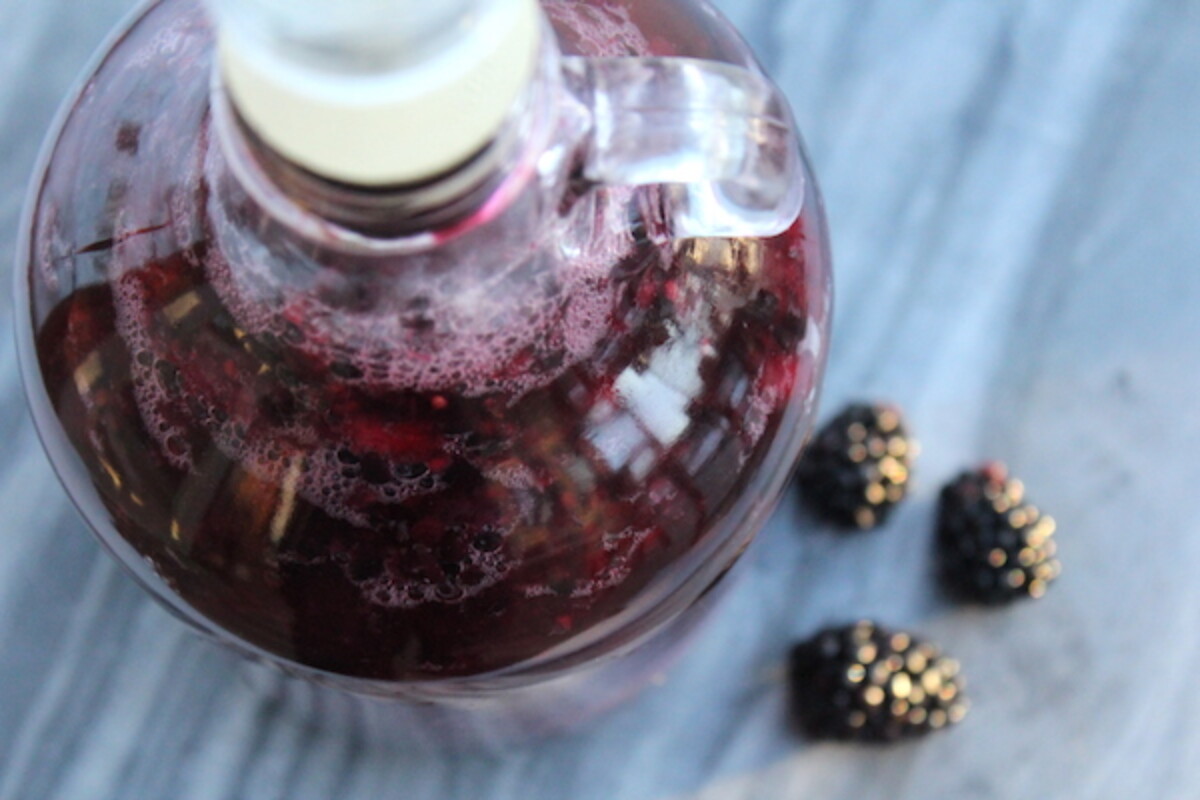
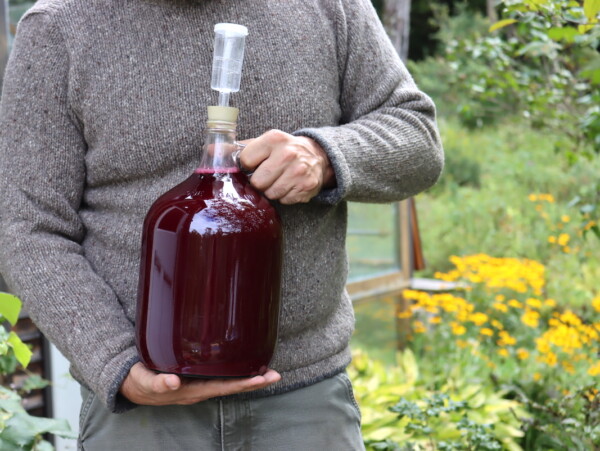
The finished wine takes on a gorgeous deep ruby color from the blackberries’ natural pigments, and develops a rich, jammy flavor through the long aging process. This is a sweeter style of country wine than most fruit wines, so it works beautifully as a dessert wine on its own or alongside something rich and chocolatey. The recipe scales cleanly from 1 gallon up to 5 gallons (or down to a half-gallon or quart batch if you only have a handful of berries on hand).
Wild blackberries grow in tangled hedges along old fields and roadsides across most of the country, and they yield more fruit per hour of picking than just about any other foraged berry (once you accept the inevitable scratches). If you’d rather skip the thorns, frozen cultivated blackberries from the grocery store work just as well, since freezing actually helps break down the cell walls and improves color extraction.
With a big crop on hand, you can also turn the harvest into blackberry jam, blackberry jelly, canned whole blackberries, or blackberry pie filling.
Notes from my Kitchen

Wild blackberries are everywhere here in Vermont, and we grow blackberries in our garden too, so summer always brings buckets of fresh fruit into the kitchen. Most of the crop gets eaten standing right there in the patch, but once the kids’ stomachs are full, what comes home goes into preserving. There’s only so much jam a household can use, so blackberry wine became my go-to project for the bigger harvests.
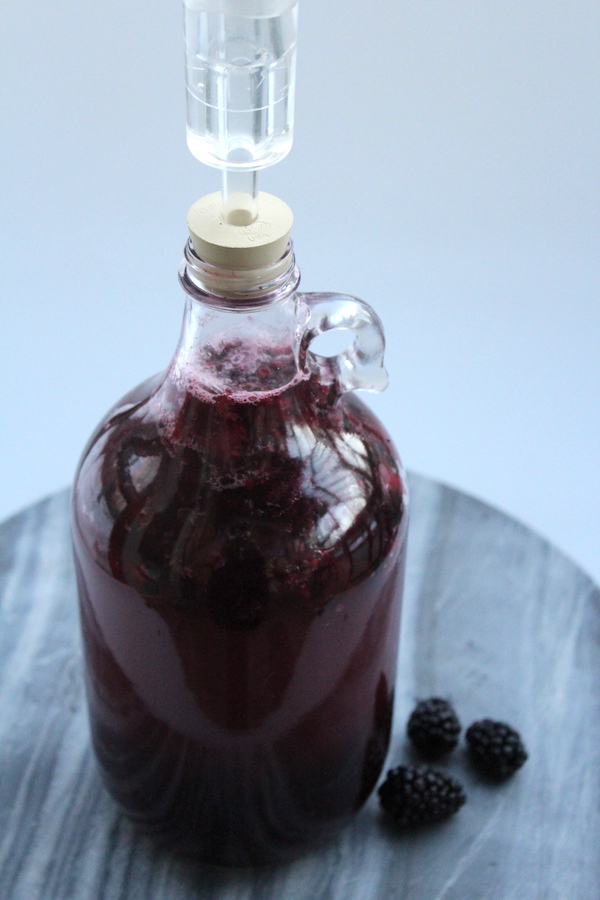
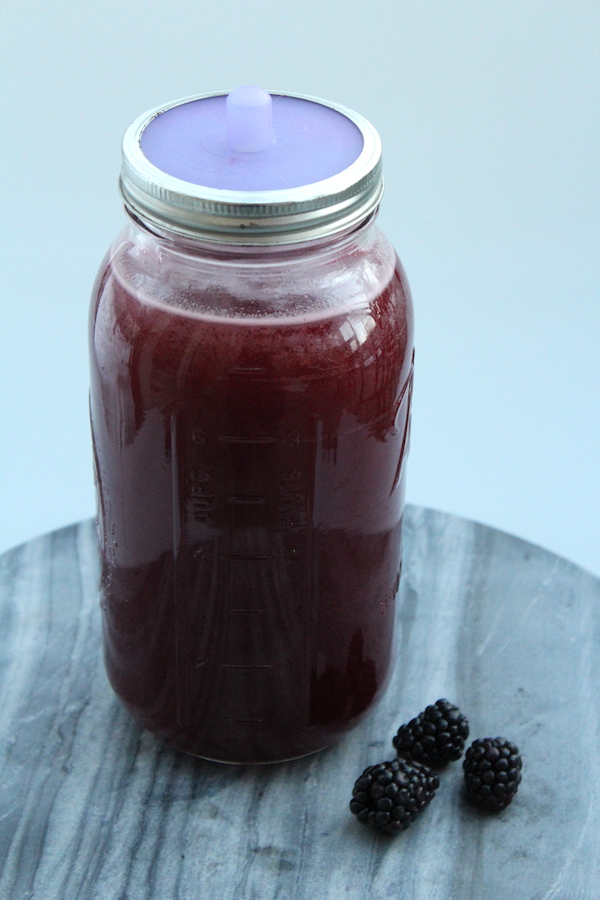
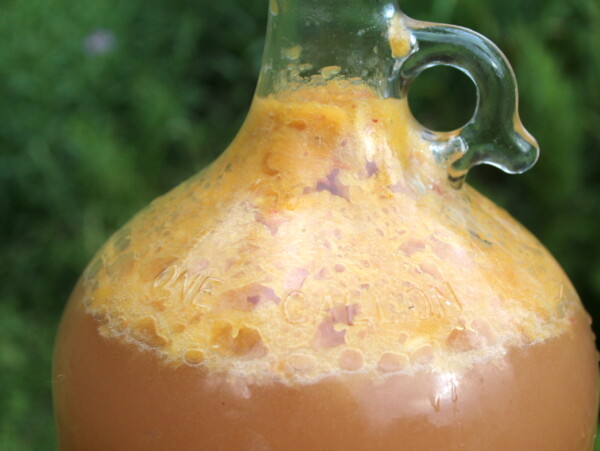
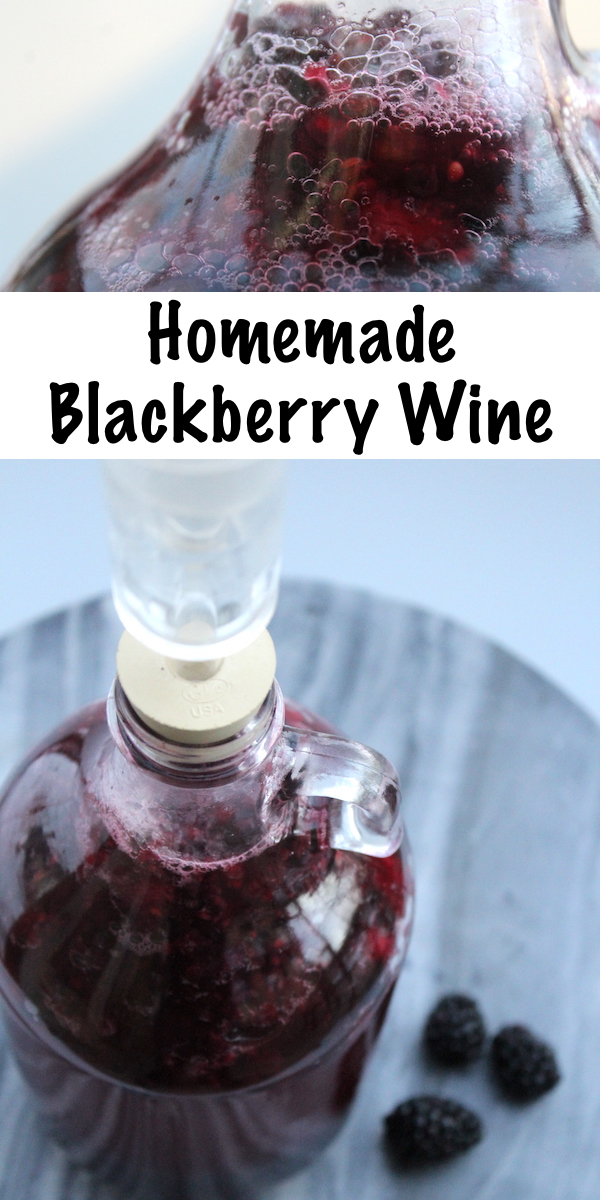
The first time I made this recipe, I learned the hard way that blackberry wine ferments more violently than just about any other fruit wine I’ve worked with. I sealed it in my usual narrow-neck one-gallon jug with a water lock, came back a few hours later, and found the fermenter erupting through the airlock every hour or two like a tiny volcano. I ended up filtering out the fruit early and moving the must into half-gallon mason jars sealed with silicone Mason Tops water locks, which handled the pressure beautifully. Now I always start blackberry wine in a wide-mouth bucket fermenter or a half-gallon jar with a silicone airlock, and only move it to a narrow-neck carboy after the worst of the fermentation has settled down.
I always thought it was best to make a lot so some of it can sit away. They taste so much better after a year. Thanks for the great recipe!
Ingredients for Blackberry Wine
All country winemaking recipes aim to create a balanced fruit wine with enough residual sweetness to be tasty, enough acidity to add bright flavor, and enough tannin for good body and mouthfeel. The fruit brings some of these things, and the other winemaking ingredients balance what the fruit lacks.
- 4 lbs blackberries (fresh or frozen) ~ Provides the primary flavor, color, and most of the tannin. Wild blackberries make exceptional wine because they’re more intensely flavored than cultivated varieties, but cultivated berries from the garden or grocery store work fine too. Frozen blackberries are arguably better than fresh, since the freeze-thaw cycle breaks down the cell walls and improves juice and color extraction during primary fermentation. Don’t heat the fruit to extract juice, since cooked blackberries lose much of the bright fruit character that makes the wine special.
- 2¼ lbs sugar (about 4½ cups) ~ Provides the fuel that yeast convert into alcohol. The sugar is what gets fermented, so the finished wine won’t taste sweet unless you backsweeten at the end or use a yeast that quits before fermenting everything. You cannot use indigestible sugar substitutes like monk fruit, stevia, or Splenda, because the yeast need to actually digest the sugar, not just taste sweetness. For blackberry mead, substitute 3 lbs of honey instead.
- Water, to fill ~ Creates the wine base and dilutes the fruit. Use filtered or spring water if your tap water has a strong chlorine taste, since chlorine can inhibit yeast.
- 1 packet wine yeast ~ A sweet-finishing yeast keeps this wine in dessert-wine territory. See the yeast section below for specific strain recommendations.
- ½ tsp yeast nutrient ~ Wine grapes have all the nutrients yeast need, but country wine fruits are often deficient. Yeast can’t live on sugar alone, and a yeast nutrient gives them the nitrogen and trace minerals they need to ferment cleanly. A quarter pound of raisins works as a substitute (the original recipe in The Home Winemaker’s Companion calls for raisins), but powdered nutrient is more reliable and won’t add raisin flavor to the finished wine.
- 1 tsp acid blend ~ Creates the proper pH environment for yeast to work, and balances the residual sweetness for better flavor. Powdered acid blend gives consistent results, or you can substitute lemon juice (1 tablespoon juice equals 1 teaspoon acid blend). Acid blend is a mix of about 50% malic, 40% citric, and 10% tartaric acid, so if you can source those individually you can also blend them in that ratio.
- ½ tsp pectic enzyme ~ Optional but recommended. Breaks down the natural pectin in fruit that would otherwise cloud the wine. Blackberries are moderately high in pectin, so the enzyme makes a real difference in the clarity of the finished wine. Skip it if you don’t have it on hand and don’t mind a slightly cloudy wine.
- ¼ tsp tannin powder ~ Adds structure, mouthfeel, and aging potential. Most of the tannin in blackberries lives in the seeds, and a small dose of wine tannin powder helps round out the body of the finished wine. You can substitute a strong cup of plain black tea (about 1 tea bag steeped for 5 minutes in ¼ cup hot water) if you don’t have tannin powder.
Yeast for Blackberry Wine
The yeast strain you choose has a profound impact on the finished flavor and character. Yeast contribute flavor esters as they ferment, and alcohol tolerance determines both final alcohol percentage and residual sweetness. Because this is a sweet dessert-style wine, look for a yeast with moderate alcohol tolerance that finishes with some residual sugar:
- Lalvin 71B ~ Excellent for fruit wines, particularly berry wines. It softens malic acid, brings out fruit-forward esters, and finishes with a touch of residual sweetness that suits this dessert-wine profile. This is the strain I reach for most often for blackberry wine.
- Red Star Cote des Blancs ~ A slow-fermenting yeast with a 12-14% alcohol tolerance that finishes sweet. Originally bred for sweet white wines and ciders, it’s a great choice when you want to lock in residual sugar.
- Red Star Premier Blanc ~ A neutral yeast with 15% alcohol tolerance. It will ferment your blackberry wine drier than the two strains above, but it’s economical and reliable. If you choose this one, plan to backsweeten at the end of secondary.
One packet treats up to 5 gallons, so for a one-gallon batch you only need about 1 teaspoon of dry yeast. You can pitch a whole packet on a 1-gallon batch (it speeds things up but produces an even more violent primary), or use about 1/4 of the packet and store the rest for your next batch. Never use bread yeast for winemaking. It will make your wine taste like bread, and it only tolerates about 5% alcohol before stalling out.
Equipment for Blackberry Wine
In addition to ingredients, you’ll need some basic winemaking equipment:
- Wide-mouth bucket fermenter or a wide-mouth gallon jar with a silicone water lock for primary fermentation (this is a hard requirement for this recipe, since blackberry wine ferments too violently for a narrow-neck airlock at the start)
- One-gallon glass carboy with airlock for secondary fermentation
- Auto-siphon or racking cane for transferring wine without disturbing sediment
- Wine bottles, corks, and a bottle corker (or flip-top Grolsch bottles if you want to skip the corker)
- No-rinse brewing sanitizer for cleaning all your equipment before you start
The wide-mouth fermenter for primary is non-negotiable here. Blackberry wine ferments harder than almost any other fruit wine I’ve made, and a narrow-neck carboy with a standard airlock will absolutely overflow into the airlock within hours of pitching the yeast. Save yourself a sticky purple cleanup and start in something open or with a high-volume relief setup.
How to Make Blackberry Wine
The process follows the same basic method as any small-batch fruit wine, with a longer secondary and bottle aging cycle than most fruit wines because of how the original Home Winemaker’s Companion recipe is structured. If this is your first batch, work through my beginner’s guide to making homemade wine first. For the mead variation, see my guide on how to make mead.
Preparing the Blackberries
Sort through the blackberries to remove stems, leaves, and any obviously moldy or under-ripe fruit. Rinse them in cold water if they need it, but a quick check is usually enough for clean cultivated berries. Frozen blackberries can go straight from the freezer into the fermenter, since freeze-thaw helps break down the fruit’s cell walls.
Crush the berries by hand or with a potato masher in your primary fermenter. Don’t blend or food-process the fruit, since that pulverizes the seeds and releases bitter, astringent compounds into the wine. The goal is to break the skins and release the juice while keeping the seeds intact.
Mixing the Must
Add the sugar to the crushed blackberries in the primary fermenter and mash everything together so the sugar coats the fruit. Bring 1 quart of water to a boil on the stovetop, then pour it over the blackberries and sugar. Stir until the sugar dissolves completely.
Let the mixture cool to about 70°F (room temperature). Add the acid blend, pectic enzyme, yeast nutrient, and tannin powder. Top up with cool water to fill the fermenter to a one-gallon working volume, leaving headspace for the violent primary fermentation that’s about to start.
Pitching the Yeast
Once the must is at room temperature (below 90°F), rehydrate the wine yeast in a small amount of room-temperature water for about 10 minutes before adding it to the fermenter. Stir gently to incorporate.
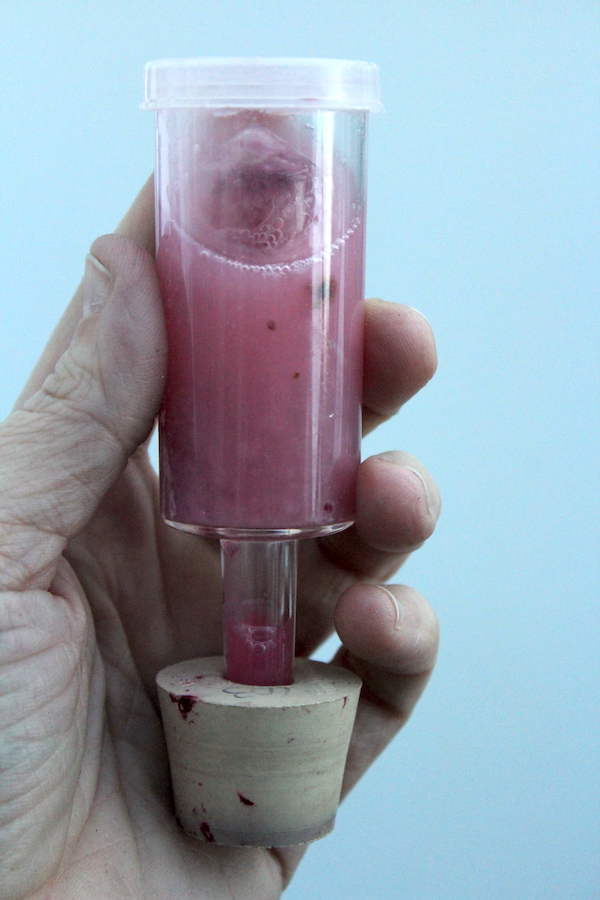
For primary, either leave the fermenter open and cover it with a clean towel, or seal it with a wide-mouth silicone water lock that can vent pressure quickly. Do not seal blackberry wine with a standard narrow-neck airlock for primary fermentation. It will overflow.
Primary Fermentation
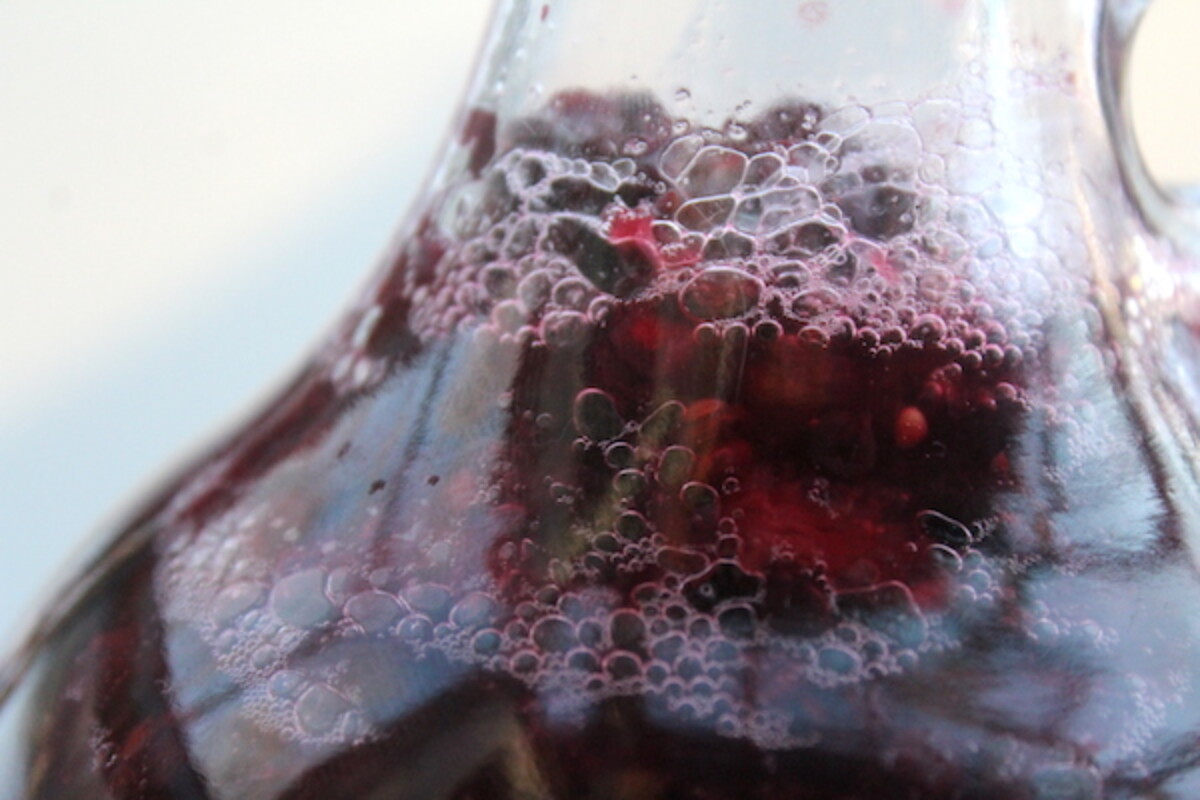
Within a few hours of pitching the yeast, the must should start bubbling vigorously. Stir the must once a day for 5 to 7 days to keep the fruit submerged and prevent any cap from drying out on top. The most aggressive fermentation tapers off after the first few days, but the wine will keep working all week.
Racking to Secondary
After about a week, when the most violent fermentation has slowed, siphon the wine off the fruit and into a clean one-gallon glass carboy. Leave the spent fruit and any sediment behind. Stirring up the sediment causes off-flavors in the finished wine, so move slowly and keep the siphon hose above the layer of fines at the bottom.
Top up with cool water if needed to bring the level to the neck of the carboy and seal with a standard airlock. By this point primary is calm enough that a regular airlock won’t overflow. Move the wine to a cool, dark spot and let it ferment in secondary for about 3 months, then rack again into another clean carboy and let it sit for an additional 8 to 12 months before bottling.
The extended secondary cycle is unusual for fruit wines, and it’s what gives this recipe its dessert-wine character. The long aging on the lees pulls out a richer, more complex flavor than a 6-week secondary would. For blackberry mead, plan on similar timing or longer, since honey ferments more slowly than table sugar.
Bottling and Aging
Taste the wine before bottling. If you used a sweet-finishing yeast, the wine should already have some residual sweetness. If it tastes too dry, this is the point where you’d backsweeten by stabilizing first with a Campden tablet and ½ teaspoon potassium sorbate, waiting 24 to 48 hours, then stirring in a simple syrup of equal parts sugar and water to taste. Let the stabilized wine rest for another week before bottling to make sure fermentation doesn’t restart.
Siphon the finished wine into clean bottles and cork or cap. Store upright for 24 hours so the corks can fully seat, then lay the bottles on their sides for aging. Plan on at least 6 months of bottle aging before opening, and ideally longer. The full timeline from crushing fruit to first taste is about 18 months, which is why I usually wish I’d made a 5-gallon batch instead of a 1-gallon one.
Tips for Blackberry Wine
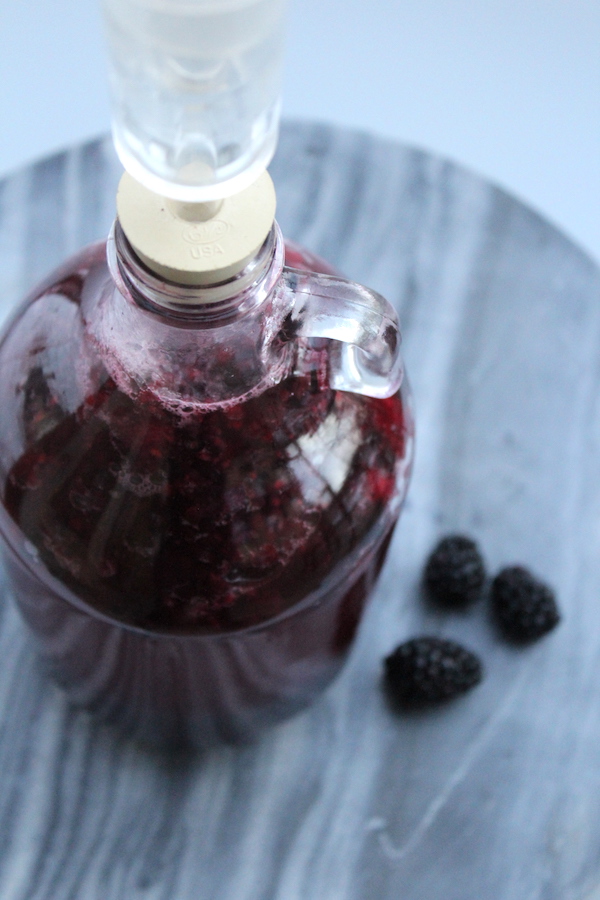
- Plan for the violent ferment. Blackberry wine ferments harder than just about any other fruit wine. Always start in a wide-mouth bucket or jar covered with a towel, or use a silicone Mason Tops water lock that vents pressure freely. A standard narrow-neck airlock will overflow within hours.
- Frozen fruit is a feature, not a compromise. The freeze-thaw cycle pops blackberry cell walls and improves color and flavor extraction. If you’re working with fresh berries, freezing and thawing them before crushing actually gives a better-extracted wine than starting with fresh fruit.
- Don’t crush the seeds. Hand-crushing or a gentle pass with a potato masher is enough to break the skins. Skip the food processor or blender, since cracked seeds release bitter, astringent compounds that carry into the finished wine.
- Substitute black tea for tannin powder. If you don’t have tannin powder, brew a strong cup of plain black tea (1 tea bag steeped 5 minutes in ¼ cup hot water) and add it with the other ingredients. This is also a good move if you find the tannin powder makes the wine taste astringent during aging.
- Scale up to a 5-gallon batch. All ingredients except the yeast scale linearly. One yeast packet handles up to 5 gallons, and bigger batches mean you’ll have plenty to give away after the long aging cycle.
- Try the mead version. Substituting 3 pounds of honey for the sugar produces blackberry mead, which has a softer, more floral character than the wine. Like other honey-based ferments, expect a longer secondary and longer overall aging time.
- Pair with similar berry wines. If you enjoy blackberry wine, you’ll probably like other deep-fruit country wines too. Raspberry wine, elderberry wine, blueberry wine, and aronia wine all share that intense fruit character.
Frequently Asked Questions
Plan on about 18 months from start to first taste. The recipe calls for one week in primary, three months in secondary, another 8 to 12 months on the lees after the second racking, and a minimum of 6 months bottle aging after that. The long aging cycle is what gives this wine its rich dessert-wine character. You can technically taste it earlier, but the flavor improves dramatically with patience.
Yes, and many home winemakers actually prefer frozen fruit. The freeze-thaw cycle breaks down the cell walls in blackberries, which improves color and flavor extraction during primary fermentation. There’s no need to fully thaw the fruit before crushing.
Lemon juice is the simplest substitute. Use 1 tablespoon of lemon juice for every 1 teaspoon of acid blend the recipe calls for, so 1 tablespoon total for this recipe. Acid blend is a mix of about 50 percent malic, 40 percent citric, and 10 percent tartaric acid, so if you can source those individually you can blend them in that ratio for an even closer match.
Blackberries are unusually rich in fermentable sugars and yeast nutrients, which produces a more aggressive primary than most fruit wines. This is normal and not a problem, but it does mean blackberry wine will overflow a standard narrow-neck airlock. Always start primary in a wide-mouth fermenter or use a silicone Mason Tops water lock that can vent pressure freely.
Yes. All ingredients except the yeast scale linearly, so multiply everything by 5 for a 5-gallon batch. A single yeast packet treats up to 5 gallons, so you only need one packet regardless of batch size between 1 and 5 gallons. For batches larger than 5 gallons, use additional yeast packets at the same 1-per-5-gallon ratio.
Winemaking Recipes
If you tried this Blackberry Wine recipe, or any other recipe on Practical Self Reliance, leave a ⭐ star rating and let me know what you think in the 📝 comments below!
And make sure you stay in touch with me by following on social media!
Blackberry Wine
Ingredients
- 4 lbs blackberries, fresh or frozen
- 2 1/4 lbs sugar, about 4 1/2 cups
- 1/4 tsp tannin powder
- 1 tsp acid blend
- 1/2 tsp Pectic Enzyme
- 1/2 tsp yeast nutrient
- 1 packet wine yeast, preferably sweet wine yeast
- water to fill
- Optional: 1 Campden tablet + ½ tsp potassium sorbate (for backsweetening only)
Instructions
- Sanitize all equipment.
- Smash blackberries and sugar together in a primary fermentation container.
- Bring 1 quart of water to a boil and pour over the blackberries and sugar. Stir to dissolve the sugar.
- Allow the mixture to cool to around 70 degrees and add the remaining ingredients, adding enough water to fill your 1-gallon fermenter.
- Seal the fermenter with a blow off tube (this ferments a bit violently for a water lock) or leave open for the first part of the primary ferment, just covered with a towel. Stir the mixture daily for 5-7 days until the most vigorous fermentation is complete.
- After about a week, wrack the blackberry wine into a glass carboy (narrow neck) and seal with a water lock. Allow the mixture to ferment for about 3 months before racking again.
- At this point, allow the mixture to ferment for 8-12 months before bottling.
- Allow the blackberry wine to bottle age at least 6 months before tasting.
Notes
Nutrition
Nutrition information is automatically calculated, so should only be used as an approximation.
Ways to Preserve Blackberries
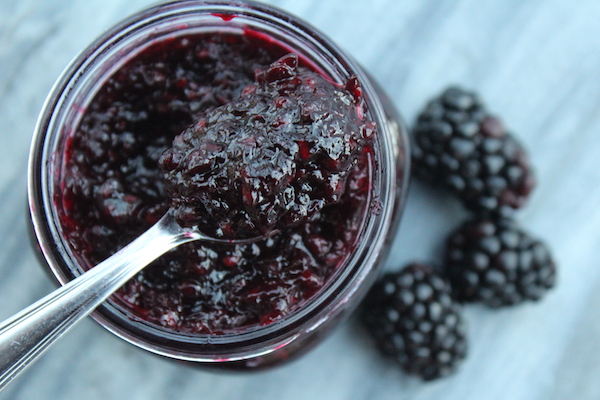
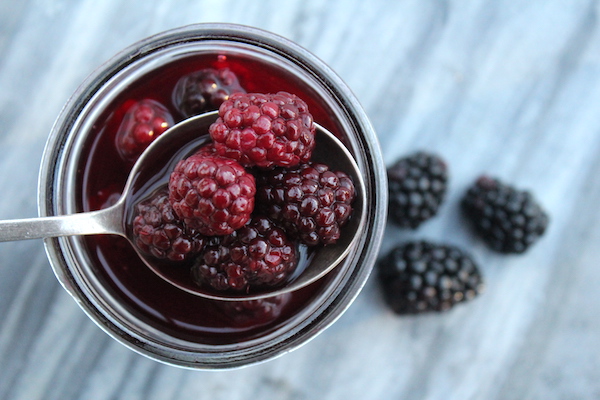
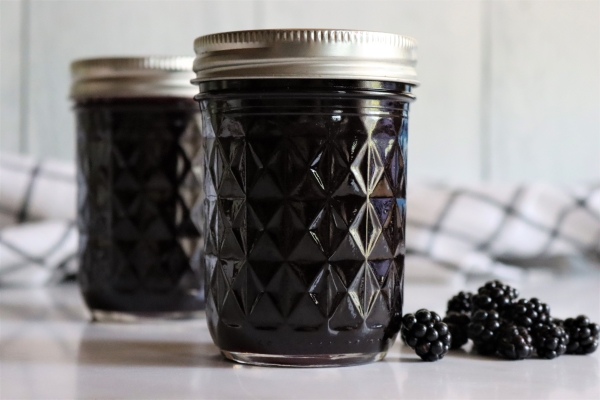
Once you’ve started a batch, you’ll have a long wait before the first taste. To fill the time, work through more homemade wine recipes or mead recipes on the site. If you’ve still got blackberries on hand and want a faster preservation project, head over to my full guide on preserving blackberries or browse the blackberry canning recipes on Creative Canning.
Find the perfect recipe
Searching for something else? Enter keywords to find the perfect recipe!









Will adding campden tablets to this affect the recipe?
You can add Camden tablets to stop the fermentation and stabilize the wine before bottling. I personally prefer not to add any stabilizers to keep it as natural as possible.
Hi Ashley! Just wondering if you know about how much water you’re adding per gallon I have been following your recipes and have started my wines in a large crock for the primary so there’s plenty of space for bubbling!!
It really just depends. If you have another container that is a gallon then you could maybe measure everything out in that container to be sure that you have a gallon and then add it to your crock for the fermentation.
Can I use this recipe for Raspberry wine?
Yes!
Is it normal for my initial ferment in bucket to stop after only 3 days
No, it should really still be going, but it can be hard to see if it’s in a bucket. It goes really hard and fast for a few days, then really slows down. My guess is it’s still working, but much slower than it was the first few days.
Can I use black tea instead of tannic powder? And can I use lemons instead of the pectic enzyme?
The pectic enzyme is just a cosmetic thing. It breaks apart the pectin in the fruit so the wine will clear. If you don’t have it, you can just skip it (lemons aren’t a sub for that). For the tannin powder, yes, you can use a cup of strongly brewed black tea in place of that. Just make a cup of tea (like lipton), let it cool, remove the tea bag and put it in with everything else.
What should i do if initial ferment seems to stop after a couple of days
Try what they suggest here on this troubleshooting guide: https://www.midwestsupplies.com/blogs/bottled-knowledge/how-do-i-fix-a-stuck-fermentation
After the initial fermentation and after racking, When topping off the narrow neck bottle, what ratio of sugar water should I use?
You really shouldn’t need to top it off but if you choose to do so most people prefer to use the same juice that the wine was made from or adding a finished wine. Putting sugar in the wine while it is still in the fermentation process will cause the fermentation to get much more active.
I really want to try to make wine for the first time. What kind of equipment is needed for a 5 gallo batch? Google searches are not helping and for some reason, I just trust you. I can FEEEL the good vibes through the screen lol.
This post for a 1 gallon batch of apple wine lists all of the equipment that you need. The equipment is the same for a 5 gallon batch but you just need a larger fermentation vessel.
Thanks for the reply. I just moved them all to the bigger freezer, and it feels like I have close to 10 lbs of berries. Time to syrup, cobbler, AND wine! 🤗
Anything I make that erupts like blackberries takes special care. I allways use something bigger so the foam cant make it to the top. A bucket works good or a large wide mouth jar. Or my 7 gallon open top fermentater. I allways thought it was best to make alot so some of it can sit away. They taste so much better after a year.
When racking, especially from secondary to tirsherary, I will lose space in my carboy. I know air and light are killers. What do I back fill with? A red? If so what grape?
When I make grape wine I use only a 1/2 tsp (2.8 grams) per 5 gallons at 3 different times during the process. 1) on day 1 in the primary fermenter to kill wild yeasts. 2) months later after all the racking is done and I want to age it in bulk for a long period of time (a year or more). 3) a few days before bottling when you rack the last time. If you used 3 grams in 1 gallon after only 9 days… well… I kinda think you were being too cautious.
If you are worried about wild yeasts… make the recipe as above but don’t add the yeast right away.
Instead put all the ingredients (except the yeast) in the primary fermenter ( I just use a 5 gallon food grade bucket with a loose lid) and stir in 1/8th of a teaspoon (in a bit of water) or if you have a scale about 1 gm of MBS to it, put the lid on loose. WAIT 24 HOURS. The next day add the yeast and carry on. You likely won’t need any more MBS after that if you keep things really clean. Anything that touches the wine needs to be very very clean.
The sanitizing action of MBS comes from the solution off-gassing sulfur. The sulfur kills any organism but is short lived. First I clean everything. Then I use a 2.5% solution of MBS (2 teaspoons in 1 liter of water) in a spray bottle to spray all the buckets, tools, bottles, hydrometer, sink etc… (including my hands) and let it all sit for a just a few minutes. Then rinse everything with clean water and you are good to go. As long as the spray bottle keeps tight it will last you a long time. MBS in water open to air will off-gas and become useless. I have never had a grape or any other fruit wine go bad. Cheers.
I use a similar recipe (24 1 gal batches so far). 2 things that really ease the process: use a 2 gal food grade plastic bucket for primary & put the mashed blackberries into a 1 gal nylon paint strainer. I tie the nylon strainer with string & into the bucket with all else. 5-6 days later remove the bag & rack to glass secondary. I also go with about 148 oz fluid only so I get a gallon in secondary 1 about a bottle secondary. The bottle is used for top-up after rackings & as test drinks so you end up with a full gallon. Not to say my way is better, just explaining some things to eliminate straining & get 5 bottles from the batch.
Wine was fermented in canner pot and bottled a week later with air locks. I noticed recipe didn’t call for Sodium Metabisulphite. This is my second time making wine and I didn’t want it to turn into sparkling (like my cider last fall) so I added 3grams of it diluted in water and topped off to prevent yeast from going into second fermentation. I hope I didn’t mess this up. Any suggestions/comments? Do you back sweeten yours? It’s been fermenting for total of 9 days until I added SM and I’d like wine to be sweet. I used sweet wine yeast K1-V1116. Thank you.
I never use stabilizers in my wine, so I’m honestly not sure if 3 grams is right for a gallon. Only fermenting it for 9 days is a bit short though…here’s the timeline I suggested:
Ferment in primary for 1 week, watching for overflows
Secondary for 3 months
rack again and leave for 8 to 12 months
Bottle and age for at least 6 months.
So killing off the yeast after just 9 days will result in a very low alcohol ferment, and the vast majority of the sugar will still be in there. I’m honestly not sure if there’s enough alcohol in there for it to keep, but then again, I’m not sure if that’s strictly required given that you added a stabilizer. I don’t know if it’s possible for it to spoil with that in there…
All around, I’m not sure since you’re doing something I’ve never tried and I’m not sure how it’ll turn out. My best guess is you have a very lightly alcoholic wine, with A LOT of residual sugar. Not my preference, but I wouldn’t necessarily call it messed up either if you were going for a still wine with a lot of sugar remaining.
Give it a bit of time in the bottle to mellow, and then let me know how it tastes, now I’m curious.
Hi Ashley and thank you for your reply. I realized the mistake I made after rereading your instructions that same night. It was late and for some reason I thought wine wasn’t supposed to fizz. I remembered using stabilizer in the past and added it way too early. I’ll let it age and follow racking guidelines. This may be time consuming and expensive grape juice! Sorry, we all have our moments =)
No worries Carole, you have no idea how many batches I’ve fudged at some point in the process. All part of the learning curve. Hope it turns out tasty either way!
Is it normal for a blackberry & sugar water for wine making to have mold build up in the jars
If left long enough it will start to mold. Did you add yeast yet? Blackberries and sugar will of course mold pretty quickly. Extract the juice with sugar, strain and then get the yeast in there. That whole process should only be 24-48 hours, and there shouldn’t be any mold issues in that time.
If you leave the fruit pulp in the primary ferment, after about 2 weeks anything exposed to the air will start to mold. That’s one reason to either filter it out before beginning or be sure to rack the wine over into secondary on time to avoid mold issues.
Is it ok to use a standard enamel canning pot for this?
Yes, you can use whatever pot you want. All you’re doing is bringing the water to a boil before pouring it over the fruit, it doesn’t much matter what container you use in this case.
A little bit over my head, many terms I don’t know, time to grab a dictionary, LoL! The jist of it all seems simple enough. I looked up wine and found you, as acstep in liqueur… so, if made, can this wine be used in lieu of the red wine in blackberry liqueur recipes?
Yes, you can use this in place of red wine in recipes. Sorry about the lingo, winemaking can get complicated…
yes, lol what does rack it mean?
Racking is just moving the mixture into a clean vessel after the primary fermentation is completed for the secondary fermentation. Here is a post on basic winemaking that might help answer some of your questions. https://practicalselfreliance.com/homemade-wine/
I also would prefer to juice my berries first, and then ferment the first stage in a food grade bucket covered with cloth and a rubber band. Does this seem like a viable plan?
Yes indeed. That works just fine too (and likely will be cleaner all around).
At which step do you strain the fruit from the juice?
Recipe looks perfect! Can’t wait to try it….
At which step do you strain the fruit from the juice?
Recipe looks perfect! Can’t wait to try it….
You have a few options…
For a cleaner ferment with less chance of overflows, mash the blackberries in sugar and allow their juices to extract for about 24 hours. Pour the water over it, stir it well and then strain then (before even putting it into the fermenter).
You can also leave the blackberries in during the primary fermentation and strain after the first week or so, which will extract more flavor but also increase the risk of the water lock clogging with fruit. If you do this, really watch it for overflows and clogs, and clear the water lock as necessary.
What do you do with the overflow? I’m on my first day after putting everything in the fermenter. I put it in a bowl in case stuff overflowed the yup in the night, and sure enough I’ve got about half an inch of juice in the bowl. Is that the good stuff or the bad stuff?
Tube. Not yup
I’d love to make wine, but I juiced from all my berries. How much berry juice would i need for the 1 gallon recipe?
I’d love to make wine, but I juiced from all my berries. How much berry juice would i need for the 1 gallon recipe?
Wow, that’s lovely! If you have the juice already you can try making a really strong batch with just under a gallon of juice, leaving enough space for the sugar and other additives. When I used sugar to extract juice, the combined juice/sugar mixture was only about 1/2 gallon so to make something akin to my recipe I’d just use about 1/2 gallon of extracted juice.
I would test the gravity of the juice and at that point you can decide to add more liquid and amount of sugar based on the starting gravity.
Does this blackberry to water ratio make the one dark or light. I like a dark blackberry wine. Wondering if I should increase the amount.