
Affiliate disclosure: This post may contain affiliate links. Please see our Privacy Policy.
Lemon balm recipes are a delicious way to make the most of this prolific summer herb. It always seems to grow faster than I can use it, and by mid-summer a single plant can hand you armloads of fragrant, lemony leaves.
I’m forever hunting for new ways to use mine before the season runs out, everything from cold summer drinks and frozen treats to teas, tinctures, salves, and a few clever uses around the house and garden.
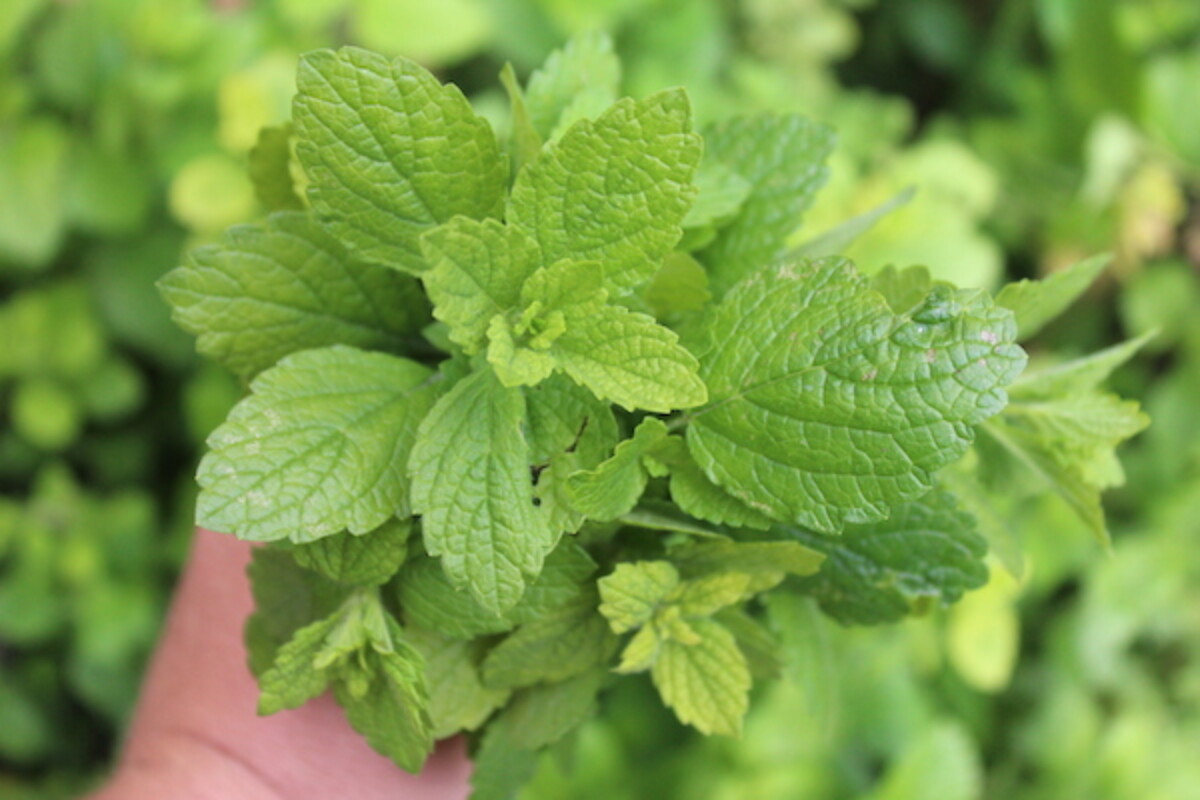
Table of Contents
- Notes from My Homestead
- What is Lemon Balm?
- Harvesting Lemon Balm at Its Peak
- Lemon Balm Drinks and Cocktails
- Frozen Lemon Balm Treats
- Baked Goods Using Lemon Balm
- Savory Lemon Balm Recipes
- Lemon Balm Tea, Fresh and Dried
- Preserving Your Lemon Balm Harvest
- Lemon Balm Herbal Remedies
- Lemon Balm for Skin and Bath
- Lemon Balm for the Homestead and Chickens
- Lemon Balm Around the Home and Garden
- Lemon Balm Crafts and Household Uses
- Lemon Balm Safety and Cautions
- A Note on Thyroid Medication
- Lemon Balm FAQs
- More Ways to Use Garden Herbs
If you grow lemon balm, you already know how generous it gets once summer hits its stride. The good news is that it bends in almost every direction, sweet and savory in the kitchen, refreshing in a cold glass, and calming in the medicine cabinet, so a big harvest is a gift rather than a chore to manage.
The uses below run from a five-minute pitcher of iced tea to a weekend batch of mead, with plenty of ways to preserve the harvest and even a few ideas for the coop and the linen closet, so there’s something here whether you’ve got a free afternoon ahead of you or just a handful of leaves and a hot kettle.
Notes from My Homestead

Every single year, my good intentions for lemon balm collapse into a single use: iced tea. The plant is fresh and fragrant right at the busiest time of the season, and I’ll grab a leaf or two passing the sprawling mass of it in the corner of the garden, promising myself I’ll sit down later and make something special. Then the summer carries on with all its garden commitments, and I never make it past lemon balm iced tea.
So I put this list together for myself as much as for you, a place to plan ahead before the harvest gets away from me. These are the recipes and remedies I keep meaning to make, gathered in one spot so this lovely herb doesn’t linger unused in the kitchen garden one more year.
This post is such a wealth of information. So glad to find so many uses for lemon balm!
What is Lemon Balm?
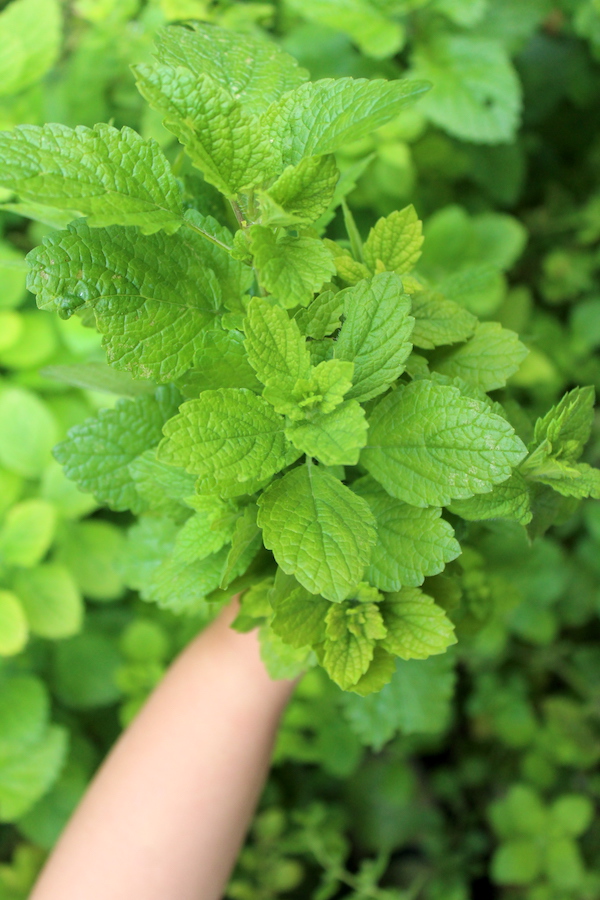
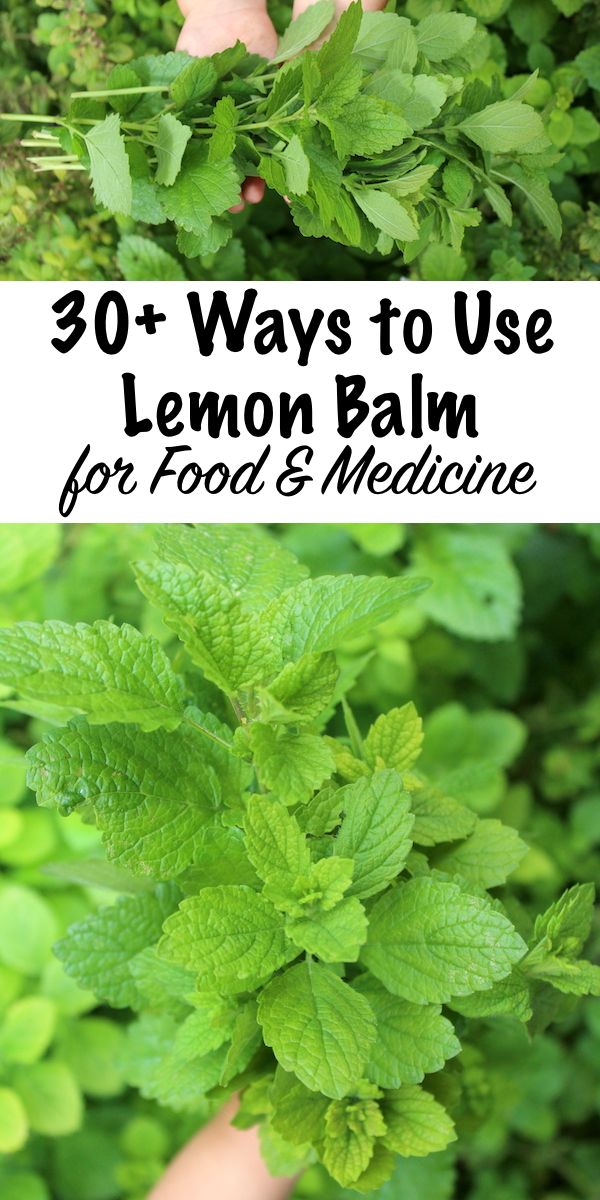
Lemon balm (Melissa officinalis) is a perennial in the mint family, and it behaves like one. Give a small seedling a year or two, and it’ll spread into a big, bushy plant that comes back reliably every spring. The leaves carry a soft lemony fragrance and flavor that’s gentler and more floral than actual lemon, which is exactly what makes it so versatile in the kitchen and the medicine cabinet.
It’s hardy, forgiving, and happy in part shade, so it earns a spot among the easy to grow medicinal herbs for anyone just starting an herb garden. If you don’t have a patch yet, I’ve written up everything I know about how to grow lemon balm from seed or division, and it’s hard to kill once it’s established. A few lemon balm seed packets are all you need to get going.
Lemon balm hits its fullest, most fragrant stride in the heat of high summer, right when the garden is busiest, and the plant is easiest to walk past. That’s the moment to cut it, and a little attention to timing keeps the flavor at its brightest.
Harvesting Lemon Balm at Its Peak
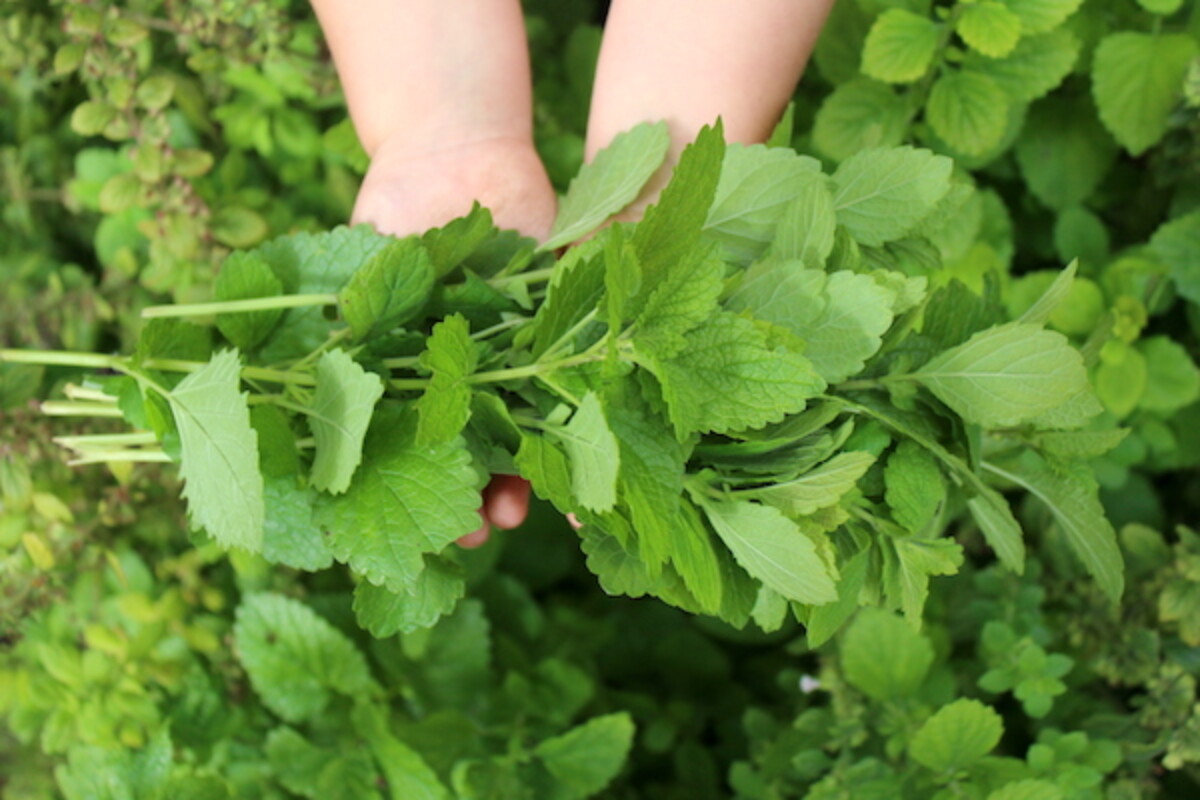
For the brightest lemon flavor, cut lemon balm in the morning after the dew has dried but before the heat of the day, and harvest before the plant sets flowers. A hard cutting back encourages fresh, tender new growth, so you’ll get a second flush to harvest later in the season.
- Fresh: Use within a day or two of cutting, since the leaves wilt and lose fragrance quickly.
- Dried: Hang small bundles or use a dehydrator on low. See my full guide to drying herbs at home for temperatures and timing.
Once you’ve got a basket of fresh leaves on the counter, the hardest part is deciding where to start. I usually reach for a cold drink first, so that’s where this list begins.
Lemon Balm Drinks and Cocktails
A lemon balm drink is almost too obvious to mention, but it’s where most of us start for good reason. The herb is refreshing on its own, and tossing a handful into a cold pitcher just feels like the right thing to do on a hot afternoon. There are plenty of variations to play with, both with and without alcohol.
If you’re heading back out to work in the garden, keep things cold, simple, and non-alcoholic. A jar of iced tea, a spritzer, or a splash of lemon balm cordial in soda water will do more for you than anything that needs a cocktail shaker. These are the ones I keep coming back to.
- Honey & Lemon Balm Spritzer
- Lemon Balm Infused Lemonade
- Lemon Balm Iced Tea
- Lemon Balm Blueberry Smoothie
Fermented and Brewed Lemon Balm Drinks
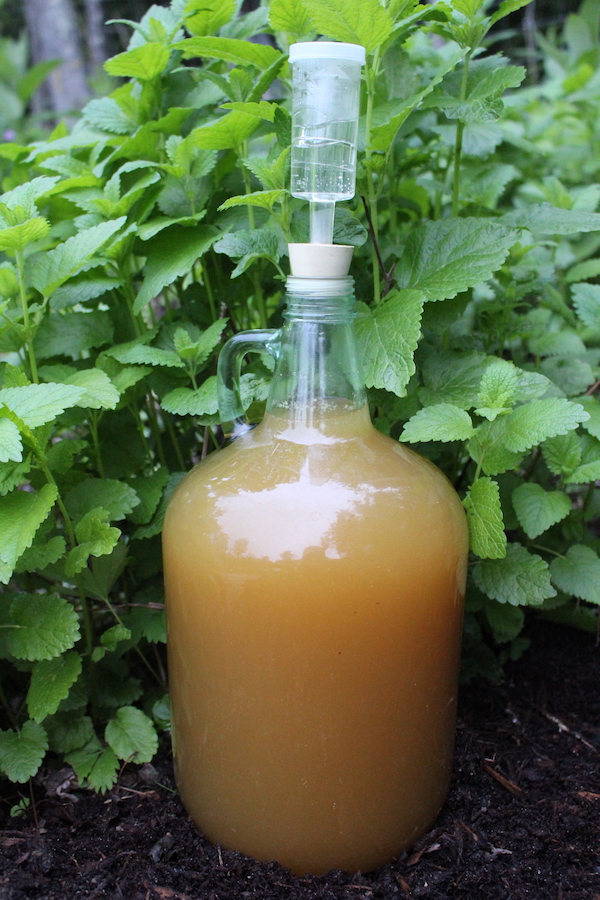
Once you start fermenting, lemon balm opens up a whole second category of drinks. It’s a natural fit in kombucha and shrubs, and it makes a lovely honey wine. My own lemon balm mead is one of the more reliable ways I’ve found to capture that summer fragrance and keep it on the shelf well into winter.
If brewing a full batch of mead feels like a project, a shrub is a gentler entry point. It’s just fruit, vinegar, sugar, and herbs, and it keeps for ages in the fridge to splash into sparkling water all summer.
- Classic Lemonbalm Mead
- Blueberry Lemon Balm Kombucha
- Motherwort & Lemon Balm Mead (or ale)
- Raspberry Lemon Balm Shrub
Lemon Balm Cocktails
Plenty of cocktails lean on herbal notes, and lemon balm slips right into any recipe that calls for mint, basil, or rosemary if you want to soften it with a lemony edge. It’s particularly good muddled into anything bright and citrusy.
Here are a few worth mixing up once the work is done for the day.
- The Beekeepers Balm Cocktail
- Lemon Balm Martini
- Lemon Balm Honeysuckle
- Apricot Mojito with Lemon Balm
- Lemon Balm Julep
- Blackberry Jammin Gin Cocktail with Lemon Balm
Frozen Lemon Balm Treats
Lemon balm is a hot-weather herb, so freezing it into ice cream, sorbet, or popsicles feels like the most natural thing in the world. The flavor pairs beautifully with summer fruit, and a custard base carries that lemony note especially well. There are a lot of directions you can take it.
If you keep an ice cream maker handy, these are the recipes I’ve bookmarked. They range from a rich egg-yolk custard base to lighter, no-egg versions, with a few that fold in roasted blueberries or buttermilk for tang.
- Lemon Balm Ice Cream with Egg Yolk Custard Base
- Lemon Balm and Crème Fraîche Ice Cream
- Lemon Meringue Ice Cream with Lemon Balm
- Roasted Blueberry and Lemon Balm Ice Cream
- Buttermilk Lemon Balm Ice Cream
- Creamy Lemon Balm Gelato
If you’d rather skip the dairy, there are a couple of vegan and dairy-free options too. A honey-sweetened granita is about as easy as frozen treats get, since it needs nothing more than a freezer and a fork.
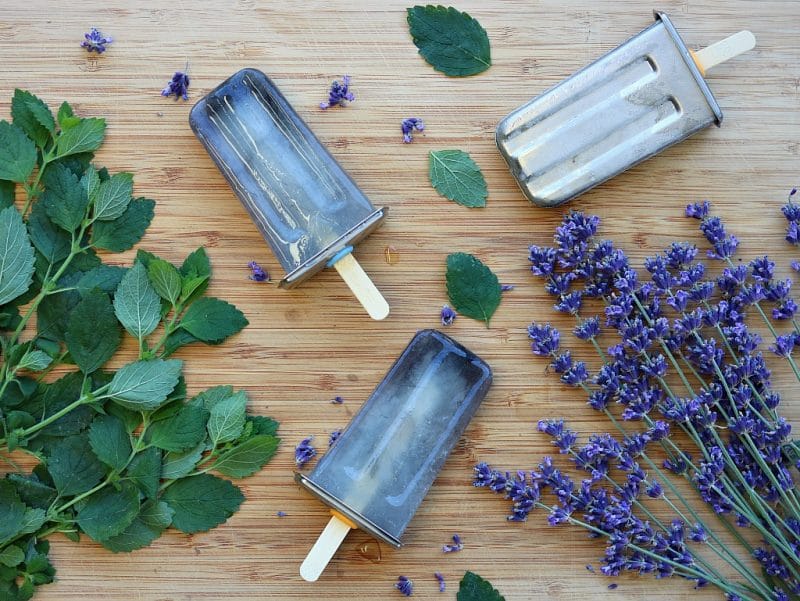
In the thick of the busy season, it’s often simpler to skip the ice cream maker altogether and freeze a batch of herbal popsicles, like these lavender lemon balm herbal popsicles.
I use these same stainless steel popsicle molds and love them. They work wonderfully, and there’s no plastic in contact with your food.
And if you want a herbal sweet treat that doesn’t have to live in the freezer, these herbal lollipops with elderberry and lemon balm are a lovely, kid-friendly option to keep on hand.
Baked Goods Using Lemon Balm
I’ll admit I’m not much for summer baking, but even in high summer we get cool nights here in Vermont, with the thermometer dipping into the 40s on occasion. On those evenings the oven goes back on, and lemon balm baked goods are exactly the kind of thing I want to make.
The lemony flavor works in just about anything you’d brighten with citrus zest. Cookies and shortbread are the simplest entry point, but a bundt cake or a batch of drop biscuits is worth the extra effort when you’ve got the time.
- Lemon Balm Cookies
- Lemon Balm Poppy Seed Cookies
- Lemon Balm Shortbread
- Lemon Balm Bundt Cake
- Lemon Balm Lavender Scones
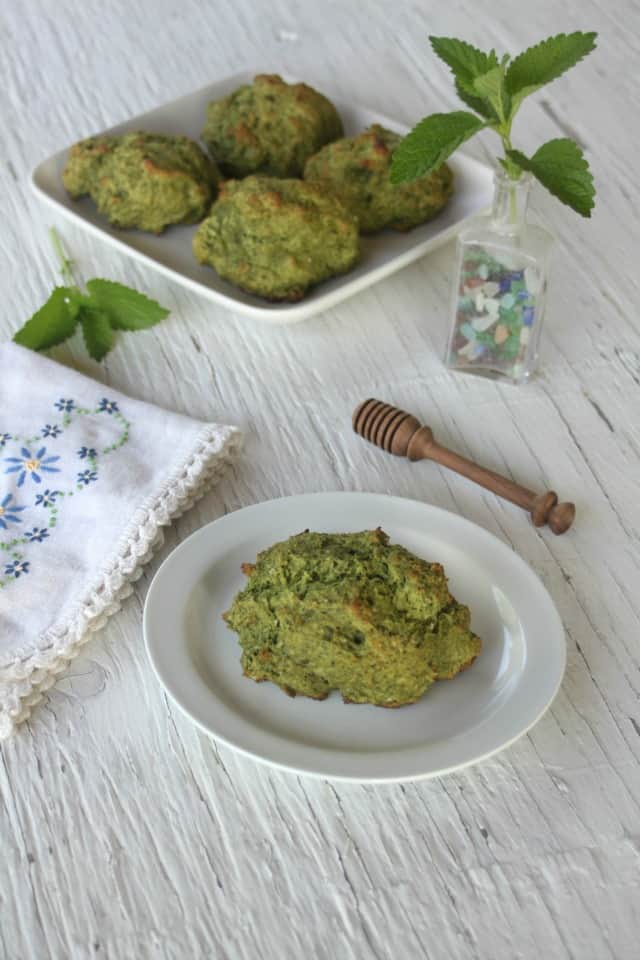
- Lemon Balm Drop Biscuits
Savory Lemon Balm Recipes
Desserts and drinks get all the attention, but I think savory lemon balm uses are badly underrated. One of my readers mentioned chopping the leaves into a green salad with a vinaigrette, and that simple idea has stuck with me ever since. A handful of fresh leaves brightens almost anything you’d use mint or parsley in.
There should be more savory inspiration out there than there is, because you can’t live on ice cream alone, however hard you try. A few cooks have done the work, and these are the recipes I’d start with for a pesto, a summer chicken dish, or a light soup.
Lemon balm also plays well straight from the garden in everyday cooking. Tuck a few sprigs into a chicken cavity before roasting, or fold them into a parchment packet with fish for a light lemon note that won’t overpower the dish. It makes a bright vinaigrette or marinade too, and a handful of leaves whirled into a salsa verde gives roasted vegetables a lemony lift. The flavor is delicate, so add it toward the end of cooking and use a generous hand.
- Lemon Balm Pesto
- Summer Lemon Balm Chicken
- Lemon Balm Zucchini Soup
- Lemon Balm Vinaigrette & Marinade
Lemon Balm Tea, Fresh and Dried
Tea is where lemon balm started for most of us, and it’s still the simplest way to enjoy it. A handful of fresh leaves steeped in just-boiled water makes a gentle, calming cup, hot or iced, and it’s a fine introduction to the herb’s reputation as a relaxing nervine.
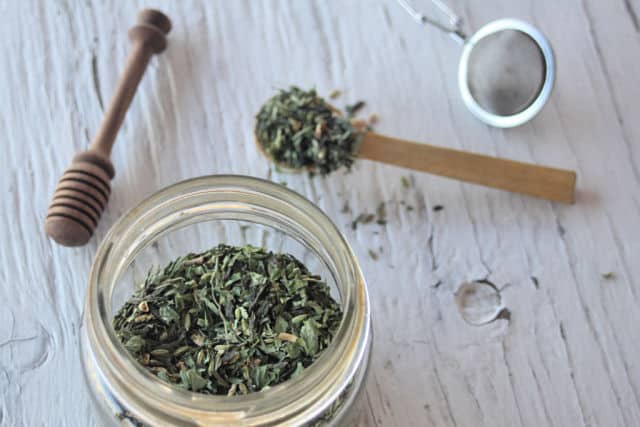
Beyond the fresh-from-the-garden cup, drying lemon balm lets you keep that summery flavor through the winter. Once the weather turns, dried lemon balm makes a comforting hot tea, and it’s a common ingredient in blends for cold and flu season as well as in gentle relaxation blends.
Tuck a jar of dried leaves away, and you’ll be glad of it come January.
Preserving Your Lemon Balm Harvest
Drying is the classic way to hold onto a lemon balm harvest, but it’s far from the only one. When the patch is producing faster than you can brew tea, there are several ways to capture that lemony flavor and carry it through the colder months.
Some of the simplest start in the kitchen. You can pulse the chopped leaves into granulated sugar for a fragrant herb sugar, or dissolve that sugar into water for a quick lemon balm syrup to sweeten lemonade, iced tea, and cocktails. A compound butter is just as easy, mashing finely chopped leaves and a little lemon zest into softened butter, and it freezes beautifully rolled into a log. You can also freeze chopped leaves in ice cube trays with a little water, ready to drop straight into a summer drink.
For longer keeping, reach for vinegar or a canning jar. Packed into a jar and covered with white wine vinegar for a few weeks, lemon balm makes a bright herbal vinegar for dressings and marinades.
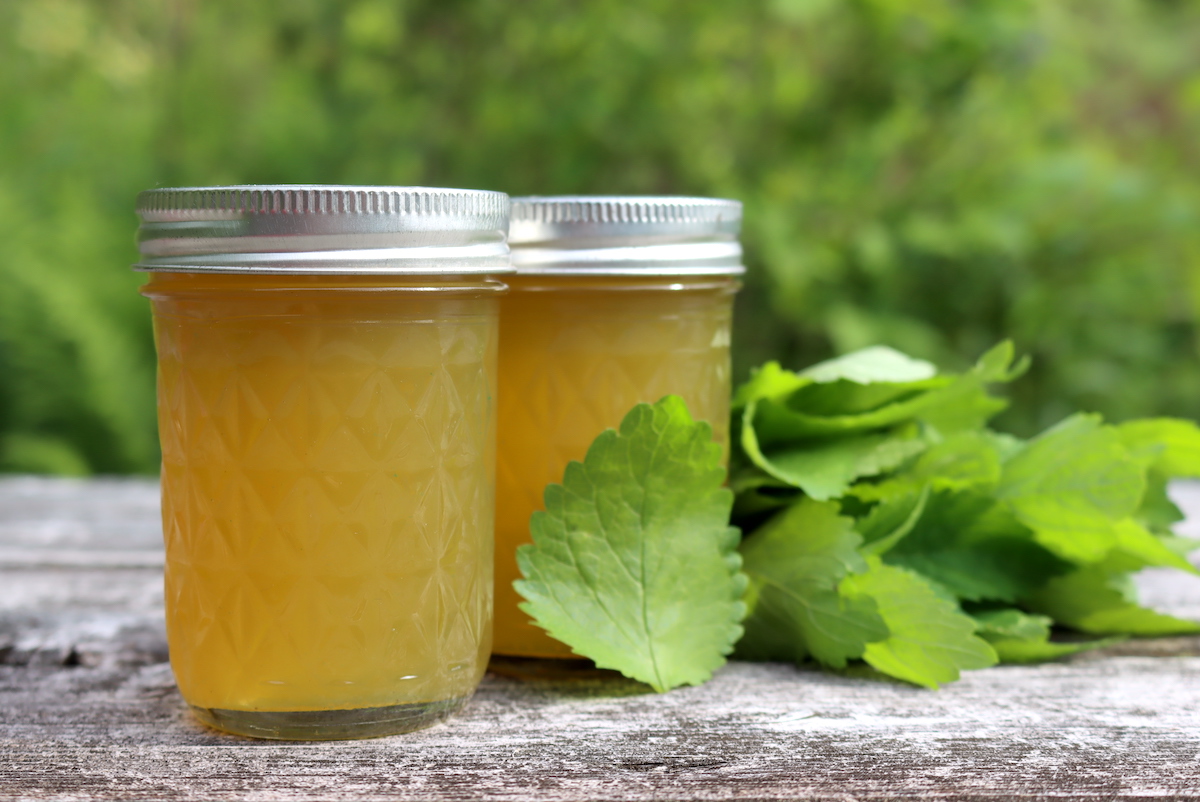
And a canned lemon balm jelly keeps longest of all, setting up with pectin into a soft, pale-gold spread that’s lovely on scones or spooned over goat cheese. It’s a good first herbal jelly, since you’re really just brewing a strong tea and setting it.
Lemon Balm Herbal Remedies
Lemon balm is as much a medicine as it is a flavoring. It’s a relaxing herb that calms the nervous system, which is why it turns up so often in teas and tinctures for stress and sleep, alongside calming companions like chamomile and valerian. Once you have a good harvest, it’s worth putting some up in a form that lasts longer than a cup of tea.
A tincture is the most concentrated way to keep lemon balm on hand year-round. The process is the same as any other, so my guide to making a herbal tincture walks you through the ratios, and you can make an alcohol-free glycerite instead if you’d rather skip the alcohol. For a sweet, syrupy option that’s lovely stirred into tea, lemon balm also infuses beautifully into herbal-infused honey or a tangy herbal oxymel.
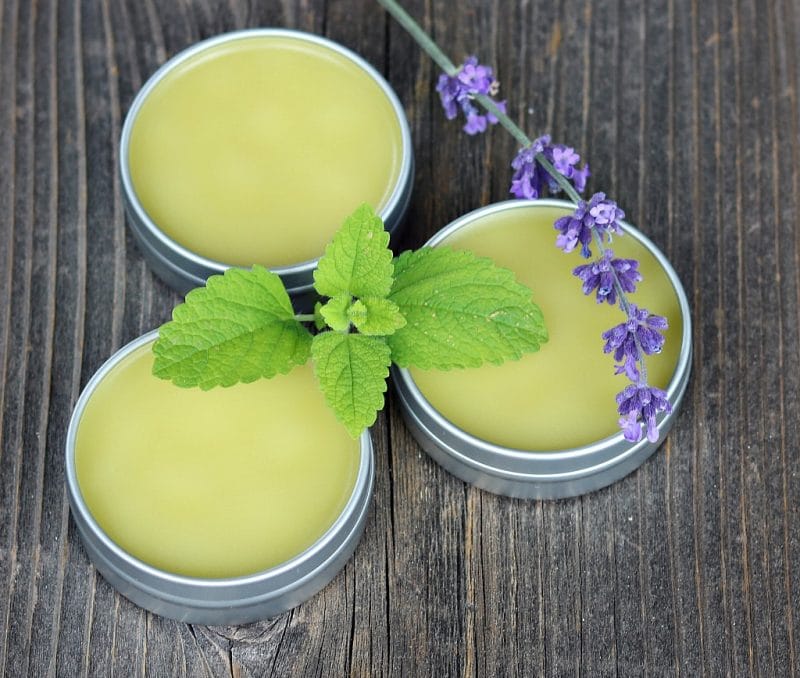
Lemon balm also has a long history in cold sore and cut-and-scrape balms. To make your own, infuse the leaves into oil and stir in beeswax following my herbal healing salve method, starting from a simple herbal infused oil. For more ideas in this direction, my roundups of herbal tincture recipes and herbal salve recipes are good places to browse.
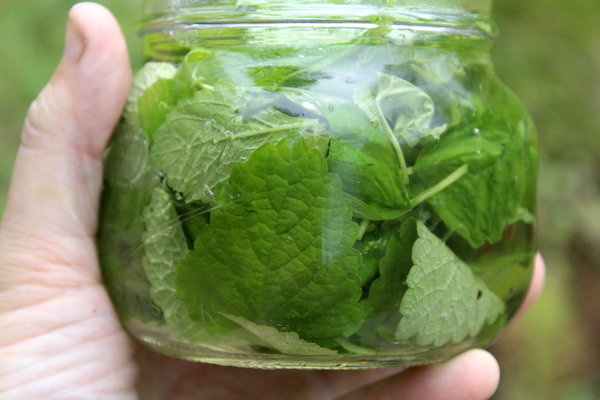
Lemon Balm Benefits
Beyond its subtle relaxing qualities, lemon balm is showing promise in the research for a number of more serious conditions.
- Heart Health: Studies show that lemon balm can improve heart health, by protecting against injury (source) and treat heart arrhythmias (source).
- Diabetes: Lemon balm extracts are effective at reducing blood sugar (source) and they’re being investigated as a preventative agent to help forestall the disease in diabetes-prone individuals (source).
- Concentration & Insomnia: Lemon balm is known for its calming properties, and it’s commonly used to treat insomnia, but studies show that it can also help improve concentration and decrease hyperactivity in school-aged children (source).
Lemon balm is also effective as an anti-microbial, and it’s effective against both bacteria and yeast strains (source). That’s what makes it a common ingredient in cut and scrape balms, as well as cold sore salves, since it’s particularly effective topically against oral herpes outbreaks. It’s a natural anti-inflammatory herb as well, and like other members of the mint family, it’s useful in soothing digestive complaints.
Lemon Balm for Skin and Bath
The same calming, antioxidant qualities that make lemon balm useful in the medicine cabinet carry right over into skincare. The leaves are gentle and soothing, which makes them a natural fit for a few simple at-home spa treatments once you have a good harvest in hand.
A handful of dried leaves dropped into a bowl of just-boiled water makes a relaxing facial steam, the warm water opening your pores while the lemony aroma does its quiet work. Lemon balm is also a classic ingredient in herbal toners, from the old Queen of Hungary’s water that steeps in apple cider vinegar with rose and calendula to simpler single-herb versions for oily or blemish-prone skin.
Because it’s so often used on cold sores, lemon balm turns up in soothing lip balms as well, and a handful of leaves tied into a muslin bath bag, on their own or with rose petals, makes a calming, lightly scented soak. As with any new skincare ingredient, it’s worth testing a little on your skin first to make sure it agrees with you.
- Herbal Facial Steam with Lemon Balm
- Queen of Hungary’s Facial Toner
- Lemon Balm Facial Toner for Oily Skin
- Lemon Balm Lip Balm
- Herbal Bath Soak with Lemon Balm
Lemon Balm for the Homestead and Chickens
If you keep chickens, lemon balm earns a place in the coop as readily as in the kitchen. It’s a traditional nesting box herb, valued by chicken keepers for being calming and pleasantly aromatic, with a reputation among poultry folks for discouraging pests and rodents and helping laying hens settle in to do their work.
The usual approach is to scatter fresh or dried cuttings into the nesting boxes and refresh them as the herbs lose their scent. It sits comfortably alongside lavender, mint, and calendula on most coop-herb lists, and drying a batch at the end of summer means you’ll have some to sprinkle through the winter. It’s an easy way to put a generous harvest to use, and the coop smells like an herb garden for your trouble.
Lemon Balm Around the Home and Garden
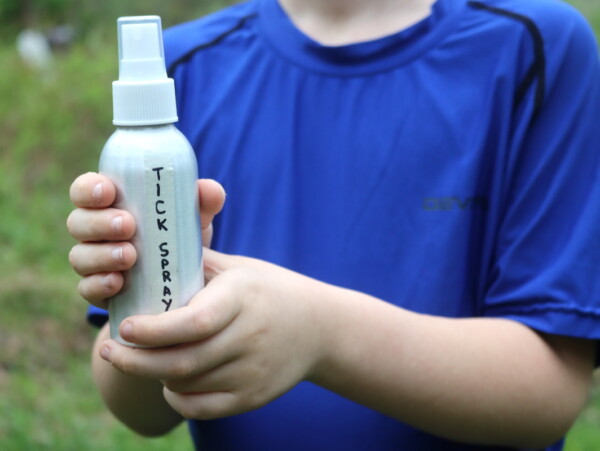
Lemon balm is lovely for people, but insects feel differently about it, mosquitoes most of all. That makes it a natural choice for herbal bug sprays and balms, and it’s worth planting near porches and seating areas to help keep biting insects at bay. It also earns its keep as a soothing skin herb in soaps.
As a flowering member of the mint family, it’s also a big draw for bees, which is exactly why it shows up among pollinator friendly medicinal herbs. Let a little of it flower at the edge of the patch and the pollinators will thank you, even as you harvest the rest of the leaves for the kitchen.
Lemon Balm Crafts and Household Uses
Beyond the kitchen and the medicine cabinet, lemon balm has a long history of more decorative and domestic uses. A few of these are old-fashioned in the best way, the kind of thing our great-grandmothers would have known by heart.
Candied lemon balm leaves are a pretty way to dress up a cake or a plate of cookies, brushed with beaten egg white, dipped in fine sugar, and dried low in the oven until crisp. The dried leaves also tuck nicely into a homemade herbal sleep pillow, where the calming scent earns its keep at bedtime, or into sachets and potpourri to freshen a drawer or a linen closet.
Lemon balm has a place in cleaning, too. A few muddled leaves dropped into a jar of homemade vinegar cleaner lend a fresh, lemony scent to an otherwise sharp-smelling spray. The herb’s history here runs deep, from a 17th-century furniture polish to Carmelite water, a centuries-old herbal tonic that nuns used as both a remedy and a sweet-smelling water for the home.
Lemon Balm Safety and Cautions
Lemon balm is a gentle herb that’s well tolerated by most people, and it’s been used safely as a food and tea for centuries. As with any medicinal plant, though, there are a few situations where it’s worth a little extra care, and a couple of my readers have raised one in particular.
A Note on Thyroid Medication
If you take thyroid hormone replacement or manage a thyroid condition, talk to your doctor before using lemon balm regularly. Compounds in lemon balm can bind to thyroid-stimulating hormone (TSH) and may interfere with thyroid function and replacement therapy. An occasional cup of tea is one thing, but daily medicinal doses are worth running past your provider first.
Beyond the thyroid question, lemon balm can have a mild sedative effect, so go easy if you’re already taking sedatives or sleep aids, and be aware it might add to that drowsiness. As always, if you’re pregnant, nursing, or managing a chronic condition, check with your doctor or a clinical herbalist before adding any new herb to your routine in medicinal amounts.
Lemon Balm FAQs
Drying is the simplest way to keep lemon balm through the winter, and dried leaves make a comforting hot tea. For a longer-lasting and more concentrated preparation, make a tincture or a glycerite, infuse the leaves into honey, or fold them into herb sugar, compound butter, or vinegar. A canned lemon balm jelly keeps longest of all. You can also freeze chopped leaves in ice cube trays with a little water for cold drinks.
For most people, lemon balm tea is gentle enough to enjoy daily. If you take thyroid medication, sedatives, or sleep aids, or you’re pregnant or nursing, check with your doctor first, since lemon balm can interfere with thyroid hormones and may add to the effect of sedative medications.
Yes. Lemon balm has a softer, more lemony and floral flavor than mint, and it works as a substitute in most recipes that call for mint, basil, or rosemary. It’s especially good in summer drinks, cocktails, pesto, and salads where you want a bright, citrusy note.
Lemon balm is a relaxing nervine that calms the nervous system, and it’s traditionally used in teas and tinctures for stress, anxiety, and sleep. It’s often blended with other calming herbs like chamomile and valerian for a stronger evening tea.
Lemon balm is disliked by insects, mosquitoes especially, and the crushed leaves can be rubbed on skin or used in homemade bug sprays and balms. Many gardeners plant it near porches and seating areas to help keep biting insects away.
Yes, lemon balm is a popular nesting box herb. Chicken keepers scatter fresh or dried leaves in the boxes because it’s calming and aromatic for laying hens, with a reputation for helping deter pests and rodents. Refresh the herbs as they lose their scent, and dry a batch at the end of summer to use through the winter.
If lemon balm has you in an herb-garden mood, here are a few more of my guides to other useful plants worth getting to know.
Did you find this lemon balm uses guide helpful? Tell me in the 📝 comments below how YOU use lemon balm on your homestead, since I’m always looking for new ideas!
And make sure you stay in touch with me by following on social media!
And if you’re looking for more ways to use the herbs and flowers in your garden, these roundups are a good next stop.
More Ways to Use Garden Herbs
Searching for something else? Enter a keyword below to find the perfect recipe.
Find the perfect recipe
Searching for something else? Enter keywords to find the perfect recipe!









Thyroid disease: Don’t use lemon balm. There is a concern that lemon balm may change thyroid function, reduce thyroid hormone levels, and interfere with thyroid hormone-replacement therapy.Jun 11, 2021
I’m interested to read about this study (I’m assuming based on the date you placed at the end that this is from a scientific study) and considering some of my family members have issues with their thyroid, I feel I need to keep abreast w new infomation.
Looks like I need to add this to my apothecary.
It’s definitely a great addition to any home apothecary.
Great to know.
Thanks for sharing so many different ways to use Lemon Balm, Ashley.
I am really interested in making those popsicles and those metal popsicle makers look
totally cool and will have to get some when I can. You have given me so many great
ideas of things to make this summer including the tea.
I’m always open to making cold and refreshing on these hot summer days.
You’re very welcome. So glad you enjoyed the post.
I have really enjoyed my lemon herbal tea mixed with hibiscus and other mint flavours and honey. Thank your for being part of this. Your post are all helpful.
You’re very welcome. So glad you found it helpful.
Great Article… I love to read your articles because your writing style is too good, it is very very helpful for all of us and I never get bored while reading your article because, they are becomes a more and more interesting from the starting lines until the end.
Thanks so much. So glad you enjoyed it.
I love Lemon Balm but have to be careful what I put it in in my household. My daughter has had both of her thyroids removed and is on thyroid replacement meds, which Lemon Balm can interfere with.
It’s definitely good to be aware of that. Hopefully, you are still finding ways to enjoy lemon balm without affecting your daughter’s health.
I love adding a handful of chopped lemon balm leaves into a salad, especially with a vinaigrette dressing. So good!
Wow, I’ve just started growing lemon balm, which I got from a fantastically flavoured bush in someone’s garden. I love it as a cuppa – strong! And I love all these suggestions for health, that you have collected together. Thank you. x
This post is such a wealth of information. So glad to find so any used for lemon balm!
Just last night, I was thinking that my lemon balm must be up and green by now. Your article is perfectly timed! Thank you!