
Affiliate disclosure: This post may contain affiliate links. Please see our Privacy Policy.
Persimmon jam tastes like late fall in a jar, sweet and mellow, with a deep orange color. It’s one of the last jams of the year, made long after summer fruits are gone, and a few jars on the shelf bring that flavor through the whole winter.
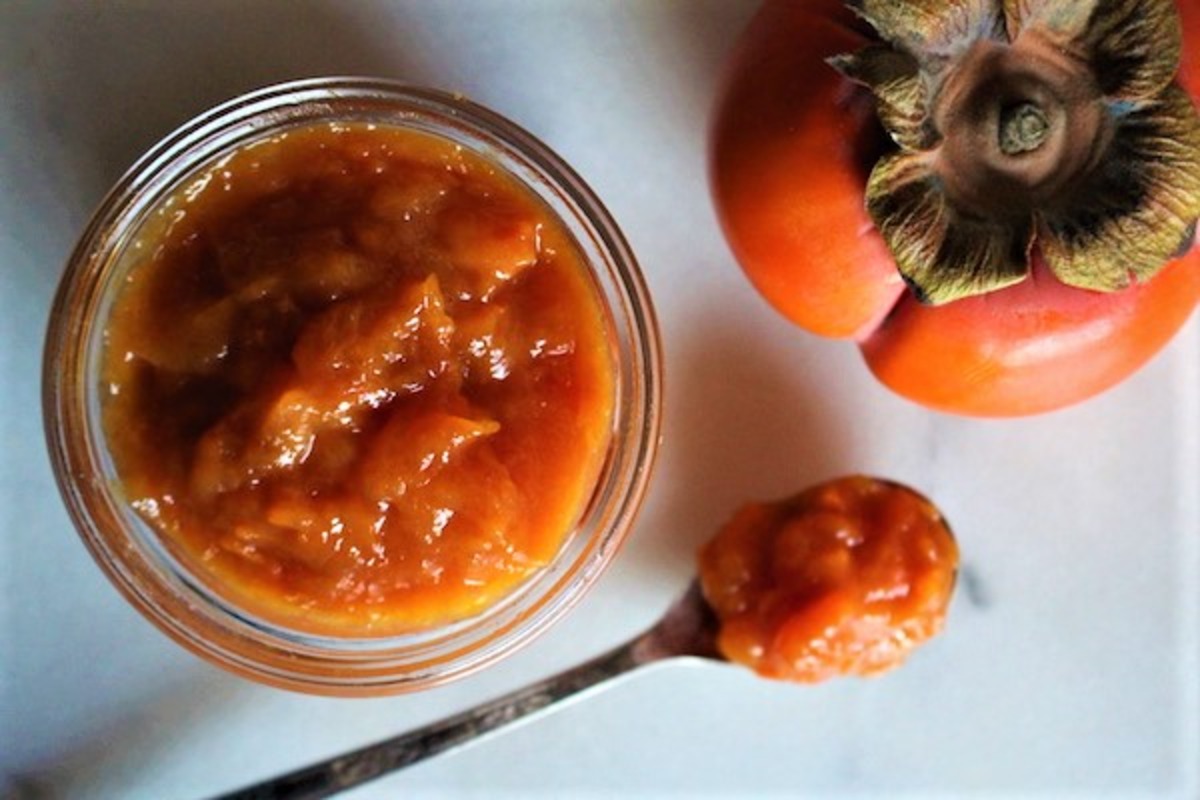
Table of Contents
- Notes from My Kitchen
- Choosing Persimmons for Jam
- Why Persimmon Jam Needs Lemon Juice
- Ingredients for Persimmon Jam
- Low Sugar Persimmon Jam
- How to Make Persimmon Jam
- Don’t Overcook Pectin Jam
- Canning Persimmon Jam
- Altitude Adjustments
- Yield Notes
- Storing Persimmon Jam
- Persimmon Jam Tips
- Ways to Use Persimmon Jam
- Persimmon Jam FAQs
- More Late Fall Preserves
- Persimmon Jam Recipe
- Jam Recipes
Persimmons ripen late in the fall, when most of the garden is already put to bed. Fuyu persimmons are the ones I usually see at the grocery store, and in late fall the stores often sell them by the case. One year I found whole cases at Costco, ripe and ready for jam, for a steal.
A while back I was invited to a birthday party for a friend of a friend. This person is my polar opposite, and would rather buy just about anything than make it homemade. What did I choose for a gift? My homemade persimmon jam.
I got a skeptical look, but with some urging, he opened up the jar and slathered it on a scone. He looked up with an expression of shock on his face. “This is really good! It’s really, really good. You made this?” I call that one small victory for the home jam maker.
Persimmon jam isn’t something you’ll find on most store shelves, and its flavor is good enough to win over a skeptic. If you end up with more fruit than jam jars, persimmons also make a lovely persimmon wine, and there are lots more ideas in my 70+ persimmon recipes.
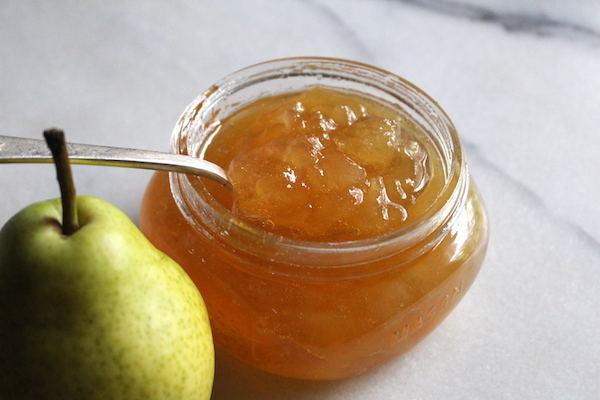
It also fits right in with the rest of the late fall pantry, next to pear jam, quince jam and apple butter.
Notes from My Kitchen

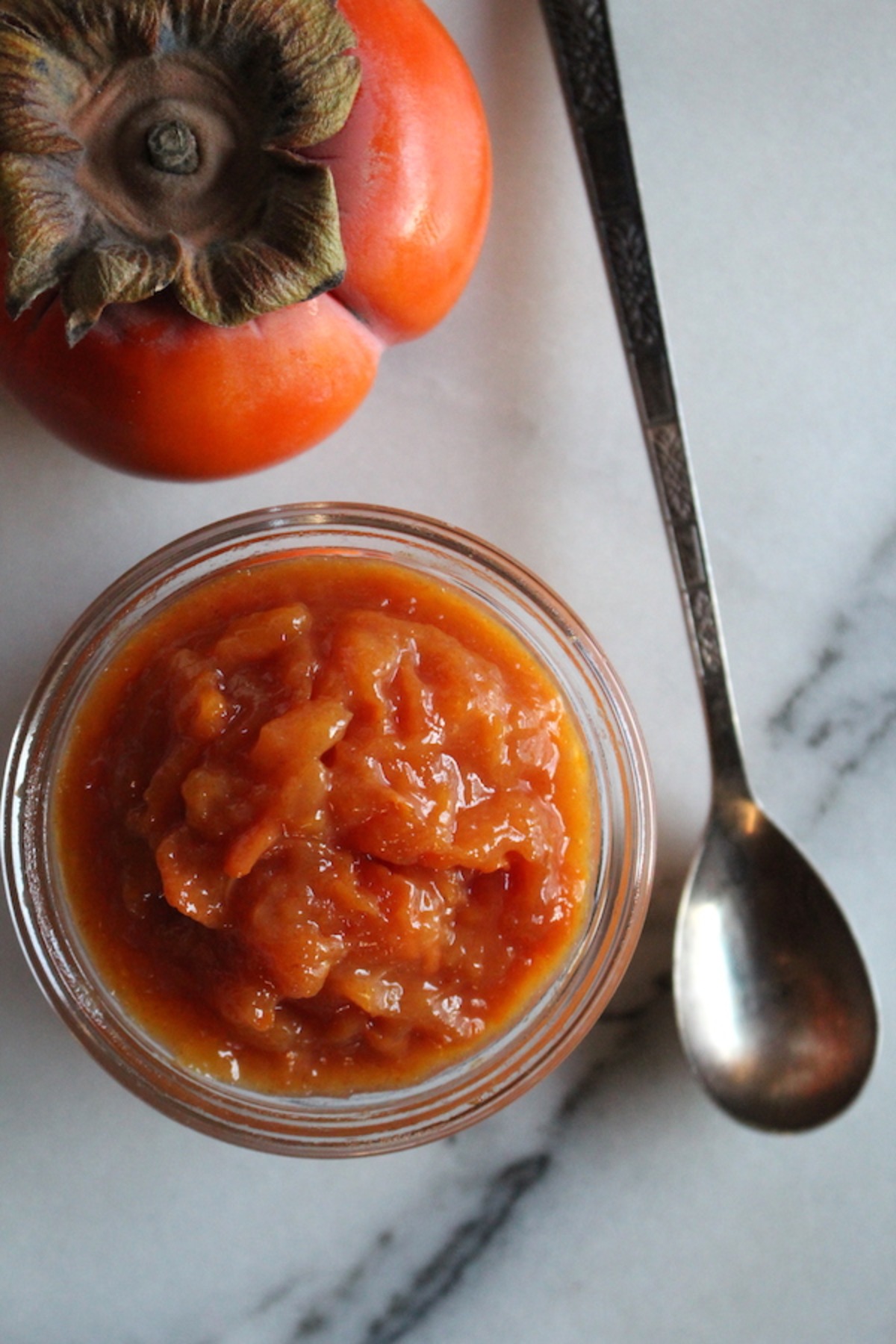
Fuyus are the only persimmons I’ve ever made jam with. The ones I buy have a reasonably soft skin, so I don’t bother peeling them. I just slice them, mash them, and get cooking. I rarely even find a seed.
Persimmons don’t do well with a long simmer, so I keep the boil short and let the pectin do the setting. Whatever doesn’t go into jam gets dried, since I love dried persimmons too. We make them every year, along with a long list of other dehydrator recipes.
Choosing Persimmons for Jam
Persimmons at the store usually come in two types, Fuyu and Hachiya, and for jam the difference matters.
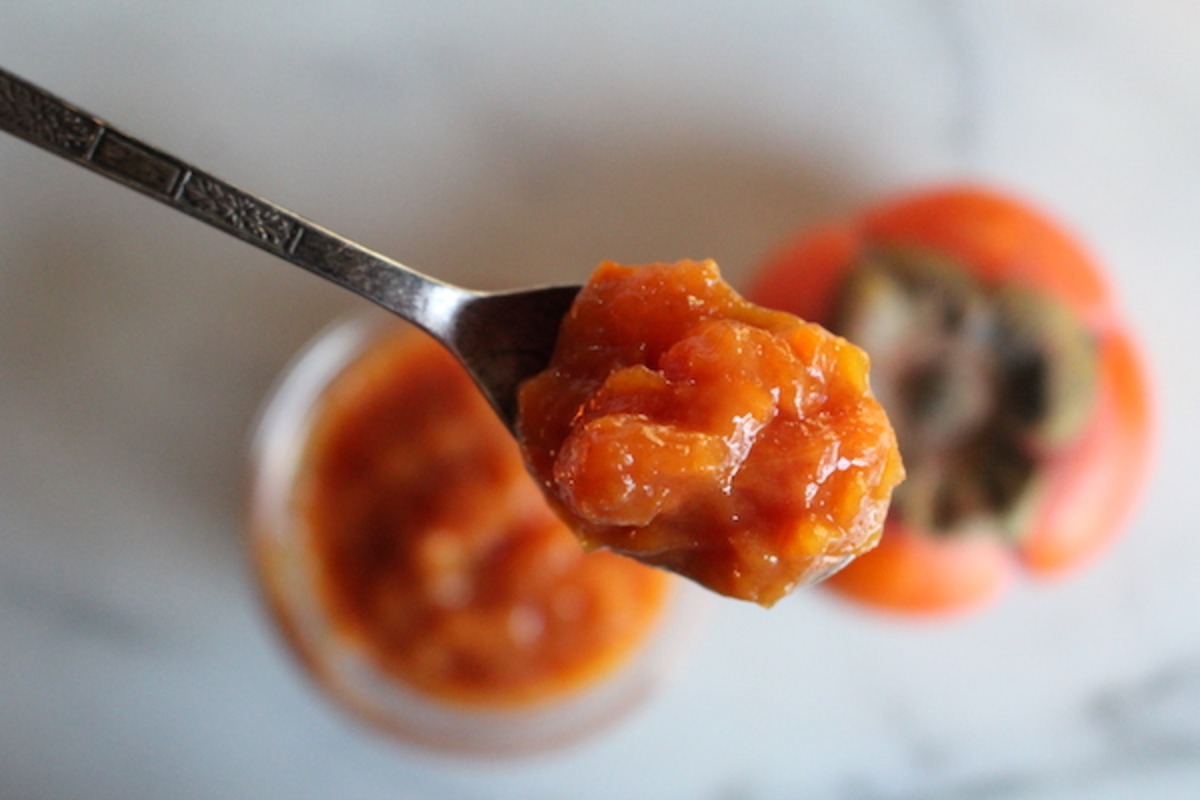
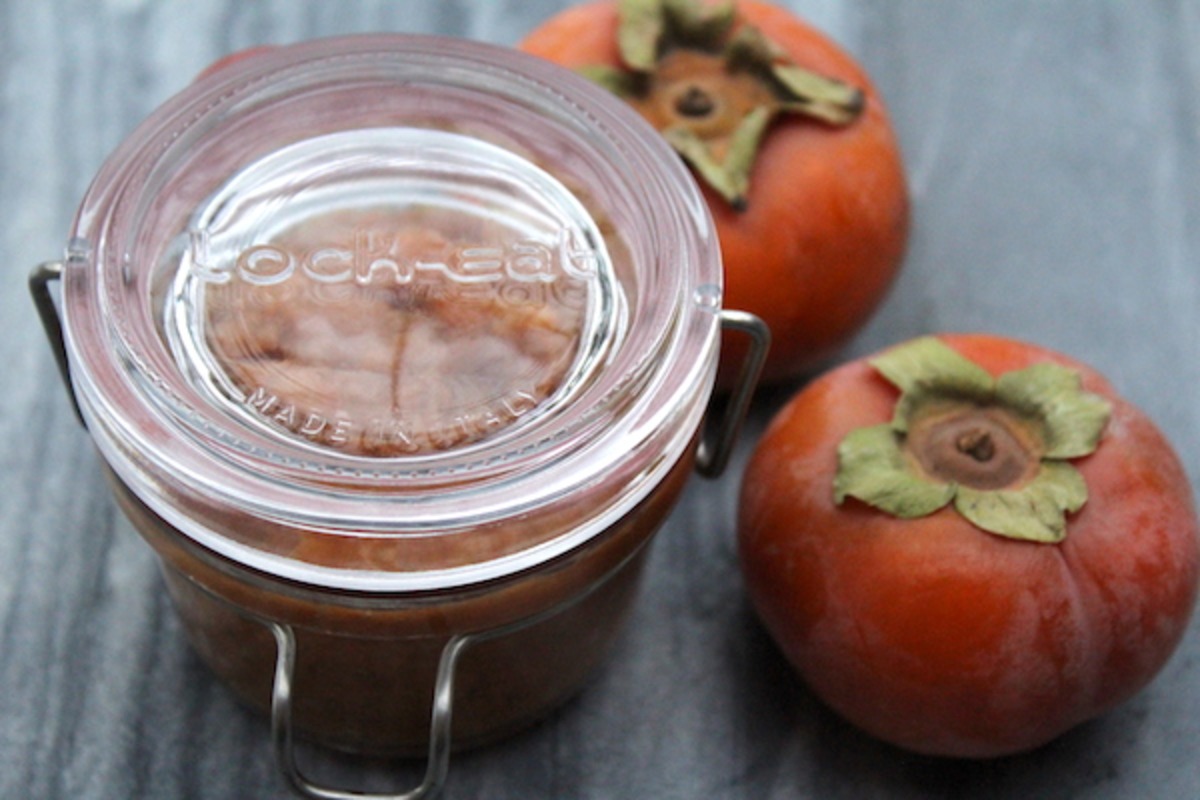
Fuyu persimmons are the ones in my photos. They’re firm, with a squat, lobed shape a little like a flying saucer, and they’re fully ripe when the skin has just a slight bit of give, like a pear. They’re sweet even before they soften, so they’re easy to work with.
Hachiya persimmons are the tall, acorn-shaped ones. They stay mouth-puckeringly astringent until the inside goes soft as pudding. I haven’t made jam with Hachiyas. Some readers have made it with fully ripe Hachiyas, but several had their jam turn astringent as it cooked, even when the fruit tasted fine raw. If you have a choice, go with Fuyus.
Wild American persimmons aren’t a good fit for this jam. Pomona’s hasn’t made its persimmon jam with them, and one reader who used wild persimmon pulp got a very thick, grainy jam.
Firm persimmons soften on the kitchen counter, which can take anywhere from a few days to a couple of weeks. To hurry them along, tuck them into a paper bag with an apple.
Why Persimmon Jam Needs Lemon Juice
Persimmons sit right on the borderline for water bath canning. Anything that goes in a water bath canner needs a pH of 4.6 or lower, and persimmons range from about 4.4 to 4.7. That’s why this jam always gets added acid.
The National Center for Home Food Preservation doesn’t have a tested persimmon jam, and Penn State Extension says there are no research-based recipes for canning persimmons. So I follow the lemon juice in Pomona’s Pectin’s Persimmon Jam, which is 1/2 cup of bottled lemon juice to 4 cups of persimmon pulp. Pomona’s is a pure citrus pectin with no added acid, so its recipes rely on the lemon juice for every bit of their added acid.
Use bottled juice, since its acidity is the same from bottle to bottle, and don’t cut the amount. I think lime juice complements persimmons beautifully, so bottled lime juice works here too, measure for measure. For no citrus flavor at all, use citric acid, 1/4 teaspoon for each tablespoon of lemon juice. For this batch, that’s 2 teaspoons of citric acid dissolved in 1/2 cup of water.
Ingredients for Persimmon Jam
There are only four ingredients, and the persimmons and the lemon juice are the two to get right.
- Persimmons: Ripe Fuyus with a little give when you press them. Some readers use fully ripe Hachiyas, peeled and seeded. Skip wild American persimmons.
- Bottled lemon juice: This is the added acid, so use the full amount. I use Santa Cruz organic lemon juice. Bottled lime juice or citric acid can take its place, as above.
- Regular powdered pectin: A box of Sure-Jell, or any other regular powdered pectin. Low or no sugar pectin needs a different recipe.
- Sugar: Regular pectin only sets with the full measure, so don’t cut it back. The box below has a low sugar option.
- Spices (optional): A little cinnamon is lovely with persimmons. Ginger, nutmeg or cardamom work well too.
Use a bigger pot than you think you need, since the jam foams up as it boils. A potato masher handles the fruit, or use an immersion blender for a smoother jam.
Low Sugar Persimmon Jam
Regular pectin won’t set with less sugar. For a low sugar or no sugar persimmon jam, make Pomona’s version with Pomona’s Universal Pectin instead. That recipe keeps the same persimmon pulp and bottled lemon juice, then sets with calcium water and Pomona’s pectin, so you can sweeten it with as little as 3/4 cup of sugar (up to 2 cups) or 1/2 to 1 cup of honey.
Pomona’s pectin works differently than regular pectin. If you’re new to it, start with my low sugar peach jam or this guide on how to use Pomona’s pectin. The book Preserving with Pomona’s Pectin has many more low sugar recipes.
How to Make Persimmon Jam
Most of the time goes into slicing and mashing the fruit. The cooking only takes about 15 minutes, so get the canner heating and measure the sugar into a bowl before the fruit goes in the pot.
If you’re new to jam making, start with my guide on how to make jam. It’s an easy jam to start with, since the pectin sets it and there’s no gel test to judge.
Preparing the Persimmons
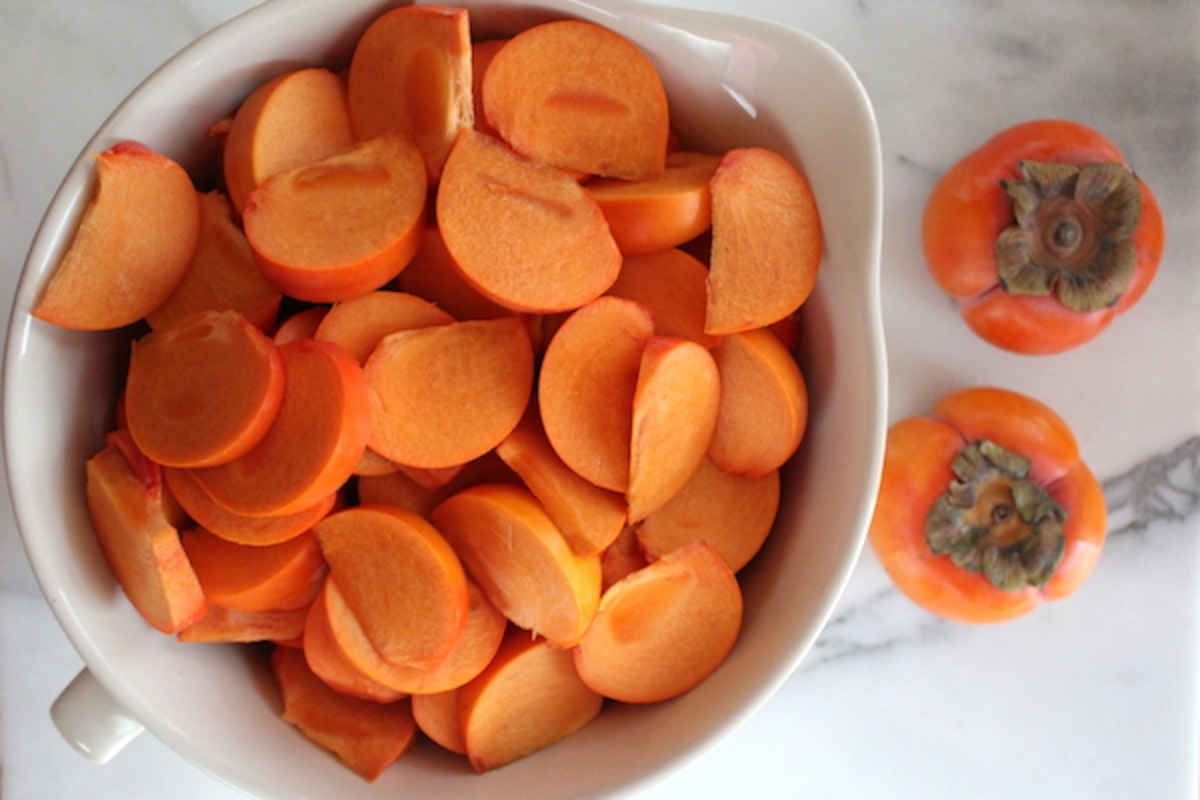
Pull off the leafy tops and slice the Fuyus. I don’t peel mine, but if your persimmons have thick or tough skins, peel them first. Then mash the slices with a potato masher, or puree them for a smoother jam.
Firm Fuyus can be too crisp to mash. If yours are, cook the slices gently with a little water until they’re soft, then mash.
For Hachiyas, halve them, spoon the soft pulp out of the skins and puree it, picking out any seeds.
Measure the pulp once it’s mashed, not as slices. Sliced persimmons take up far more room in the cup, and the lemon juice and pectin are set for the measured pulp in the recipe card.
Cooking the Jam
Put the pulp in the pot and stir in the bottled lemon juice. Whisk in the pectin and keep stirring until there are no lumps, all before the burner goes on. Some brands clump if they hit hot fruit.
Turn the heat to high and stir constantly until it reaches a full rolling boil, the kind you can’t stir down. Dump in all the sugar at once, stir until it dissolves, and keep stirring until it’s back at a full rolling boil.
Let it boil hard for exactly 1 minute while you keep stirring. Pull the pot off the burner and skim away the foam.
Don’t Overcook Pectin Jam
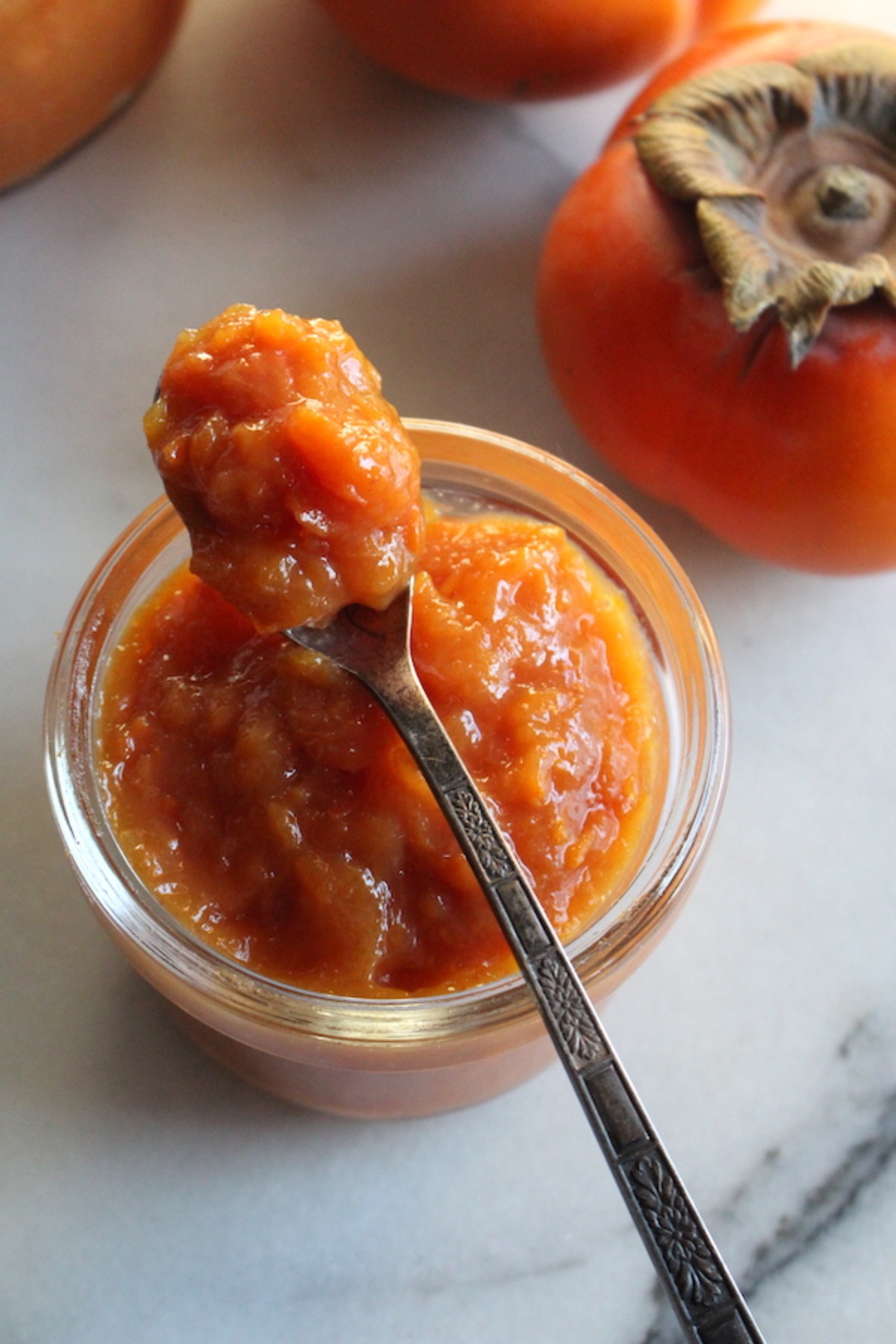
Pectin jam looks thin in the pot, and that’s normal. It firms up as it cools, usually within a day or two, though some batches take up to two weeks to set completely. Either way, don’t keep boiling it past the minute. A freezer plate or thermometer won’t tell you much here, since those tests are for jams without added pectin.
If it’s still soft after that, common causes are a boil that wasn’t hard enough or long enough once the sugar was in, or fruit or sugar that wasn’t measured exactly. A runny batch can be cooked again, and there are steps for that in my guide to troubleshooting jelly that didn’t set. Or keep it as a spoonable persimmon sauce for pancakes.
Canning Persimmon Jam
You don’t have to can this jam. Unprocessed jars keep about 3 weeks in the refrigerator, or up to a year in the freezer. I really enjoy it year round, though, and it makes a great gift, so I choose to can it. If you’re new to canning, start with my beginner’s guide to water bath canning.
Ladle the hot jam into hot jars, leaving 1/4 inch headspace. The jam is chunky, so slide a spatula down the sides of each jar to let out trapped air. Then wipe the rims and put on the lids.
Set the jars in a water bath canner with the water at about 180 degrees F. Bring it to a full boil and process for 10 minutes, adjusting for altitude. Turn off the heat, take off the canner lid, and leave the jars in the water for 5 minutes, which cuts down on siphoning. Then lift them out with a jar lifter and let them sit for 12 to 24 hours before you check the seals.
Altitude Adjustments
Process half pints or quarter pints in a water bath canner for:
- 0 to 6,000 feet: 10 minutes
- Above 6,000 feet: 15 minutes
Yield Notes
Four cups of mashed persimmons makes about 6 to 7 half pints, so keep a spare jar hot just in case.
That takes roughly 8 medium Fuyus, or 5 or 6 big Hachiyas.
Don’t double the batch. A bigger pot of pectin jam takes longer to come back to a boil and may not set, so make two batches back to back instead.
Storing Persimmon Jam
Once the jars have cooled, push down on the middle of each lid. A lid that stays put has sealed.
Take off the bands before you store the jars, so a loose lid can’t hide under a ring.
- Canned: On a cool, dark shelf, sealed jars hold their best quality for 12 to 18 months. After that the jam slowly loses flavor and color.
- Refrigerator: Opened jars, and any that didn’t seal, keep about 3 weeks.
- Freezer: Up to a year in straight-sided freezer jars with 1/2 inch of headspace, since a jar with a narrow neck can crack when the jam expands as it freezes.
Persimmon Jam Tips
- Add warm spices. Stir dry spices like cinnamon, ginger, nutmeg or cardamom into the pulp along with the lemon juice. Pomona’s lists half a teaspoon of cinnamon as an option in its version.
- Try an extract. A little vanilla or almond extract, added once the pot comes off the heat, is good too.
- Keep it all persimmon. Don’t mix in other fruit or vegetables, since the lemon juice amount only works for persimmons.
- Freeze ripe fruit as it comes. Persimmons rarely ripen all at once. Mash and freeze the pulp as each batch softens, then make jam once you have enough.
Ways to Use Persimmon Jam
Persimmon jam is wonderful on a warm scone, which is how it won over that birthday skeptic. It’s good on biscuits and toast, stirred into oatmeal or yogurt, or spooned over baked brie for the holidays. At Christmas, it makes a nice gift paired with a jar of canned cranberry sauce.
It’s also good as a thumbprint cookie filling. For more ideas, here are 100+ ways to use up a jar of jam.
Persimmon Jam FAQs
These are the persimmon jam questions that come up most in the comments.
I don’t peel Fuyus. The skins on the ones I buy are soft and cook down fine. If your persimmons have thick or tough skins, peel them first. Hachiyas always lose the skin, since you scoop the soft pulp out of it.
Some readers have made it with fully ripe Hachiyas, but several have had their jam turn astringent as it cooked. I’ve only made it with Fuyus, so that’s what I’d use if you have the choice.
I wouldn’t. Pomona’s hasn’t tried them in its persimmon jam, and a reader who used wild persimmon pulp got a very thick, grainy jam.
Not with regular pectin, which only sets with the full measure of sugar. For a low sugar jam, make Pomona’s version with Pomona’s Universal Pectin instead.
Yes. Freeze the mashed pulp with no sugar, then thaw it and use it along with any liquid that comes out. Measure it after it thaws.
More Late Fall Preserves
A few more ways to fill the pantry this time of year.


If you tried this Persimmon Jam recipe, or any other recipe on Practical Self Reliance, leave a ⭐ star rating and let me know what you think in the 📝 comments below!
And make sure you stay in touch with me by following on social media!
Persimmon Jam
Equipment
- Canning Jars, Lids, and Rings
Ingredients
- 4 cups persimmon pulp, sliced Fuyus, mashed; see notes
- 1/2 cup bottled lemon juice, or bottled lime juice; see notes
- 1 box regular powdered pectin, such as Sure-Jell
- 5 cups sugar
Instructions
- Heat a water bath canner to about 180 degrees F, since this is a hot pack, and keep the jars hot until they’re filled.
- Pull the leafy tops off the persimmons. Slice Fuyus and mash or puree them. There’s no need to peel them unless the skins are thick or tough. If they’re too crisp to mash, simmer the slices with a splash of water until they soften, then mash. For Hachiyas, scoop the soft pulp out of the skin, puree it and remove any seeds. Measure the pulp after mashing.
- Put the measured pulp in a large, heavy-bottomed pot and stir in the bottled lemon juice. Stir in the pectin until it dissolves completely, before the heat goes on. Measure the sugar into a bowl and set it aside.
- Bring the pulp to a full rolling boil over high heat, stirring constantly. Pour in all the sugar at once and stir until it dissolves.
- Bring it back to a full rolling boil and boil hard for exactly 1 minute, stirring constantly. Take the pot off the heat and skim off the foam.
- Ladle the hot jam into hot jars through a canning funnel, leaving 1/4 inch headspace. Run a spatula around the inside of each jar to release air bubbles, wipe the rims and put on the lids, fingertip tight.
- Process half pints or quarter pints in a boiling water bath canner for 10 minutes, adjusting for altitude (see notes).
- Turn off the heat, remove the canner lid and let the jars rest in the water for 5 minutes before lifting them out.
- Let the jars cool on a towel for 12 to 24 hours, then check the seals. Refrigerate any jar that didn’t seal, and store sealed jars in a cool, dark place.
Notes
- 0 to 6,000 feet: 10 minutes
- Above 6,000 feet: 15 minutes
Nutrition
Nutrition information is automatically calculated, so should only be used as an approximation.
Jam Recipes
A few more jams to put up this season.

Find the perfect recipe
Searching for something else? Enter keywords to find the perfect recipe!











Do you need to peel the persimmons before you cook them
No need to peel them. Just cut them up and take out the stems and seeds. The fuyus I use have fairly soft skins that cook down fine, but if yours are tough, you can peel them.
Awesome flavor
Thanks for the recipe, it worked perfect. I cooked for 45mins and added 1/4 cup of lemon juice like you suggested and it was great. I used the Fuyu persimmons, peeled them and added 1 TBS of pectin 15 mins before it was done, because I was worried about it setting. On the second batch I added 1-teaspoon of Almond extract that tasted great and worked out great also. I normally prep the summer fruit and freeze it in the summer and jam it in the winter when it is cold and rainy. It also worms up the house nicely.
Thanks for the help
Walt
Thank you, I was gifted some persimmons (my trees are only 3 years old!) and I made 2 batches of persimmon bread and thought – hey, let’s make jam to go with. Asley, I love your work. Thank you. Linda Faye, the green witch of Maumee
I just want to can the persimmons, so I can use the fruit for other recipes. Jam is nice, I just need the fruit. Do yiu have any other suggestions?
Do I use the same canning recipe for jam?
Persimmons aren’t acidic enough for canning on their own, and they need the sugar and lemon juice to preserve them. If you want to keep them without jam, dehydrating or freezing is a better option.
Would Splenda work instead of regular granulated sugar? My husband is diabetic.
We have Japanese Persimmons and trying to figure out how to use them at home instead of giving them all away.
Splenda doesn’t have the same thickening power in jams and jellies, so you’ll need to use a low sugar pectin like pomona’s or sure jel low sugar. I’d suggest using the pomona’s pectin recipe: https://pomonapectin.com/persimmon-jam/
Did you peel the persimmons?
I do not, and the fuyu persimmons I get have a reasonably soft skin. I’ve heard others have a less great skin for cooking, and they do peel theirs.
How many cups of persimons. Weight is deceiving
The 4 pounds is about 9 to 10 large Fuyu persimmons, or about 12 cups sliced (closer to 10 to 11 cups if you dice them finely). It’s under “Choosing Fruit for Persimmon Jam” in the post. Happy canning!
On Jan 1, 2025 i made jam with hachiya persimmons. Recipe: 6 cups of mushy mushy persimmon pure, 4 cups sugar, 1/4 cup lemon juice and 2 tsps of Pomona pectin. I cooked all ingredients in a pot, brought it to boil, cooked for 10 min to reach 220F in candy thermometer. The jam was at the right consistency, and right flavor. HOWEVER, it made my mouth puckered due to its astringency. I later found thru Google that boiling tannings will leach out of the fruit and get into the liquid. For me the lesson learned is that you cannot boil hachiyas to 220F to get a jam consistency.
I’ve made your jam a few times now turned out great each time thank you so much! I was wondering, can I double the recipe and use 8 cups of fruit and 2 cups of sugar and 4 tablespoons of lemon juice just double everything? Would that work? Thank you.
You’re so welcome. We’re so glad you loved the recipe. It’s not usually recommended to double a jam recipe. It will cause it to cook differently in the pan and often keeps it from gelling.
I doubled the recipe and had no problems. See my comment above for what I did a little differently.
Thanks Walt
Curious… if I add cinnamon to this will it change the chemistry at all.
You do want to be careful adding non-acidic ingredients in a water bath recipe. It depends on how much you add and you could always add a bit more acid to be on the safe side.
I tried this recipe using wild persimmon pulp. The end result is a very thick and grainy jam. It’s not very sweet. Should I add more sugar?
I think the wild persimmons are a little bit different in the consistency. I have heard some say that they just use the pulp as a jam rather than trying to make it into an actual jam.
I have a variety called Great Wall and tried the recipe. The fruits were sweet and benign when raw. After cooking they were horribly astringent. Seems cooking reversed the ripening process. Wish I knew the chemistry of tannins.
That’s crazy, I’ve never tried a persimmon like that. Goes to show you they’re all unique, and likewise, I too wish I understood the chemistry of tannins.