
Affiliate disclosure: This post may contain affiliate links. Please see our Privacy Policy.
Elderberry plants can be expensive to buy, but it’s easy to grow elderberries from cuttings. All you need is a few hardwood cuttings taken in the late fall or winter and a bit of patience.
When my husband and I first moved to our off-grid homestead, elderberries were one of the very first things we planted. They’re a big part of our winter wellness strategy, and they go into all manner of tasty things like elderberry oxymel as a quick cough syrup, elderberry mead for long winter nights and even elderberry jelly that our little ones love.
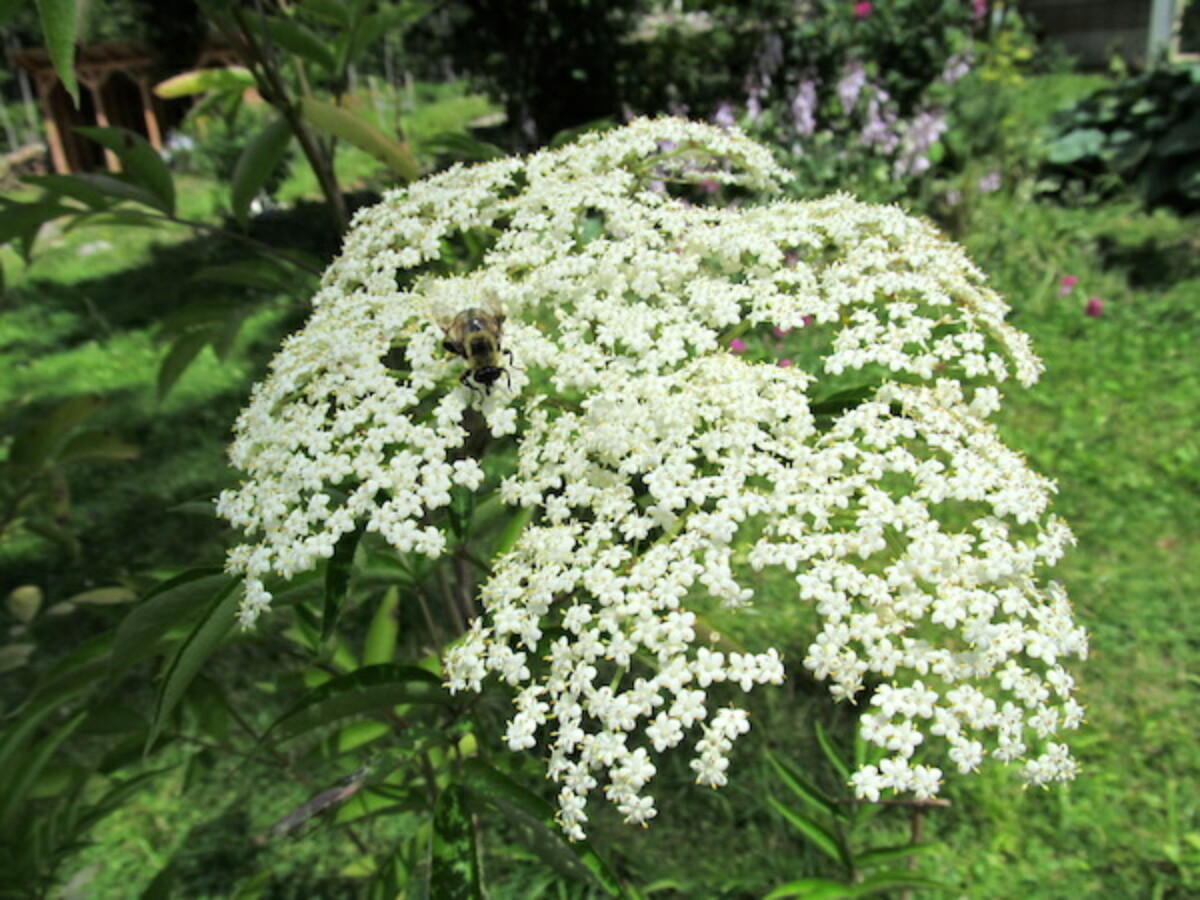
Beyond that, elderflowers make delicious liqueur and they feed the bees, both domestic and native.
We stopped by the nursery and I just couldn’t believe how expensive elderberry plants were. They were $30 each, about the same price as grafted apple trees.
Now, a few years later apple trees are more than $60 each and I don’t even want to look at the price tags on elderberry bushes. Time for a different strategy.
While buying elderberry plants may be expensive, with a little work and patience you can grow elderberries from hardwood cuttings. We’ve had great success propagating grapes with cuttings taken in the winter months, so why not try propagating elderberries?
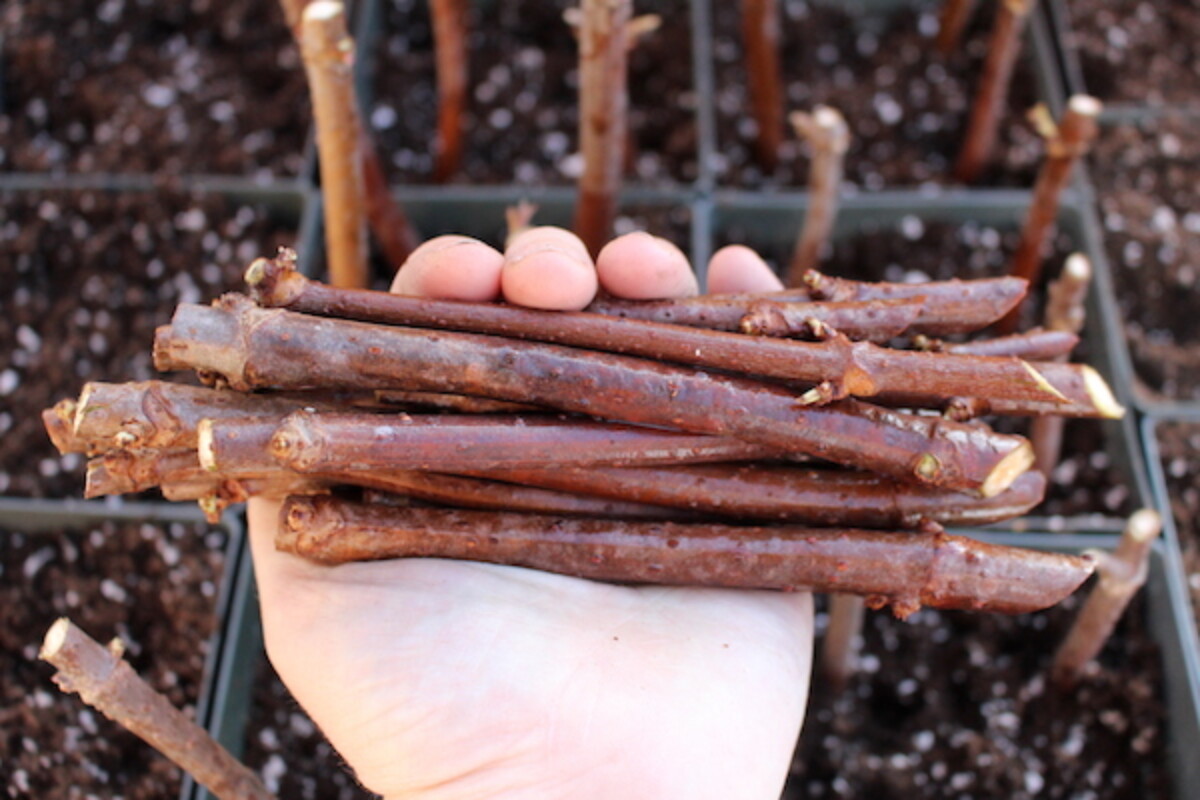
Our original elderberry plants are still pretty small, as they’re notoriously slow growing for the first few years after transplant. I didn’t want to take many cuttings from them, so instead I ordered elderberry cuttings from The Farm on Central which ships them out in late winter or early spring each year. I ordered 30 cuttings, so here I am potting up whole trays of elderberry cuttings in our sunny attached greenhouse in early February.
(Elderberries are only one of many fruits you can propagate from cuttings, including blueberries and grapes. They’re one of the easiest, and they sprout easily from hardwood cuttings.)
How to Grow Elderberries from Cuttings
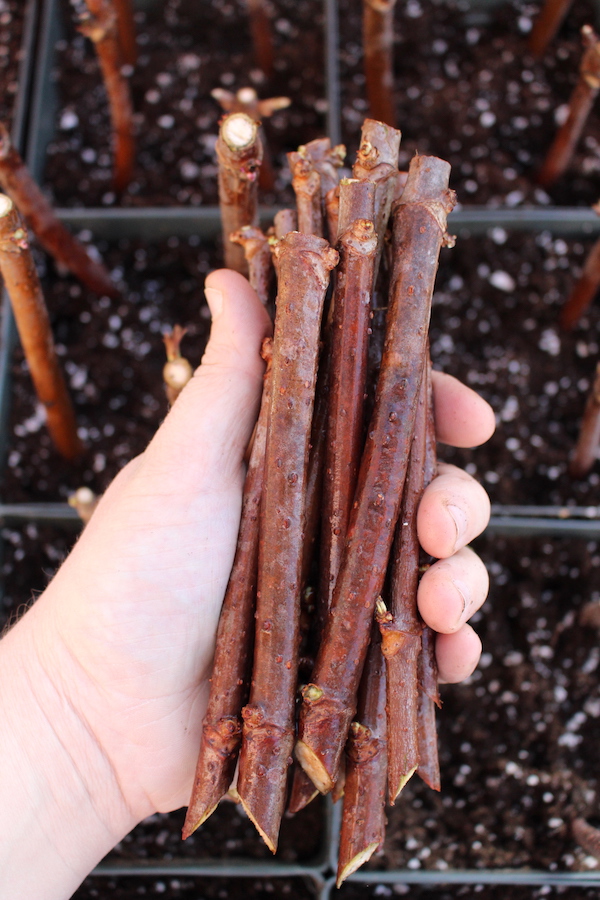
If you’re taking your own cuttings, do it when the plants are dormant for the winter. Make a slanted cut on the “root” side of the cutting so that you plant them in the correct direction. If you forget, you can still look at the buds on the stick and see which direction they’re pointing before planting, but making a slanted cut during harvest saves a lot of time on the potting bench.
Elderberry cuttings should be about 6 to 8 inches long and include at least 4 buds.
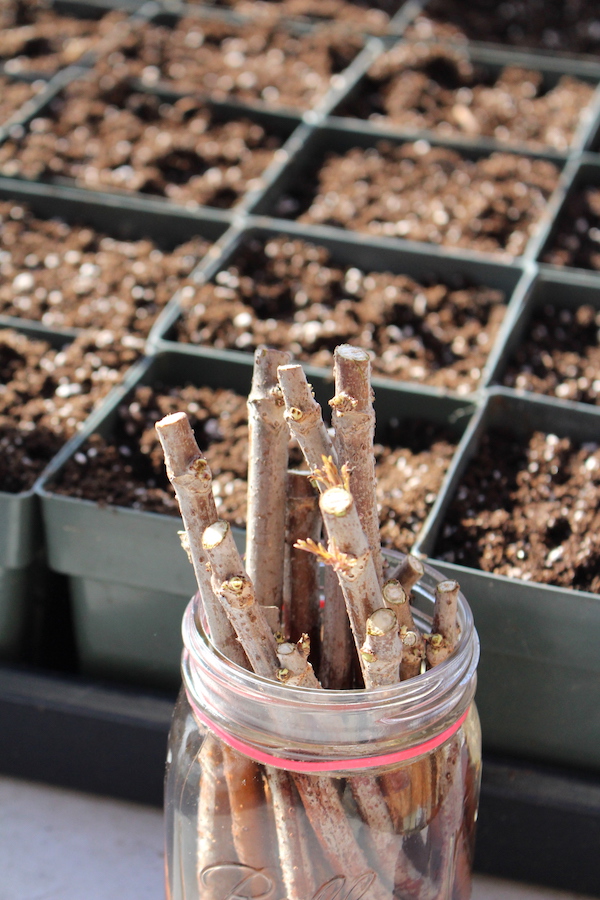
Whether you’ve ordered elderberry cuttings online or cut them fresh from existing plants, the process is the same once they’re in hand. Start by soaking the cuttings in water for 24 hours to thoroughly rehydrate them. Then prepare a tray of pots with moistened potting soil.
Since the elderberry cuttings have been soaking in water, the “root” end will be wet, which is perfect for dipping into a rooting hormone. I’m using a commercial rooting hormone powder, which is dependable and effective. It’s a synthetic version of the same hormone plants produce naturally.
You can also use willow water as a rooting hormone. Willows have a lot of natural rooting hormone, and soaking a few willow twigs in water helps to extract it for use with other plants. I imagine willow bark powder would also work as a natural alternative.
Dip the slant cut “root” end in the rooting hormone, covering the cutting about an inch up the sides.
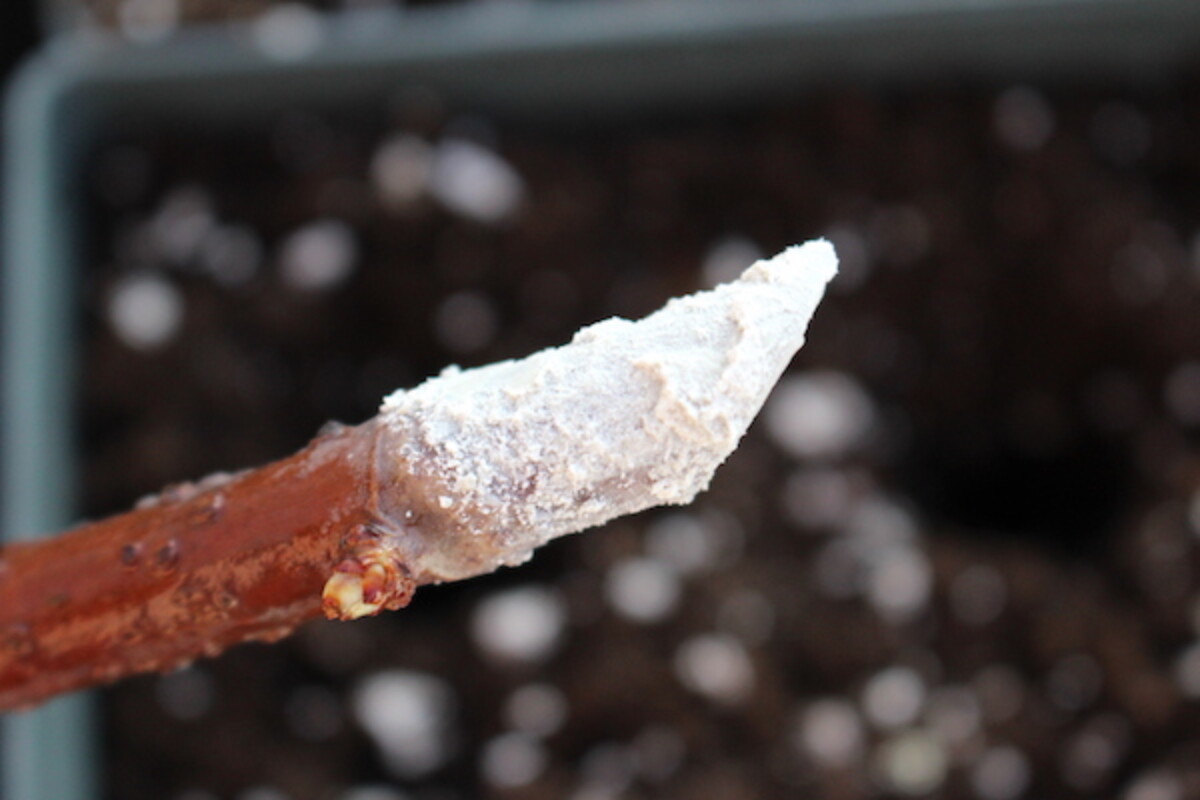
To plant, make a hole in the potting medium with your finger first. The whole is so the powder doesn’t get knocked off the elderberry cutting during planting, so don’t just slide the cutting into the soil. Then push the soil back around the cutting and tamp down.
You can reasonably plant 3-4 cuttings in a 5 to 6” pot. They’ll need to be transplanted to their own pot later in the spring, but this saves on space early on when not all the cuttings will survive.
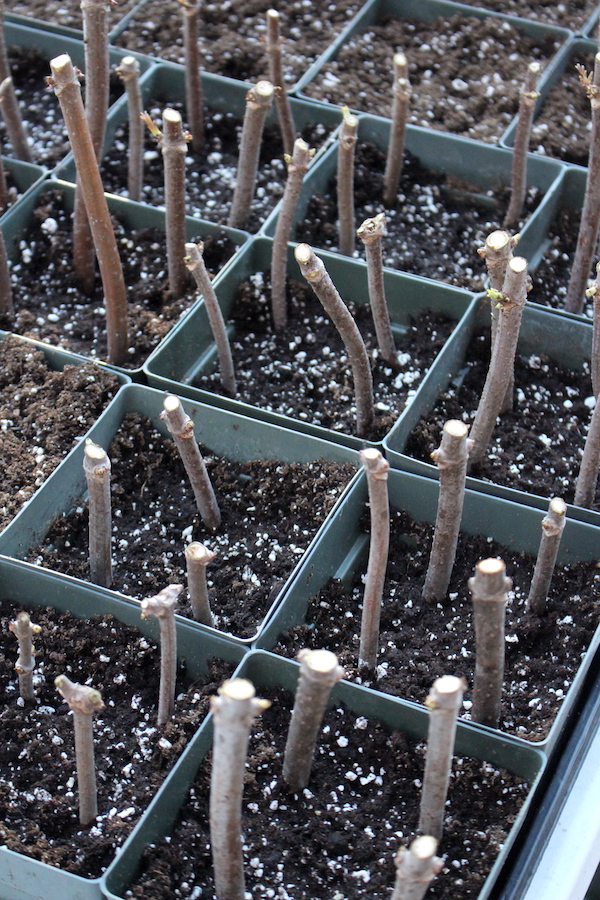
Once the elderberries are planted, it’s important to keep them cool (but not cold) to encourage root formation. The ideal is about 40 degrees F, out of direct sunlight and wind. Direct sunlight and warm temps encourage quick top growth, at the expense of good roots.
If you live somewhere with a mild winter, a sheltered outdoor location would work well. In our case, I think the high this week is a whopping 3 degrees, with high winds. We won’t see consistent 40-degree temps until April at least. My elderberry cuttings are going into the basement, which is about 50 degrees, but moist and semi-dark.
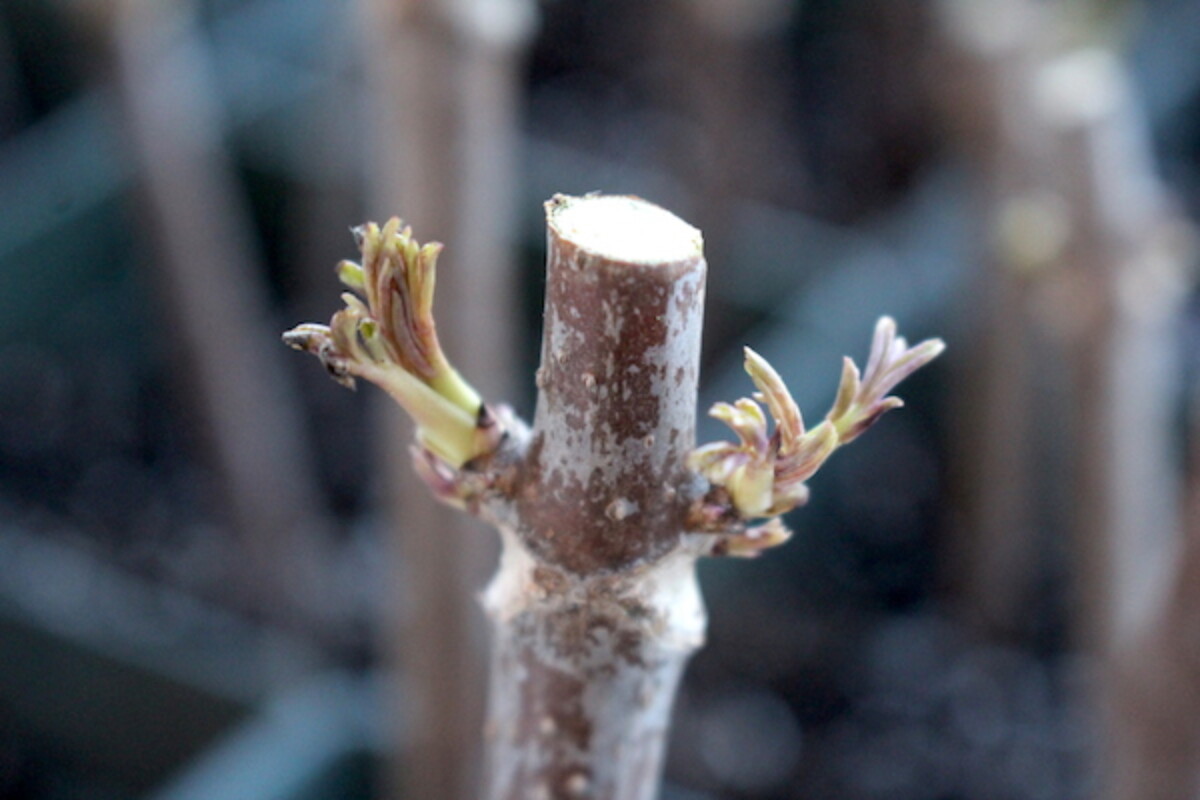
Keep the soil moist but not soggy and wait. Solid roots and new shoots should be present after 8 to 10 weeks. At that point, the elderberry cuttings (or tiny plants) can be potted up individually or planted out in the garden in spring.
When planting elderberries, be sure to give them plenty of space. They’ll stay small for the first few years, but mature plants can be 8 to 10 feet tall…









I’ve read that elderberry stems contain a type of poison and you need to be careful in harvesting them. Is this true?
Elderberry leaves, stems and roots contain something called glycoside which becomes cyanide in the body if you eat it. The only part of the plant that is edible is the fruit (and many recommend that you cook those). But anyhow, there’s no real issue in handling the plant material, so long as you’re not eating it, and even then I believe you’d need to eat a good bit over a period of time, though I’m not willing to test it on even a bite (and don’t recommend anyone try it to check exactly how much it takes…)
About how long will it take for a cutting to bare fruit?
It depends on how good your soil is, but they can put out their first couple of flowers in about 2 years, better production in 3-4 years.
Thank you. That’s not bad at all. I think I will give it a go!
Just curious how many of your 45 cuttings have made it to plants?
I have some growing in my ditch and was wondering if you could transplant them without killing them
We’ve had great success transplanting them, they’re pretty resilient (some started growing wild in one of the plow zones and got hit several winters by the plow until we moved it, and it’s still thriving).
Better to take cuttings, I haven’t had much luck transplanting
I had 1 growing beside a door??
no idea how it got there, but I dug it up(lotsa roots) after dormancy and transplanted it. it is the first up this spring
I was just wondering how to grow Elderberry plants from cuttings and then a friend posted your article on FB. Thank you! I made a Elderberry tincture for cold and flu that turned out great. Using a steamer juicer to extract works wonders, but you have to let the juice drain into a pan while it steams to keep the juice fresh and not cooked. After I made the juice, I immediately put it on the stove with honey, ginger root sliced, honey, lemon and simmered for 30 minutes, added rum and brought up to boil, canned in small jars for 10 minutes….excellent.
Becky, I have grown and sold frozen and dried elderberries for years and made healthy tinctures. I went to an Extension meeting recently with an expert from the Univ. of Mo. where they research on elderberries who changed some of our advice in prepping tonics or tinctures…Biggest one is to not let the juice get above 185 degrees when cooking…as that lessens the healthy parts of the berry juice. The other thing is – to use local organic honey when possible, and honey should always be added after it cools down a bit. as heat destroys much of the beneficial organisms in the honey. I low simmer my berries with some water, cinnamon sticks, whole cloves, lemon slices, and some good slices of fresh ginger (which I also grow in pots over the summer or in my sunroom). then I strain it thru cheesecloth and a strainer (removing the bigger things – like sticks, to not puncture the cheesecloth) and then add the honey. I freeze mine ( I do can the jelly or syrup) so I do not need to boil or heat process it. my preferences… just suggestions…but you might research how it is currently changing. good luck to you.
There are three types of elder berry trees where I live. A red berry, dusty blue berry and a white berry, are they all safe to consume. Also I read an article on elderberry flower cluster. Making a pancake type mix with some cinnamon and dipping the flower cluster in then frying it in oil for a tasty snack. Anyone try that? Just wondering.
Elderberry flower fritters!!! They’re good, a lot like a floral flavored donut (because that’s what they are).
Do not use the red elderberries at all. They are toxic, especially if your a kid. The blue or the black are fine.
Great article! I have an elderberry question. I have been unable to get my elderberry jelly to gel, so I have plenty of elderberry syrup!. I use Certo. I have no such problem with wild raspberries or wild grapes. Does anyone have suggestions?
Elderberries are very low pectin and need plenty of extra added to gel properly. I make black raspberry jam and regular raspberry jam without pectin just fine, and they probably have enough to work out in your certo recipe but elderberries fall short.
For elderberry jelly I use Pomona’s pectin because it works with low sugar levels. Certo needs a certain amount of sugar to make it gel, and that might be part of the problem. It takes A LOT to make that stuff gel, and that combined with a very low pectin fruit may be what’s yielding syrup.
Here’s my elderberry jelly recipe, gels up really well without issue. Good luck!
https://practicalselfreliance.com/elderberry-jelly/
I’ve used a mix of two parts 100% Apple juice to one part elderberry juice using the elderberry jelly recipe. Makes a less bitter jelly and the natural pectin in the apples sets up beautifully along with the pectin mix Been doing it this way for many years, and it is lovely in gift jars and especially tasty.
That’s a lovely idea!
Do elderberry plants grow well on Florida?
Likely, they’re good zone 3 to 9, so unless you’re in the southern most tip. They grow in California in zone 9 (with water) so they’re probably also ok in most of Florida.
Where can someone in California get cuttings?
River Hills Harvest. Norms Farms has rooted cuttings. Both online.
California has import quarantine restrictions on all plant parts of Sambucus. Rolling River Nursery is a good source for California. They offer both S canadensis and S nigra caerulea.
I’ve not tried hardwood cuttings; I’ll have to get out and get some cuttings off my Black Beauty elder. I’ve tried taking semi-hardwood cuttings during summer without luck, a couple of times. But…. I cut back a friend’s elder to the ground (at her request) and just threw the branches on a pile of leaves, branches, grass cuttings… next year there was this funny looking thing coming just barely up. Next year.. yep, it was an elder bush. It’s 15 feet tall now and blooms and berries every year but last year- it didn’t get enough water. Anyway, nature did what I couldn’t manage to do!
I,m told that Black Beauty doesnt get the amount of berrys that most others do?
I was at a friend’s place one day and marveled at her ‘Weeping Japanese Maple’
she informed me it was Black Beauty elderberry.
last fall she let me prune it for her.
I got maybe 30 cuttings from it.
I only ended up with 2 outta the 30, but they seem to be doing great so far.
I recently watched a youtube from a fella with 7000 elderberry plants. (business)
He cuts them off at ground level every yr..
That was news to me, so I cut 1 of mine off at ground level
and just normal pruned my others.
I will see what works for me.
Let us know about the pruning back
hank you. When I lived in VA I used to pick wild Elderberry and make jelly. I would scatter some of the berries all around the edge of the woods behind our house. I had lots growing. LOVE elderberry
Do they grow from the berries!???? Green or the ripened???
Elderberry will grow from seed but they do need to be ripened and scarified in order to germinate.
Loved elderberries from the meadow behind my childhood home,
Great story . Thanks !
Love elderberries for their beautiful blooms but being a beekeeper the bees love them too. When you can find a flowering nectar and pollen producing plant or shrub I instinctively incorporate them into my landscape . Some can be affordable and when they propagate with a little help everyone wins . It’s a can’t lose proposition to have a smorgasboard of time stretching nectar and pollen to solve late summer nectar and pollen dearth’s for bees.
Wonderful!
If I have no access to rooting hormone will it be ok to just plant in rich soil mixed with vermiculite?
Yes, they’re supposed to self root without rooting hormone pretty successfully. I haven’t tried that method, but I hear it works pretty well. You can also try pre-rooting them in a cup of water on a sunny windowsill and then planting when a few strong roots form.
Thanks. I hope it works! 😃
yes. they will grow without the hormone. OR you can buy it online. It gives your plant an extra boost.
Most hardware stores carry it, and I think Target and Walmart do, too. If you don’t see it on the shelf, ASK. They may have some in the stockroom.
It’s a little bottle for about $5. That sounds like a lot, but it lasts just about forever unless you use a lot of it.
I’ve got a mostly full bottle that I bought a couple of years ago.
Can use cinnamon or honey. They are antifungal which helps rotting of the cutting.
Use cinnamon or crushed aspirin.
Cinnamon powder from your kitchen is a natural rooting hormone as well.
Willow water is good to use for a natural root hormone. I usually steep a willow branch chunks in hot water (like a tea) and leave the cuttings in for 24 hrs. Works pretty well and you don’t have to buy it!
Love that idea, thanks for sharing!
Can rooting cuttings be kept in the dark? Only place that would work for me temperature-wise is our earth cellar and it’s pitch black there 🙁
Yup, that works great. I keep them in the root cellar section of our basement when they’re just cuttings. When they start to sprout greenery though, they’ll need light.
This is great information . Thank you for sharing
I’m assuming curly willow chunks will work as well.
I am going to be trying this.
This is probably why my curly willow in arrangements one year rooted. I put them into pots and gave them out to friends. They loved that.
Yep, it should work just fine for any woody cuttings.
So excited! Thank You for inspiring me to plant Elderberry starts on our new farm! Tried to order from Norm’s but missed theirs by a few weeks. All Sold Out now! I’m signed up for their next cuttings! In the meantime, I’ll hope to find some either locally in our mountain area or online! Love your Blog and intend to follow! = )
The elderberry bush on the property I bought is easily 20′ tall. I have no idea what variety it is and whether it’s native or planted but it’s wonderful! I plan to make starts off it this year and give them to relatives who will appreciate them.
There are 2 native elderberry species in the U.S.A. that are sometimes distinguished by “blue” and “black”. Sambucus nights is native to parts of Texas, where I live, and can get that tall and also be evergreen.
I wish I were your family. LOL
Hi, IS now a good time to stick Elderberry hardwood cuttings?
I had to buy the cuttings now since they were offered on a short time window. Stick them outside in what medium? Date 12/8/23
Thanks in advance,
Terry
Late fall and winter are the perfect time to plant cuttings. You want to take them when the plants are dormant. The cuttings in this post were planted into standard potting soil.
Thanks for the response, I stuck them on Dec 19th so time will tell I guess. I have them on a shelf in my basement in containers and it’s around 60F right now because of warmer weather this time of year. I stuck them in a professional potting mix so I have a good amount of time until they root.
High, I realize that this post is 5 years old. The only elderberry tree that I know that growth 20 feet tall is “Sambucus nigra” . It is from European variety grown here as well. It makes big black or blue/black flavor full berries. This is the variety used for making the products that you buy at the store. It supposedly has the highest medicinal value, lucky you.