
Affiliate disclosure: This post may contain affiliate links. Please see our Privacy Policy.
Preserving mushrooms lets you hold onto a good foraging day long after the flush is over, so a windfall of morels or chanterelles keeps feeding you well into winter. From drying and freezing to pickling, tinctures, and even candied treats, there’s a method here for every mushroom and every kitchen, and most of them work just as well with cultivated mushrooms from the store.
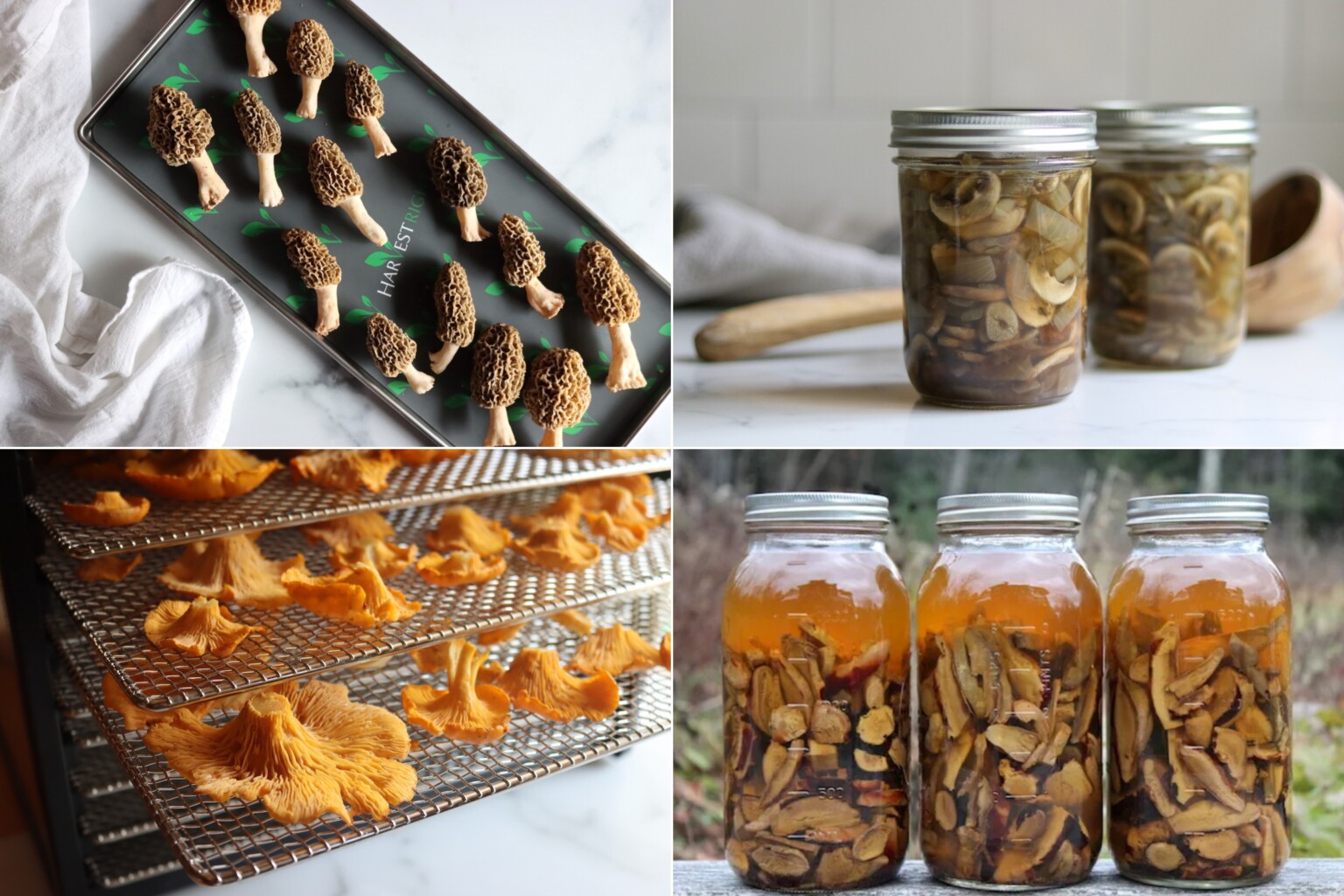
Anyone who’s spent a season chasing wild mushrooms knows the harvest comes in a boom or bust cycle. One afternoon you’re hauling buckets of the edible wild mushrooms you love out of the woods, and the next week you walk the same trails for hours and come home empty-handed. Preserving the bounty from the good days is how you make sure nothing goes to waste, and how you keep wild flavor on the table year-round.
The method you reach for usually comes down to the type of mushroom you have, how you plan to cook with it later, and whether you’re after long-term pantry storage or a short-term flavor project. Some techniques, like drying, freezing, and freeze drying, work for almost anything, from grocery-store button mushrooms to treasured wild finds. Others, like pickling, fermenting, or candying, lean into a mushroom’s particular flavor and texture in more unexpected ways. If you’re just getting started with fungi, it’s worth learning to grow your own mushrooms too, so you always have something on hand to practice these methods with.
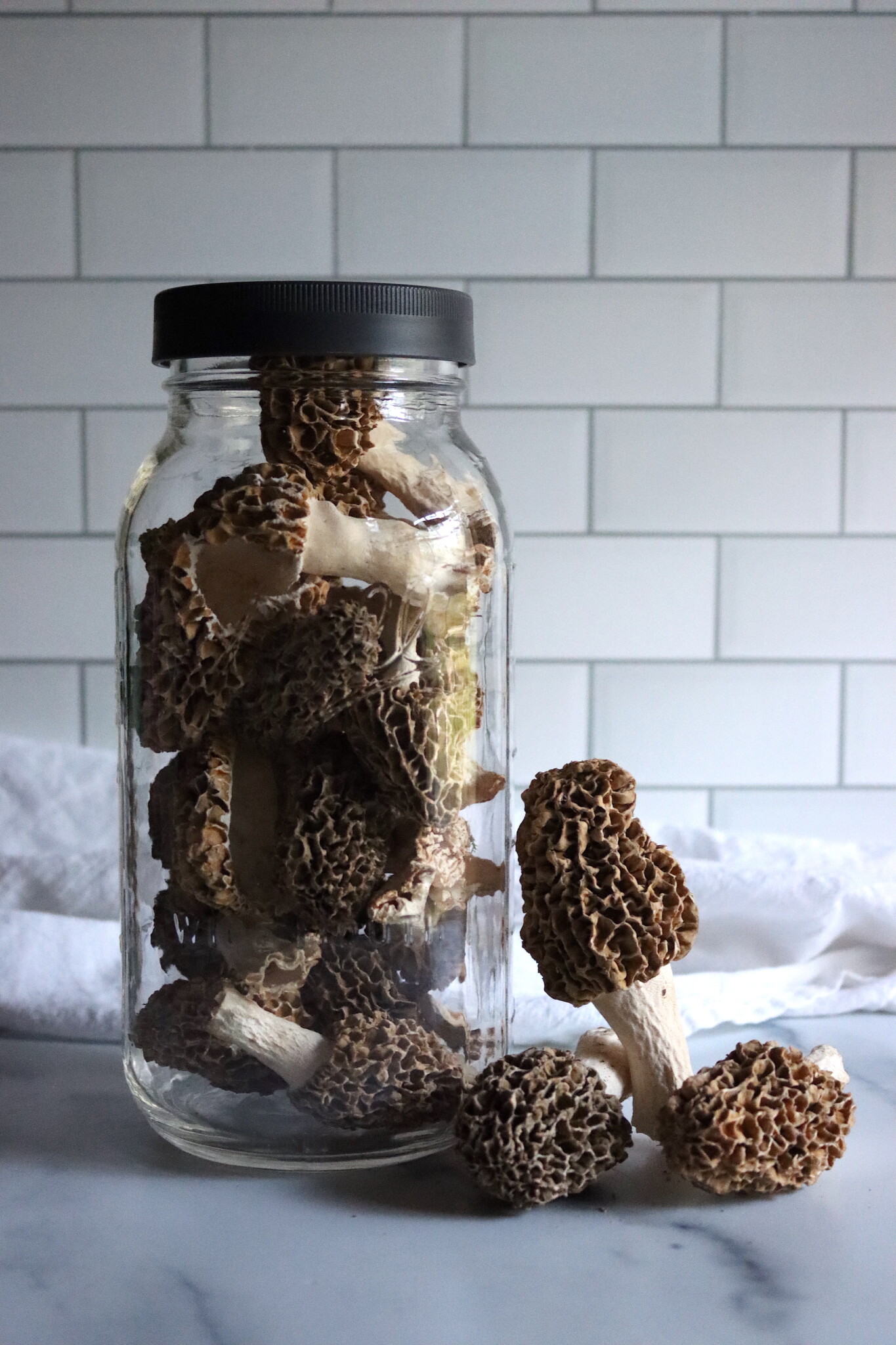
Notes from My Homestead

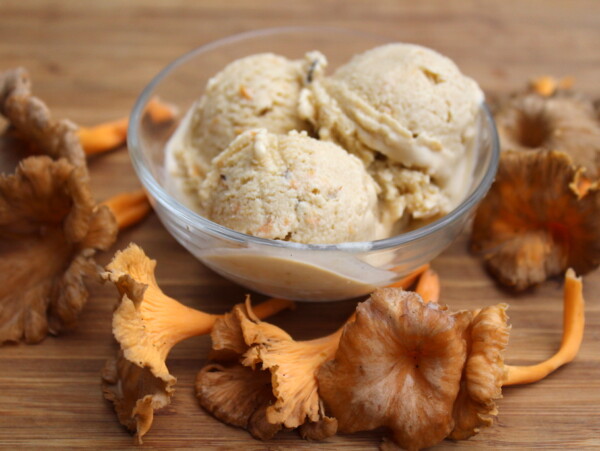
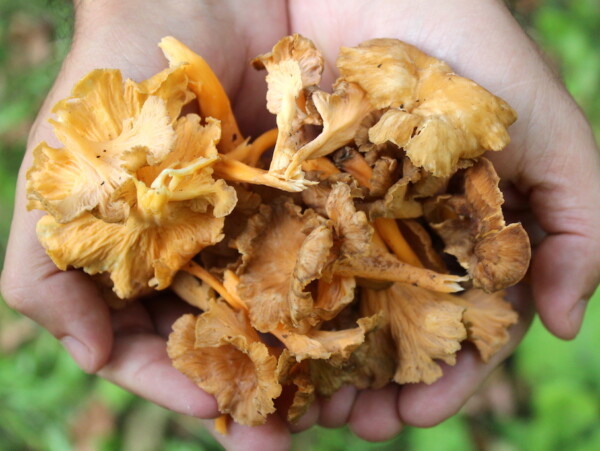
Chanterelles are the mushroom I build my preservation year around here in Vermont. In a good summer we bring home more golden chanterelles than we could ever eat fresh, and I’ve learned the hard way that they don’t keep long in the fridge. Drying is my everyday workhorse for the bulk of them, but the ones I’m proudest of go into the freezer as chanterelle ice cream, which tastes like apricots with a savory, umami edge that nobody expects from a mushroom.
Over the years I’ve worked my way through most of the methods below, partly out of necessity and partly because a boom harvest makes you creative. Some jars get opened all winter long, and some are experiments I’m still figuring out. If you preserve mushrooms in a way I haven’t tried, I’d love to hear about it, so leave me a note in the comments at the end.
Ways to Preserve Mushrooms
Each method below brings out something different in the mushrooms, and once you’ve tried a few, you’ll start matching the technique to the harvest without thinking about it. Whether you’re preserving mushrooms for the pantry, the medicine cabinet, or just the fun of having wild food on the shelf, there’s a way here to get it done.
1. Freezing Mushrooms
Freezing is one of the simplest ways to put up wild mushrooms, but it does take a little prep first. Most mushrooms shouldn’t go into the freezer raw, because their high water content turns them mushy and waterlogged once they thaw. Instead, sauté them first, just until they release their moisture and start to brown, then cool them and portion them into jars or freezer bags for later.
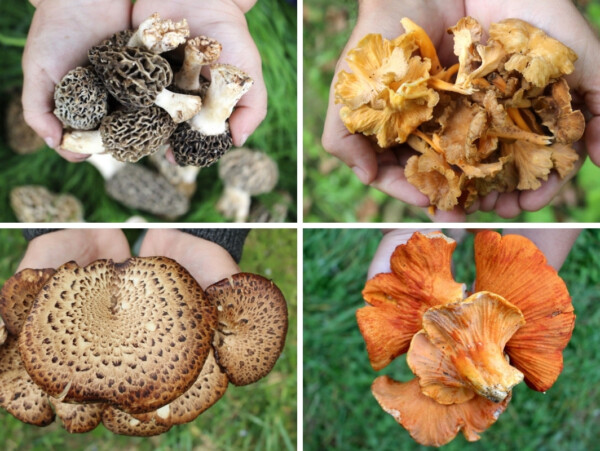
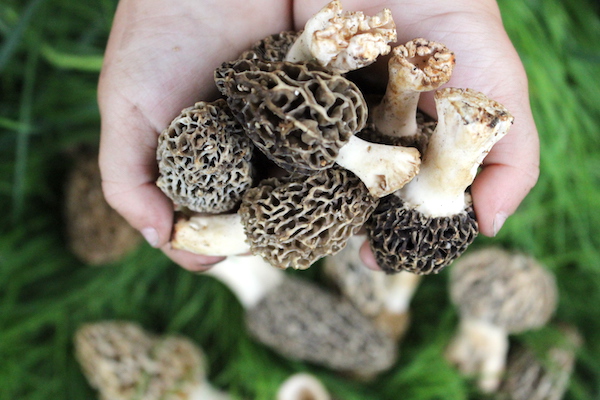
Some mushrooms freeze beautifully this way. Morels and chanterelles both hold their texture and flavor well after a quick sauté, ready to drop straight into soups, sauces, and skillet dinners. Cultivated varieties like lion’s mane or shiitake are worth freezing already cooked, so you’ve got a weeknight head start waiting in the freezer.
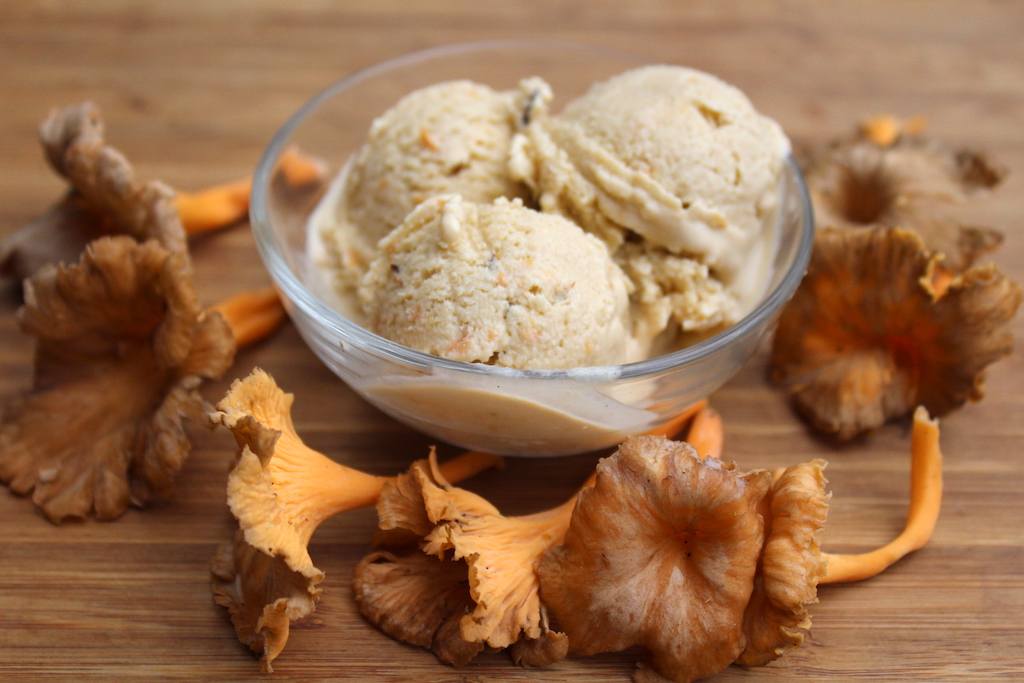
Believe it or not, mushrooms turn up in desserts too. One of the more surprising freezer projects is mushroom ice cream, often made with candy caps, which naturally taste like maple syrup or butterscotch. We make ours with chanterelles instead, steeping them in cream and churning them into something rich and just barely savory. If you want to try it, here’s my full chanterelle ice cream recipe with all the details.
2. Dehydrating Mushrooms
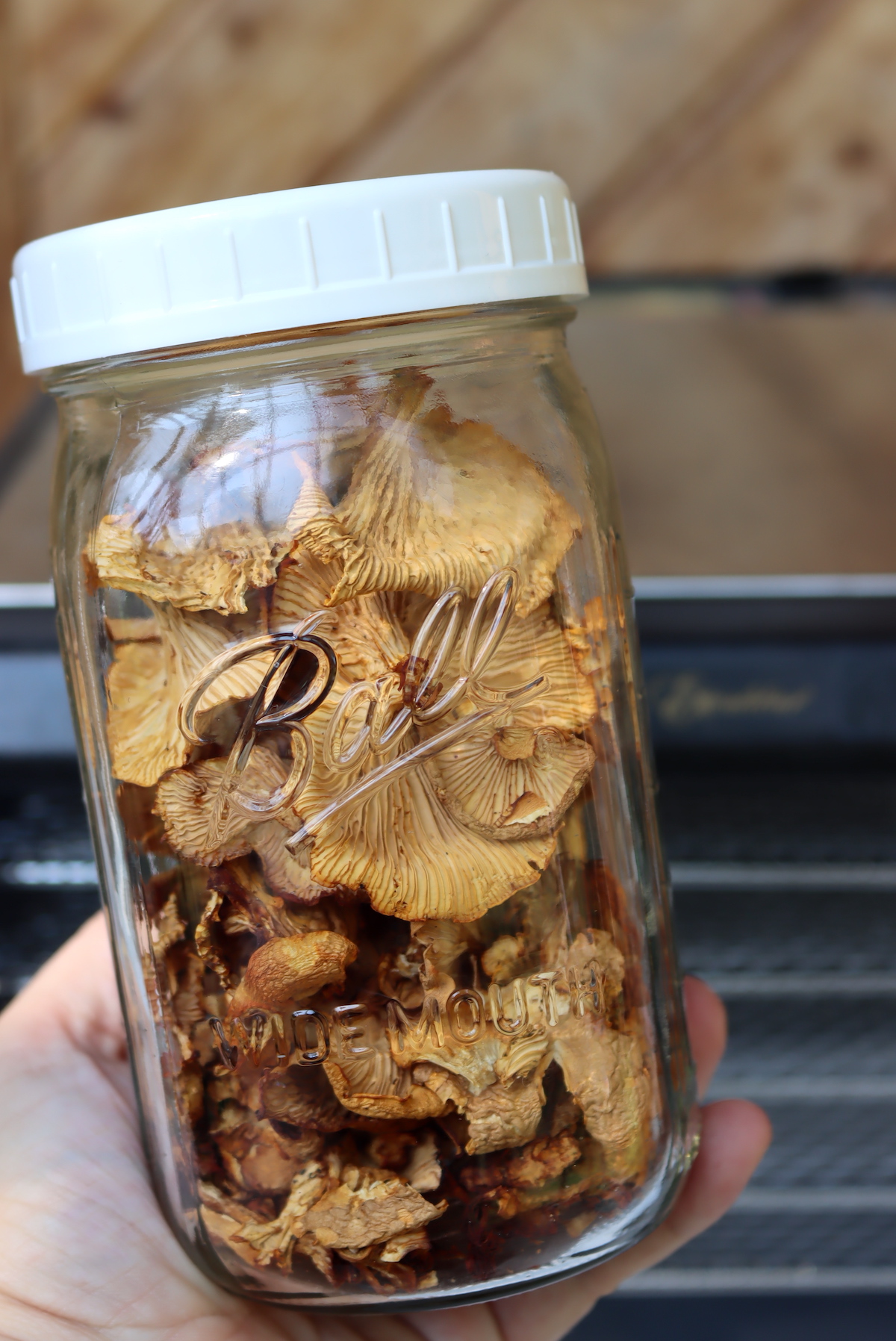
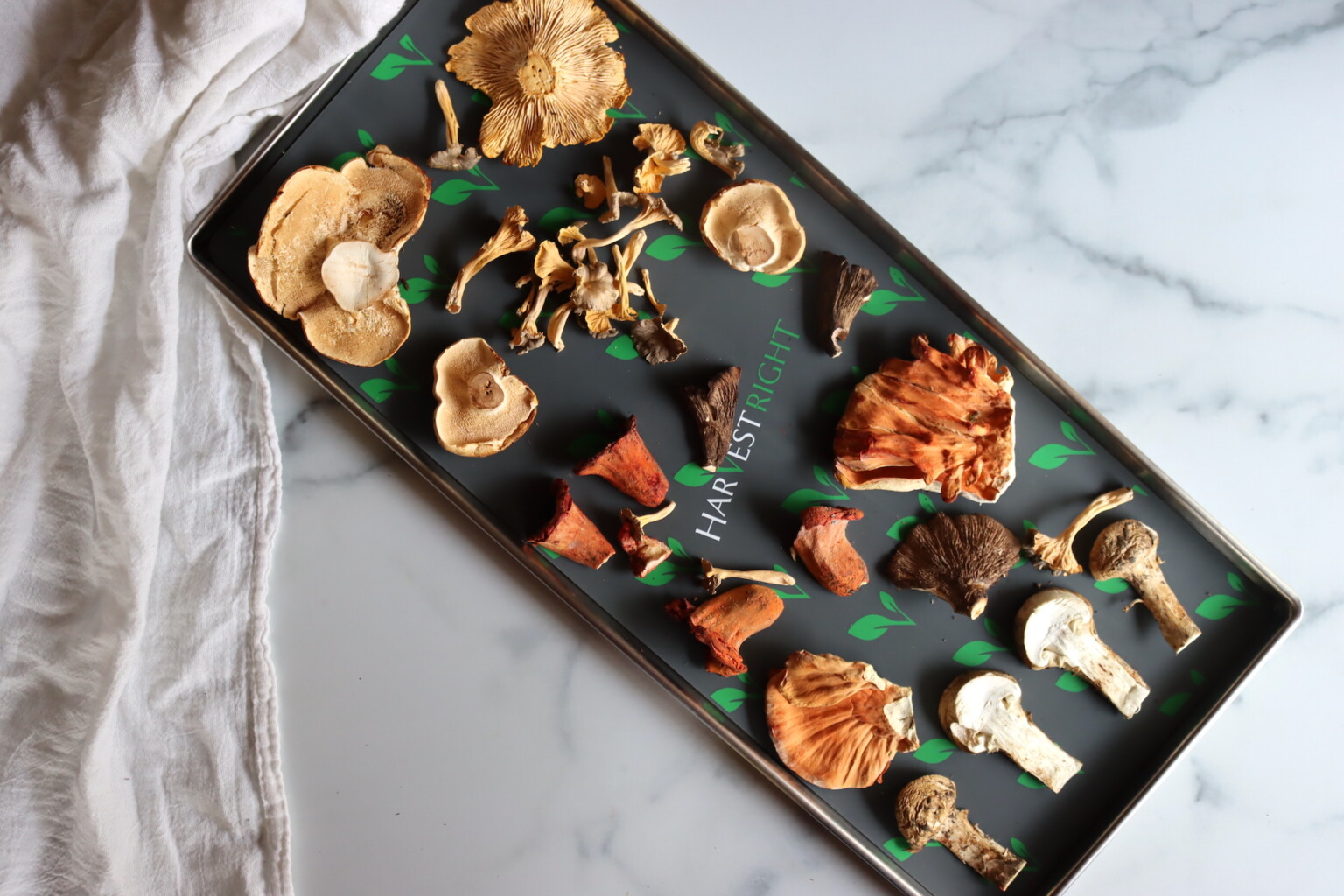
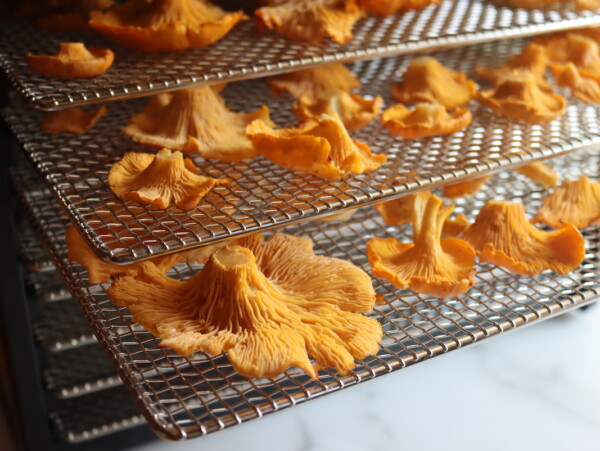
Drying is the most traditional way to preserve mushrooms, and it works for nearly every variety you’re likely to bring home. Once mushrooms are fully dehydrated, they store almost indefinitely in an airtight jar and rehydrate right back into soups, stews, and sauces. It’s my go-to method for the bulk of a big harvest, since dried mushrooms take up so little pantry space. Here’s my complete guide to how to dehydrate mushrooms, wild or cultivated.
To dry them, slice the mushrooms thinly and spread them in a single layer in a dehydrator or a warm, dry spot with good airflow. Times vary with thickness and moisture, but most mushrooms are done in 6 to 12 hours. You’ll know they’re ready when they snap cleanly instead of bending.
Dried mushrooms also grind into mushroom powder, which is one of the simplest ways to fold deep umami into broths, gravies, and spice rubs. Shiitake and porcini powders are especially good for this, and a spoonful stirred into a pan sauce does a lot of quiet work.
3. Freeze Drying Mushrooms
Freeze drying is the gold standard for holding onto texture and flavor, especially with delicate mushrooms that don’t come back well from ordinary dehydrating. The process pulls moisture out at very low temperatures, leaving behind crisp, shelf-stable mushrooms that bounce back to nearly fresh once you rehydrate them.
The finished mushrooms keep their color and flavor remarkably well, and they store for decades when properly sealed. Whether you’re working with morels, oyster mushrooms, or lion’s mane, a home freeze dryer preserves the integrity of the mushroom better than any other method I’ve used.
You can also snack on freeze-dried mushrooms straight from the jar. They’re surprisingly addictive as a crunchy, savory nibble, a bit like nature’s version of a potato chip.
4. Canning Mushrooms
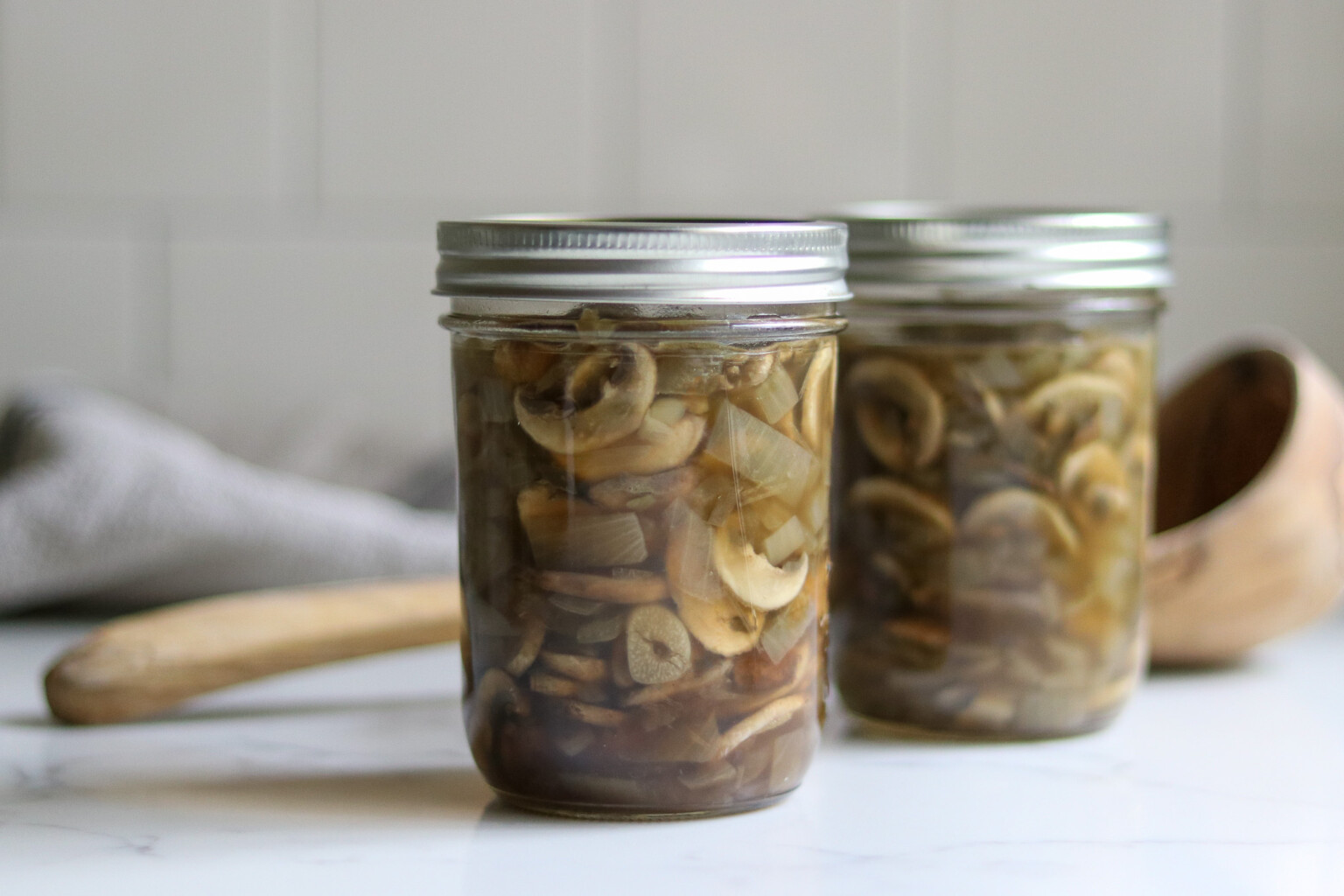
Canning is where mushrooms need a careful hand. You should never can wild mushrooms at home, because their wide variation in density, texture, and water content means processing times can’t be verified for safe heat penetration. Cultivated button and crimini mushrooms are a different story. These have been tested through the National Center for Home Food Preservation, adapted from the USDA Complete Guide to Home Canning, and they hold up well in jars when you follow a tested recipe.
Because mushrooms are a low-acid vegetable, they have to be pressure canned, never water bath canned. To can them, trim and soak the mushrooms, then boil them for 5 minutes before packing them hot into jars. Add 1 inch of headspace, an optional half teaspoon of salt per pint for flavor, and an optional pinch of ascorbic acid if you want to keep pale mushrooms from darkening. Process half-pints and pints for 45 minutes in a pressure canner, adjusting the pressure for your altitude. There are no tested times for quarts, so don’t size up. My full step-by-step canning mushrooms recipe over on Creative Canning walks through the whole process with the altitude chart.
If you end up with leftover mushroom cooking liquid after filling your jars, don’t pour it out. You can process it separately as canning mushroom broth, since the NCHFP allows canning a vegetable broth at the same time as the vegetable itself, which puts mushroom broth at the same 45 minutes. Whole mushrooms are also a natural addition to canning soup recipes, like this recipe for canning cream of mushroom soup base.
Once canned, mushrooms stay shelf-stable for over a year and drop straight into soups, stews, gravies, and pasta with no prep at all. It doesn’t preserve the gourmet texture of fresh or freeze-dried mushrooms, but pressure canning is a genuinely useful way to store cultivated mushrooms in bulk when you’ve got more than you can use fresh.
5. Pickling Mushrooms
Pickling is one of my go-to ways to preserve mushrooms, because the acidity does the heavy lifting. When mushrooms are packed in a high-acid vinegar brine, you don’t have to think about the pressure canner or the risks that come with low-acid foods.
Before pickling, parboil or sauté the mushrooms to firm up their texture and make sure they’re fully cooked. Then pack them into jars with a hot vinegar brine along with your choice of spices, herbs, and sometimes a little sugar for a sweet-and-savory edge. With wild mushrooms, keep these as refrigerator pickles for safety. With cultivated mushrooms, you can follow a tested canning recipe like this one for canning marinated mushrooms.
Pickled mushrooms are a staple across Eastern European and Italian cooking, and for good reason. They’re wonderful on a charcuterie board, tossed into a salad, or eaten straight from the jar. Meaty wild mushrooms like chicken of the woods are especially good pickled, since they hold their firm texture in the brine.
6. Fermenting Mushrooms
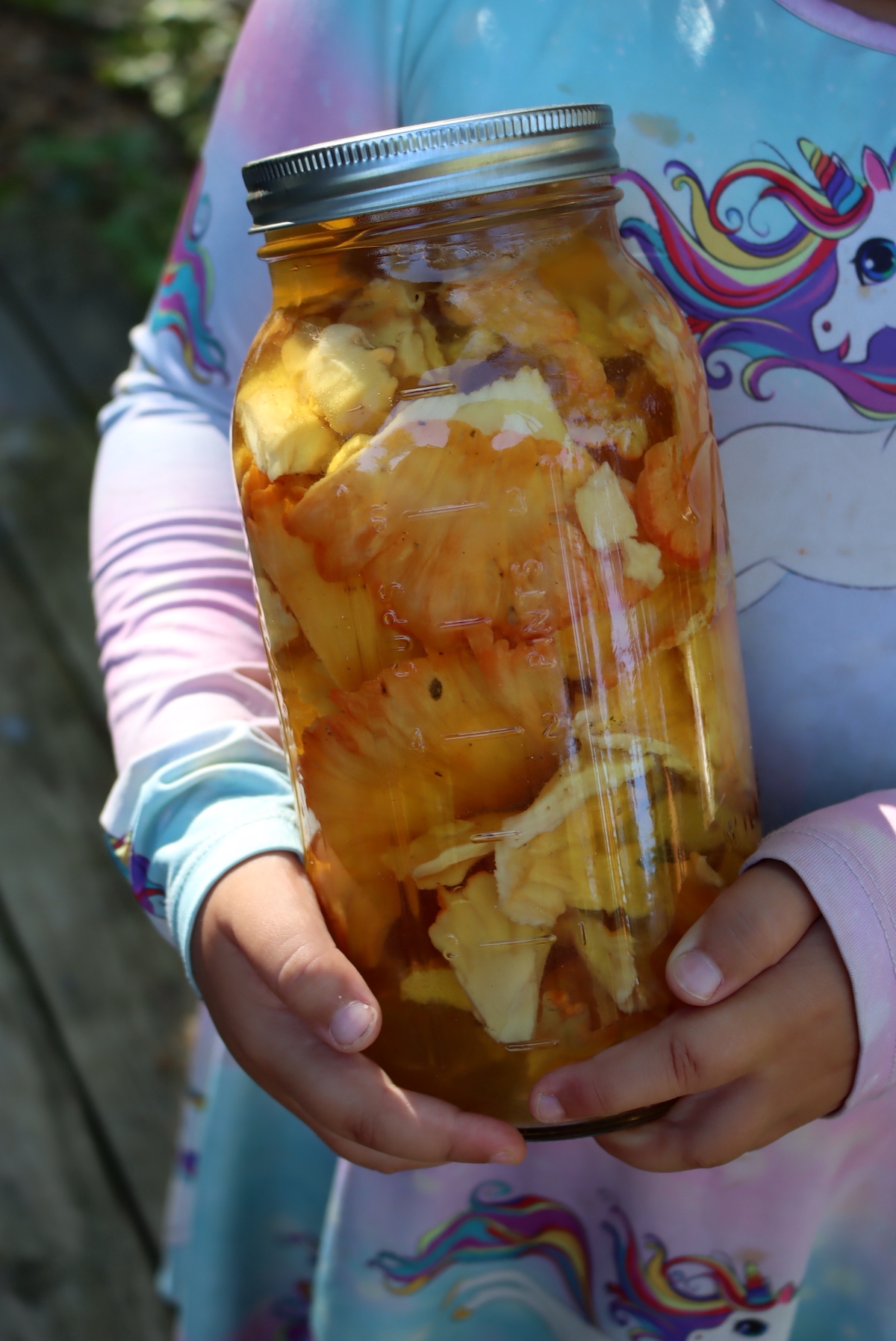
Fermentation isn’t just for cabbage and cucumbers. Mushrooms ferment beautifully too, and a salt ferment deepens their natural umami while adding a tangy, funky complexity. What you end up with is a savory, probiotic-rich preserve that works as a condiment, a side, or a topping for grain bowls and sandwiches. Meaty varieties like oyster, shiitake, and porcini are the strongest candidates, holding their texture while the flavor builds over time.
To ferment mushrooms, slice or chop them and pack them into a jar with about 3% salt by weight, roughly 1 1/2 teaspoons of salt per cup of chopped mushrooms. Press them down so they release their liquid, or add a splash of brine so everything stays submerged. Weigh them down and let them ferment at room temperature for about a week, tasting as you go. Once they’re pleasantly tangy, move them to the fridge for long-term storage. They’re delicious in salads, on a charcuterie board, or served alongside other pickled vegetables.
7. Mushroom-Infused Salt
Mushroom salt is a simple, shelf-stable way to capture the deep, earthy flavor of whatever fungi you’ve dried. Start by drying mushrooms until they’re crisp, then grind them into a fine powder in a spice grinder or blender. Mix the powder with coarse or fine sea salt at a ratio that suits your taste, usually around one part mushroom powder to four parts salt.
This savory blend adds an instant umami boost to roasted vegetables, eggs, soups, steaks, and even popcorn. It shines with rich or creamy dishes, where the mushroom flavor has room to come forward. I like making separate blends for different mushrooms: porcini salt for a bold, woodsy note, or candy cap salt for a sweet-savory twist that’s lovely on roasted squash or stirred into compound butter. Sealed in a jar, mushroom salt keeps for months and makes a thoughtful homemade gift for the foragers and food lovers in your life.
8. Mushroom Ketchup
Long before tomatoes took over the condiment shelf, mushroom ketchup was a pantry staple in kitchens across England and early America. Made from slow-fermented or simmered mushrooms, salt, and spices, it’s a dark, umami-rich sauce that once seasoned meats, soups, stews, and gravies much the way Worcestershire or soy sauce does today.
Traditional recipes layer chopped mushrooms, often field mushrooms or other dark, flavorful types, with salt and let them sit for a day or two. That draws out the liquid and starts to break the mushrooms down. The mixture then simmers with vinegar, allspice, pepper, and other spices before being strained and bottled. The result is a thin, dark liquid packed with deep mushroom flavor and a gentle tang from the vinegar.
Homemade mushroom ketchup is best stored in the refrigerator, where it keeps for several weeks, and it freezes well for longer storage. It’s had a quiet comeback among foragers and fermentation fans, and it’s worth trying as a marinade, a secret ingredient in gravies, or a spoonful stirred into soup for an instant hit of umami.
9. Mushroom Tinctures
If you’re working with medicinal mushrooms like chaga, reishi, turkey tail, or lion’s mane, tinctures are one of the most compact and long-lasting ways to preserve their beneficial compounds. It’s not only wild mushrooms, either. Cultivated mushrooms like shiitake are traditionally valued for their medicinal properties too.
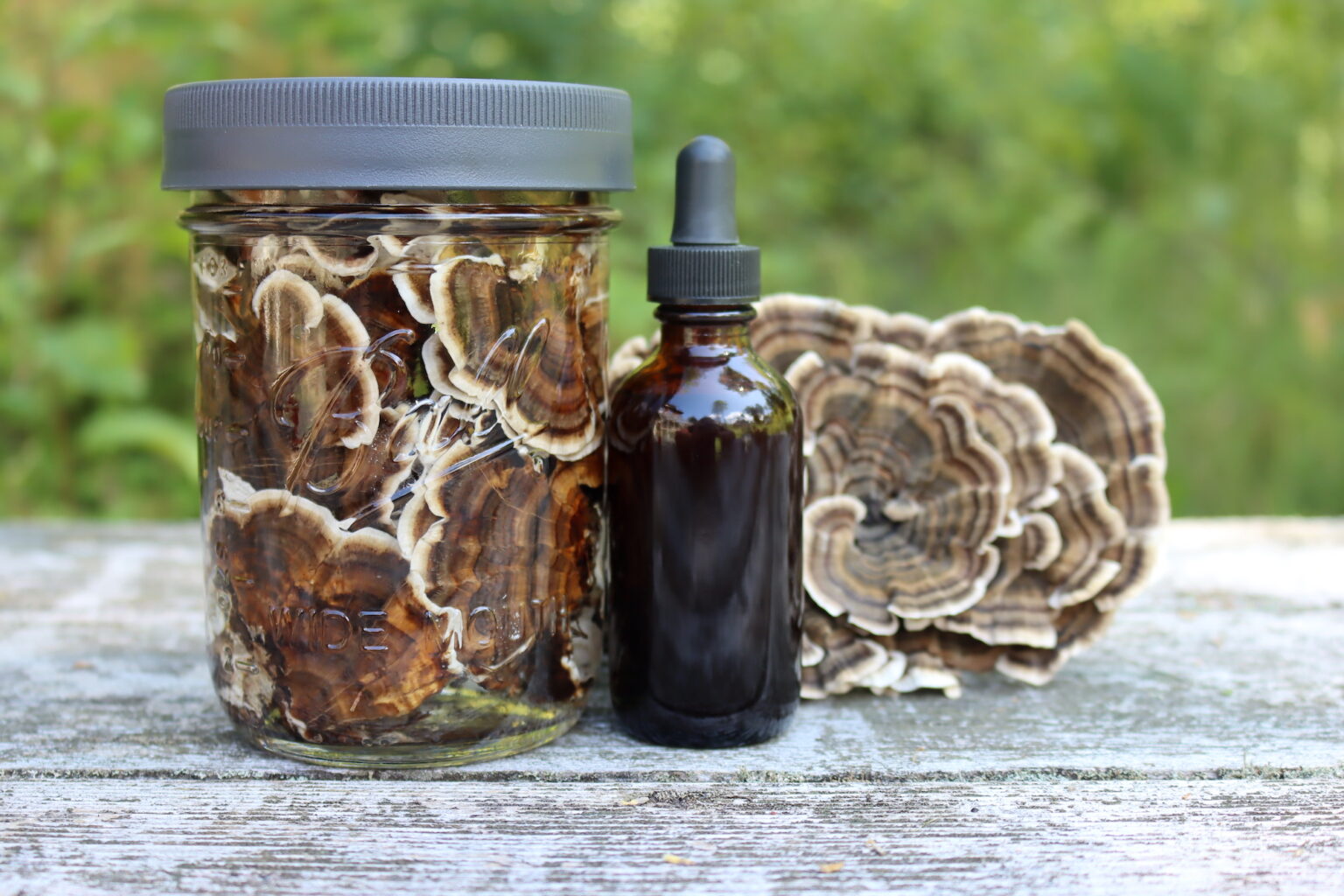
A tincture is made by soaking dried or fresh mushrooms in alcohol to extract their alcohol-soluble constituents, primarily the triterpenes. Many herbalists prefer a double extraction for mushrooms, which involves simmering the mushrooms in water first to pull out the water-soluble beta-glucans and polysaccharides, then soaking the strained solids in high-proof alcohol for several weeks. Combining the two extracts gives you a shelf-stable tincture that captures both fractions.
These concentrated extracts are taken by the dropperful and used as daily supplements, traditionally to support immune and cognitive health depending on the mushroom. I’ve got full walkthroughs for a chaga tincture, a reishi tincture, and a turkey tail tincture, and you’ll find more in my guide to immune-boosting herbs and mushrooms.
10. Mushroom Cordials
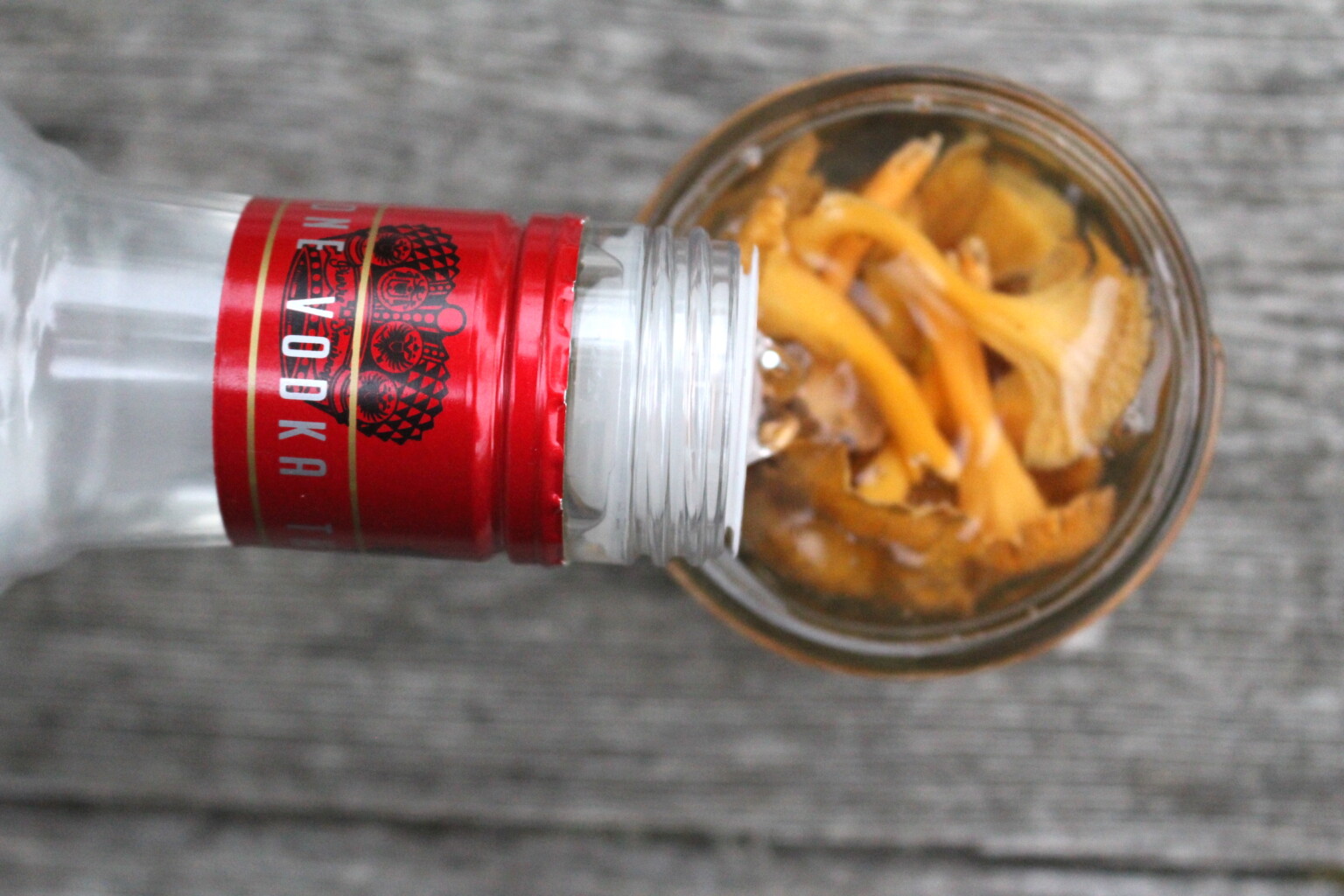
On the sweeter side of things, mushroom cordials use alcohol to capture flavor rather than medicine. A handful of culinary mushrooms take to this surprisingly well, and candy caps and chanterelles are the two I’d start with.
Candy caps are famous for an aroma that reads like maple syrup and brown sugar. Infused in brandy or vodka and sweetened with a simple syrup, they make a rich, dessert-like liqueur that tastes more like a gourmet maple cordial than anything you’d expect from a mushroom. Chanterelles are more delicate, with subtle apricot and earth tones that pair especially well with aged spirits like bourbon or cognac, giving you a warm, fruity, slightly woodsy cordial for fall and winter drinks.
To make one, steep dried mushrooms in alcohol for a few weeks, then strain and sweeten to taste. You end up with a flavorful, shelf-stable cordial that brings a wild, foraged twist to after-dinner drinks and dessert. If you’ve got a chanterelle haul to work through, my collection of chanterelle mushroom recipes has plenty of other ideas.
11. Candied Mushrooms
Yes, you really can candy mushrooms, and the results are far more delicious than they sound. Candying leans into a mushroom’s natural sweetness and turns earthy or fruity varieties into treats for desserts, cocktails, or straight-up snacking.
Candy caps are the classic choice here. Their maple flavor intensifies when candied, which makes them wonderful folded into baked goods or eaten on their own. Simmer them in a sugar syrup until fully saturated, then dry them slightly for a chewy, caramel-like texture. Chanterelles work too, taking their subtle apricot note into an elegant dessert topping. Chanterelle cheesecake is a regular in our kitchen, and a little citrus zest or honey in the syrup rounds the flavor out.
Some foragers get even more playful with the jelly fungi. Jelly babies (Leotia lubrica) and witch’s butter (Tremella mesenterica) can be candied the same way, simmered in sugar syrup until translucent, then tossed in citric acid for a sour kick. The result is a wild-foraged take on sour gummy candy: chewy, tangy, and weirdly addictive if you enjoy experimenting with texture and flavor. Candied mushrooms are a niche treat, but they’re a fun, delicious way to stretch both your imagination and your harvest.
Beyond these eleven methods, creative mushroom lovers keep coming up with new ways to hold onto their finds. Some infuse mushrooms into oils or vinegars for cooking, others blend dried mushrooms into compound butters, and plenty fold mushroom powder into spice blends and rubs. However you choose to preserve them, a good harvest can carry you well past mushroom season, filling your pantry, freezer, and spice rack with the flavors of the forest all year long.
A Note on Mushroom Preservation Safety
A few of these methods deserve a careful word, because mushrooms are a low-acid food and low-acid foods carry a real risk of botulism when they’re preserved improperly. The most important rule is the one worth repeating: never pressure can wild mushrooms, and never water bath can any mushroom. Only cultivated button and crimini mushrooms have tested pressure canning times, and even they have to be processed in a pressure canner, never a boiling water bath.
The same caution applies to the vinegar-based projects. Pickled wild mushrooms and homemade mushroom ketchup should be stored in the refrigerator rather than canned at home, unless you’re following a lab-tested recipe written specifically for canning. A home pH reading isn’t enough to make a low-acid food safe for shelf storage, so when in doubt, keep it in the fridge or the freezer. Drying, freezing, freeze drying, and tinctures don’t carry the same risk, which is part of why they’re such reliable go-to methods.
Mushroom Preservation FAQs
It depends on the mushroom and how you plan to use it. Drying is the most versatile and space-saving method and works for almost any variety. Freezing (after a quick sauté) is best when you want mushrooms that behave like fresh in cooked dishes, and freeze drying preserves texture and flavor better than anything else. For long-term pantry storage of cultivated button or crimini mushrooms, pressure canning is a solid option.
No. You should never pressure can wild mushrooms, because their wide variation in density, texture, and water content means processing times can’t be verified for safe heat penetration. Only cultivated button and crimini mushrooms have tested, USDA-approved pressure canning times. Wild mushrooms are better preserved by drying, freezing, freeze drying, or refrigerator pickling.
Yes. If you have leftover mushroom cooking liquid, you can pressure can it as mushroom broth. The NCHFP allows canning a vegetable broth using the same processing time as the vegetable itself, so mushroom broth is processed for 45 minutes in half-pints or pints, the same as canned mushrooms. Like the mushrooms, it must be pressure canned and never water bath canned.
In most cases, yes. Mushrooms have a high water content, and freezing them raw tends to leave them mushy and waterlogged once thawed. Sautéing them first, just until they release their moisture and start to brown, gives you a much better texture. Cool them completely before portioning into jars or freezer bags.
Properly dried mushrooms, stored in an airtight container in a cool, dark place, keep almost indefinitely, easily a year or more with no loss of quality. The key is making sure they’re fully dry (they should snap rather than bend) and keeping moisture out of the jar. If you ever see any sign of moisture or mold, discard them.
Mushroom Recipes & Projects
Did you find this mushroom preservation guide helpful? Tell me in the 📝 comments below how YOU preserve your mushroom harvest, I’m always looking for new ideas to try!
And make sure you stay in touch with me by following on social media!
A Note on Foraging Safely
Before any of these preservation methods come into play, correct identification has to come first. I forage and preserve the mushrooms I write about here, but I’ve spent more than 20 years learning to identify them, and I still double-check anything I’m not completely sure about. Please never eat or preserve a wild mushroom unless you’re certain of exactly what it is. Several choice edibles have poisonous lookalikes, and a single misidentification can land you in the hospital.
If you’re newer to foraging, get your finds confirmed by an experienced local forager or a regional mushroom identification group before you eat anything, and when you try a new-to-you species for the first time, cook it thoroughly, eat only a small amount, and wait a full day before having more. Even well-known edibles disagree with some people. If you want to build your identification skills the way I did, the Herbal Academy’s Mushroom Course is a good place to start. When in doubt, leave it in the woods. There’s always another flush coming.
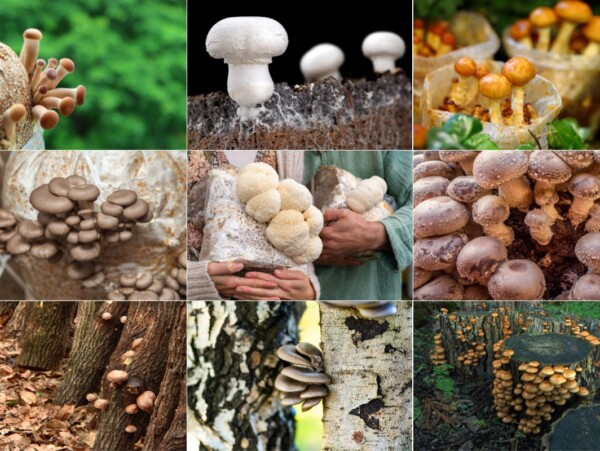
Mushroom Foraging & Growing Guides
Find the perfect recipe
Searching for something else? Enter keywords to find the perfect recipe!








Do you have/know of a mushroom broth recipe that is able to be canned?
I love the mushroom salt idea and will definitely be trying that as well
I just published a recipe for canning mushroom broth here: https://creativecanning.com/canning-mushroom-broth/
It’s processed for a good bit longer than most broths (45 minutes) and you can only do pints (not quarts), but it follows NCHFP guidelines. Enjoy!
Can’t wait to try it out! Thank you so much!
Lovely! So glad I could help.