Affiliate disclosure: This post may contain affiliate links. Please see our Privacy Policy.
Shrimp of the woods are white, knobby wild mushrooms that appear alongside honey mushrooms in late summer and fall. They’re among the easiest wild mushrooms to identify, and they cook up firm and springy like shrimp, with a mild mushroom flavor.
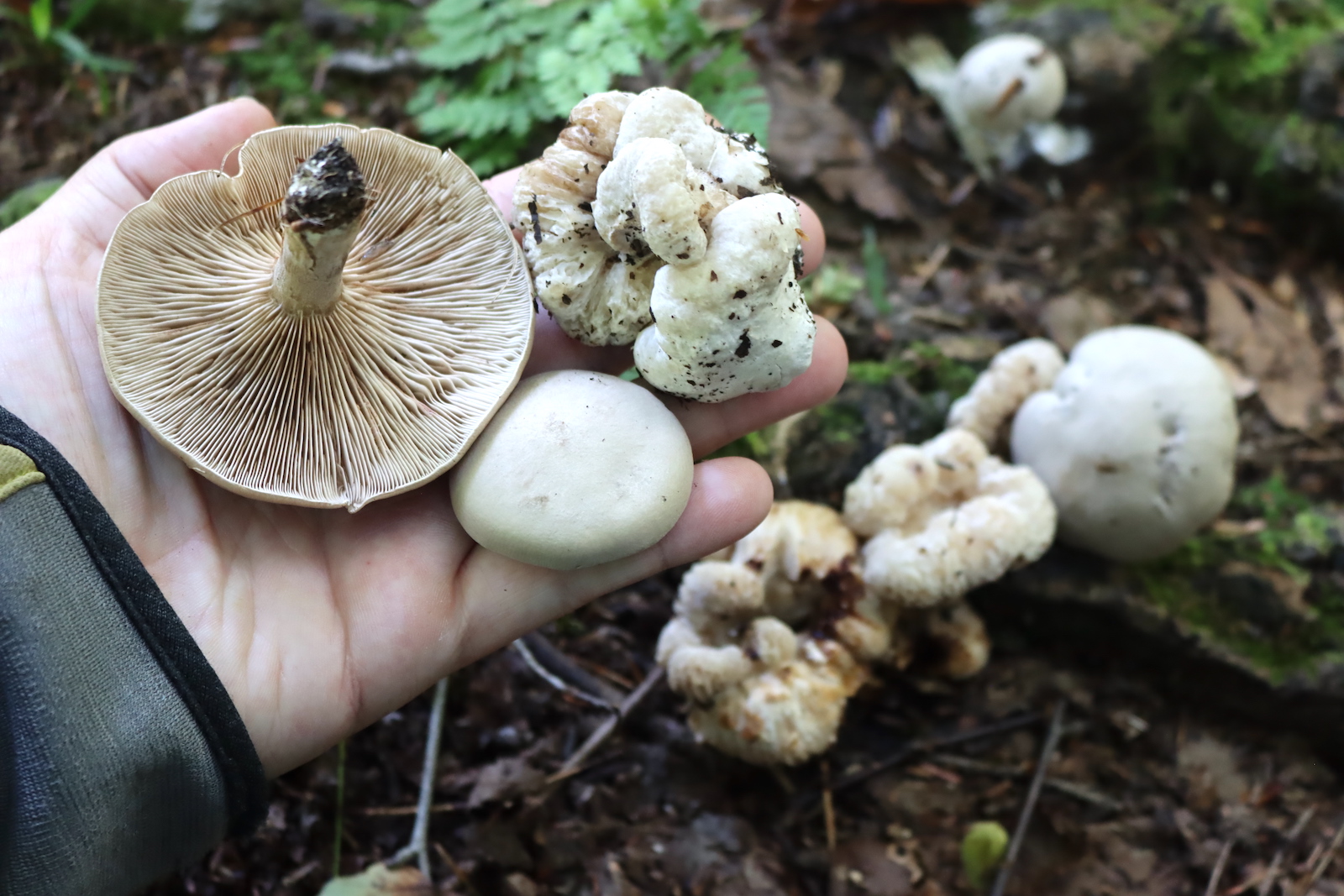
Table of Contents
- Forager’s Notes
- What Is Shrimp of the Woods?
- Is Shrimp of the Woods Edible?
- When to Find Shrimp of the Woods
- Where to Find Shrimp of the Woods
- Identifying Shrimp of the Woods
- Shrimp of the Woods Look-Alikes
- Harvesting and Cleaning Shrimp of the Woods
- Cooking Shrimp of the Woods
- Shrimp of the Woods FAQs
- More Mushroom Foraging Guides
- More Fall Mushrooms
Shrimp of the woods start as honey mushrooms. Current research says another mushroom, Entoloma abortivum, attacks them before they can form caps and gills. What’s left is a cluster of white lumps on the forest floor, and foragers look for those lumps.
It’s a mushroom living on another mushroom, a bit like the lobster mushroom. That one turns ordinary milk caps and russulas into bright orange, oddly shaped mushrooms.
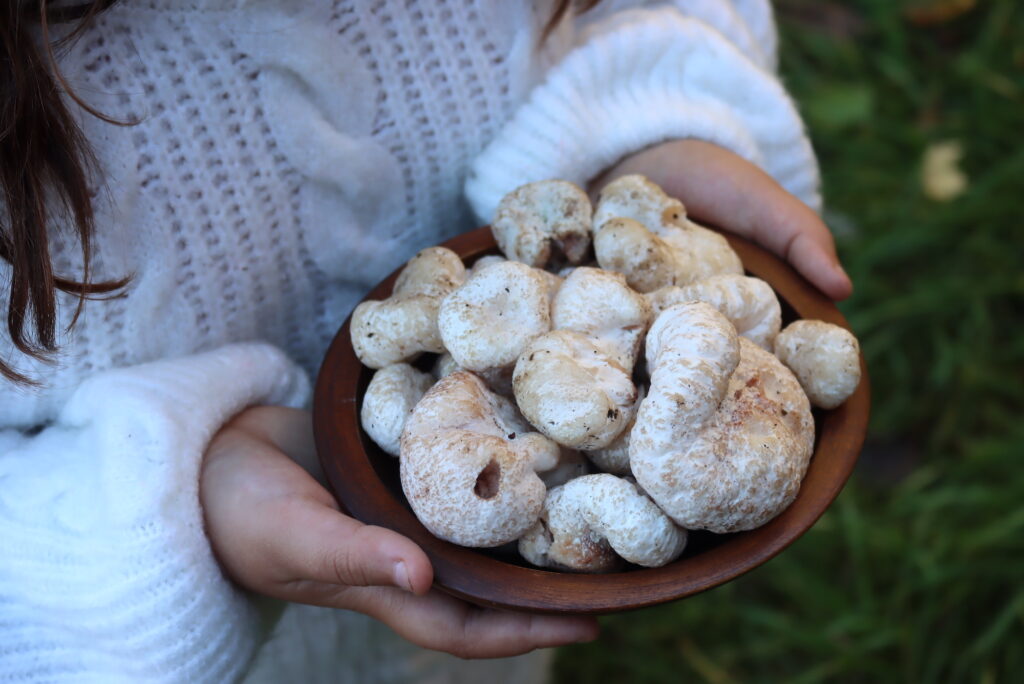
Nothing else in the woods looks quite like a cluster of them, and in my book they’re better eating than puffball mushrooms.
They don’t taste like seafood, though. The name comes from the texture, which is firm and a little bouncy, like cooked shrimp.
They come up in the same stretch of fall as hen of the woods and matsutake, so they’re a regular part of my fall mushroom foraging. If you’re just getting started with wild mushrooms, my list of edible wild mushrooms for beginners is a good place to begin.
Forager’s Notes

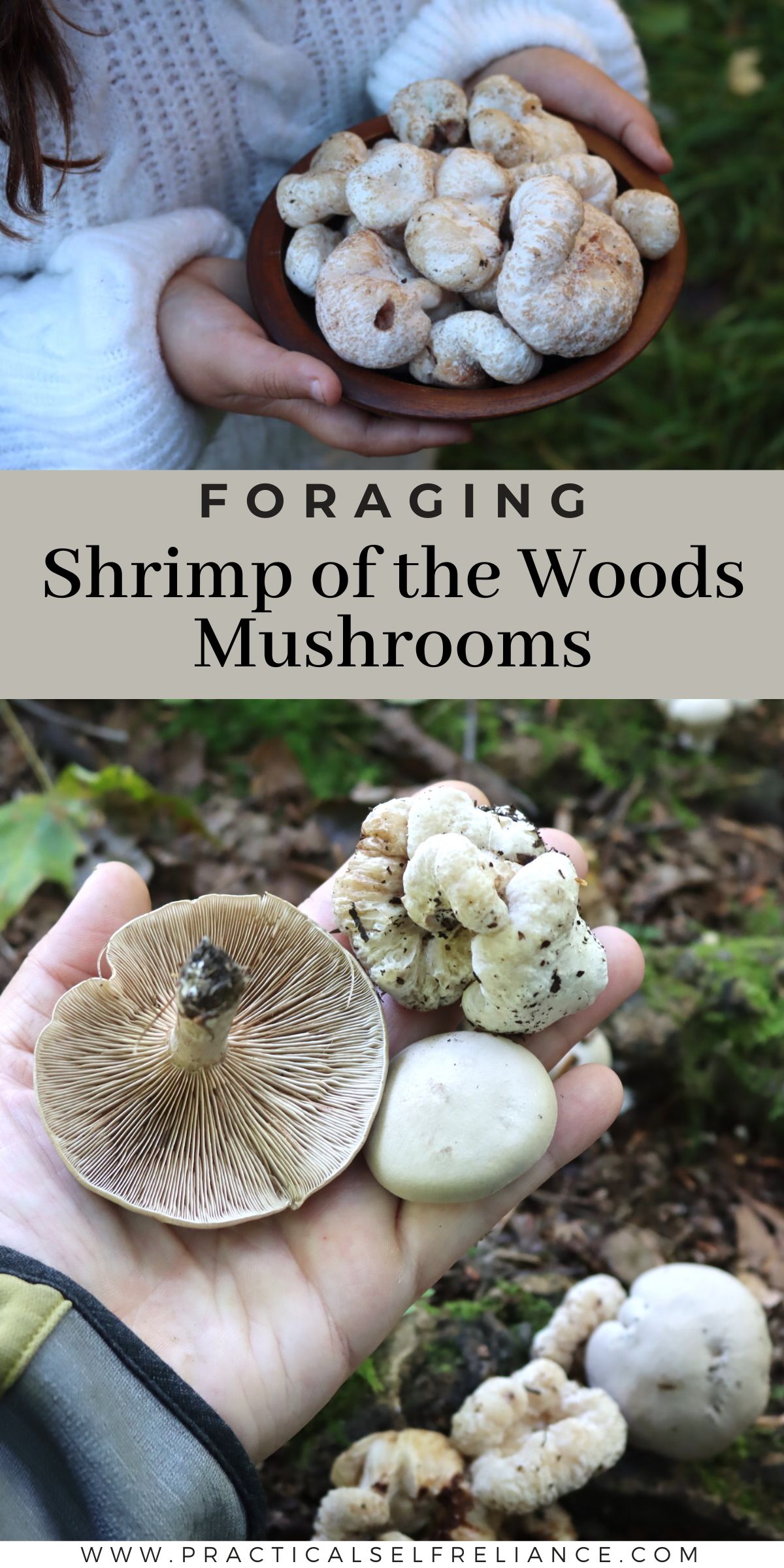
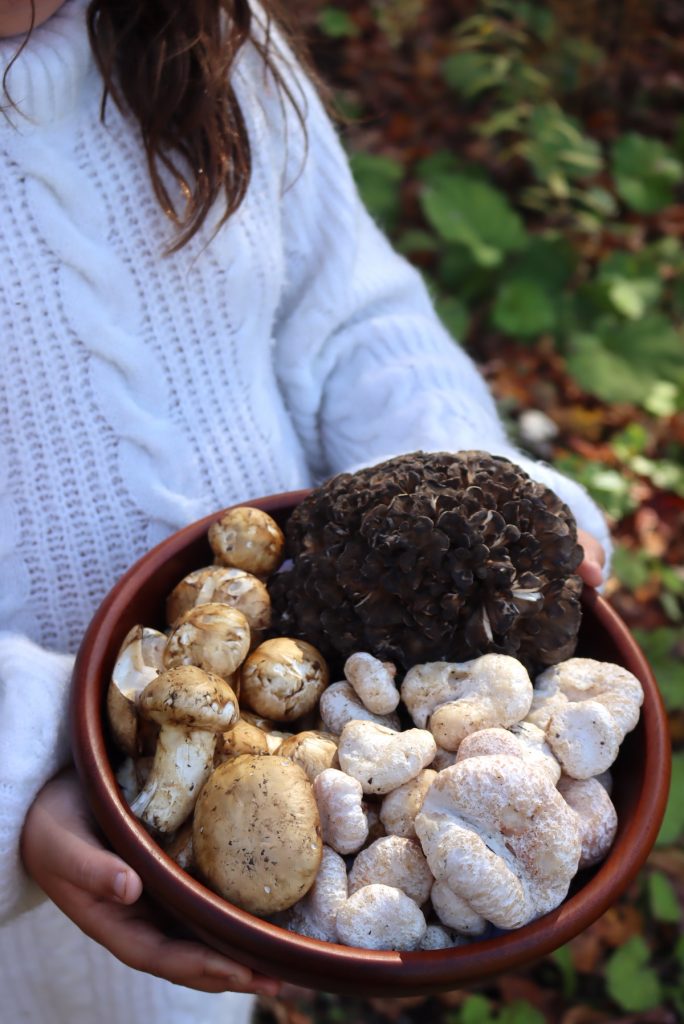
That’s my daughter holding the bowl of shrimp of the woods in these photos. The bowl with the big hen of the woods and the pile of matsutake has a few more shrimp of the woods tucked in, too.
We find all three in different spots, but they come in at the same time each autumn. Given the choice, I’ll take shrimp of the woods over honey mushrooms. They’re easier to identify, and they don’t turn slimy in the pan the way honey mushrooms can.
What Is Shrimp of the Woods?
Shrimp of the woods is the common name for Entoloma abortivum, a gilled mushroom in the family Entolomataceae, and especially for its lumpy, aborted form. The same fungus also makes ordinary gray mushrooms with caps and gills, and the two forms often grow side by side.
It goes by plenty of other names, too, including aborted entoloma, abortive entoloma, hunter’s heart, and ground prunes. In parts of Mexico, markets sell it as totlcoxcatl.
For more than a hundred years, mycologists thought the lumps were Entoloma mushrooms that had failed to develop. That’s where the name comes from. Then in 1974, a British mycologist suggested the honey mushroom was the parasite and was deforming the Entoloma.
A 2001 study in the journal Mycologia turned that around. The researchers found the lumps were deformed honey mushrooms full of Entoloma threads, and in the lab, Entoloma kept honey mushrooms from forming normally.
A 2021 study of the genes active inside the lumps supported that. Most of the genetic activity came from the Entoloma, and the authors suggested that the lumps form when Entoloma attacks, and eventually kills, its honey mushroom host.
They called it a tentative explanation and said more research is needed to confirm. Either way, it doesn’t change how you find, check, or cook them.
Is Shrimp of the Woods Edible?
Yes. The lumpy aborted form is a well-known edible, and most foragers collect it.
Since the lumps are partly honey mushroom, cook them thoroughly, as with any honey mushroom, and never eat them raw. The late mycologist Tom Volk made the cooking point in his write-up on this fungus.
Honey mushrooms don’t agree with everyone, and Midwest American Mycological Information recommends trying a small amount the first time, and only one new mushroom at a time.
The gilled form is a different story. Volk considered it edible too, but he warned that several other Entoloma species look a lot like it.
Many of those other Entolomas are toxic, so Midwest American Mycological Information recommends eating only the aborted form. In Michigan, the state only approves the aborted form for sale.
When to Find Shrimp of the Woods
Shrimp of the woods come up in late summer and fall, at the same time as honey mushrooms. When the honey mushrooms are fruiting, it’s time to start looking.
Honey mushrooms live in old stumps and roots for years, so a spot that grows them once is worth checking again the next fall. For everything else worth looking for that time of year, my fall foraging list has over a hundred.
Where to Find Shrimp of the Woods
Look for shrimp of the woods wherever honey mushrooms grow. That means around old stumps, on rotting logs, and under dying hardwood trees.
They grow on the ground near decaying wood, or right on very rotten wood, mostly in hardwood forests. They don’t stick to deep woods, either. They also turn up in lawns and parks.
In the United States and Canada, shrimp of the woods grows east of the Rocky Mountains. The same pairing with honey mushrooms also shows up in eastern Asia.
Identifying Shrimp of the Woods
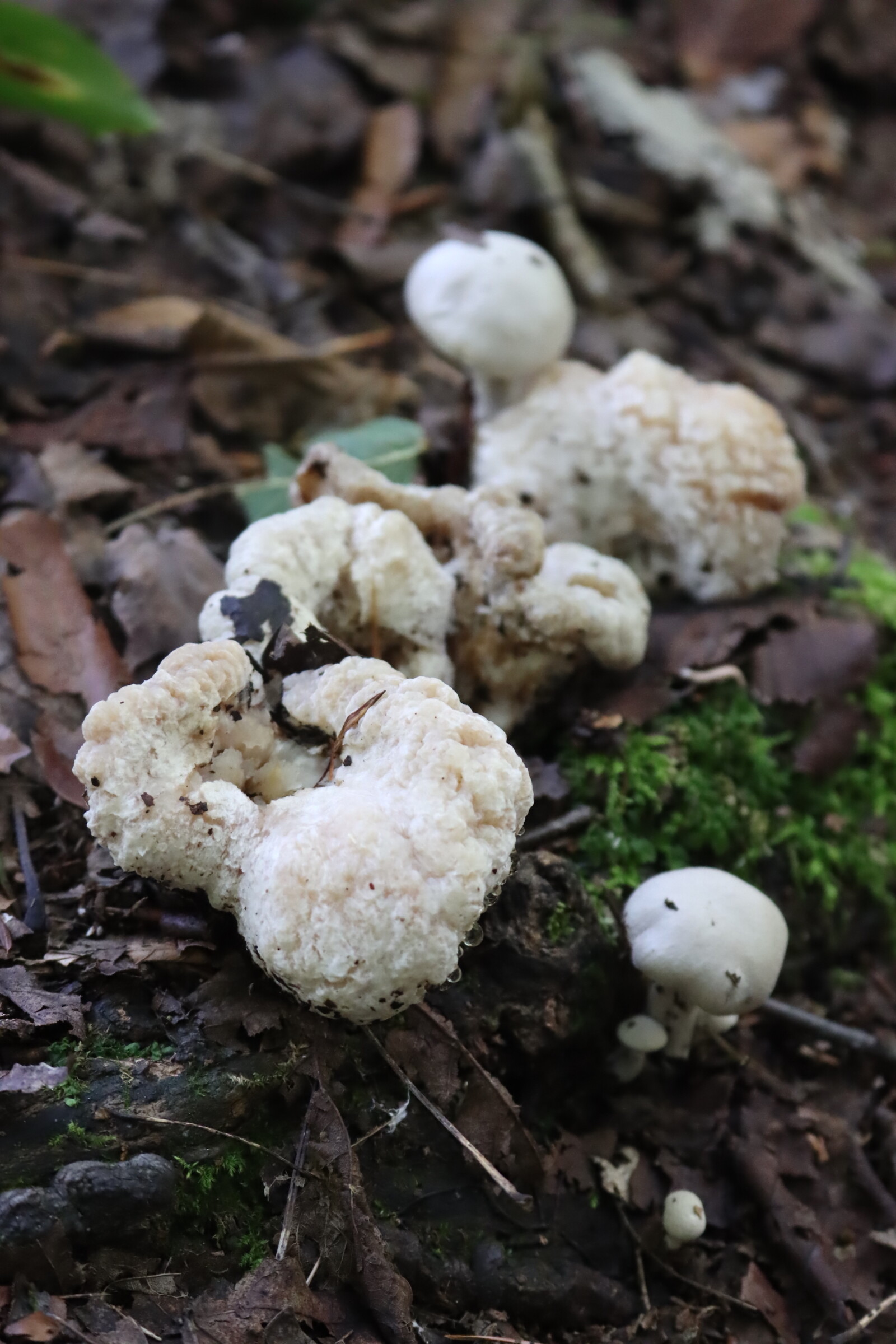
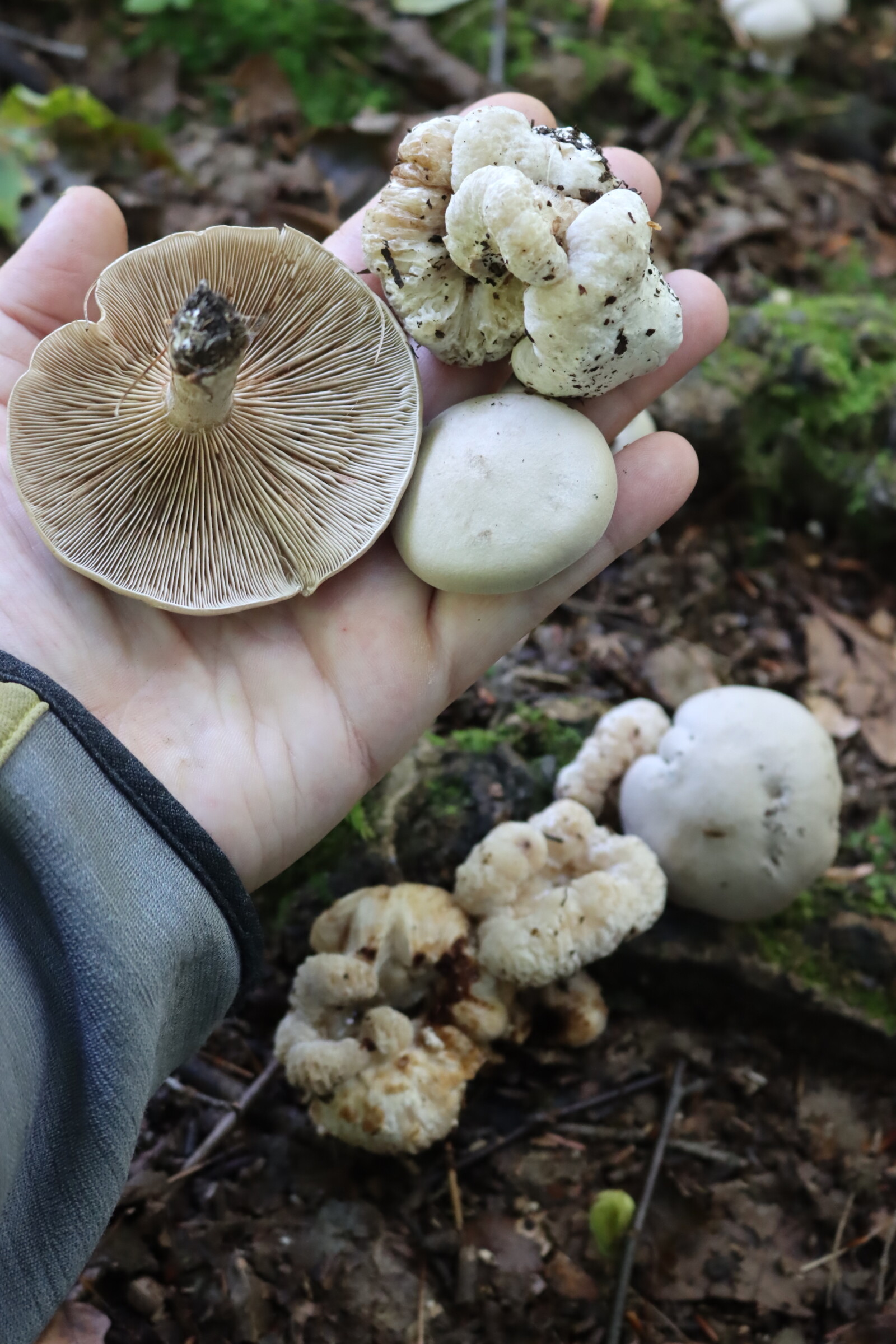
Shrimp of the woods comes in two forms, and they often grow together. The lumpy aborted form is the one people eat and the one to learn first. The gilled form looks like a lot of other gray mushrooms.
Check every feature, and cut every lump in half before it goes in your basket. If something doesn’t match, leave it in the woods.
Herbal Academy’s Mushroom Course sharpened my own mushroom identification, and it’s a good next step if you want to go deeper.
Shape and Size
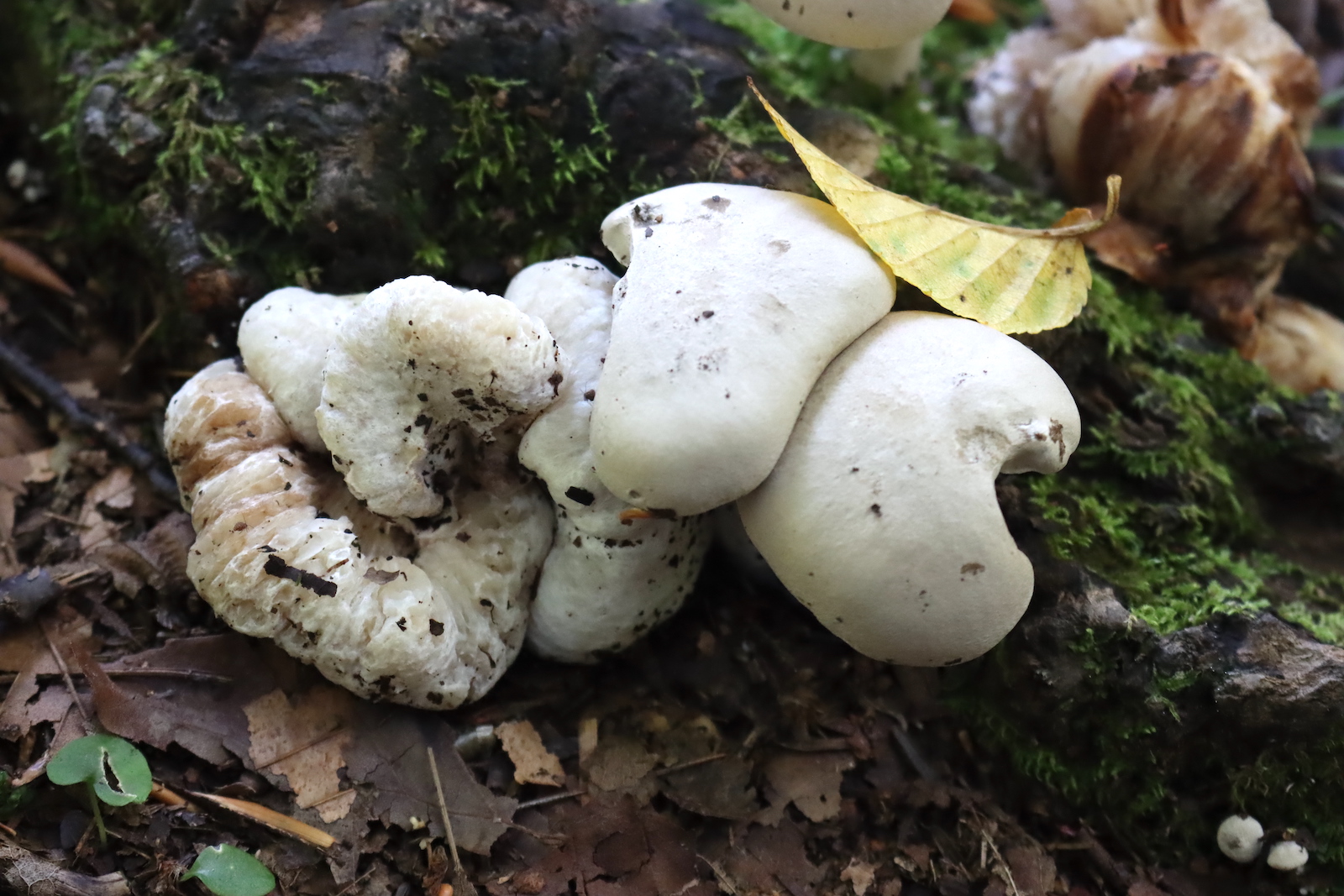
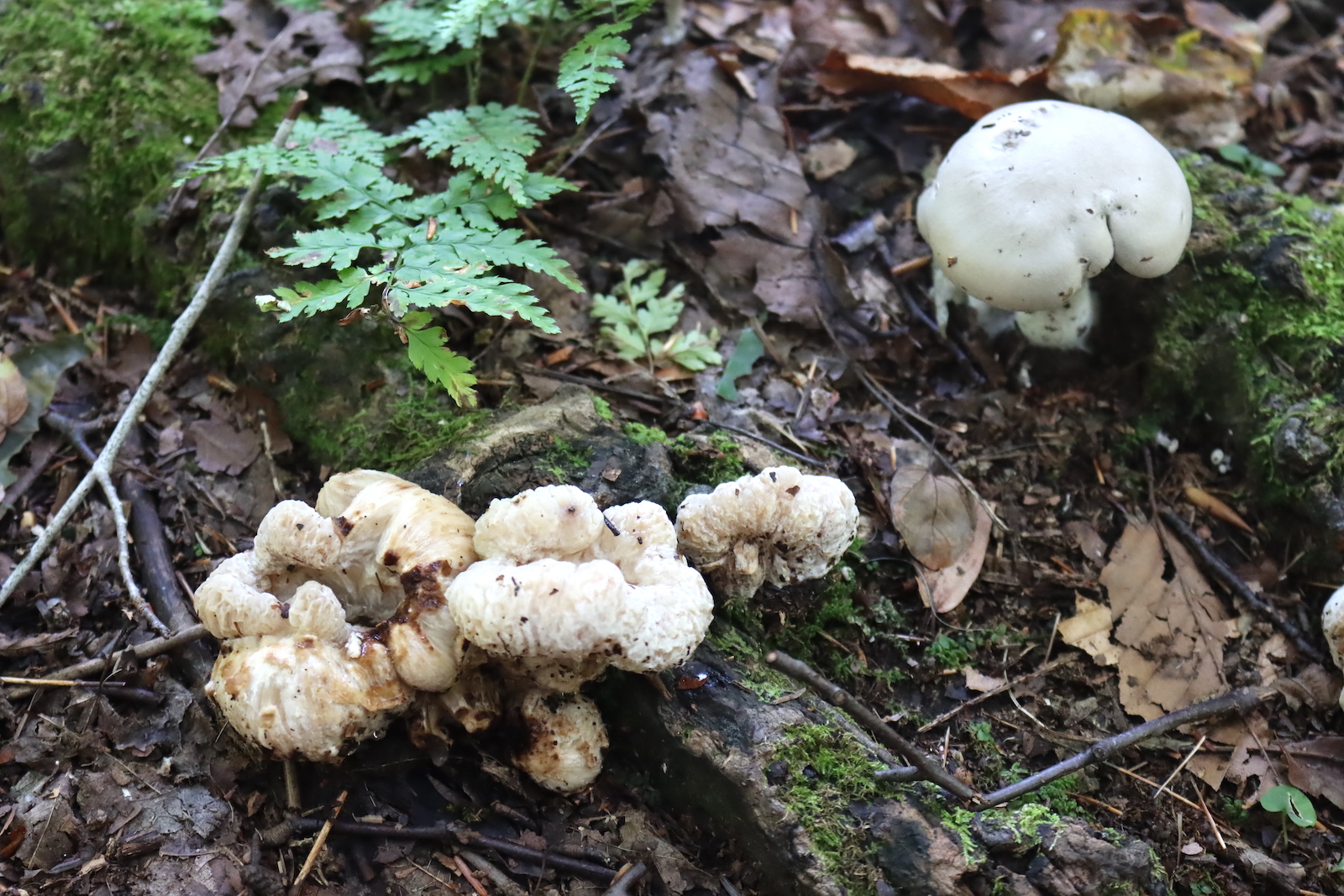
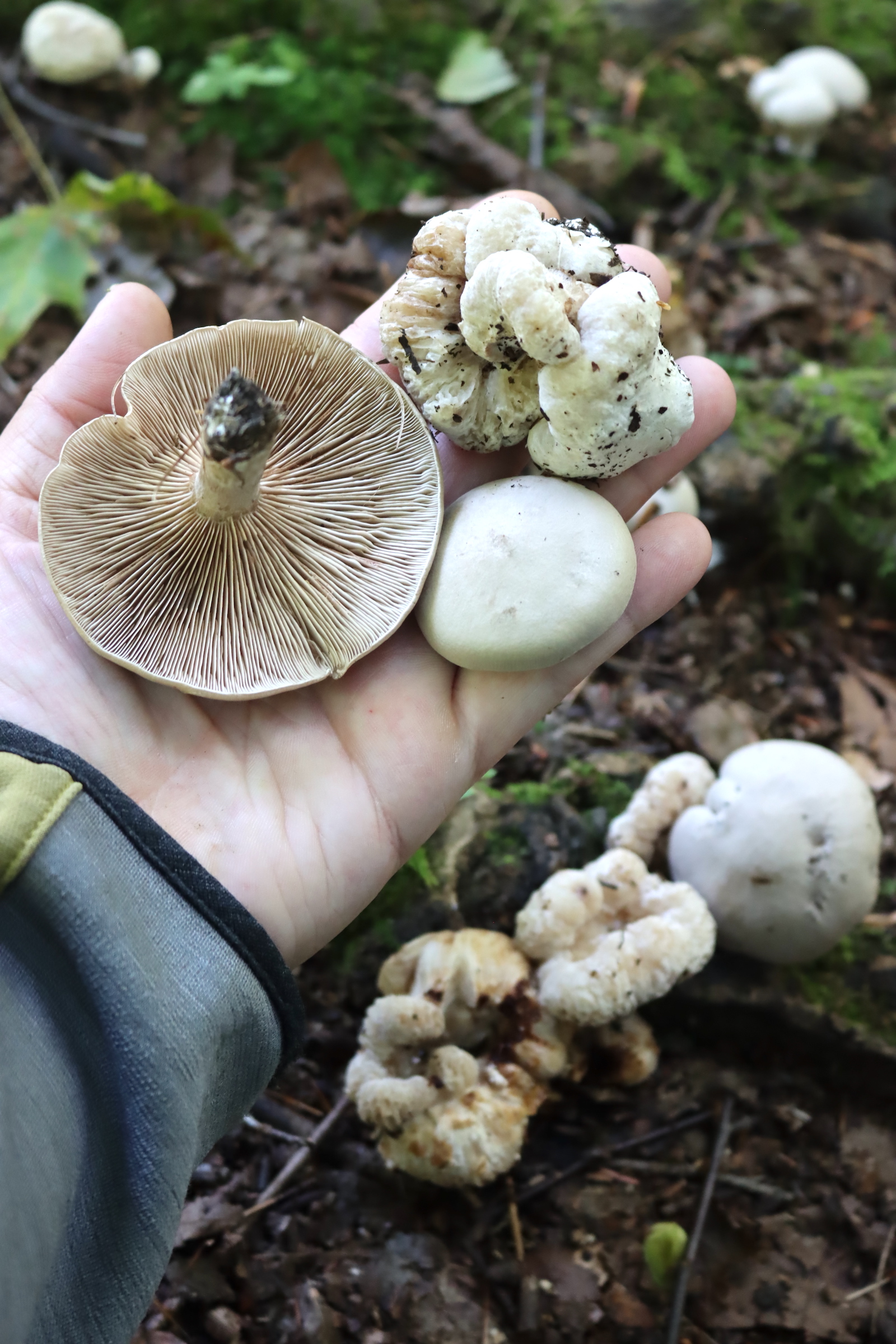
The aborted form is a white, irregular lump, anywhere from about 1 to 4 inches. Some are smooth and rounded, and others are folded and knobby, almost like a popcorn ball.
They grow scattered or in clusters, often with several fused together. Most have a short, stubby base where they attach to the ground.
Color and Surface
Fresh lumps are white to off-white, and they turn brownish as they age.
There are no real gills on the outside. In a cross-section, Tom Volk found a layer of malformed gill tissue just under the skin, which he called the rind.
Flesh
Cut a lump in half from top to bottom. Inside, the flesh is firm and white, often with pinkish areas mixed in, and it tends to bruise pink. A slightly pithy center is normal.
If you see the outline of a cap, a stem, or gills, throw it out. That’s what a young Amanita looks like inside, and some of those are deadly.
Throw out anything that’s purple, gray, black, or olive inside, too. Some lumps are only partly aborted and show traces of stems inside, and those aren’t worth a guess either.
The Gilled Form
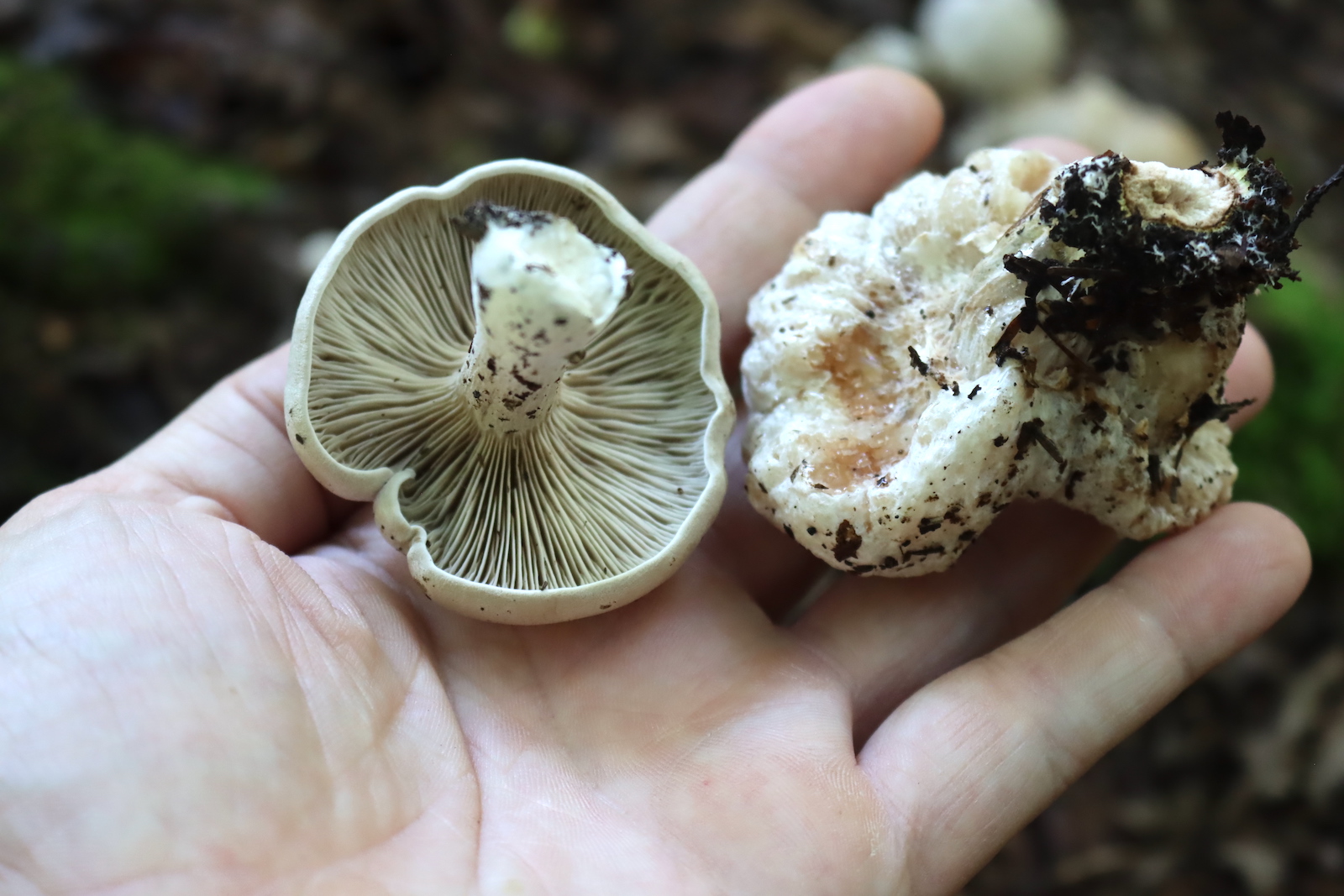
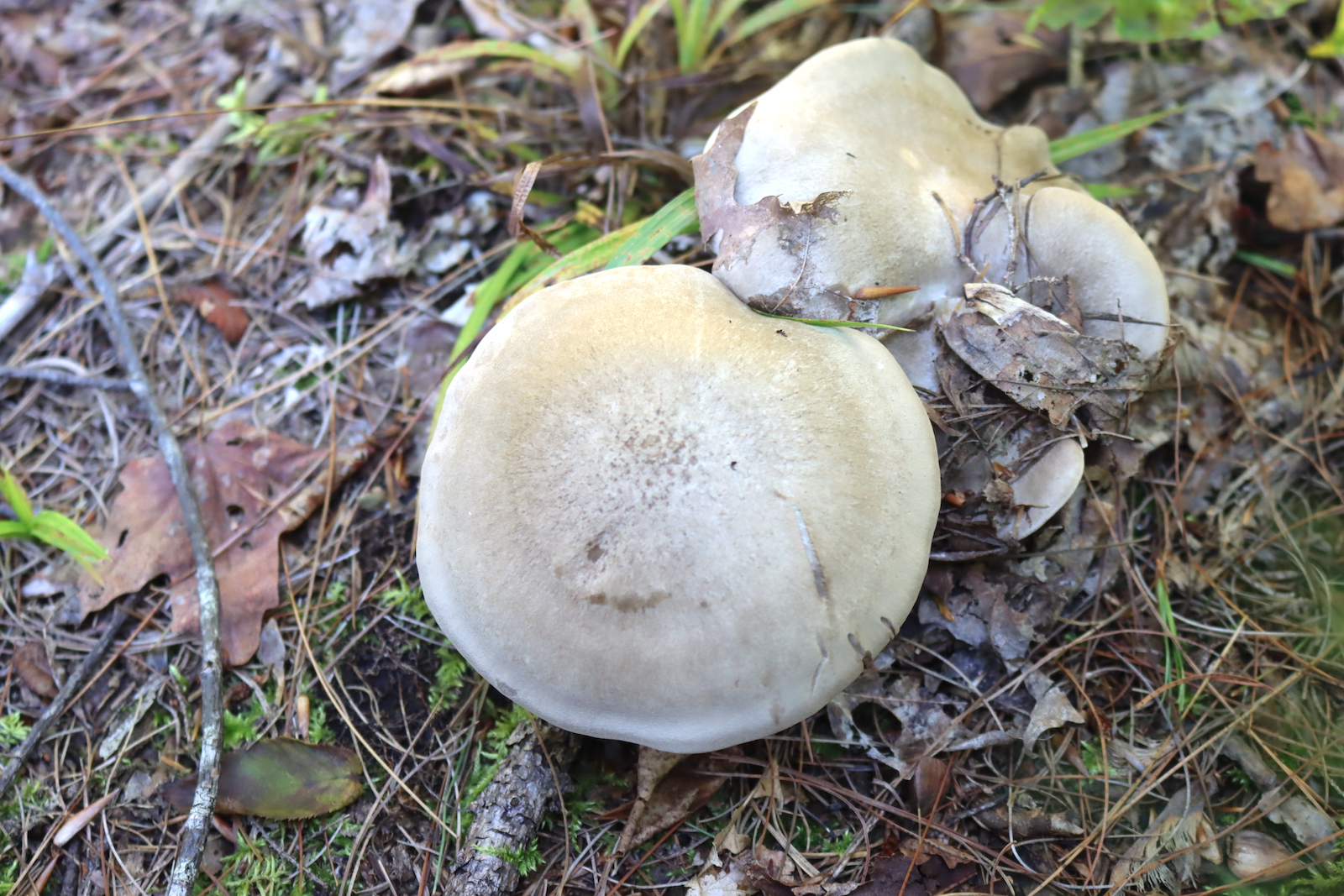
The gilled form looks like an ordinary gray mushroom. The cap is about 3/4 to 3 inches across, gray to grayish-brown, and dry, with an edge that curls under when young.
The gills are close together, and they usually run a little way down the stem. They start pale gray and turn pink as the spores mature.
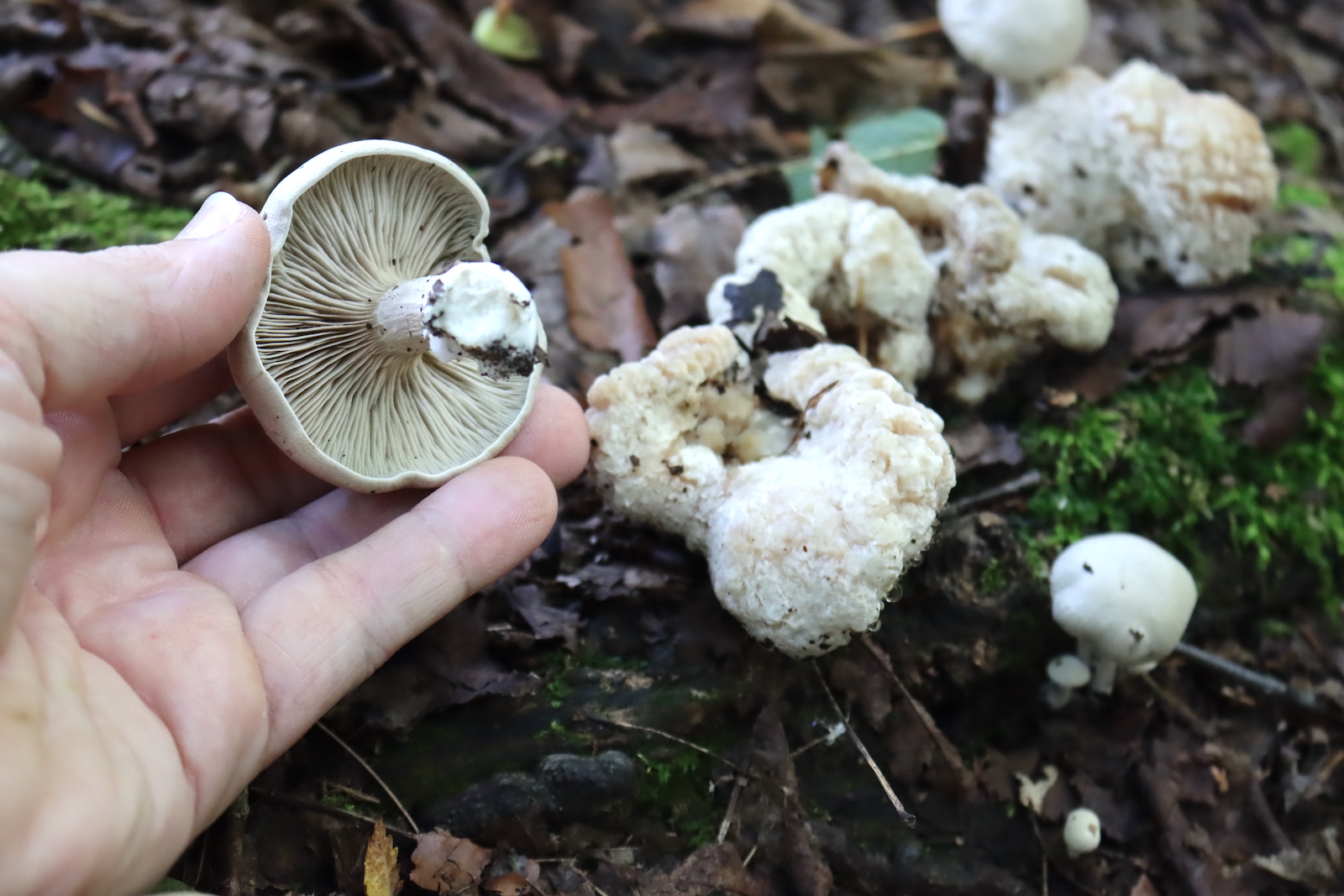
The stem is about 3/4 to 3 inches long, and it often has an enlarged base with white threads at the bottom. The flesh is white, and it stays white when you slice it.
Give it a sniff, too. According to Michael Kuo at MushroomExpert.com, the gilled form has a strong mealy smell, like grain meal or watermelon rind. I haven’t noticed anything in particular in the smell in these guys, so maybe not everyone can smell it.
Spore Print
The lumps don’t have real gills, so the spore print is a check for the gilled form. Set a cap gills-down on a piece of white paper, cover it with a bowl, and leave it for a few hours or overnight.
The gilled form of shrimp of the woods leaves a pink spore print. A white, brown, or black print means you have something else. A pink print doesn’t confirm it, though, because every Entoloma prints pink, including the toxic ones.
Shrimp of the Woods Look-Alikes
The lumps don’t have many look-alikes. Most aborted shrimp of the woods are too knobby to mistake for anything else, and that’s a big part of why I like them.
The smooth, rounded ones are the exception. At a glance, they can pass for a puffball, an earthball, or a young Amanita, so slice every one in half, top to bottom, before it goes in the basket.
Puffballs
Puffballs are round and white, and young ones can sit in the same leaf litter. A young, edible puffball is pure white all the way through inside, with a fine, foamy texture.
Shrimp of the woods are usually firmer, and the inside often has pinkish areas mixed into the white. A fresh one can be white all the way through, though, so I go by texture. Puffballs are soft and foamy inside, and shrimp of the woods are springy.
Amanita Eggs
Many young Amanitas start out as white, egg-shaped buttons inside a white, sack-like veil. Some of them, like the destroying angels, are deadly, and they grow in eastern hardwood forests in summer and fall. Even the edible Caesar’s mushroom hatches from an egg like this.
Slice the button from top to bottom. An Amanita shows the outline of a cap, gills, and a stem inside. A shrimp of the woods doesn’t, and neither does a puffball.
Earthballs
Earthballs (Scleroderma) are round, firm, and often half-buried, and they occasionally grow on well-rotted wood. Most species are toxic, and they can make you very sick.
Their skin is thick and tough, often yellowish and scaly. The inside starts white in some species, but it soon turns purple-gray to purple-black. Throw out any lump with a hard rind or a dark interior.
Other Gray Entolomas
The gilled form is where things get tricky. Michael Kuo notes that on its own, it blends in with many gray and brown Entoloma species that are hard to tell apart.
Many of those Entolomas are toxic. Chef and forager Alan Bergo suggests only picking gilled ones that are clearly growing with the lumps. Even that isn’t proof, since other mushrooms can grow in the same spot.
He also warns about poisonous white Clitocybes, like Clitocybe dealbata. Those leave a white spore print, so a print helps rule them out, but a pink print won’t separate this one from the toxic Entolomas. If you’re new to mushrooms, leave the gilled ones in the woods.
Harvesting and Cleaning Shrimp of the Woods
Pick lumps that are white, firm, and dense, with few cracks on top. Leave soft, spongy, or waterlogged ones behind, along with any that have brown spots.
Insects like them too, so check closely as you pick. The soft ones are the most likely to have fungus gnat larvae inside.
Most of the dirt sits at the base. Trim it off with a knife right in the woods, so the dirty ends don’t make the rest of the haul gritty.
Cut big or deeply folded lumps in half in the field, too. That clears dirt out of the folds, and it gives you the look inside that you need for identification.
A basket or a mushroom harvesting mesh bag protects them on the walk home.
Clean them up again in the kitchen, and cook them soon after you pick them.
Cooking Shrimp of the Woods
Shrimp of the woods are mild, with a firm, springy bite. In the kitchen, treat them like shrimp. They soak up sauces and seasoning, and they hold their texture in the pan.
Brown them well. Alan Bergo says the flavor comes from caramelizing them, and stewing them straight from raw leaves them bland, with a texture like styrofoam.
Bergo pairs them with garlic, white wine, hot pepper, and anything with tomatoes. I’d use them in place of shrimp in just about any dish.
Cook them all the way through every time. They’re part honey mushroom, and honey mushrooms need thorough cooking.
Shrimp of the Woods Recipes
Most shrimp recipes work with them. Alan Bergo has a blackened shrimp of the woods and a shrimp of the woods fra diavolo that both use them in place of seafood.
For a simple side, slice them, brown them in butter or oil, and finish them with garlic and parsley.
Preserving Shrimp of the Woods
Freezing them raw does something odd to the texture, according to Forager Chef, so sauté them first and freeze them cooked, or make them into duxelles. He also says they don’t pickle well.
Freeze-drying them works well, if you have a home freeze dryer. Dried slices are okay, but brown them in the pan after you rehydrate them. My guides to drying mushrooms and preserving mushrooms cover more options.
Shrimp of the Woods FAQs
A few more questions about shrimp of the woods.
No. Shrimp of the woods are part honey mushroom, and honey mushrooms need thorough cooking. A few people don’t tolerate honey mushrooms well, so try a small portion the first time.
Not really. The name comes from the texture, which is firm and springy like cooked shrimp. The flavor is mild and mushroomy, and it picks up whatever you cook it with.
Some mycologists consider it edible, but it looks a lot like other gray Entoloma mushrooms, and many of those are toxic. Michigan only approves the aborted form for sale. Stick to the lumps unless you know your Entolomas well.
Partly. The lumps are honey mushrooms that Entoloma abortivum attacked before they could form caps, so they hold tissue from both fungi. Normal honey mushrooms often grow nearby, and those are a separate edible with look-alikes of their own.
More Mushroom Foraging Guides
More wild mushrooms to find and identify.


Did you find this shrimp of the woods foraging guide helpful? Tell me in the 📝 comments below how you use shrimp of the woods on your homestead!
And make sure you stay in touch with me by following on social media!
More Fall Mushrooms
Three more mushrooms that come up in the same season.


Find the perfect foraging guide
Searching for something else? Enter keywords to find the perfect foraging guide!