
Affiliate disclosure: This post may contain affiliate links. Please see our Privacy Policy.
Bee balm is a beautiful perennial flower, but it also turns into tea, jelly, tincture, salve, and a dozen other things once you know what to do with a summer harvest. Both the flowers and the leaves are worth saving, and there’s a place for them in your kitchen and your home apothecary.
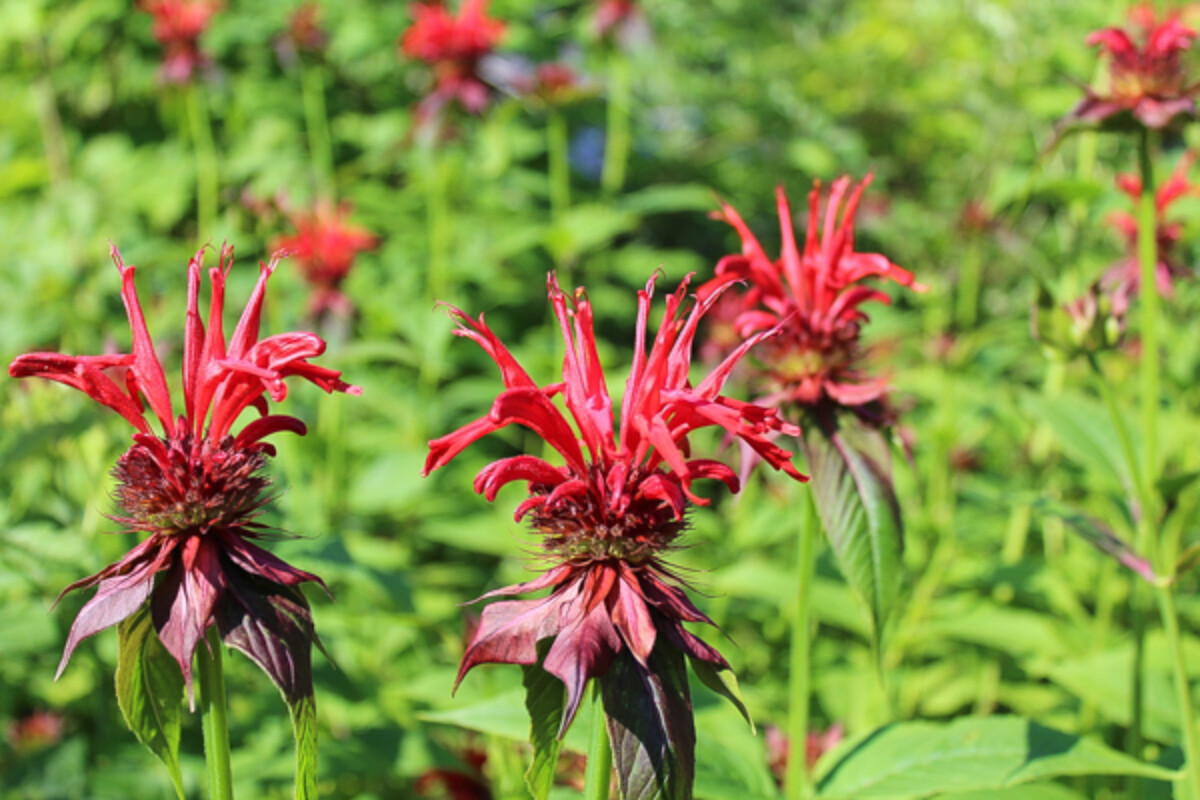
Table of Contents
Bee balm is one of those plants that more than earns its place in the garden. It feeds the pollinators, it’s a striking cut flower, and the leaves and flowers are both edible and traditionally used in herbal medicine. Most people grow it for the hummingbirds and never realize they’re standing next to a pantry and home apothecary rolled into one.
There are two species you’re likely to run into.
Monarda didyma, or scarlet bee balm, is the bright red one you’ll see in perennial beds and pollinator gardens.
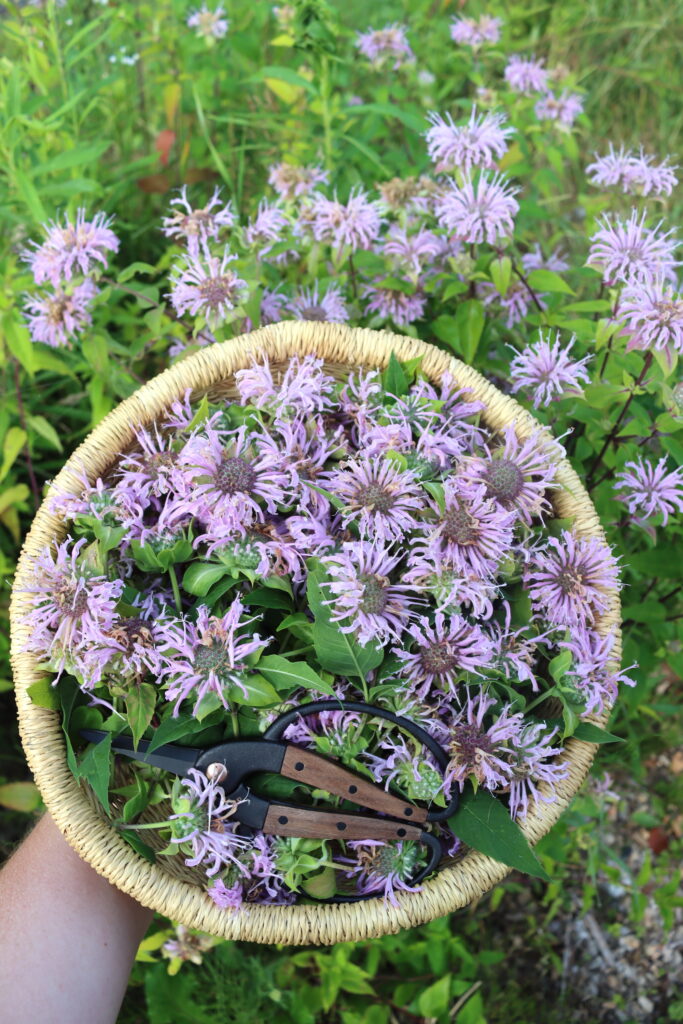
Monarda fistulosa, or wild bergamot, is the pale lavender version native across most of North America, and the one most foragers harvest from old fields and trail edges.
Both are edible, both have a long history of herbal use, and they share many of the same traditional applications. You can generally use them in the same kinds of preparations below, though the flavor and aroma can vary from plant to plant.
It’s a member of the mint family, which is exactly what you’d guess the first time you crush a leaf. The scent carries oregano, thyme, and mint all at once, and that aromatic punch is what makes it so versatile. If you grow a few pollinator-friendly medicinal herbs or like cooking with edible flowers, bee balm belongs near the top of the list.
Notes from My Homestead
My first home here in Vermont had a huge patch of bee balm growing right outside my bedroom window. I’d wake up in summer to a flurry of hummingbirds arguing over the nectar inches from the glass, and I never once needed to hang a feeder. The bee balm took care of that for me and gave me hours of entertainment all season long.
That patch is what got me curious about everything else the plant could do, and these days I harvest it for tea, tincture, and oxymel every single summer. It’s become one of the herbs I genuinely couldn’t homestead without.
I’m clearly not the only one who’s been won over by this plant once they realized how much it can do.
My friend just gifted me with three bee balm plants. I couldn’t get over how reminiscent the aroma is of oregano. I had no idea you could use it for so many other things.
What is Bee Balm?
Bee balm is the common name for plants in the Monarda genus, a group of aromatic North American wildflowers in the mint family. The two you’ll work with most are scarlet bee balm (Monarda didyma) and wild bergamot (Monarda fistulosa), though all the Monarda species are fragrant and the petals pull free of the flower head in tidy little tubes that are easy to harvest.
It has a long history of use in North America. Native American tribes brewed it as a tea and used it to ease colds, congestion, and digestive complaints, and the Oswego people taught early settlers to steep the dried leaves as a tea, which is why you’ll still hear bee balm called “Oswego tea” today. If you want the full identification and harvest rundown, I’ve got a dedicated guide to identifying wild bergamot that covers look-alikes and the best time to pick.
If you don’t have a patch yet, it grows readily from seed. You can pick up Scarlet Bee Balm seed packets or Wild Bergamot seed packets online and have your own supply within a season or two. Fair warning: it spreads enthusiastically, like most things in the mint family, so give it room or a container of its own.
Which Part of Bee Balm Do You Use?
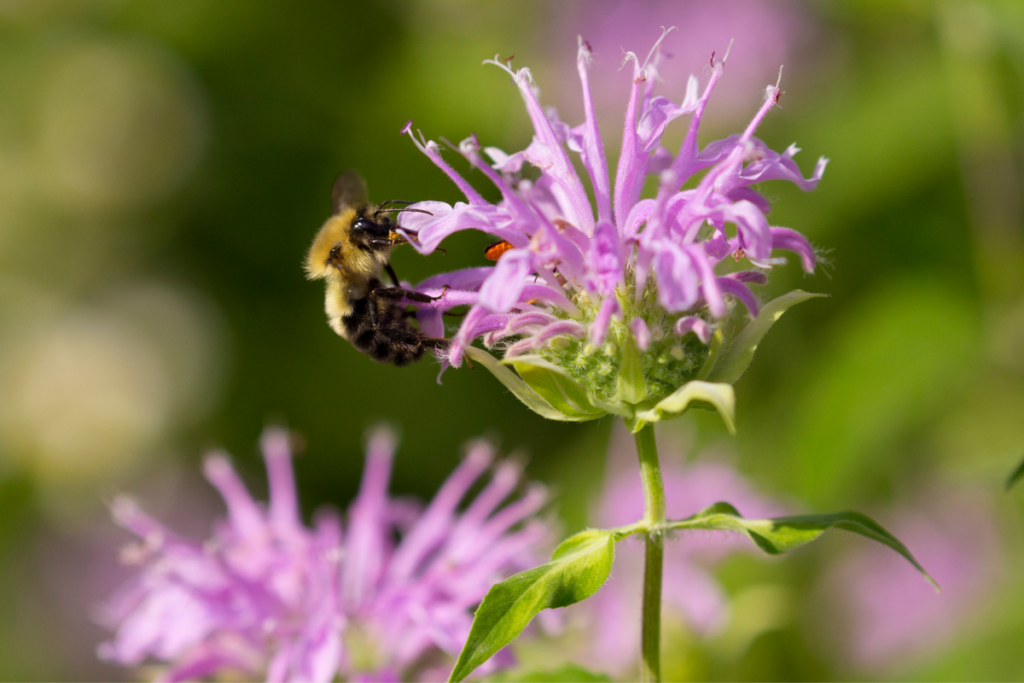
This is the question I get asked most, and the answer depends on the project. For tea, jelly, and salads, I reach for the colorful flower petals, which pull out of the flower head easily. For tinctures, oxymels, and infused oils, you can use the aerial parts, flowers and leaves together, since you’re after the aromatic oils found throughout the upper plant.
The leaves carry a slightly more savory, oregano-forward flavor than the petals, which is why some people prefer them for cooking and seasoning. When a recipe below calls for a specific part, I’ll say so, but for most home herbal preparations, the flowers and leaves are both useful.
Bee Balm Benefits and Medicinal Properties
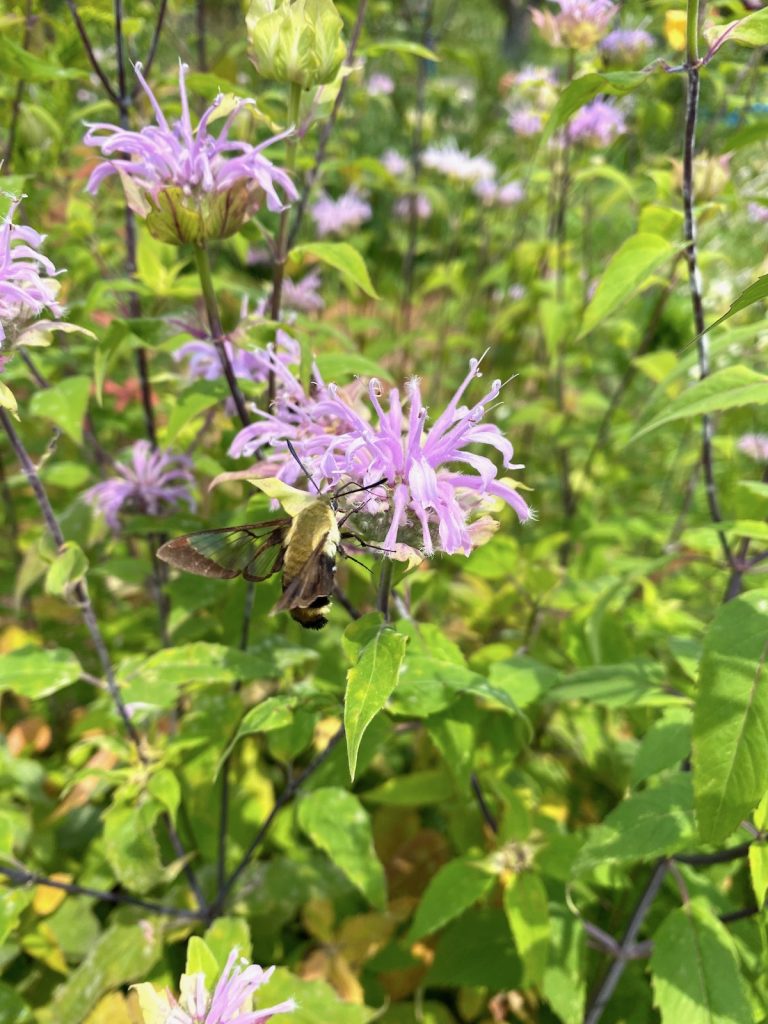
Bee balm has a long history of traditional use for colds, congestion, digestive discomfort, and minor skin irritation. Much of its herbal reputation comes from its aromatic essential oils, including thymol and carvacrol, compounds that have been studied for antimicrobial activity. In home herbalism, bee balm is most often used as a warming, aromatic tea or tincture when someone is feeling stuffy, chilled, or unsettled after a heavy meal.
Herbalists also use bee balm externally in preparations for minor scrapes, stings, and rashes. Some herbal traditions describe it as a gentle, calming herb, especially as a warm tea, but I keep that in the realm of traditional home use rather than treating it like a substitute for medical care, especially with children.
As with any herbal remedy, what works on my homestead isn’t a substitute for medical advice, so check in with your doctor before adding a new herb to your routine, especially during pregnancy or nursing, when giving herbs to children, or if you’re taking prescription medication. If you like keeping a few simple plant remedies on hand, bee balm fits naturally alongside the rest of my natural remedies for cold and flu.
Culinary Uses for Bee Balm
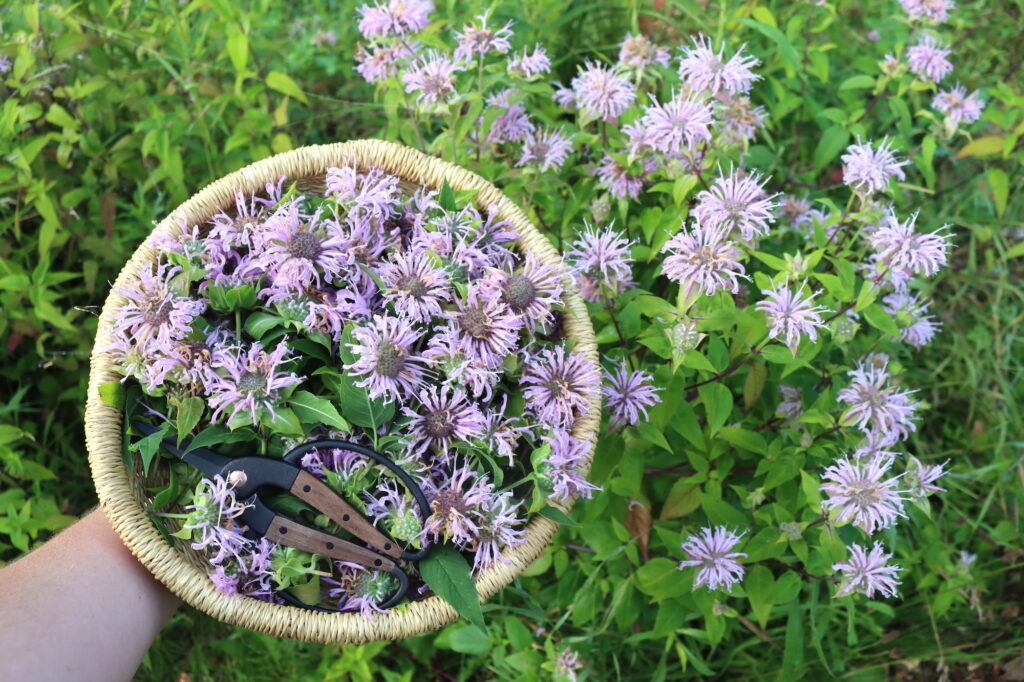
The flavor of bee balm sits right between oregano and mint, with a floral, almost citrusy top note, and that makes it a fun ingredient to cook with. The petals are mild and pretty enough to scatter raw over food, while the leaves bring a more savory, herbal depth.
Here are six of my favorite ways to bring bee balm into the kitchen, from a simple cup of tea to a small batch of mead.
Bee Balm Tea
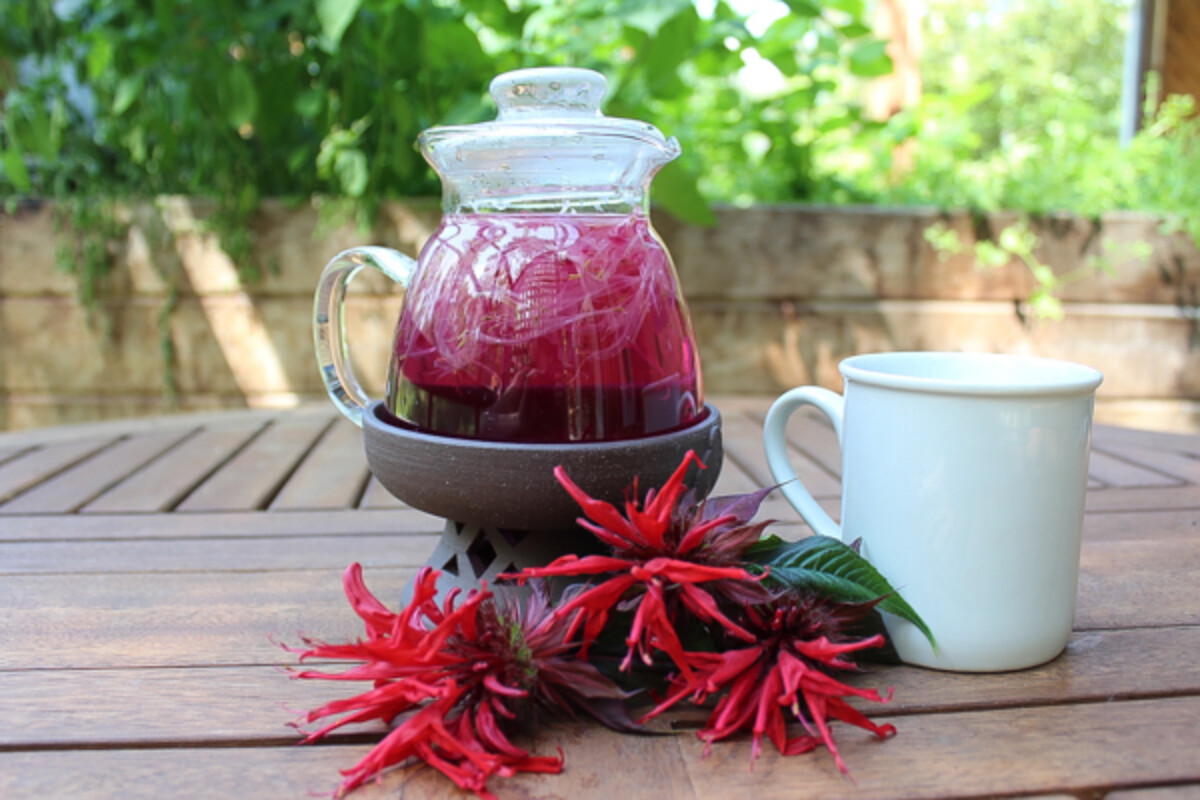
The individual petals pull out of the flower head easily and dry into a beautiful bright red tea, though you can use them fresh in season too. Like most herbal teas, it takes a bit longer to steep than black tea, around 15 minutes. Use 1 tablespoon of dried petals or 2 tablespoons of fresh petals per cup of water, and keep the water just below boiling since the delicate flowers scorch easily.
It’s a traditional digestive tea, often used after meals when someone feels unsettled, gassy, or a bit queasy. Plenty of readers also steep the dried leaves the old Oswego-tea way, so don’t toss them.
Bee Balm Jelly
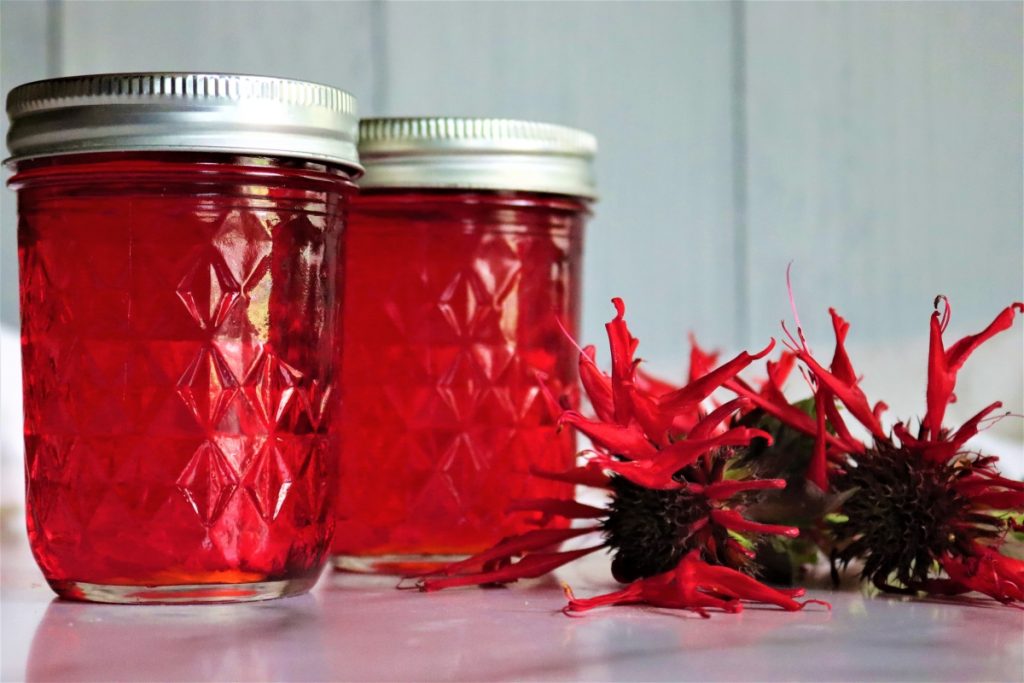
Those aromatic petals turn into a gorgeous bee balm jelly, and it’s one of my favorite ways to use up a generous patch. It’s made as a savory herbal jelly with a splash of vinegar and only a cup or two of sugar.
It tastes herbal and a little peppery, closer to oregano and marjoram than to anything sweet, which puts it on the cheese-board side of the pantry rather than the toast-and-butter side. The red blossoms give it a deep, warm color that looks striking next to sharp cheese and cured meats.
Edible Flower for Summer Salads
For color, flavor, and a little nutrition, scatter a few bee balm petals over a summer salad. The delicate herbal flavor pairs beautifully with microgreens and a mesclun mix, though it can get lost on something sturdier like a romaine base. Sherri, one of my readers, even tosses a leafy stem straight into beef stews and roasts for depth, and yes, you can absolutely eat the leaves raw.
Bee balm is far from the only flower worth eating, so if this sparks ideas, my full guide to edible flowers has dozens more to scatter across your plate.
Bee Balm Vinegar
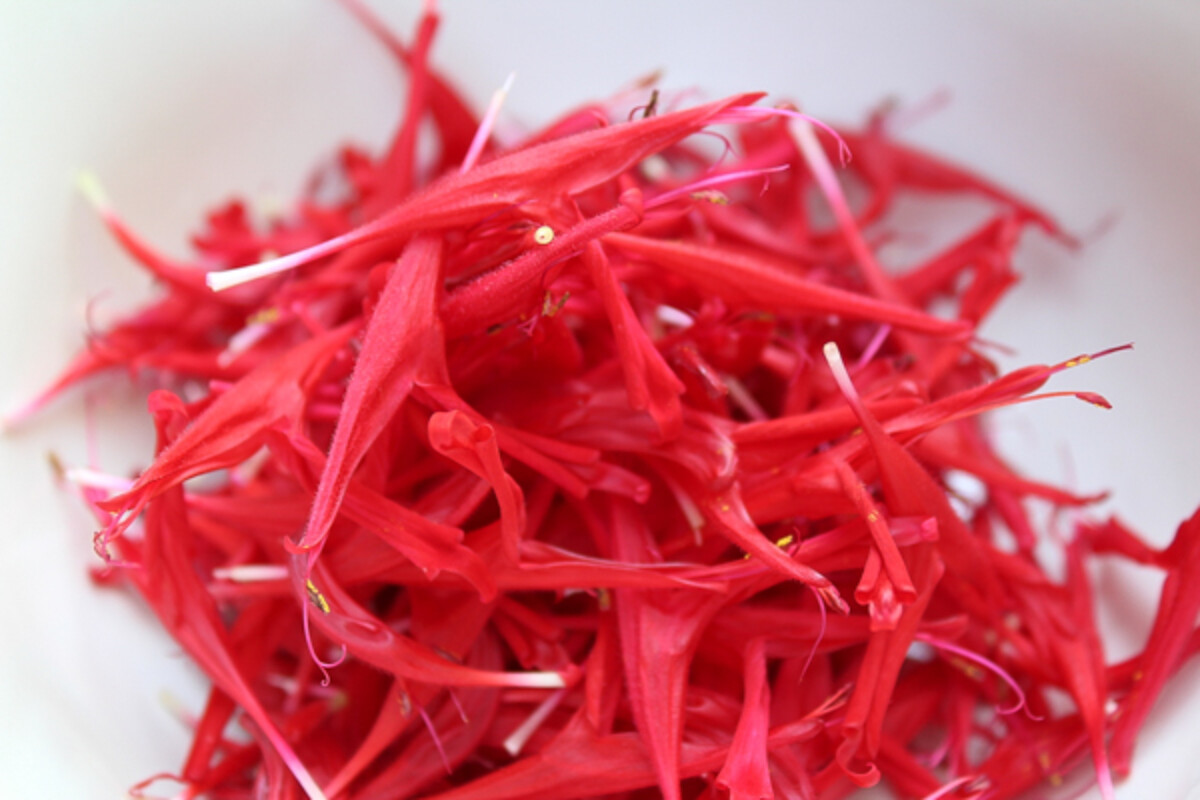
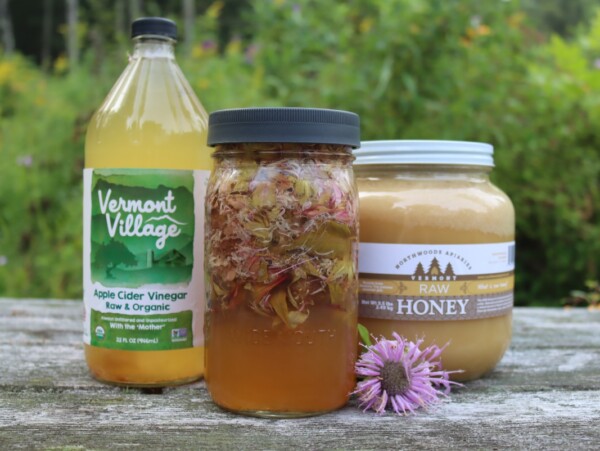
Quick and easy, you can steep bee balm petals into raw apple cider vinegar for a few weeks to make a fragrant herbal vinegar. Use it by the spoonful as a traditional herbal preparation, or simply whisk it into salad dressings and marinades, where it’s said to be especially good on wild game.
My full herbal vinegar guide covers the ratios and steeping times that work for any aromatic herb.
Bee Balm Mead (and Wine)
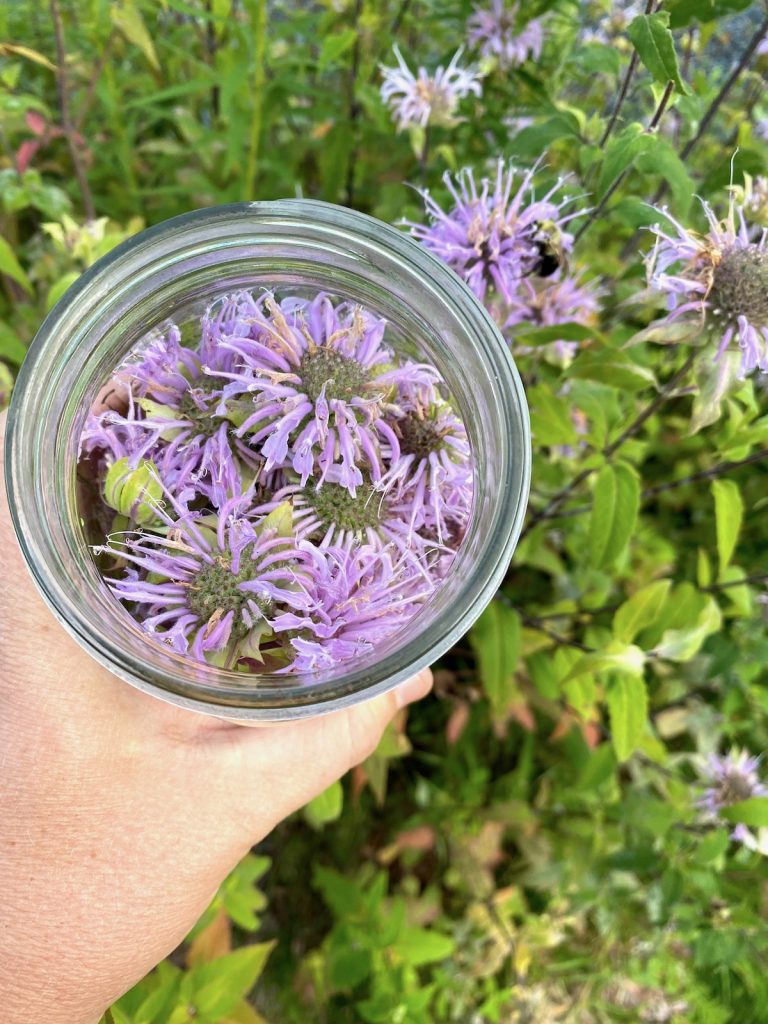
A simple bee balm tea converts beautifully into a small-batch mead in a single quart jar. Add 1 cup of honey to 3 cups of strong bee balm tea, pitch a yeast packet, and let it ferment. My quart-jar mead method walks through the whole process, and if you need convincing, here are some good reasons to make micro-batch mead.
Let it ferment with a mason jar fermentation kit until fermentation is complete, rather than bottling strictly by the calendar. For best results, use a hydrometer and bottle only once the reading is stable, or keep it still rather than sparkling unless you’re following a tested carbonation method. The same approach scales up to any blossom, which I cover in my guide to making flower wine and mead with any edible flower.
Bee Balm Baked Goods
I love the idea of baking with edible flowers, and bee balm has the same flavor compounds that make thyme so good in shortbread. It works folded into a yeasted bread, stirred into muffins, or worked into a simple herbal shortbread, where the floral, savory note adds a bit of intrigue you don’t expect from a cookie.
Mince the leaves finely or rub the dried petals between your fingers before adding them, so the flavor distributes evenly through the dough.
Cook Savory Dishes with the Leaves
The leaves are where bee balm really earns its keep in the kitchen. Thanks to those aromatic oils, they taste like a cross between oregano and thyme, and you can use them fresh or dried anywhere you’d normally reach for either one. They’re especially good with tomatoes, so much so that some foragers have taken to calling wild bergamot the “pizza plant.” I keep a jar of the dried leaves right next to my oregano and work them into tomato sauce, marinades, soups, and vinaigrettes all winter long.
Chef Alan Bergo has a few good ideas for using them in the kitchen. Bergamot salmoriglio sauce swaps wild bergamot for the oregano in a classic Sicilian blend of lemon, garlic, and olive oil, and it’s wonderful brushed over grilled fish or chicken. His oven-dried tomatoes with bergamot and ramp leaves get slow-roasted with the herb until they turn rich and concentrated, then packed in olive oil for tossing into pasta and salads or layering onto flatbread.
Drying Bee Balm for Winter
To keep bee balm on hand year-round, harvest on a dry morning after the dew has lifted and hang small bundles upside down in a warm, airy spot out of direct sun. Once the petals and leaves are crisp, strip them off the stems and store them in a sealed jar away from light.
Dried bee balm holds its color and aroma for about a year, which carries you straight through cold and flu season. My full guide to drying herbs at home covers the temperatures and timing for both air-drying and dehydrator methods.
Medicinal and Herbal Uses for Bee Balm
This is where bee balm really shines on my homestead. Its aromatic oils make it a natural fit for the home apothecary, whether you’re preserving it in alcohol, oil, honey, or vinegar to have on hand during cold season.
These next six preparations are the ones I come back to year after year, and several have full step-by-step recipes here on the site.
Bee Balm Tincture
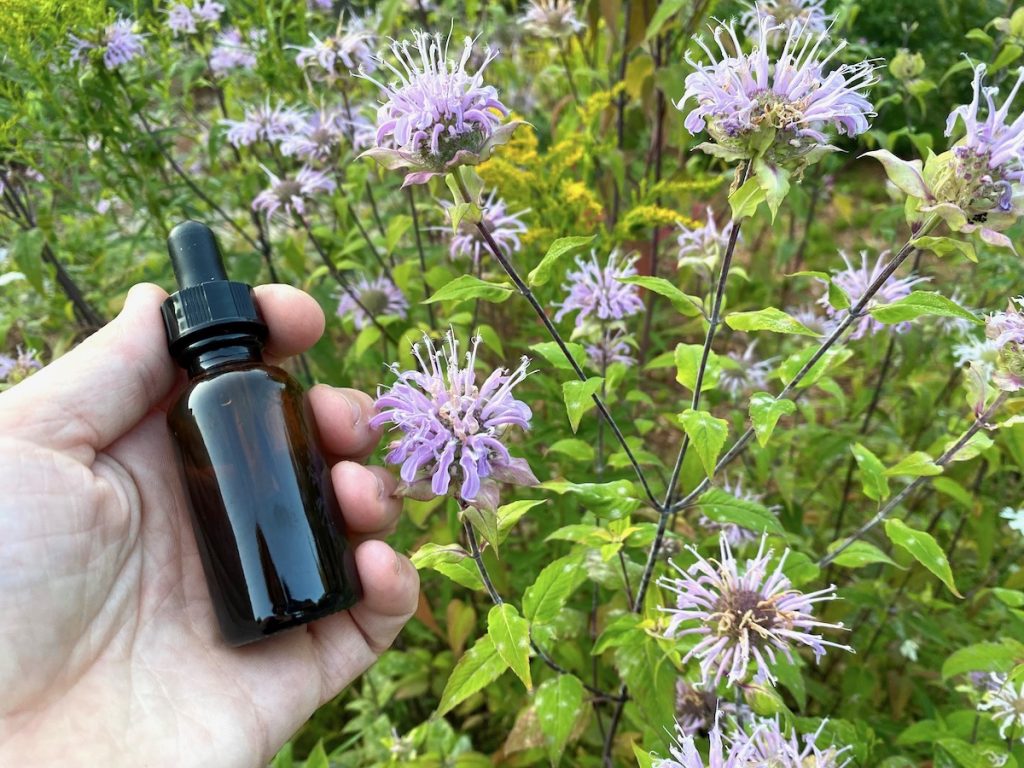
Since bee balm is traditionally used as a warming, aromatic herb, a tincture is a tidy way to keep it on the shelf. Fill a jar with bee balm, cover it with a neutral alcohol like vodka, and store it somewhere cool and dark for at least a month before straining. You can use the aerial parts here, flowers and leaves together.
I’ve got a full bee balm tincture recipe with exact ratios, dosing notes, and shelf-life guidance if you want to follow along step by step.
Bee Balm Oxymel
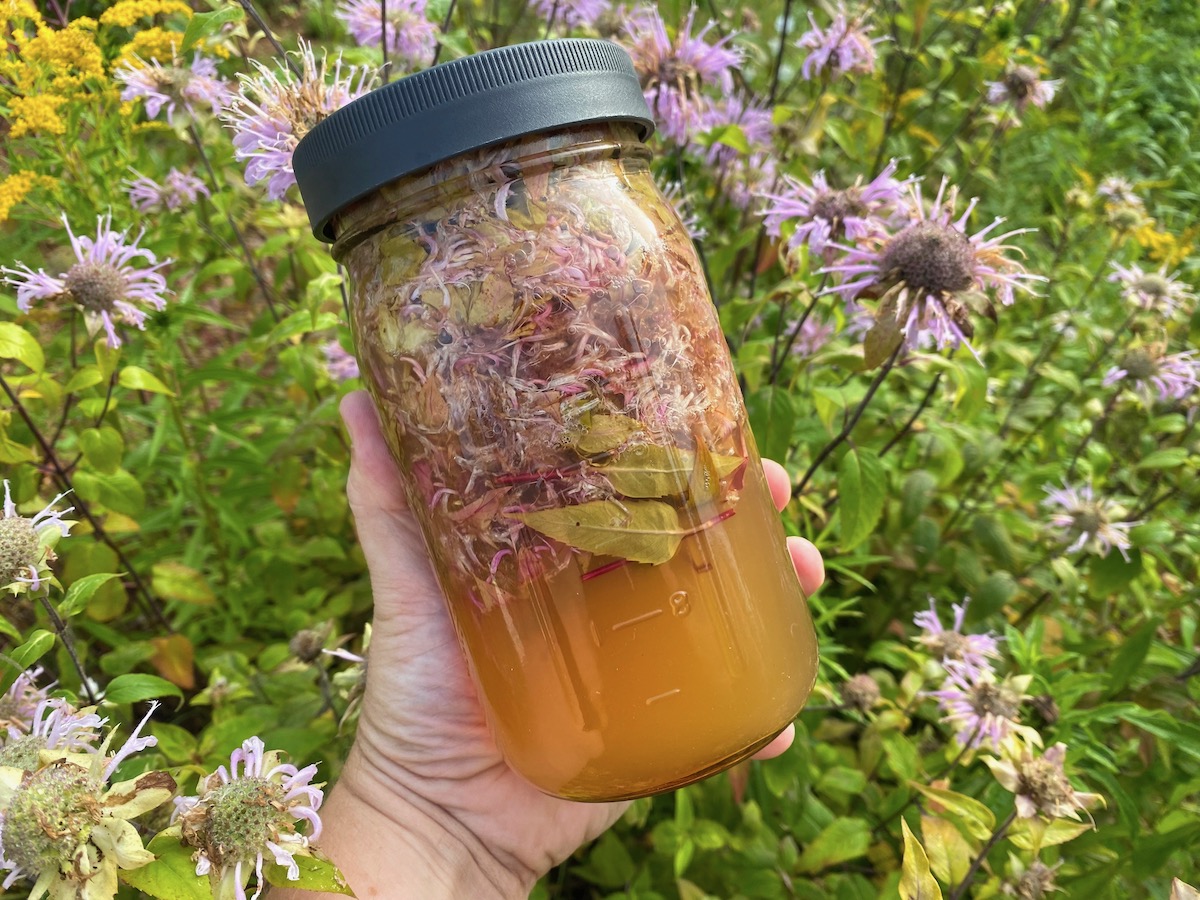
An oxymel is a blend of herbs, vinegar, and honey taken by the spoonful or used as a soothing honey-vinegar preparation, and bee balm’s aromatic nature makes it a good candidate for cold-season herbal shelves. We make an elderberry oxymel every year for the same reason, and bee balm slots right into the rotation.
Here’s my full bee balm oxymel recipe, and if you want the master method that works for any herb, start with my guide to making a herbal oxymel. Since oxymels are made with honey, don’t give them to children under 1 year old.
Bee Balm Salve
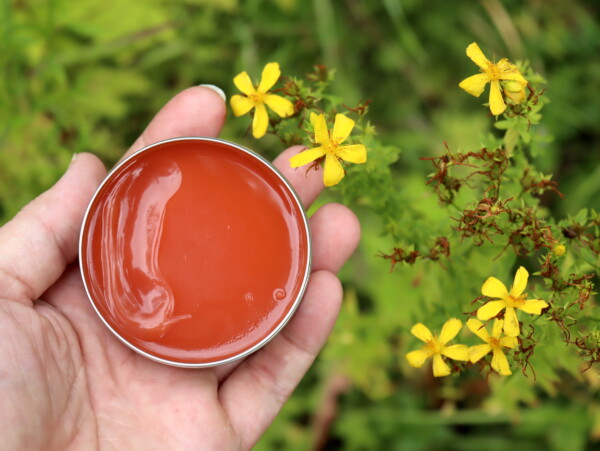
Because bee balm has a long history of topical herbal use, it makes a lovely infused-oil base for salves meant for dry skin, minor scrapes, or bug bites.
Start by making a herbal infused oil with bee balm, then thicken that oil with beeswax to set it into a salve. The basic ratio is 1 ounce of beeswax to 8 ounces of infused oil.
If you’d rather follow a tested formula, any of my herbal salve recipes will give you a base you can swap bee balm into.
Herbal Steam for Congestion
Bee balm smells wonderful, and a handful tossed into a bowl of just-boiled water makes a fragrant herbal steam for stuffy days. Many Monarda plants contain aromatic compounds such as thymol, one of the same constituents that gives thyme its sharp, clearing scent, so a towel-draped steam over the bowl puts those aromatic oils right where you can breathe them in.
Adding a few sprigs of the dried herb to a hot bath does much the same thing, with the bonus of relaxing tired muscles while you enjoy the scent.
Bee Balm Poultice
A poultice made from boiled bee balm leaves has a long history of folk use. According to the Herbal Academy, the leaves were historically wrapped in cloth and applied to sore eyes, headaches, muscle spasms, and minor wounds.
If you want the technique itself, here’s a good walkthrough on how to make a poultice with herbs.
Bee Balm Mouthwash
Used as a mouthwash, bee balm is a traditional remedy for sore throats and mouth sores, and the antimicrobial leaves were once chewed straight on battlefields for the same purpose. A strong, cooled bee balm tea makes a simple rinse, and stirring in a little bee balm tincture helps it keep longer without spoiling.
That rounds out my dozen, though readers have suggested plenty more over the years, from chewing a leaf in old-time toothache remedies to using a strong tea during cold season.
Is Bee Balm Safe to Use?
Bee balm is a gentle, food-safe herb that’s been eaten and brewed for generations, so for most people it’s a low-risk plant to work with in normal food and tea amounts. As with any new herb, start small to make sure you don’t have a sensitivity, and patch test before applying a salve or poultice to irritated or broken skin.
If you’re pregnant or nursing, on prescription medication, or treating a child, talk to your doctor or a clinical herbalist before using bee balm medicinally. Do not give honey-based oxymels to children under 1 year old. And whenever you’re foraging rather than growing your own, be sure of your identification first using a dedicated wild edible plants reference.
Bee Balm FAQs
Both are useful. The colorful petals are best for tea, jelly, and salads, while the aerial parts, flowers and leaves together, work well for tinctures, oxymels, and infused oils. The leaves carry a more savory, oregano-like flavor that some people prefer for cooking.
Scarlet bee balm (Monarda didyma) and lavender wild bergamot (Monarda fistulosa) are both edible and have similar traditional uses, so you can generally use them in the same kinds of recipes and herbal preparations. The flavor and aroma can vary from plant to plant.
Bee balm tastes herby and aromatic, often described as a cross between oregano, thyme, and mint with a floral, slightly citrusy note. The petals are milder than the leaves, which lean more savory.
Drying is the simplest option. Hang small bundles upside down in a warm, airy spot out of direct sun, then strip the dried petals and leaves and store them in a sealed jar away from light. You can also preserve it in alcohol as a tincture or in vinegar and honey as an oxymel.
No, though the names cause confusion. Earl Grey is flavored with bergamot orange, a citrus fruit, while bee balm is also called wild bergamot because its scent is similar. They are unrelated plants, but bee balm’s citrusy aroma is why it picked up the bergamot nickname.
I’d love to hear how bee balm grows and gets used in your corner of the world.
Did you find this bee balm uses guide helpful? Tell me in the 📝 comments below how YOU use bee balm on your homestead. I’m always looking for new ideas!
And make sure you stay in touch with me by following on social media!
If you’re building out an herb-by-herb apothecary, these companion roundups cover three more plants worth knowing well.
More Herbs to Put to Work
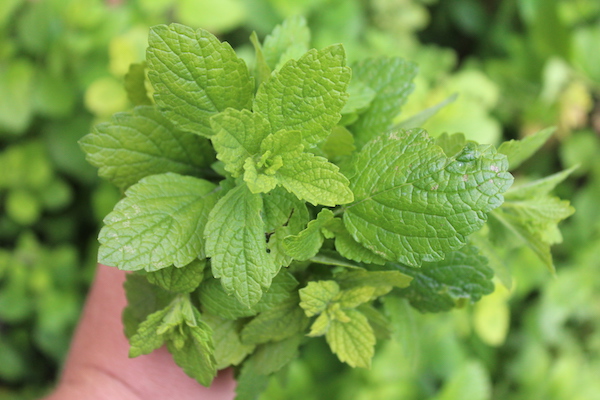
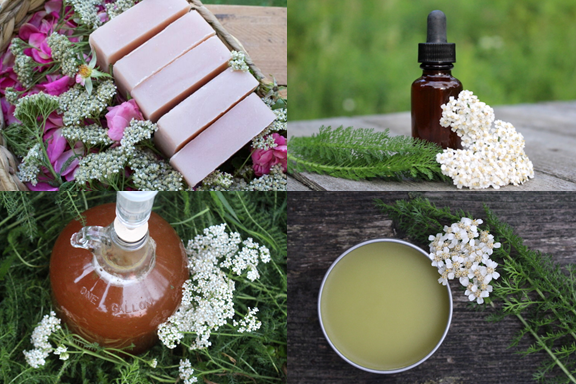
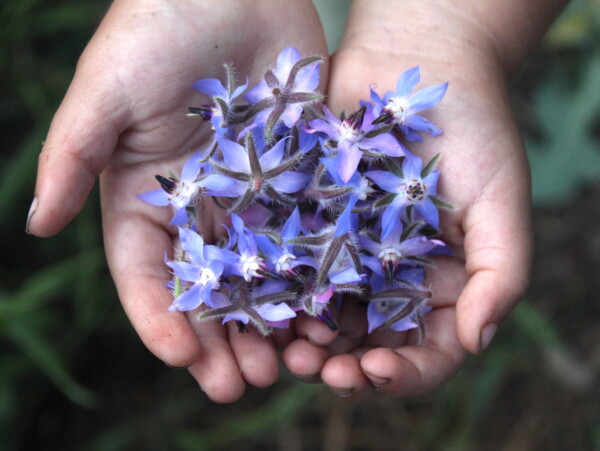
And once you’ve got a bee balm harvest in hand, you can follow these herbal medicine-making guides to craft your own remedies.
Herbal Recipes & Remedies
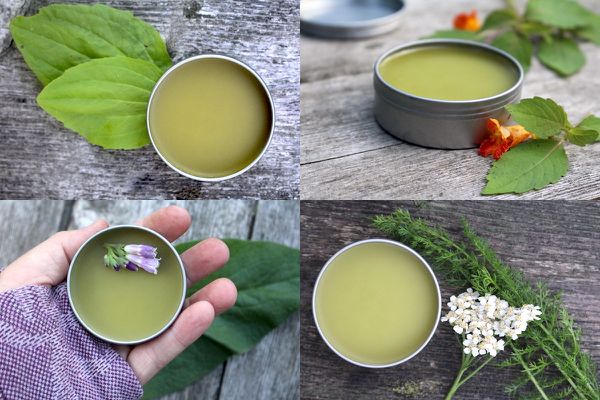
Still hunting for something specific? Pop a keyword into the search box below, and I’ll point you toward it.
Find the perfect recipe
Searching for something else? Enter keywords to find the perfect recipe!






I purchased 2 bee balm plants from my local Lowe’s hardware and when they bloomed one bloomed scarlet and the other bloomed lavender, are they both okay to use in herbal recipes.
That’s very interesting. My guess would be that the one with the scarlet blooms is Mondarda didyma. This is what you’ll see most commonly in garden perennial beds. My guess is that the lavender one is Mondarda fistulosa, or wild bergamot. This one is the wild version native to the United States.
I bought 3 small plants at a Asian market here in southern CA. It said cucumber lol. Grew into huge bushes in my garden. So delicious. I Identified it with an app. I love the unique taste and just graze on it a little everyday. It is calming.
I’m so glad you’re enjoying your bee balm, Lisa!
Can it kill noseeums they keep multiplying and biting
It’s doubtful that it would kill them. There are plants that might help repel them but I am not sure if Bee Balm is one of them.
I absolutely love it in beef stews and roasts. I cut off a step with 5-6 leaves and just toss it in. So much depth to the dishes. And yes, you can eat it raw.
I have lavender bee balm can this be used the same as the red bee balm. Thank you for your help
Do you use whole flower head or just the petal for tincture?
You can use the entire plant when making tinctures.
You used a whole packet of yeast for the monarda tea mead?
I just planted my first Bee Balm plant and after reading these reviews, and seeing the beautiful red flowers I must get a few more starts to plant.
Happy plantings!! Margo Oberer
It spreads like wildfire!!!! It will choke out the rest of your plants….it is related to the mint plant… If I ever plant them again, it will be in a pot…
Growing in a container is a great suggestion. You could also have a dedicated patch just for the bee balm.
You won’t need to get more plants. Bee balm spreads quite well on its own.
Are you using the petals and leaves in the oils, tinctures and such or just the petals? This was a most interesting article. Thank you.
I just use the petals, but I imagine the leaves would work as well for tinctures. (But I don’t know for sure about the leaves, all references I’ve read have been about the flowers.)
Petals
I use the whole thing. Clip whole, dry whole, use whole, crunch stalk & all for tea in a teaball. 1 tsp. Per cup tea. I absolutely love this stuff! I’m new to foraging & have MS. Trying to help & heal myself. Time to get back to basics.❤🇺🇸🙏🏼
For the person with MS have you read the Wahls Protocol by Terry Wahls. The diet works for my MS.
every year i gather bergamot here in ok. and useually just ground it up and use it for seasoning my food, it has a great flavor! then i came across this info and i made tincture, and oxymel with the bergamot. well, i have been taking a shot of the oxymel daily and i cut myself 4 days ago pretty deeply (most anyone would have went to the ER for stitches) and i cleaned the cut and covered it every day and it is conpletely healed!!! i daresay it is due to the wonderful oxymel i have been consuming. also, my friend who has diabetes and has nerve damage in his feet had punctured his foot very deeply without even realizing it and i took some oxymel to him and after 3 days he said it looks almost completely healed!! almost unheard of. i am a firm believer in this medicine. thank you so much for sharing!!!!
i am collecting and growing anything edible so when the SHTF we will be self sufficient. I have a lot of health issues and the pain causes me naseau all the time. As i was reading the uses for bee balm it said it was good for this so i ate some leaves raw as i was reading all the comments and guess what. No more naseau. amazing. thank you so much for this info. cant wait to do more. God bless
I find the study of the medicinal uses of monarda is fascinating! Another one of God’s gifts!
A leaf of bee balm chewed and placed by a toothache stops it from hurting.same goes for yarrow
Just planted my first bee balm plants excited to see future blossoms and growth. Hope to be able to harvest some next year to dry for tea for my 5 girls and I.
Thanks for explaining that bee balm has a gentle calming effect, so it can be used to treat anxiety or stress in patients like children who may be more sensitive. My daughter has been suffering from social anxiety at school, so I’ve been doing some research online about natural remedies that might help her. I’m glad I read your article because now I’m excited to shop for monarda essential oil and see if it helps ease her anxiety.
Thanks for the useful information about bee balm. I just gathered some of the first of the season; I can’t wait to try out the recipes.
This is wonderful information! I can’t wait to put this lovely plant to good use!
Bee Balm is also known as “Oswego Tea” because the Oswego Indians here in NY taught the settlers to use the dried leaves as a tea substitute, So apparently it’s not just the flowers that are useful.
*Oswego Native Americans
🙂
So excited to find all of the amazing uses for Bee Balm! We have a pretty big patch of her along a trail line. Thanks for all the great info!!
Thank you for this! My friend just gifted me with three bee balm plants. I couldn’t get over how reminiscent the aroma is of oregano.
I had no idea you could use it for so many other things.
Very good information. Ty
It’s also known as Wild Bergamot so those leaves have an Earl Grey tea scent/flavour.