Affiliate disclosure: This post may contain affiliate links. Please see our Privacy Policy.
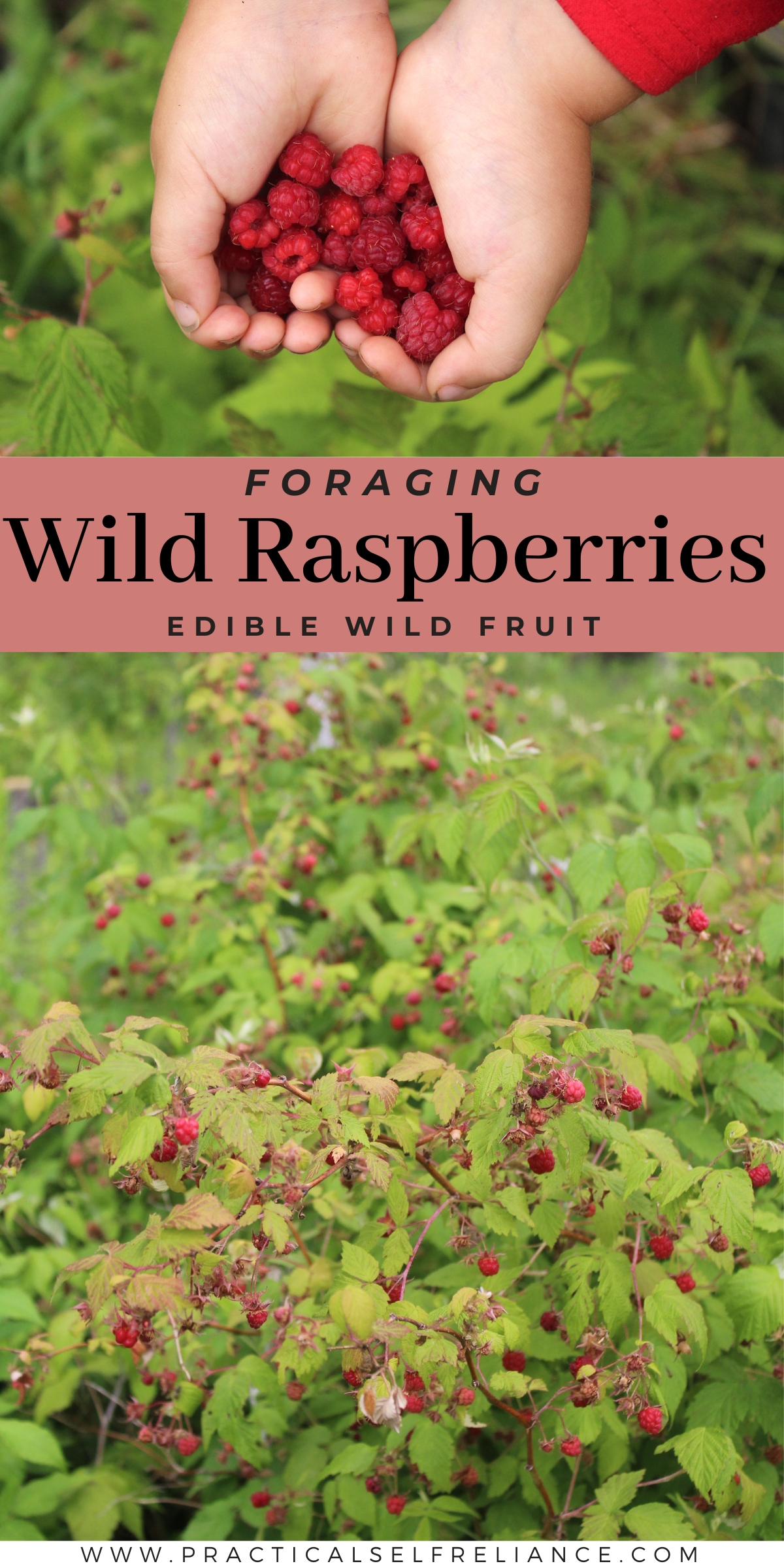
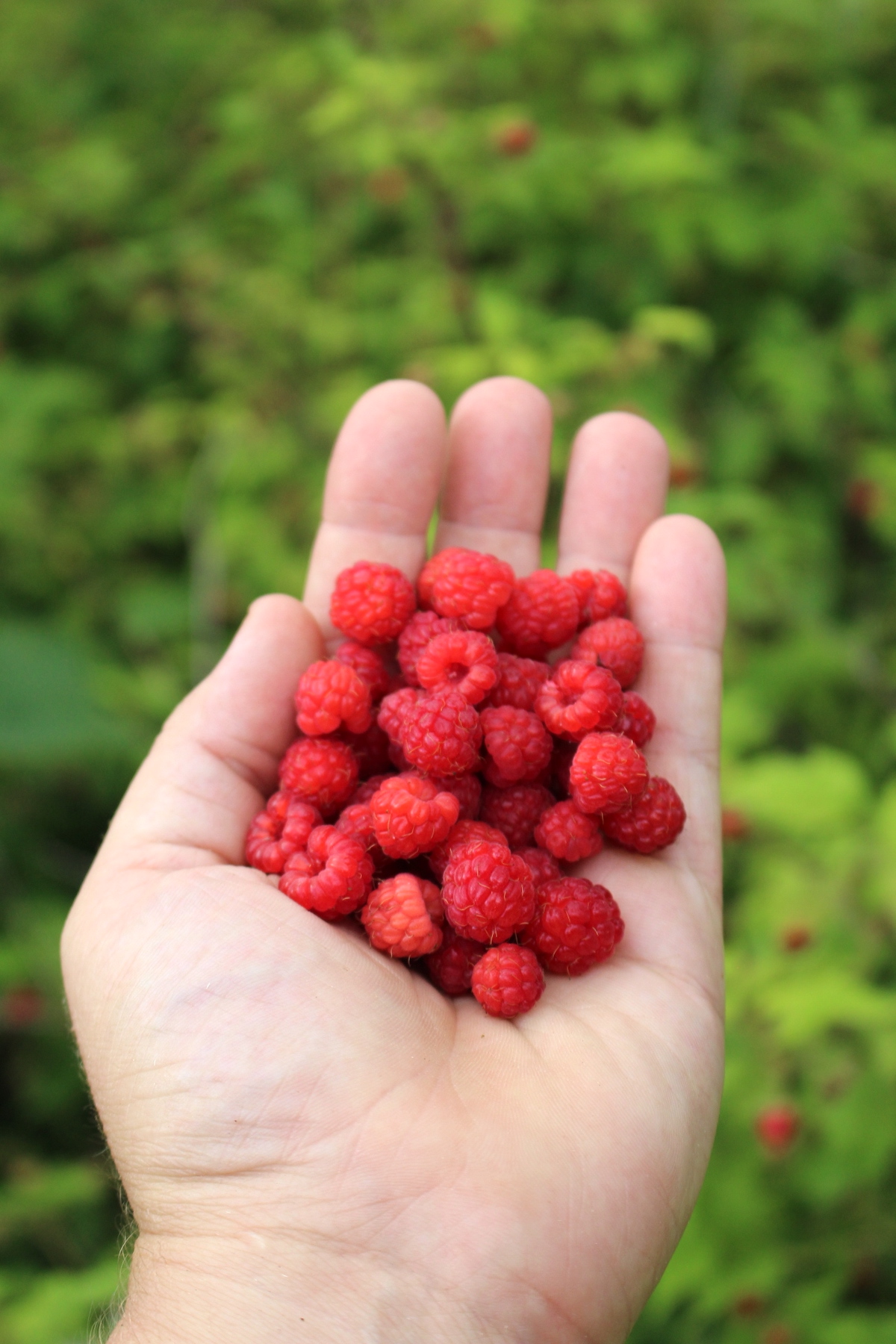
Wild Raspberries (Rubus sp.) are the same fruit you find at the grocery store for a hefty price tag, only free for the picking. They grow throughout most of North America, Europe, and Asia, and the various species are easy to identify with no toxic look-alikes (just other edible Rubus species).
The dominant North American natives are American Red Raspberry (Rubus strigosus) and Black Raspberry (Rubus occidentalis), with the European Raspberry (Rubus idaeus) widely naturalized as well. Wild raspberries are perfect for foraging with children or beginning foragers because the hollow-centered fruit and biennial canes make them one of the easiest wild fruits to confidently identify.
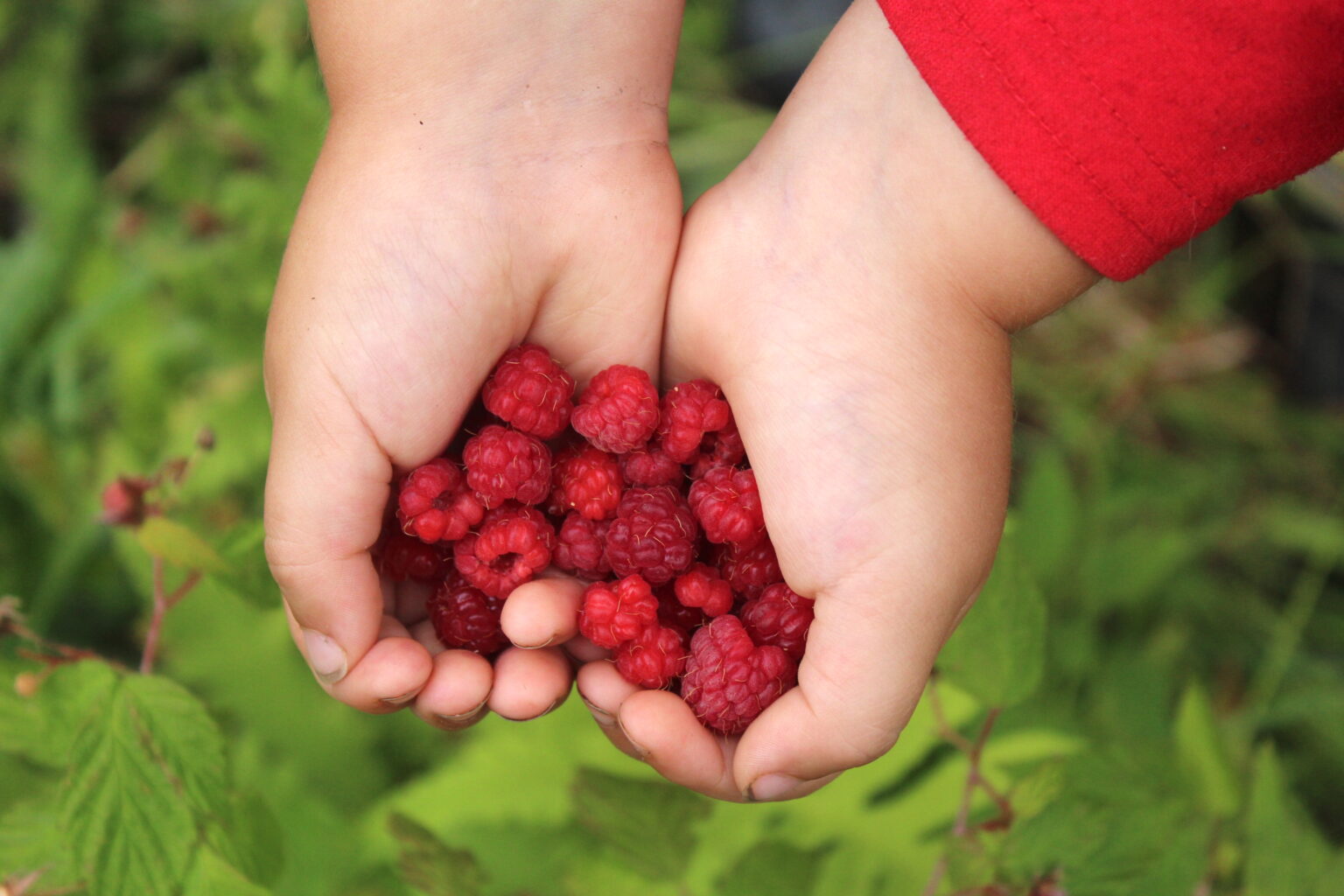
Table of Contents
- Notes from My Homestead
- What Are Wild Raspberries?
- Types of Wild Raspberries
- Are Raspberries Native to North America?
- Are Wild Raspberries Safe to Eat?
- Raspberry Medicinal Benefits
- Where Do Wild Raspberries Grow?
- When to Find Wild Raspberries
- How to Identify Wild Raspberries
- Wild Raspberry Look-Alikes
- How to Harvest Wild Raspberries
- Ways to Use Wild Raspberries
- Raspberry Recipes
- Wild Raspberry FAQs
- Rubus Foraging Guides
Wild raspberries are one of the easiest wild edible fruits to forage. They’re delicious, and they don’t have any toxic look-alikes. Pretty much everything that looks like a raspberry is either a raspberry or another closely related edible Rubus species, so you can harvest with confidence even if you can’t tell which exact species you’ve got.
Listing the related Rubus species off makes me feel a little bit like Willy Wonka, and while there aren’t snozzberries, there are thimbleberries, salmonberries, black raspberries, red blackberries, and northern dewberries. All of them look vaguely like raspberries, and all of them are delicious and edible (and there are dozens more Rubus species in the US alone).
While raspberries are easy to ID, you do still need to identify them correctly to harvest them safely. I’ll walk you through everything you need to know to forage wild raspberries successfully, from species identification to harvest timing to recipes for using your wild raspberry haul.
Notes from My Homestead

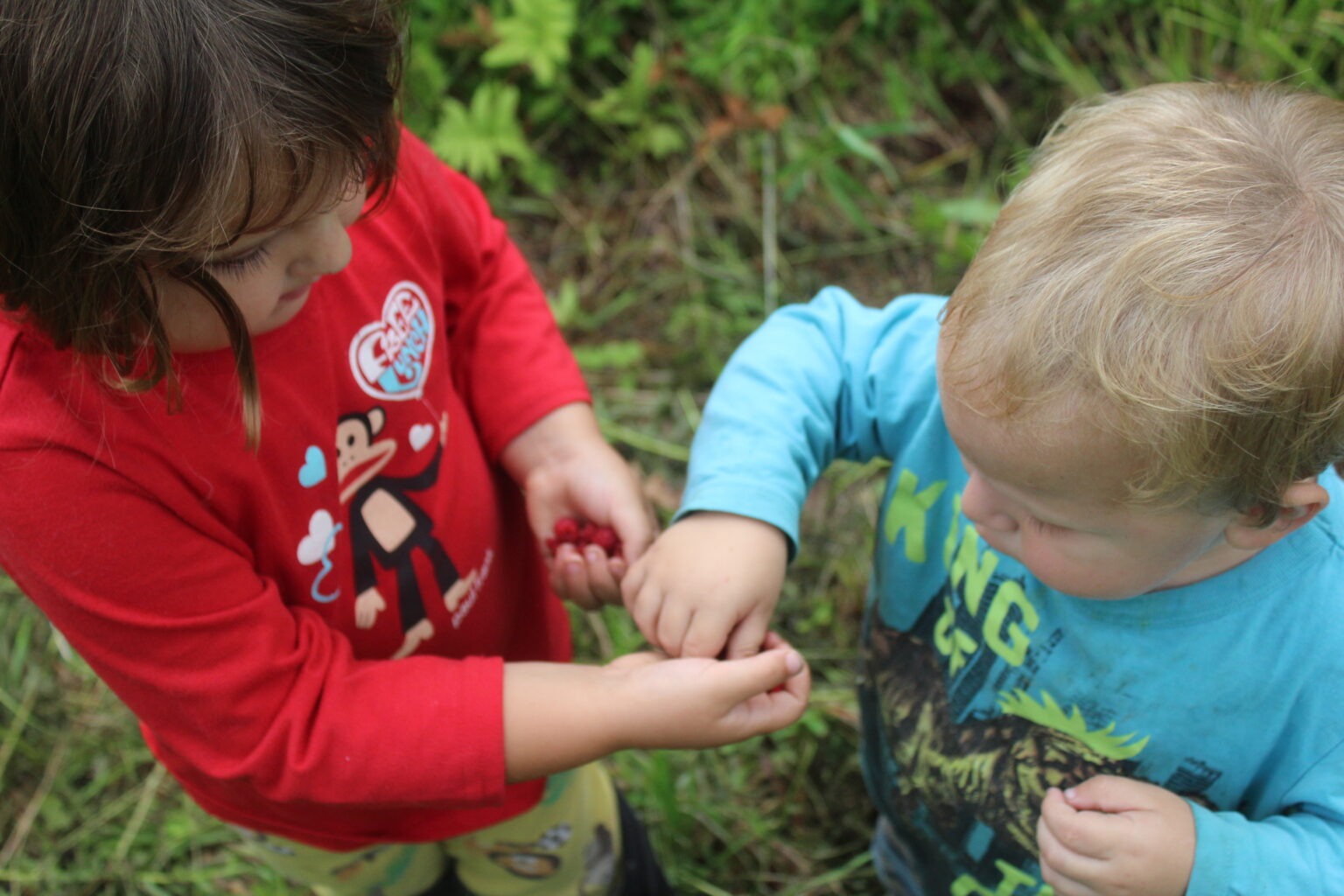
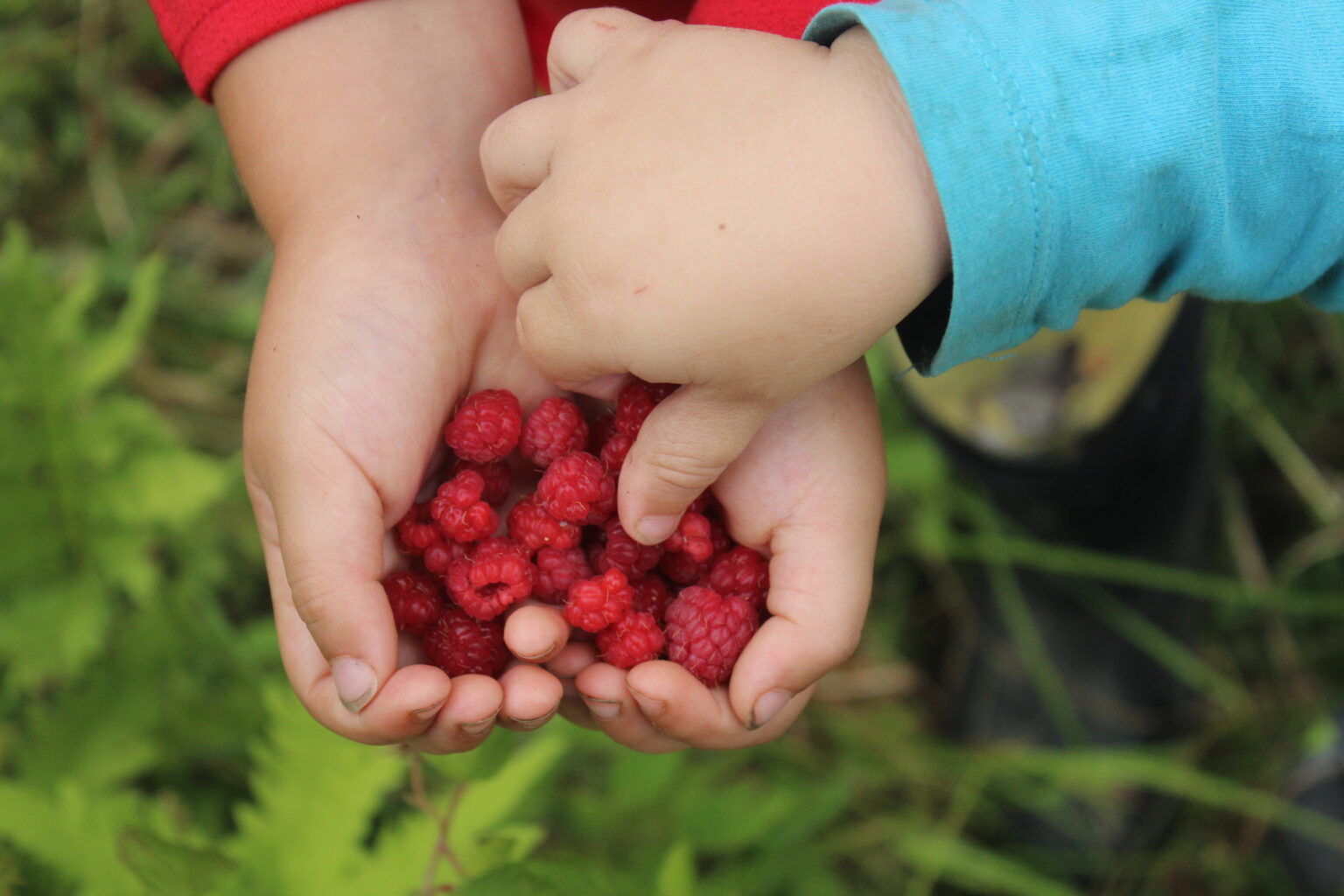
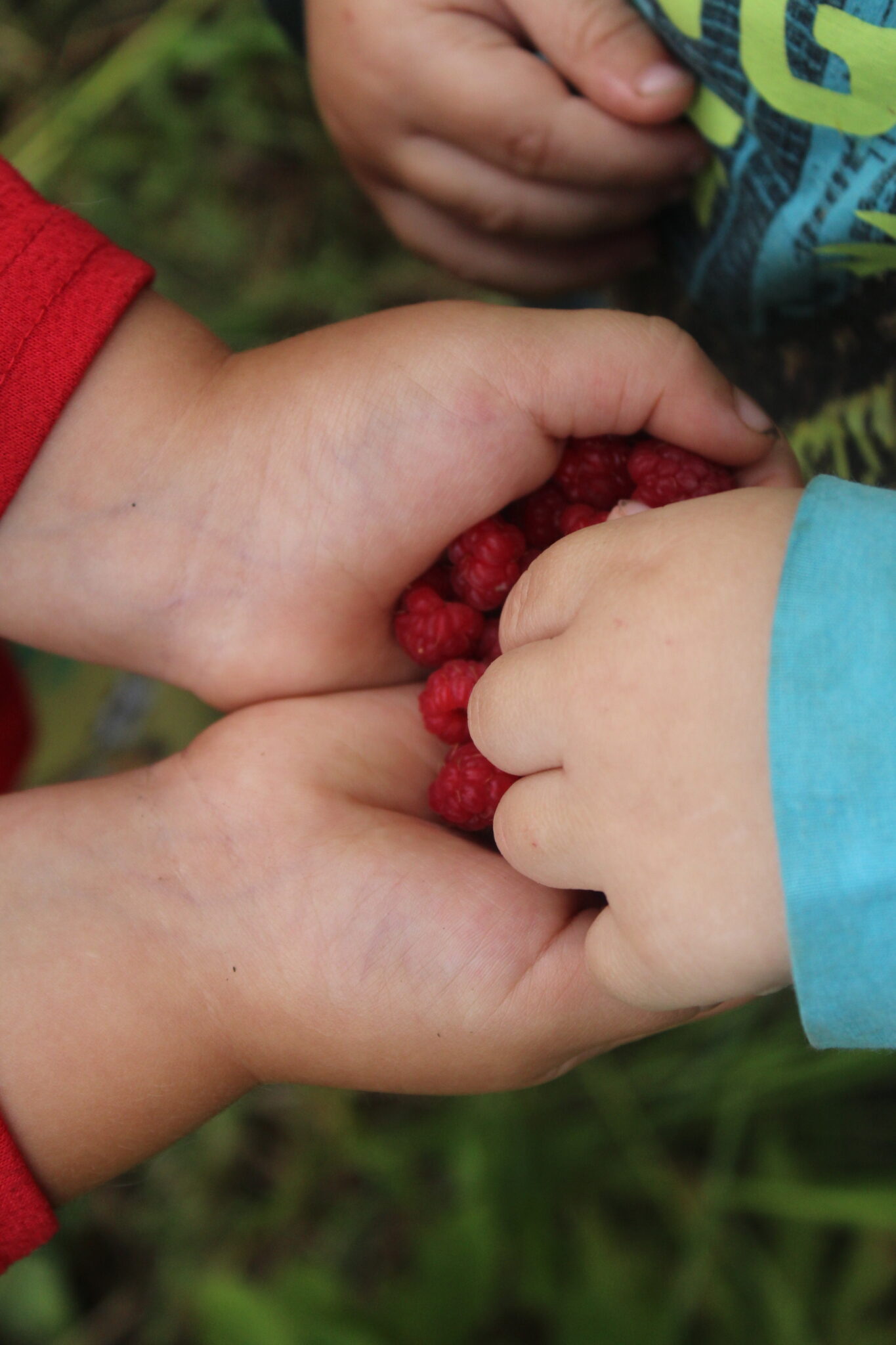
Wild raspberries are the first wild fruit my kids learned to forage on their own. Here in central Vermont, the canes start fruiting in mid-July along old farm fence lines and woodland edges, and by August the kids can fill a small basket without my help. The fruit is the same shape and color as the cultivated raspberries you’d buy at the farm stand, just smaller and sometimes more intensely flavored. Once you’ve shown a child what the hollow-centered fruit looks like and how it pulls cleanly off the receptacle when ripe, they can identify it as well as you can.
The thing I love most about wild raspberries is the volume. A productive thicket can yield several quarts in a good morning, and unlike many wild fruits, the harvest doesn’t require any processing to be edible. Eat them off the cane, freeze them whole for winter, or turn them into raspberry jelly or raspberry wine. The biennial cane growth pattern means a wild raspberry patch keeps producing year after year as long as you don’t disturb it, which makes them one of the most reliable wild fruits to know on your home territory.
What Are Wild Raspberries?
Wild raspberries are perennial fruiting shrubs in the Rubus genus of the rose family (Rosaceae), the same family as apples, cherries, plums, and strawberries. The Rubus genus includes hundreds of species worldwide, all producing aggregate fruits made up of small individual drupelets clustered together. Raspberries are distinguished from blackberries (also in Rubus) by their hollow-centered fruit that pulls cleanly off a white receptacle when ripe.
Raspberries are native to parts of Asia, North America, Australia, and Europe. Many of these species have naturalized well outside of their native range, so even cultivated European Raspberry (Rubus idaeus) often grows wild in North America after escaping from gardens.
Types of Wild Raspberries
Several species of wild raspberry are native to North America, plus the widespread European Raspberry that has naturalized in many regions. All are edible, and most can be used identically in recipes. The differences between species are mostly geographic and morphological rather than culinary.
American Red Raspberry (Rubus strigosus)
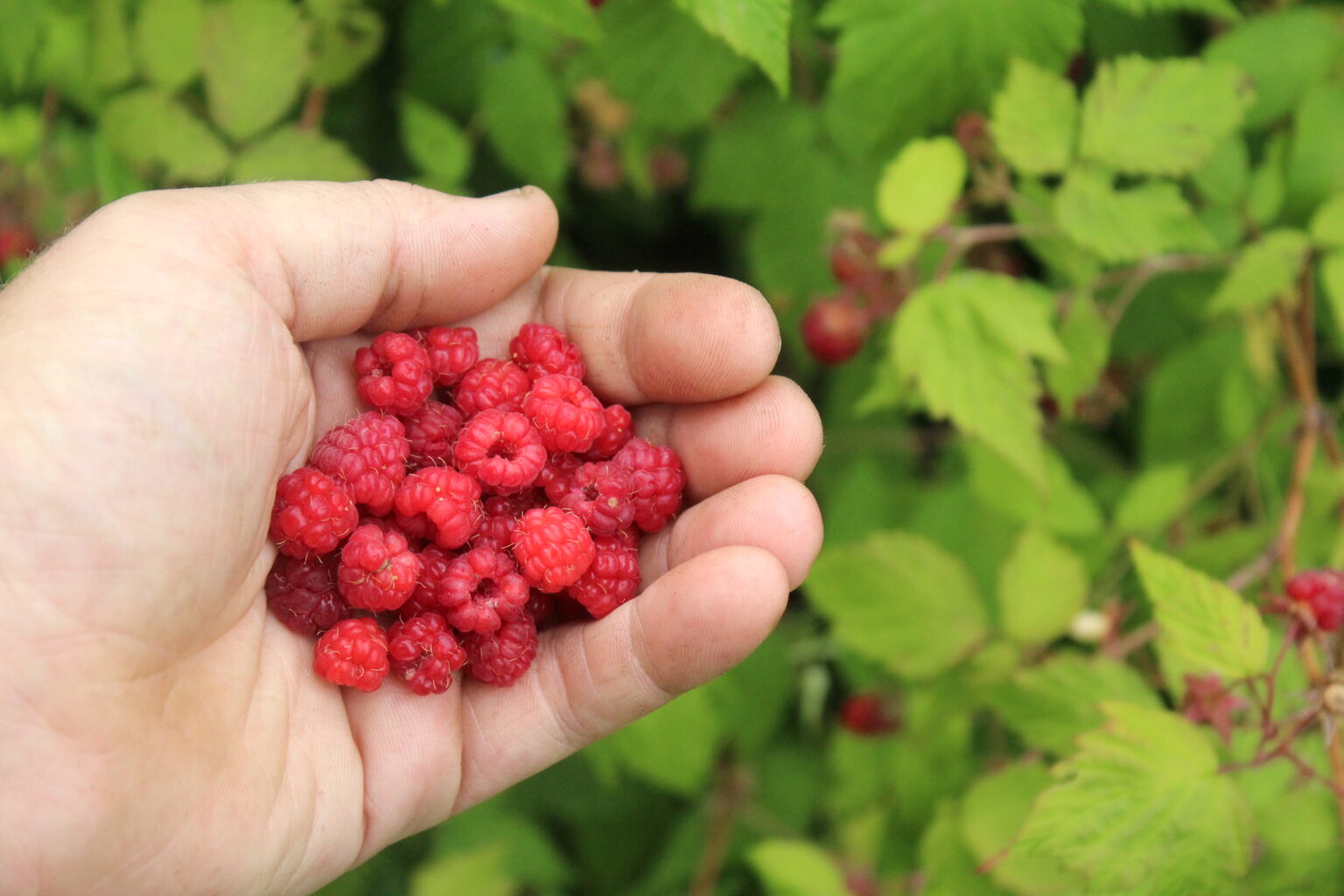
American Red Raspberry (Rubus strigosus) is the most widespread native raspberry in North America, growing across most of Canada and the northern and central United States, south through the Appalachian mountains. The fruit is bright red with tiny hairs on the surface, and it ripens from green through pink to bright red. The canes are bristly with stiff hairs and small thorns, and the leaves typically have 3 to 5 leaflets.
This is the species most North American foragers encounter, and it’s nearly indistinguishable from the cultivated European Raspberry except for slightly smaller fruit and slightly more intense flavor. Many botanists now consider American Red Raspberry a subspecies of European Raspberry (Rubus idaeus subsp. strigosus), reflecting the close relationship between the two.
European Raspberry (Rubus idaeus)
European Raspberry (Rubus idaeus) is native to Europe and parts of Asia and is widely cultivated in North America. Plants frequently escape from cultivation and naturalize in wild areas, especially near old homesteads and abandoned orchards. The fruit is similar to American Red Raspberry but typically larger and slightly less hairy.
European Raspberry is the species used to develop almost all commercial raspberry cultivars, so the wild fruit you find naturalized often closely resembles supermarket raspberries.
Black Raspberry (Rubus occidentalis)
Black Raspberry (Rubus occidentalis) is native to the eastern and central United States, ranging from Quebec south to Georgia and west to Colorado. The fruit ripens from green through red to deep purple-black, and the canes have a distinctive whitish bloom that easily distinguishes them from other raspberries.
Black raspberries are smaller than red raspberries but pack significantly more flavor, with an intense sweet-tart taste that’s prized for jam and wine. They ripen earlier than most red raspberries (typically late June to early July) and have a much shorter harvest window of just a few weeks.
Thimbleberry / Purple-flowering Raspberry (Rubus parviflorus and R. odoratus)
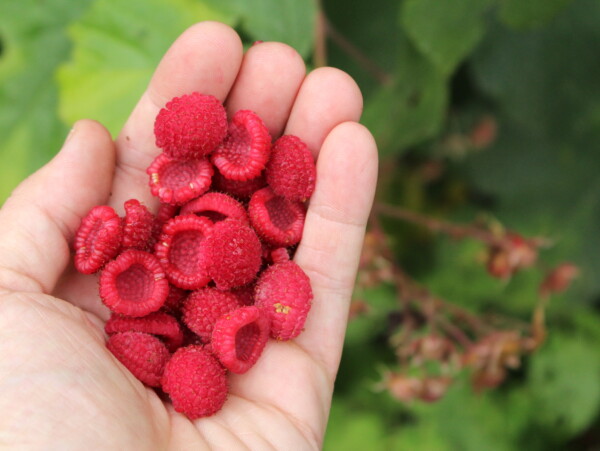
Thimbleberry (Rubus parviflorus, native to western North America) and Purple-flowering Raspberry (Rubus odoratus, native to eastern North America) are sister species sometimes called “flowering raspberries” because of their large showy flowers. Both have palmate (maple-like) leaves up to 10 inches wide, thornless canes, and large flat raspberry-like fruit.
The fruit is more flattened and crumbly than a true raspberry but unmistakably raspberry-flavored. Purple-flowering Raspberry (R. odoratus) has bright magenta flowers up to 2 inches wide and grows in northeastern woodland understory. Thimbleberry (R. parviflorus) has white flowers and grows in western mountain forests from Alaska south to California and through the northern Great Lakes region.
Other North American Raspberries
Several less common North American raspberry species are worth knowing for foragers in specific regions:
- Whitebark Raspberry (Rubus leucodermis): Native to western North America from British Columbia south to California. The fruit is dark purple-black with a heavy whitish bloom, similar in appearance to Black Raspberry. Sometimes called Western Black Raspberry.
- Rocky Mountain Raspberry (Rubus deliciosus): Native to the Rocky Mountains. The fruit tends to be dry with lots of seeds, despite the species name. The plant is thornless with attractive 2½-inch fragrant white flowers, often used as an ornamental.
- Snow Raspberry (Rubus nivalis): Native to the Pacific Northwest. A low-growing trailing plant of high-elevation forests.
- Arctic Raspberry (Rubus arcticus): Native to the far north (Alaska, northern Canada, and Arctic regions). Only grows about 12 inches tall, with intensely flavored small berries highly prized by northern foragers.
Are Raspberries Native to North America?
Yes, several raspberry species are native to North America. American Red Raspberry (Rubus strigosus) is native to most of Canada and the northern and central United States. Black Raspberry (Rubus occidentalis) is native to the eastern and central US. Thimbleberry (Rubus parviflorus) is native to western North America, while Purple-flowering Raspberry (Rubus odoratus) is its eastern counterpart. Whitebark Raspberry, Rocky Mountain Raspberry, Snow Raspberry, and Arctic Raspberry are also native to specific North American regions.
Native Americans throughout the continent used wild raspberries extensively as food and medicine long before European contact. Archaeological evidence suggests raspberries have been part of human diet on both continents for tens of thousands of years.
The European Raspberry (Rubus idaeus) commonly cultivated for fresh-market fruit is native to Europe and parts of Asia, not North America. However, it has naturalized widely across North America, escaping from old farms and gardens to grow alongside the native species. Many populations of “wild raspberries” in eastern North America are actually a mix of native American Red Raspberry and naturalized European Raspberry, with hybrids common where the two ranges overlap.
For foraging purposes, the distinction between native and naturalized raspberries matters less than knowing they’re all edible and used identically. A North American forager is essentially guaranteed to find at least one native raspberry species somewhere in their region, plus naturalized populations almost everywhere.
Are Wild Raspberries Safe to Eat?
Yes, wild raspberries are safe to eat. All Rubus species (including raspberries, blackberries, dewberries, thimbleberries, salmonberries, and cloudberries) produce edible fruit. There are no toxic raspberry look-alikes in North America, which makes wild raspberries one of the safest wild fruits for beginning foragers and for foraging with children.
The plants you might confuse with wild raspberry are all also edible:
- Other raspberry species (different colors, sizes, growth habits)
- Blackberries (Rubus species with solid, not hollow-centered fruit)
- Dewberries (low-growing trailing Rubus species)
- Thimbleberries (large-leaved Rubus with flat raspberry-like fruit)
- Mulberries (different genus entirely, but visually similar fruit)
- Cloudberries (low-growing Rubus species in arctic and alpine regions)
The few sensible cautions for eating wild raspberries:
- Avoid harvesting from roadsides where exhaust fumes may have contaminated the fruit, or from sprayed agricultural areas.
- Wash the fruit before eating in quantity, especially if harvested from areas with wildlife traffic.
- The leaves should not be eaten fresh in large quantities. Fresh wilted Rubus leaves contain compounds that can cause mild digestive upset. Use the leaves either fully fresh (within hours of picking) or fully dried for tea, but not partially wilted.
- Pregnant individuals should consult a midwife or doctor before consuming raspberry leaf preparations regularly, since the leaves have documented effects on uterine muscle.
For the fresh fruit, no special precautions are needed beyond standard food hygiene. Eat them off the cane, take them home for jam, freeze them whole. Wild raspberries are as safe as the cultivated raspberries you’d buy at the grocery store.
Raspberry Medicinal Benefits
Raspberries have been part of human life for thousands of years. Archaeological evidence suggests that humans were eating raspberries as early as the Paleolithic era, and our first evidence of domestication comes from Roman agricultural writer Palladius in the 5th century. People may have first used raspberries for their tasty fruit, but they also quickly incorporated the plant into herbal medicine.
The ancient Indians, Greeks, Chinese, and Romans all used raspberry leaves in their traditional medicinal practices, employing the leaves to treat wounds and diarrhea and as a childbirth aid for both humans and livestock. Culpeper’s Complete Herbal, published in 1653, displays the continued use of raspberry leaf through the ages, describing the leaf as binding and useful for fevers, ulcers, and women’s health complaints.
People in the Americas were also using raspberry medicinally. The Cherokee, Iroquois, and Mohawk people all used raspberry leaves to help with labor by easing labor pains and contractions and soothing nausea. Other Native American groups undoubtedly used the plant as well.
In modern times, herbalists recognize that consuming both the berries and leaves may help to support general wellness and the immune system. The berries are full of vitamins, minerals, antioxidants, and fiber. The leaves also contain significant amounts of vitamins B, C, and E and essential minerals like calcium, magnesium, and zinc. In addition, the leaves are high in antioxidants that may help protect the body from cancer and disease.
Modern medicine has also recognized raspberry leaf extract as a treatment for some mouth sores. An Australian study found that raspberry leaf extract was a safe and effective treatment for Oral lichen planus (OLP), a chronic mucocutaneous inflammatory disease. The study found that using raspberry leaf extract significantly reduced OLP symptoms including burning sensation and erosion.
Increased antibiotic-resistant bacteria has led some modern scientists to experiment with raspberry leaves for infections, too. A 2023 study found that a combination of tormentil, raspberry leaves, and loosestrife extracts made a suitable antibiotic replacement for treating campylobacteriosis, a common food-borne illness from undercooked poultry.
Today, many herbalists and midwives continue to use raspberry leaf products to help with labor and menstrual issues. One study from The Journal of Midwifery and Women’s Health found that raspberry leaf tablets reduced the second stage of labor by almost 10 minutes and resulted in a lower rate of forceps deliveries. However, on the whole, raspberry leaf products have been largely understudied for women’s issues. Disappointingly, some studies still regularly cited for raspberry leaf’s use in women date back to as early as 1941.
Where Do Wild Raspberries Grow?
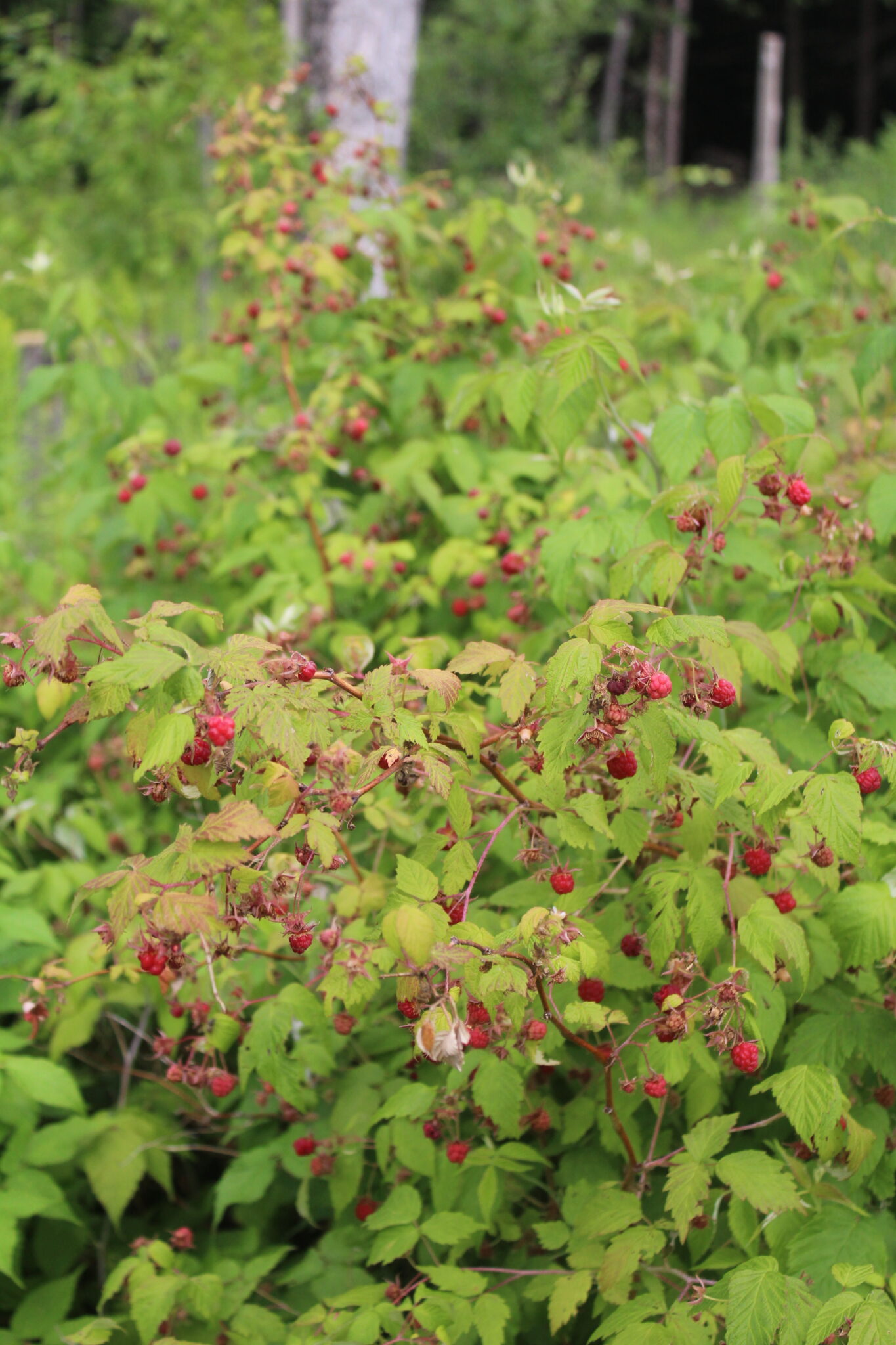
Wild raspberries grow throughout most of North America, Europe, Asia, and Australia. Some species, like American Red Raspberry (Rubus strigosus) and the naturalized European Raspberry (Rubus idaeus), are widespread in the United States and Canada. Other species like Rocky Mountain Raspberry (Rubus deliciosus) have a more limited range.
Wild raspberries are early successional species that quickly colonize open or disturbed habitats. The most productive places to look:
- Abandoned fields and old pastures
- Recent clear-cuts and logging clearings
- Roadsides and railroad embankments (avoid sprayed verges)
- Edges of streams, rivers, and ponds
- Forest edges and meadow margins
- Old farm fence lines and hedgerows
- Power line cuts and other regularly disturbed areas
- Old homestead sites and abandoned orchards (where naturalized European Raspberry often persists)
Wild raspberries thrive in the full sun to partial shade these habitats offer, and they’re pretty tolerant of different soil types. You’re most likely to find them thriving in places with well-drained, acidic soil. Once you find a productive patch, mark its location and return year after year. The biennial cane growth pattern means a stable raspberry thicket can produce reliably for decades.
When to Find Wild Raspberries
Wild raspberries are deciduous perennials. Like deciduous trees, they lose their leaves in the fall, but you may still find their arching canes year-round. The biennial cane life cycle is one of the most useful features for understanding when to find ripe fruit:
- First-year canes (primocanes): New canes growing from the perennial root system. They are typically prickly and covered with bristly hair and glands. They don’t flower or fruit in their first year.
- Second-year canes (floricanes): Canes that overwintered from the previous season. They produce flowers and fruit, then die back to the ground after fruiting.
This biennial pattern means a healthy raspberry patch always has both first-year and second-year canes growing simultaneously, ensuring fruit production every year as long as the root system stays alive. Some everbearing varieties produce a small fall crop on first-year canes, but the main summer harvest always comes from second-year floricanes.
Most herbalists recommend harvesting the leaves in spring or early summer before the plants flower and begin to produce fruit. Some foraging experts and herbalists believe the leaves are higher in sugars and healthy compounds at this stage before they have put energy into flowering.
Wild raspberries flower in late spring or summer and fruit in summer or early fall, depending on the region:
- Southern US: June to early July (Black Raspberry first, followed by Red Raspberry)
- Mid-Atlantic and Midwest: Late June through July
- Northeast and Upper Midwest: July through early August
- Far north (Canada, Alaska, high elevations): August through September
The window for ripe wild raspberries is typically 2 to 4 weeks per patch. Plan to check your patches every few days during the harvest window, since ripe fruit doesn’t last long on the cane and birds will quickly clean a patch out.
How to Identify Wild Raspberries
Wild raspberries form drooping or arching canes that sometimes root where they touch the ground to form new plants. While they do spread to create patches, they generally aren’t as aggressive as most blackberry species. The combination of features that identifies a wild raspberry:
- Arching biennial canes 2 to 10 feet tall
- Pinnately compound leaves with 3 to 5 (rarely 7) leaflets
- Stems with stiff bristles, hairs, or thorns
- Small white flowers with five reflexed sepals and five rounded petals
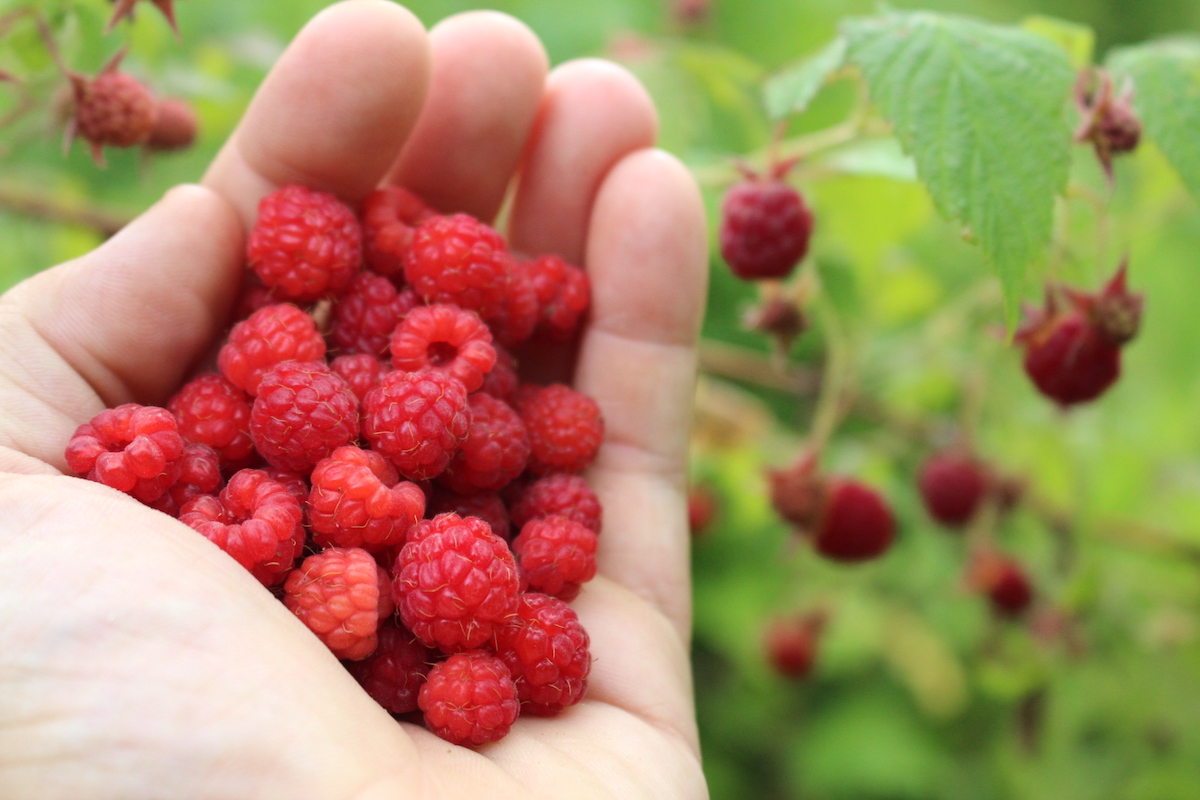
- Hollow-centered aggregate fruit that pulls cleanly off a white receptacle when ripe
The hollow-centered fruit is the single most diagnostic feature. When you pluck a ripe raspberry from the cane, the receptacle (the white core that supported the fruit on the plant) stays on the cane while the hollow drupelet cluster comes free in your hand. This is what distinguishes raspberries from blackberries (which have a solid green or white center) and from any other look-alike fruit.
Raspberry Leaves
Wild raspberries have compound, alternately arranged leaves with three to five (rarely seven) leaflets. The leaves are each held on small petioles or stems. The leaflets are usually ovate with pointed tips and serrated margins, measuring 1 to 4 inches long. They are green above and hairy and pale below.
The Purple-flowering Raspberry (Rubus odoratus), sometimes called Eastern Thimbleberry, stands out among the raspberries for its large palmate (maple-like) leaves up to 10 inches wide. This is the easiest non-typical raspberry to identify because the leaves don’t look anything like other raspberries.
Raspberry Stems
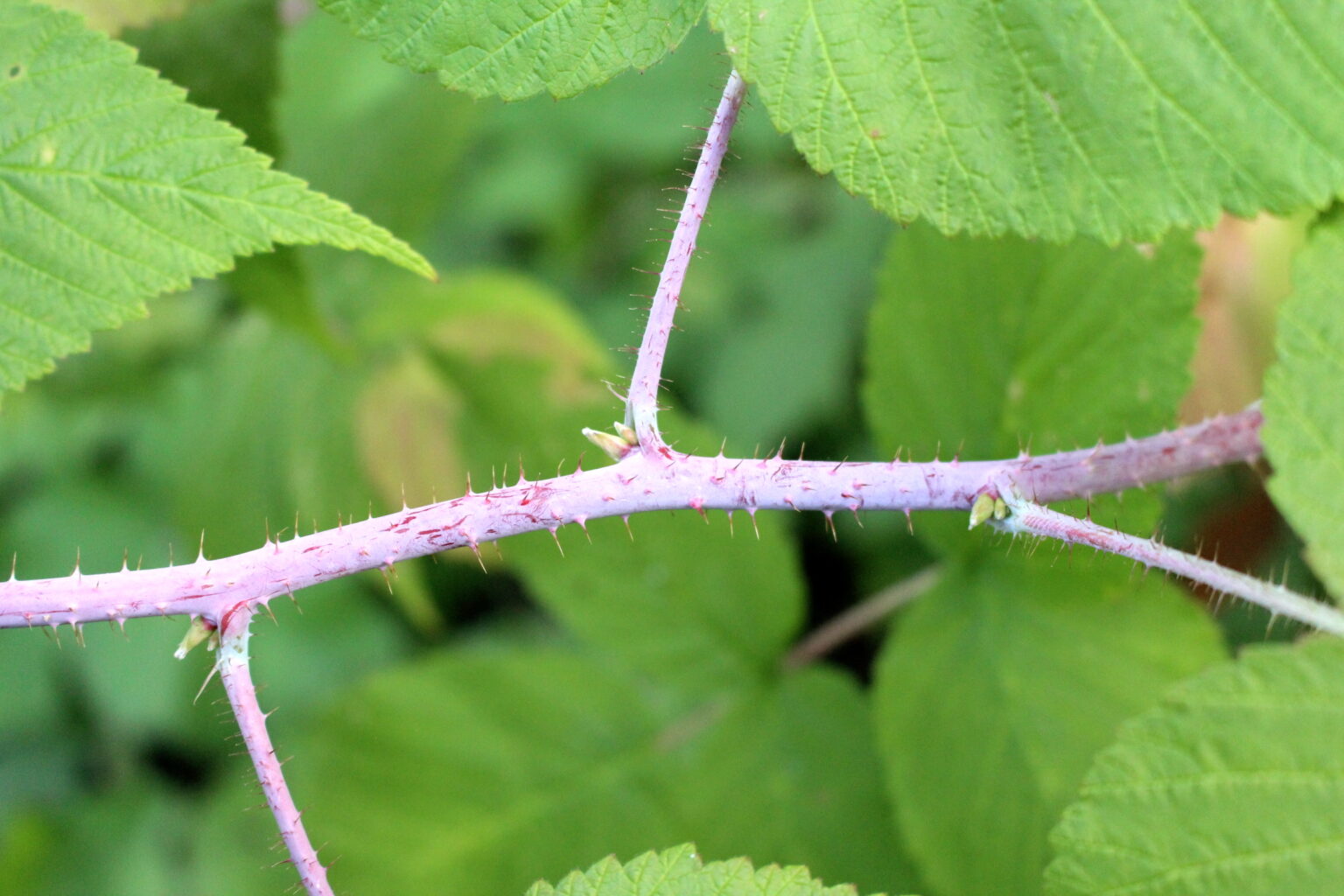
Raspberry stems may be greenish, purplish, brownish, or reddish. Typically, they’re covered in stiff bristles and hairs, though some species have more pronounced thorns. Usually, raspberry canes grow from 2 to 10 feet tall but tend to arch or droop over rather than stand erect.
Some species have more noticeable variation. Black Raspberry (Rubus occidentalis) canes display a noticeable whitish bloom that easily distinguishes them from other raspberries. Purple-flowering Raspberry (Rubus odoratus) has thornless canes with red, bristly hair when young and peeling and cracking bark in their second year. The Rocky Mountain Raspberry (Rubus deliciosus) is also thornless, and the Arctic Raspberry (Rubus arcticus) only grows about 12 inches tall.
Raspberry Flowers
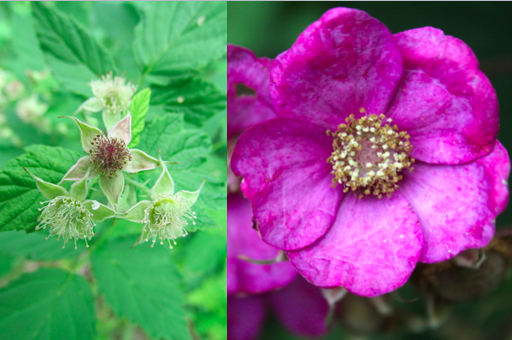
Raspberry flowers usually grow in small groups of three to five. Each flower is usually about 1 cm (less than ½ inch) wide and has five reflexed sepals and five white, rounded petals. The flowers attract bees, butterflies, and other pollinators.
A few raspberries have different flower features. Purple-flowering Raspberry (Rubus odoratus) has larger, purplish or magenta flowers that are 1.2 to 2 inches wide. Rocky Mountain Raspberry (Rubus deliciosus) has fragrant white flowers about 2½ inches wide. Both of these are easily distinguished from typical white-flowered raspberries by flower size alone.
Raspberry Fruit
After flowering, raspberries form hollow-centered, rounded clusters of fleshy drupelets typically about ½ inch wide. The fruit of the Purple-flowering Raspberry (Rubus odoratus) tends to be more flattened than the other raspberries.
Depending on the species, these fruits usually ripen from green to red or dark purple. Some species, like American Red Raspberry (Rubus strigosus), have tiny hairs on the fruit. Others, like Black Raspberry (Rubus occidentalis) and Whitebark Raspberry (Rubus leucodermis), have a whitish bloom on the fruit.
The defining test: a ripe raspberry pulls cleanly off the cane, leaving a white receptacle behind. The hollow center of the fruit is the single most reliable identification feature for wild raspberries.
Wild Raspberry Look-Alikes
Wild raspberries are most easily confused with other members of the Rubus genus. Fortunately, all true Rubus species are edible (with no toxic look-alikes), so any confusion is informational rather than dangerous. The most common look-alikes:
Pennsylvania Blackberry (Rubus pensilvanicus)
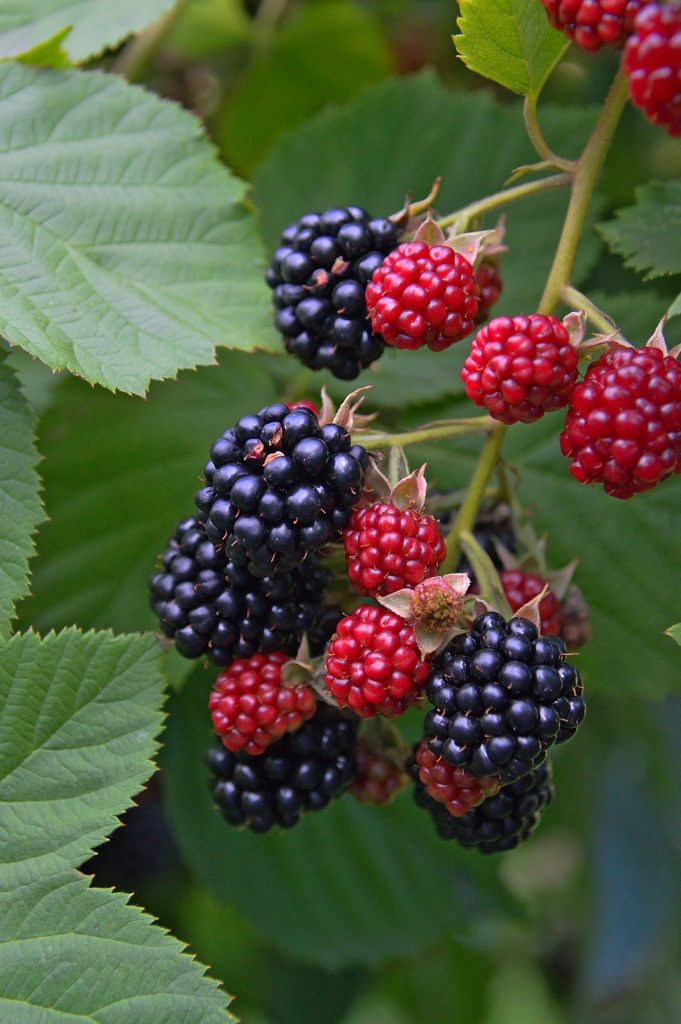
Pennsylvania Blackberry (Rubus pensilvanicus) is the most commonly confused species. Both raspberries and blackberries have similar leaves, similar flowers, and aggregate fruit. The differences:
- Pennsylvania Blackberry canes mature from green to dark red.
- Pennsylvania Blackberry canes are usually ridged and covered with copious amounts of straight prickles, while raspberry canes are typically rounder and have softer bristly hairs.
- Blackberries have a soft green or white center rather than being hollow. The receptacle stays attached to the fruit when picked, rather than separating.
- Blackberries typically ripen later than raspberries (August to September in most regions, vs July for raspberries).
Cloudberries (Rubus chamaemorus)
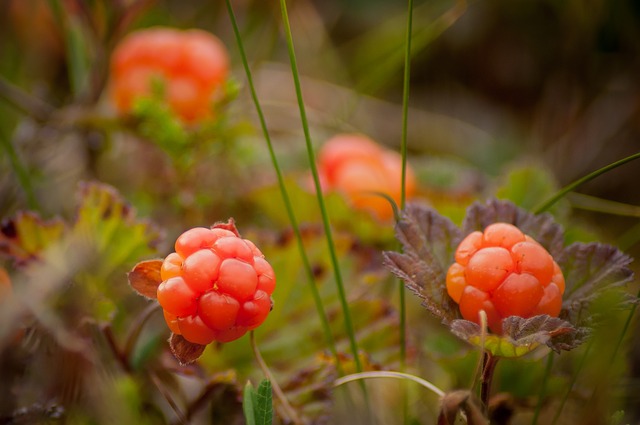
If you live in or near alpine areas, boreal forests, or arctic tundra, you may also spot Cloudberries (Rubus chamaemorus). They share the Rubus genus with raspberries but look quite different:
- Cloudberries only grow 4 to 10 inches tall (much smaller than raspberry canes).
- Cloudberries have soft, palmate leaves with 5 to 7 lobes (very different from compound raspberry leaves).
- Cloudberries start as pale red and then ripen to amber-orange (not red or purple-black like raspberries).
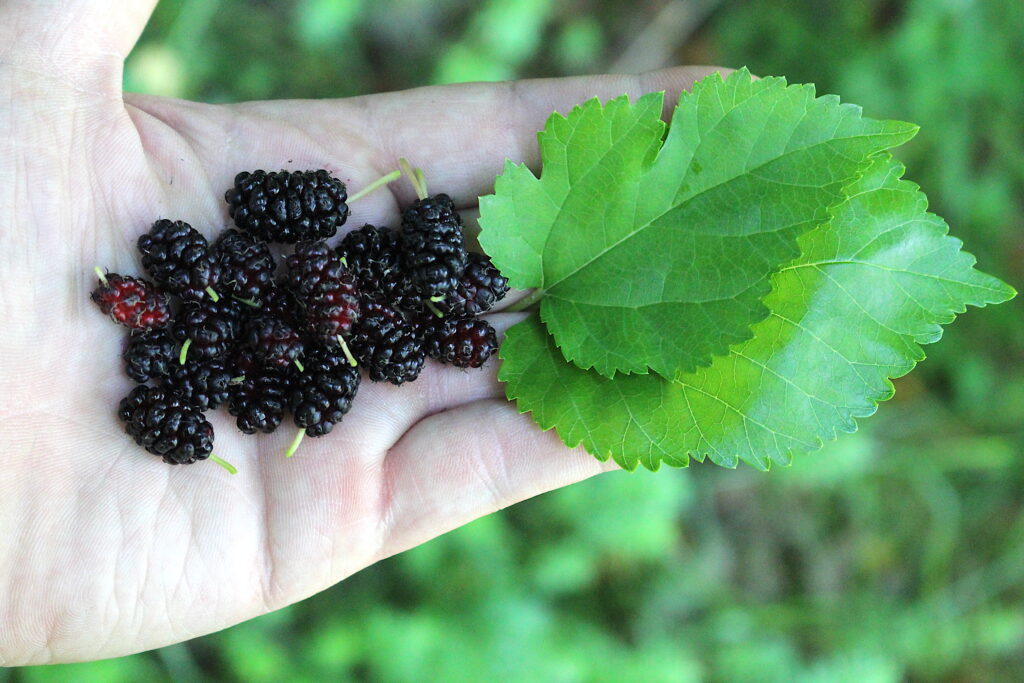
Mulberries (Morus spp.)
Occasionally, raspberries may also be confused with mulberries (Morus spp.), although the trees are very different from raspberry canes. The fruit-level differences:
- Mulberries are fast-growing trees that may reach 80 feet tall, not arching shrub canes.
- Mulberry leaves are simple and alternately arranged (not compound like raspberry leaves).
- Mulberries have a green or white center rather than being hollow.
- Mulberries are in a completely different genus (Morus, in the Moraceae family), unrelated to Rubus.
All of these look-alikes are edible, so confusing them with wild raspberries doesn’t pose any safety risk. The main reason to learn the differences is so you know exactly what you’re harvesting and can choose the best preparation methods for each.
How to Harvest Wild Raspberries
Wild raspberry harvest is one of the most pleasant foraging experiences. The fruit is easy to identify, easy to pick, and immediately edible. Practical harvest tips:
- A ripe raspberry will pull cleanly off the cane with a gentle tug. If you have to pull hard, the fruit isn’t ripe yet.
- The receptacle (white core) should stay on the cane when you pick a ripe fruit. If the receptacle comes off with the berry, the fruit is overripe and the flavor will be muted.
- Pick early in the morning when temperatures are cool. The fruit holds its shape better and travels home in better condition.
- Use a wide, shallow container so the fruit doesn’t crush itself under its own weight. A pint or quart yogurt container works well; a deep bucket does not.
- Wear long sleeves if the canes have prominent thorns. Most wild raspberry species have small bristly hairs rather than serious thorns, but a few species and individual plants can be more heavily armed.
- Process or refrigerate within a few hours. Wild raspberries are highly perishable and don’t keep at room temperature.
- To freeze whole, spread the berries in a single layer on a baking sheet and freeze until solid before transferring to a freezer container. This prevents the berries from clumping together into a frozen brick.
- For maximum harvest from a productive thicket, return every 2 to 3 days during the ripening window. Different fruit on the same plant ripens at different rates, so a single visit usually only catches the peak ripeness fruit.
- Be respectful of the patch. Don’t trample the canes or break them, since the second-year canes you damage now would have produced fruit next year.
A productive wild raspberry thicket can yield several quarts of fruit in a single harvest, and a stable thicket can be harvested year after year for decades. Once you know where your local patches are, mark their locations and check them every July or August.
Ways to Use Wild Raspberries
Wild raspberries are easy to enjoy right off the cane. They make an excellent trailside snack for hikers and a perfect first foraging experience for kids. If you’re fortunate enough to find a large patch, there are plenty of ways to use them at home.
To preserve berries for use over the winter, you can dry, freeze, or can them as jam or jelly. Mashed raspberries and other fruits make tasty fruit leathers for kids and adults. Their sweet, slightly tart flavor makes them excellent toppings for salads, cereal, yogurt, and cakes. They’re also a tasty addition to more savory creations like rib glazes, meatballs, or pork chops.
You can also use them in baked goods. Wild raspberries shine in muffins, cobbler, granola, pie, crisp, cake, cheesecake, or quick bread. They’re easy to add to other dessert recipes like chocolate bark, ice cream, smoothies, and popsicles. Wild raspberries are also great drink ingredients. Try making raspberry lemonade, simple syrup, or your own signature raspberry cocktail or mocktail.
If you want to add raspberry to your herbal practice, you’ll want to harvest the leaves in spring or early summer. You can use the leaves fresh or dry them for later use. Raspberry leaves are wonderful medicinal herbs that are great for making teas, tinctures, or mouthwash.
Raspberry leaves make one of the best-tasting herbal teas. Not surprisingly, they were one of the herbs that saw heightened use just before the American Revolution as Americans gave up true tea leaves to protest the Tea Tax. You can also powder the dried leaves and put the powder in capsules or add it to smoothies and other dishes.
Lastly, you can experiment with raspberry roots. You can make root teas and tinctures for digestive issues and mouth sores, or pound the roots and use them externally as a poultice for soothing minor wounds, burns, and skin irritations.
Wild Raspberry Recipes
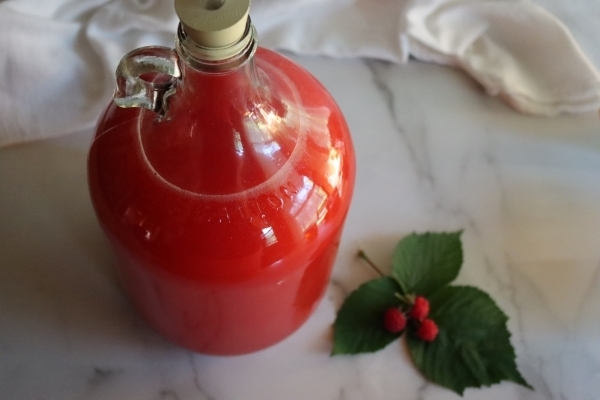
- Wild raspberries work wonderfully in homemade raspberry wine, a classic country wine that captures the summer flavor for year-round enjoyment.
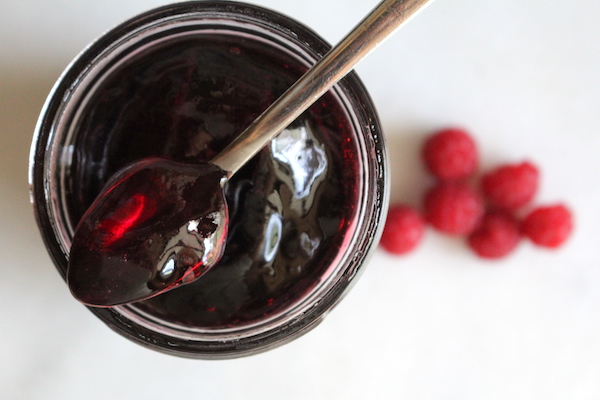
- Raspberry jelly is a simple recipe that comes together without added pectin, with just sugar and fruit.
- Raspberry jam (without added pectin) is the easiest preservation method for wild raspberries and is perfect for spreading on toast or biscuits.
- Raspberry mead is a small-batch fermented honey wine that highlights the wild raspberry flavor beautifully.
- If you’ve foraged Black Raspberries specifically, try Black Raspberry Jam for the most intense raspberry flavor possible.
- Check out this Chipotle Raspberry Chicken Thigh recipe from Handle the Heat for a savory take on raspberries.
- These Sheet Pan Pork Chops with Raspberry Ketchup from Healthy Seasonal Recipes are easy to make and easy to eat.
- Encourage your kids or friends to fall in love with foraging with these Raspberry Popsicles with Dark Chocolate Drizzle from Foraged Dish.
- Simple raspberry leaf tea is nourishing and easy to make, with several variations to try.
- Make a raspberry leaf tincture from The Sparrow’s Home, especially recommended for folks who struggle with painful periods and other menstrual issues.
Raspberry Recipes
Wild Raspberry FAQs
Yes, wild raspberries are safe to eat. All Rubus species (including raspberries, blackberries, dewberries, thimbleberries, salmonberries, and cloudberries) produce edible fruit. There are no toxic raspberry look-alikes in North America, which makes wild raspberries one of the safest wild fruits for beginning foragers and for foraging with children. The few sensible cautions: avoid harvesting from sprayed agricultural areas or busy roadsides, wash the fruit before eating in quantity, and avoid eating fresh wilted Rubus leaves (use them either fully fresh or fully dried for tea). Pregnant individuals should consult a midwife or doctor before consuming raspberry leaf preparations regularly.
Wild raspberries grow throughout most of North America, Europe, Asia, and Australia. American Red Raspberry (Rubus strigosus) and the naturalized European Raspberry (Rubus idaeus) are widespread across the United States and Canada. Black Raspberry (Rubus occidentalis) is native to the eastern and central US. Wild raspberries are early successional species that thrive in disturbed habitats: abandoned fields, recent clear-cuts, roadsides, the edges of streams and meadows, forest edges, old farm fence lines, power line cuts, and old homestead sites. They prefer full sun to partial shade and well-drained acidic soil.
Yes, several raspberry species are native to North America. American Red Raspberry (Rubus strigosus) is native to most of Canada and the northern and central US. Black Raspberry (Rubus occidentalis) is native to the eastern and central US. Thimbleberry (Rubus parviflorus) and Purple-flowering Raspberry (Rubus odoratus) are native to western and eastern North America respectively. The European Raspberry (Rubus idaeus) commonly cultivated for fresh-market fruit is native to Europe and Asia, but it has naturalized widely across North America. Native Americans throughout the continent used wild raspberries extensively as food and medicine long before European contact.
Several wild raspberry species are common in North America. American Red Raspberry (Rubus strigosus) is the most widespread, with bright red fruit and bristly canes. Black Raspberry (Rubus occidentalis) has dark purple-black fruit and canes with a whitish bloom, native to the eastern and central US. Thimbleberry (Rubus parviflorus) and Purple-flowering Raspberry (Rubus odoratus) have large palmate leaves and flat raspberry-like fruit. Less common species include Whitebark Raspberry, Rocky Mountain Raspberry, Snow Raspberry, and Arctic Raspberry, each native to specific regions. The European Raspberry (Rubus idaeus) is also widely naturalized in North America.
Most pets can safely eat wild raspberries in moderation. Dogs, rabbits, horses, and goats can all consume small quantities of fresh raspberries without issue. Raspberries are also non-toxic to cats, though most cats won’t eat them voluntarily. Raspberry leaves are sometimes used in herbal preparations for animals, particularly horses and rabbits. As with any treat, raspberries should be a small part of a pet’s diet rather than a primary food source. Consult your veterinarian before feeding raspberries (or any new food) to a pet with health conditions, especially diabetes (since raspberries contain natural sugars).
Did you find this Wild Raspberry foraging guide helpful? Tell me in the 📝 comments below how you use wild raspberries on your homestead!
And make sure you stay in touch with me by following on social media!
Rubus Foraging Guides

Find the perfect foraging guide
Searching for something else? Enter keywords to find the perfect foraging guide!