Affiliate disclosure: This post may contain affiliate links. Please see our Privacy Policy.
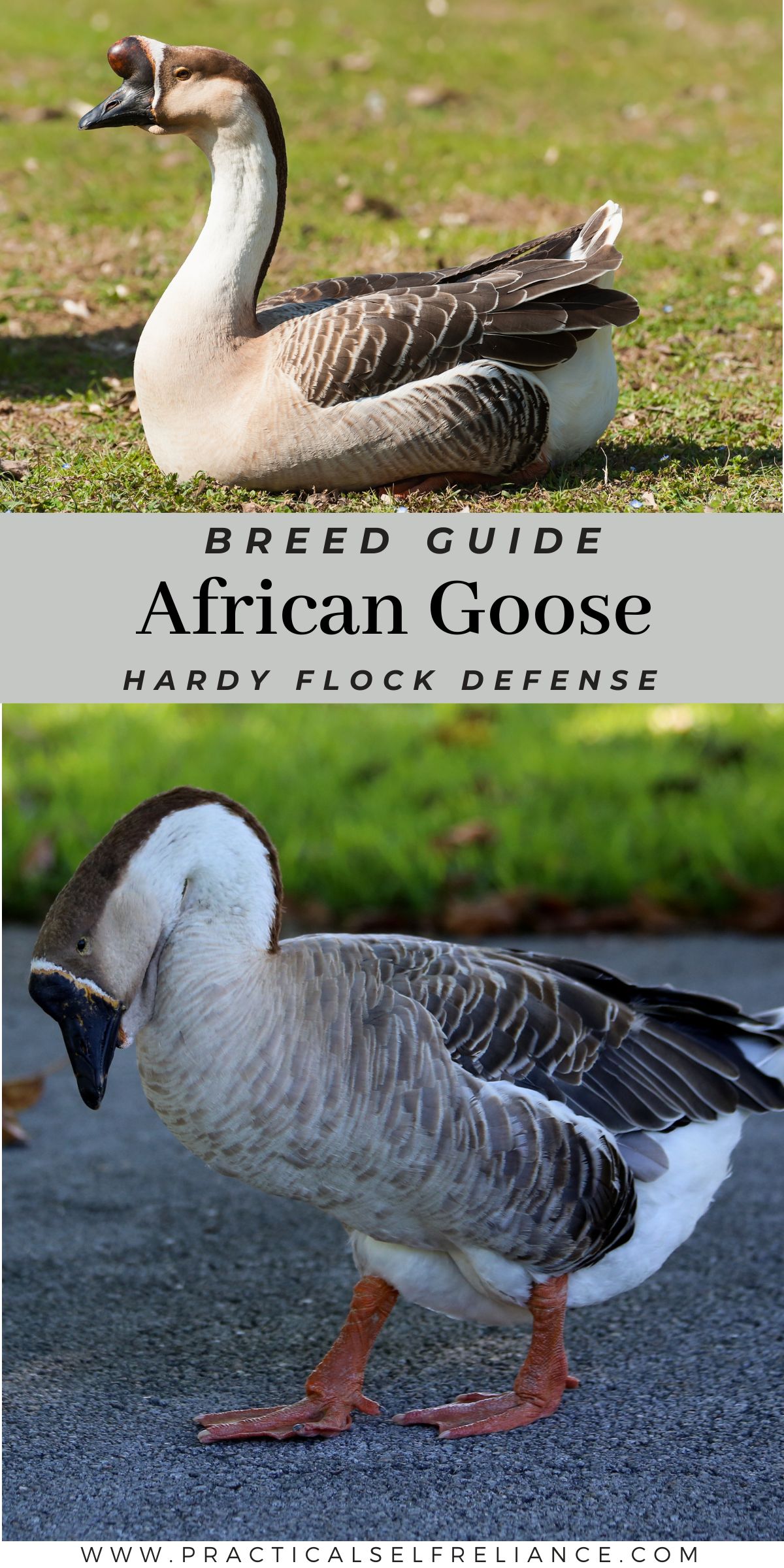
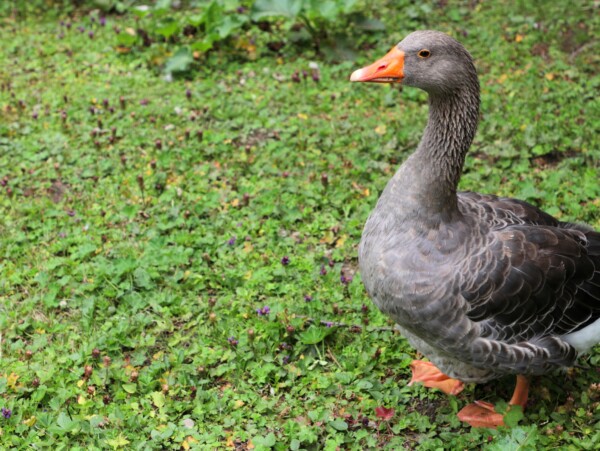
African geese are big, upright geese with a knob on the forehead and a dewlap hanging under the chin. Despite the name, they aren’t from Africa. They grow fast into a lean roasting goose, and their loud voices let you know the minute anything comes up the driveway.
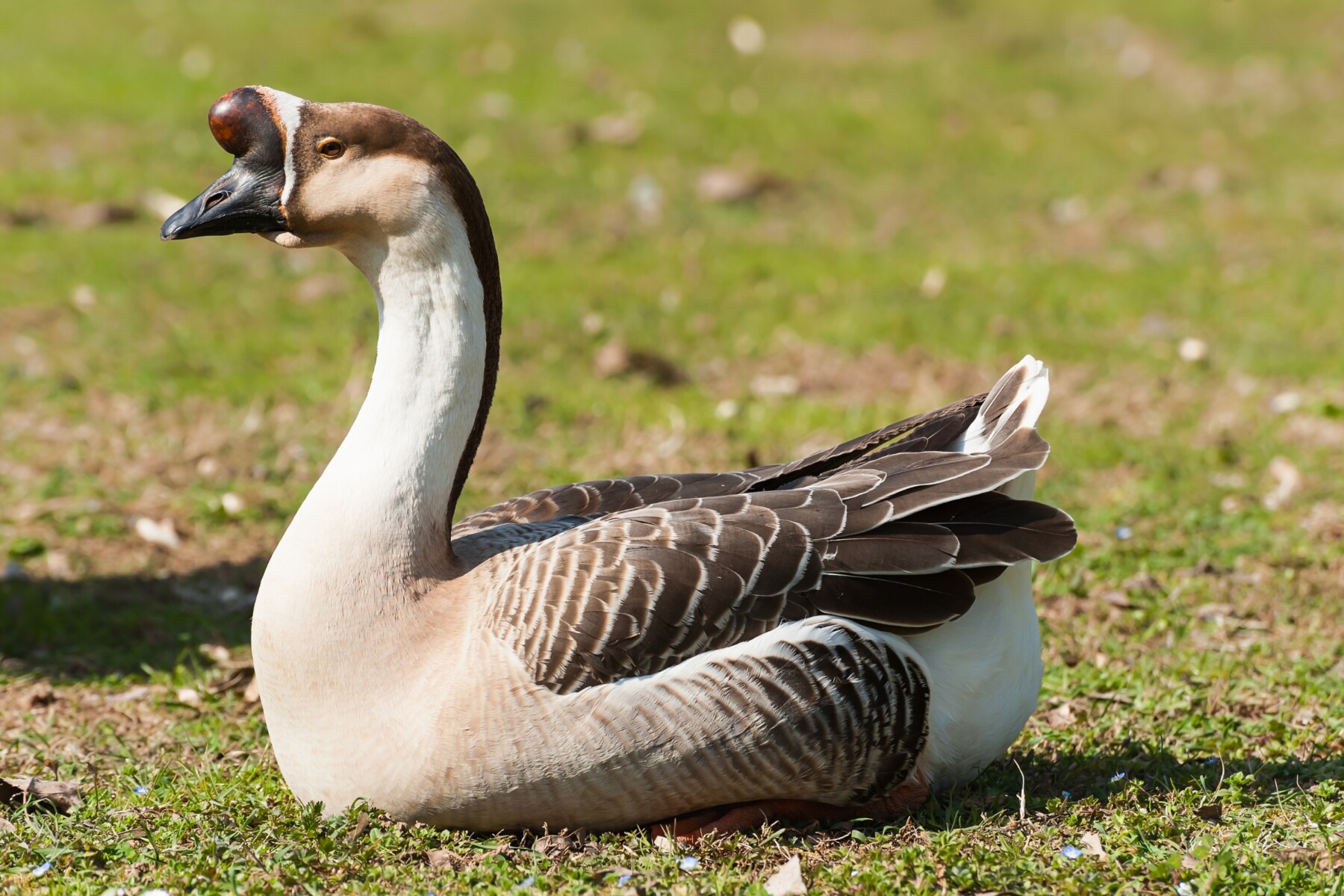
Table of Contents
- Notes from My Homestead
- What Are African Geese?
- African Goose Characteristics
- African Goose Breed Standard
- Temperament
- Hardiness
- Egg Production
- Raising African Geese for Meat
- Broodiness
- African vs. Chinese Geese
- Pros and Cons of African Geese
- Tips for Raising African Geese
- African Geese FAQs
- More Goose Breed Guides
- Raising Geese
African geese are one of the big meat breeds, and Oklahoma State’s breed guide says a grown African should be about the size of an Embden. They have their own look, with a knob on the forehead and a dewlap under the chin.
They’re close cousins of the Chinese goose, and both breeds descend from the wild swan goose of Asia. The African is much bulkier than the Chinese.
Africans are mainly a meat breed, and The Livestock Conservancy calls them a premier roasting goose with high-quality, lean meat. They’re also loud, which can be a plus or a minus depending on how close your neighbors are.
If you’re new to geese, start with my beginner’s guide to raising geese. You can also compare them with the Toulouse goose, the Sebastopol goose, and the rest of the goose breeds from A to Z.
Notes from My Homestead

Our African goose is part of my daughter’s little mixed flock here in Vermont, along with three Embdens, three American Buffs, and a Chinese goose. They all forage in the grass together while she snuggles them.
Geese in general have a reputation for aggression, but in my experience, that has more to do with handling than anything else. Geese raised by hand treat you as part of the flock.
What Are African Geese?
African geese descend from the wild swan goose of Asia, the same ancestor as the Chinese goose. The name doesn’t tell you where they came from, and the Livestock Conservancy says people have credited the breed to many different continents.
They reached Europe in the late 1700s and North America by the mid-1800s. The Brown African went into the American Standard of Perfection in 1874, and the White African followed in 1987.
Some older poultry guides describe the African as a cross between the Toulouse and the Brown Chinese, and you’ll still see that claim around. The Livestock Conservancy puts it with the swan goose breeds, like the Chinese.
African Goose Characteristics
African geese are massive, keelless birds, nearly as wide as they are long. Mature ganders run about 22 pounds and geese about 18, according to The Livestock Conservancy.
They grow quickly, too. Young ganders can reach 16 to 18 pounds at 15 to 18 weeks old.
- Breed type: Meat goose, also kept for eggs and as a loud, watchful flock goose
- Weight: Mature ganders about 22 pounds, and geese about 18
- Varieties: Brown and White, plus a Buff variety in Britain
- Noise: Loud, so not a good fit with close neighbors
For eggs and goslings, they’re middle of the road.
- Eggs: 20 to 40 extra-large white eggs a year
- Egg weight: 5 to 8 ounces each
- Broodiness: Fair to good, and some make good sitters
- Conservation status: Watch, according to The Livestock Conservancy
African Goose Breed Standard
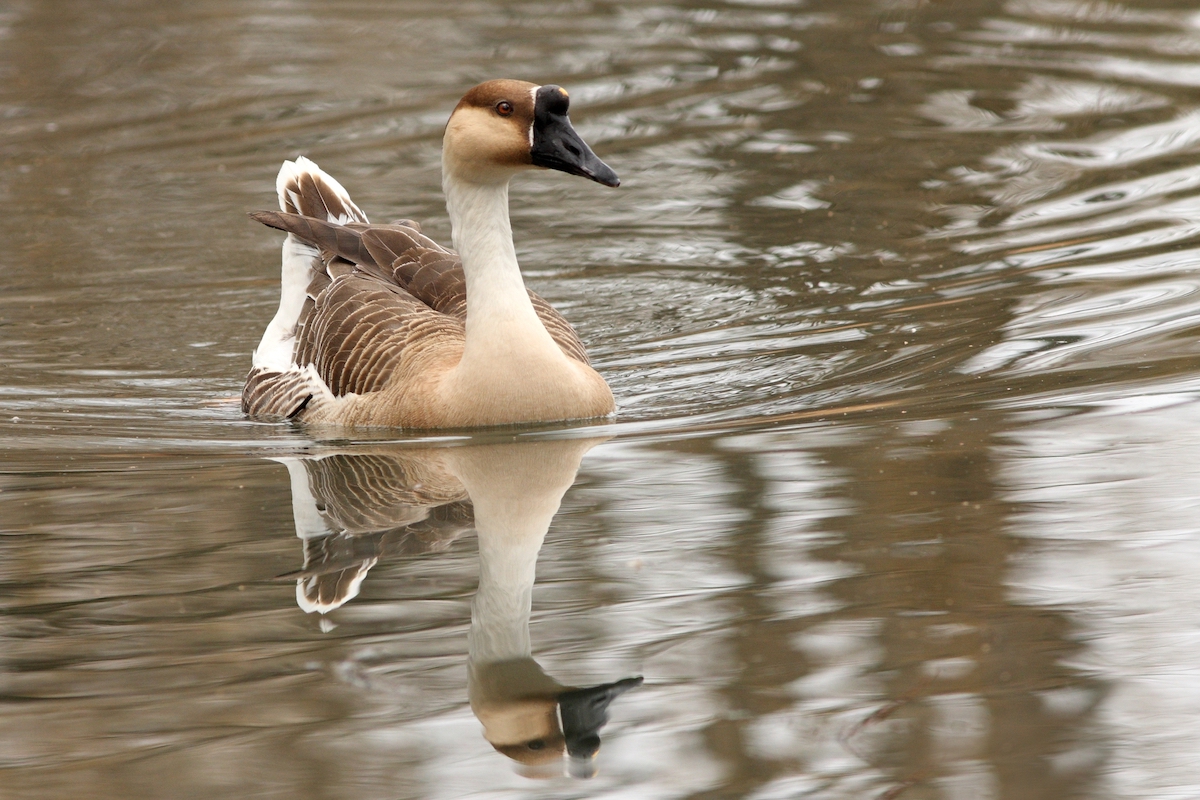
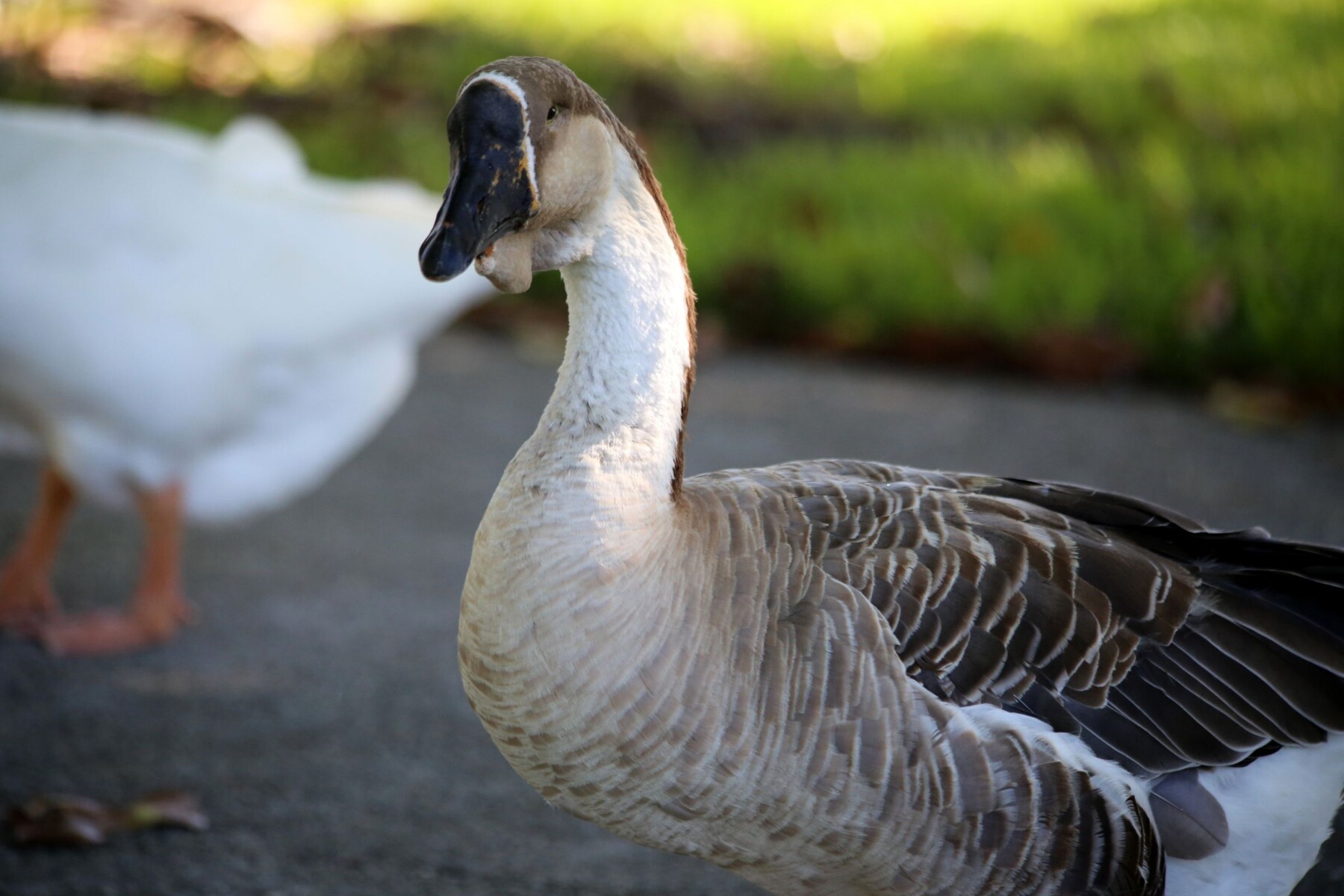
The knob on the forehead takes several years to fully develop. Below the bill hangs a smooth, crescent-shaped dewlap, which can get a little ragged with age.
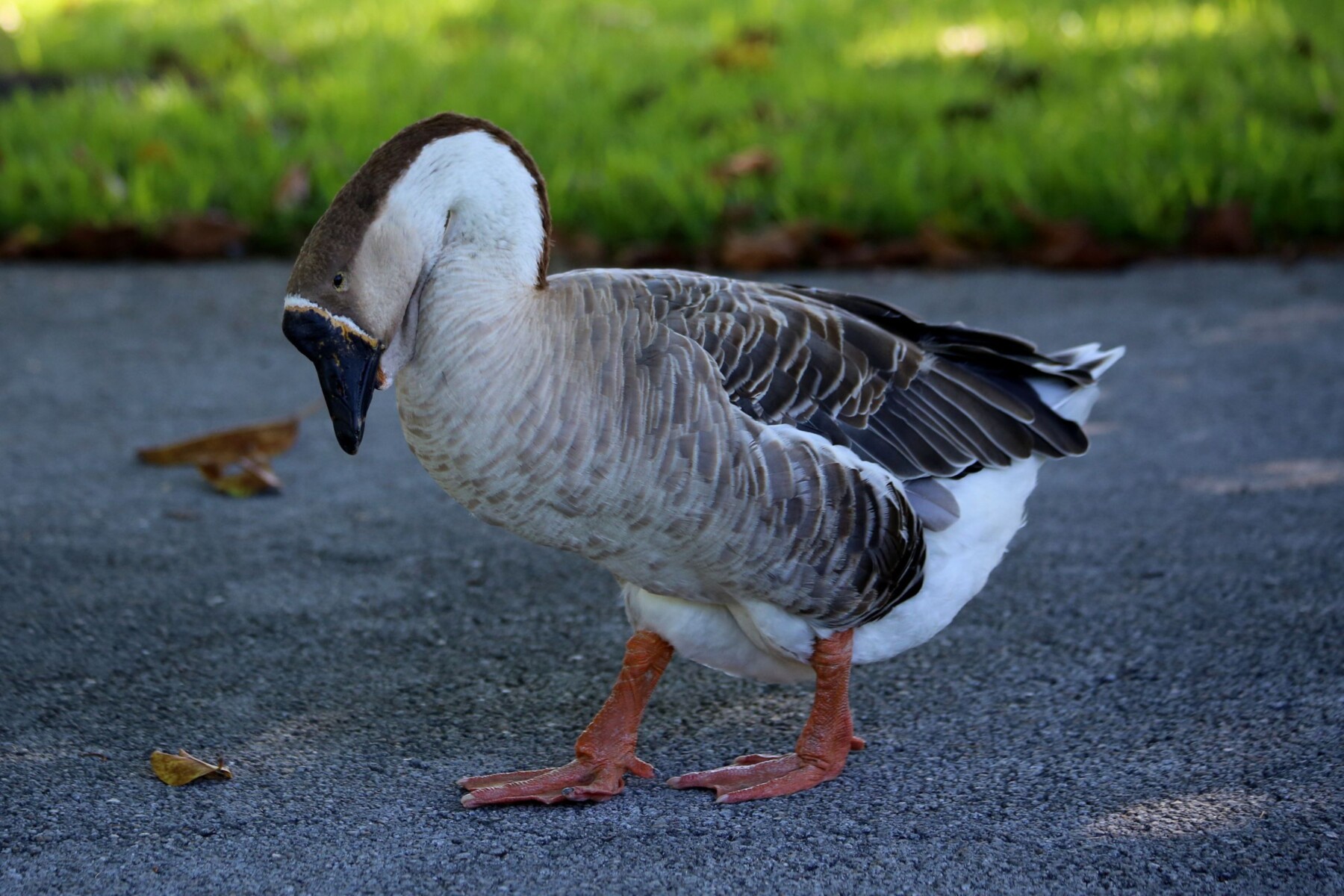
Breeding stock should carry their bodies at 30 to 40 degrees above horizontal, so they stand fairly upright. The tail points up and folds neatly.
Brown Africans have a satin-black bill and knob, a dark brown stripe down the back of the neck, and dark orange to brownish-orange legs and feet. White Africans are pure white, with an orange bill, knob, and feet.
Temperament
This is where the sources disagree. The Livestock Conservancy calls Africans intelligent and inquisitive, and says birds socialized young can be docile and pleasant with people. University of Kentucky Extension calls them very aggressive.
The truth is probably somewhere in the middle, and a lot of it comes down to the individual gander. Some ganders get aggressive, especially in breeding season, and how you raise them makes a big difference.
If you want friendly Africans, start with goslings and handle them every day. And plan for the noise, since they’ll greet everyone who arrives. There’s more on that in my list of things to know before getting geese.
Hardiness
African geese can take a lot of cold, but they need shelter to protect their knobs from frostbite. A frostbitten knob can develop orange patches, which usually fade by fall.
The Livestock Conservancy says they do best in a moderate climate. In a northern winter like ours, that means a dry, draft-free shelter and a windbreak on the worst days.
Summer heat calls for shade and water to bathe in. A kiddie pool or stock tank works fine, and if you have a pond, here’s more on maintaining a homestead pond.
Egg Production
African geese aren’t big layers. Expect 20 to 40 extra-large white eggs a year, all in the spring laying season.
The eggs weigh 5 to 8 ounces each, and they hatch in 30 to 32 days. A well-managed goose can start laying in her first year, and Africans keep producing for many years.
Goose eggs have a big, rich yolk and a thinner white than chicken eggs, so here’s how a goose egg is different from a chicken egg. For the extras, try one of these goose egg recipes or a batch of salt cured egg yolks.
Raising African Geese for Meat
Meat is what African geese are for. They grow fast and get big, and The Livestock Conservancy calls the meat high-quality and lean.
Breeders also cross them with Toulouse to make a commercial meat hybrid.
Goose meat is dark and rich, and to me it tastes more like beef than chicken. Here’s how to roast a goose, plus a long list of goose recipes for the rest of the bird.
Save the fat when you cook it, and here’s how to render goose fat. If you’re processing more than one, you can also can goose meat for the pantry.
Broodiness
African geese are fair to good mothers. Some will sit tight and raise a clutch, and some keepers use them as broodies. We have an African goose that’s a devoted mother, and she puts all the other ladies to shame with her devotion to both the nest and any baby goslings that hatch.
You can pair one gander with two to six geese, according to The Livestock Conservancy. Give a broody goose a big, quiet nest on the floor, since geese don’t roost.
Goose eggs need more moisture than chicken eggs to hatch, so an incubator takes a different routine than hatching chicken eggs. The Modern Homesteader’s Guide to Keeping Geese walks through it.
African vs. Chinese Geese
Brown Chinese and Brown African geese look a lot alike at first glance, and they’re closely related. The African is the heavier, bulkier bird, with a dewlap under the chin that the Chinese doesn’t have.
Chinese geese are much lighter, and they lay far more eggs. If eggs are the goal, go Chinese. If you want a roasting goose, go African.
The two interbreed easily, so a mixed flock can turn up goslings that are a bit of both. Neither one is a quiet goose, either.
Pros and Cons of African Geese
Africans are a good pick for a homestead that wants a big roasting goose and a loud alarm system. They’re less of a fit if you’re after eggs or quiet.
Pros:
- Fast-growing, with lean, high-quality meat
- Loud and alert, so nothing sneaks up on the flock
- Striking to look at, with the knob and dewlap
- Productive for many years
Cons:
- Loud enough to bother close neighbors
- Some ganders can be aggressive
- Knobs need shelter from frostbite
- Fewer eggs than Chinese geese
Tips for Raising African Geese
Plan your shelter around the knob. A dry, draft-free shelter and a windbreak keep frostbite off the knob in a cold snap. If a knob does get frostbitten, the orange patches usually fade by fall.
Handle the goslings every day. Some African ganders turn pushy as adults, and early handling is your best shot at a friendly flock. Geese raised by hand treat you as part of the flock.
Lock them up at night. Even a big gander can’t fight what he can’t see, and geese have very poor night vision. We’ve lost geese to coyotes, bears, and foxes over the years, so a secure shelter after dark matters.
African Geese FAQs
These are the questions that come up most about African geese, from their name to their noise.
No. Despite the name, they descend from the wild swan goose of Asia, like the Chinese goose. The breed reached Europe in the late 1700s and North America by the mid-1800s.
Yes. The Livestock Conservancy calls them a loud breed and doesn’t recommend them if you have close neighbors. On a rural homestead, that voice makes them a good alarm for the rest of the flock.
Some ganders are, especially during breeding season. If you handle Africans from the time they’re goslings, they tend to be much calmer and friendlier with people.
Most lay 20 to 40 extra-large white eggs a year, all in spring. The eggs weigh 5 to 8 ounces each.
They’re close relatives, and both have a knob on the forehead. African geese are much heavier and have a dewlap under the chin, while Chinese geese are lighter and lay far more eggs. Here’s more on Chinese geese.
More Goose Breed Guides
A few more breeds to consider for your flock.

Did you find this African goose breed guide helpful? Tell me in the 📝 comments below about the geese on your homestead!
And make sure you stay in touch with me by following on social media!
Raising Geese
More help with raising geese on the homestead.



Looking for something else?
Enter a few keywords to find more homesteading guides.