Affiliate disclosure: This post may contain affiliate links. Please see our Privacy Policy.
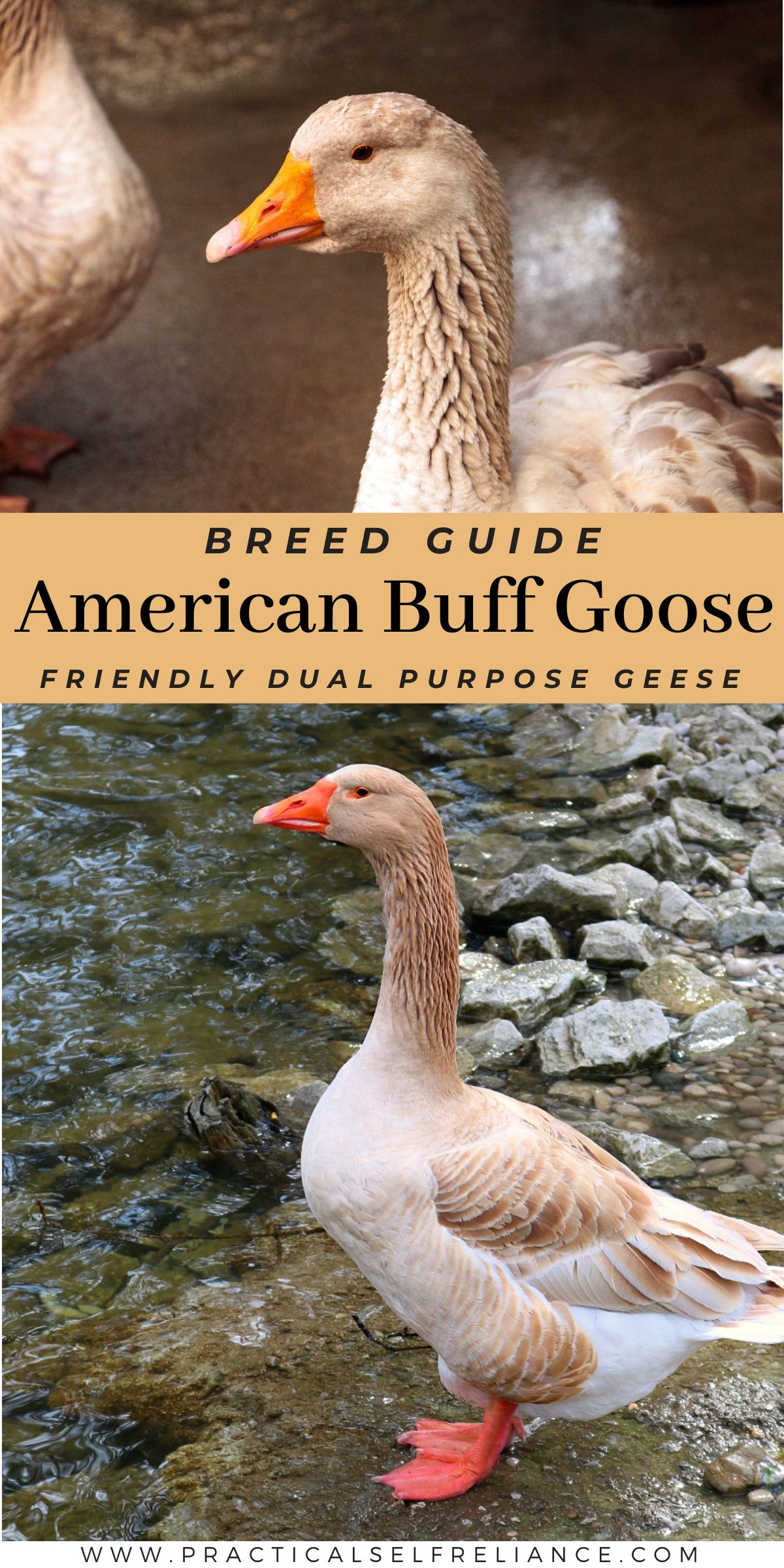
American Buff geese are a calm, medium-sized heritage breed with soft apricot feathers and a friendly streak. They’re one of the few goose breeds developed in North America, and they make good mothers, steady grazers, and a nice roasting goose for a small homestead.
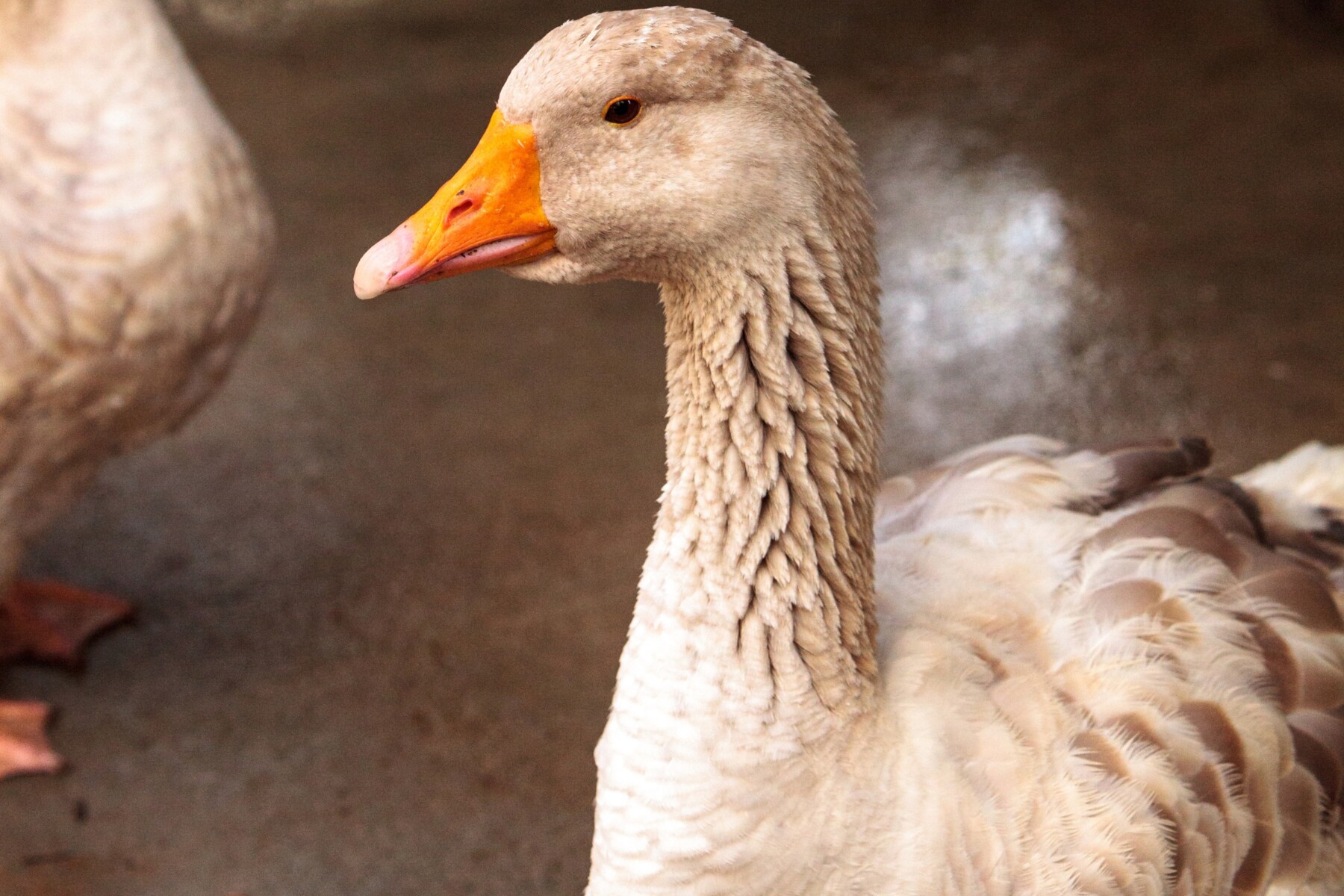
Table of Contents
- Notes from My Homestead
- What Are American Buff Geese?
- American Buff Goose Characteristics
- American Buff Goose Breed Standard
- Temperament
- Hardiness
- Egg Production
- Raising American Buff Geese for Meat
- Broodiness
- Grazing and Foraging
- Pros and Cons of American Buff Geese
- Tips for Raising American Buff Geese
- American Buff Geese FAQs
- More Goose Breed Guides
- Raising Geese
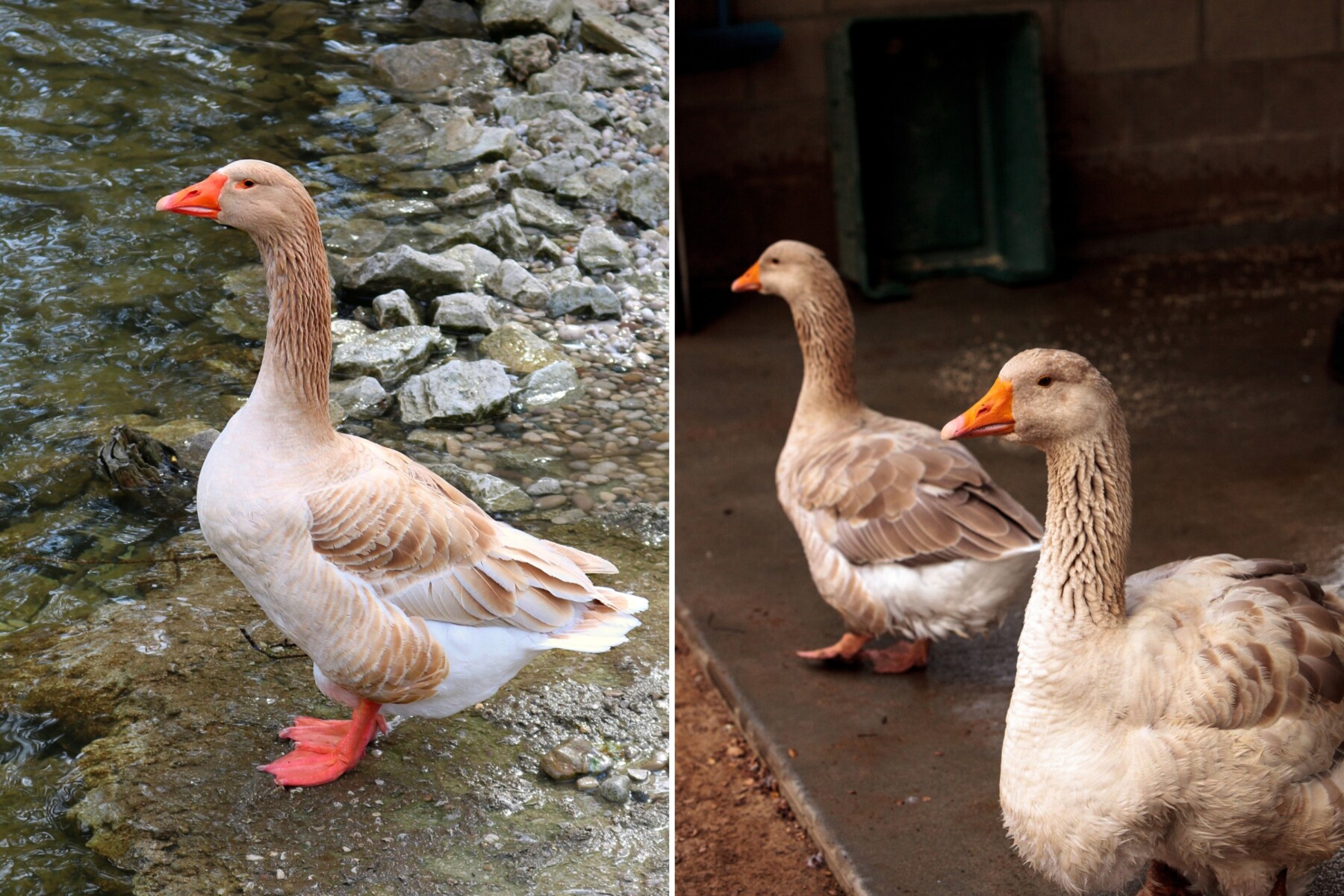
We’ve kept American Buff geese on our Vermont homestead for years. They’re gentle, they’re happy on grass, and our geese would lie out on the snow grooming themselves right through a blizzard.
They’re a true heritage breed, and The Livestock Conservancy still lists them as Watch. That means every backyard flock helps keep them around.
Their color is a warm apricot buff edged in cream, and it hides barnyard dirt a lot better than a white goose does. They’re big enough for a holiday roast but easier to handle than the giant meat breeds.
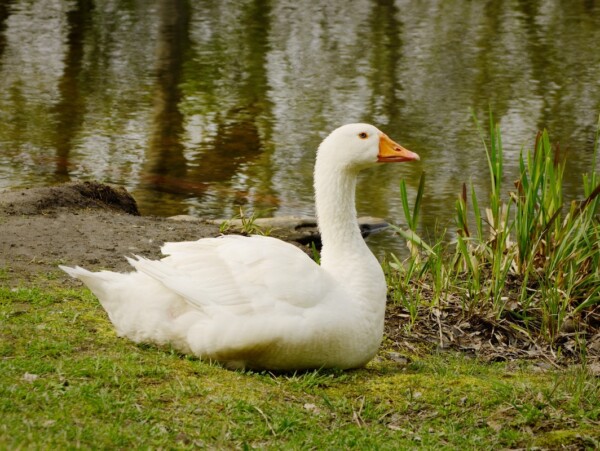
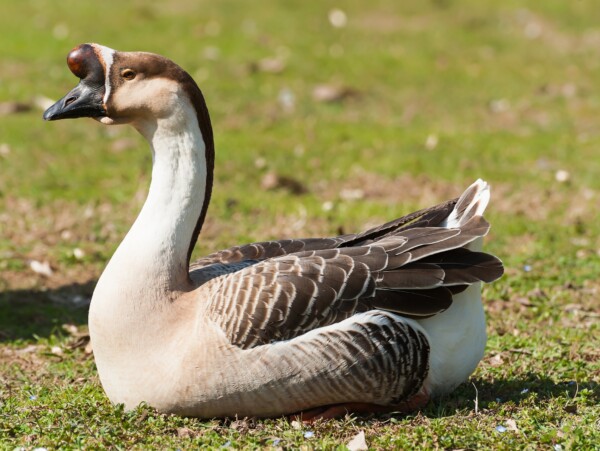
If you’re new to geese, my beginner’s guide to raising geese covers housing, feed, and goslings. And if you’re still choosing a breed, there’s a full list of goose breeds from A to Z, plus guides to Toulouse geese and Chinese geese.
Notes from My Homestead

I had an American Buff gander who bonded to me completely. If I sat down in the grass, he’d crawl right into my lap, even at 4 years old. He was gentle and snuggly, at least with me.
He saw my husband as competition and would defend me from him if he could. I thought it was hilarious. My husband, less so.
What Are American Buff Geese?
American Buffs are a heritage goose developed in North America. The American Poultry Association accepted them into its Standard of Perfection in 1947.
Nobody’s quite sure how they came about. The Livestock Conservancy gives two likely stories: buff color mutations that turned up in flocks of gray geese, or a refined line of European buff geese like the Pomeranian.
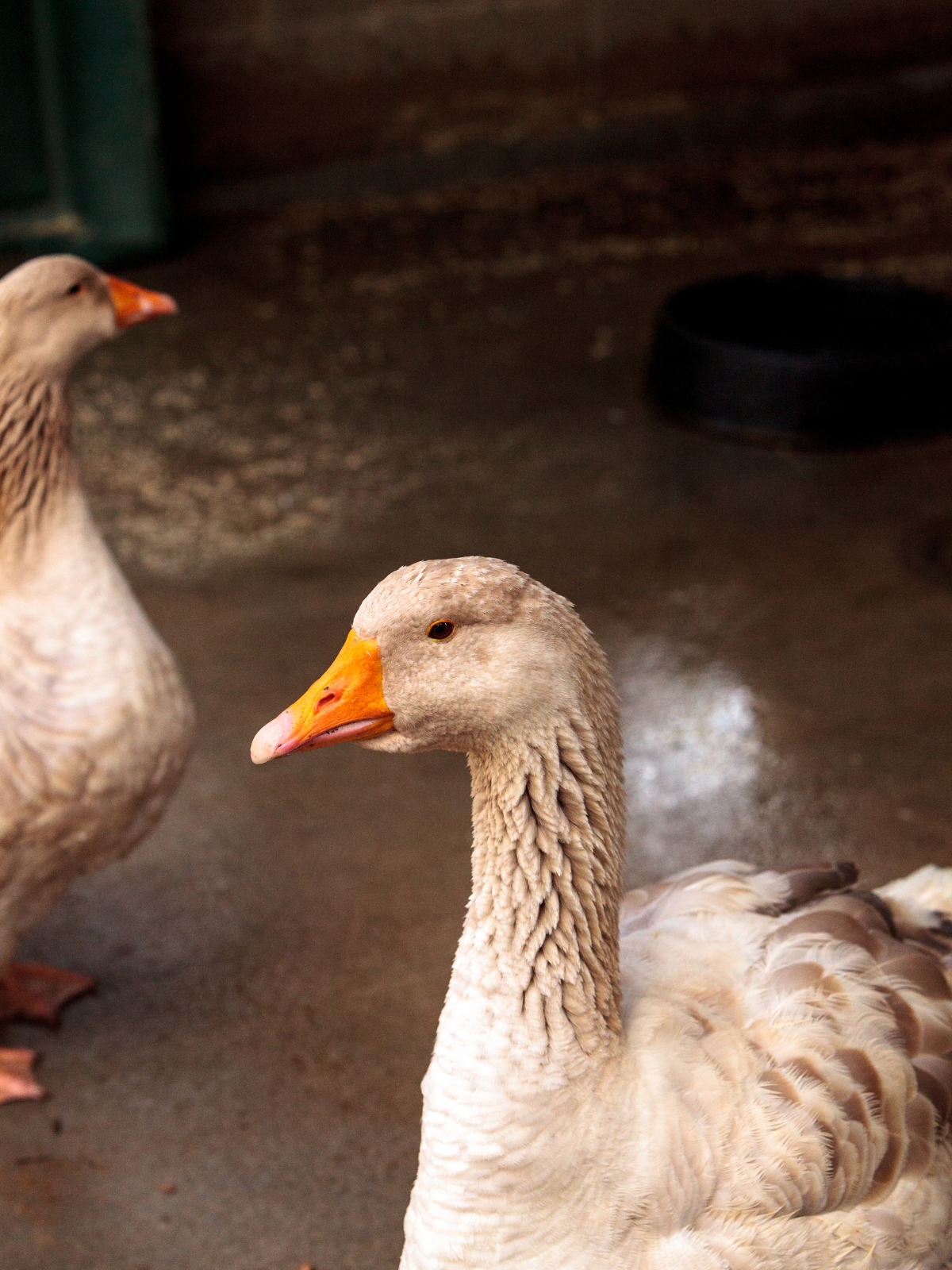
They look a lot like the Brecon Buff from Wales. The easy way to tell them apart is the bill and feet, which are pink on a Brecon Buff and orange on an American Buff.
American Buff Goose Characteristics
American Buffs sit right in the middle of the goose world for size. They’re bigger than a Chinese or Roman goose, and smaller than an Embden or a Toulouse.
Here’s the short version, using The Livestock Conservancy’s numbers for weight.
- Breed type: Meat goose, and a good pet goose
- Weight: Mature ganders about 18 pounds, and geese about 16 pounds
- Temperament: Calm, docile, and curious
- Noise: Not as noisy as some goose breeds
For eggs, goslings, and weather, this is what to expect.
- Eggs: About 10 to 25 large white eggs a year, or more with extra light
- Broodiness: One of the broodier goose breeds, and attentive parents
- Climate: Handles both cold and heat
- Conservation status: Watch, according to The Livestock Conservancy
American Buff Goose Breed Standard
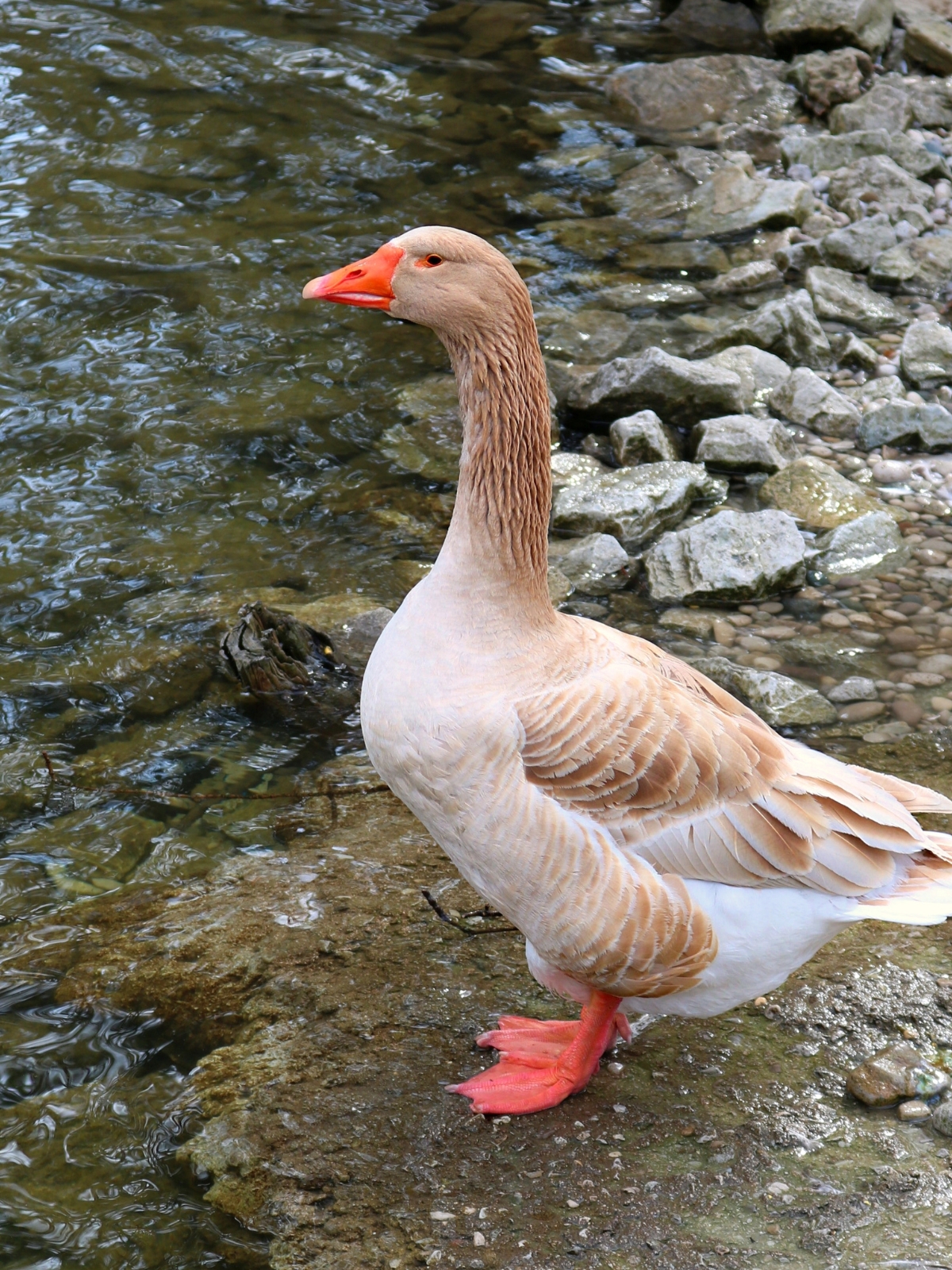
American Buffs have a chunky body with little or no keel, a slightly arched back, and two rounded lobes of fat under the belly. The tail sits level with the back or a touch higher.
Their feathers are an apricot-fawn buff, with cream edging on the back and sides and a nearly white belly. The neck feathers are deeply furrowed, which gives the neck that ridged look.
Their eyes are brown, and the bill and feet are orange to reddish orange. A goose’s legs can fade toward pink while she’s laying, or when there isn’t much green grass around.
Temperament
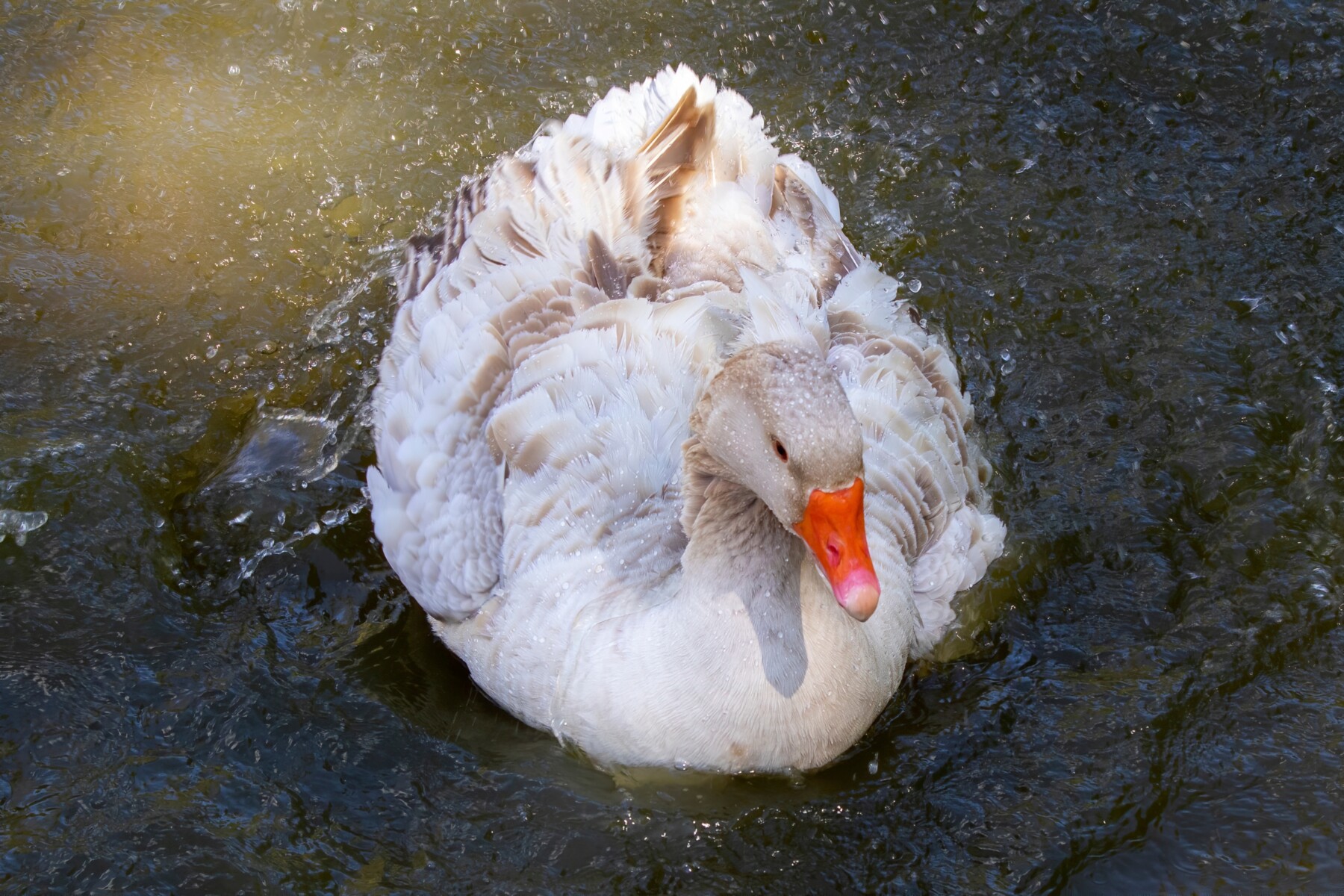
American Buffs are calm, curious birds, and they make good pet geese. If you raise them by hand, they’ll treat you as part of the flock, and our geese always came running when they saw us.
That doesn’t mean they’ll welcome everyone. We had to lock our friendly geese in when friends visited, and we had to work out a fencing compromise with the UPS guy. It’s one of the things to know before getting geese.
They’re not as loud as some breeds, but they’ll still holler at anything that comes up the driveway. And there’s always the occasional gander that nobody can tame, whatever the breed.
Hardiness
The Livestock Conservancy says American Buffs do well in most climates, hot or cold. Here in Vermont, our geese wanted to be outside during the day even in the worst winter weather.
Winter water is the tricky part. We brought our geese warm water every day, and they ate snow for a lot of their water.
Keep the winter waterer small and hard to tip. A goose will try to climb in and bathe, then freeze her breast and feet to the ice, and you don’t want to chip a panicked goose out of a frozen puddle.
In summer, they’re happy with a kiddie pool or a stock tank to splash in. If you have a pond, they’ll use that too, and there’s more on maintaining a homestead pond.
Egg Production
Like most geese, American Buffs lay in spring. The Livestock Conservancy puts them at about 10 to 25 large white eggs a year, and Metzer Farms gets 25 to 35 with lights on 17 hours a day during lay.
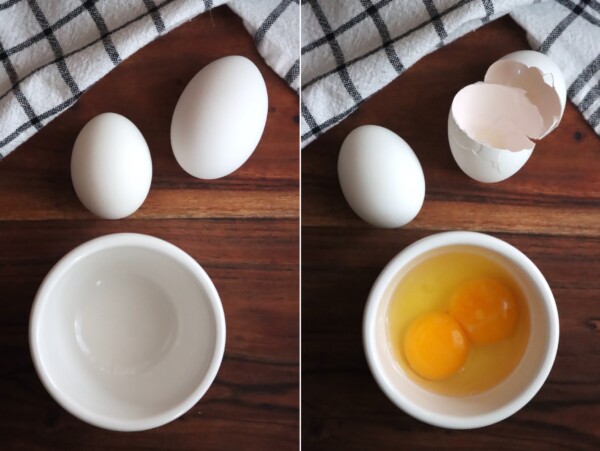
The eggs from our Buffs ranged from 114 to 218 grams, so the biggest ones were close to half a pound.
You don’t need a gander for eggs, either. We had a single female Buff in with our ducks, and she laid plenty of eggs on her own.
Goose eggs have a bigger, richer yolk and a thinner white than chicken eggs, and here’s more on how a goose egg is different from a chicken egg. I love the yolks in custard and waffles, and there are plenty more goose egg recipes to work through a spring glut.
Raising American Buff Geese for Meat
American Buffs are a medium-large roasting goose. They don’t grow as big or as fast as an Embden, but one goose is still plenty of dinner for a family.
The Livestock Conservancy points out that their light pin feathers dress out cleanly. I dry pluck geese by hand, since I’ve never had much luck scalding waterfowl. Their feathers are waterproof, so it’s hard to get a scald that loosens them.
It takes me about half an hour to pluck a goose. The down comes out easily from the chest, and you’ll want a good pair of pliers for the wing feathers. Save that down, too, since we’ve made our own down pillows here on the homestead.
Goose meat tastes more like beef than chicken to me. Once it’s in the kitchen, here’s how to roast a goose, and don’t skip rendering the goose fat. You can also can goose meat for the pantry.
Broodiness
American Buffs are one of the broodier goose breeds. The Livestock Conservancy says they’ll hatch and raise goslings from other breeds too, and they’re attentive parents once the goslings arrive.
Give a broody goose a big, quiet nest on the floor of her shelter. Geese don’t roost, and they can’t get into raised chicken nest boxes.
Goose eggs need more moisture than chicken eggs to hatch. A mother goose bathes and comes back to the nest with damp feathers, so an incubator needs a different routine than hatching chicken eggs. The Modern Homesteader’s Guide to Keeping Geese walks through it.
Grazing and Foraging
Geese are grazers, built to turn grass into meat and eggs. University of Kentucky Extension’s Selecting Geese guide says geese spend seven to eight hours a day eating, and American Buffs are happy to spend it on pasture.
In the growing season, grass, clover, and weeds cover a lot of what they need. We also start trays of microgreens for our geese every week.
They do tend to wander, according to The Livestock Conservancy, so plan on good fencing. Don’t count on them staying in the yard just because they’re too heavy to fly.
Pros and Cons of American Buff Geese
American Buffs are an easy breed to recommend for a first flock. The trade-offs mostly come down to eggs and size.
Pros:
- Calm and friendly, especially when they’re hand-raised
- Good mothers that will raise their own goslings
- Strong grazers that cut the feed bill in summer
- Colored feathers that hide barnyard dirt
Cons:
- Only 10 to 25 eggs a year without extra light, all in spring
- Smaller and slower growing than the big meat breeds
- They wander, so they need good fencing
Tips for Raising American Buff Geese
Handle the goslings every day. Hand-raised geese welcome you into the flock as adults, and that’s where the lap geese come from. A gosling you leave to itself grows into a goose that keeps its distance.
Go easy on rich feed. Tufts University’s vet school links angel wing, where the flight feathers twist out from the body, to a diet too high in carbohydrates and protein. Keep goslings on a balanced waterfowl feed with plenty of greens, and skip the bread.
Lock them up at night. Geese have very poor night vision. I’ve seen them hold their own against weasels and raccoons, but we’ve lost geese to coyotes, bears, and foxes, so they need a secure shelter after dark.
American Buff Geese FAQs
These are the questions readers ask most about raising geese, answered for American Buffs.
Yes. They’re calm, curious, and easy to handle, especially if you raise them from goslings. I had a Buff gander who’d crawl into my lap if I sat down in the grass. Like any goose, though, they can get protective of their mates and their nest in spring.
The Livestock Conservancy puts them at about 10 to 25 large white eggs a year, all in spring. Metzer Farms gets 25 to 35 from its breeders with extra light during lay. You don’t need a gander for eggs, only for eggs that will hatch.
Not really. Domestic geese get too big and heavy to fly well, and they usually only take off when something startles them. Even then, they generally make it 30 feet or so.
Yes, as long as it’s a female. We had one female goose in with our ducks for years before we got more, and she did great. A gander will harass female ducks and can get territorial.
They’re a medium-large roasting goose, and their light pin feathers dress out cleanly. They won’t grow as fast or as big as an Embden, but a Buff makes a good holiday dinner, and here’s how to roast a goose.
More Goose Breed Guides
A few more breeds to consider for your flock.
Did you find this American Buff geese breed guide helpful? Tell me in the 📝 comments below about the geese on your homestead!
And make sure you stay in touch with me by following on social media!
Raising Geese
More help with raising geese on the homestead.


Looking for something else?
Enter a few keywords to find more homesteading guides.