
Affiliate disclosure: This post may contain affiliate links. Please see our Privacy Policy.
Black walnut tincture comes from the green hulls, not the nut, so you can make it without cracking a single shell. Herbalists have used it for generations, mostly for fungal complaints and digestive trouble.
It takes one jar, a bottle of vodka, and about six weeks.

Table of Contents
- Notes from My Homestead
- What Black Walnut Tincture Is Used For
- Choosing Your Black Walnut Hulls
- Ingredients for Black Walnut Tincture
- Equipment for Black Walnut Tincture
- How to Make Black Walnut Tincture
- A Note on Alcohol Percentage
- Black Walnut Tincture Dosage
- Storage and Shelf Life
- Recipe Tips and Variations
- How to Make Black Walnut Powder
- Tincture Formulations
- Ways to Use Black Walnut
- Black Walnut Tincture FAQs
- Black Walnut Guides
- Black Walnut Tincture Recipe
- Herbal Tincture Recipes
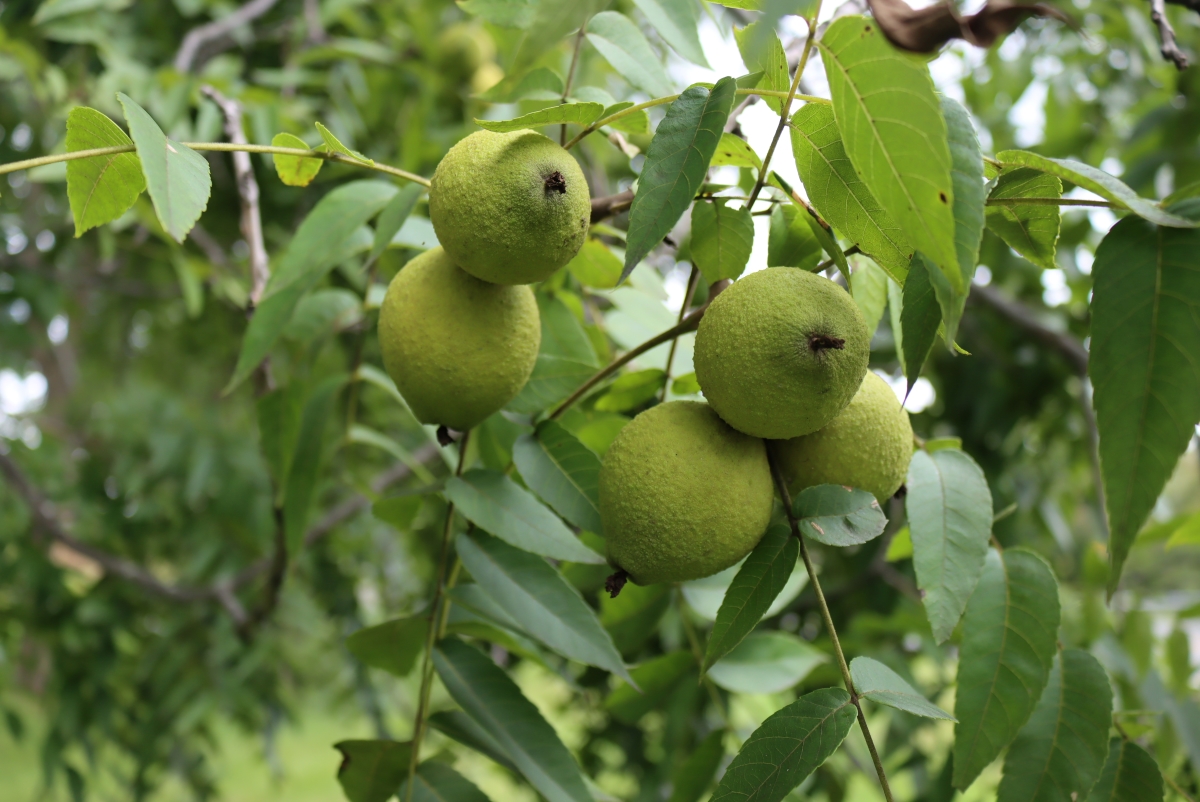
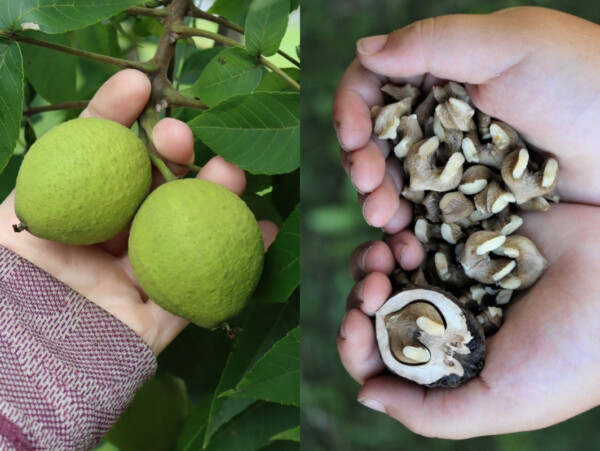
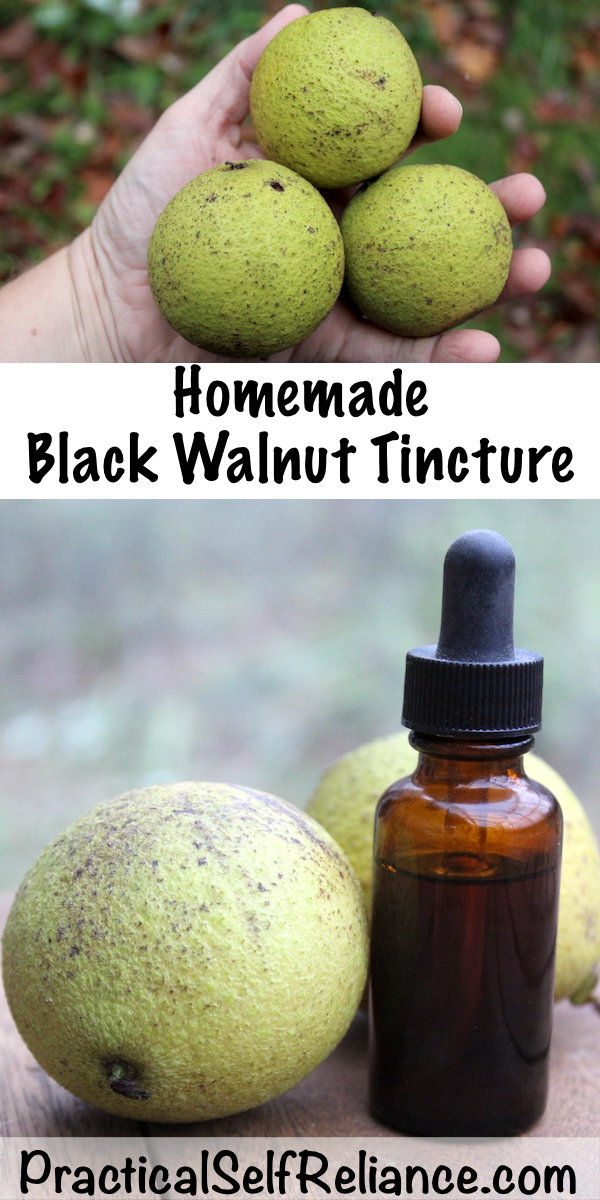
Black walnuts (Juglans nigra) grow through the eastern and central United States, usually in well-drained bottomland. They’re easy to spot once you know them. The leaves are pinnately compound and a foot or two long, the bark is deeply furrowed and nearly black, and the nuts come down in green husks the size of a golf ball.
The green husk around a black walnut is the medicinal part of the tree. It’s thick, it’s fragrant, and it’s loaded with tannins and a compound called juglone. Both of those are what herbalists are after.
The timing is the tricky part. Hulls have to be green when you pick them up, and they go from green to brown to black in a matter of days once they hit the ground. That gives you a window of a couple of weeks in early fall, and then it’s gone until next year.
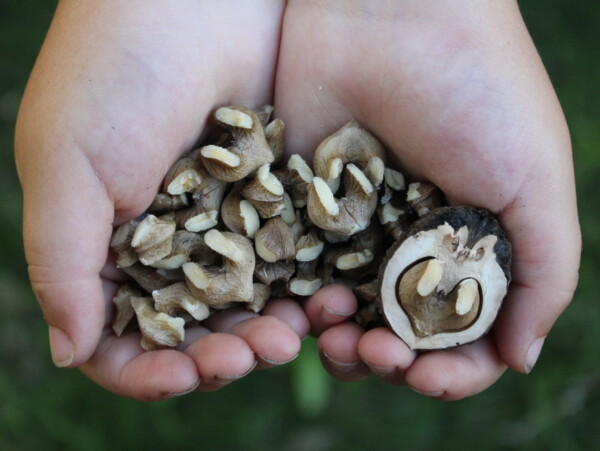
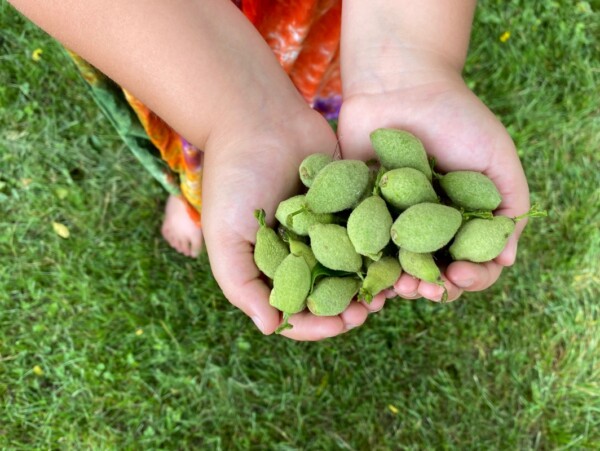
Once you’ve cut the hulls off, you still have the nuts. Those are worth keeping, and there’s a trick to cracking black walnuts that makes the job a lot less miserable. If you get out earlier in the season, the whole unripe nut is usable too, and there are plenty of traditional green walnut recipes that use it.
Notes from My Homestead

Our walnuts come off a tree here in Vermont that’s well over 250 years old, and it drops more than we could ever use. The first year I made this, I wanted a photo of the inside of a fresh hull, because the flesh is a creamy white color when you first cut it. I never got the shot. They oxidize and go brown in about two seconds, and I couldn’t move fast enough.
The other thing I learned that year is that this stuff stains everything it touches. Pick a jar you don’t mind losing, because the glass never comes clean. Wear gloves unless you want brown fingers into next month, and check the lid twice before you shake it. Ask me how I know.
What Black Walnut Tincture Is Used For
Herbalists use black walnut hull tincture both on the skin and internally. Traditionally, it’s been used for:
- Fungal and bacterial infections, on the skin and internally
- Diarrhea and other digestive complaints
- Intestinal parasites
- Goiter and low thyroid function
Indigenous peoples in eastern North America used black walnut for goiter, sores, hemorrhoids, parasites, and skin fungus like ringworm and athlete’s foot. Colonists picked it up mainly as a remedy for worms. Two working herbalists today, Phyllis Light and Matthew Wood, still recommend black walnut for goiter and low thyroid function.
The research is thinner than the tradition, but it isn’t empty. A 2019 review of walnut husks found the green hulls carry compounds with antibacterial and antifungal activity in laboratory testing. It also noted that black walnut hulls get thrown out during nut processing, even though they hold those same compounds.
Juglone, the compound that gives black walnut its dark stain, is the one most often studied for parasites. A 2015 laboratory study found juglone killed off Acanthamoeba, a single-celled organism that causes rare but serious eye and brain infections. A 2020 laboratory study found compounds built from juglone worked well against the parasite behind Chagas disease. Neither one tells you what a tincture does in a person, and that research hasn’t been done.
The digestive side is easier to explain. Black walnut hulls are high in tannins, which is why the tincture is so astringent. In a small clinical study, a tannic acid preparation settled diarrhea in nine of ten patients, and lab work in the same paper showed tannins tighten the gut lining and cut fluid loss. Tannin-rich plants have been used for stomach complaints in herbal traditions worldwide, long before anyone knew why.
The thyroid use is the one with the least behind it. Black walnut hulls are high in iodine and magnesium, and low iodine is a common cause of low thyroid function, so there may be something there. Low thyroid function can also be a symptom of something serious, so that’s a conversation for your doctor rather than a jar on the shelf.
Black Walnuts and Iodine
Black walnut hulls are one of the few land-based sources of iodine, which matters quite a bit if you live inland. You can forage for salt inland or extract salt from plants, but neither one gives you iodine the way sea salt does.
I’ve found scattered references claiming black walnut hull extract was used topically on people exposed to radiation after Chernobyl, on the theory that the iodine absorbs through the skin. I’m still looking for a reputable source to back that up, and I wouldn’t count on it until I find one.
Other sources say there’s enough iodine in it to work as a wound wash. That one I find easier to believe. Between the iodine, the tannins, and the fact that the whole thing is suspended in high-proof alcohol, it’s not a bad thing to have in a first aid kit. But again, that’s theory, not research-backed.
Choosing Your Black Walnut Hulls
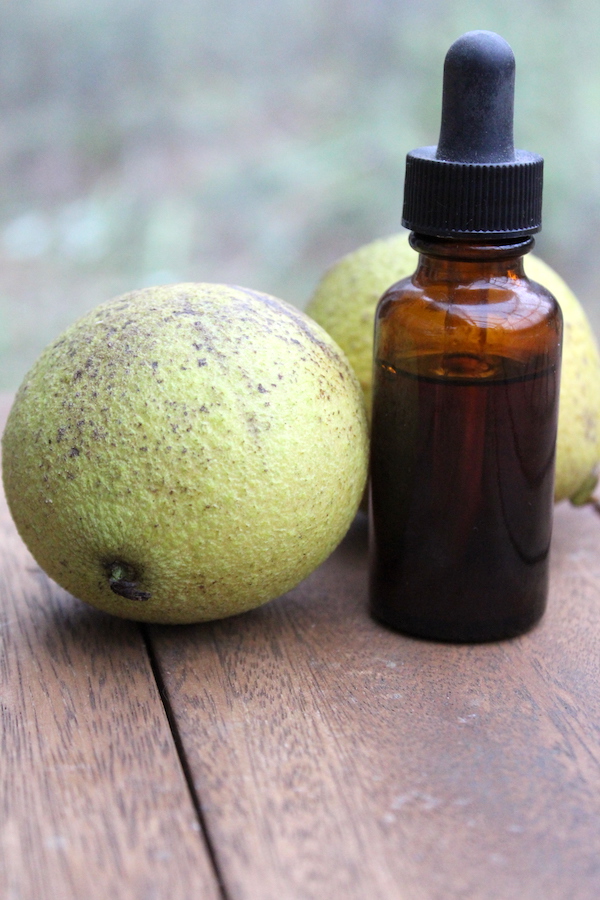
You want the green outer husk and nothing else. The nut inside, shell and all, stays out of the jar. That’s the question I get most often on this post, and it’s a fair one, because a fresh walnut looks like one solid thing until you cut into it.
Green hulls are what you want, and freshly harvested. Once a hull has gone brown and soft, the juglone and the tannins have already started breaking down, and there are usually walnut husk flies living in it. Nuts that sat out all winter aren’t worth processing. Use this year’s, picked up in the first week or two after they drop.
Most black walnut trees are far too tall to pick from, so you’re gathering off the ground. Watch the leaves rather than the calendar. They go from deep green to bright yellow as the nuts ripen, and a ripe husk gives a little under thumb pressure. In Vermont, that’s usually late September into October, and it’s often earlier the farther south you are.
Dried hulls work too, and they’re the answer if you’re out of season or don’t have a tree. Mountain Rose Herbs carries black walnut hull powder milled from Juglans nigra. Powder is far more concentrated than whole hulls, since the fresh ones are bulky and full of air, so you use much less of it.
Ingredients for Black Walnut Tincture
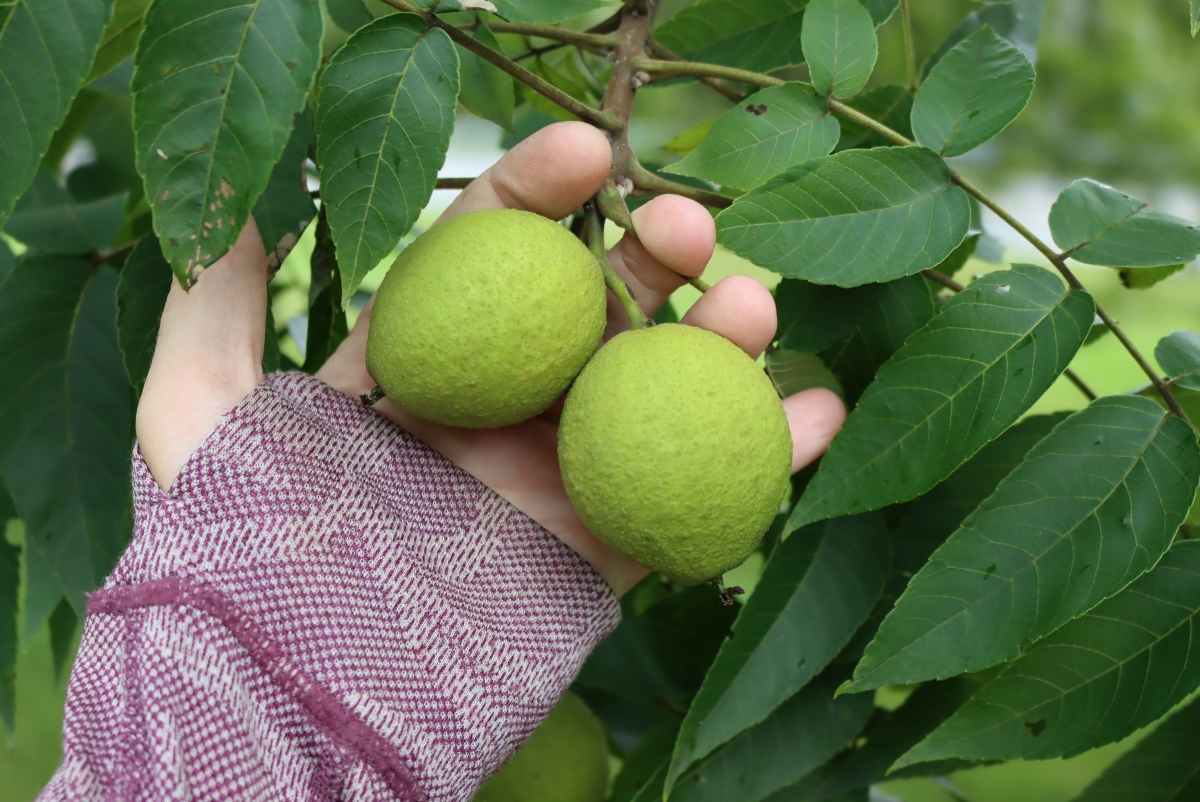
Two ingredients, and one of them is free if you have access to a tree. Pack a pint jar about three-quarters full of fresh hulls and top it with alcohol. That gives you roughly ten to twelve ounces of finished tincture, which is a couple of years’ worth for most households.
- Fresh green black walnut hulls: Cut off the nuts with a knife while the husks are still green and firm. Dried hulls or hull powder work in place of fresh, at a smaller volume. Rinse muddy ones and skip anything soft, black, or full of holes.
- Vodka: Fresh hulls are mostly water, so the alcohol has to be strong enough to hold up once that water dilutes it. I use a mid shelf vodka for most of my herbal tinctures, and it’s the right call here, because black walnut brings plenty of flavor of its own. Brandy or rum work if that’s what’s in the cupboard. Never use rubbing alcohol, which is toxic to drink even in small amounts.
I can attest to the anti-parasitic properties of black walnuts. After getting the hulls off the nuts, I washed them in a bucket of water to get rid of the “floaters”. I poured the rinse water out of the bucket, and as soon as the rinse water hit the ground, there were hundreds of earthworms coming out of the ground! The strong tannins in the water really messed with them, and they wanted to get away from it. I ended up rescuing hundreds of earthworms by hand and moving them away from the walnut water area! An unintended experiment. Next time, find a different spot to rinse the nuts!
Equipment for Black Walnut Tincture
Four things, and gloves. This is the one tincture where the gear matters, because the dye gets into anything porous and stays there.
- A pint mason jar: Pick one you’re willing to give up. The stain sets into the glass and never washes out.
- A sharp paring knife and gloves: The knife is for slicing hulls off the nuts. The gloves are so your hands don’t go brown for a month.
- A mesh strainer and cheesecloth: Hull tinctures throw a lot of fine sediment, so line the strainer rather than relying on mesh alone.
- Amber dropper bottles: Dark glass keeps light off the finished tincture, and the dropper is how you measure a dose.
How to Make Black Walnut Tincture
The method is the same folk method behind every other tincture on this site. Fill a jar with plant material, cover it with alcohol, and wait. Black walnut just makes more of a mess than most.
Harvesting and Preparing the Hulls
Gather green walnuts off the ground and rinse any that are muddy. Put your gloves on before you start cutting, not after.
Most hulling methods are built to destroy the husk and save the nut, and we want the opposite. Slice the green hull off in chunks with a paring knife, working around the nut like you’re peeling a very tough orange. The husks are thick, so a pint jar’s worth fills fast.
Use gloves though, they’ll stain everything!
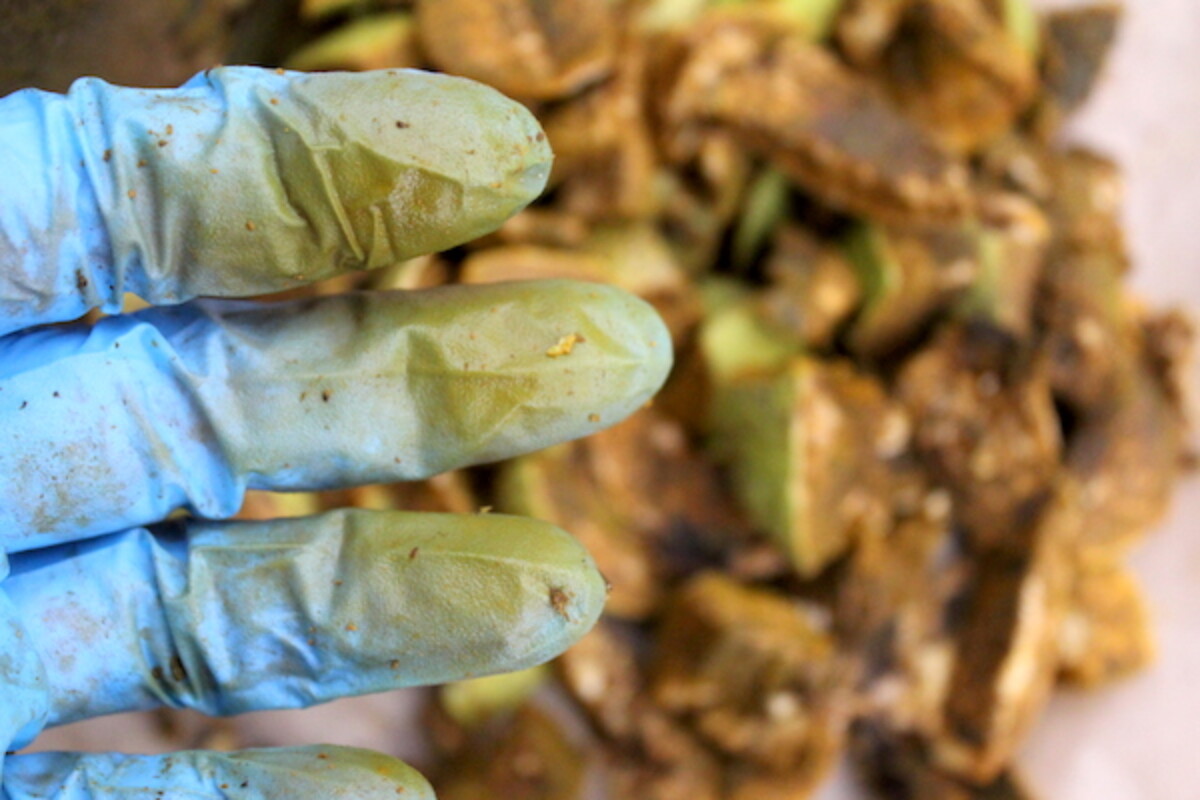
Chop the chunks smaller as you go. More cut surface means faster extraction, and the hulls are soft enough that this is quick work.
Combining With Alcohol
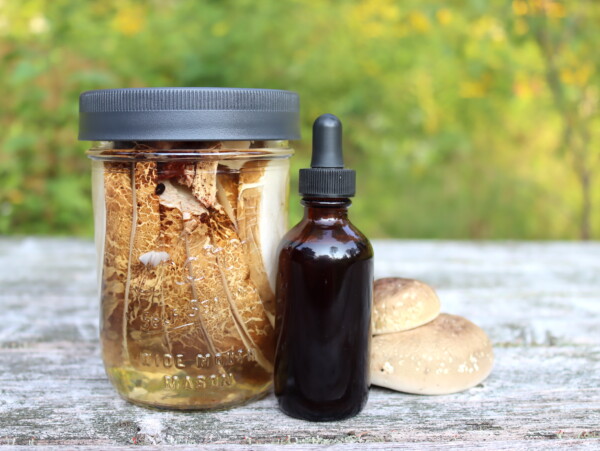
Pack the chopped hulls into the jar until it’s about three-quarters full. If you’re working with dried hulls or powder instead, use much less, because dried material swells and it’s far more concentrated by volume. Half full for dried chunks, and about a quarter full for powder.
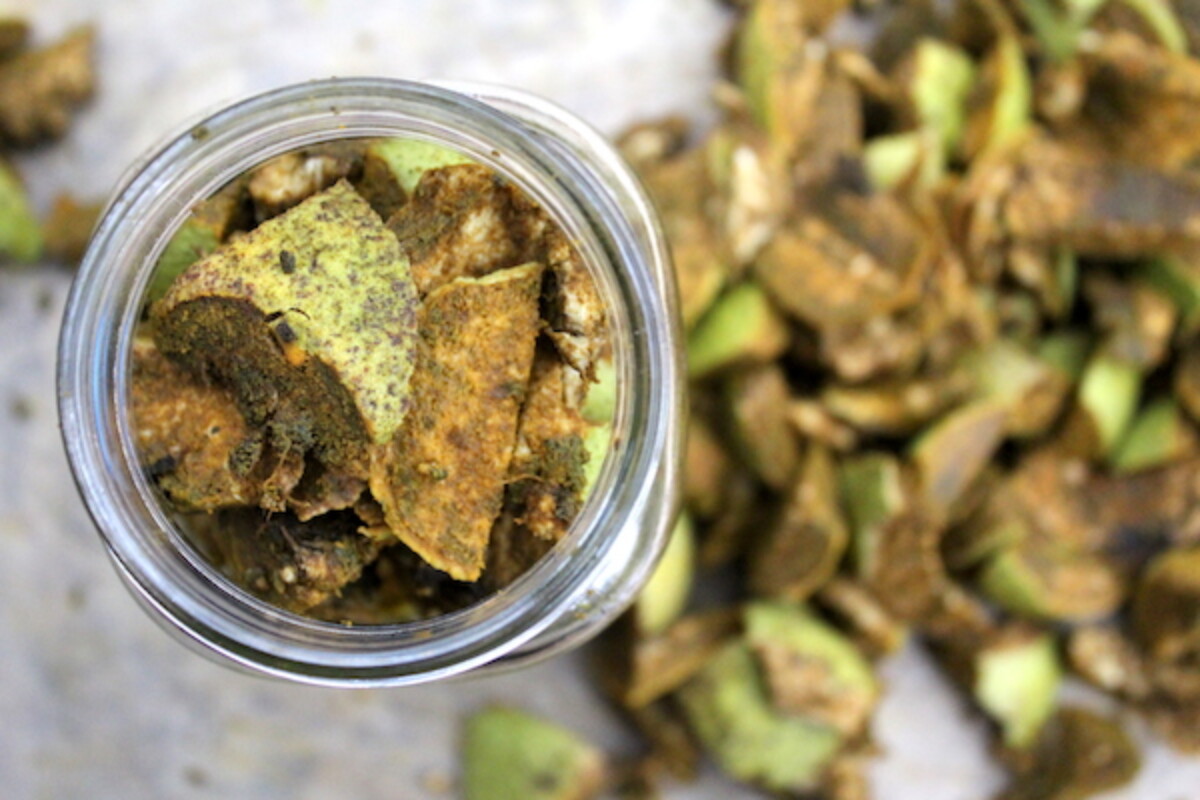
Pour alcohol over the top until the hulls are covered, and the jar is full to within an inch of the rim. Hulls float, so push them down and add more alcohol if any of them come up above the surface. Anything sitting in air will mold.
Cap it tight, label it with the contents and the date, and put it somewhere cool and dark. Shake it daily for the first week, then whenever you think of it. Check the lid every single time before you shake. A loose lid here is a much worse problem than a loose lid on any other tincture, and the stain doesn’t come out of a countertop either.
Straining and Bottling
Give it 4 to 6 weeks. The alcohol goes nearly black well before that, so color isn’t a useful signal with this one. Go by the calendar instead.
Line your strainer with cheesecloth and pour the tincture through into a clean jar. Gather up the cloth and squeeze the spent hulls hard, because they hold a surprising amount of liquid. Hull tinctures leave fine sediment behind, so a second pass through fresh cheesecloth is worth the two extra minutes. It keeps the dropper from clogging later.
Decant into amber dropper bottles and label every one with the contents, the date, and the dose. I use masking tape and a marker, which peels off clean when I want the bottle back.
A Note on Alcohol Percentage
Fresh hulls bring their own water. Green walnut husks are mostly water, and that water dilutes whatever you pour over it. Standard 80 proof vodka is 40 percent alcohol, and that’s the floor for fresh plant material. The Herbal Academy’s tincture-making course recommends 70 to 95 percent alcohol for fresh herbs, which is stronger than most of us keep on hand.
Higher proof pulls more, up to a point. If you’re using high-proof grain alcohol, cut it with water to somewhere around 50 percent before it goes in the jar. Undiluted grain alcohol pulls resins well but leaves some of the water-soluble tannins behind, and tannins are much of what you want from a hull.
Folk method versus weight to volume. Everything here is the folk method, meaning you fill the jar by eye and top it with alcohol. Herbalists working by weight use 1 part fresh plant material to 2 parts alcohol, or 1 part dried to 5 parts alcohol. Either approach works, and the folk method is what I use at home.
Black Walnut Tincture Dosage
Consult a clinical herbalist for an exact dosage specific to your body and needs.
Most clinical herbalists say the dosage for black walnut tincture is usually 15 to 20 drops taken in water 2 to 3 times per day. One dropperful is around 20 drops. Some guides say 1 to 2 droppers full, taken 2 to 3 times a day, so dosages do vary. If you want something specific to you, you’d need to talk to a clinical herbalist about your own concerns.
You can also use it topically as needed. For an open wound, dilute it with a little water first so it doesn’t burn, and be cautious. It’s always possible to have an allergic reaction to a new remedy.
Black walnut is considered a gentler way to handle parasites than a conventional de-wormer, but it’s still hard on the system. Don’t use it internally for more than 2 weeks at a time, and always consult your doctor or herbalist for interactions and precautions first.
Black walnut hulls contain strong compounds like juglone, and their long-term effects aren’t well understood. And, I’ve heard quite a few people tell me they have a reaction to juglone, so be cautious here.
Anyone with a tree nut allergy should stay away from it entirely. On skin, it can dye you brown, and it irritates some people, so try a small patch first. Black walnut bark is a different preparation than the hull tincture here, but taken daily, it’s been linked to a raised risk of tongue and lip cancer. That’s one more reason not to take any part of this plant long term.
Storage and Shelf Life
Keep the bottles somewhere cool and dark, away from the stove and out of the window. A cupboard is fine. Amber glass helps, but light is still the thing that degrades a tincture fastest.
An alcohol tincture holds its potency for 2 to 5 years, with the higher end going to tinctures made at a higher alcohol percentage and strained clean of sediment. Straining twice pays off here for exactly that reason. Since this one is used in short courses rather than daily, a pint batch tends to outlive most of my other tinctures on the shelf.
Recipe Tips and Variations
Alcohol free version. Fill the jar with dried hulls and cover them with 3 parts vegetable glycerine to 1 part water to make a glycerite instead. Shake daily for 4 to 6 weeks and strain the same way. Glycerine is sweet, which does black walnut a real favor, but the shelf life drops to about 1 to 2 years.
Skip the vinegar version here. Vinegar extracts work for gentler herbs, but the tannins in black walnut are already astringent enough that vinegar makes it rough going down. If you want a non-alcoholic option, use the glycerite.
A tea isn’t a tincture. You can steep dried hulls in water, and people do, but water pulls different compounds than alcohol does, and the result won’t keep on a shelf. Refrigerate it and use it within a few days.
Sweeten the dose, not the jar. This is one of the more bitter tinctures out there, and adding anything to the bottle shortens its life. Take it in a small glass of water with honey stirred in, or in juice.
Save the spent hulls for dye. They still hold plenty of color. Cover them with water, simmer, and strain, and you have a strong brown dye for wool or cotton. Black walnut is a good first project with natural dyes, since the color comes out strong straight from the pot.
How to Make Black Walnut Powder
The same green hulls dry down into a powder, and it’s worth making a batch alongside the tincture while you have the mess out anyway. Powder does things a tincture can’t. Mixed with water it becomes ink, dye, or wood stain, and it goes into a herbal healing salve when you want the antifungal properties without the alcohol.
Spread the cut hulls in a single layer on a baking tray and dry them in a 300-degree oven for 3 to 4 hours. They don’t feel wet in your hand going in, and they still take much longer than that suggests. A woodstove or a dehydrator works too.
Get them into the heat quickly once they’re cut. Left on a counter, hulls degrade fast and can liquefy within a day or two. Some readers do dry theirs on screens with good airflow and no mold problems, breaking the pieces smaller as they go, so it can be done outdoors if you stay on top of it. Indoors and warm is the reliable route.
Cool them completely, then grind them in a coffee grinder or food processor. Use something you don’t mind staining, because the powder gets into plastic immediately and stays.
Tincture Formulations
Black walnut is rarely taken on its own. Herbalists usually pair it with wormwood for digestive work, and I like it with ginger when a stomach is unhappy. If you’re using it against a mild infection, immune herbs round it out well, and elderberry, echinacea, and self heal are the three I’d choose. For skin, combine it with an antifungal like oregano or something soothing like calendula.
Combining herbs well is its own skill, and there’s a lot more to it than putting two good ones in the same bottle. If you want to go deeper, mastering herbal formulations is an excellent resource.
Ways to Use Black Walnut
Once the hulls are off, you still have the nuts. Black walnut tastes stronger and more perfumed than an English walnut, and it holds up in baking where a regular walnut disappears. There are plenty of black walnut recipes worth the cracking for. Get to the tree while the nuts are still soft all the way through, and the whole green nut goes into nocino, the Italian walnut liqueur.
Black walnut is one of a handful of wild nuts worth planning your fall around. It comes in alongside the hickories and butternuts, right in the middle of fall foraging season.
If you’d rather not wait on a wild tree, they’re easy to plant. Black walnut is on the short list of cold-hardy nut trees that produce this far north. A young tree takes about 7 years to bear, so it’s worth knowing where the neighborhood trees are in the meantime.
Black Walnut Tincture FAQs
These are the questions readers ask most often on this post, mostly about which part goes in the jar and what to do when the season has already passed.
Only the green outer husk. The nut itself, shell and all, stays out. Slice the green layer off with a knife and put those chunks in the jar. It looks like one solid piece until you cut into it, which is why this comes up so often.
Yes. Powder is much more concentrated than fresh hulls, since fresh husks are bulky and full of air. Fill the jar about a quarter of the way with powder and top it off with alcohol. That gets you close to the same strength as a jar packed three quarters full of fresh hulls. Dried hull pieces rather than powder sit in between, so fill the jar about halfway.
I’d pass on those. Once a hull goes brown and soft the compounds you want have started breaking down, and by spring there is usually more insect than hull in there. Use this year’s nuts, picked up green within a week or two of dropping. If you missed the window, buy dried hull powder rather than working with old ones.
You can make a glycerite, which is the closest thing. Use dried hulls covered with 3 parts vegetable glycerine to 1 part water, shake daily for 4 to 6 weeks, and strain it the same way. Water works differently. A water steep is a tea, not a tincture, it pulls different compounds than alcohol does, and it won’t keep on a shelf.
Two to five years stored cool and dark, and closer to five if you used a higher proof alcohol and strained the sediment out well. It won’t spoil, since alcohol keeps it, but it does slowly lose potency. A glycerite is a shorter story at about 1 to 2 years.
Black Walnut Guides
Everything else worth knowing about the tree, from finding it to getting the nuts out.
If you tried this Black Walnut Tincture recipe, or any other recipe on Practical Self Reliance, leave a ⭐ star rating and let me know what you think in the 📝 comments below!
And make sure you stay in touch with me by following on social media!
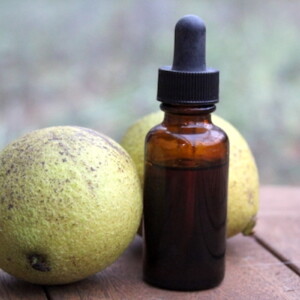
Black Walnut Tincture
Equipment
- Optional: Gloves (the walnut hulls can stain your hands)
Ingredients
- 1 1/2 cup fresh green black walnut hulls, chopped, see notes
- 1 1/4 cup vodka, 80 proof or higher, plus more to cover
Instructions
- Gather green black walnuts off the ground while the husks are still green and firm, and rinse any that are muddy.
- Put on gloves, then slice the green hull off each nut with a paring knife, setting the nuts aside for cracking later.
- Chop the hull pieces smaller so more cut surface is exposed to the alcohol.
- Pack the chopped hulls into a clean pint mason jar until it is about three quarters full.
- Pour vodka over the hulls until the jar is full to within an inch of the rim, pressing down any pieces that float so nothing sits above the alcohol.
- Cap the jar tightly, label it with the contents and the date, and set it somewhere cool and dark.
- Shake daily for the first week and every few days after that, checking that the lid is tight before every shake.
- Infuse for 4 to 6 weeks.
- Line a fine mesh strainer with cheesecloth and pour the tincture through into a clean jar, then squeeze the spent hulls to release the last of the liquid.
- Strain a second time through fresh cheesecloth to catch the fine sediment that hull tinctures leave behind.
- Decant into amber dropper bottles and label each one with the contents, the date, and the dose.
Notes
A Note from Your Family Herbalist
I’m a family herbalist, trained by more than 20 years of hands-on work with medicinal plants and rounded out with coursework through the Herbal Academy of New England. That means I know my way around the plants in this post, and I’ve personally made and used the remedies I write about, often many times over. But there’s a real difference between knowing what works on my homestead and knowing what’s right for you.
Medicine is a personal affair. Every body is different, every medical history is different, and herbs interact with medications, pregnancy, nursing, and existing health conditions in ways no general blog post can anticipate. Even mild medicinal plants like chamomile cause allergic reactions in some people, so what sits comfortably on my own medicine shelf might not be the right choice for yours.
For guidance tailored to your situation, there are three directions I’d point you:
- See a local clinical herbalist. A practicing clinical herbalist can take your full health picture into account, recommend the right herb and dose for you, and adjust the protocol as you go. Ask around at your nearest food co-op, herb farm, or natural-foods store; most communities have at least one.
- Talk to your doctor before adding any new herb to your routine, especially if you take prescription medications, are pregnant or nursing, or are managing a chronic condition. A good doctor will welcome the conversation.
- Educate yourself, the way I have. The Herbal Academy of New England runs the courses I credit with sharpening my own practice. Their Introduction to Herbal Medicine course is where I’d start. I’ve also taken and recommend their Mushroom Course and their Botany and Wildcrafting Course. All three are well-paced and easy to follow at home.
Herbal Tincture Recipes
Three more to make while the jars are out, and there are herbal tincture recipes for most of the medicine cabinet.
Find the perfect recipe
Searching for something else? Enter keywords to find the perfect recipe!











This year our black walnut tree behind our house dropped a million nuts! We’ve never seen anything like it!! But we didn’t know the medicinal benefits till just the last few days.. Going to guess the old nuts are useless now?
I personally would just use the nuts that have fallen this year.
What an amazing and thorough and inspiring and practical and useful writeup.
Thank you SO much!!!
God bless you.
You’re very welcome. So glad you enjoyed it.
Dear Ashley,
THHHHHHAAAANNNNKKKKKK YOUUUUUUUUUUU SOOOOOOOOO MUCH!!!!!
My entire family wants to hug you right now!!!!!! ❤️❤️❤️❤️❤️
Awwww! So glad it’s helpful =)
Thanks for the very interesting article. I have a very large Black Walnut tree on the side of my house. Last August, there was a large storm in Iowa and afterward the ground around my house was covered in walnuts. I picked up about (10) 5-gallon buckets of walnuts and put them in my barn and promptly forgot about them. Now, they have dried and black and covered in a little mold, so I’ll likely dispose of the whole box. I did add about 20 of the nuts to a bucket of water and after a day, the water was a strong black color, but I’m guessing the juglone is not as potent after waiting so long. Mainly I’m more interested in Black Walnuts now, so I’ll try some experiments with them next autumn.
So I have a bag of black walnut hulls. They are like black kind of crusty bee bee’s.
I want to make a tincture with them. Is that what I can use to do that.
Thank you
Sharon
Yes, the black walnut hulls are what is used to make the tincture.
I also bought dry black walnut hulls from Amazon. I like to make a tinture without alcohol. can I make it with distill water? if so, do I boil it as a tea? I heard it’s great for healing the teeth.
You can make a tea but that’s a tea and not a tincture. Alcohol also pulls out different plant constituents than water so you won’t necessarily get the same benefits. It also will not be shelf stable if made with water.
Hi there,
I would like to use the powder to make a dye for body art. What is safe to mix the Walnut powder with and do I need to ad preservatives to keep the paste good?
I would probably just use water and I would mix it up as you use it to avoid the need for preservative. You may want to do a small spot test to rule out any allergies as well and maybe do some research to be sure that there aren’t any contraindications associated with using it topically like that.
Thank you for your great write up! I’m in the middle of my walnut harvest here in Tennessee and excited for the finished products I’ll have after (tincture, hull powder for dye, and nut meat). I began the hull drying process in the oven but a family member had a severe respiratory reaction to that method even while in another room. I did not experience any problems personally. I immediately switched to sun / air drying instead but this is obviously a longer process. I’m wondering if you have heard of reactions to the oven drying method? Thanks in advance!
That’s a good question, but honestly, no I’ve never heard of that. I guess it could happen with anything, as you’re heating it volatile compounds are being released and anyone could be sensitive to just about anything. I’d say if they had that reaction though, they probably shouldn’t eat black walnuts or use the extract/powder.
Hello Everyone,
“Montpelier”, James Madison’s family home in northern Virginia has many Black Walnut trees. They have been dropping their nuts for days now. (Late September 2020) Anyone in the area should stop to gather the husks, pronto. Bring bags and tour masks. You won’t be disappointed! I would suggest checking in with the office first. The staff was not interested in a Black Walnut harvest for themselves….too much work?
Awesome, good to know! Thank you so much for the heads up.
I’ve found that a lot of public land and museum-type spaces love it when people come to pick the walnuts, butternuts, and hickory nuts from their land. Keeps the traditions alive, and is one less thing for their landscape people to clean up.
DO YOU HAVE ANY INFO ABOUT USING IT FOR HAIR DYE, I GUESS THE POWDER. WONDERING TOO ABOUT IT BEING TOXIC FROM THE IODINE
You say that drying in the sun or without the use of an oven or dehydrator is not recommended because the hulls turn to mush. I have *only* dried them in the sun or on window screens out of the sun and have *never* had mush. If it has rained soon before you pick them up off the ground, remove the husks as soon as possible and break them apart a bit so that there is more surface area. As with drying anything, airflow is key to keep the mold away. I monitor – turn and further break down the hulls by hand then by walking over a pillowcase full of them (then dump them back out on the window screen hung from rafters) – as they dry down.
You may also notice all of the bugs leaving your hulls at this point so it’s a good idea to keep them outside where the bugs can escape. Walnut husk fly (Rhagoletis completa) and walnut curculio (Conotrachelus retentus) may be what’s wanting an escape route.
I use the hulls for dye, tincture and in oil. I ferment them in water for dye and have had a dye pot going now (July 20) since autumn 2019 and no mold or any other growth is present. Evidence of the antimicrobial and anti-fungal properties, I’d say as other dye baths (acorn shells) go funky if not kept very cool.
Wow, awesome! I’ll have to try your method next time. Thank you!
Aside from being messy to work with, can black walnuts that have been sitting outside on the ground all winter still be used to make the tincture? Or do they actually spoil/rot, thus eliminating all the health benefits?
That is a good question and one I honestly don’t have the answer to, unfortunately.
Thank you for this wonderful article. Happy to hear that you are living close to nature. I grew up outside engaging with animals and plants, and playing in the trees (I live in California). People are so far removed from their environment while they constantly talk about “environmental issues” –it is so bizarre. It is wonderful to find a site with real stories about nature. CM
Excellent info, but you didn’t mention 1 danger of the tincture. Some people can have severely adverse reactions to it. Never use the tincture if you’re a lawyer or a politician: It kills parasites! (-:
HAHAHAHAHAHAHA!!!!🤣🤣🤣
HAHAHAHAHA! I LOVE YOUR SENSE OF HUMOR. This is the greatest tincture. I love it! Thanks for this site!
Sharon V.
Omg Love it!!!!! 🤣🤣🤣🤣
🤣🤣😅🤣😅😅😅🤣🤣
I’d like to know how long the shelf life is on a bottle of black walnut extract.
I believe generally tinctures are considered to be potent for 1-2 years. Since it’s an alcohol extract it shouldn’t “spoil” but it may not keep the same properties forever. In truth though, I’m sure the exact potent shelf life varies by the tincture and I’m not sure anyone’s ever really studied it in detail.
I have a recipe that needs the walnuts after the green soft outter part has been removed but BEFORE they’ve been “cleaned” and the “hull” is removed. I understand the green fruit part spoils very quickly but I don’t really need that part. Is there any way you can point me toward where I can find these walnuts with the hull intact OR be willing to sell me a few? Pretty please?
The only place to get them is fresh off the tree. They spoil in a day or two once picked, so you really just have to find a black walnut tree if you want to make it yourself.
You say it’s good for fungus. Will it help tonnail fungus?
I’ll start with a note that I’m not a doctor, or even a clinical herbalist, so I’d suggest you consult a real one to be sure. That said, from what I’ve read black walnut is used for all manner of topical fungal issues, including ringworm and athletes foot. It stands to reason that some kind of foot bath would help toenail fungus, but I don’t have any personal experience trying to treat it.
A personal story…steeped green hulls in olive oil, discarded and steeped a second batch. Used this to make a salve. My mother put it on toenails for fungus problem…it helped.
Thanks for the personal experience! I love this article, it always pays to read several viewpoints on an herbal medicine. I’ve also found that different herbs work differently for every person. This way to make a salve sounds, well, sound!
Tha k you for this blog. It is very helpful. And, thank you for all that you do for the world as an off grid homesteader, sharing knowledge and insight as to how to better care for oneself!
You’re quite welcome, it’s fun to write =)
Thank you for posting this. I have many black walnut trees in the woods behind my house and coincidentally, my naturopathic doc just told me to get some black walnut husk tincture as an iodine supplement. However, when reading through your instructions, I’m not clear if the outside green casing of the walnut is considered part of the husk that goes into the jar with the vodka, or does it get stripped off? Any further clarification appreciated!
The outside green part is what you put in the alcohol. The nut (shell and all) are not involved in the tincture, it’s only the green husk.
Thank you for clarifying! I thought perhaps we were supposed to peel off the green part…LOL but as soon as I cut into the walnuts, it became quite obvious so this was probably a dumb question!
No worries, happy to help!
there’re no dumb questions when. Learning something new. always good to double or triple check if you’re uncertain about something.
I have a large black walnut tree in my yard and picking up all those nuts is a pain. Most times I put them in a box and put them by the road marked as FREE. Someone always takes them. I will try to make medicines from them for sure. If you want some I live in Chazy NY,very near VT. THANKS FOR THE info.
John Bell.
How much powder would you use to make a tincture? I dont have black walnit around me.
Good question and I’m sorry to say I don’t have an exact answer. The powder is a lot more concentrated than the husk, since it’s ground up and the husks are pretty fluffy and full of air (a bit like packing peanuts). If I were trying to make a tincture from black walnut powder, I’d fill a jar about 1/4 of the way full with the powder and then fill it the rest of the way with alcohol. That’s my best guess at what would give the same concentration as using the husks themselves.