Affiliate disclosure: This post may contain affiliate links. Please see our Privacy Policy.
Chicken dust baths are how hens keep themselves clean, rolling in loose, dry dirt to fluff their feathers and knock off mites and lice. When rain or heavy clay takes away their usual dusting spots, a homemade dust bath for chickens gives your flock a dry place to bathe all year.
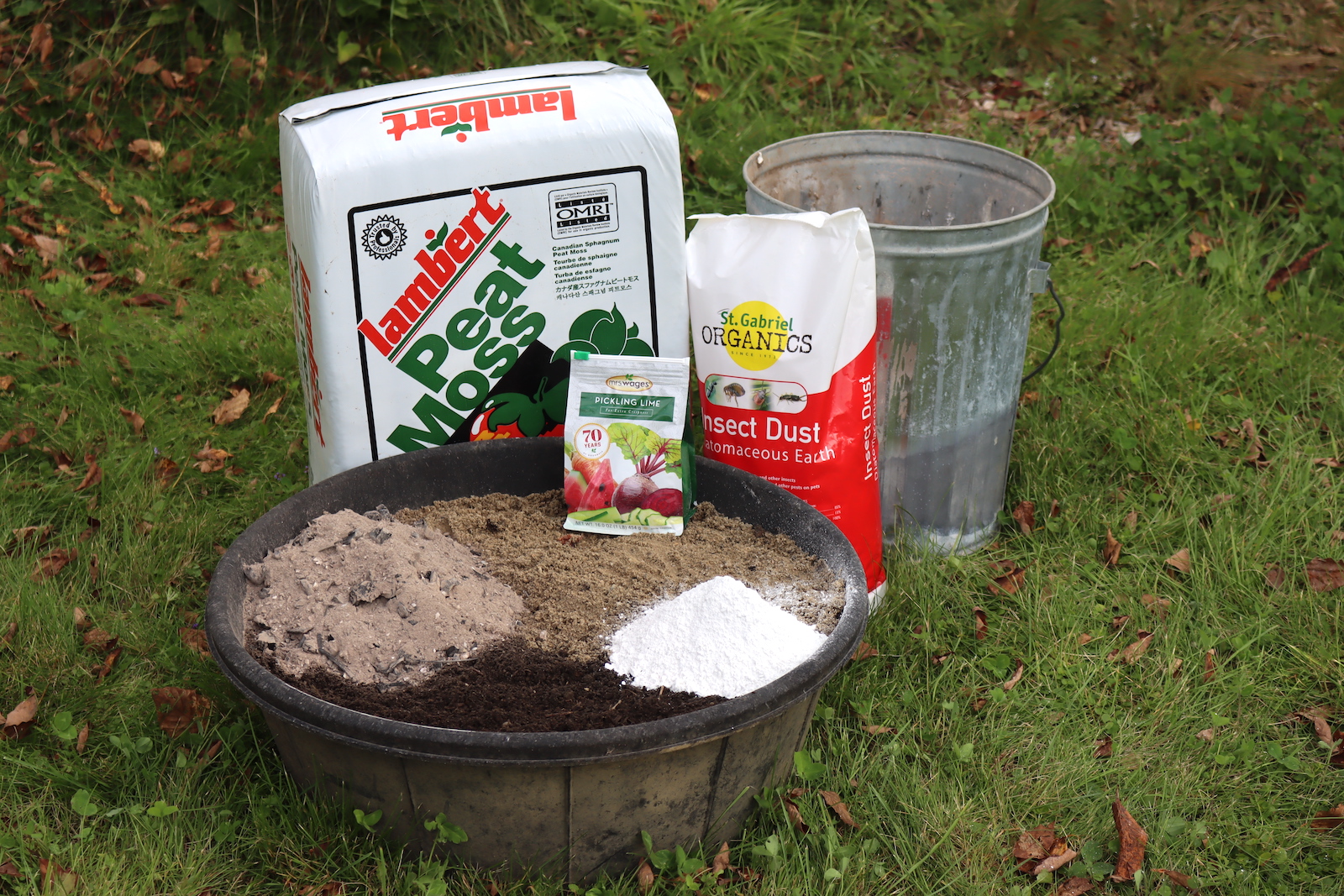
Table of Contents
- Notes from My Homestead
- Why Chickens Need a Dust Bath
- Chicken Dust Bath Ingredients
- Yield Notes
- What Not to Put in a Dust Bath
- Choosing a Chicken Dust Bath Container
- How to Make a Chicken Dust Bath
- Tips for the Best Chicken Dust Bath
- Will a Dust Bath Get Rid of Mites?
- Dust Bath Variations
- Chicken Dust Bath FAQs
- More for Your Flock
- Chicken Dust Bath Recipe
- Raising Chickens
Our soil here in Vermont is heavy, wet clay, which isn’t what chickens want for a dust bath. Most years, the girls still find a few raised, fluffy spots around the yard, and they make do.
A dust bath is how a hen keeps her feathers in good shape. She works loose dirt down to her skin, then flaps and shakes it back out, and the dust takes stale feather oils and parasites with it.
We raise our flock off the grid without heat lamps, and I’d rather give them what they need to look after themselves. A dust bath is about as simple as that gets. It costs very little to set up, especially if you heat with wood and have ashes to spare.
If you’re just getting started, my beginner’s guide to raising chickens covers the coop, feed, and daily care, plus how to raise baby chicks into laying hens. And if you’re up north like us, these cold-hardy chicken breeds handle a long winter, with plenty more in my list of chicken breeds from A to Z.
Notes from My Homestead

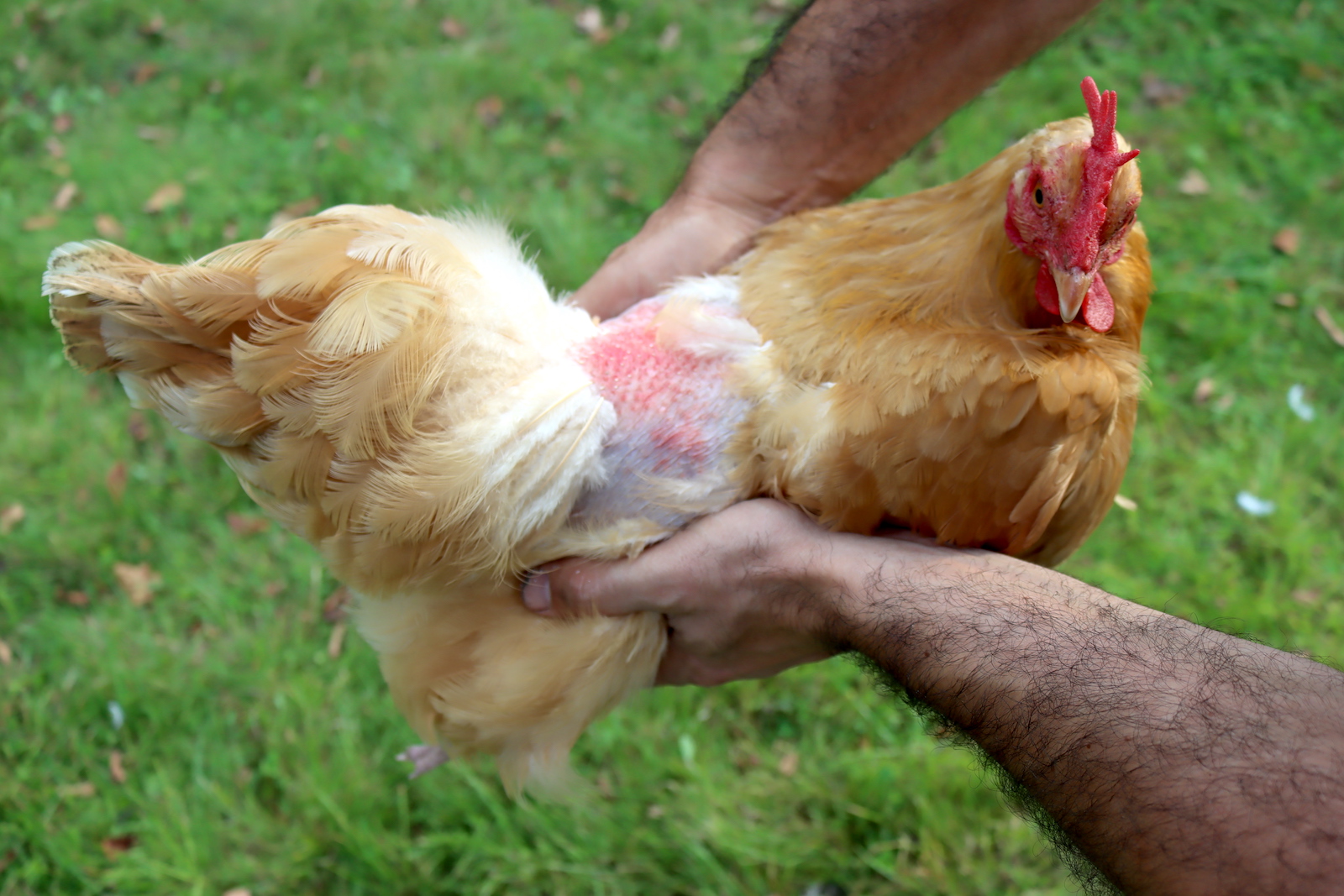
Most summers, the girls take care of their own dust baths. This year, no luck, because it rained nonstop all summer and the girls suffered for it.
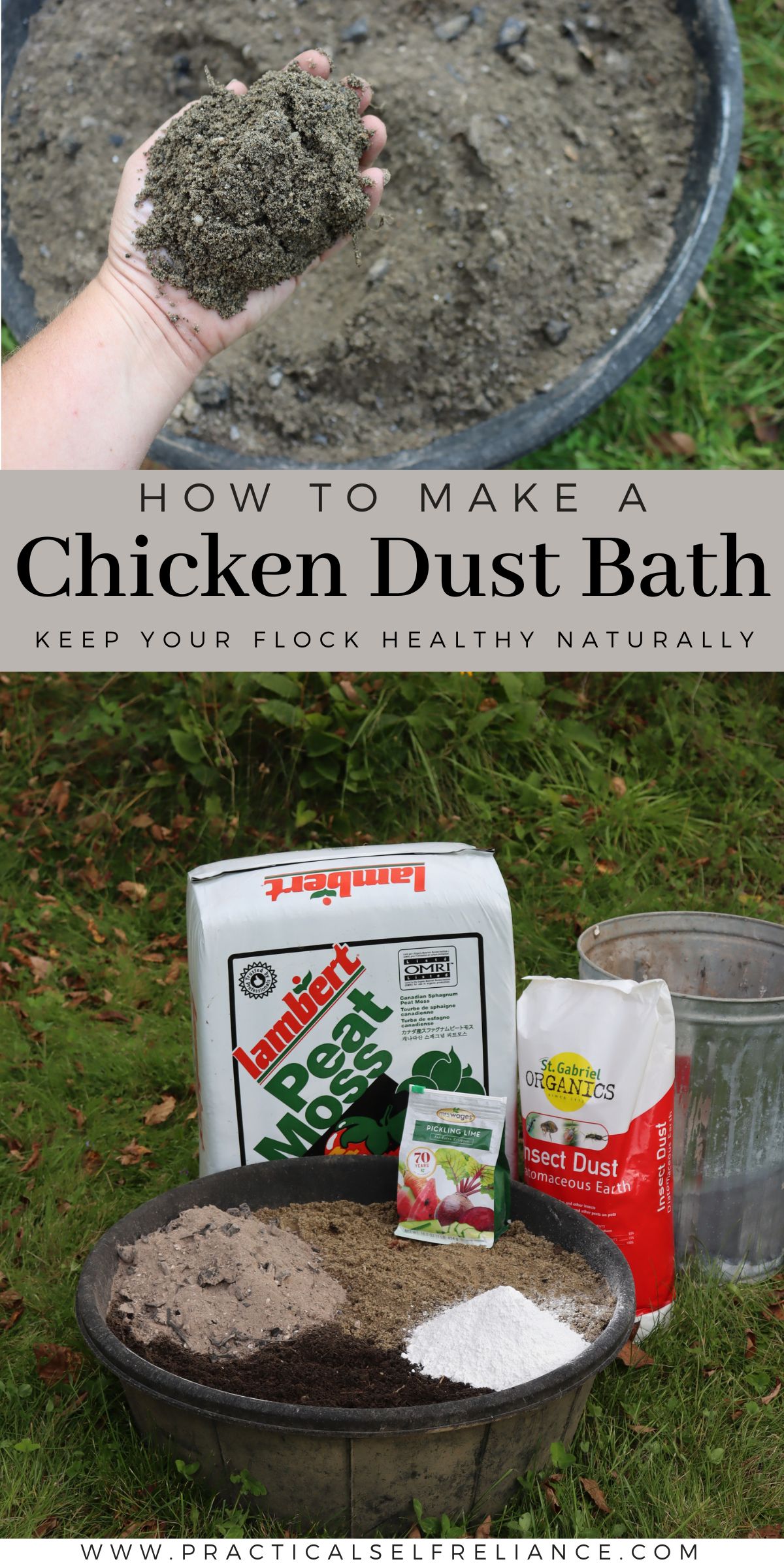
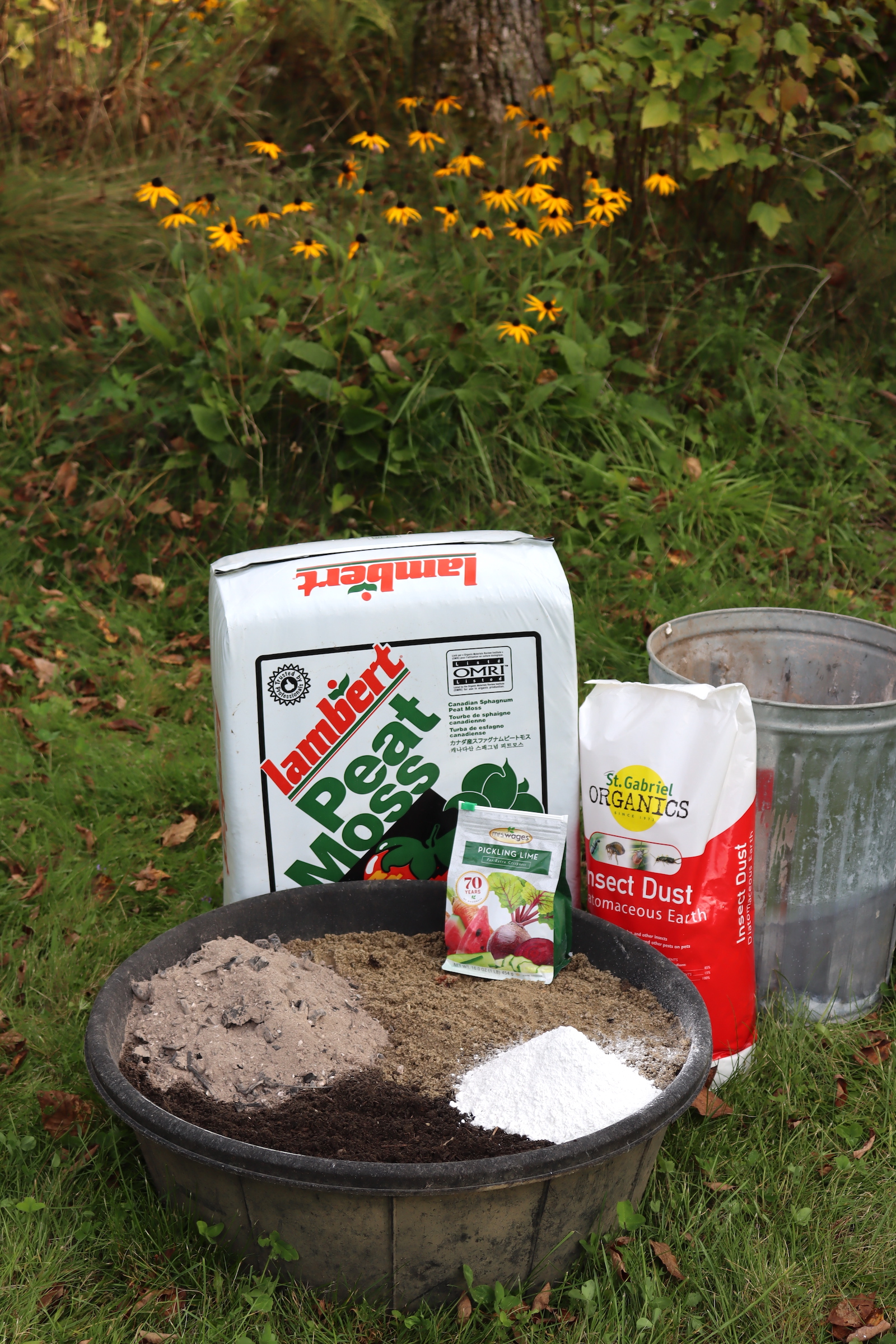
They ended up with feather mites all over them and started developing bald spots. We had to make something for them, so I mixed up a dust bath in a big rubber pan. It did the trick.
Why Chickens Need a Dust Bath
Chickens don’t bathe in water. They bathe in dust, and if you don’t give them a spot, they’ll find their own, as our girls do in a normal year.
The first job is keeping their feathers clean. Feather oils build up and go stale when hens can’t dust bathe. In one study of hens, only sand and peat cleared that extra oil out of the downy feathers next to the skin.
The second job is parasites. In a 2026 study, researchers analyzed video of 34 bird species dust bathing, then copied the wing flapping on a lab shaker fitted with real feathers. With sand in the mix, most of the mites came off within seconds.
Fine dust adds to that. In a dust box study from the University of California, a dust box of sand plus diatomaceous earth or kaolin clay cut mites and lice by 80 to 100 percent on the hens that used it, all within a week.
The catch is that it only helped the hens that actually got in. A dust bath does nothing sitting in a spot your hens won’t use.
Chicken Dust Bath Ingredients
You can find everything for this mix at a garden center or feed store. Dry, loose garden soil can stand in for some of the sand, and kaolin clay can replace the diatomaceous earth.
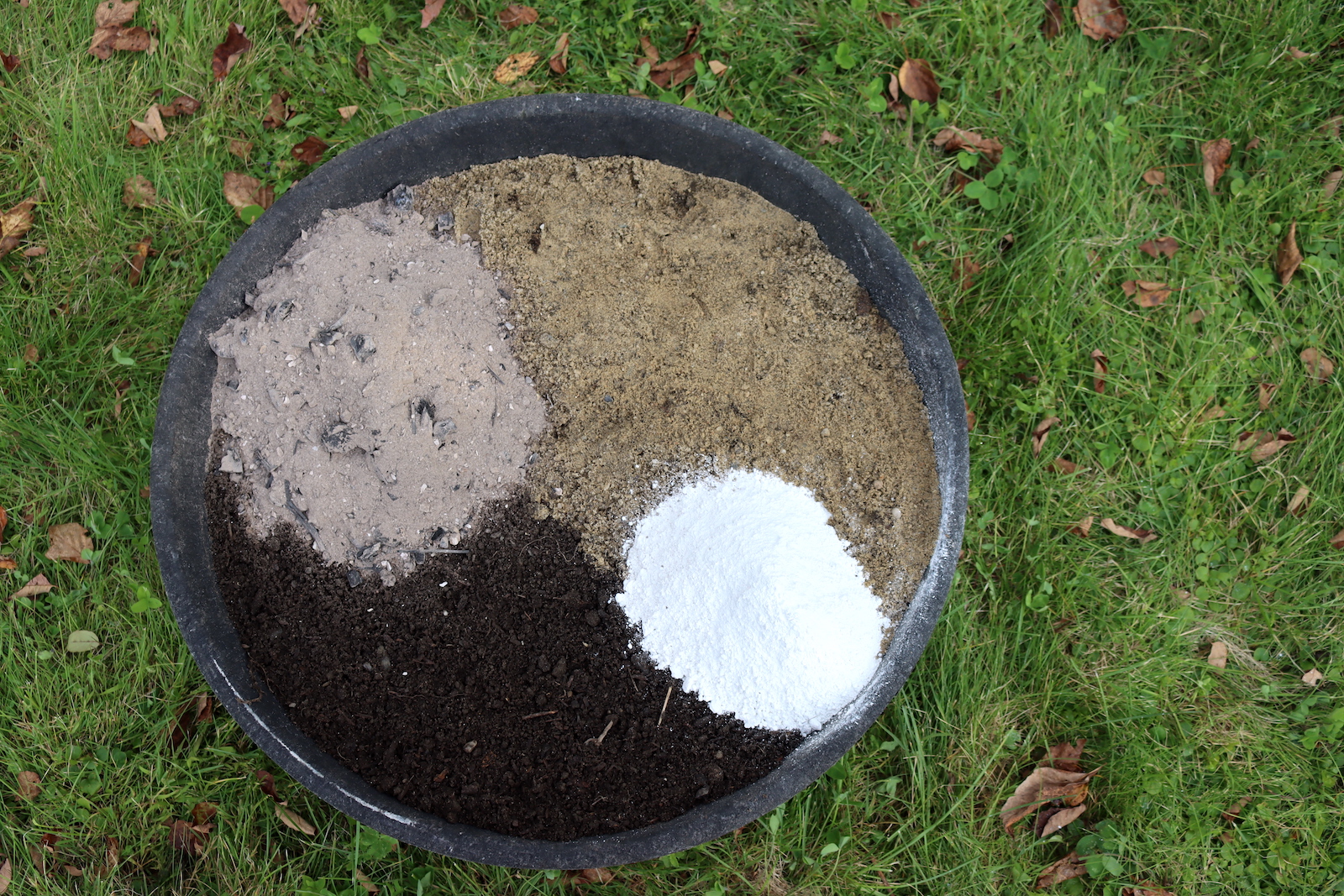
The mix is mostly sand and peat moss, plus a smaller share of wood ash and a little diatomaceous earth. Measure by volume with whatever bucket you have, since none of it needs to be exact.
- Sand: The base of the mix, and the part that does the scrubbing. Washed play sand or builder’s sand both drain fast after a rain. In one study of caged hens, sand on its own didn’t lower mite numbers, so you’ll want to mix in the other ingredients.
- Peat moss: In the feather oil study, hens new to dust bathing ended up preferring peat over sand and wood shavings, and their down came out fluffiest after a peat bath. Use plain sphagnum peat moss, not a potting mix or a peat moss that has fertilizer in it.
- Wood ash: Cold ash from clean, untreated firewood adds a fine dust that clings to feathers. Years ago, when our turkeys had lice, we filled a kiddie pool with wood ash, and they spent hours rolling in it. It’s alkaline enough to irritate skin, though, so it’s a smaller share here.
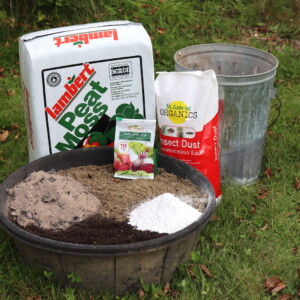
- Diatomaceous earth: Food-grade diatomaceous earth is ground fossilized algae. It dries out mites and lice by soaking up the waxy coating on their bodies. It’s dusty stuff, so mix it into the sand rather than sprinkling it over the top. I used St. Gabriel Organics insect dust, the bag in my photos.
Yield Notes
Ratio: By volume, use 4 parts sand, 4 parts peat moss, 2 parts wood ash, and 1 part diatomaceous earth.
Yield: 2 gallons each of sand and peat moss, 1 gallon of wood ash, and 2 quarts of diatomaceous earth add up to about 5 1/2 gallons before mixing. That fills an 18 1/2-inch rubber tub about 4 to 5 inches deep, and the dust boxes in one University of California mite trial held 2 to 4 inches.
There’s no tested ratio for a backyard dust bath. This one keeps sand and peat moss as the bulk of it, since the wood ash and diatomaceous earth are the fine, dusty parts.
What Not to Put in a Dust Bath
A hen works the dust right down to her skin, and with mites, that skin may already be raw. A few things that turn up in dust bath recipes online can do more harm than good, so you’ll want to leave them out.
Most of them are useful for other jobs around the homestead, just not on a hen’s skin.
- Pickling lime and hydrated lime: Pickling lime is calcium hydroxide, the same lime I use for preserving eggs without refrigeration. Food grade means it’s pure enough for pickles, not that it’s gentle on skin. A federal workplace safety guide to calcium hydroxide lists eye and skin burns, and a University of Kentucky poultry specialist warns that lime burns birds’ footpads when it sits on the ground.
- Pool filter diatomaceous earth: It goes through a heat treatment that turns part of it into crystalline silica, the kind that can scar lungs. Buy food-grade diatomaceous earth only.
- Ash from anything but firewood: Never use ash from garbage, painted wood, or pressure-treated wood, since it can carry heavy metals and other toxic leftovers. Make sure it’s cold, too, because fresh ash can still hold hot coals.
Choosing a Chicken Dust Bath Container
You want a container big enough for a hen to lie down, roll onto her side, and kick dust around. A wide, shallow pan works better than a deep bucket.
I mixed ours in a big rubber pan. A rubber utility pan stands up to the weather and won’t crack the way thin plastic does, and the 6 1/2-gallon size is about 18 1/2 inches across.
If you have a bigger flock, go bigger. A kiddie pool, an old tractor tire, or a simple wooden frame on the ground all work.
Where you put it matters more than what it’s in. Rain is what ruined the girls’ dust baths this year, so set yours under cover. A roof overhang, the space under a raised coop, or a covered corner of the run all keep it dry.
In hot climates, put it in the shade, too. Even heat-tolerant chicken breeds appreciate a cool patch of dirt on the hottest days.
How to Make a Chicken Dust Bath
Mixing a dust bath takes about 15 minutes, and most of that is hauling bags. I mixed ours right in the pan, out on the lawn. Pick a calm day if you can, since peat moss and diatomaceous earth both kick up dust.
Wear gloves and eye protection for the wood ash, and a dust mask while you work in the diatomaceous earth. Wood ash is caustic, and University of New Hampshire Extension recommends gloves, eye protection, and a mask when you handle it.
Cool and Sift the Wood Ash
Use ash that’s been sitting in a metal can until it’s completely cold. Fresh ash can still hold live coals, and a dust bath full of peat moss is the last place you want one.
Shake it through a piece of hardware cloth or an old sieve to pull out chunks of charcoal. You want just the fine, powdery ash.
Mix the Sand and Peat Moss
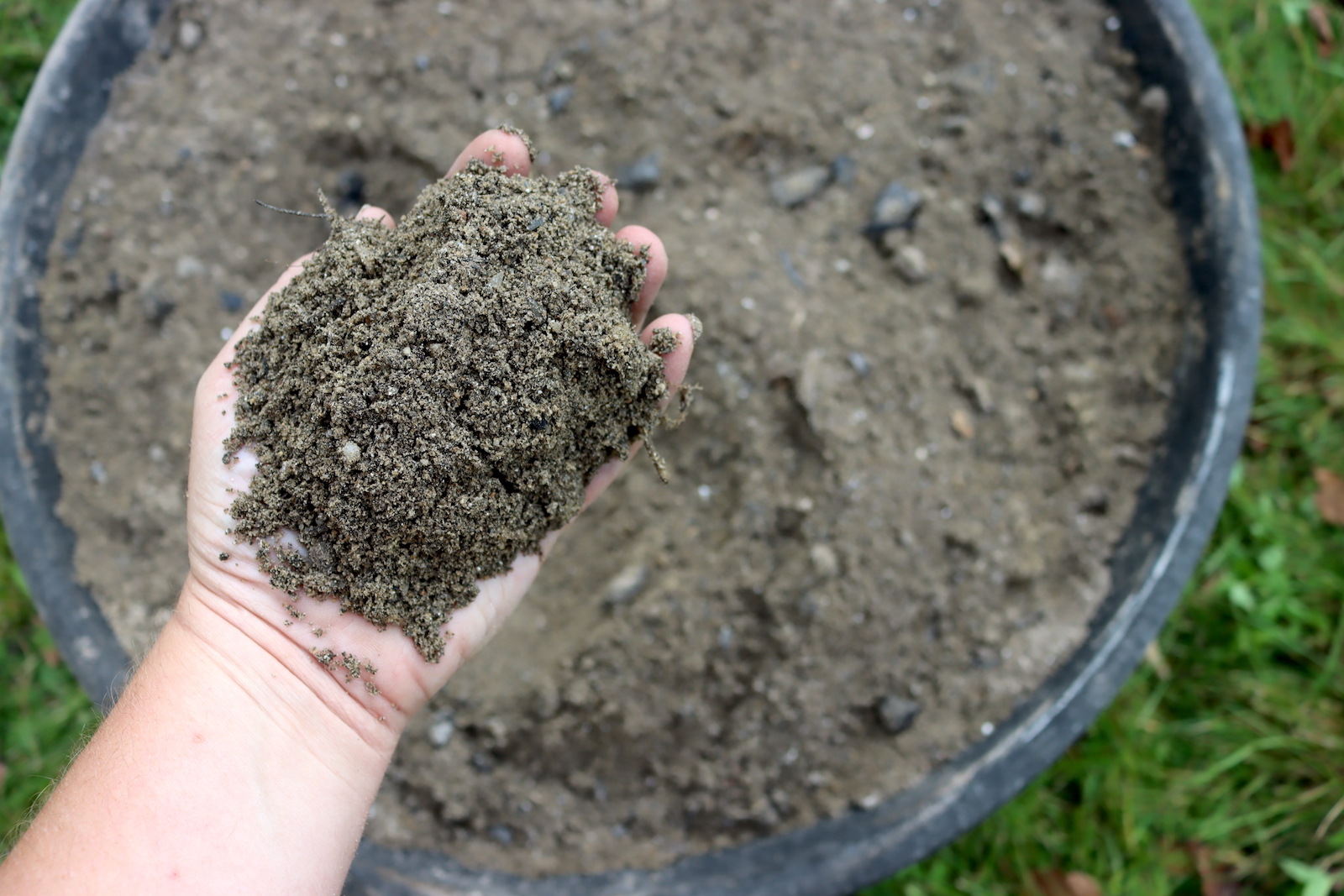
Pour the sand and peat moss into the pan, and mix them with a garden trowel or your hands. Break up any clumps of peat as you go.
Keep everything dry. A damp mix packs down instead of fluffing up through the feathers.
Work in the Wood Ash and Diatomaceous Earth
Add the wood ash and diatomaceous earth last. Fold them in gently rather than stirring hard, so the fine powder spreads through the sand without going up in a cloud.
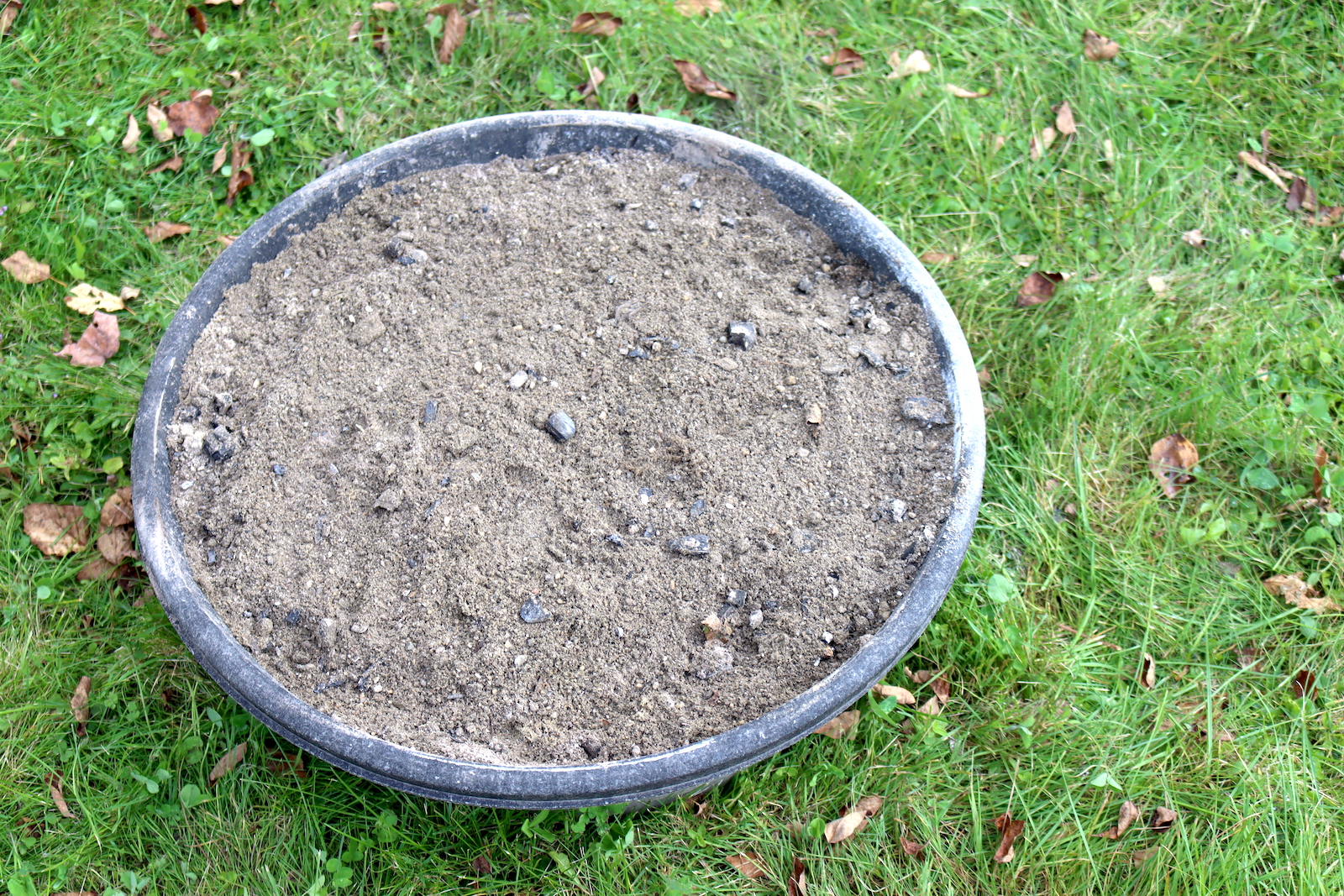
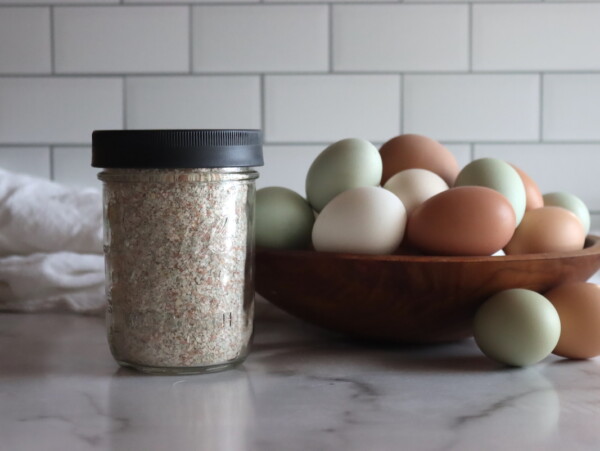
When it’s ready, the whole pan should be an even gray-brown with no white streaks.
Set It Out and Keep It Topped Up
Set the pan in a dry, covered spot where your hens already spend time. Scoop out droppings when you see them, and stir it up now and then so it doesn’t pack down.
Top it up as it gets low, since the hens fling a good bit over the side. Replace the whole batch when it’s damp or full of droppings.
Tips for the Best Chicken Dust Bath
Leave it out year-round. In a University of California trial, mite numbers climbed back up once the dust boxes came out, even with diatomaceous earth still in the poultry house. A dust bath works as a permanent part of the run, not a one-time fix.
Check under the tail. Northern fowl mites gather around the vent, so part the feathers there once a week to see if the dust bath is doing its job. They’re harder to spot on Silkies, Cochins, and other fluffy chicken breeds, so look closely.
Will a Dust Bath Get Rid of Mites?
A dust bath helps a lot, but it won’t solve every mite problem on its own. In that dust box study, the diatomaceous earth and kaolin did nothing for hens that never got in them.
It also matters which mite you have. Northern fowl mites live on the bird, so a dust bath reaches them. Poultry red mites hide in coop cracks and roosts during the day and feed at night, so they need a coop cleanout as well.
Heavy mite loads can cause anemia and cut egg production. If a hen looks pale or your flock’s laying drops off, I’d call a vet rather than wait on the dust bath.
Dust Bath Variations
Kaolin clay: Swap kaolin clay in for some or all of the diatomaceous earth. In that dust box study, kaolin and diatomaceous earth both cut mites and lice by 80 to 100 percent on the hens that used them.
Garden soil: If you have dry, loose topsoil, use it in place of some of the sand. It’s what the girls find on their own in a normal year.
Dried herbs: Some people add dried lavender or mint. I haven’t seen research showing herbs keep mites away, so think of them as a nice smell rather than a mite remedy.
Chicken Dust Bath FAQs
A few more questions come up when you’re setting up a dust bath for the first time.
Diatomaceous earth is an approved organic insecticide, and feed makers use the food-grade kind as an anticaking agent in animal feed. The main concern is breathing the dust, for you and the hens, so mix it into the sand rather than dusting it over the top. The National Pesticide Information Center has a good diatomaceous earth fact sheet if you want the details.
Yes, as long as it’s cold ash from clean, untreated firewood. Wood ash has a pH of 9 to 13.5, according to University of Georgia Extension, so it’s alkaline enough to irritate skin. That’s why it’s a smaller share of this mix, and there are plenty of other uses for wood ash for the rest of the bucket.
Washed play sand or coarse builder’s sand both work, since they drain fast and stay loose. Skip colored craft sand. Sand alone didn’t lower mite numbers in one study of caged hens, though, so mix in the peat moss, wood ash, and diatomaceous earth.
Top it up whenever it gets low, and replace the whole batch when it’s damp, packed down, or full of droppings. Leave it out year-round, too. In one University of California trial, mites came back once the researchers took the dust boxes away.
Somewhere dry and covered, where your hens already like to spend time. Under a raised coop, under a roof overhang, or in a covered corner of the run all work. Rain is what turns a dust bath to mud, so keep it out of the weather.
More for Your Flock
A little more help with your backyard chickens.
If you tried this Chicken Dust Bath recipe, or any other recipe on Practical Self Reliance, leave a ⭐ star rating and let me know what you think in the 📝 comments below!
And make sure you stay in touch with me by following on social media!
Chicken Dust Bath
Equipment
- Garden Trowel
- Gloves, Safety Goggles, and Long Sleeves
Ingredients
- 2 gallons sand, washed play sand or builder’s sand
- 2 gallons peat moss, plain sphagnum, no fertilizer
- 1 gallon wood ash, cold, from clean untreated firewood
- 2 quarts diatomaceous earth, food grade
Instructions
- Make sure the wood ash is completely cold, then sift it through hardware cloth or a sieve to remove any chunks of charcoal.
- Pour the sand and peat moss into a wide, shallow container, and mix them with a trowel, breaking up any clumps of peat.
- Add the wood ash and diatomaceous earth, and fold them in gently until the mix is an even color, keeping the dust down as you work.
- Set the dust bath in a dry, covered spot where the hens already spend time.
- Scoop out droppings as needed, top up the mix as it gets low, and replace it when it’s damp or packed down.
Notes
Raising Chickens
More ideas for raising a healthy backyard flock.
Find the perfect recipe
Searching for something else? Enter keywords to find the perfect recipe!