
Affiliate disclosure: This post may contain affiliate links. Please see our Privacy Policy.
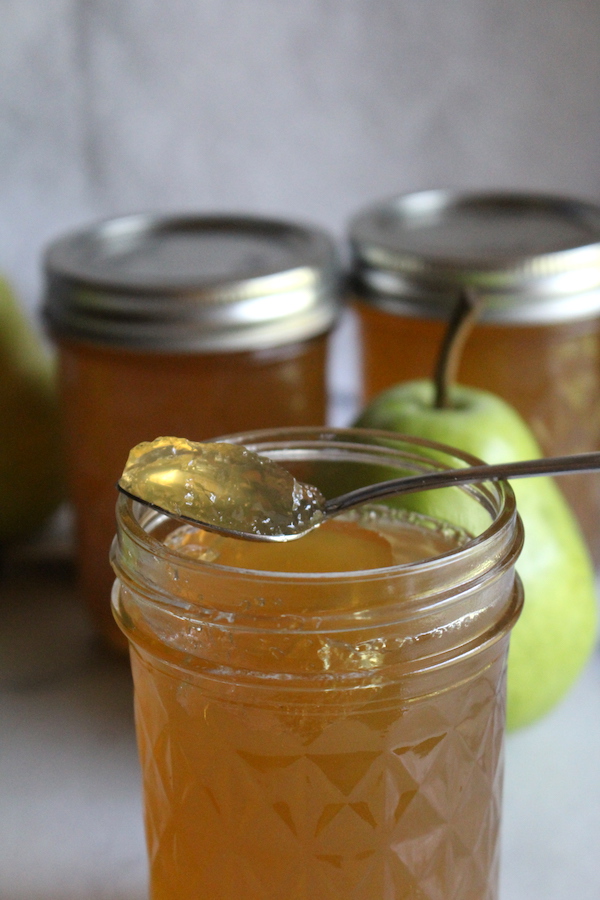
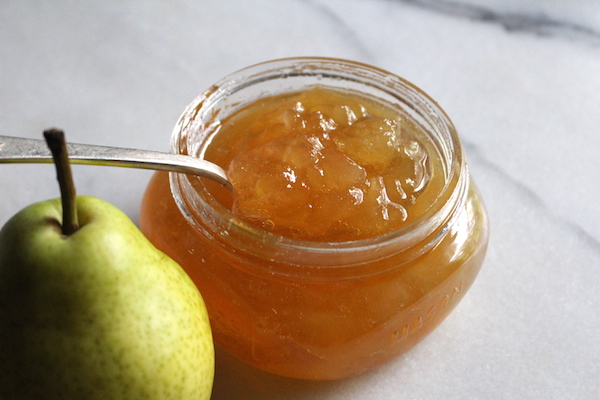
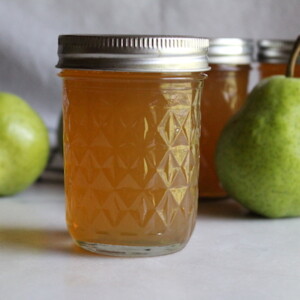
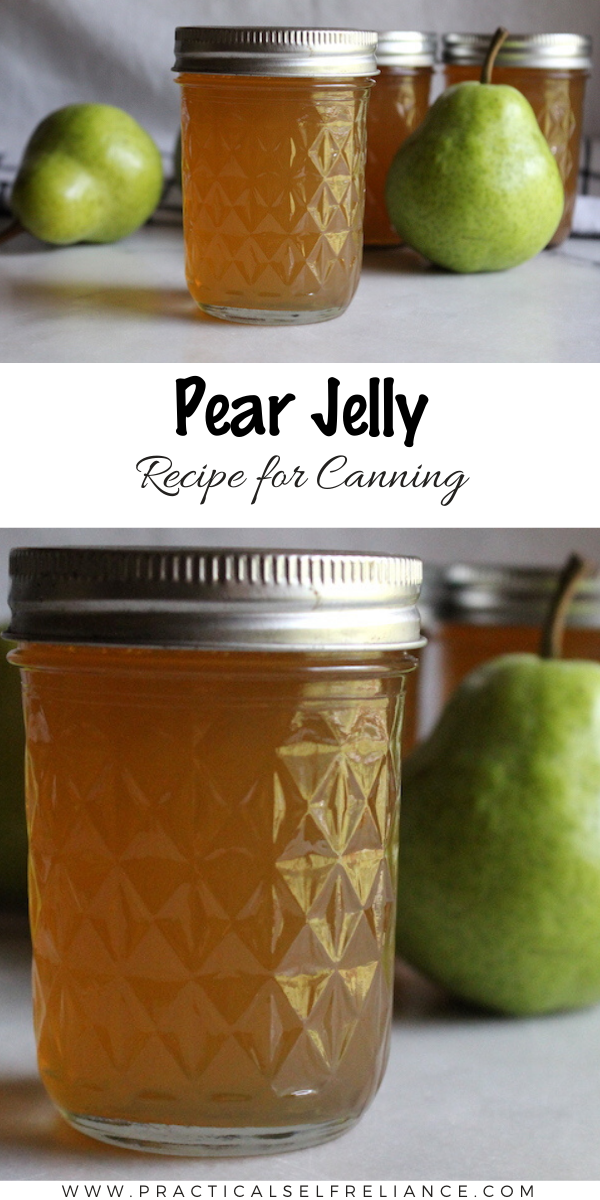
Pear jelly captures the delicate honey-sweet flavor of fall pears in a clear amber preserve. This small batch recipe uses powdered fruit pectin for a quick reliable set with no gel-stage testing, and yields about 6 half-pint jars from either fresh-pressed pear juice or store-bought 100% pear juice.
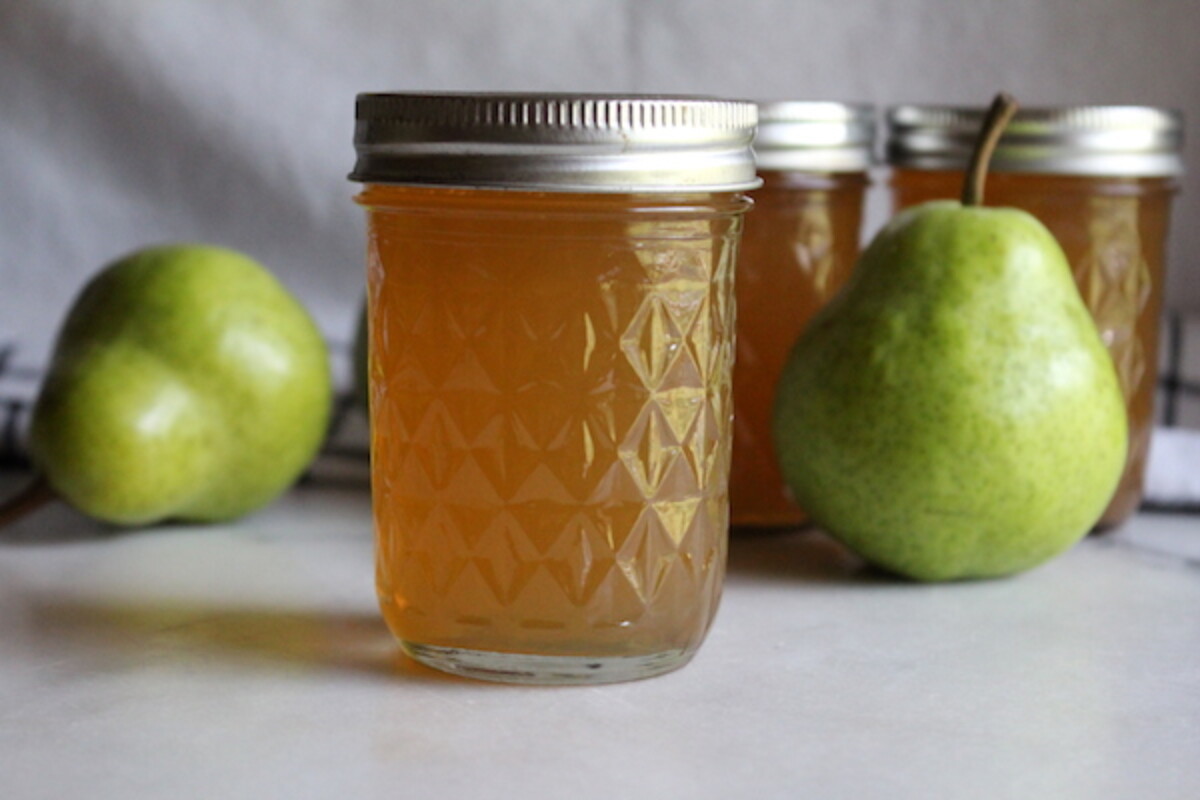
Pear jelly relies on Sure-Jell or Ball Classic powdered fruit pectin for a quick reliable set, with no gel-stage testing required. The whole pears (peels, cores, stems, and all) get rough-chopped and simmered in water until they release their juice, which strains overnight through a jelly bag into a beautiful clear amber liquid. The pectin and lemon juice handle the gel; you just have to follow the timing.
This recipe is adapted from the Ball Complete Book of Home Preserving, and it’s a great way to use up a pear harvest without having to peel or core the fruit. It yields about 6 half-pint jars and works equally well with home-extracted pear juice or with store-bought 100% pear juice if fresh pears aren’t in season. Pears and apples are interchangeable in most jelly recipes, so this same method works for crabapple jelly or any apple-pear combination.
For other ways to put up a pear harvest, try canning pears in light syrup, pear sauce, or pear pie filling.
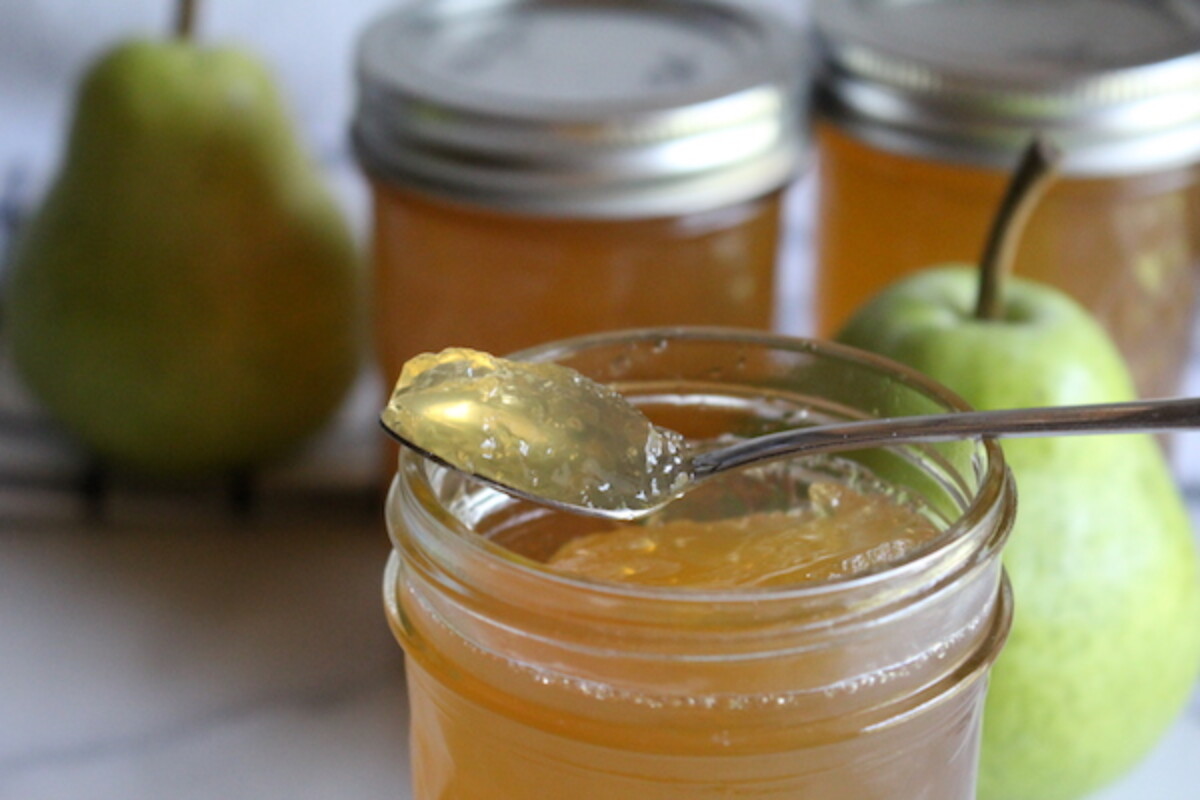
Notes from my Kitchen

I’ll admit it, if I have whole pears in front of me, I’d usually rather make pear jam than jelly. Most of the time I make this pear jelly when my kids open up too many jugs of pear juice and I find them hiding in the back of the fridge. Store-bought pear juice works perfectly fine, and turning it into a jar of jelly feels like a small win against the half-empty fridge problem.
The other time I reach for this recipe is when I’m canning pears and end up with a big bowl of peels and cores. Those scraps have all the natural pectin you need for a beautiful pear scrap jelly, and turning them into another batch of preserves feels like getting an extra few jars for free.
Ingredients for Pear Jelly
This pear jelly recipe yields about 6 half-pint jars and uses just four ingredients:
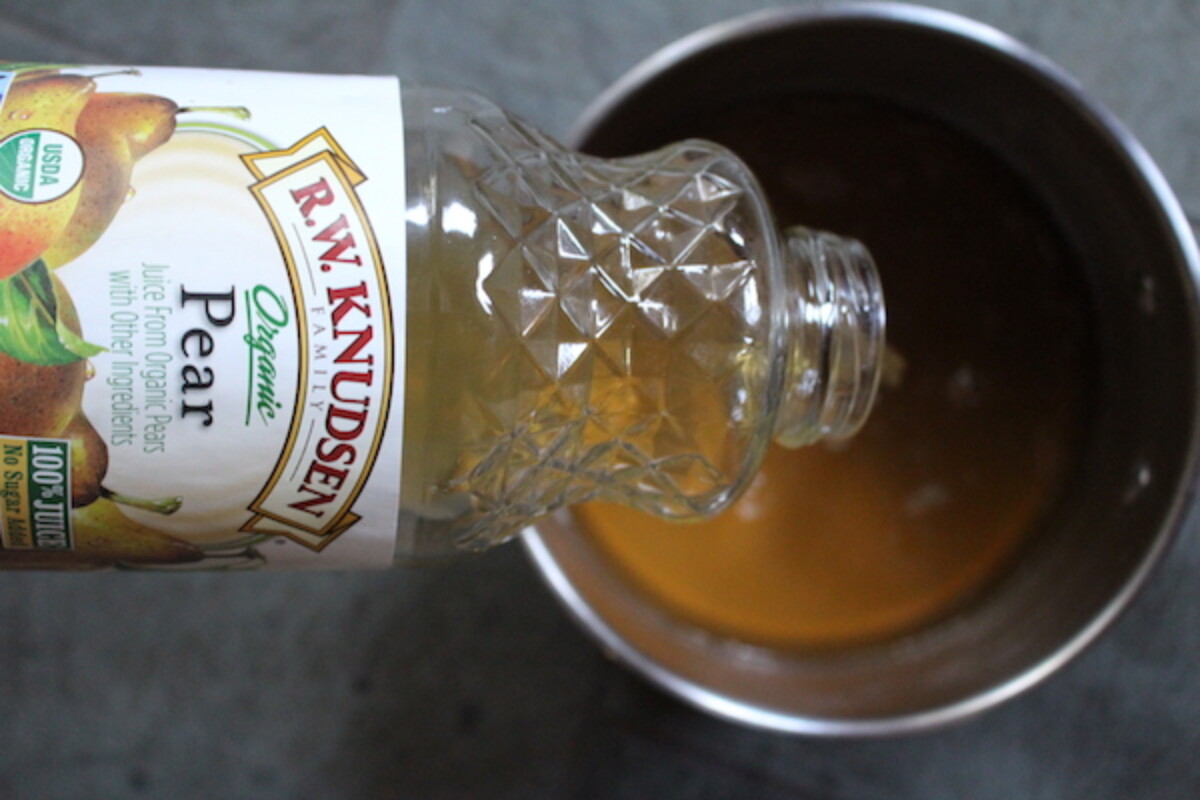
- Pear juice: Use fresh juice extracted from whole pears (instructions below), juice from canning pear scraps, or store-bought 100% pear juice. Bartlett, Bosc, Anjou, and Comice pears all make excellent jelly.
- Bottled lemon juice: Adds the acid pears need for a proper gel and brightens the flavor. Bottled lemon juice has a consistent acid level, which matters more here than fresh.
- 1 box (1.75 oz) powdered fruit pectin: Use Sure-Jell or Ball Classic regular powdered pectin. Don’t substitute liquid pectin, which requires different ratios. For a low-sugar version with Pomona’s pectin, see the Recipe Tips block below.
- Granulated sugar: Don’t reduce the sugar with regular powdered pectin; it won’t gel. To use less sugar (or honey or maple syrup), switch to Pomona’s pectin (see Recipe Tips). The recipe card has the specific amount.
How to Make Pear Jelly
Pear jelly comes together in two stages: extracting the juice from the pears (which takes most of the time, mostly hands-off as the juice strains through a jelly bag), and then cooking the jelly itself, which only takes about 15 minutes once the juice is ready.
Extracting the Juice
You have three options for getting the pear juice this recipe needs.
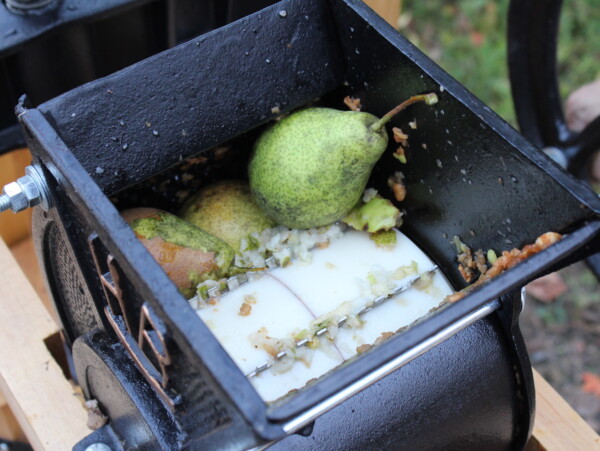
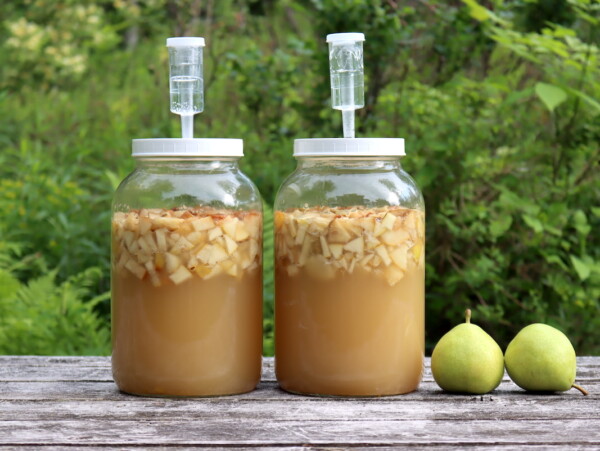
From whole fresh pears (Ball book method): Wash the pears and quarter them. Don’t peel or core; the peels and cores have most of the natural pectin. Place the quartered pears in a large saucepan with enough water to cover (about 1 cup of water per pound of fruit). Bring to a boil over high heat, then reduce heat, cover loosely, and simmer for about 30 minutes, stirring and crushing the pears occasionally with a potato masher, just until softened. Don’t overcook; long cooking reduces flavor, color, and the strength of the natural pectin.
From canning pear scraps: When you’re canning pears or making pear jam, save the peels and cores instead of composting them. Cover them with water in a saucepan, bring to a boil, simmer 30 minutes, and proceed with the straining step below. The yield is similar to whole-pear extraction.
From store-bought pear juice: Use 100% pear juice with no added sugar, sweeteners, or preservatives. Skip the cooking and straining steps entirely and proceed straight to cooking the jelly.
For fresh-extracted juice, transfer the cooked pear mixture to a dampened jelly bag or strainer lined with several layers of dampened cheesecloth set over a deep bowl. Let it drip undisturbed for at least 2 hours, or overnight for best yield. Don’t squeeze the bag, even though it’s tempting; squeezing releases solids that cloud the finished jelly. Measure the juice for the recipe (the recipe card has the specific amount).
Cooking the Jelly
Order matters with powdered pectin. Combine the pear juice and lemon juice in a heavy-bottomed jam pot. Whisk in the powdered pectin until fully dissolved. Bring to a hard rolling boil over high heat, stirring frequently.
Add the sugar all at once and stir constantly until fully dissolved. Return to a hard rolling boil that can’t be stirred down, and boil hard for exactly 1 minute. Remove from heat and quickly skim off any foam. Ladle the hot jelly into prepared half-pint jars, leaving 1/4 inch headspace, wipe rims clean, and apply two-piece canning lids fingertip tight.
Don’t Overcook Pectin Jelly
Pectin jelly works on chemistry, not on cooking time. A few things to know:
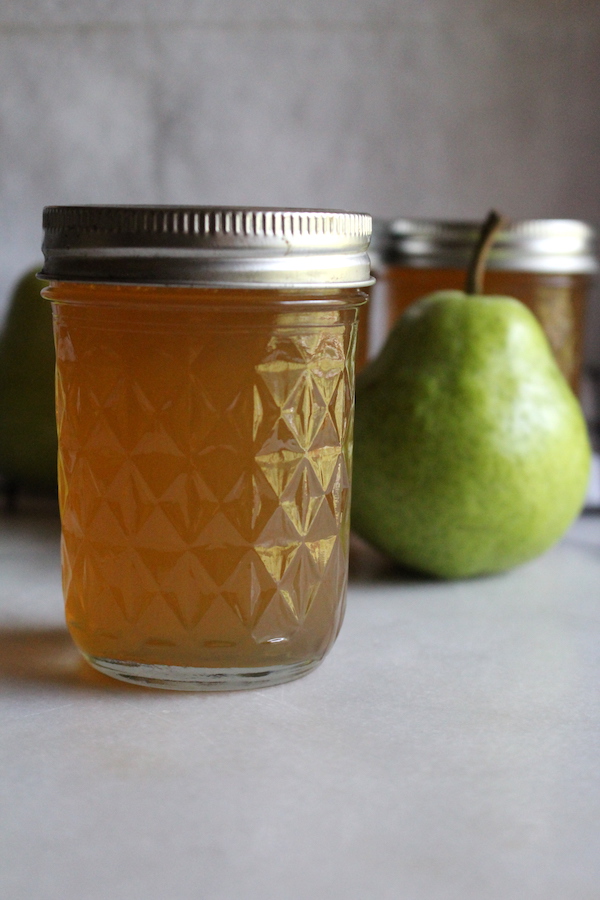
- The jelly looks thin in the pot when you take it off the heat, and that’s normal. Pectin sets as the jelly cools, not while it’s boiling.
- Trust the timing. A hard rolling boil for exactly 1 minute after the sugar fully dissolves is all you need.
- Skip the thermometer and freezer plate test. Those are for old-fashioned no-pectin jellies. Pectin recipes set on chemistry, not on temperature.
- Give the jars 24 to 48 hours to fully set before declaring failure.
Canning Pear Jelly
I always can my pear jelly so I have shelf-stable jars year-round, but canning is optional. You can also store the finished jelly in the fridge for several weeks or in the freezer for up to 6 months (use freezer-safe straight-sided jars if you’re freezing). If you’re new to canning, start with my beginner’s guide to water bath canning before you fire up the canner.
Process the filled jars in a boiling water bath canner for 10 minutes (adjusting for altitude). When the timer goes off, turn off the heat and let the jars sit in the canner for another 5 minutes before lifting them out (this helps prevent siphoning). Cool on a towel for 12 to 24 hours, check seals, and refrigerate any unsealed jars. Sealed jars keep on the pantry shelf for up to 18 months.
Altitude Adjustments
Processing time depends on your elevation:
- 0 to 6,000 feet: 10 minutes
- Above 6,000 feet: 15 minutes
Yield Notes
Here’s what you can expect from this recipe:
- 2 medium-large pears (about 14 oz) = about 1 cup of extracted pear juice
- 8 medium-large pears (about 3 1/2 lbs) + 3 1/2 cups water = 4 cups pear juice
- 4 cups pear juice + 2 tbsp lemon + 1 box pectin + 5 1/2 cups sugar = about 6 half-pint (8 oz) jars
- Don’t double the recipe. Larger batches don’t heat evenly and often fail to set properly. Make two single batches back-to-back instead.
Storage Options
Not committed to water bath canning? You have several options:
- Refrigerator jelly: Let jars cool to room temperature, then store in the fridge. Keeps for 3 to 4 weeks.
- Freezer jelly: Use freezer-safe straight-sided jars and leave headspace for expansion. Lasts up to 6 months frozen.
- Canned jelly: Water bath processed jars keep for 12 to 18 months in a cool, dark pantry. This is my preferred method because it means pear jelly in February when the snow is piling up.
Recipe Tips
- Pear Jelly with Pomona’s Pectin (low-sugar option): Pomona’s Universal Pectin uses a calcium-water system that lets you reduce the sugar significantly (or substitute honey or maple syrup) while still getting a reliable gel. Follow the instructions on the Pomona’s box for the calcium water and pectin amounts; the lemon juice, juice extraction, and canning steps stay the same.
- Spiced Pear Jelly: Add 1 cinnamon stick, 4 to 6 whole cloves, and a 1-inch piece of fresh ginger to the pears while simmering for juice extraction (or simmer them in pre-extracted juice for 10 minutes). Strain out the spices before adding pectin.
- Vanilla Pear Jelly: Stir the seeds from one split vanilla bean (or 2 teaspoons vanilla extract) into the jelly right after you remove it from the heat. Adding vanilla early would cook off the flavor.
- Apple-Pear Jelly: Substitute up to half the pear juice with fresh apple cider or unsweetened apple juice. The combination has a beautiful flavor and the apples contribute extra natural pectin.
- No-pectin alternative: If you’d rather skip commercial pectin entirely, try salted caramel pear butter or maple pear butter instead. Both use slow reduction to thicken pears into a spreadable preserve without any added pectin.
- Don’t double the recipe. Two single batches back-to-back will always set better than one big batch.
- Don’t squeeze the jelly bag. It speeds up the juice collection but releases solids that cloud the finished jelly. Let it drip on its own time.
Ways to Use Pear Jelly
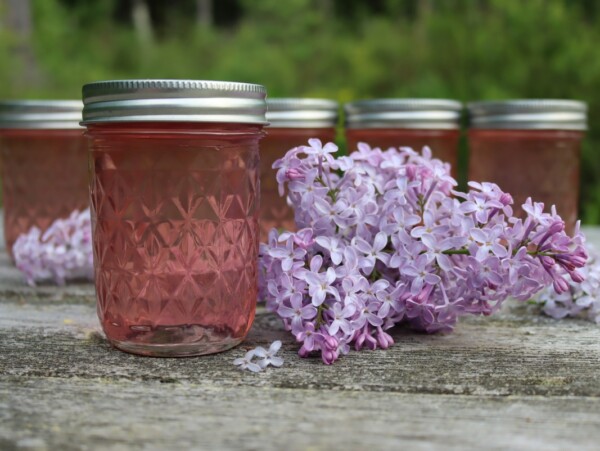
Pear jelly is more versatile than people give it credit for. I spread it on biscuits and toast at breakfast, swirl it into yogurt or oatmeal, melt it down as a glaze for roasted pork tenderloin or duck breast, and serve it with a sharp aged cheddar or blue cheese on a fall cheese board. It also makes a beautiful gift jar with a fabric topper and ribbon, and the soft amber color looks stunning on the shelf.
If you find yourself with extra (or one that didn’t quite set), I have a guide to 100+ ways to use up a jar of jam for more inspiration. And while you’re already in pear-preserving mode, you might enjoy rounding out your pantry with pickled pears for cheese boards or old fashioned pear preserves for a chunkier whole-fruit option.
Pear Jelly FAQs
Yes, pears have a moderate amount of natural pectin, with most of it concentrated in the peels and cores. Pears have less natural pectin than apples or quinces but more than berries. That’s why this recipe simmers whole pears (peels, cores, and all) and uses commercial pectin too. The natural pectin from the cores helps the gel, but the added pectin gives a faster cook and a more reliable set.
Yes, store-bought 100% pear juice works perfectly fine for this recipe. Look for juice with no added sugar, sweeteners, or preservatives. Skip the cooking and straining steps entirely and proceed straight to cooking the jelly with the amounts in the recipe card.
The most common cause is squeezing the jelly bag during straining, which releases solids into the juice. Let the bag drip on its own without pressing or squeezing, even if it takes overnight. Other causes include stirring too aggressively while cooking, not skimming foam quickly enough before jarring, or starting with juice that wasn’t fully strained.
Pear jelly is made from strained pear juice, so it’s smooth and translucent with no fruit pieces. Pear jam is made from chopped or mashed whole pears, so it has fruit texture and is more opaque. Jelly spreads more smoothly on toast and shows off the amber color of the pears, while jam has more body and a stronger pear flavor.
Process half-pint and pint jars for 10 minutes in a boiling water bath canner at elevations below 6,000 feet. Above 6,000 feet, increase the processing time to 15 minutes. After the timer goes off, let the jars sit for an additional 5 minutes in the canner before removing them, which helps prevent siphoning.
Ways to Preserve Pears
If you tried this Pear Jelly Recipe, or any other recipe on Practical Self Reliance, leave a ⭐ star rating and let me know what you think in the 📝 comments below!
And make sure you stay in touch with me by following on social media!
Pear Jelly
Ingredients
For Pear Juice (skip if using bottled juice)
- 3 1/2 lbs pears, about 8 medium pears
- 3 1/2 cups water
For Pear Jelly
- 4 cups Pear Juice, Extracted from above, or bottled
- 2 Tbsp. Lemon Juice, optional, but delicious
- 1 box powdered pectin, 1.75 ounces, Sure Jell or Ball Classic. Equals 6 Tbsp bulk pectin.
- 5 cups Sugar, see notes for low sugar option
Instructions
- Extract the Juice (skip if using bottled pear juice)
- Wash and quarter the pears. Don’t peel or core; the peels and cores have most of the natural pectin.
- Place the quartered pears in a large saucepan with the water (about 1 cup of water per pound of fruit). Bring to a boil over high heat, then reduce heat, cover loosely, and simmer for about 30 minutes. Stir and crush the pears occasionally with a potato masher, just until softened. Don’t overcook.
- Transfer the cooked pear mixture to a dampened jelly bag or strainer lined with several layers of dampened cheesecloth set over a deep bowl. Let drip undisturbed for at least 2 hours, or overnight for best yield. Don’t squeeze the bag; squeezing releases solids that cloud the jelly. Measure out 4 cups of juice.
- Make the Jelly
- Prepare canning jars, lids, and water bath canner.
- Combine the pear juice and lemon juice in a heavy-bottomed jam pot. Whisk in the powdered pectin until fully dissolved. Bring to a hard rolling boil over high heat, stirring frequently.
- Add the sugar all at once and stir constantly until fully dissolved. Return to a hard rolling boil that can’t be stirred down, and boil hard for exactly 1 minute.
- Remove from heat and quickly skim off any foam.
Can the Jelly
- Ladle the hot jelly into prepared half-pint jars, leaving 1/4 inch headspace. Wipe rims clean with a damp cloth and apply two-piece canning lids fingertip tight.
- Process jars in a boiling water bath canner for 10 minutes (15 minutes above 6,000 feet elevation).
- When the timer goes off, turn off the heat and let jars sit in the canner for 5 minutes before lifting them out.
- Cool on a towel for 12 to 24 hours, check seals, and refrigerate any unsealed jars. Sealed jars keep on the pantry shelf for up to 18 months.
Notes
Nutrition
Nutrition information is automatically calculated, so should only be used as an approximation.
Jelly Recipes
Find the perfect recipe
Searching for something else? Enter keywords to find the perfect recipe!









Wonderfully tart pear jelly!!!
I’m so glad you like it!
This recipe is so simple! We often use bottled pear juice for simplicity, and the pectin ensures a foolproof set. The kids love it =)
I’m thinking it could use more lemon juice – like 1/4 c. This will add the needed acid to help it gel.
I have pear juice leftover from making pear butter. I used my Instant Pot, so it is almost pure juice. I started with 1/4 c of water. Do you think I could make jelly using that and the Ball less or no sugar needed pectin and the apple jelly recipe?
I don’t see why not.
Temperature boys and girls. I hit 225F before the jelly began snotting off a cold spoon. Got up this morning and all was good. Labeled and stored five 8oz. jars.
Hi we’re step by step in UK. We started canning some fruit this year trying each one through the winter to see if they smirked out ok! So far one yes one no!