
Affiliate disclosure: This post may contain affiliate links. Please see our Privacy Policy.
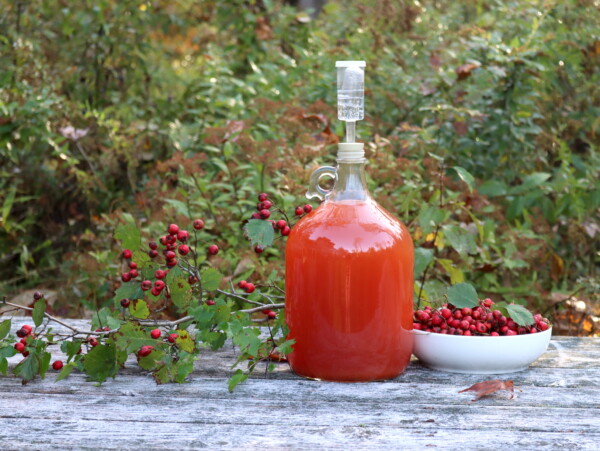
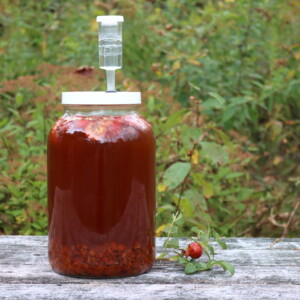
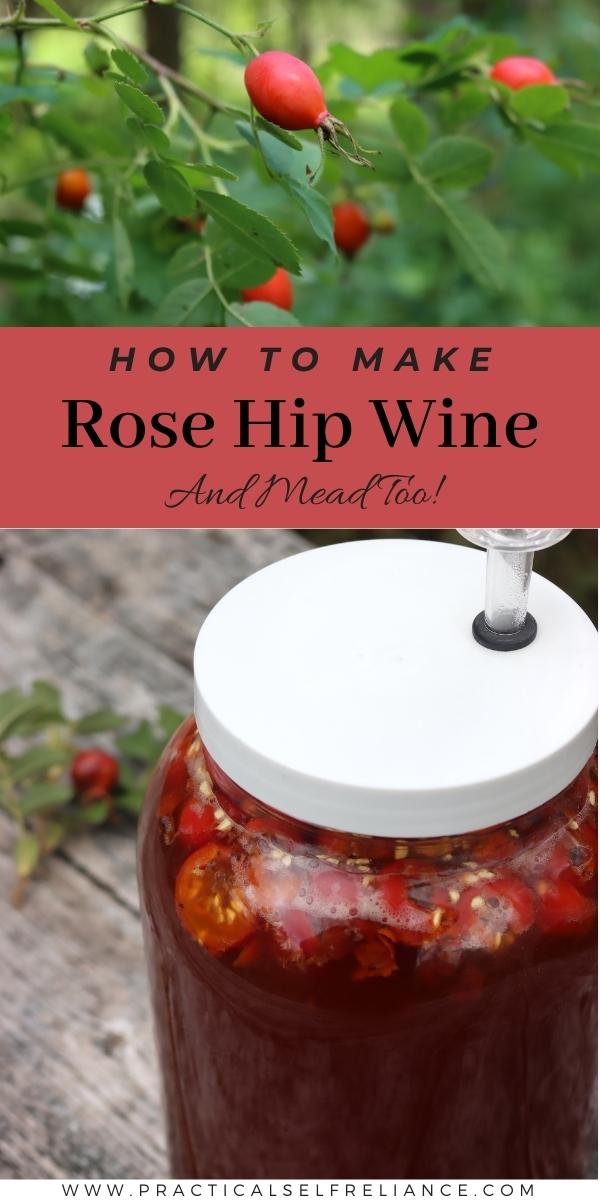
Rosehip wine turns a basketful of wild autumn hips into a crisp homemade country wine with a bright, tart finish that tastes a little like a dry rosé crossed with an apple wine. Made the traditional way with sugar, it ferments into a light, refreshing sipper, and if you swap in honey, those same hips give you a rounder, more complex rosehip mead with real body. It takes patience while it ages, but a well-rested bottle is worth every month of the wait.
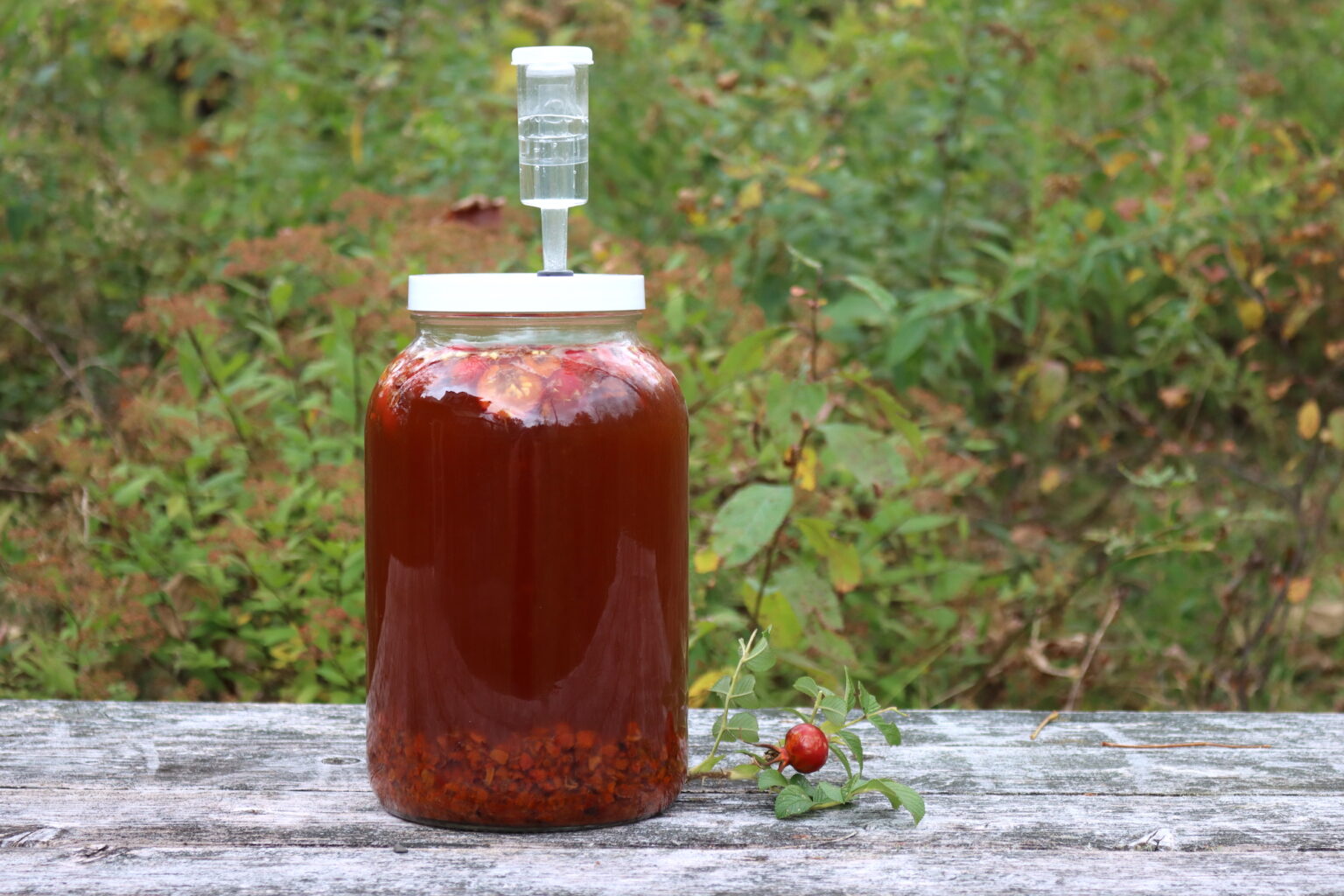
Rosehips are one of the wild fruits I most enjoy working with in the fall, mostly because they show up right when almost everything else has been picked over.
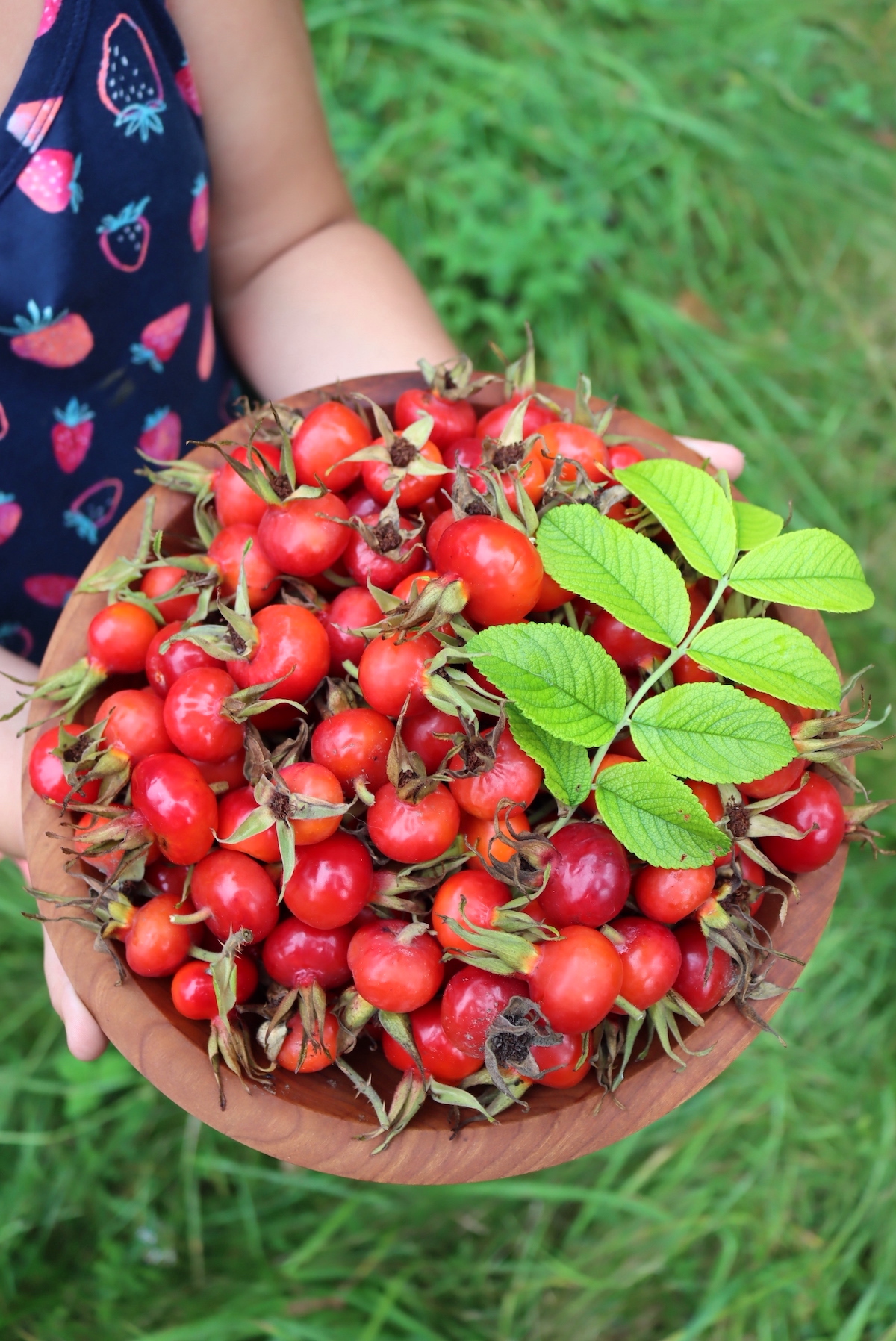
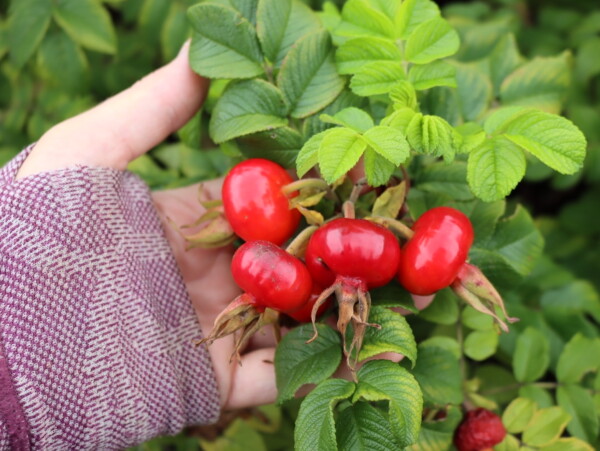
Every rose that’s allowed to keep its spent blossoms will set hips, and by late summer they start blushing orange before deepening to that glorious autumn red. They cling to the canes long after the leaves drop, so you can gather them well into the cold months once frost has softened and sweetened them.
The finished wine carries a subtle, tart-fruity flavor and a beautiful rich color, and it drinks a lot like a dry apple wine. Rosehips are famously high in vitamin C, and while fermentation drives most of that off, the fruit’s natural acidity and tannin give the wine a lovely structure without much help from you.
If you’re gathering your own, my guide to foraging rosehips covers identification and the ideal time to pick, and if you end up with more than you can ferment, they also make a gorgeous rosehip syrup.
Fans of rose-scented drinks should try a batch of rose petal wine in early summer when the blossoms are open, then come back for the hips in fall.
Notes from my Kitchen

I came to rosehip wine the way I come to most of my country wines, which is by having far more of an ingredient than I knew what to do with. We have a scrappy row of rugosa roses that I planted mostly for the flowers, and one October I realized they’d set hundreds of fat red hips that were just going to waste if I didn’t get out there. I’d already made syrup and tea, so a gallon jug of wine seemed like the obvious next experiment.
The hard part is the wait. Rosehip wine tastes sharp and unfinished at bottling, and I’ve learned not to judge it until it’s had a good long rest in the bottle. Now I make a batch most falls and tuck it away in the back of the cellar, and by the time I’ve half forgotten about it, it’s turned into something soft, dry, and lovely.
If you’re impatient, the honey version mellows a touch faster and gives you a rounder, meadier drink, which is what I reach for when I want something to sip by the woodstove.
Ingredients for Rosehip Wine
All country winemaking recipes aim to create a balanced fruit wine with enough residual sweetness to be tasty, enough acidity to add bright flavor, and enough tannin for good body and mouthfeel. The fruit brings some of these things, and the other winemaking ingredients balance out what it lacks. Rosehips happen to be one of the better-equipped wild fruits for this, since they come loaded with both natural acid and tannin. To make a one-gallon batch, you’ll need:
- Rosehips – The star of the wine, providing flavor, color, natural acidity, and tannin. Use bright red, fully ripe hips that are free of pesticides and roadside runoff, and pick them after the first frost if you can, since cold weather softens and sweetens them. Fresh hips are ideal, but dried rosehips work beautifully too (see the notes on quantities below).
- Sugar – Required because rosehips are nowhere near as sweet as wine grapes, and without enough sugar the yeast will run out of food and stall. The sugar is what gets converted into alcohol, so the finished wine will not taste sugary, it will have very little actual sugar left in it. You cannot use indigestible sugar substitutes like monk fruit, stevia, or Splenda, because the yeast need to actually digest the sugar rather than just taste sweetness. For mead, substitute honey, which adds its own flavor and gives the wine more body.
- Water – Creates the wine base and dilutes the fruit to fill out the gallon. Use filtered or spring water if your tap water has a strong chlorine taste, since chlorine can inhibit the yeast.
- Wine yeast – Different strains produce dramatically different results, contributing flavor esters as they ferment and determining both the final alcohol level and how dry the wine finishes. See the yeast section just below for strains that suit rosehip wine.
- Yeast nutrient – Grapes carry everything wine yeast need to thrive, but wild fruits like rosehips are often short on nitrogen and other nutrients. Yeast cannot live on sugar alone, so a teaspoon of powdered yeast nutrient keeps the ferment healthy. You can substitute a small handful of raisins, but powdered nutrient gives more consistent results without adding stray flavors.
- Acid blend – Serves two purposes: it sets the proper pH for the yeast to work, and it balances the wine’s flavor. Rosehips are naturally tart, but a measured teaspoon of acid blend gives you a consistent, reliable starting pH rather than leaving it to chance. You can substitute lemon juice at a rate of 1 tablespoon of juice per teaspoon of acid blend.
- Pectic enzyme – Optional but recommended. Rosehips contain a fair amount of pectin, which would otherwise leave the wine hazy, so a half teaspoon of pectic enzyme breaks it down for a much clearer finished wine.
- Tannin – Not needed here. Rosehips are rich in natural tannins, which is exactly what gives the wine its pleasant structure and mouthfeel, so there’s no need to add tannin powder or the usual cup of strong black tea.
Yeast for Rosehip Wine
The yeast strain you choose has a real impact on the finished character of the wine. Since rosehips make a light, tart, fruit-forward wine, a clean-fermenting strain that lets the fruit shine works well. Good options for rosehip wine:
- Lalvin 71B – A great choice for tart wild fruit, since it softens sharp acidity and enhances fruity esters, giving a rounder, more approachable rosehip wine. Moderate alcohol tolerance.
- Lalvin K1-V1116 – A dependable, clean all-purpose strain that ferments reliably even in less-than-ideal conditions and lets the natural fruit character come through.
- Lalvin EC-1118 – A champagne yeast for a drier, crisper wine with higher alcohol tolerance. It’s also the strain to reach for if a stuck ferment needs restarting.
One packet treats about 5 gallons, so you’ll use roughly a fifth of a packet (about 1 teaspoon) for a single gallon. Never use bread yeast, which makes wine taste bready and only tolerates about 5% alcohol before it quits.
Equipment for Rosehip Wine
Beyond the ingredients, you’ll need some basic winemaking equipment to see the batch through primary and secondary fermentation and into the bottle:
- Wide-mouth one-gallon jar with airlock (for the primary ferment with the fruit)
- Narrow-neck one-gallon carboy with airlock (for the secondary ferment)
- Auto-siphon and tubing for racking
- Wine bottles with corks and a corker, or reusable flip-top Grolsch bottles
- Brewing sanitizer
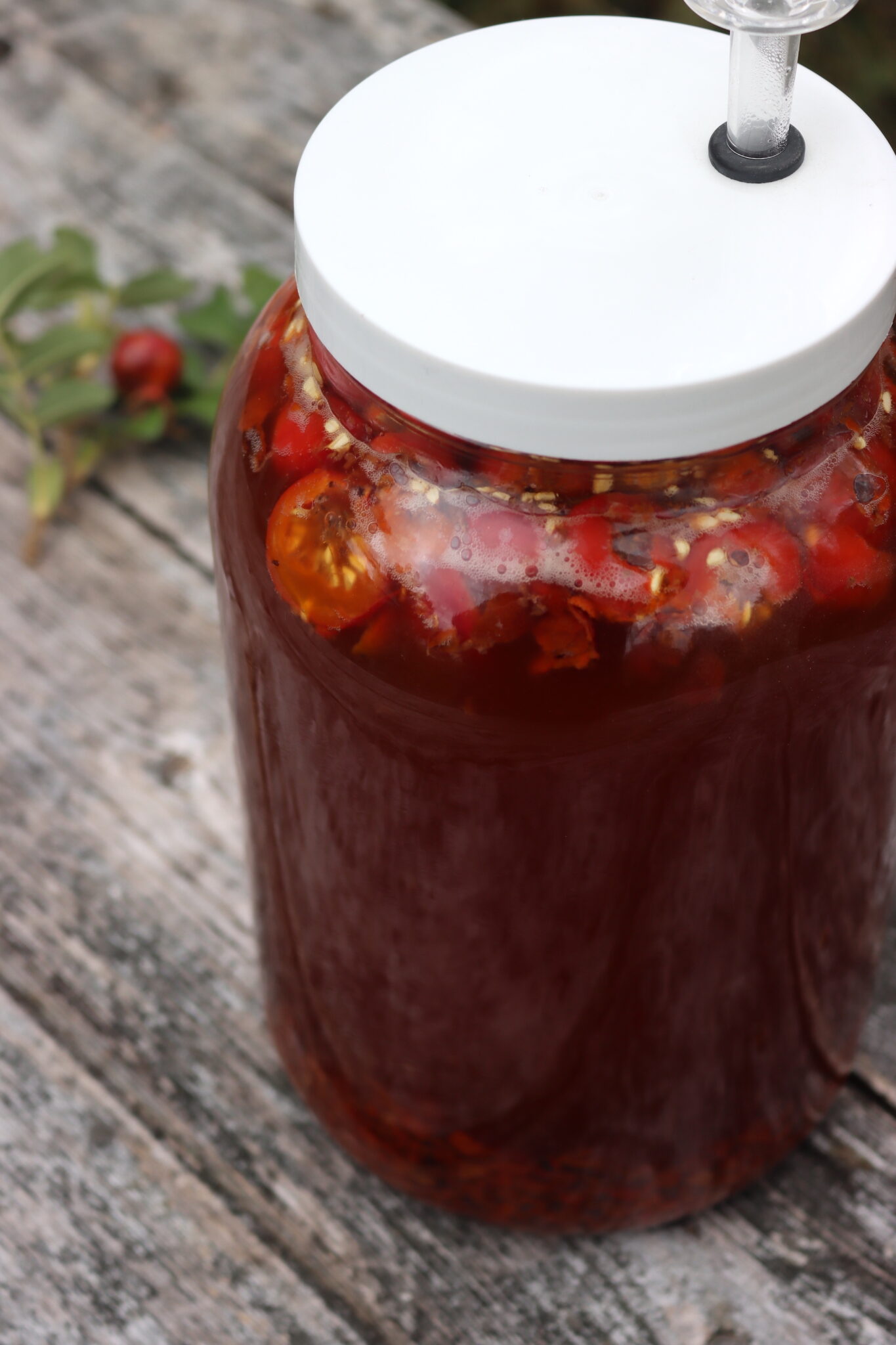
When I make fruit wines with the fruit right in the primary, I much prefer a wide-mouth vessel to the traditional narrow-neck carboy, since a narrow neck clogs easily with fruit pulp. A mesh straining or brew bag is optional but makes it far easier to lift the chopped hips out cleanly when it’s time to rack. Once the fruit comes out, everything moves to the narrow-neck carboy so there’s as little air contact as possible during the long secondary.
How to Make Rosehip Wine
The process follows the same basic method as any small-batch fruit wine. If you’re new to this, it’s worth reading through my beginner’s guide to making homemade wine first, and if you’re going the honey route, my guide on how to make mead covers the small differences that come with fermenting honey.
Preparing the Rosehips
Wash the rosehips well to rinse off any dust or lingering insects, then trim off the stems and blossom ends. Coarsely chop the hips to break them open and expose the flesh, which helps the flavor and color extract during fermentation. If you’d like, pack the chopped hips into a mesh straining bag and tie it closed, which makes cleanup much simpler later. There’s no need to remove the seeds or the fine hairs inside the way you would for jam or syrup, because you’ll be racking the finished wine off the solids and leaving all of that behind.
Mixing the Must
Place the chopped rosehips (loose or in the bag) into your wide-mouth vessel and add the sugar right on top. Pour boiling water over the fruit and sugar, then stir until the sugar fully dissolves. Let the must cool to room temperature before going any further, since hot liquid will kill your yeast.
Pitching the Yeast
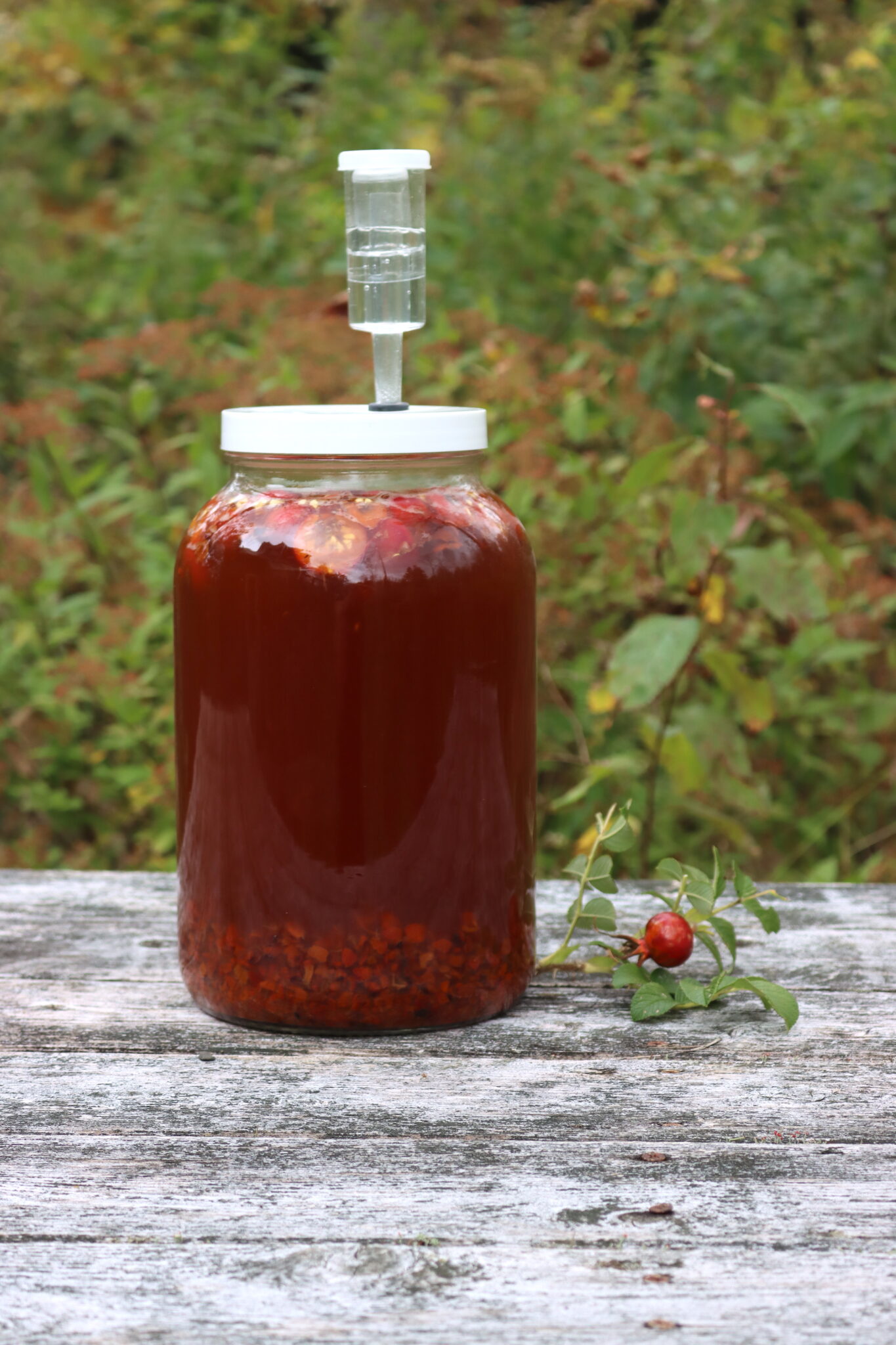
Once the must has cooled, stir in the acid blend, pectic enzyme, and yeast nutrient. Add the wine yeast last. If you’re using dry yeast, rehydrate it in a little warm water for about 10 minutes so it can bloom before you add it. Top up the vessel with cool water, leaving 2 to 3 inches of headspace at the top, then seal it with an airlock. The one-way airlock lets carbon dioxide escape while keeping contaminants out.
Primary Fermentation
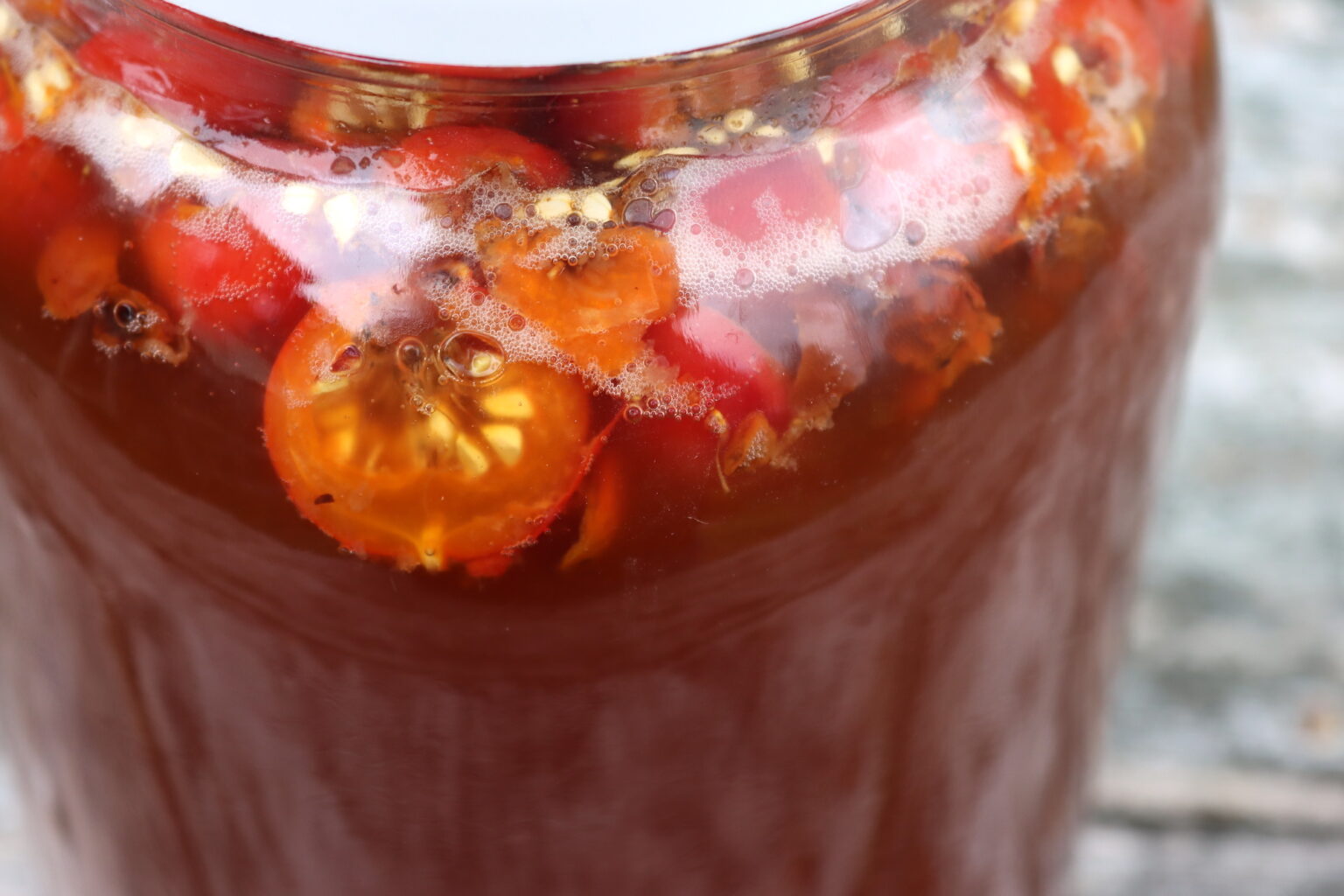
Within a day or so you should see the primary fermentation bubbling away vigorously. Let the wine ferment in primary for 8 to 10 days. If your fruit is loose rather than bagged, give it a gentle stir once a day to keep the cap of floating fruit wet. Toward the end of this window the bubbling will slow noticeably, which tells you it’s time to move on to secondary.
Racking to Secondary
Lift out the mesh bag and give it a good squeeze to extract the last of the juice, or if your fruit was loose, siphon carefully off the top. Rack the wine into a clean narrow-neck carboy, leaving the sediment behind, and top up with cool water to bring the level up to the neck so you expose as little wine as possible to air. Seal with an airlock and move it somewhere cool and dark. Let it ferment in secondary for about 6 weeks, then rack again into another clean vessel to leave behind the sediment that’s built up, topping up and refitting the airlock each time. Plan on another 3 months or so, racking once more if a lot of sediment collects, until the wine begins to clear. Mead made with honey ferments more slowly and often needs 2 to 6 months in secondary, since honey is harder for the yeast to work through than plain sugar.
Bottling and Backsweetening
Once the wine has cleared, taste it before you bottle. It will still be rough and young, but it should give you a sense of the final flavor. Rosehip wine ferments bone dry, and if you’d like yours a little sweeter, you can backsweeten it now. The one thing to understand is the order of operations, because you have to stop the yeast first and only then add sugar. If you sweeten before stabilizing, the yeast will simply ferment the new sugar too, and if that happens after the wine is in sealed bottles, the building pressure can pop corks or burst the glass.
So backsweetening comes down to three simple steps. First, stabilize the wine: rack it into a clean vessel and stir in 1 crushed Campden tablet plus 1/2 teaspoon of potassium sorbate per gallon, then wait 24 hours for them to take full effect. Together these keep the yeast from fermenting anything you add. Second, sweeten to taste: make a simple syrup from equal parts sugar and water, let it cool, and stir it in a little at a time, roughly 1/2 cup per gallon, tasting as you go until it’s where you like it. Third, let it rest: because the yeast is now stabilized, the wine will not start fermenting again, so just leave it a week or two and keep an eye on the airlock. As long as there’s no fresh bubbling, it’s safe to bottle.
Siphon the finished wine into sanitized bottles and cork or cap them. Rosehip wine truly rewards patience, so let it bottle age for 18 to 24 months in a cool, dark place before you open the first bottle. It’s one of those wines that goes from sharp and unremarkable to soft and genuinely lovely with time.
Tips for Making Rosehip Wine
- Pick after a frost. Rosehips gathered after the first hard frost are softer, a little sweeter, and easier to chop, which makes for a friendlier ferment. Always choose bright red, fully ripe hips away from roadsides and sprayed gardens.
- Dried hips work too. If fresh hips are out of season, dried rosehips make excellent wine. Crush them and soak overnight in some of the recipe water to rehydrate before you start, and use about half a pound of dried hips per gallon (see the recipe notes for details).
- Skip the tannin, keep the acid. Rosehips bring their own tannin, so there’s no need to add any, but they still benefit from a measured dose of acid blend for a consistent starting pH and a bright, balanced flavor.
- Give it time in the bottle. This is not a wine to rush. Aging is where rosehip wine really comes into its own, and 18 to 24 months of bottle age makes an enormous difference. Try a bottle of hawthorn wine or aronia wine while you wait, since both are foraged fall wines that age on a similar timeline.
- Make the mead version. Swap the sugar for honey to turn this into rosehip mead, which finishes rounder and more complex. It’s one of the ways I most like to use hips, and you’ll find dozens more ideas in my collection of mead recipes.
Frequently Asked Questions
Yes, dried rosehips make excellent wine when fresh ones are out of season. Crush the dried hips and soak them overnight in some of the recipe water to rehydrate before you begin. Use about half a pound of dried rosehips in place of the 2 to 3 1/2 pounds of fresh hips for a one-gallon batch, since drying concentrates them. Everything else in the process stays exactly the same.
Backsweeten in three simple steps, and always stabilize before you add sugar. First, rack the wine into a clean vessel and stir in 1 crushed Campden tablet plus 1/2 teaspoon potassium sorbate per gallon, then wait 24 hours. This stops the yeast so it cannot ferment the sugar you are about to add. Second, make a simple syrup of equal parts sugar and water, cool it, and stir it in about 1/2 cup at a time, tasting until the sweetness is right. Third, let the wine rest a week or two and watch the airlock. Since the yeast is stabilized the wine will not ferment again, so once there is no new bubbling it is safe to bottle. Skipping the stabilizing step is what causes bottles to burst later.
Not for wine. The fine hairs and seeds inside rosehips are an irritant you would strain out when making jam or syrup, but for wine you rack the finished liquid off all the solids and leave the seeds, hairs, and pulp behind in the sediment. Just wash the hips, trim the stems and ends, and chop them coarsely.
The only difference is the fermentable sugar. Rosehip wine is made with granulated sugar and ferments into a light, crisp, dry country wine. Rosehip mead uses honey in place of the sugar, which gives it more body and a rounder, more complex finish. Honey ferments more slowly, so mead usually needs a bit longer in secondary, but the fruit prep and overall method are identical.
Rosehip wine needs patience. It tastes sharp and rough at bottling and really benefits from long bottle aging, ideally 18 to 24 months in a cool, dark place. Over that time it mellows into a smooth, dry, pleasantly tart wine. It is tempting to open a bottle early, but the wait makes a dramatic difference in the final flavor.
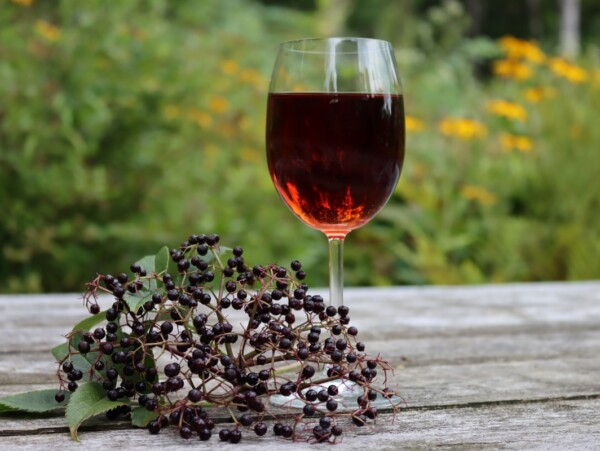
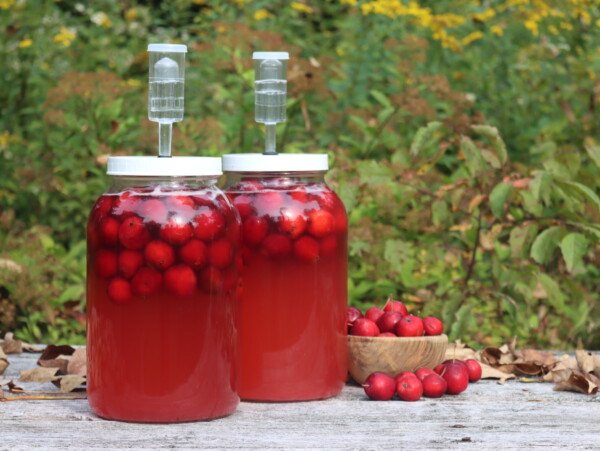
Foraged Fall Wines
If you tried this Rosehip Wine recipe, or any other recipe on Practical Self Reliance, leave a ⭐ star rating and let me know what you think in the 📝 comments below!
And make sure you stay in touch with me by following on social media!
Rosehip Wine
Equipment
Ingredients
- 2 to 3-½ lbs fresh rosehips, or 1/2 to 1 lb dried
- 2 1/2 lbs cane sugar, or honey for mead
- 1 tsp yeast nutrient
- 1 tsp acid blend
- 1/2 tsp Pectic Enzyme
- wine yeast, Lalvin 71B, K1-V1116, or EC-1118; see notes
- Optional ~ Campden Tablet and Potassium Sorbate for stabilizing, only needed for backsweetening
Instructions
- Wash the rosehips, trim off the stems and blossom ends, and chop coarsely. If you like, pack them into a mesh straining bag and tie it closed. There is no need to remove seeds or hairs for wine.
- Place the rosehips in a wide-mouth vessel and add the sugar on top. Pour boiling water over them and stir until the sugar dissolves. Cool to room temperature.
- Once cool, stir in the acid blend, pectic enzyme, and yeast nutrient. Add the wine yeast last, rehydrating dry yeast first if needed.
- Top up with cool water, leaving 2 to 3 inches of headspace, and seal with an airlock. Ferment in primary for 8 to 10 days, stirring loose fruit daily.
- Lift out the bag and squeeze, or siphon off the top. Rack into a clean narrow-neck carboy, top up with water, and seal with an airlock.
- Ferment in secondary about 6 weeks, then rack again into a clean vessel. Continue about 3 more months, racking as sediment collects, until the wine clears. Mead needs 2 to 6 months.
- Taste before bottling. To backsweeten, rack into a clean vessel, stir in a crushed Campden tablet and potassium sorbate, and wait 24 hours. Then stir in cooled simple syrup a little at a time to taste. Rest 1 to 2 weeks and confirm no new airlock activity.
- Siphon into sanitized bottles and cork or cap. Bottle age 18 to 24 months in a cool, dark place before drinking.
Notes
Nutrition
Nutrition information is automatically calculated, so should only be used as an approximation.
More Ways to Use Rose Hips
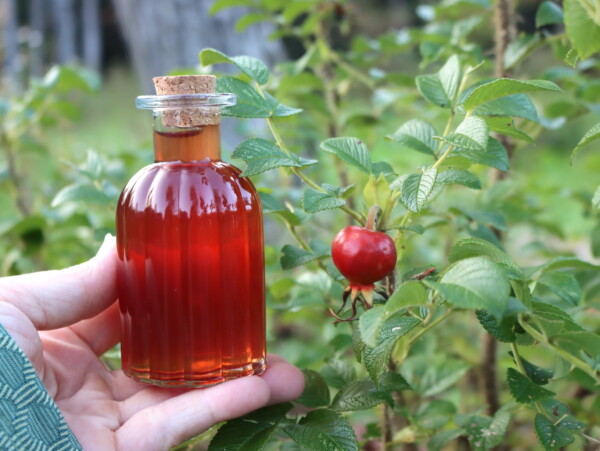
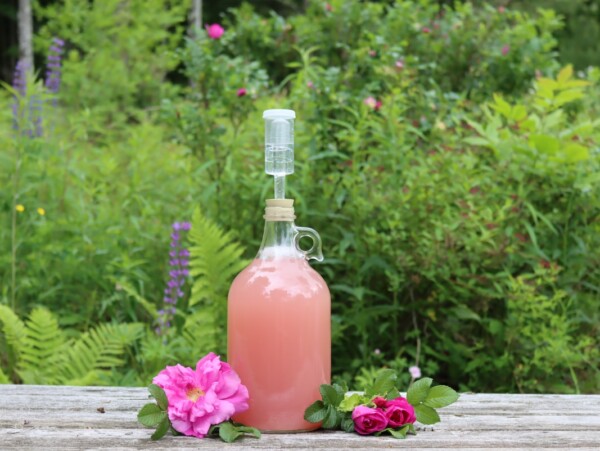
Rosehips are worth gathering by the basketful, and wine is just the beginning. Once you have a batch going, dig into my full collection of 50+ country winemaking recipes for just about every fruit, flower, and vegetable you can imagine.
Find the perfect recipe
Searching for something else? Enter keywords to find the perfect recipe!










Hi – I appreciate your suggestions for making Rose Hip Metheglin. I was looking for tips on using dried hips and other ingredients. HOWEVER, those THREE paragraphs on back sweetening leave much to be corrected – they seem to contradict each other – need revision to make it simpler when considering back sweetening. Yours, Bob
Thanks Bob. I’ve gone in and updated the post so the backsweetening information is a bit more clear. Hope this helps!
Absolutely delicious!