
Affiliate disclosure: This post may contain affiliate links. Please see our Privacy Policy.
Rose hips (Rosa sp.) are the bright red, fleshy fruits of rose bushes, both wild and cultivated. They’re rich in vitamin C, easy to identify, and one of the most rewarding wild fruits to forage in the fall and into winter. Learn how to identify rose hips, distinguish them from look-alikes, and use them in tea, syrup, jam, and traditional herbal preparations.
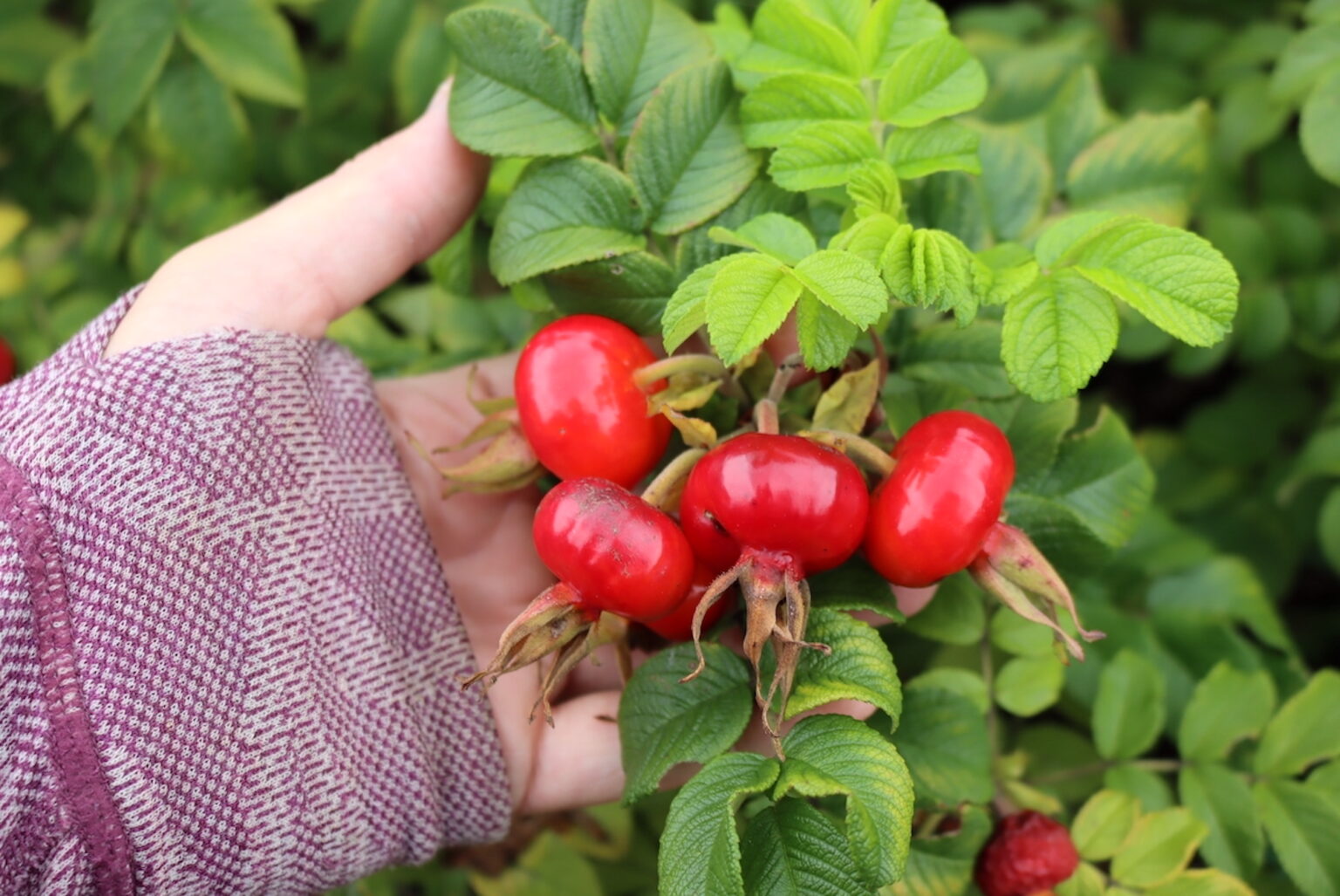
Table of Contents
My daughter absolutely loves roses of all kinds, especially fragrant wild roses that we find on our hikes. She’ll “stop and smell the roses” at any opportunity, but before she strikes out again, she always says, “Mama, we have to come back here in the Fall for rose fruits!”
Rose hips, or “rose fruits” as she calls them, are an extra special treat. As with any wild fruit, some taste better than others, and we have all our favorite spots for the sweetest, most flavorful rose hips marked out in our mental map, and each fall we do a tour harvesting for all manner of tasty treats (and remedies).
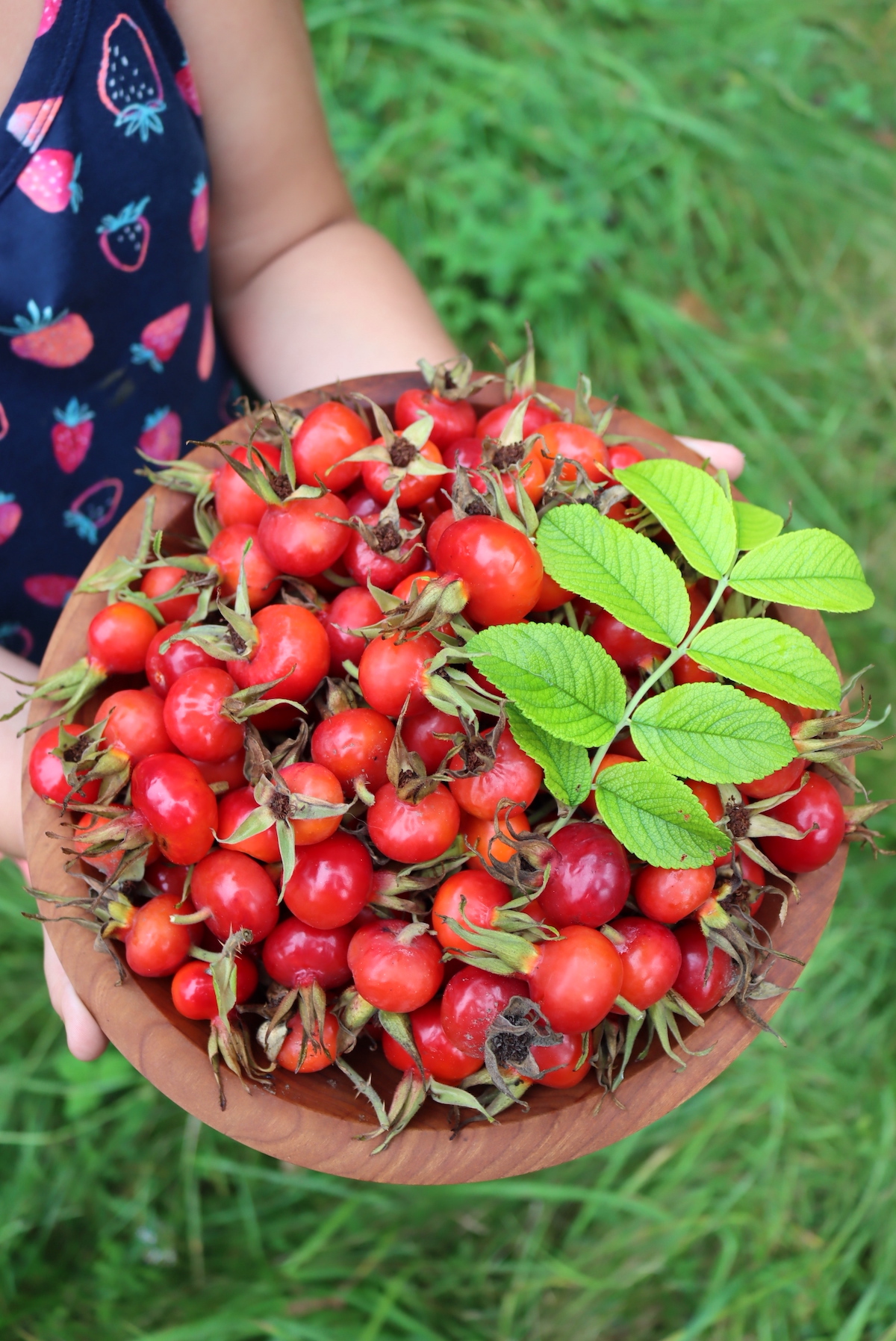
The best-tasting rose hips are a bit like an apple, sweet and crunchy, with a hit of acidity and an almost tropical fruit flavor. Others are a bit more tannic and abrasive, but you never quite know until you try them.
I think that’s part of the appeal for my little one. You never quite know what you’re going to get, and after testing out wild rose hips all over our region, we’ve yet to find one she didn’t like. I know they have a reputation for being tart, and maybe we’re just lucky, but even as a toddler, she’d gently use her teeth to scrape back sweet rose hip flesh off of any wild rose hip she found, always exclaiming, “I love rose fruits!”

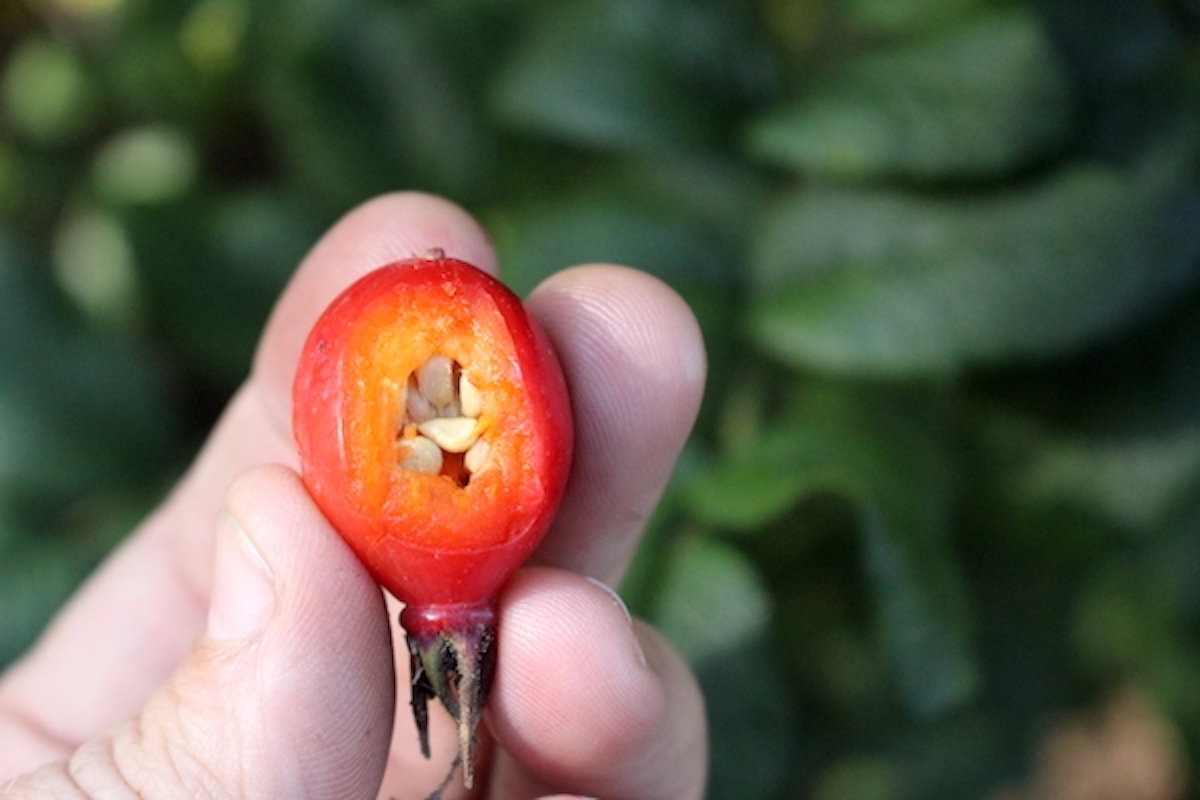
The fruits themselves are just a thin layer of fruit flesh over a pocket of seeds, and the seeds aren’t particularly tasty. If you do test your rose hips wild in the field, be sure to do as I’ve trained my littles to do, gently scrape back the flesh all around the seeds, then toss the seeds back where you found them (or in another suitable spot) to grow again.
Rose hips pair naturally with the other small fruits ripening on our hedgerow tour each fall: hawthorn berries, aronia, chokecherries, and the last of the season’s serviceberries. Together they make for a productive afternoon and stocked pantry shelves heading into winter.
Notes from My Homestead

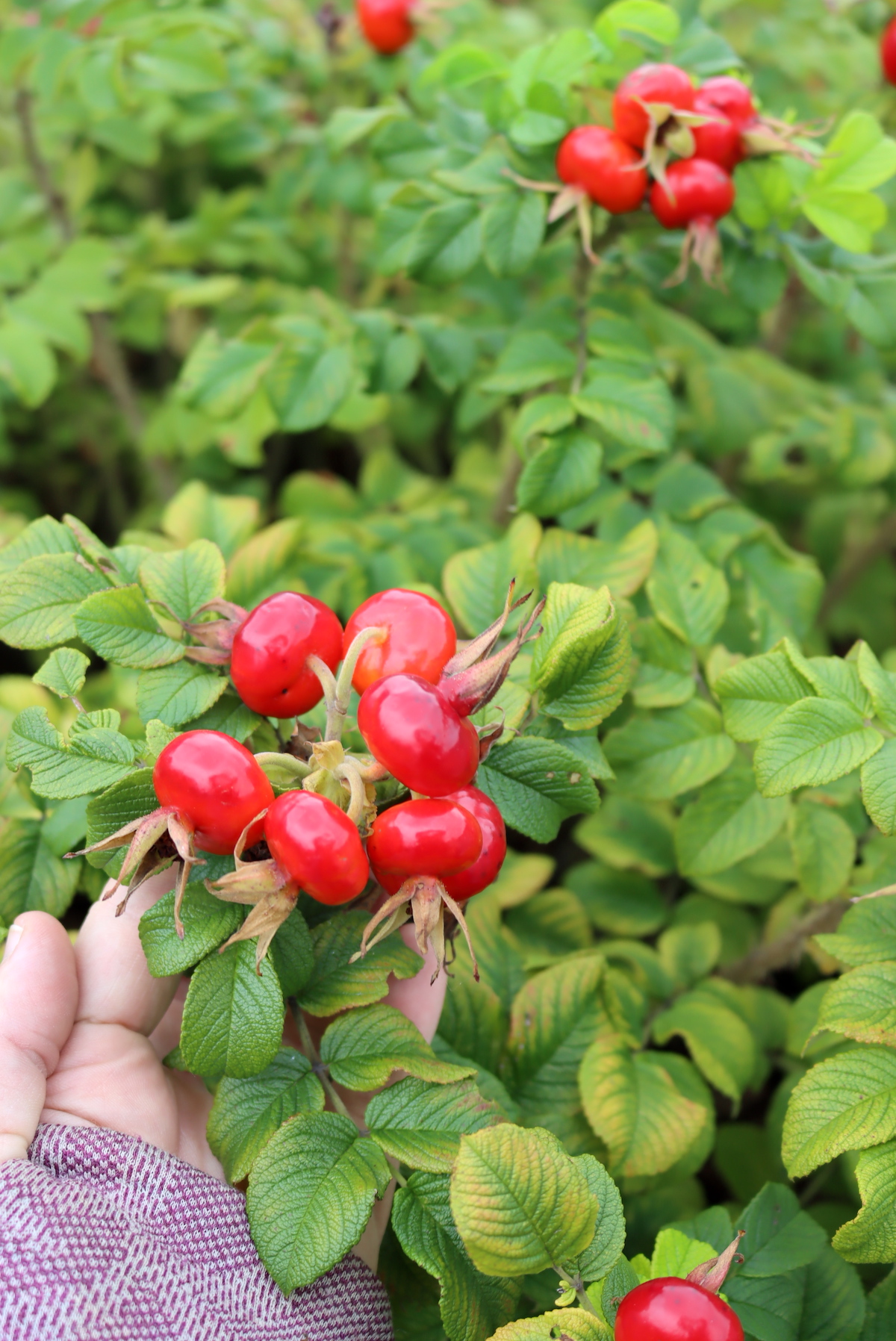
Our Vermont homestead has a few different rose hip patches scattered around the property, and each one produces a different style of fruit. The wild rose along our south-facing pasture line gives small, intensely flavored hips that are perfect for tea and tincture. A volunteer rugosa rose at the corner of the kitchen garden produces giant tomato-sized hips that I split and seed for jam every September. There’s also a beautiful old climbing rose by the barn that the previous owners must have planted decades ago, with smaller red hips that hang on through January and make a beautiful winter forage.
Most of the rose hip harvest goes into rose hip syrup for the kids’ winter cold-and-flu season; a tablespoon stirred into hot water with a squeeze of lemon is one of those simple homestead remedies that actually pulls its weight. Whatever’s left gets dried for tea or saved for rosehip wine and mead. The seeds are the hardest part of working with rose hips at home, and after years of trial and error I’ve settled on a system: dry the whole hips first, then crack them open over a sieve, which is much faster than fresh-seeding by hand.
What Are Rose Hips?
Rose hips are the fruits of rose bushes, wild or cultivated. Botanically, they’re called accessory fruits because the fleshy outer part is formed from the swollen base of the flower (the hypanthium) rather than from the ovary itself. Inside each rose hip is a cluster of small, dry, hairy true fruits called achenes, which most people think of as the “seeds” of the rose.
Rose is a woody, perennial flowering shrub in the Rosaceae or Rose family. There are over three hundred species of Rose. Depending on the species, they may be vining or more shrub-like and vary widely in size.
Most rose species are native to Asia, but small numbers are native to North America, Europe, and northwestern Africa. Today roses are widely grown as ornamental plants outside of their native range. Some of these species have escaped cultivation and become invasive. A good example is Multiflora Rose (Rosa multiflora), which is native to Asia but was introduced to North America, where it’s now considered invasive.
Rose species readily hybridize, and there are thousands of garden cultivars on the market. Some of these cultivars have been developed to grow large rose hips, the accessory fruit the plant produces.
Common Rose Species for Foraging
The exact rose species you’ll find depends on where you live, but a handful of species show up most often in foraging conversations:
- Rugosa Rose (Rosa rugosa) — also called Wrinkled Rose or Beach Rose; widely naturalized along coasts and roadsides; produces some of the largest, most flavorful rose hips (up to 1 inch across).
- Dog Rose (Rosa canina) — the European species most often associated with traditional rose hip syrup recipes; oblong hips with very high vitamin C content.
- Multiflora Rose (Rosa multiflora) — invasive in North America; produces small but abundant red hips in late fall; flavor is good though the hips are smaller than other species.
- Virginia Rose (Rosa virginiana) — native to eastern North America; shrub-like, with bright red round hips.
- Prairie Rose (Rosa arkansana) — native to the central US; small native rose with edible hips.
- Nootka Rose (Rosa nutkana) — native to western North America; large bright red hips, important to indigenous foraging traditions.
- Burnet Rose (Rosa spinosissima, also R. pimpinellifolia) — small Eurasian rose with distinctive dark purple to black hips.
- Sweet Briar (Rosa rubiginosa) — native to Europe with apple-scented foliage and bright red hips.
All rose species produce edible rose hips, and you can use them interchangeably in any rose hip recipe. The rugosa and dog rose species tend to be most prized for their size and flavor, but a productive multiflora rose stand can yield buckets of small but tasty hips in just a few visits.
Are Rose Hips Edible?
All rose hips are edible. Roses are usually grown as ornamentals but are wonderful edible and medicinal plants too. You can safely consume young rose leaves, rose buds, rose petals, and rose hips, and you can use them raw or cooked.
Roses are high in nutrients and have various medicinal properties making them suitable for internal and external preparations, including teas, tinctures, glycerites, vinegars, syrups, lotions, and baths.
The rose hips of two species, the Dog Rose (Rosa canina) and the Rugose or Wrinkled Rose (Rosa rugosa), are valued for their exceptionally high vitamin C content. Both species are commonly grown commercially for rose hip products in Europe and North America.
One important note about preparation: while the fleshy outer fruit is delicious, the small hairs surrounding the seeds inside can be irritating to the digestive tract and the throat. They have a long folk reputation as natural “itching powder” and shouldn’t be eaten in any quantity. Most rose hip recipes either seed the hips manually or strain the cooked fruit through a fine mesh sieve to remove the hairs and seeds before final use.
As the adage goes, every rose has its thorn. Be careful when harvesting roses. Their thorns can cause irritations and scratches, especially in those with sensitive skin.
Always ensure the roses you’re harvesting are not contaminated with pesticides, fungicides, or other chemicals. Gardeners often grow roses strictly for ornamental purposes and may treat them with products and amendments that aren’t food-safe. On the same note, florists often treat roses with chemicals to help them last longer. Don’t consume roses that were purchased from a florist.
Rose hips and products made from them contain high levels of vitamin C. Due to this, people with sickle cell anemia, recurring kidney stones, or hemochromatosis should avoid consuming excessive amounts.
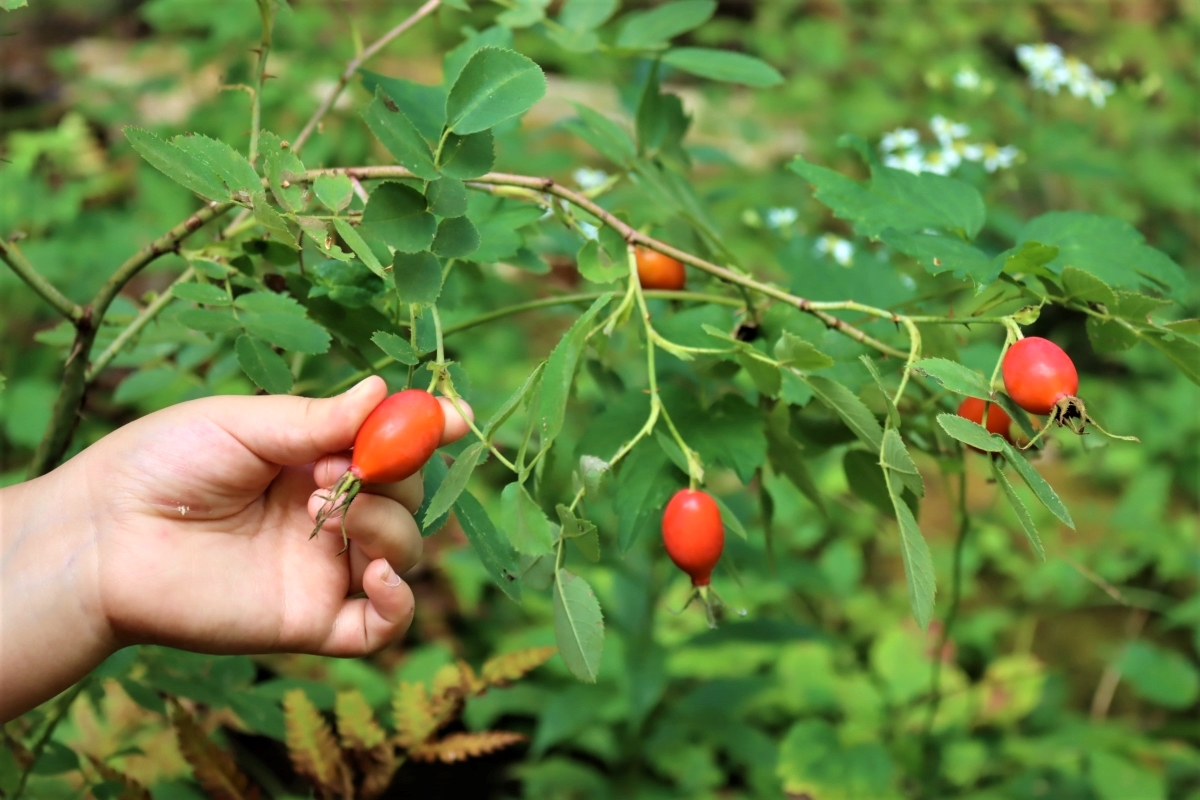
Rose Hips Medicinal Benefits
Roses are nutritional powerhouses. Rose hips are well known for their high levels of vitamin C, but they’re also a great source of antioxidants and contain other essential vitamins and minerals. The petals also contain vitamins C, A, D, E, and B-complex and minerals such as zinc, iron, and selenium.
Herbalists attribute roses with antiviral, antibacterial, anti-inflammatory, antidepressant, and mood-enhancing properties. Herbalists may use roses in various internal remedies for treating sore throats, colds, flu, heart disease, UTIs, ulcers, headaches, diarrhea, constipation, ulcers, and hypertension.
Modern science has supported herbalists’ use of the plant for treating heart disease. Researchers found that patients who drank rose hip tea daily for six weeks saw numerous heart health benefits, including significant reductions in blood pressure, total cholesterol, and LDL (bad cholesterol).
Modern studies have also explored the use of rose hips in treating osteoarthritis pain. A 2019 review of 24 studies indicated that rose hips may help reduce oxidative stress and inflammation in the joints, helping to relieve the symptoms of osteoarthritis.
In some cultures, herbal medicine practitioners also use rose petals and rose hips in tea for female disorders like menstrual cramps and heavy, painful periods.
Herbalists may also use roses externally. They may have anti-aging and soothing properties, so herbalists employ them to treat sunburn, acne, eczema, and bug bites, as well as in daily skincare and anti-aging treatments.
Taking rose hips internally may also help improve skin health. One 8-week study found that participants taking rose hip powder saw decreased wrinkles and increased skin moisture and elasticity.
Native Americans across North America also have extensive documented traditional uses for wild rose hips. The Iroquois used rose hip preparations for digestive issues and as a winter source of vitamin C; the Cherokee used the bark and roots for diarrhea and dysentery; and several western tribes including the Blackfoot and Okanagan used rose hips in stews and pemmican as a winter staple.
Where to Find Roses
There are over 300 species of rose, most of which are native to Asia. However, there are also a few species that are native to North America and Europe. The extensive range of species is found over an equally vast range of habitats, growing virtually anywhere they can get enough sunlight. Most rose species prefer well-drained, slightly acidic soil.
In North America, you may spot roses growing in various habitats, from seasides to woodlands.
The Rugosa or Wrinkled Rose (Rosa rugosa) grows in seaside thickets, sand dunes, and roadsides.
The Prairie Rose (Rosa arkansana) grows in prairies, roadsides, and ditches.
The invasive Multiflora Rose (Rosa multiflora) grows in fields, woods, and roadsides.
These are just a few examples.
Most cultivated roses need at least 6 hours of sunlight daily and nutrient-rich, moist, well-drained soil. You’ll find them in yards, parks, and occasionally open woodlands or old abandoned farmlands, where they sometimes mark the remains of old homes and gardens.
When to Find Roses
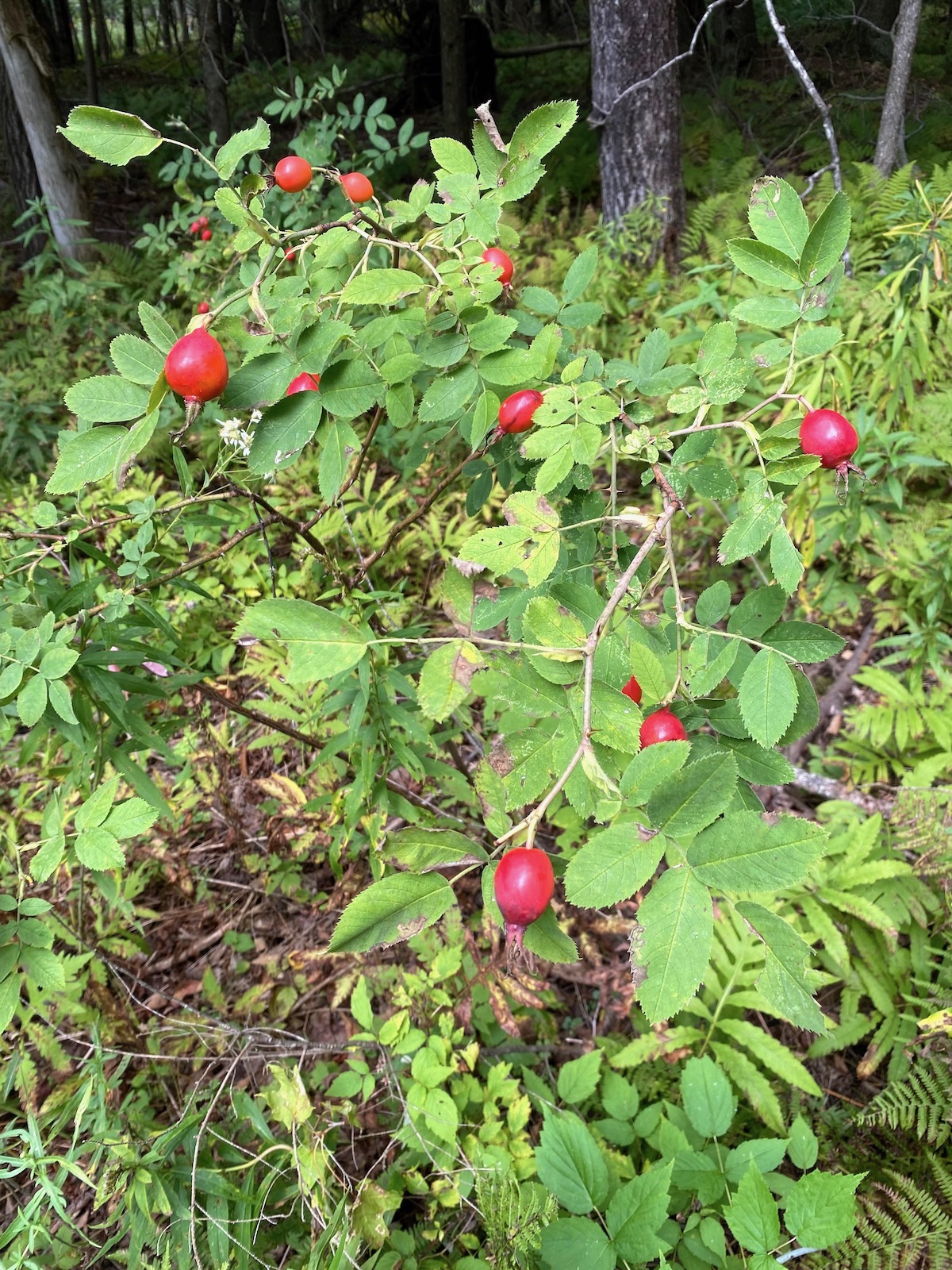
Roses are perennial but deciduous, meaning that they lose their leaves in the fall, often in October or November, depending on the climate. Sometimes, you’ll still find some rose hips on plants long after the leaves have dropped. This long-lasting feature makes them excellent winter food for birds and foragers alike.
Bloom periods vary greatly over the over 300 species and thousands of rose cultivars. Typically, roses bloom somewhere between late spring and early fall. Some may only bloom once and briefly, while others will bloom multiple times throughout the year. The petals should be harvested when the flowers have first opened, and they’re fresh and in good shape.
The blooms give way to fleshy, accessory fruits called rose hips. The rose hips usually start green and then ripen to orange or reddish.
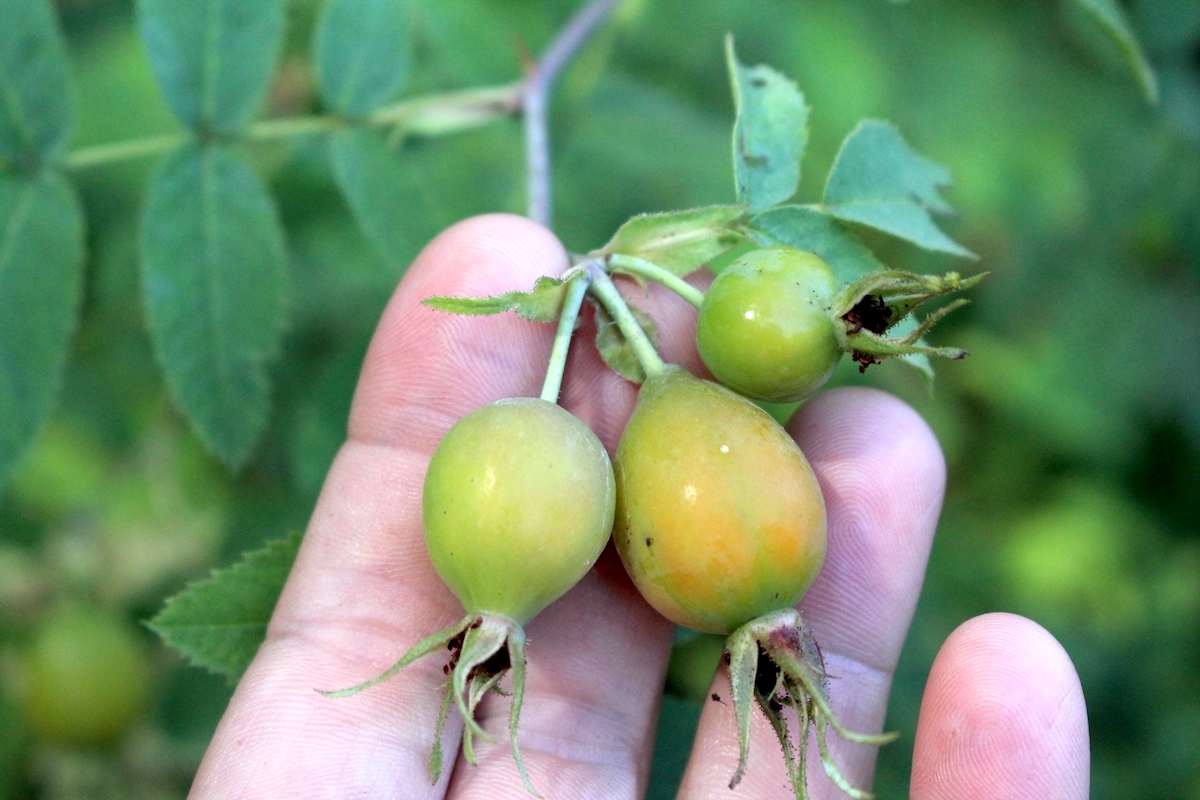
Many foragers and herbalists find the rose hips are best after a light frost, but they can be harvested anytime they’re bright red in color.
Here in Vermont, rose hips start ripening in late August, but we usually harvest them in September and early October.
A light frost or two will bring out their sweetness and drop the acidity a tiny bit. After too many frosts, they turn soft and aren’t quite as good, in my opinion. Still, they can be harvested all winter long, and I do sometimes harvest them for tea in mid-January.
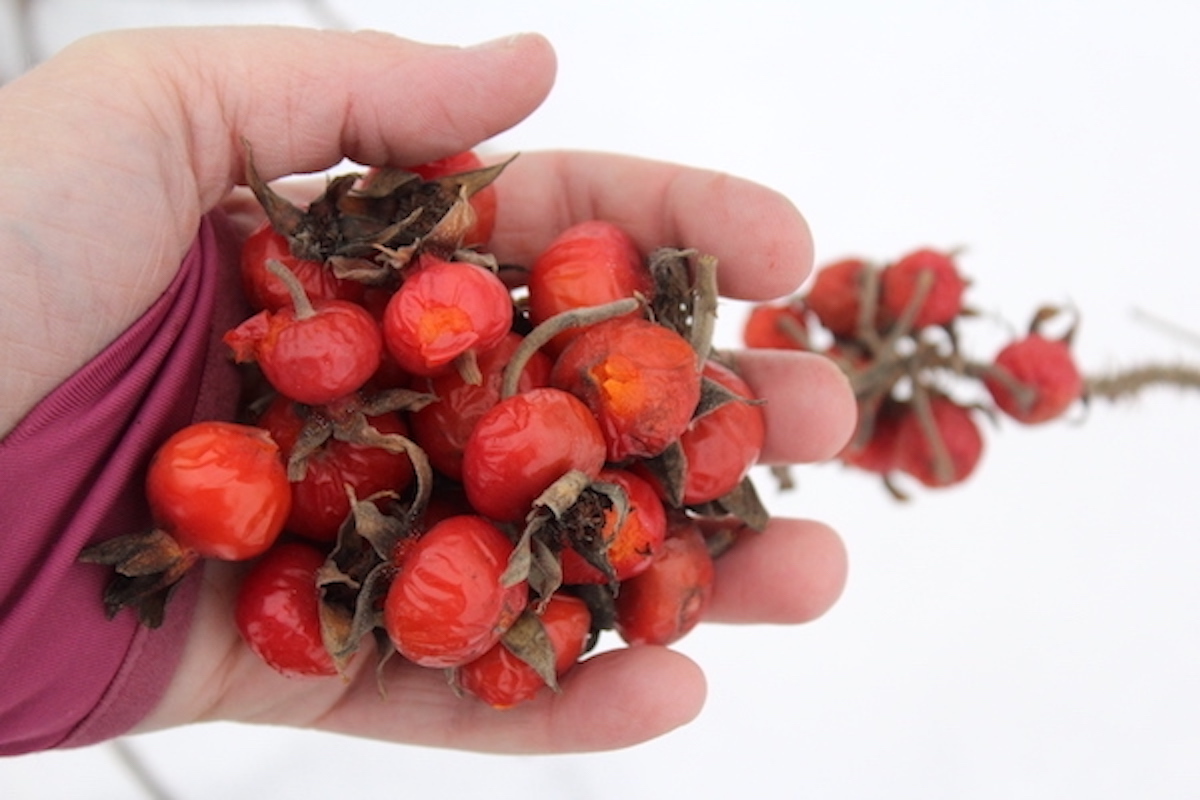
If you want to harvest rose hips en-masse for recipes or herbal preparations, then I’d suggest harvesting them earlier rather than later. Once frosted, they may taste a slight bit sweeter, but they also lose a bit of their acidic Vitamin C content.
They also won’t keep as well after they’ve been softened by a frost (unless they’re kept refrigerated or frozen, as they are in nature to preserve them in the winter). If harvested a bit earlier, they’re higher in vitamin C, and they’ll keep a few weeks on the counter top (as you’d keep an apple).
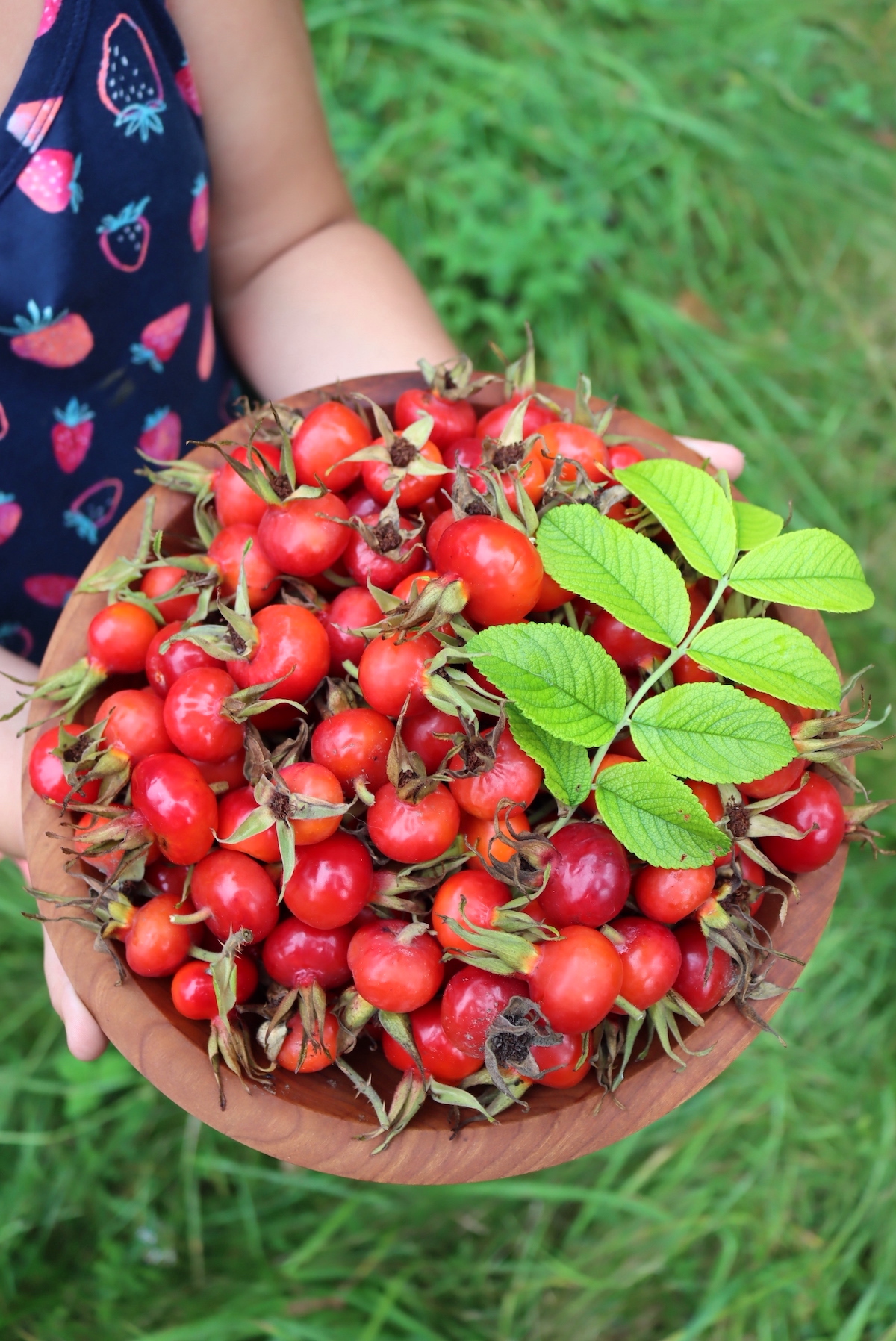
Then you can slowly work through your harvest, and turn it into jam, jelly, wine, or whatever your heart desires. Or simply dry them for wintertime teas. Rose hips are one of the easiest fruits to add to a winter foraging rotation, and they’re abundant enough to be a reliable cold-season vitamin C source.
How to Identify Roses
Roses range from tiny shrubs to large climbing or rambling vines up to 50 feet long. Generally, they’re known for their large, showy flowers ranging in color from whites and pinks to yellows and reds, but some wild roses, like the Multiflora Rose (Rosa multiflora), have small, white, less-showy flowers.
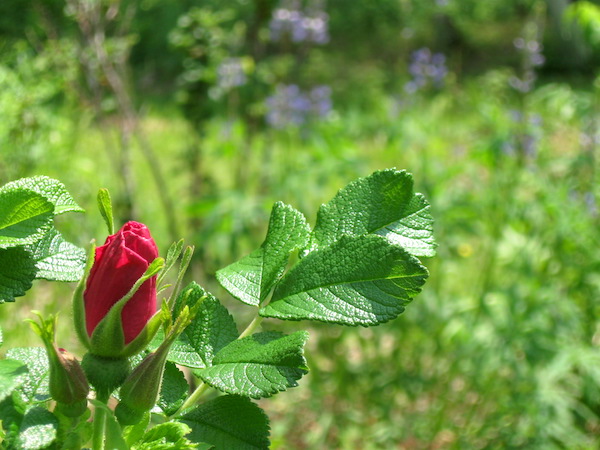
While some species may vary significantly in appearance, all roses have alternate green leaves, greenish stems, and thorns.
Rose Leaves
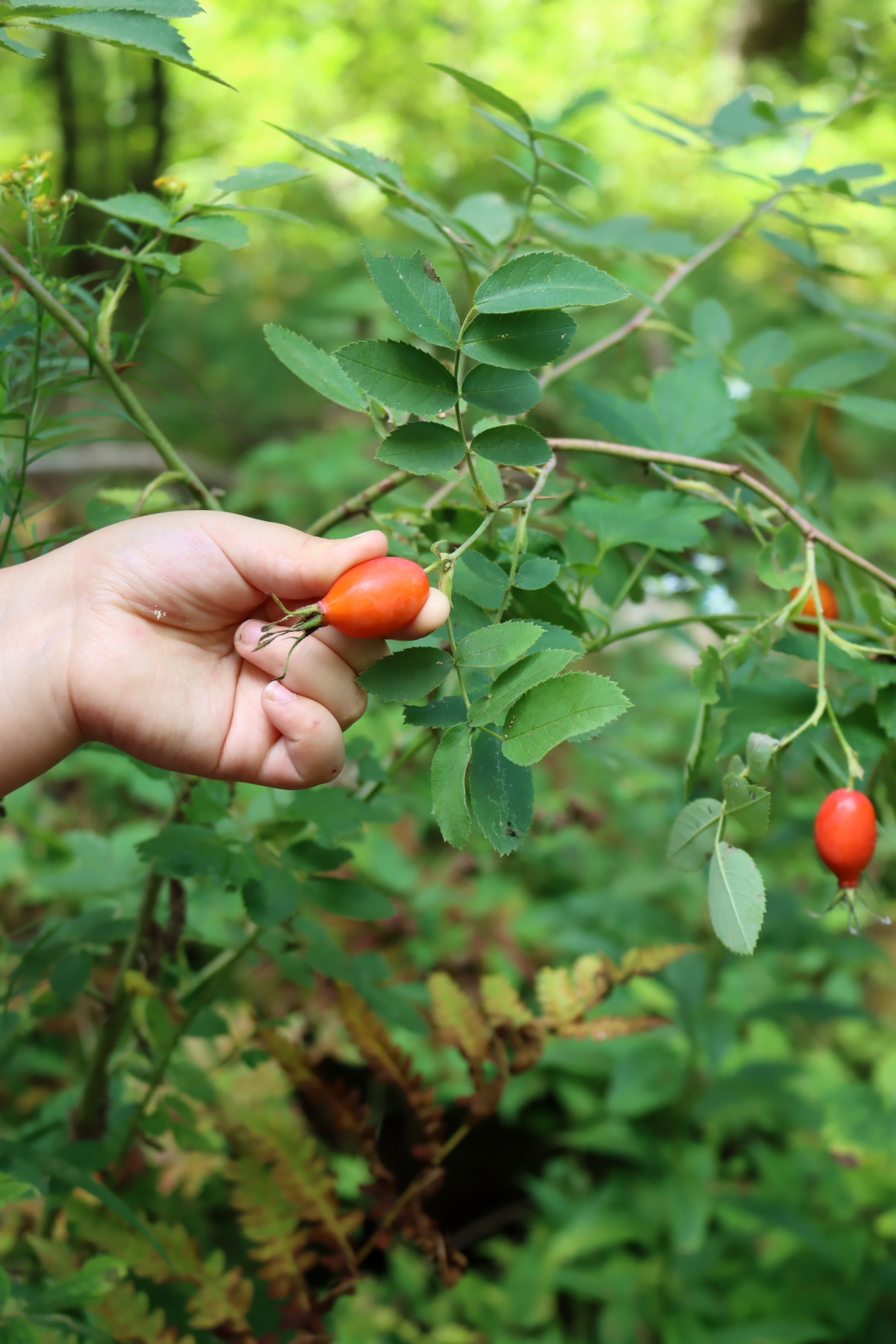
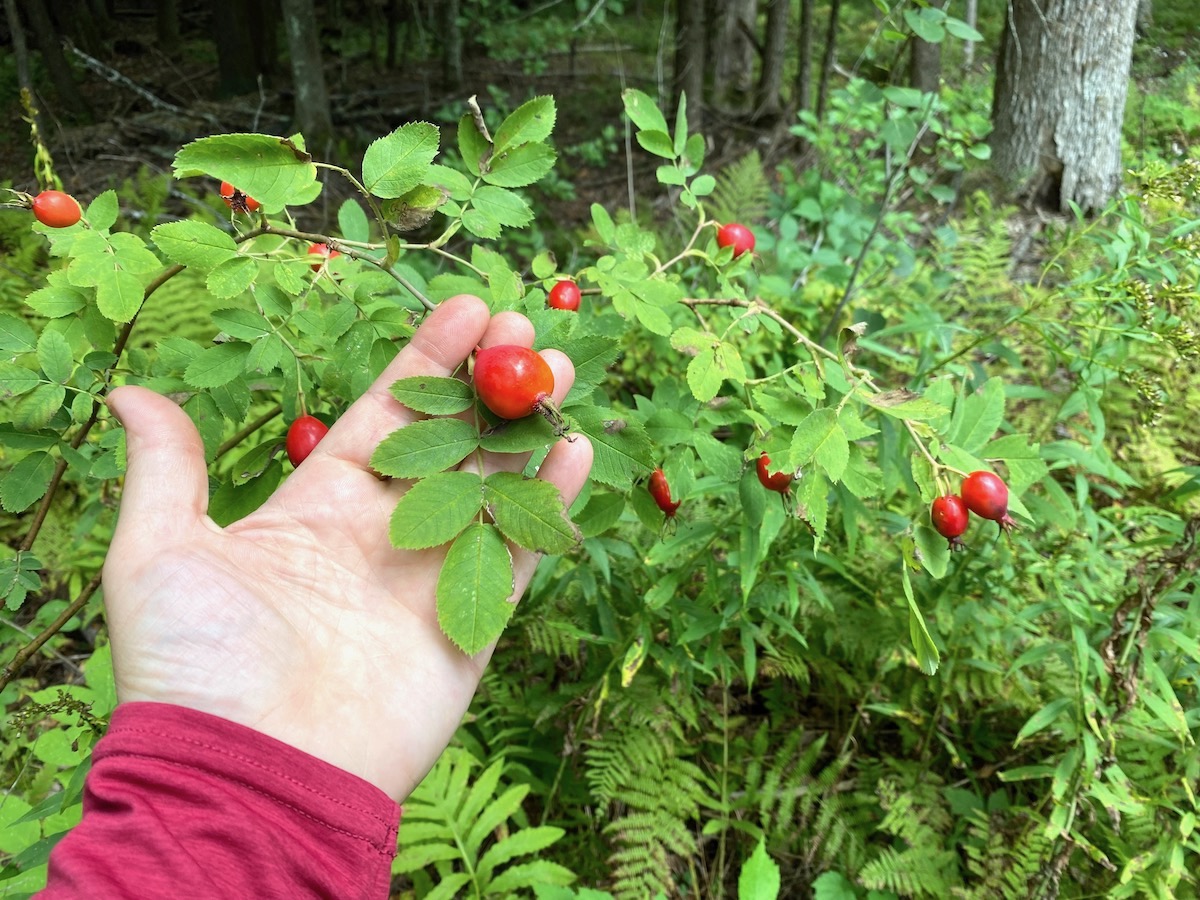
Roses have green, pinnately-compound, alternately arranged leaves. Depending on the species, they are usually between 2 and 5.9 inches long.
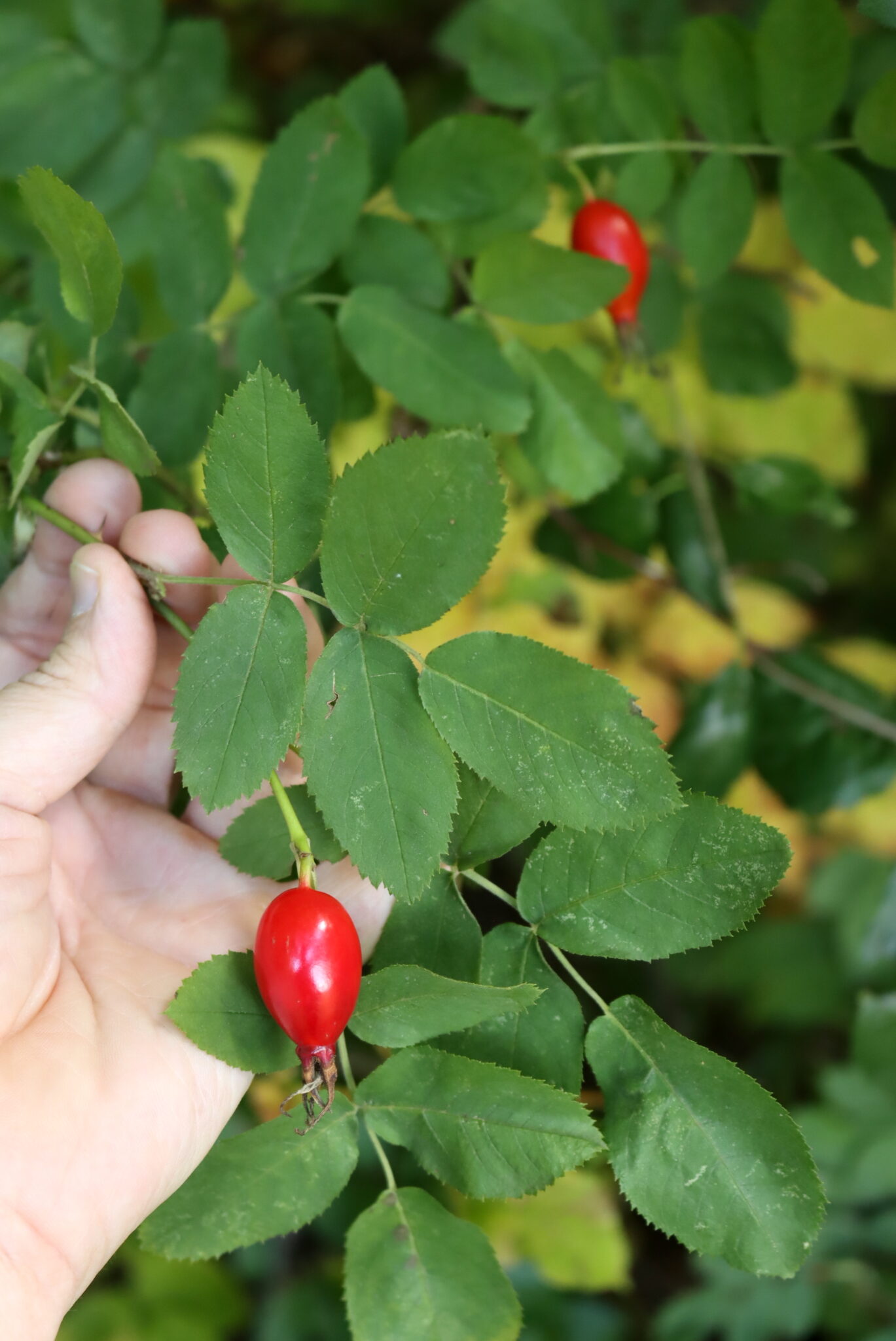
Each leaf is typically composed of 3 to 13 leaflets. Each leaflet is ovate, oblong, or elliptical and has serrated margins and a few sharp prickles on the underside of its stem. Rose leaves are themselves edible (the young, tender leaves can be brewed into a mild herbal tea), which is part of why “rosehip leaves” comes up so often in foraging searches.
Rose Stems and Thorns
Rose stems are relatively slender and woody. They’re usually green but may also be reddish or brownish. They may be shrubby, just one to six feet tall like the Virginia Rose (Rosa virginiana), or long and vining up to 50 feet long like some climbing cultivars available today.
The stems feature hooked or sickle-shaped thorns. The thorn shape varies by species: some species have small straight bristles (like rugosa rose, where the entire stem is densely covered in stiff thin spines), while others have widely spaced curved thorns (like dog rose). All roses have some form of thorn, and a thorn-free shrub with similar leaves and red fruits is almost certainly not a rose.
Rose Flowers
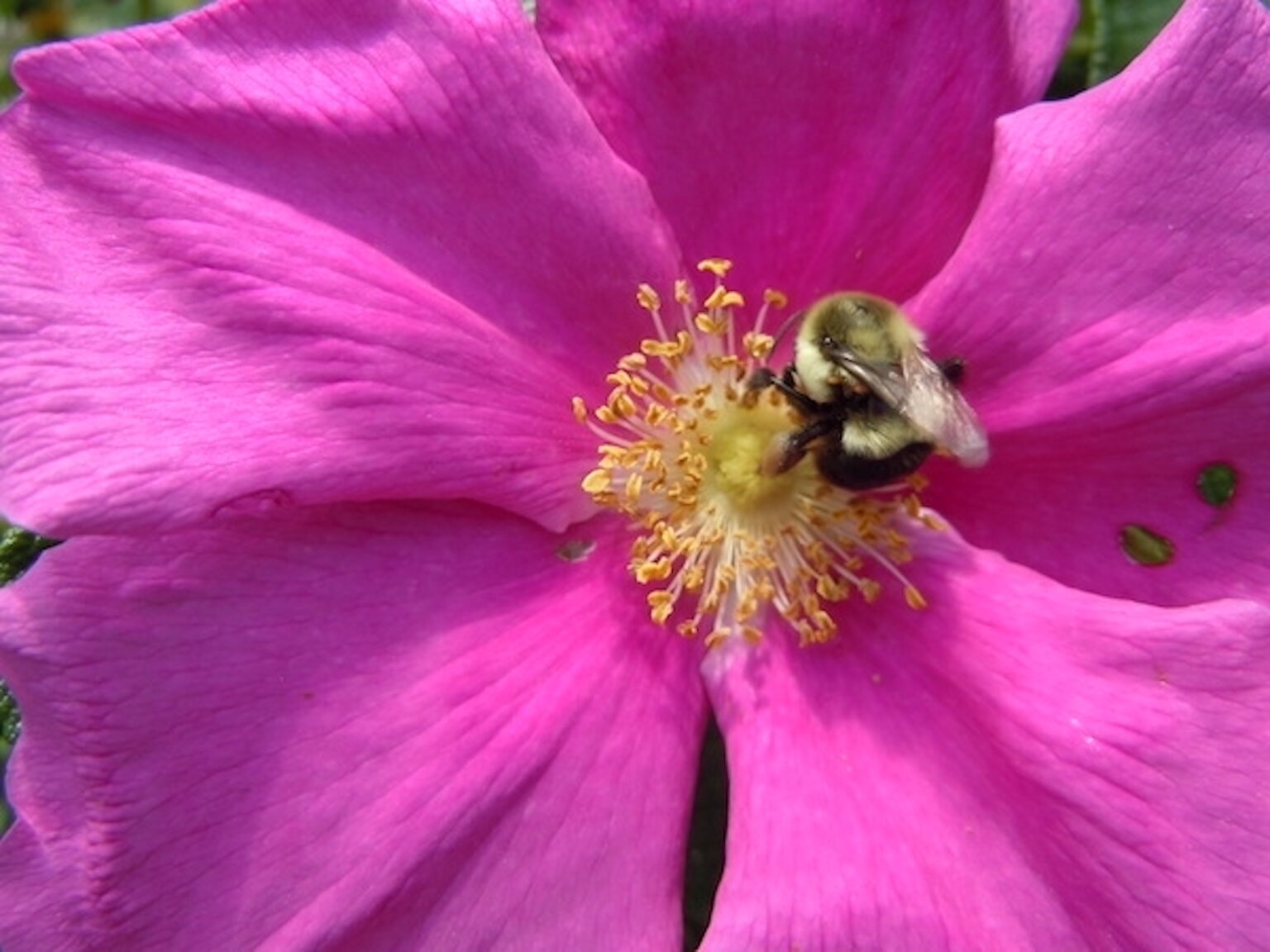
Rose flowers vary widely in size and color. They may be shades of white, yellow, orange, pink, or red. Some, like the flowers of the Multiflora Rose (Rosa multiflora), may be very small, ¾ to 1 ½ inches wide, while the largest recorded bloom was a whopping 33 inches in diameter, but that’s a highly fertilized cultivated blossom. Most wild roses will be 3 inches or less in diameter.
The majority of wild rose species have five-petaled flowers, but some, especially those spread from cultivated blossoms, can have many more petals. There are a couple of exceptions which have fewer petals. The Silk Rose (Rosa sericea) and a Chinese species called Rosa omeiensis have four petals. Each petal is divided into two lobes.
Beneath the petals, the flowers have five sepals (or, in the case of some Rosa omeiensis and Rosa sericea, four).
Rose Hips (Fruit)
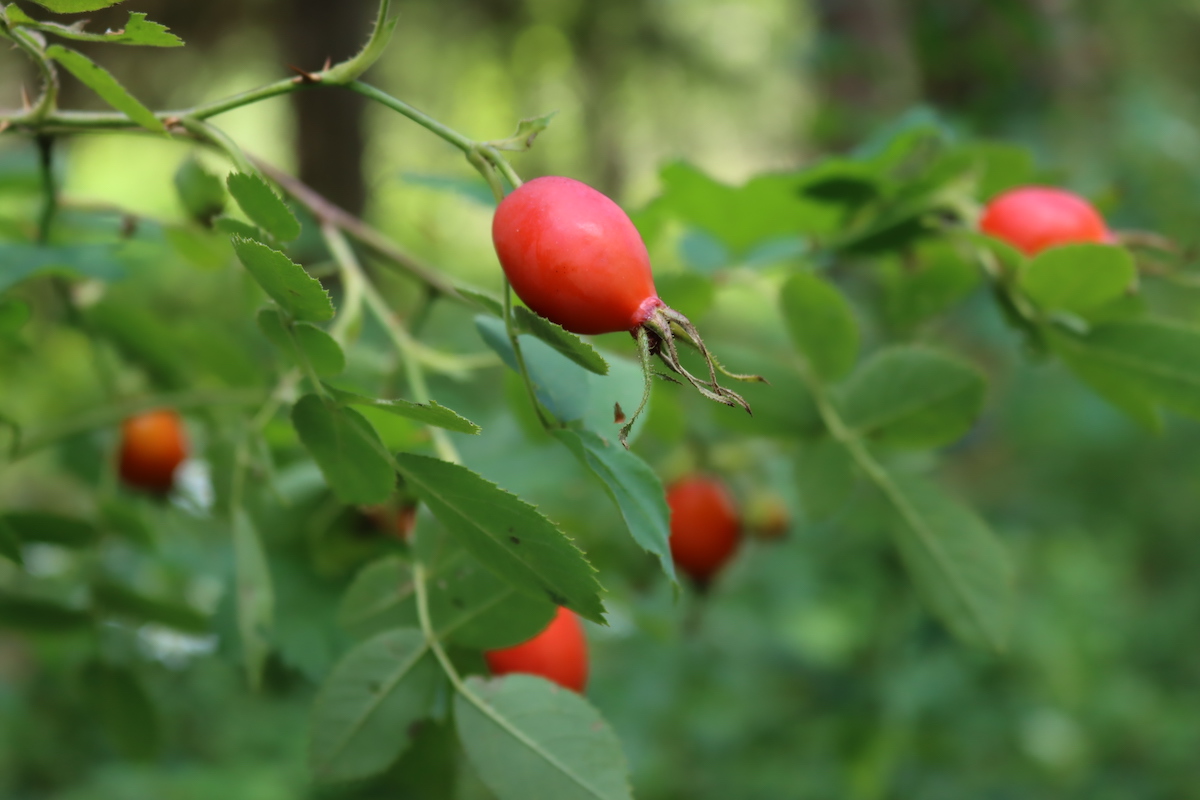
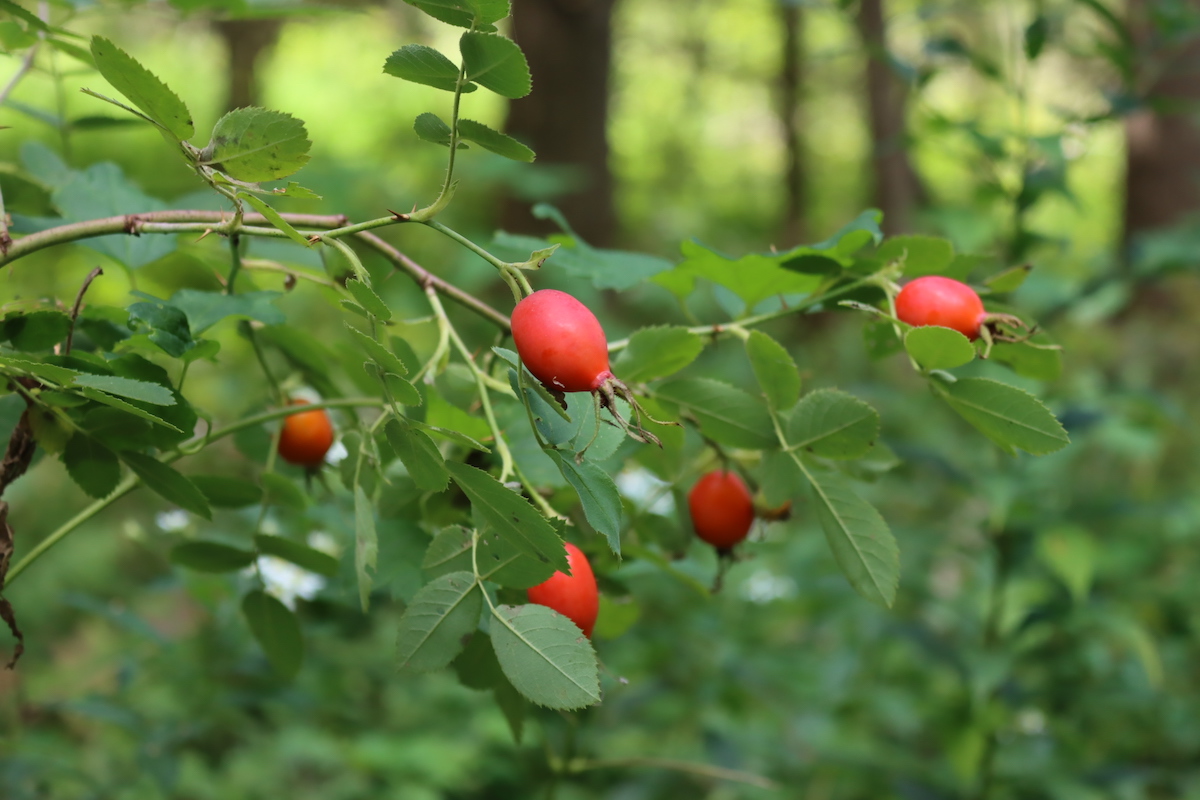
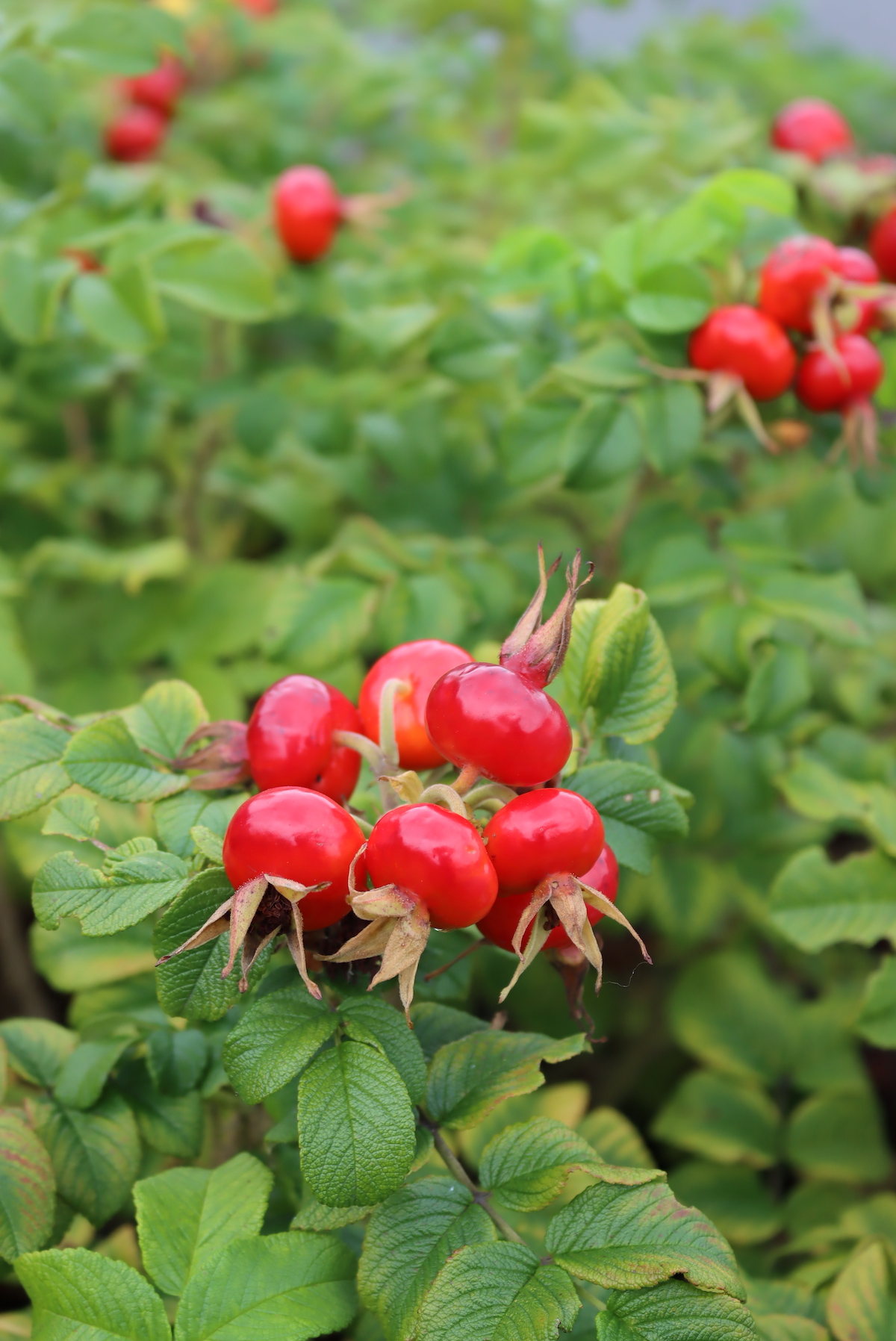
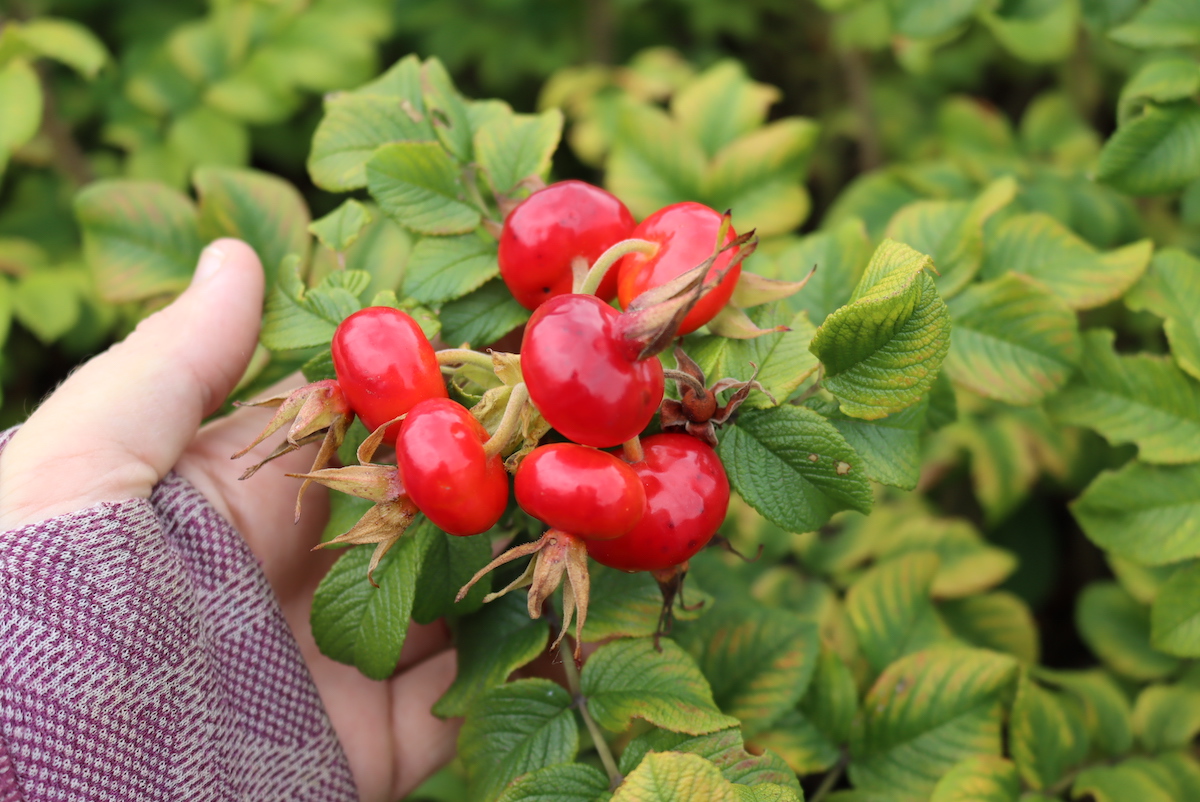
Rose hips are a fleshy accessory fruit produced by roses. These fruits typically contain 5 to 160 seeds embedded in fine stiff hairs. Most rose hips start as green and ripen to an orange or reddish though they may be yellowish or dark purple to black like those of the Burnet Rose (Rosa pimpinellifolia).
Rose hips vary in size with species. Many of the varieties favored for rose hip production have larger hips, about ½ inch in size. I’ve seen some species of wild rose with hips up to 1 1/2 inches, so they can get quite large.
One distinctive feature that helps confirm rose hip identification is the persistent calyx at the bottom of each fruit. The five sepals from the original flower remain attached at the base of the rose hip, often appearing as a dried, feathery little crown. This is one of the easiest features to use when distinguishing rose hips from other red fruits in the fall hedgerow.
Note that some domestic cultivars don’t produce rose hips. Their petals are too tightly formed to allow pollination. If grandma’s extra showy double roses aren’t producing rose hips, that’s probably why.
Rose Hip Look-Alikes
Rose hips are one of the easier wild fruits to identify because the persistent calyx at the bottom of each fruit, the thorny canes, and the alternate compound leaves with serrated leaflets are all distinctive in combination. Still, several other fall-fruiting plants share enough features to be worth a closer look. The good news is that none of the most common look-alikes are dangerously toxic, and most are edible in their own right.
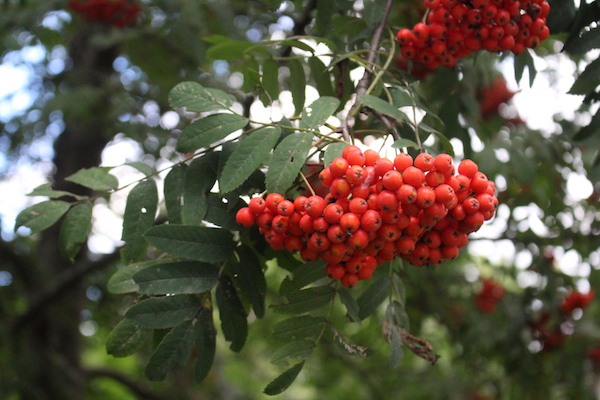
Hawthorn Berries
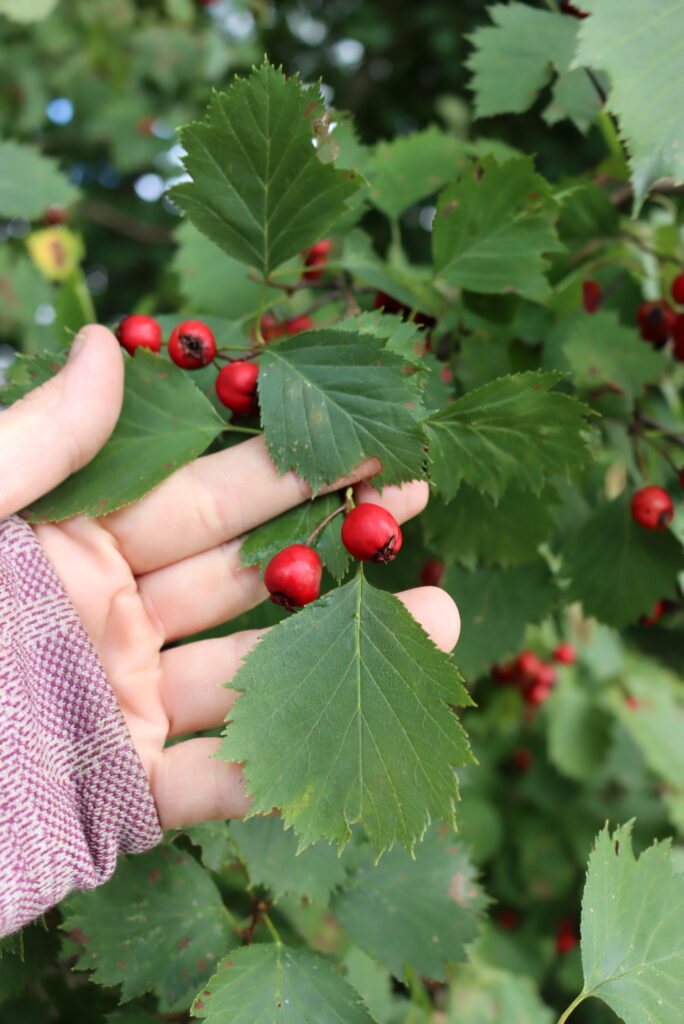
Hawthorn berries (Crataegus sp.) ripen at the same time as rose hips, are similar in size and color, and even grow on similar thorny shrubs. They’re closely related (both in the Rosaceae family) and they’re also edible, so confusion between the two is not a safety issue. The differences:
- Hawthorn berries grow on actual trees (often 15 to 30 feet tall), while rose hips grow on shrubs and vines (typically under 10 feet).
- Hawthorn leaves are simple, lobed, and toothed (not pinnately compound like rose leaves).
- Hawthorn berries contain 1 to 5 hard “stone” seeds rather than a cluster of small hairy achenes.
- Hawthorn flesh is mealy and apple-like, while rose hip flesh is tangy, tart, and almost tropical-fruit-like.
Thimbleberries
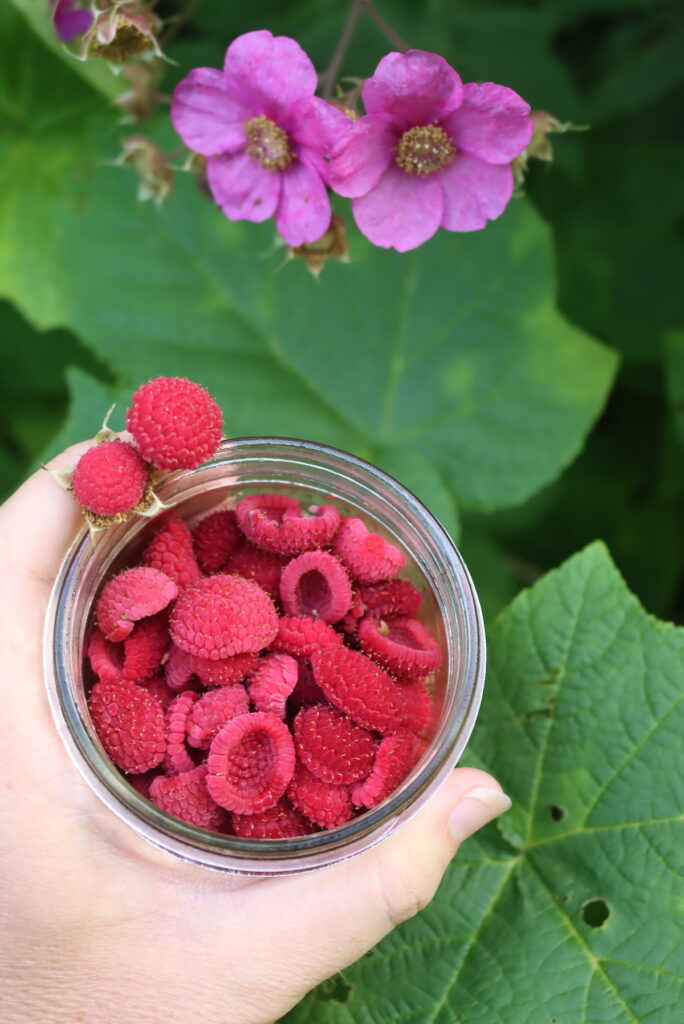
Thimbleberries (Rubus odoratus in the eastern US, Rubus parviflorus in the western US) are sometimes confused with rose hips because of the similar bright red color and similar habitat. They differ in several ways:
- Thimbleberry has large, simple, palmate leaves (not the pinnately compound leaves of roses).
- Thimbleberry stems are thornless and have brown, yellowish, or grayish bark.
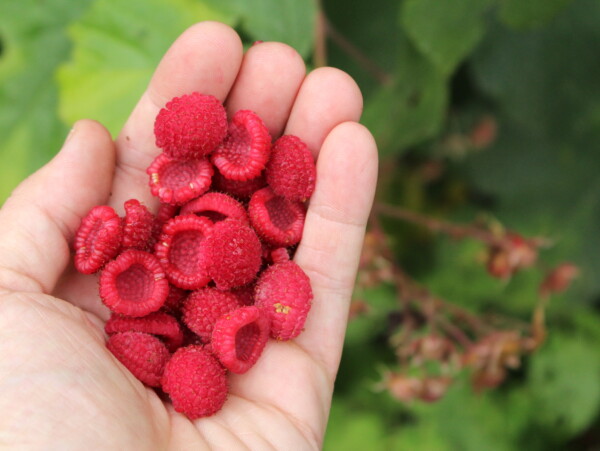
- Thimbleberry produces shallow, raspberry-like aggregate fruits with many tiny drupelets, not a single fleshy hip with seeds inside.
Red Chokeberry
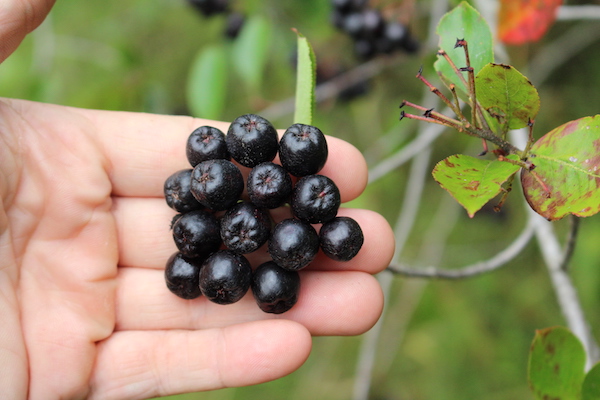
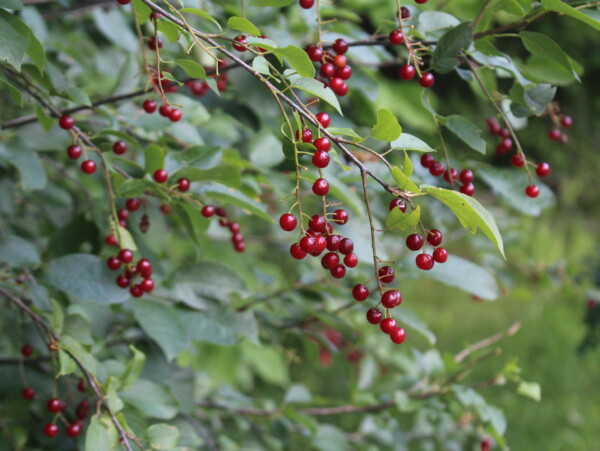
Foragers also need to be careful not to confuse rose hips with the similar-looking red fruit of Red Chokeberry (Aronia arbutifolia, formerly Pyrus arbutifolia). Thankfully, there are a few simple ways to differentiate the two:
- Red Chokeberry is a fairly large, spreading shrub that grows up to 12 feet tall.
- Red Chokeberry stems lack thorns.
- Red Chokeberry has simple, toothed, broadly lanceolate to oval leaves.
- Red Chokeberry leaves are densely hairy and pale beneath.
- Red Chokeberry forms clusters of white or pink-tinged flowers on hairy stalks.
Red Chokeberry is itself edible (and closely related to aronia), but it’s not the same as a rose hip and the two shouldn’t be substituted in recipes.
How to Harvest Rose Hips
Once you’ve identified a productive rose stand, harvesting is straightforward, though it’s worth knowing a few tricks before reaching into a thorny rose bush.
Wear long sleeves and a pair of sturdy leather or rose-pruning gloves. Rose thorns are sharp enough to penetrate thin gardening gloves, and the smaller stems are often densely covered in fine bristly thorns that can be just as bothersome as the larger hooked thorns. A pair of bypass pruners makes harvesting much easier than picking by hand; you can clip whole clusters of hips off the stems and process them at the kitchen table.
For the best flavor, harvest rose hips after they’ve fully ripened to a deep orange or red and ideally after a light frost or two has sweetened the flesh. The harvest window is generous: rose hips persist on the plants well into winter, and many foragers happily harvest in November, December, and even January if the hips are still in good condition. The earlier-harvested hips have higher vitamin C content and keep better at room temperature, while the later-harvested ones are softer and sweeter but should be processed or refrigerated quickly.
Rose hips don’t need to be processed immediately after harvest. Whole, fresh rose hips can keep on a kitchen counter for a couple of weeks, much like apples; in the refrigerator they’ll keep for over a month. For long-term storage, the easiest approach is to dry them whole on a screen, in a low oven, or in a dehydrator at 95-110°F until they’re hard and shriveled. Properly dried rose hips keep for a year or more in an airtight jar away from light.
Whichever method you use, only harvest from rose bushes that haven’t been treated with pesticides or fungicides. Garden roses are notoriously sprayed for blackspot and aphids, and florist roses are heavily treated with chemicals to extend their vase life. The best rose hip harvests come from wild rose stands, organic gardens, and untreated hedgerows.
Preparing Rose Hips for Recipes
Rose hips are generally seeded before they’re used in recipes. This is not strictly required, but it’s recommended.
The fruit of the rose hip is on the outside, and the inside is a little pocket of seeds. The seeds themselves are surrounded by tiny hairs that can be irritating to the digestive tract.
Some people can eat them whole with no problem, but others find it uncomfortable.
Personally, when I’m eating them in the wild, I just carefully eat the tasty fruit off the outside of the seeds and then toss the seeds back so they can grow again.
At home, they’re easy enough to seed by slicing them in half and then scooping out the seeds. This works really well in recipes where you’re going to use the whole fruit, like rose hip jam.
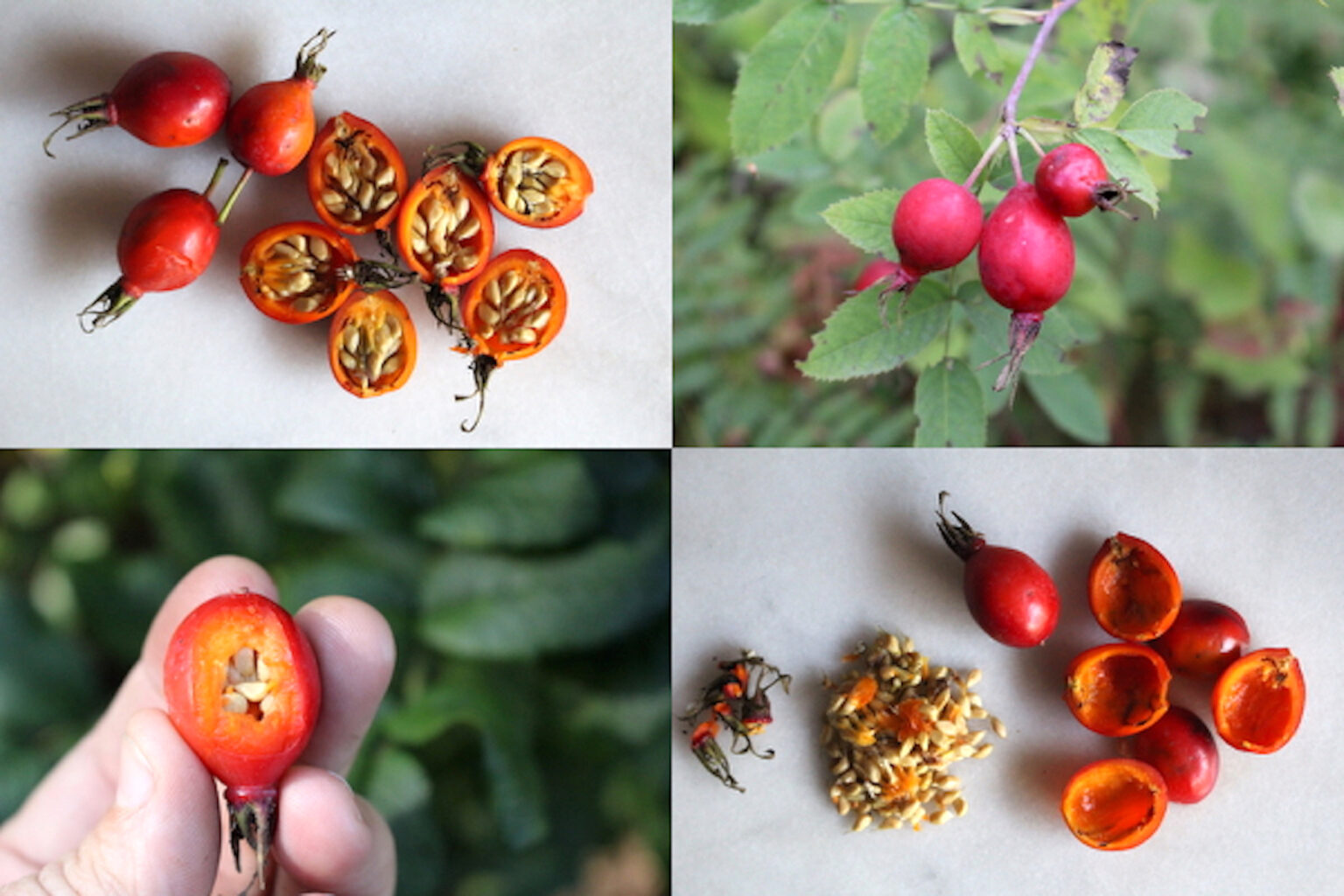
Sometimes, you’re just using a tea made with the rose hips, where the fruit is strained out. Things like rosehip wine, rose hip tea, and rose hip syrup don’t necessarily require hand seeding since you’re going to strain out all the solids anyway.
Similarly, rose hip liqueurs and tinctures are infusions, and the hips themselves are strained out.
If you don’t want to bother with seeding your rose hips, then opt to use them in some kind of tea or infusion.
Ways to Use Rose Hips
Though they still have a place in many gardens, roses have lost their place in our kitchens and medicine cabinets. It’s time to start using these tasty herbal allies again!
Rose hips are known for their high vitamin C content and are usually the most sought-after part of the plant. Their pleasantly tart flavor makes for excellent teas, syrups, and preserves. Middle Eastern cuisine sometimes uses rose hips in jellies, syrups, and marmalades. They also make a tasty addition to sweet desserts like chocolate truffles, cake, and ice cream.
Rose petals also deserve a place in the kitchen. You can use them fresh or turn them into rose water for various dishes. Try them in tea, baked goods, beverages, rose jelly, or infused in honey. Rose water is highly versatile, and you can use it for marinating chicken and veggies, crafting cocktails, or making candy and baked goods.
When taken internally, rose hips, petals, and leaves have many health benefits, from helping to prevent heart disease and improving skin health to decreasing osteoarthritis and menstrual pain. You can use roses to make teas, tinctures, elixirs, extracts, and powders.
Externally, roses are a fantastic choice for homemade cosmetics and skincare. They may help reduce wrinkles, improve skin health, and soothe burns and irritations. Use rose petals or rose hips to make your own soaps, lotions, oils, cleansing sprays, and sugar scrubs.
Rose Hip Recipes
I’ve collected all my favorite rose hip recipes into a guide, but here are a few to get you started:
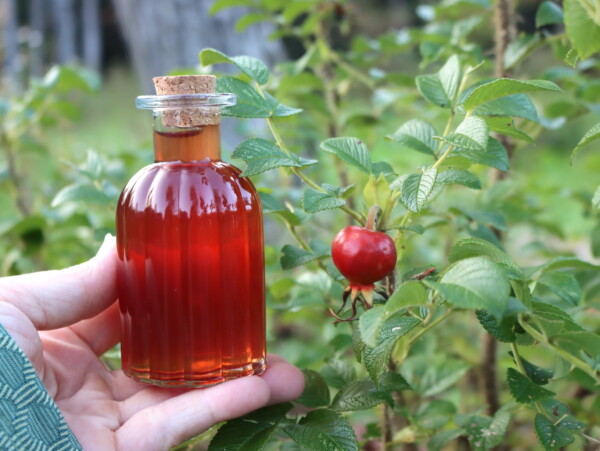
- Make heart-supporting Rose Hip Syrup from fresh or dried hips to enjoy through the winter.
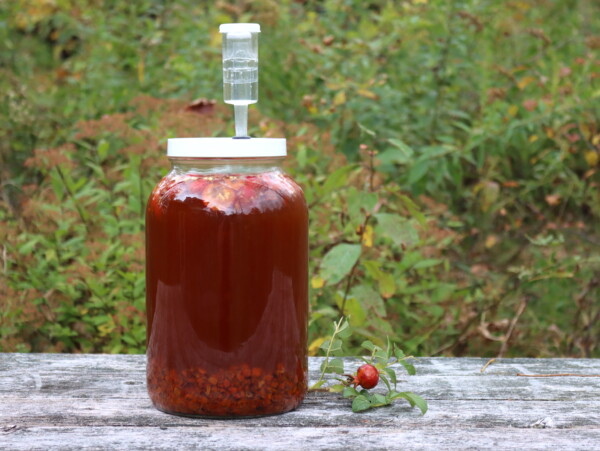
- Try making Rosehip Wine or Mead, a traditional way to preserve the harvest in fermented form.
- Whether you need immune support or a tasty addition to ice cream or cocktails, Grow Forage Cook Ferment has you covered. Try Colleen’s recipe for Rose Hip Syrup.
- If you want to incorporate roses into your herbal practice, Hawthorn & Honey has three great herbal recipes for Rose Hip Elixir, Vitamin C Balls, and Rose Hip Electuary.
- Try this street recipe for Turkish Doughnuts with Rose Hip Syrup from the LA Times for a fun treat.
Rose Hip & Rose Petal Recipes
Rose Recipes
Have a lot of roses? These rose recipes will keep you busy, and there are just so many ways to eat a rose. (Plus, they have cosmetic uses too!)
- Rose Petal Wine and Mead are great ways to drink your flowers!
- Use this Homemade Rose Petal Jam recipe from Feasting at Home to preserve some.
- Make your own rose water for room sprays, hair sprays, or cosmetic products with this simple recipe from Fare Isle.
- Create a stunning masterpiece of a cake with this Rose Cake recipe from Sugar Geek Show.
- Looking for a fun summer beverage? Try this recipe for a Rose Lassi from Dassana’s Veg Recipes.
- Add roses to your skincare routine with this DIY Rose Body Lotion from Country Hill Cottage.
Rose Hip FAQs
Yes, all rose hips are edible. The bright red, fleshy outer fruit has a tangy, fruity flavor and is rich in vitamin C and antioxidants. The fine hairs around the seeds inside can irritate the digestive tract, so most rose hip preparations either remove the seeds and hairs or strain them out after cooking. Wild and cultivated rose species can both be used, as long as the bushes haven’t been treated with pesticides or fungicides.
The best-tasting rose hips are tart, fruity, and slightly sweet, often described as a cross between cranberry, apple, and tropical fruit. The flavor varies considerably between species and even between individual bushes; some rose hips are sweeter and more apple-like, while others are more tart and astringent. Rose hips are usually best after a light frost, which sweetens them slightly. The flesh itself is the tasty part; the seeds inside are dry and not eaten.
Yes, all rose species in the genus Rosa produce edible rose hips, including wild roses (like dog rose, multiflora, and rugosa), heirloom roses, and modern cultivars. Some species (like Rosa rugosa and Rosa canina) have larger and more flavorful hips than others, but all are safe to eat. The two cautions are not to consume rose hips from bushes treated with pesticides or fungicides (a common issue with garden and florist roses), and to remove or strain out the inner hairs around the seeds, which can irritate the throat and digestive tract.
Rose hips ripen from late summer through fall, with most species becoming fully ripe between late August and October in temperate climates. They turn from green to bright orange or red as they ripen and stay on the bushes long after the leaves have fallen. Many foragers harvest after the first light frost, which sweetens the flesh slightly and reduces some acidity. Rose hips also persist into winter, so they can be foraged for tea or syrup well after the last frost has hit, even into January in milder areas.
Rose petals come from the rose flower in spring or summer; they’re fragrant, soft, and used in teas, jams, syrups, rose water, and cosmetic preparations. Rose hips come from the swollen base of the flower after the petals fall and the flower is pollinated; they’re firm fleshy red or orange fruits that ripen in late summer and fall, and they’re used in syrups, jam, tea, wine, and herbal preparations. Both parts of the rose plant are edible and nutritious, but they appear on the plant at different times and have different flavors and uses.
Did you find this Rose Hips foraging guide helpful? Tell me in the 📝 comments below how you use rose hips on your homestead!
And make sure you stay in touch with me by following on social media!
Wild Fruit Foraging Guides
Find the perfect foraging guide
Searching for something else? Enter keywords to find the perfect foraging guide!











What do you do if your rosehip has worms in it? Toss the whole thing?
Probably? You’ll have to use your best judgement here. I’ve never actually seen rosehips with worms in them, but it makes sense that it would happen.
Nice clicks and thanks for the detailed explanation. Made me think about the times I went hunting for stuff in the bushes close to our home. Nowadays it’s hard to find such spots in the city.
Yes, and you have to be careful because everything is so heavily sprayed now.
Do multiflora rose tips taste good? A lot grows near me and I thought I might try them to lower the amount of seeds it drops.
Yes, they have a good flavor. The biggest issue is that they’re a lot smaller so it takes more but the quality is the same.