
Affiliate disclosure: This post may contain affiliate links. Please see our Privacy Policy.
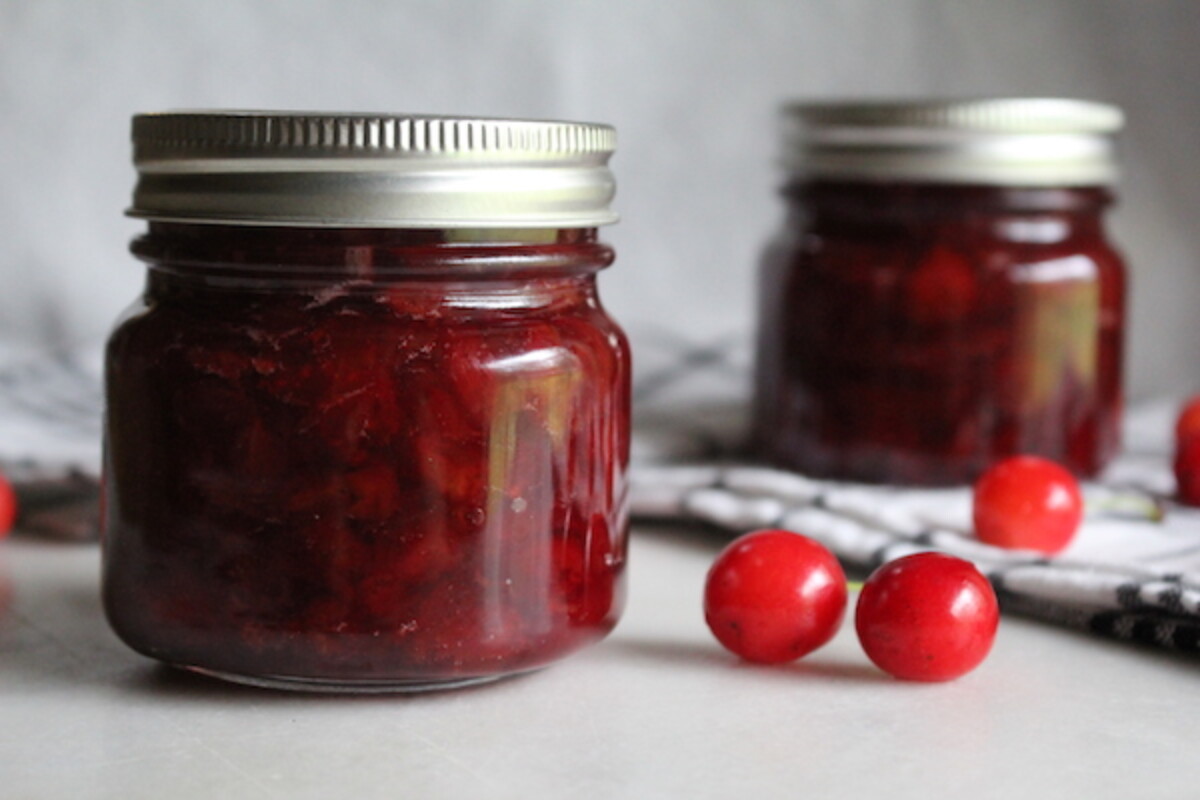
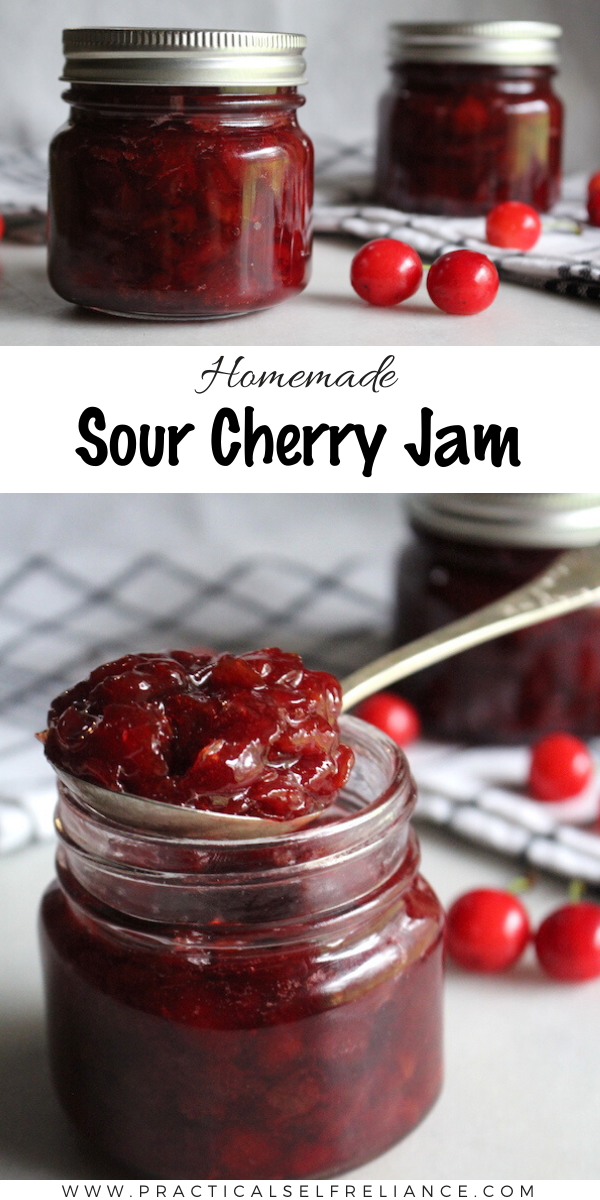
Sour cherry jam turns fresh tart cherries into a deep, ruby-red preserve with a fresh flavor that tastes like the inside of a cherry pie. Sour cherries aren’t actually sour once you cook them down with a bit of sugar, they’re just packed with more real cherry flavor than any sweet cherry on the shelf.
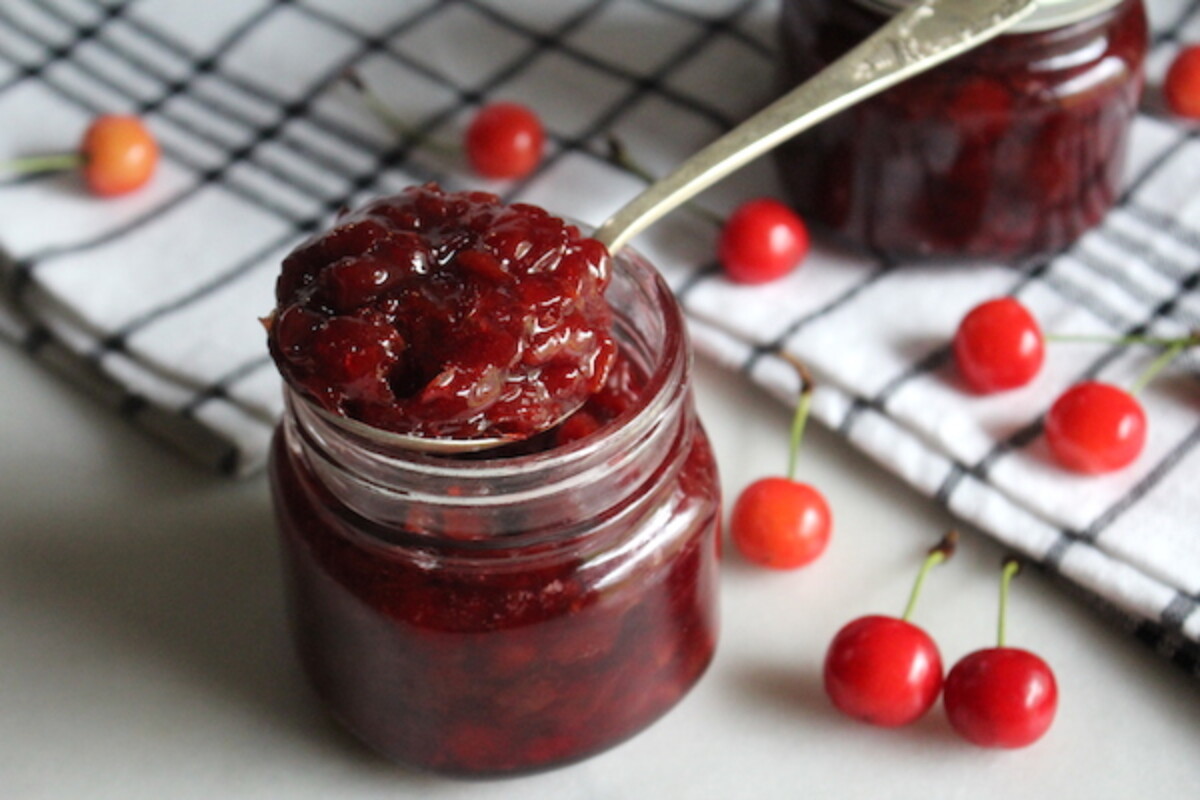
Table of Contents
- Notes from my Kitchen
- Ingredients for Sour Cherry Jam
- How to Make Sour Cherry Jam
- Testing for Gel Stage
- Canning Sour Cherry Jam
- Altitude Adjustments
- Yield Notes
- Storage Options
- Recipe Tips and Variations
- Ways to Use Sour Cherry Jam
- Sour Cherry Jam FAQs
- Ways to Preserve Cherries
- Sour Cherry Jam Recipe
- Jam Recipes
Sour cherries are naturally low in pectin, so this is an old-fashioned jam that gels through a long, slow cook and a little lemon juice instead of a box of pectin. It’s the same approach I use for most of my small-batch jams, and it gives you a jam with cleaner fruit flavor and a nicer texture than the pectin-set kind.
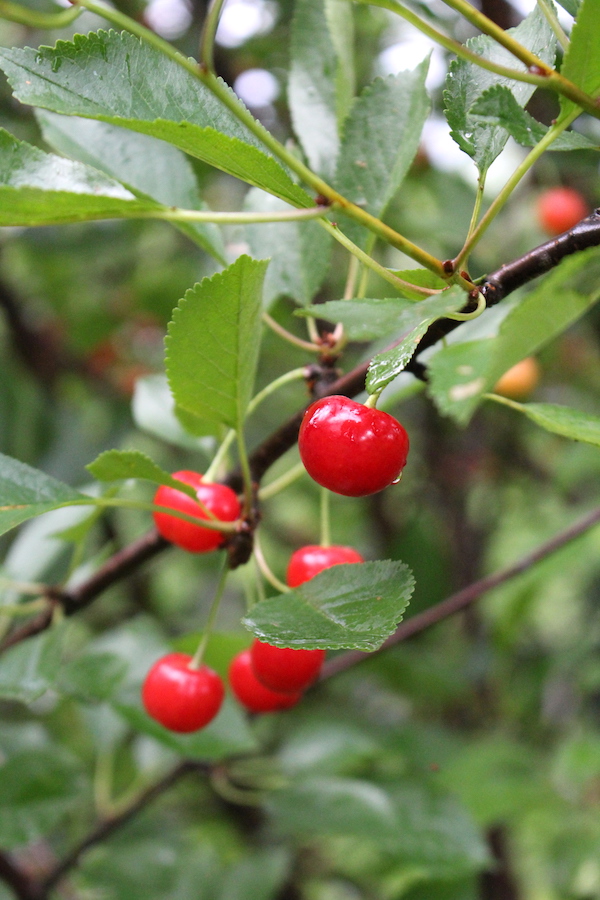
You may know sour cherries by another name. They’re also called tart cherries or pie cherries, and they almost never show up in the grocery store because they’re too soft to ship well. If you don’t grow your own, your best bet is a pick-your-own orchard in early summer or the frozen fruit section, where I’ve actually had the most luck finding them at big supermarkets rather than specialty shops.
This recipe is flexible. Cook it to a full gel, and you’ll get a thick jam that stands up on a spoon, or stop a little earlier for a softer, more spoonable set.
The one thing to know going in is that sour cherries foam like nothing else I cook. I make dozens of kinds of jam every summer and this is the one that keeps me standing right at the stove, because it’ll boil over the second you turn your back.
It’s the same patient, no-pectin method behind my raspberry jam and old-fashioned strawberry jam, just with a fruit that needs a closer eye.
Notes from my Kitchen

We grow our own tart cherries in our permaculture orchard, and every year I seem to talk myself into planting one or two more trees just to keep up with this jam. When our own trees come up short, we head down to a pick-your-own farm about twenty miles down the road and come home with a trunk full of cherries.
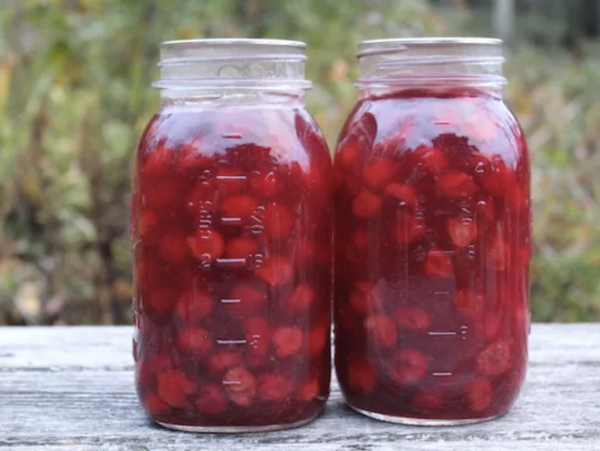
The first batch never makes it into the canner. It gets eaten straight off the spoon and on toast within a couple of weeks, so I just keep that one in the fridge. After that, I make more and squirrel a few jars away for winter, because nothing brings back the warmth of July like sour cherry jam in February. Some years, I put up ten pounds of cherries at a time, always one small pot at a time, and the rest of the harvest goes into home-canned cherry pie filling and a few jars of whole canned cherries.
Ingredients for Sour Cherry Jam
This is a three-ingredient jam, and the measurements all live in the recipe card down below. Here’s what each one does and what to look for.
- Sour cherries: Any tart or pie cherry works here, including Montmorency, Evans, Meteor, and Balaton. Use them fully ripe for the best flavor. Fresh and frozen cherries both work, so don’t pass this up just because cherry season is over.
- Lemon juice (fresh or bottled): The lemon brightens the cherry flavor and adds a little extra pectin to help these low-pectin cherries gel on their own. Sour cherries are already high in acid, so the lemon isn’t needed to make the jam safe for canning, it’s there for flavor and set. Feel free to use fresh lemon juice for better flavor and the extra pectin that comes with fresh fruit.
- Granulated sugar: Sugar sweetens the jam and helps it reach a firm gel. A smaller amount of sugar gives the most concentrated cherry flavor with a lower yield, while more sugar gives you a higher yield and a milder, sweeter jam.
I’ve written this recipe explicitly for sour cherries, so keep that in mind.
Sweet cherries like Bing and Rainier are a bit different, and I have separate recipes for black cherry jam and Rainier cherry jam. They’re much lower in acid and tartness, so they don’t make the same bold jam, but they’re still delicious.
If you only have a few pounds of tiny fruit and dread the pitting, a smooth, seedless cherry jelly may be the better project. The same goes for smaller, wild cherries, and they’re better suited to chokecherry jelly or pin cherry jelly, depending on the variety.
Great recipe!! I have made this two years in a row now, and love it. Not too sweet and super easy to make.
How to Make Sour Cherry Jam
The method is simple. Cook the pitted cherries down with lemon juice, add sugar, and keep cooking until the jam gels. The only real work is the pitting, and the only thing to watch is the foam.
Preparing the Cherries
Sour cherries are soft and bruise easily, so process them as soon as you can after picking. If you can’t get to them right away, get them into the freezer. Freezing is actually a handy way to pit them, since they break down a bit as they thaw, and you can pop the pits out by hand without a knife or pitter.
For fresh cherries, a sharp knife works in a pinch, but if you have more than a couple of pounds, it’s worth picking up a small handheld cherry pitter. Once you get a rhythm going, a batch will be pitted in no time.
Cooking the Jam
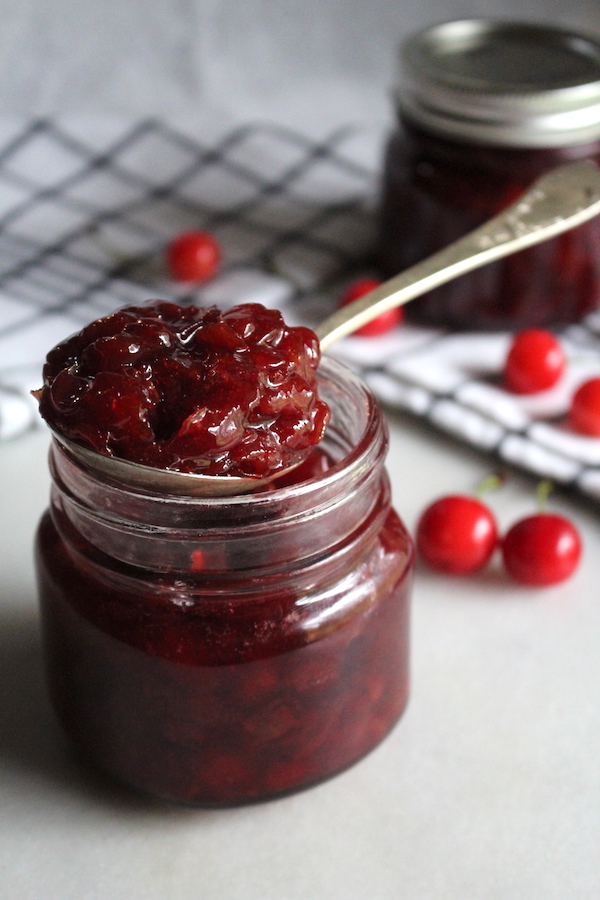
Put the pitted cherries in a heavy-bottomed jam pot with the lemon juice and bring them to a boil. Use a deeper pot than you think you need, because this jam foams a lot, and you do not want to fight a boil-over. Stir often and cook for about twenty minutes, until the cherries have completely fallen apart.
Add the sugar and keep cooking until the jam reaches gel stage. Cook to the gel, not to a fixed clock. On my stove, it usually takes another twenty to thirty minutes, but every stovetop and every batch of fruit is different, and the time is only a guideline.
Start testing for gel early and pull the pot off the heat the moment it sets, because no-pectin jam keeps thickening the longer it boils, and it’ll go from perfect to scorched faster than you’d expect.
Once it gels, ladle the jam into prepared jars and take your time removing air bubbles, since this thick jam traps them easily. Adjust the headspace to 1/4 inch and cap with two-part canning lids.
Testing for Gel Stage
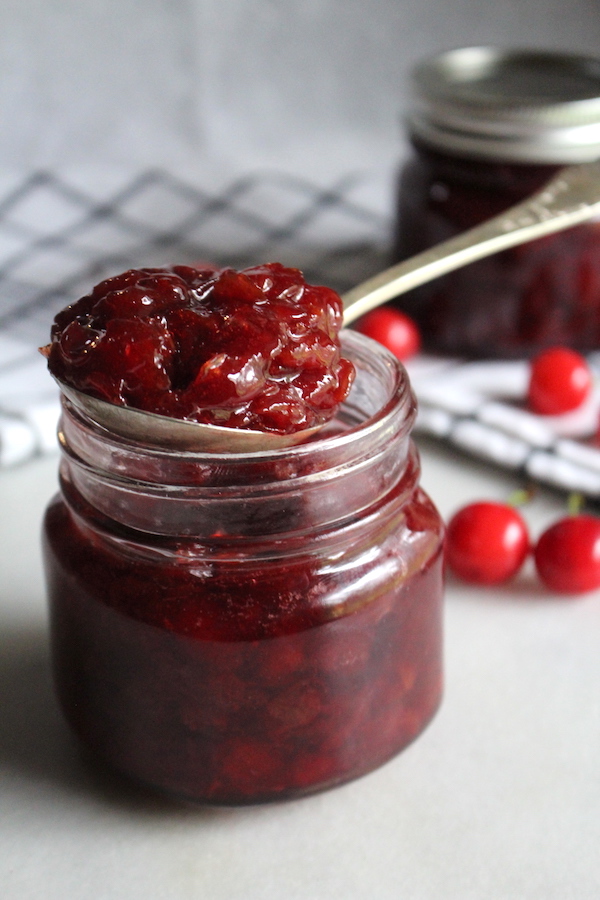
Since there’s no added pectin, you’ll need to test the jam yourself to know when it’s done. Use either of these methods, and stop cooking the second it passes.
- Frozen plate test: Put a small plate in the freezer before you start. Spoon a little jam onto the cold plate, wait a few seconds, then push it with your finger. If it wrinkles and holds its shape instead of running, it’s ready.
- Thermometer test: Gel stage is right around 220°F at sea level. It drops about 1 degree for every 500 feet of elevation, so here at 1,000 feet, I finish my jams at about 218°F.
- Don’t go by the clock: The cook times above are just a guide. Cooking past the gel point is the number one reason this jam turns out too thick or hard, so trust the test, not the timer.
Canning Sour Cherry Jam
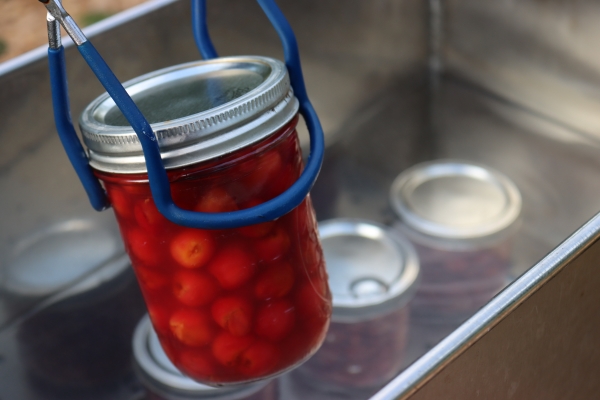
You don’t have to can this jam at all. A single batch is small enough that it’s easy to just keep it in the refrigerator, where it’ll last about a month. It also freezes beautifully. If you do want it shelf-stable for the pantry, it’s a quick water bath process, and if you’re new to canning, my beginner’s guide to water bath canning walks through the whole setup.
To can it, ladle the hot jam into prepared half-pint or pint jars, leaving 1/4 inch of headspace. De-bubble carefully, wipe the rims, and seat your two-part lids. Process in a boiling water bath for 10 minutes (adjusting for altitude, see below).
Then turn off the heat and let the jars rest in the canner for 5 minutes before lifting them out to cool. Once they’re cool, check that every lid has sealed, and store any unsealed jars in the fridge.
Altitude Adjustments
Adjust your water bath processing time for elevation:
- Below 6,000 feet: Process for 10 minutes
- Above 6,000 feet: Process for 15 minutes
Yield Notes
Sour cherries cook down a lot, so a finished batch always looks small next to the fruit you started with. That’s normal, and it’s exactly what gives the jam its concentrated flavor.
- About 3 pounds of whole sour cherries, roughly 5 cups once pitted, makes a single small batch of about 2 half-pint jars.
- Adding more sugar will raise the yield but mute the cherry flavor. I’d rather have a little less of a really good jam.
- Don’t double the recipe. Larger batches don’t heat evenly, take much longer to cook down, and often fail to set or scorch. Make single batches back to back instead.
Storage Options
However you finish it, here’s how long sour cherry jam will keep:
- Refrigerator: 3 to 4 weeks in a covered jar.
- Freezer: Up to 6 months in a freezer-safe container with a little headspace.
- Canned: 12 to 18 months in a cool, dark pantry once sealed.
Recipe Tips and Variations
A few things I’ve learned making this jam year after year, plus some flavor variations worth trying:
- Add a splash of bourbon. Stir a few tablespoons in near the end of cooking for a grown-up sour cherry preserve.
- Almond and cherry are classic. A few drops of almond extract added with the sugar plays beautifully off the tart fruit. Cinnamon and vanilla work too. These flavors are strong, so go with a light hand.
- Adjust the sugar to taste. Anywhere from 2 to 3 cups per batch works. Less sugar means more intense cherry flavor and a lower yield, more sugar means a sweeter, higher-yield jam.
- Use the ripest fruit you can get. Fully ripe cherries have the most flavor and the most natural pectin to help the jam set.
- The method works for other low-pectin fruit too. Once you’re comfortable cooking a jam to gel stage without a box of pectin, the same approach makes blackberry jam and old-fashioned grape jam.
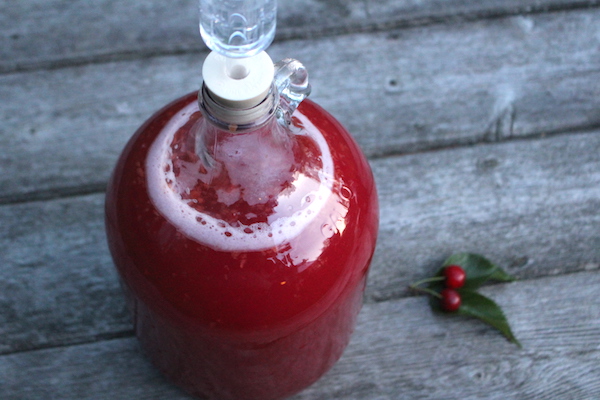
- Make jelly if you hate pitting. When I just can’t pit one more cherry, I run the rest through a steam juicer and turn the juice into a smooth, seedless cherry jelly or a batch of homemade cherry wine.
Ways to Use Sour Cherry Jam
The obvious home for this jam is toast and peanut butter sandwiches, but it’s far too good to stop there. I spoon it into thumbprint cookies, swirl it through yogurt and oatmeal, and warm a little to spoon over pancakes or ice cream. It also makes a quick glaze for roast pork or duck, and a spoonful next to a sharp cheese on a board disappears fast.
Once you’ve got a few jars in the pantry, there’s no end to what you can do with them. My roundup of ways to use up a jar of jam has plenty more ideas for working through the harvest.
Sour Cherry Jam FAQs
About 3 pounds of whole sour cherries, which is roughly 5 cups once pitted, makes a single small batch of around 2 half-pint jars. Cherries cook down a lot, so the finished yield always looks small next to the fruit you started with. That concentration is exactly what gives the jam its deep cherry flavor.
Yes. Frozen sour cherries work just as well as fresh, and freezing actually makes pitting easier, since the cherries soften as they thaw and release their pits by hand. You can cook them straight from frozen if you don’t mind a slightly longer cook time while they release their juice.
That almost always means it cooked past gel stage. No-pectin jam keeps thickening the longer it boils, so going by the clock instead of the frozen-plate or thermometer test is the usual cause. Pull it off the heat the moment it gels at around 220°F, and if it’s already too stiff, reheat it gently with a splash of water to loosen it back to a spreadable jam.
A runny batch usually didn’t quite reach full gel stage, so cook it a few minutes longer and retest on a frozen plate. Doubling the recipe is the other common culprit, since a larger batch has less surface area to evaporate and rarely sets up well. You can always reheat a runny batch and cook it back up to gel stage.
It’s best not to. Larger batches don’t heat evenly, take much longer to cook down, and often fail to set or scorch on the bottom. If you have a lot of cherries, make single batches back to back instead. That’s how I put up ten pounds of cherries some years, one small pot at a time.
Ways to Preserve Cherries
Did you make this sour cherry jam? Leave a ⭐⭐⭐⭐⭐ star rating on the recipe card below and tell me in the 📝 comments how your batch turned out!
And make sure you stay in touch with me by following on social media!
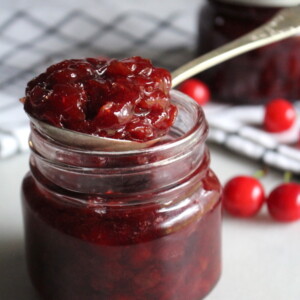
Sour Cherry Jam
Equipment
- Canning Jars, Lids, and Rings
Ingredients
- 3 lbs sour cherries
- 1 medium lemon, juiced
- 2 cups sugar, see note
Instructions
- Pit the sour cherries, removing all the pits.
- Add the pitted cherries and lemon juice to a heavy-bottomed jam pot and bring to a boil over medium-high heat. Use a deeper pot than seems necessary, since this jam foams and boils over easily.
- Cook the cherries, stirring often to prevent boil-overs, until the fruit has completely fallen apart, about 20 minutes.
- Add the sugar and stir to dissolve. (If using pectin instead, this is the point to add it. See notes.)
- Keep cooking the jam until it reaches gel stage, testing as you go rather than watching the clock. The time varies by stove, but it usually takes another 25 to 30 minutes.
- Test for gel stage with a plate chilled in the freezer (the jam should wrinkle and hold when pushed) or with an instant-read thermometer (about 220°F at sea level, lower at higher elevations). Pull the pot off the heat the moment it gels, since the jam keeps thickening the longer it cooks.
- Ladle the hot jam into prepared jars. Remove air bubbles, wipe the rims, and adjust the headspace to 1/4 inch. Cap with two-part lids.
- For refrigerator jam, cool and store in the fridge for up to 1 month. To can, process in a boiling water bath for 10 minutes, then rest the jars in the canner for 5 minutes before lifting them out to cool (see altitude adjustments below). Check the seals before storing.
Notes
Nutrition
Nutrition information is automatically calculated, so should only be used as an approximation.
Jam Recipes
Find the perfect recipe
Searching for something else? Enter keywords to find the perfect recipe!










This jam is so good. We love it. Its not over the top sweet. Its perfect. Thank you
Happy to hear it!
I really appreciate how you consider explaining, (why the yield is surprisingly small) and the pounds of picked vs pitted. Those details really matter! I have been making jam using only thermometer and it is far superior to pectin method. Thanks for sharing all your thoughtful recipes!
Thank you! So glad you like it!
The best jam! I make it every year with the tart cherries from my trees. never using pectin again. Thank you!
So glad you like it!
Great recipe!! I have made this two years in a row now, and love it. Not too sweet and super easy to make.
So glad you like it! We make it every year, and I just put up a batch with 10 lbs of cherries this week. Love it!