
Affiliate disclosure: This post may contain affiliate links. Please see our Privacy Policy.
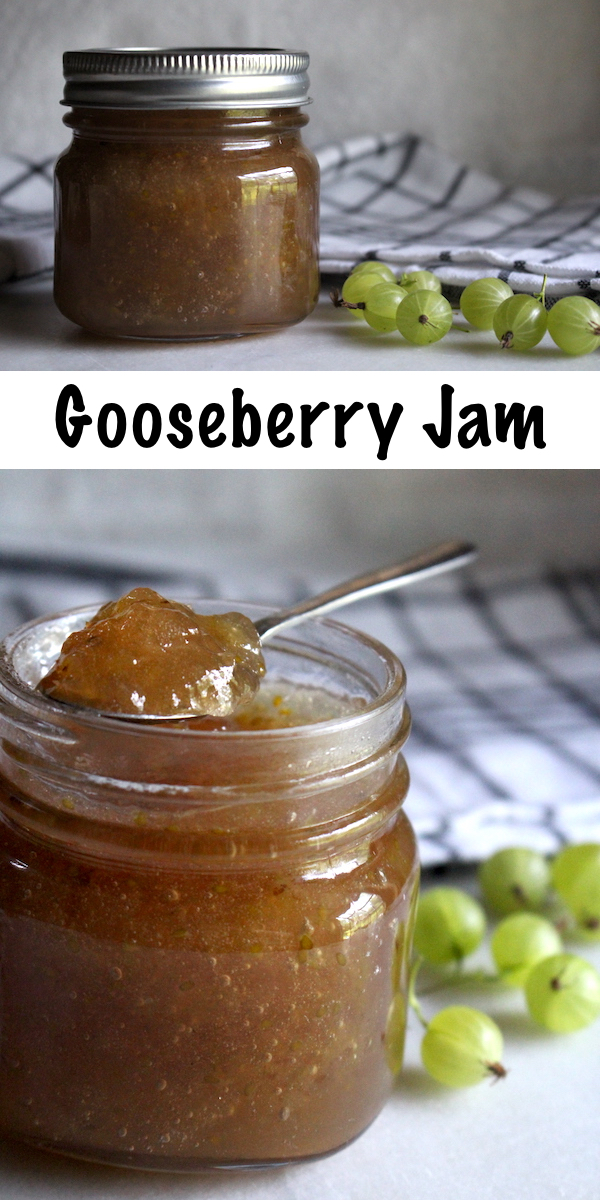
Gooseberry jam is one of those old-fashioned pleasures your grandma probably raved about, with a bright tart flavor and a firm set you just can’t buy in a store anymore. Now that gooseberries are turning up at farmers’ markets again, it’s an easy one to make at home.
Gooseberries are naturally high in pectin, so they cook down into a thick, rich jam with a firm set and no added pectin at all, just fruit and sugar. It’s the same no-pectin approach I use for most of my small-batch jams, and gooseberries make it almost effortless.
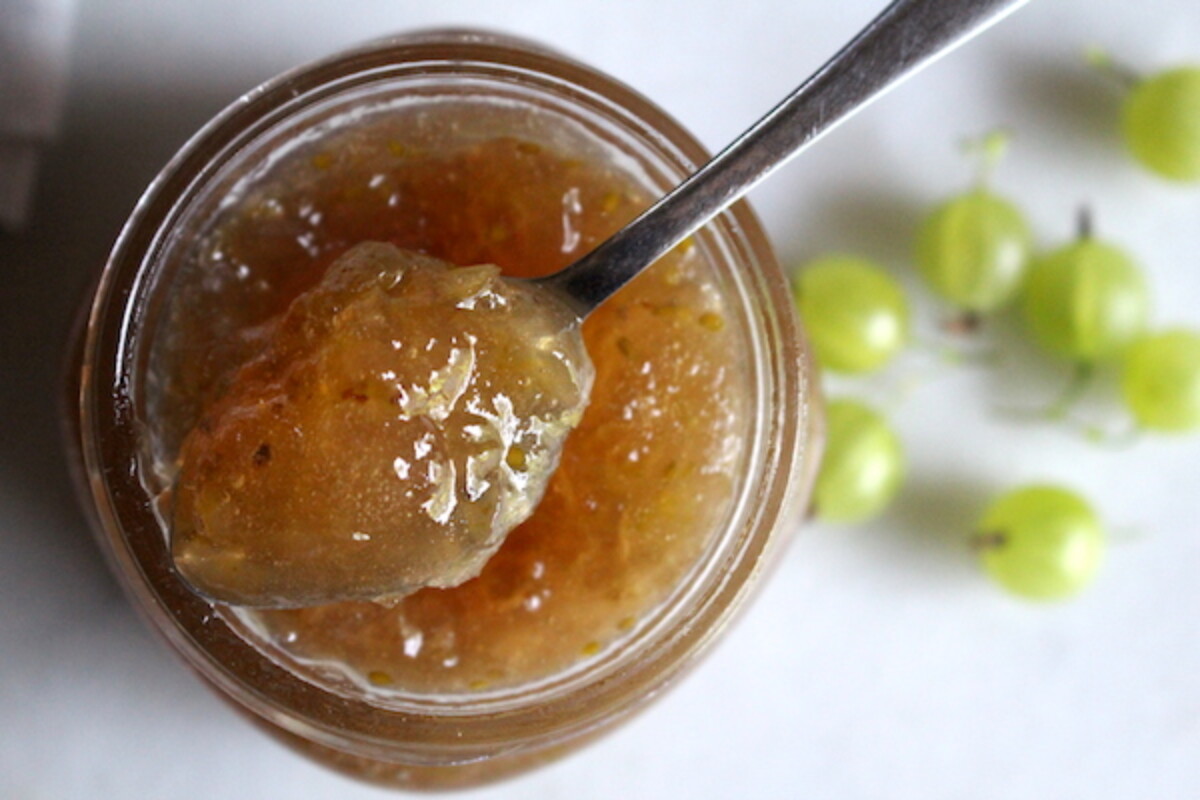
Table of Contents
- Notes from my Kitchen
- Ingredients for Gooseberry Jam
- How to Make Gooseberry Jam
- Testing for Gel Stage
- Canning Gooseberry Jam
- Altitude Adjustments
- Yield and Batch Size
- Storage Options
- Recipe Tips and Variations
- Ways to Use Gooseberry Jam
- Gooseberry Jam FAQs
- More Old-Fashioned Fruit Jams
- Gooseberry Jam Recipe
- Jam Recipes
Gooseberries are an old-fashioned fruit that’s been making a quiet comeback at market stands across the country. They’re rare in grocery stores, partly because the soft fruit doesn’t ship well, so a backyard bush or a market basket is usually the only way to get your hands on them.
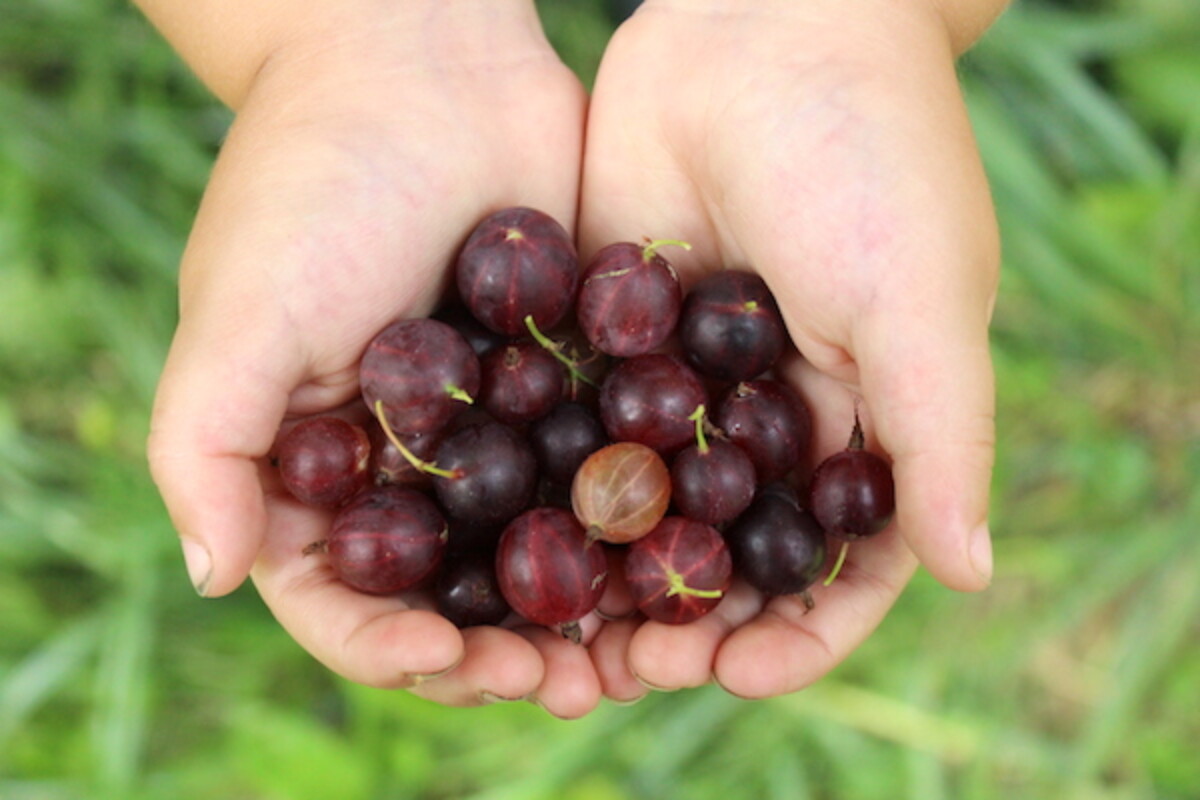
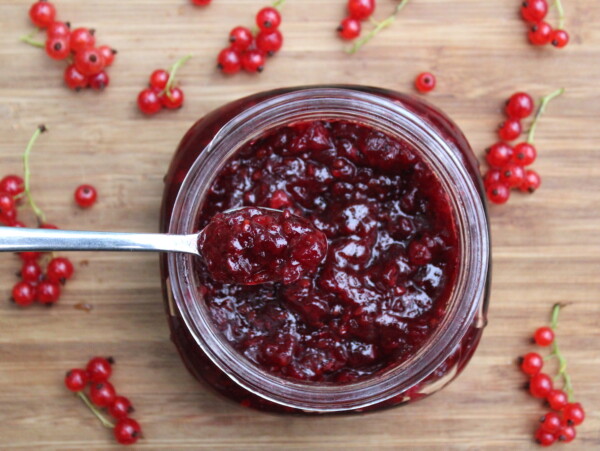
The berries come in both green and red, and red gooseberries cook into a deep, blood-red jam much like a red currant jam, which makes sense since the two are closely related.
Either color makes a tart, firm-set jam, and the flavor is the same regardless of the hue. The only real work is in the prep, since each berry needs its tops and tails removed before cooking. After that, the jam comes together in minutes.
Notes from my Kitchen

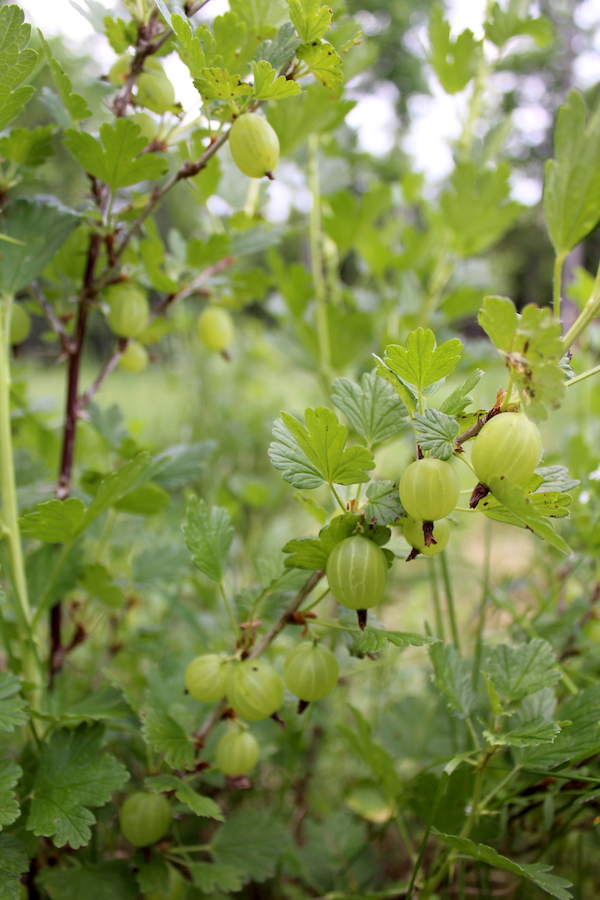
My husband raves about gooseberry jam, and grew up eating it as a kid in Oregon, where they had huge bushes in the backyard. So a few years after we settled here in Vermont, we planted our own. I spent that whole first summer watching those little orbs swell on the branches, repeating in a sing-songy voice, “There’s going to be gooseberry jam!” with a bit of happy bouncing for good measure.
To keep my kids from picking the bushes bare, I told my little one those were special berries just for the geese, and he spent days watching out the window for the Canada geese to land and collect their prize. A bit of deception, sure, but all in the name of jam. We never did see a goose, just turkeys, deer, robins, and a weasel. Then, the day before I planned to pick, our free-ranging chickens got the memo and stripped the bottom foot of every bush in minutes. I ran out hollering, but they’d made off with most of the harvest. The bushes are tall, so I saved a single bowl of plump berries, which is exactly how this small-batch recipe came to be.
Ingredients for Gooseberry Jam
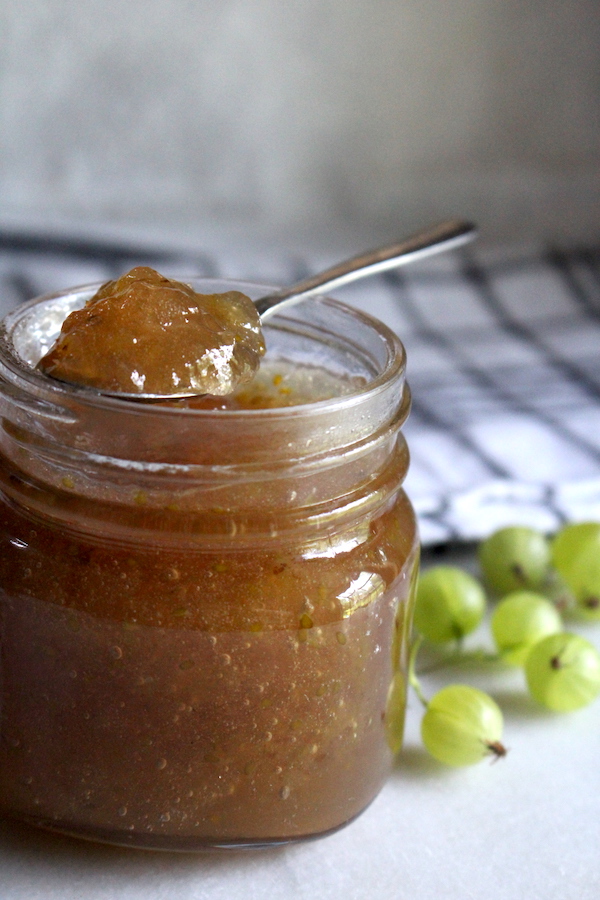
This is a short ingredient list, with the measurements in the recipe card below. Here’s what each one does.
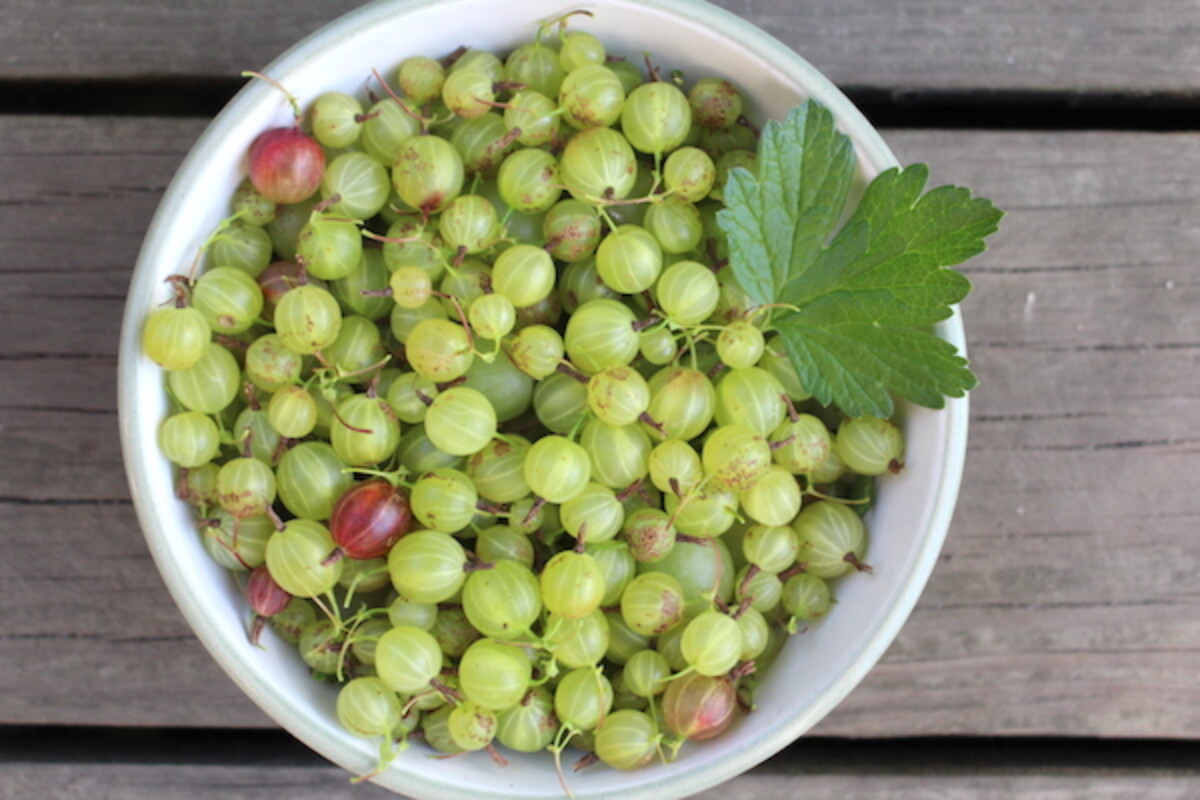
- Gooseberries: Red or green both work, and the color doesn’t change the flavor. Use them with their tops and tails removed. Fresh and frozen gooseberries are both fine here.
- Granulated sugar: Gooseberries are quite tart, and the sugar here does more than sweeten. It’s part of what sets the jam, so this isn’t the place to skimp. Most gooseberry jam uses somewhere between three-quarters and a full pound of sugar per pound of fruit.
- Lemon or lime juice (optional): A splash brightens the finished jam, though it isn’t needed for the set or for safe canning, since gooseberries are already high in acid. I like lime juice with green gooseberries.
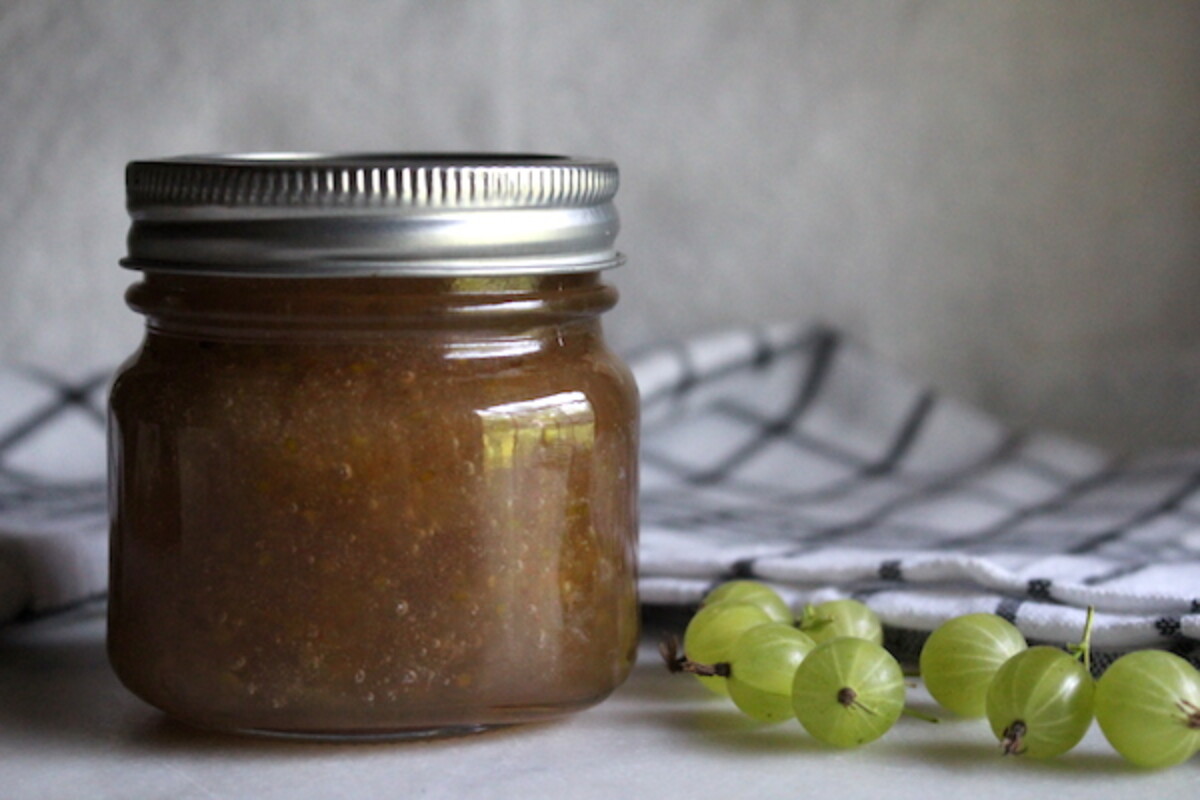
If your harvest runs to red gooseberries, you’ll get a jam that looks a lot like one made from currants, while green gooseberries give you the classic pale, golden-green preserve. The bushes are closely related to currants, so if you grow one you can usually grow the other, and a batch of blackcurrant jam isn’t far behind.
Had 2 1/2 lbs gooseberries in the freezer for 3 years! Made this jam exactly as the recipe calls for, awesome! Thank you! Grew up with gooseberry everything, big plump berries that my parents planted on their farm in Ireland.
How to Make Gooseberry Jam
I assumed gooseberry jam would be a long, slow project like blackcurrant jam, with a gradual boil before it ever reached gel stage. It’s just the opposite. Because gooseberries are so high in pectin, the jam comes together fast, much like a no-pectin strawberry jam or grape jam, and the only patience required is in the cleaning.
Topping and Tailing the Gooseberries
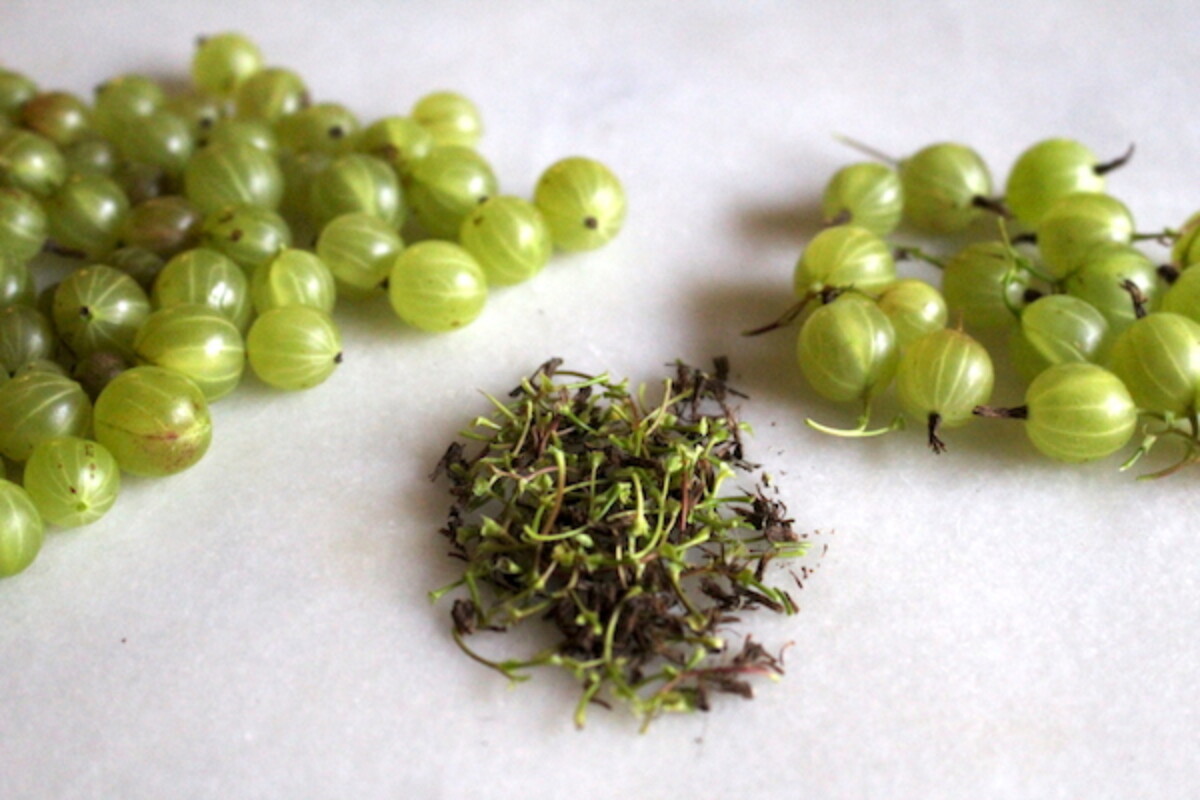
Each gooseberry holds onto a little bit of stem at the top and a dried brown tail at the bottom, left over from the flower after pollination. On most fruit those flower remnants drop away, but gooseberries hang onto theirs, so they need to be pinched off before cooking.
There’s no need to mash the berries, since they break down on their own as they cook. This topping and tailing is the most time-consuming part of the whole process, so put on a podcast and settle in.
Cooking the Jam
Put the cleaned gooseberries in a pot with a little water and a splash of lemon or lime juice if you’re using it. Bring them up over medium-high heat and cook, stirring often, until the berries disintegrate, about five minutes. While they cook, measure out your sugar.
Stir the sugar in and bring the pot back to a hard boil, cooking until the jam reaches gel stage. Gooseberries carry so much natural pectin that this happens quickly, usually in eight to ten minutes, and the jam will set firm once it cools.
Keep a close eye on it, because the same high pectin that makes this jam so easy will turn it stiff and rubbery if you cook it too long. Pull it the moment it gels.
Testing for Gel Stage
With a fruit this high in pectin, knowing when to stop is the whole game. Use any of these to catch it at the right moment:
- Sheet test: Dip a spoon into the jam and pour it back. When it runs off in a sheet rather than separate drips, it’s ready.
- Frozen plate test: Put a small plate in the freezer before you start. A spoonful dropped on the cold plate should gel and hold its shape when it’s done.
- Thermometer: Gel stage is about 220°F at sea level, dropping 1 degree for every 500 feet of elevation.
- Don’t overcook it. Red gooseberries in particular are so high in pectin that a jam cooked too long sets into a near-solid brick once cool. With this fruit, stopping a touch early is always safer than going long.
Canning Gooseberry Jam
You don’t have to can this jam. It keeps in the refrigerator for a few weeks and freezes well, so canning is optional. If you’d like it shelf-stable for the pantry, it’s a quick water bath process, and my beginner’s guide to water bath canning covers the whole setup if you’re new to it.
To can it, pour the hot jam into prepared jars, leaving 1/4 inch of headspace. Wipe the rims, apply two-part lids finger tight, and process in a boiling water bath for 10 minutes. Sealed and stored in a cool, dark spot, the jars will keep for years.
Altitude Adjustments
Adjust your water bath processing time for elevation:
- Below 6,000 feet: Process for 10 minutes
- Above 6,000 feet: Process for 15 minutes
Remember that gel stage also shifts with elevation, dropping about 1 degree for every 500 feet above sea level, so test accordingly if you’re high up.
Yield and Batch Size
This is a small-batch recipe, and the yield shifts a little with how juicy your fruit is.
- One pound of gooseberries, about 3 cups, makes roughly 3 half-pint jars when made with a full pound of sugar.
- A reduced-sugar batch yields a little less and may take slightly longer to set.
- You can double the recipe, but don’t go past about 2 pounds of gooseberries per batch. Larger batches heat unevenly and can struggle to reach a good gel.
Storage Options
However you finish it, here’s how long gooseberry jam will keep:
- Refrigerator: 3 to 4 weeks in a covered jar.
- Freezer: Up to 6 months. Use a straight-sided, freezer-safe jar and leave extra headspace for expansion, rather than the 1/4 inch used for canning.
- Canned: 12 to 18 months in a cool, dark pantry once sealed.
Recipe Tips and Variations
A few things worth knowing, plus some ways to dress up a basic batch:
- Don’t skimp on the sugar. Unlike most jams, the sugar here is structural, not just for sweetness. A full sugar batch sets best, and a sugar-free sweetener like monk fruit won’t gel at all. If you want a lower-sugar jam, use a no-sugar-added pectin made for the purpose.
- Make it seedless. If you’d rather skip the tops and tails, cook the berries down and strain the jam before canning for a smooth, seedless spread closer to a gooseberry jelly.
- Pair it with rhubarb. Gooseberries and rhubarb are a classic combination. The same goes for the technique behind my strawberry rhubarb jam and straight rhubarb jam.
- Add a savory note. A single fresh sage leaf simmered with the fruit and lifted out before jarring gives the jam a subtle, grown-up edge. Elderflower and a splash of gin are also traditional gooseberry partners.
- Mix in other fruit. Gooseberries blend well with other tart backyard fruit, like the ground cherries in my ground cherry jam, or a handful of raspberries for color.
- Frozen gooseberries work fine. Cook them straight from frozen, no need to thaw first.
Ways to Use Gooseberry Jam
Gooseberry jam is wonderful on toast and warm scones, and its tartness makes it a natural in thumbprint cookies or swirled through yogurt and oatmeal. It shines in savory company too, as a quick glaze for roast pork or duck and a fine partner to a sharp cheese on a board. It’s also lovely warmed and spooned over pancakes or vanilla ice cream.
Once you’ve got a few jars put away, there’s no shortage of things to do with them. My roundup of ways to use up a jar of jam has plenty more ideas for working through the harvest.
Gooseberry Jam FAQs
Yes, for jam it’s worth it. Each gooseberry keeps a bit of stem at the top, and a dried tail at the bottom, and pinching both off before cooking gives you a cleaner jam. There’s no need to mash the berries, since they break down on their own as they cook. If you’d rather skip the chore, you can cook the berries whole and strain the jam before canning for a smooth, seedless result.
Gooseberries are tart, and the sugar does more than sweeten here, it helps the jam set. Most recipes use between three-quarters and a full pound of sugar per pound of fruit, and a full pound gives the firmest set and the highest yield. A sugar-free sweetener like monk fruit won’t gel, so use a no-sugar-added pectin if you need a low-sugar version.
Gooseberries are extremely high in natural pectin, especially the red ones, so a jam that’s cooked too long sets into a stiff, rubbery brick once it cools. The fix is to stop cooking the moment it reaches gel stage rather than going by the clock. An instant-read thermometer pulled at 220°F, adjusted down for your elevation, is the most reliable way to catch it in time.
Yes. Frozen gooseberries work just as well as fresh, even after a year or two in the freezer. Cook them straight from frozen, with no need to thaw first, and proceed with the recipe as written.
Yes. Cook the gooseberries down until they fall apart, then strain the cooked fruit through a sieve or food mill before adding it back to finish with the sugar. This gives you a smooth, seedless jam that’s closer to a jelly, and it also lets you skip the topping and tailing step.
More Old-Fashioned Fruit Jams
Did you make this gooseberry jam? Leave a ⭐⭐⭐⭐⭐ star rating on the recipe card below and tell me in the 📝 comments how your batch turned out!
And make sure you stay in touch with me by following on social media!
Gooseberry Jam
Equipment
- Canning Jars, Lids, and Rings
Ingredients
- 1 lb Gooseberries, about 3 cups per pound
- 1 lb sugar, about 2 cups per pound
- 1/4 cup water
- 1-2 Tbsp Lemon Juice, Optional
Instructions
- Clean the gooseberries by removing the tops and tails.
- Place the cleaned gooseberries in a pot with the water and lemon juice. Bring to a boil over medium-high heat and cook until they disintegrate, about 5 minutes.
- Stir in the sugar and boil hard until the jam reaches gel stage, about 8 to 10 minutes. Test on a frozen plate, check that it sheets off a spoon, or use a thermometer (220°F at sea level). Pull it the moment it gels, since gooseberries set hard if overcooked.
- Pour the jam into prepared jars, leaving 1/4 inch headspace. Apply two-part lids finger tight.
- Refrigerate for immediate use, or process in a water bath canner for 10 minutes for shelf-stable jars.
Notes
Nutrition
Nutrition information is automatically calculated, so should only be used as an approximation.
Jam Recipes
Find the perfect recipe
Searching for something else? Enter keywords to find the perfect recipe!










If you are entering the jam for a competition, judges don’t like a loose jam that could touch the inside lid. Therefore, I would suggest a little pectin, only in this case.
Personally, I like a looser jam on my toast🤓.
The recipe is exactly like my grandmother’s….it was very good.
I’m so glad you like it!
Used 1 3/4 c sugar. Yes lemon juice.
An experienced jam/jelly maker.
Very excited about the taste! Hoping texture is perfect when cool
Gooseberries have plenty of natural pectin, so you should get a good set even with the sugar cut back. Give it a few days to firm up all the way before you judge it. Happy canning!
Very easy to follow. I added a few strawberries that were ripe at the same time, and it looks and tastes lovely.
So glad you liked it! Gooseberries and strawberries are good together, and a few berries won’t throw off the set since gooseberries bring plenty of pectin and acid of their own. Happy canning!
Just made this! It was supposed to be for holiday gifts but we may eat it all before that… lol!
Im at 4, 502′ elevation so my gel point is 212°F.
I added a bit more lemon juice because I prefer the tart balance to the excess sweetener.
Awesome recipe and easy to follow!
Wonderful, so glad you enjoyed it!
I make gooseberry jam just using gooseberry and honey, with a little water, and can it and water bath for 15 minutes and it last well over a year. Going to do a batch tomorrow, gooseberry’s all ready cleaned. To me cleaning them is very time consuming, The rest is easy. I still have some jars from last year, so will be more generous with it this year, mostly save it for special occasions. It is my favorite jam, love it over whole wheat blueberry pancakes, and toping on ice cream, also great on home made bread.
Wonderful!
Because I am considered pre-diabetic, I’m wondering if the sugar is necessary for the consistency, ability to gel or just as flavoring. I would prefer to use monk fruit or some such that would not raise blood sugar. I have ten to fifteen gooseberry plants around, and although they haven’t started fruiting in earnest yet, like you, I want to be prepared! Thanks.
The sugar in this recipe is required to get the jam to set, so yes, it’s for consistency. If you use monkfruit or something else, it wont set. But, you can make the recipe using a no sugar added pectin (like sure jel low sugar). In that case, use monkfruit and then follow their recipe for sour cherry jam.
This is a great help. Thank you!
I use only gooseberries and honey and it sets no problem, I do test it using a cold plate and spoon before bottling. Stays good for over a year.
Sounds great! Do you have a recipe for ground cherry jam also?
Sure do! https://practicalselfreliance.com/ground-cherry-jam/
If I ever harvested more than a handful I’d be very pleased. I have come up with a jam with most of the fruits I never have enough of; “Joel” bush cherry, Black Aronia & Ground Cherries, with a touch of red wine. It’s quite good. I use “Pamona’s Pectin”, so I can use only a small amount of sugar.
I also have a mini sour cherry tree called “Carmine Jewel”, with beautiful glowing ruby-like fruit, really produces for its
tiny size. I mix them with a touch of vanilla & cinnamon. Delicious! I get bored eating single fruit jams, so I make
“Blue-Barb”, “Black & Blue Berry”, “Red/Black Rasp.”, “Strawberry/Rhubarb” &”Cinna-Blue Wine”. This year a had a good crop of “Swamp” (wild) Gooseberries, that are waiting in the freezer. Wonder what I’ll mix those with?
Those all sound amazing. I would love to hear what you decide to mix with the Swamp gooseberries.
Hi! I live in Greensboro Bend, in the wonderful Northeast Kingdom of Vermont & today was gooseberry picking day.
My gooseberries were dubbed the “Old Outhouse” gooseberries, when we found the bush growing out from under where the old outhouse had been. I think they are known as swamp or wild gooseberries, turn wine color, are sweet & tasty, but they have SPINES! Raw, I just crush them with my back teeth, carefully & get rid of the leftover skin. Do you know whether the spines will dissolve during cooking? My red raspberries didn’t do well this year & they usually make up 1/3 of the total fruit I use/combine to make jam, with my blueberries, black raspberries & rhubarb. (Try “BlueBarb” jam. It’s great! ) I made 79 jars of assorted jams, last year, so I’m hoping the gooseberries will be able to fill-in a bit, this year.
Cooking should soften the spines. I have also read that if they are ripe, the spines can easily be rubbed off.
Thanks!
You’re welcome.
Well, I must say I enjoyed reading your (wait is this a blog?) well whatever you call it I enjoyed reading it. I don’t have any gooseberries so I won’t be making any jam. I loved the imagery of your son watching over the berries. Thank you for sharing.
You’re very welcome. So glad you’re enjoying the blog.
Can I make a seedless and skinless jelly use this recipe if I strain it before canning? We have tons of berries and don’t have time to remove all the stems and flowers.
Yes, a jelly would work just fine.
I love Gooseberries, in pies, etc. This is my first try at jam. The mixture was perfect and the flavor was good, but sharp, I am not a sugar user by great volume, and I wanted to temper the mixture with “something”, so I added a slightly crushed fresh Sage leaf and cooked and stirred until the leaf was perfectly limp. Removed the leave and cooked until it was more thickened, and tasted it. So good,and with just a hint of “something”.
That’s very interesting. Thanks for sharing.
Are you suppose to mash the berries?
There is no need to mash them. As you cook and stir them they should disintegrate on their own.
Can gooseberry jam be made in a bread machine? Would the measurements be the same? Thank you!
Does your bread machine have a specific setting for jam?
Can the filled jars be frozen?
Yes. To make a freezer jam though, you need to use freezer-safe jars. They’re usually straight-sided, like the ball wide mouth pint jars, or quilted half-pints. For a freezer jam in a freezer-safe jar, leave more headspace to allow for expansion (no need to use the 1/4 inch headspace, as that’s just for canning).
We have crews buried bushes growing at my mother’s house like weeds. I noticed this spring they were covered in blossoms and have been watching them all summer waiting for them to ripen. We also ran into the problem of the birds beating me to them but I did manage to get six cups picked. I can remember my grandma and my mom making gooseberry jam years ago and I decided to give it a try. I was so glad I found your site and your recipe, it was very helpful! It turned out fabulous!! Absolutely delicious! We have an abundance of apples and grapes so I’m going to give the crock pot apple butter recipe a try! Thank you!!
Wonderful!
Nice recipe but for some reason i only got 1 pint of jam.
I followed recipe exactly.
Gooseberries can vary a bit in terms of juiciness and pectin content (like any fruit), which will cause the yield to vary slightly. This recipe makes 3 half-pint jars (or 1 1/2 pints) generally, so getting 1 pint isn’t too far off.
Had 2 1/2 LBS gooseberries in the freezer for 3 (?) yrs! Made this jam exactly as the recipe calls for……awesome! Thank you! Grew up with gooseberry everything, big plump berries, that my parents planted on their farm in Ireland. They are very hard to find in S.W. Ontario. Very small berries, not sure if bigger berries would grow here due to the climate.
very simple receipe, highlights the berries. i used lemon juice as suggested.
Hi, I’ve made this twice and both times had the same problem. By the time it passed the gel test (I didn’t want runny jam) everything seemed fine. But when it cooled after the water bath it’s practically a brick. All I can think to do is cook it for less time but it’s really a guess of when to stop boiling then. I boiled it less time than the recipe called for as is. Any ideas? It is delicious, just not very spreadable.
I’d suggest using an instant-read thermometer to test for gelling if you’re having issues. The gel point is 220F at sea level, and 1 degree less for every 500 feet above. (For example, at 1000 feet the gel point is 218.) I find that to be a more reliable method than a gel test most the time. Best of luck!
A year later, the neighbour’s gooseberries are ripe again, and so I’m trying again. I did two very small batches (1 cup berries each) to experiment and think I’ve figured out what works for these berries. They’re the red kind (the ripe berries look black) and must have an amazing amount of pectin. I add water at 4:1 ratio and just boiled hard for 1 minute. Set is quite firm but not a brick now. Thanks for the recipe!