
Affiliate disclosure: This post may contain affiliate links. Please see our Privacy Policy.
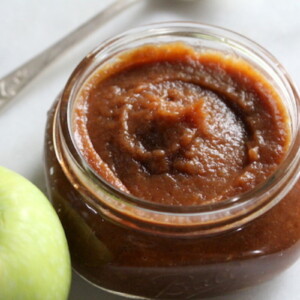
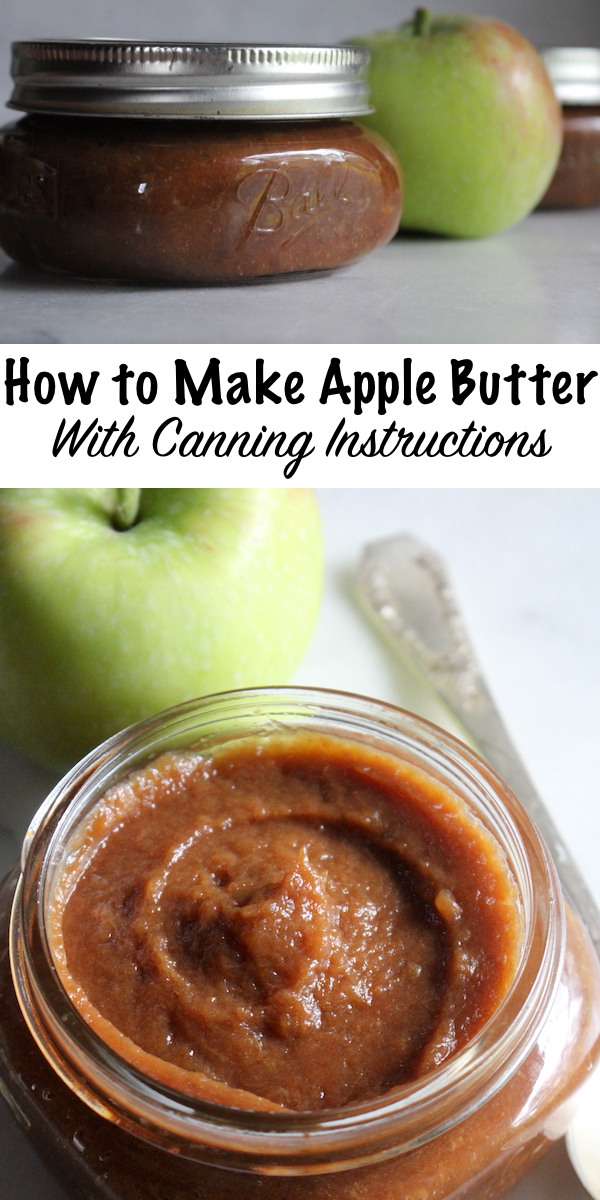
Apple butter slow-cooks humble apples down into a thick, spiced, spreadable preserve with a deep brown color and a rich caramel flavor, all without added pectin. It’s one of the oldest ways to put up an apple harvest, and it’s still one of the most rewarding.
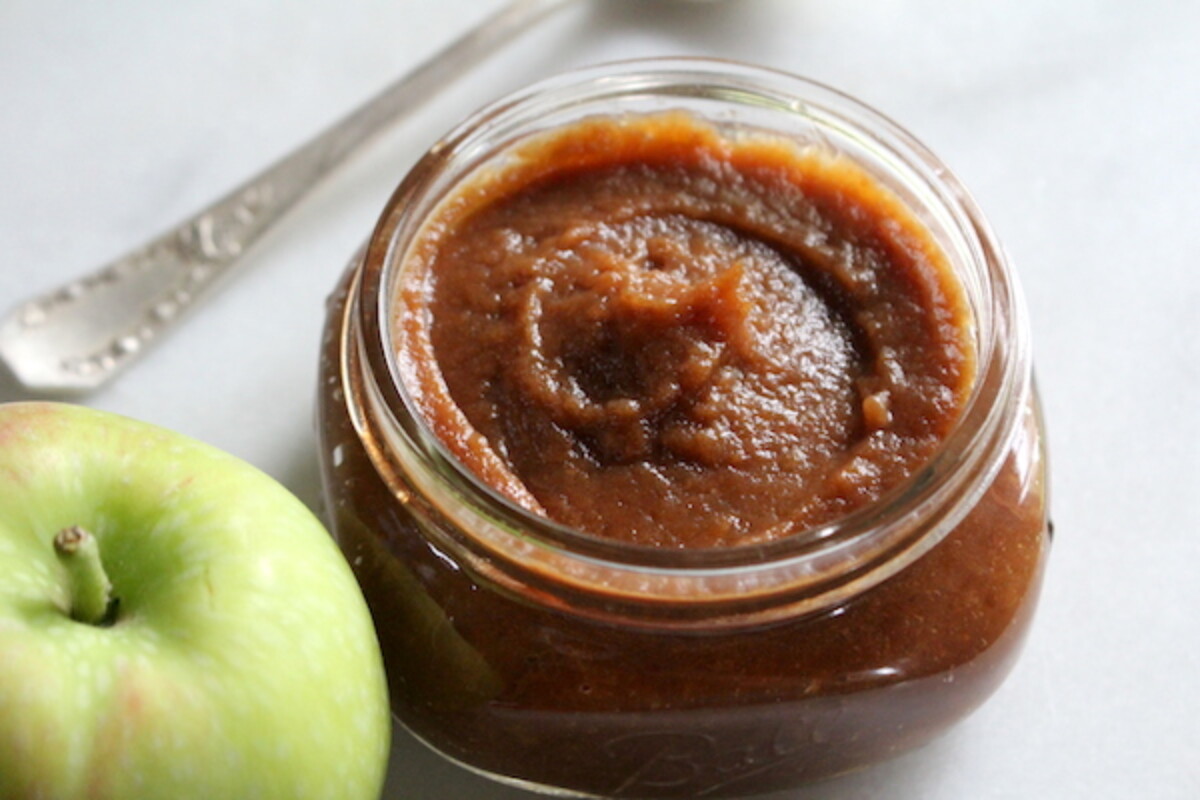
Table of Contents
- A Short History of Apple Butter
- Notes from My Homestead
- Ingredients for Apple Butter
- How to Make Apple Butter
- How to Tell When Apple Butter Is Done
- Apple Butter Recipe Variations
- What to Avoid in an Apple Butter Recipe
- Canning Apple Butter
- Altitude Adjustments
- Yield Notes
- Storage Options
- Ways to Use Apple Butter
- Apple Butter FAQs
- Other Ways to Preserve Apples
- Classic Apple Butter Recipe
- More Apple Recipes
The whole thing comes down to patience. There’s no pectin to fuss with and no gel stage to hit. You just cook apples low and slow until their natural sugars caramelize into something far greater than the sum of its parts.
Making apple butter is all about low, slow cooking. If someone asks you how to make it, it’s almost a little patience test. Pause for fifteen seconds before you answer, and if they can’t handle that much suspense, this probably isn’t the recipe for them.
A Short History of Apple Butter
The tradition of making apple butter goes all the way back to the Middle Ages, long before home canning existed as a method of food preservation. Apples were cooked in a copper kettle over a very low fire for ten to twelve hours, stirred the whole time with a long wooden paddle. That low, slow heat caused the natural apple sugars to caramelize, giving the finished butter its deep brown color and rich, almost caramel flavor.
As lovely as it tastes, slow-cooked apple butter was developed as a way to preserve the harvest. Sugar is a natural preservative, and cooking the apples down for hours concentrated their sugars enough to extend the shelf life of the spread. Sealed hot under a little oil or wax, apple butter would keep for quite a while. At that point in history, sugar (mostly in the form of honey) was expensive, so anything naturally sweet was a real treat. Traditional apple butter held no added sweetener at all, and it was sometimes so sweet on its own that a splash of cider vinegar was stirred in to balance it with a bit of tang.
These days, apple butter is usually made with shortcut methods that take far less time. Added brown sugar isn’t traditional, but it speeds things up in the canning kitchen, and most modern recipes include a fair amount of vinegar as a nod to tradition. Here’s the thing worth remembering: anything you add beyond the apples themselves is completely optional. Apples are acidic enough to be safely canned at home, and most modern varieties are sweeter than their medieval ancestors, so they can stand on their own. Any sugar, vinegar, or spice suggestions are exactly that, suggestions.
Notes from My Homestead

My own apple butter is usually just apples, nothing else. I like low-sugar jams, and a no-sugar apple butter suits me fine. What can I say, I’m a traditionalist. The apples we grow here are plenty sweet on their own, and cooking them down for a day concentrates that sweetness into something I’d never want to bury under several cups of sugar.
My last batch started with five pounds of apples and took about thirty hours in the slow cooker. I ran it mostly on low and turned it down to keep warm overnight as a safety precaution. It’s a slow project, but almost all of that time is hands-off, and the house smells incredible the whole way through.
Occasionally, I’ll add a bit of sugar with very tart apples, but 1/2 to 1 cup is plenty for me. I’ve included instructions here for a full sugar batch (3 cups for 6 lbs of apples), but you can reduce it as much as you like and still get a delicious preserve.
Ingredients for Apple Butter
The recipe below is Ball’s Sweet Cider Apple Butter, adapted from the Ball Complete Book of Home Preserving. The beauty of it is how little it asks of you. The apples do nearly all the work, and almost everything else is adjustable to your taste.
- Apples: Softer, sweeter varieties like Gala, Fuji, McIntosh, Golden Delicious, and Honeycrisp cook down smooth and need less sugar. Firmer apples like Braeburn, Cortland, and Pink Lady work too, they just take a little longer. A mix of sweet and tart gives the most interesting flavor.
- Sweet apple cider: This helps prevent the apple butter from burning at the start, and gives added body and extra apple flavor as the butter cooks down. Use sweet cider rather than hard cider, and plain water or apple juice works in a pinch.
- Sugar: Anywhere from 1/2 cup to 3 cups, granulated or brown. The full Ball recipe calls for 3 cups, but it works wonderfully as a low-sugar recipe with as little as 1/2 cup (or going all the way to no sugar), since the apple sweetness naturally concentrates as it cooks down. Using part or all brown sugar gives it a deeper, caramel flavor, a little like Ball’s salted caramel pear butter. For a less-sweet butter with a different character, Ball also suggests swapping the 3 cups of sugar for 1 cup of honey.
- Cinnamon and cloves: 1 1/2 teaspoons ground cinnamon and 1/2 teaspoon ground cloves give it that classic warm spice. They’re adjustable, and nutmeg, ginger, or allspice all work too. Keep a light hand, since the spice flavor intensifies as the butter cooks.
- Cider vinegar or lemon juice (optional): A little tang balances the sweetness. Don’t add more than 1/4 to 1/2 cup to a 5 to 8 pound batch. The apples are already acidic enough for safe canning, so this is purely for flavor.
If you’re ambitious, save the peels and cores to make apple scrap vinegar. You can also skip peeling entirely and run the cooked apples through a food mill, which strains out the skins and seeds for you.
Thank you for sharing the history of apple butter recipes and for being diligent about canning safety. You answered all of the questions I had after reading other recipes I have come across on the internet.
How to Make Apple Butter
No matter which method you use, apple butter happens in two stages. First, you cook the apples down into a smooth sauce, then you keep cooking that sauce, low and slow, until it darkens and thickens into butter.
Cook the Apples into Sauce
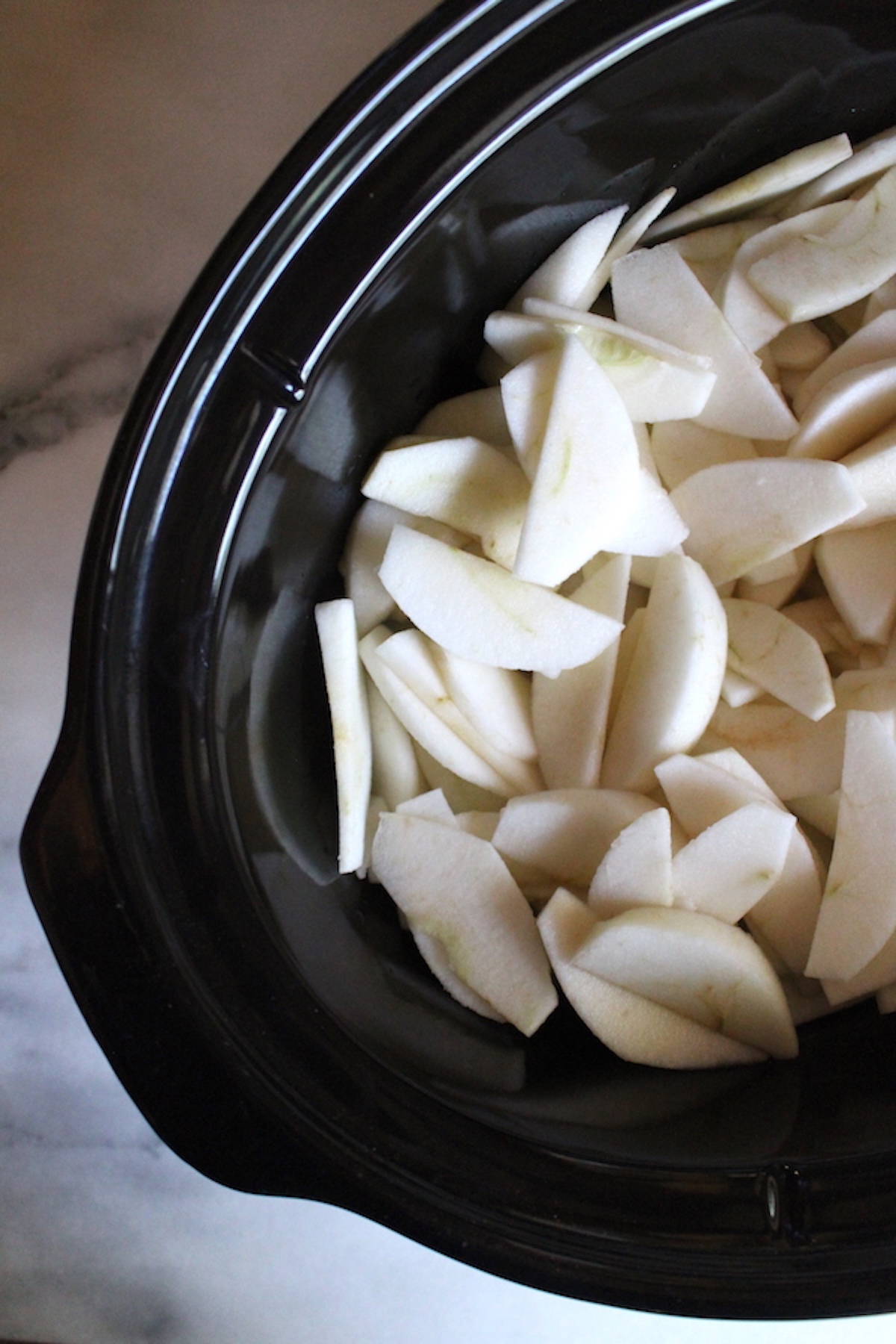
Peel, core, and chop your apples, or leave them quartered if you plan to run them through a food mill later. Add them to a large pot with the sweet apple cider. You’re making applesauce first, since you need a smooth sauce before you can make butter. Bring it to a soft boil, then reduce the heat and simmer, stirring often, until the apples are soft and mushy.
On the stovetop this takes about 25 to 40 minutes, or about 3 hours in a slow cooker on high. Once the apples are soft, run the mixture through a food mill, food processor, or immersion blender to smooth out any chunks. If you’d rather skip ahead, you can even start with ready-made applesauce.
Slow-Cook into Butter (Crock Pot Method)
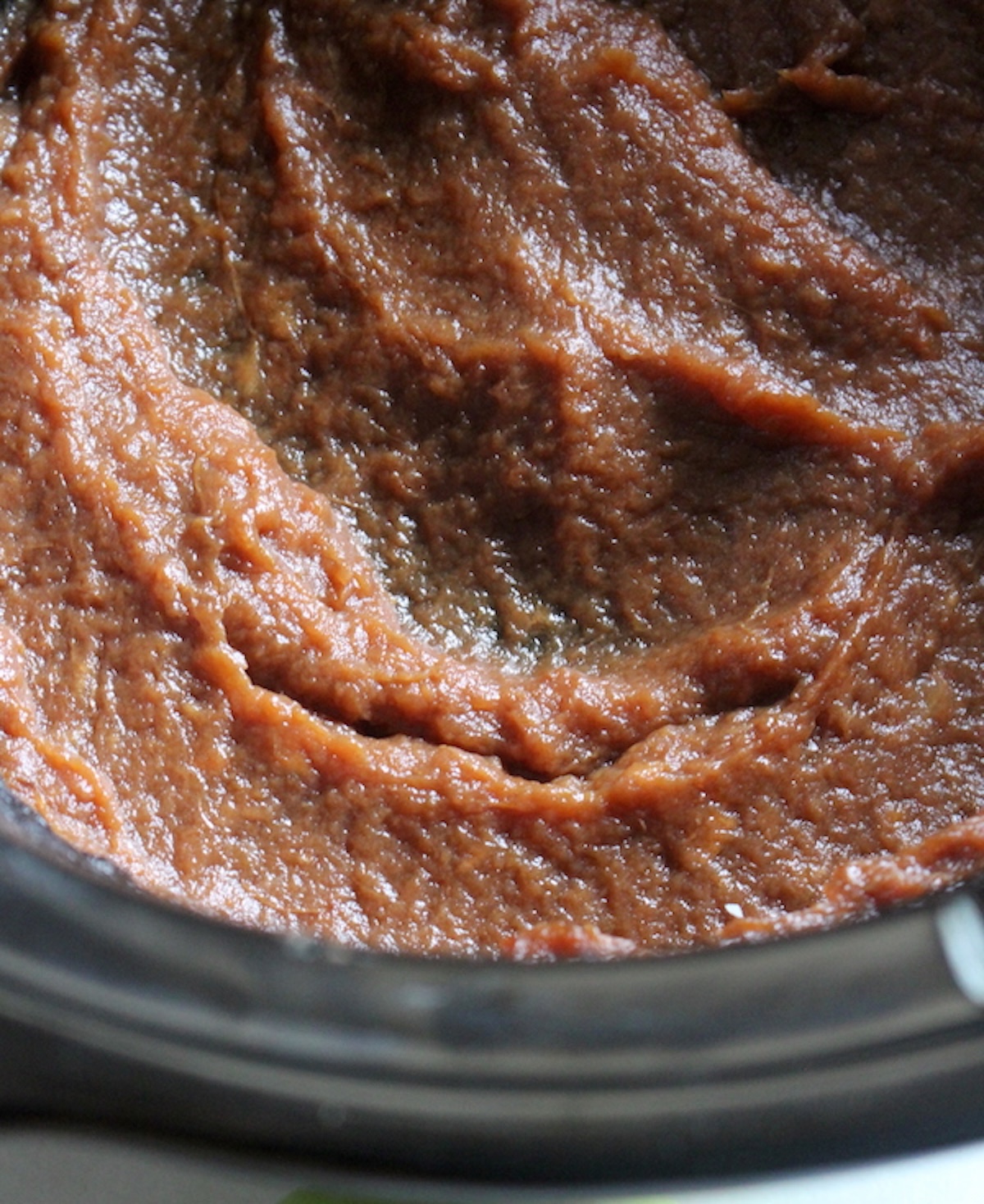
Put the apple puree into a large pot and stir in the sugar, cinnamon, and cloves, warming over medium-high heat until the sugar dissolves. Bring it to a slow boil, then reduce the heat and keep it at a gentle boil, stirring often so it doesn’t scorch. With the sugar and cider in the mix, the butter thickens fairly quickly, in about 30 to 45 minutes on the stovetop. In a slow cooker, return the sweetened puree to the pot and cook another 2 to 4 hours on high or 6 to 8 hours on low.
If you’re using a slow cooker, prop the lid open just a crack with a chopstick or wooden skewer so moisture can escape and the butter can concentrate without scorching. Stir every hour or so, more often as it thickens. A sweetened batch finishes in a few hours, while a no-sugar version cooked the traditional way can run much longer, even overnight, as it slowly reduces and the natural sugars caramelize. My own no-sugar batches have taken the better part of a day.
Stovetop Apple Butter
The stovetop is the quickest way to make this sweet cider version, since the added cider and sugar help it set up in well under an hour. Use a heavy, thick-bottomed pot like an enameled cast iron Dutch oven so the sugars don’t scorch, and keep the heat at a gentle boil rather than a hard one. Stir often, especially as it thickens toward the end. If you ever cook a no-sugar batch this way, plan on a much longer, lower simmer, since there’s no sugar to help it thicken.
How to Tell When Apple Butter Is Done
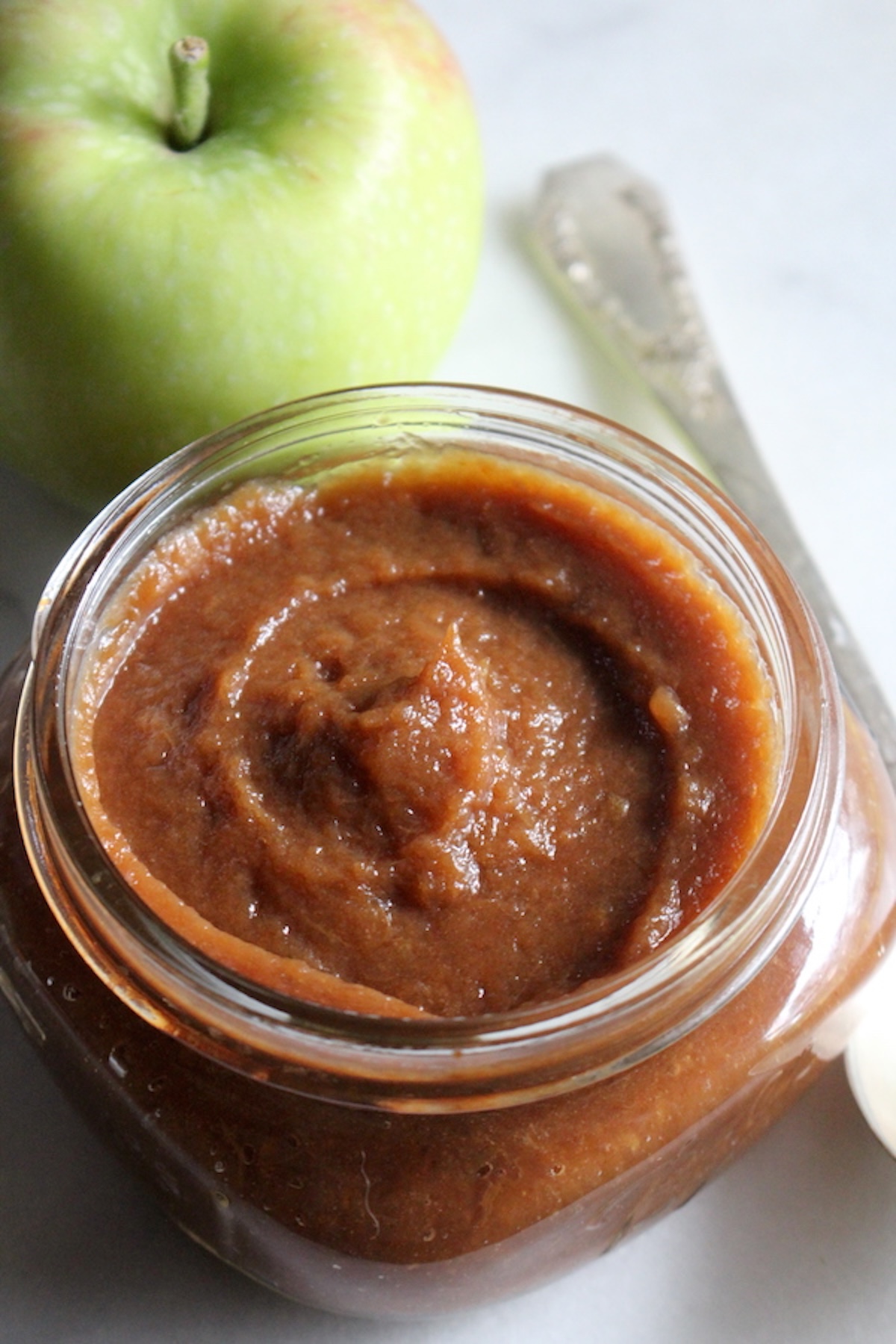
Apple butter is finished when it’s thick, deep brown, and glossy, with no watery liquid left. Two simple tests confirm it:
- The spoon test: Lift a spoonful and hold it away from the steam for two minutes. If the butter stays mounded on the spoon instead of running off, it’s ready.
- The plate test: Spoon a small dab onto a cold plate. If no rim of liquid separates out around the edge, the butter is done.
Apple Butter Recipe Variations
Apple butter is really about technique, and the recipe itself is up to your taste. Want cinnamon? Add it. Sweeter butter? Add sugar. A hint of tart? A little cider vinegar or lemon juice. My version is just apples, but if you’d like a time-tested recipe with a bit more going on, here are a few worth a look.
- The Joy of Cooking (1975): Cook any quantity of apples into applesauce with a little water, then measure the strained sauce. For each cup of sauce, add 1/2 cup sugar, 1 tsp cinnamon, 1/2 tsp cloves, and 1/4 tsp allspice. This one runs sweet and a touch heavy on cloves for my taste, but it’s lovely otherwise.
- Stocking Up (1977): A unique one that starts with 2 parts peeled, cored apples to 1 part apple cider, and nothing else. All that cider brings plenty of extra apple flavor and sugar. The apples are boiled in the cider until they reach applesauce stage, then cooked slowly, stirring often, until thick.
- Canning for a New Generation: A newer canning book I reach for because it has interesting recipes and reasonable amounts of sugar. It starts with 6 lbs apples plus 2 cups apple cider, 1 1/2 cups brown sugar, 2 tsp cinnamon, 1/2 tsp cloves, and a little allspice.
I’ve left out the Ball canning book recipes here, which call for about a cup of sugar per pound of fruit. That works out to roughly two cups of sugar per cup of apple puree, which is more sugar than I put in even my sweetest jams.
What to Avoid in an Apple Butter Recipe
There are plenty of rough apple butter recipes out there, in books as well as online. When I was first learning to preserve food, I made several of them. Here’s what to watch for:
- Too much vinegar: The National Center for Home Food Preservation has safe canning instructions for apple butter, but their flavor balance can be heavy. Their recipe calls for 2 cups of vinegar to 8 pounds of apples. I made it once and had to throw the batch out, it made me gag. Stick to no more than 1/4 to 1/2 cup of vinegar or lemon juice in a 5 to 8-pound batch.
- Too much sugar: This is a matter of taste, but at a certain point, it stops being apple butter and turns into apple jam or apple candy. This recipe gives a wide range, from 1/2 cup up to the full 3 cups, and I lean toward the lower end. Once you get past about 1/2 cup of sugar per pound of fruit, you’ve drifted into jam territory.
- Too much spice: Warm spices get intense and even bitter in large amounts. I’d keep it to about 1/2 teaspoon of spice per pound of apples.
Canning Apple Butter
Once you’ve cooked your apple butter, it isn’t shelf-stable yet. A few jars will keep for several weeks in the refrigerator, but if you want a preserve that lasts all winter, canning is the way to go. If you’re new to canning, start by reading my beginner’s guide to waterbath canning for the basics.
The biggest challenge with canning apple butter is getting the air bubbles out, since it’s so thick. I like straight-sided jars, such as wide-mouth pint mason jars for big batches or straight-sided half-pint jam jars, because they pack cleanly. One time I tried to be fancy with short, wide-mouth half-pint jars, and I regret it. They look lovely, but they’re really hard to de-bubble.
Ladle the hot butter into clean, hot jars, leaving 1/4 inch headspace, and run a bubble tool or thin spatula around the inside to release trapped air. Adjust the headspace, wipe the rims clean, and cap with two-part canning lids tightened to fingertip tight.
Process half-pint and pint jars for 15 minutes, adjusting for altitude (see below). These tested times are for half-pints and pints, so stick with those jar sizes rather than quarts.
When the time is up, turn off the heat and let the jars sit in the water for 5 more minutes before lifting them out. This stabilizes the temperature and helps prevent siphoning. Cool the jars on a towel, then check the seals after 24 hours and refrigerate any that didn’t seal.
Altitude Adjustments
Water boils cooler at higher elevations, so processing times increase. These follow the National Center for Home Food Preservation’s tested times for reduced-sugar apple butter, which are validated for half-pint and pint jars:
- 0 to 1,000 feet: 15 minutes for half-pints and pints.
- 1,001 to 6,000 feet: 20 minutes for half-pints and pints.
- Above 6,000 feet: 25 minutes for half-pints and pints.
Yield Notes
Apple butter cooks down dramatically, so plan for a much smaller finished yield than you started with.
- About 6 pounds of apples with 3 cups of sugar makes roughly 8 half-pint jars, or 4 pints, depending on how thick you cook it down and how much sugar you use. Low sugar variations will make around 5 to 6 half pints.
- Scaling up: Apple butter has no gel to worry about, so you can make as large a batch as your slow cooker or pot will hold. A bigger batch simply takes longer to cook down.
Storage Options
- Refrigerator: Uncanned apple butter keeps for several weeks in the fridge.
- Freezer: It freezes well in freezer-safe containers with a little headspace, and will keep for a year or more.
- Pantry (canned): Sealed, water bath-canned jars are shelf-stable in a cool, dark spot. Quality is best within 12 to 18 months.
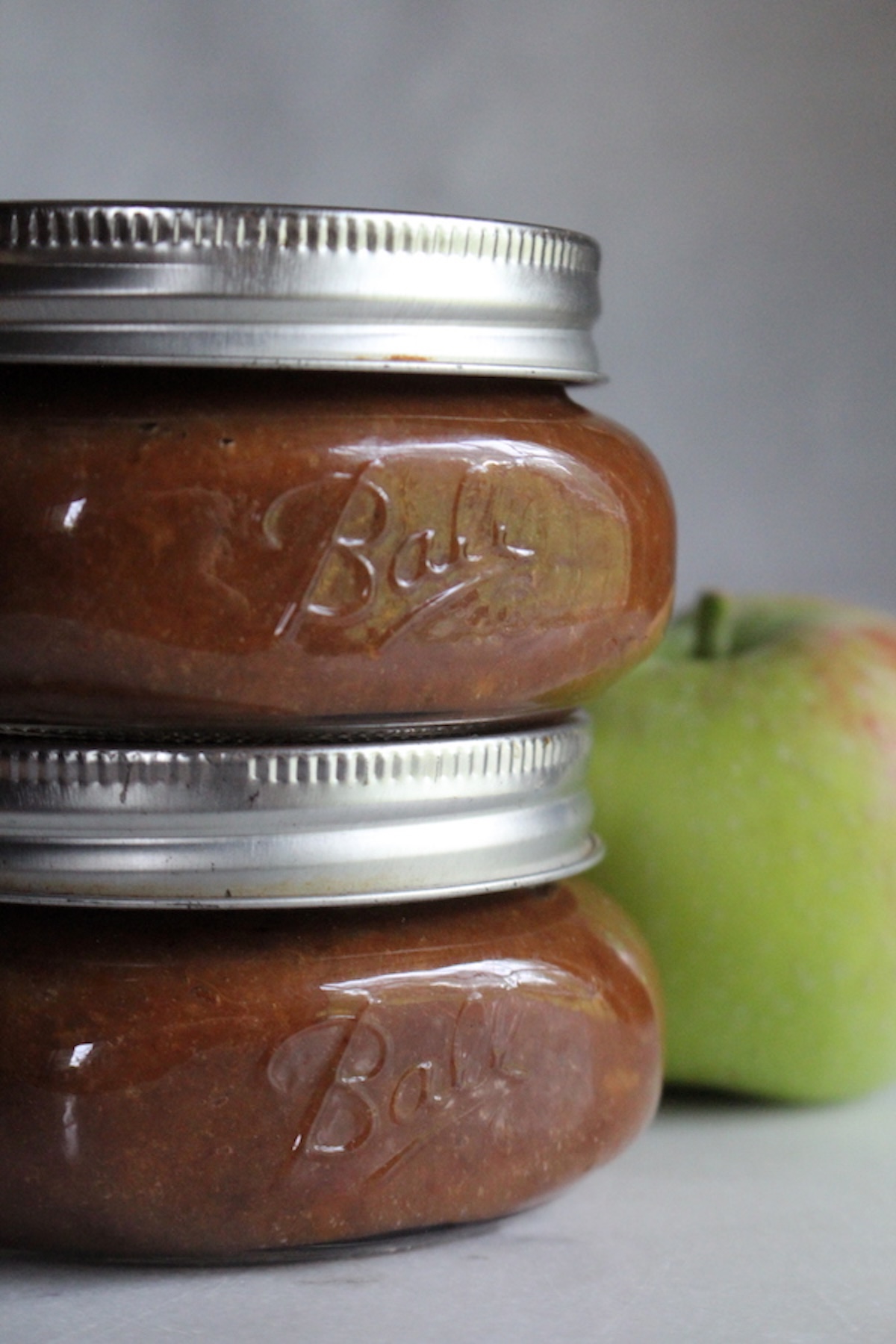
Ways to Use Apple Butter
It’s one thing to make apple butter, and another to use it up. Slathered on warm toast or a biscuit, it’s hard to beat. Where it really shines, though, is in baking. Apple butter is basically a creamy, concentrated caramel apple, and it adds wonderful flavor and moisture to muffins, quick breads, and pancakes, or stirred into oatmeal and smoothies. It’s also lovely alongside pork or sharp cheese on a cheese board.
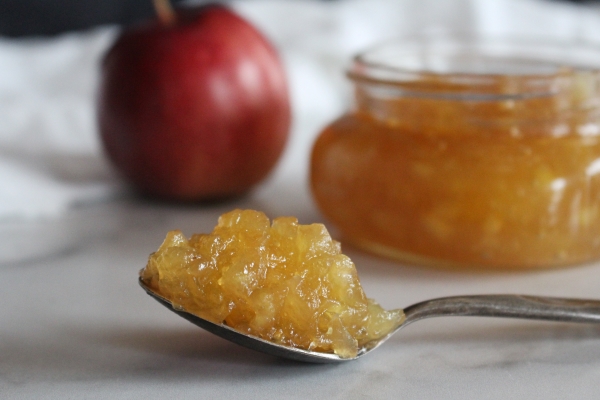
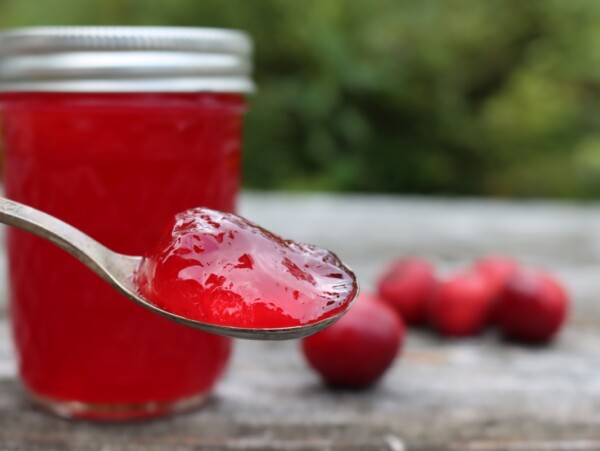
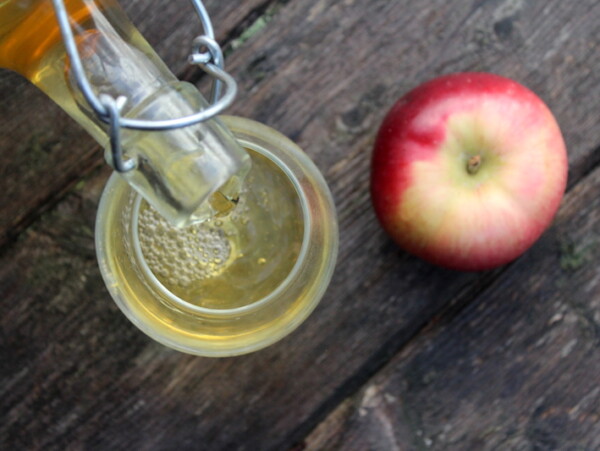
If you catch the apple-preserving bug, there’s plenty more to do with a good harvest. Try apple jam, crabapple jelly, canning apple pie filling, or canning apple cider. You can press the harvest into hard cider or apple wine, cook some down into boiled cider, or even try extracting sugar from apples. You’ll find the whole list in my 30+ ways to preserve apples and my full collection of fruit canning recipes.
Apple Butter FAQs
Almost any apple works, and a mix of sweet and tart gives the most interesting flavor. Classic choices include Jonathan, Winesap, Stayman, Golden Delicious, and McIntosh. Softer, sweeter varieties break down quickly and need less added sugar, while firmer apples hold up to long cooking. Use whatever you have on hand, including windfalls and seconds, since they all cook down the same.
No. Apples are sweet and acidic enough to make and safely can apple butter with no added sugar at all. Sugar is added only for flavor, never for safety, so it is completely optional. Traditional apple butter contained no added sweetener, and most modern apples are sweet enough to stand on their own.
No. Apple butter thickens through long, slow cooking that evaporates moisture and concentrates the natural fruit, not through a pectin gel like jam or jelly. There is no need to add any pectin.
Following the National Center for Home Food Preservation’s tested times for reduced-sugar apple butter (which works with all apple butter recipes), process half-pint and pint jars for 15 minutes at elevations up to 1,000 feet, 20 minutes from 1,001 to 6,000 feet, and 25 minutes above 6,000 feet. These times are validated for half-pints and pints, so use those jar sizes rather than quarts. Let the jars rest in the canner 5 minutes after the heat is off before removing them.
Yes. Apple butter freezes very well in freezer-safe containers with a little headspace, and will keep for a year or more. Freezing is a great option if you made a small batch or simply don’t want to can. It also keeps for several weeks in the refrigerator without any processing.
Other Ways to Preserve Apples
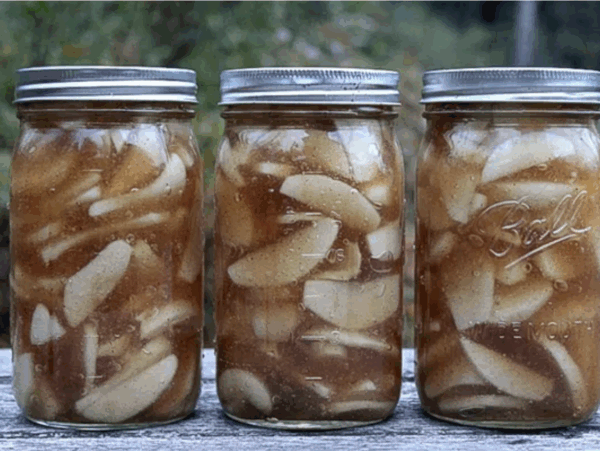
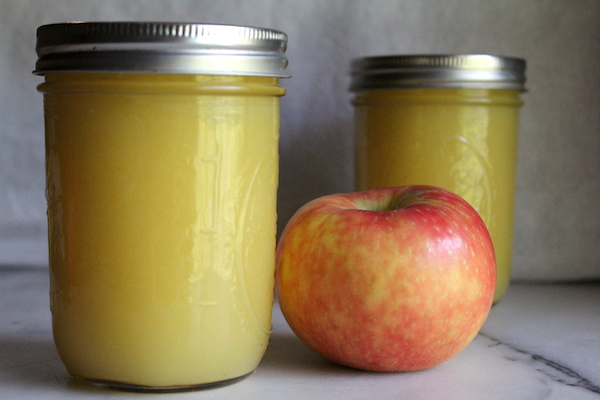
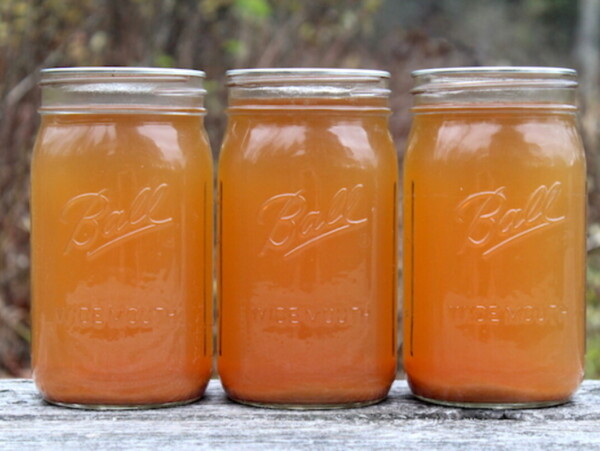
Did you make a batch of apple butter? Come back and give the recipe a ⭐⭐⭐⭐⭐ star rating and tell me in the 📝 comments how it turned out!
And make sure you stay in touch with me by following on social media!
Classic Apple Butter
Equipment
- Large Heavy-Bottomed Pot or Slow Cooker
- Food Mill or Immersion Blender
- Half-Pint or Pint Mason Jars (straight-sided)
Ingredients
- 6 lbs apples, about 18 to 24 medium
- 2 cups sweet apple cider, not hard cider; water or apple juice in a pinch
- 1/2 to 3 cups granulated or brown sugar, see notes; works wonderfully as a low-sugar recipe
- 1 1/2 tsp ground cinnamon
- 1/2 tsp ground cloves
Instructions
- Rinse the apples under cool running water. Peel and core them, saving the peels and cores for apple scrap vinegar if you like. Cut into quarters or smaller.
- Place the apples in a large pot with sweet apple cider. Bring to a soft boil, then reduce the heat and simmer, stirring often, until the apples are soft and mushy, about 25 to 40 minutes (or about 3 hours in a slow cooker on high).
- Run the soft apple mixture through a food mill, food processor, or immersion blender until smooth.
- Place the puree into a large pot and stir in the sugar, cinnamon, and cloves. Warm over medium-high heat until the sugar dissolves.
- Bring to a slow boil, then reduce and cook at a gentle boil, stirring often to prevent scorching, until the butter mounds on a spoon. This takes about 30 to 45 minutes on the stovetop, or another 2 to 4 hours in a slow cooker on high or 6 to 8 hours on low, with the lid propped open a crack.
- Ladle the hot butter into clean, hot jars, leaving 1/4 inch headspace. Run a bubble tool around the inside to release trapped air, adjust headspace, wipe the rims, and cap with two-part lids to fingertip tight.
- Process half-pint and pint jars in a boiling water bath canner for 15 minutes (adjust for altitude, see notes). These tested times are for half-pints and pints, so use those jar sizes rather than quarts.
- Turn off the heat and let the jars rest in the water 5 minutes before removing them. Cool on a towel, check the seals after 24 hours, and refrigerate any jars that did not seal. To skip canning, store in the refrigerator up to 3 weeks or freeze up to 6 months.
Notes
Nutrition
Nutrition information is automatically calculated, so should only be used as an approximation.
More Apple Recipes
Find the perfect recipe
Searching for something else? Enter keywords to find the perfect recipe!









I am wanting to make the apple butter because a friend has said she can’t find a good one anywhere. But I myself have never had apple butter. You say to cook it until it is the right consistency. What might that be?
Thank you for your time and your recipes. I’ve am about to try your apple pie recipe today as well!
Sue
I would just look at the pictures in the post and that will give you an idea of how thick it will be. It should be thick enough to hold its shape on the spoon.
Thank you for this recipe and all the great info!! I would like to make apple butter from the apple pulp left from making hard apple cider. It is just apples with their peelings, nothing else added. I’m assuming I will need to add a little water to get it started as I’m cooking it down. I’m concerned about the acidity level. Do I need to add vinegar to replace the apple juice that was extracted for the cider? Thank you!!
In theory, all that’s left after pressing apples is fiber, unless they’re not pressed all that well. The apple butter you make here won’t be all that flavorful, or sweet, but still it can be done. You will need water so it doesn’t burn, not sure how much, you’ll just have to watch it until cooks to a smooth apple sauce consistency and then let it start to concentrate. Sugar to taste.
I’m honestly not sure on the acidity. I’d think it’d be fine as is and acidic enough, but I honestly have no idea. Many apple butter recipes do include cider vinegar anyway, to balance the concentrated sweetness, so I’d say it couldn’t hurt, especially when you’ll need to add a good bit of sugar.
Good luck, and let me know how it goes!
Is it necessary to peel the apples? I make my apple sauce with peels and put through a blender to puree. The apples from my tree are quite small and soft (hard to peel without making a lot of waste).
If you want to make the apple butter without peeling the apples you can but most recipes that use the peel are not canned. Unpeeled apples could possibly alter the processing time and food safety so it is generally recommended that you peel them.
Have you ever used a pressure cooker for this? If so, were you successful or not so much?
Are you asking about using a pressure cooker for the cooking or the canning process?
I used to have a recipe for oven apple butter, but can’t find it anymore. Do you happen to have any info on that?
I would just follow the instructions listed in the post and put it in the oven at about 250 to 300 F for several hours until it is the right consistency and color.
I remember one has to stir it every so often ( I think every 15 minutes ). I will try it. Thanks.
You’re welcome. Please let us know if you give it a try.
Awesome recipe and info. Thanks!!
You’re very welcome.
There actually isn’t a printable recipe on this one because there are several different methods and recipes shared. All of the recipes are in the post along with the canning instructions and links to recipes that use the finished apple butter.
Hi! Can you tell me how much this recipe yields? Thank you
This isn’t really a recipe as such, more just a process. My particular slow cooker holds about 5lbs of apple slices, and if I remember correctly that made about 3-4 half-pint jars (1.5 to 2 pints). The actual yield will depend on how long you cook it, as some people finish their apple butter a bit thinner, and it’ll also depend on the apples you use. The more water they contain, the more it’ll cook-off and lower your yield.
How to make apple juice from the apple scrap/pealing/
Follow the instructions in this post on canning apple juice. The recipe starts with whole apples just chopped up and then simmered to extract juice, but you can use cores and peels instead: https://practicalselfreliance.com/canning-apple-juice/
Your apple butter cooking is what I like. No sugar, no spices , just the slow cooked rich apples and cider into apple butter. The way Grandma made it!
Love it!
I made the apple butter with only apples and it is fantastic. Making 2 more batches thanks so much.
You’re welcome, Sue. I’m glad you liked it.
For the USDA recipe did you blend the two cups or vinegar Into the apples? I was confused by the recipe until I had someone explain it to me on Reddit. Rereading the instructions again I finally understood the apples are boiled in the cider and vinegar until soft and then the apples alone get blended and the cooking solutions gets dumped. I hope this helps! Happy Fall!
I am sorry for the confusion. I am not sure which recipe you are referring to here though.
Does the apple butter need to be hot before canning it? Or can I put it in the jars cold and then bring the canner to a boil and process them?
It needs to be hot or it may not heat through in the jars, even if you bring the canner up from cold. Put it in a separate pot, warm it gently and pack it into the jars hot. It should only take a few minutes to come up to temperature in a saucepan, even if it’s totally cooled before you start.
My best friend loves sweet potatoes and asked a curious question of me, can you make sweet potato butter? We’ve made apple and pear but was wondering about sweet potatoes? I know it sounds weird but she uses sweet potatoes as a spread on her biscuits instead of jam or apple butter and it’s quite tedious to make them just for a few biscuits. Any ideas?
That sounds amazing, and yes, I’m sure you could make it. I’d follow a pumpkin butter recipe.
The thing is, they’re a low acid food so you wouldn’t be able to can it. It’d have to be made and stored in the refrigerator for use within a few weeks. Still, I imagine it’d be totally worth it.
Ratio of Splena to sugar. Is it equal? I think I want it barely sweetened…
Fruits are safe for diabetics…
Don’t listen to anyone research it….
Honestly, I just make it with apples and no sugar. Use honeycrisp apples, they’re plenty sweet, and the sugars carmelize really nicely to create a sweet spread without added sugar. If you’re set on splenda or something like that I’m not sure what to tell you, I’ve never used it. Good luck!
When any of these recipes has the ingredient “apple cider”, is that apple cider vinegar? Thank you. And I just wanted to say that your website with all the information is amazing!!!!!! Thank you for putting this all together!!!
Thank you! In this case, apple cider is apple cider, not vinegar.
I recommend not adding spices or sugar until the end of cooking. Taste and see what it needs. I usually cook my apples with a little cider and run them through a food mill to make applesauce. Then cook in my old avocado. Green crock pot from the ‘70s. The old crock pots cook with a lower heat. 8 Cups of applesauce cooked down to A little over 4 cups of apple butter. I added 1/2 C + 2 Tbsp. Brown sugar, I tsp. Cinnamon and 1/8 tsp nutmeg. Tasted like apple pie in a jar!
I just finished canning my apple butter and am noticing some air bubbles! Do I need to dump it all out and reprocess without air bubbles or will it still last?
It is really difficult to get all the air bubbles out of apple butter, mine always has some. You want to minimize it because extra air in the jars (usually as too much headspace) can allow mold to grow. That said, it takes A LOT of extra headspaces to make that happen. I’m talking like an inch of headspace when something’s supposed to have 1/4. Even still, if that happens, you’ll see it.
Personally, I wouldn’t worry too much about it. It’s a high acid and high sugar product, and historically it kept WITHOUT canning. That’s not really advised anymore, but it just goes to show that apple butter is a pretty safe one.
Forgot, cinnamon and ginger have helped me on my quest to lower my sugar. Have gone from hitting 300’s after meal suggested by health experts to now mid to high 100’s in matter of weeks. anything you could suggest to lower carbs in apple butter would be greatly appreciated.
Checkout Monkfruit. I think it tastes a lot like sugar https://www.thediabetescouncil.com/why-monk-fruit-is-a-power-food-for-diabetes (I really have a great distaste for stevia. The Monkfruit is yummy and is supposed to actual help sugar levels. Unfortunately, it is quite expensive. But it’s worth it for your health and taste buds.
https://www.thediabetescouncil.com/why-monk-fruit-is-a-power-food-for-diabetes/
I am diabetic on keto diet and slowely but surely getting off meds, but I low apple butter. Can I add stevia instead of sugar for taste? Also curious about carb content per tablespoon. I have been without apple butter many years and long for the taste.
You can definitely add stevia for taste, but I’d suggest adding it all the way at the end since stevia can get bitter if you cook it for extended periods. I’m not sure about the carb content per tablespoon, but honestly, I’d imagine it’d be reasonably high. You’re concentrating the apples down quite a bit. If I had to guess, I’d say it’s like a whole apple worth of carbs per tablespoon.
I used swerve brown sugar and it is amazing
Good to know!