
Affiliate disclosure: This post may contain affiliate links. Please see our Privacy Policy.
Dandelion tincture captures the bitter spring-tonic properties of one of the most generous medicinal weeds in the yard, preserved in alcohol so you can take it year-round. Herbalists reach for it as a gentle digestive bitter, a liver-supportive tonic, and a mild diuretic that helps move lymph and clear sluggish systems after a long winter indoors.
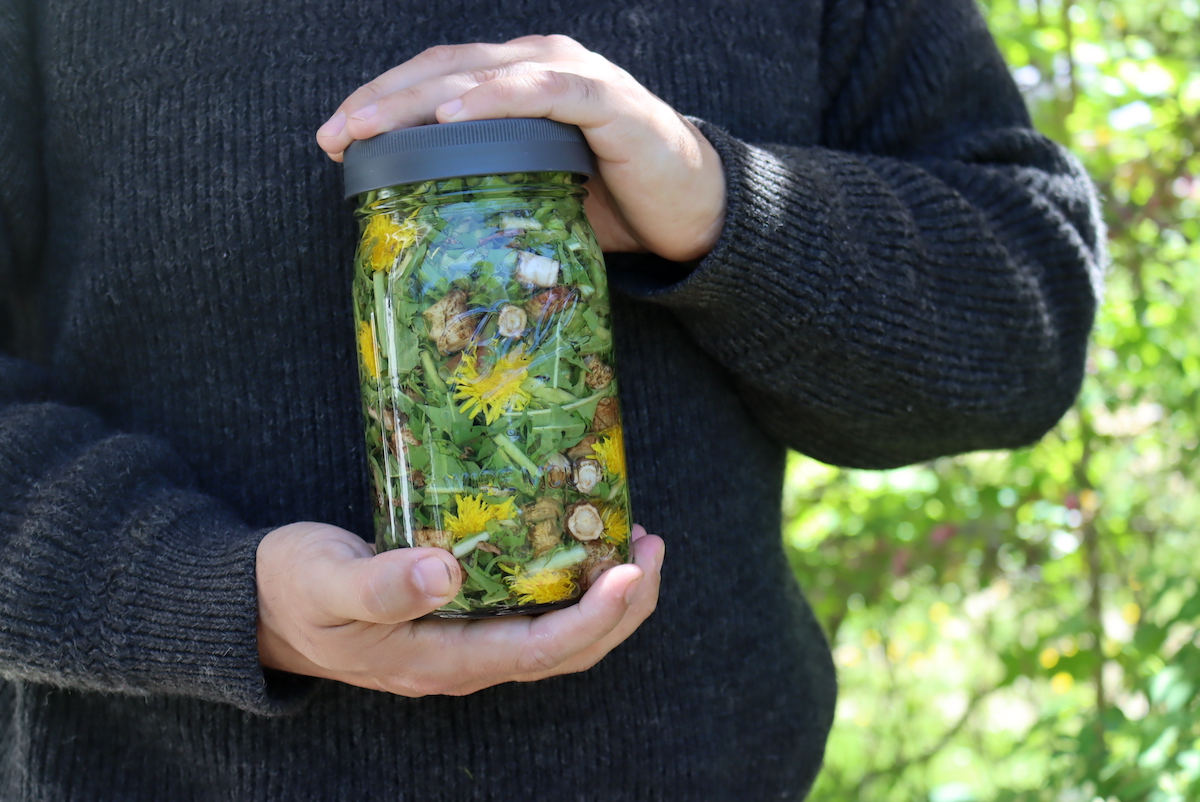
Table of Contents
- Notes from My Homestead
- What Dandelion Tincture is Used For
- Choosing Your Dandelion Material
- Ingredients for Dandelion Tincture
- Equipment for Dandelion Tincture
- How to Make Dandelion Tincture
- A Note on Alcohol Percentage
- Dandelion Tincture Dosage
- Storage and Shelf Life
- Recipe Tips & Variations
- Tincture Formulations
- Ways to Use Dandelion
- Dandelion Tincture FAQs
- Dandelion Recipes & Remedies
- Dandelion Tincture Recipe
- Herbal Tincture Recipes
After a long Vermont winter, the first dandelions in the yard are a welcome sight. Their bright sunny blossoms signal that spring has actually arrived, and their golden faces feed the soul as much as they feed the bees.
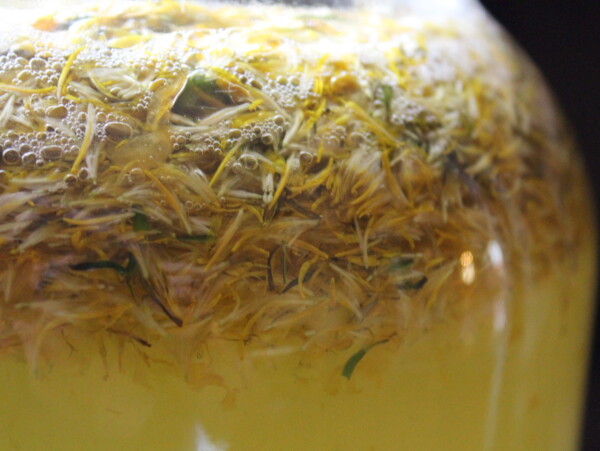
Every part of a dandelion is edible and medicinal, from the bright yellow flowers down the stem to the leafy spring greens and into the soil with the long tap root. The leaves go into fresh spring salads. The flowers make a tasty dandelion wine and an even more impressive dandelion mead. The roots can be cooked like carrots or roasted into dandelion root coffee. And every part of the plant can be preserved year-round in a tincture.
Dandelion arrives just when our bodies need a pick-me-up after a winter of heavy foods. It’s a bitter tonic, perfect for cleansing the system and boosting energy so you can make the most of sunny spring days. Beyond eating dandelions in season, you can preserve their medicinal benefits for use year-round as a simple tincture you’ll reach for through the rest of the year.
You can make it from just the roots for the most concentrated liver and lymph action, or as a whole-plant tincture that captures the medicinal benefits of every part of the plant. Either way, you’ll follow the standard tincture-making method: chop, jar, cover with alcohol, wait six to eight weeks, and strain.
Notes from My Homestead

On our 30 acres here in Vermont, we have enough wild dandelion to harvest several tractor-trailer loads each spring without really denting the population. We’re basically dandelion farmers. For the most part, I leave them in place to feed the bees, but I do weed out my raised garden beds each year before planting time, and that’s where the year’s tincture material comes from. A few wheelbarrow loads of whole dandelions come up in the process of clearing the beds, without me even touching the acres of fields surrounding the house.
That’s more than enough for all the dandelion tincture I could ever want, plus every other dandelion recipe in the book. I start a fresh quart jar of whole-plant tincture every spring when I’m pulling them from the garden beds, then a second jar of root-only tincture in early fall when the roots are fattest and most medicinal. Both jars get tucked into the back of the pantry to macerate while I work through last year’s batch.
This honestly might be the most detailed recipe I have ever read in my life. And while normally I would say that as a complaint (“just get me to the recipe already”), today I mean it as the biggest compliment. You are so insanely knowledgeable and it shows through your writing.
What Dandelion Tincture is Used For
According to the herbalist Julie Bruton-Seal in her book Backyard Medicine, dandelion tincture is traditionally used for:
- Skin problems
- Sluggish liver
- Constipation
- Urinary problems
- Fluid retention
- Arthritis
- Gout
- Hangovers
- Chronic illness
Dandelion is a well-known digestive herb. A few drops before meals helps wake up the appetite, and a few drops after meals can ease gas, indigestion, and heartburn. A 2022 review found that dandelion has been used for centuries to treat this kind of stomach trouble, and identified specific compounds in the plant that may explain why it works.
Dandelion is also a cleansing herb that supports healthy liver and kidney function. Mount Sinai’s herb library notes that herbalists use the root to support the liver and gallbladder, and the leaves to support the kidneys. A 2025 review of laboratory and animal studies found that dandelion root extracts protect the liver against damage from alcohol and other common toxins.
As a gentle diuretic, dandelion has been used across European, Asian, and Native American traditions as a remedy for water retention and urinary complaints. In a small human study, volunteers taking a fresh dandelion leaf extract showed a clear increase in how often they needed to urinate within hours of the first dose. Animal studies have also found that dandelion may help lower cholesterol and triglycerides, though this hasn’t yet been confirmed in people.
Herbalists also reach for dandelion tincture to promote healthy, clear skin, and traditionally it’s been used to help build energy and endurance after a long winter indoors.
Choosing Your Dandelion Material
Dandelion tincture is most often made one of two ways: as a root-only tincture or as a whole-plant tincture. The roots carry the most concentrated medicinal benefits when it comes to moving lymph and supporting liver function, and any tincture you buy commercially will almost always be made from just the roots. If you’re after a focused liver tonic, root-only is the way to go.
Herbalists are increasingly using whole-plant extracts that capture the medicinal benefits of every part of the plant in a single, more balanced tincture. The roots, the leaves, and the flowers each bring slightly different constituents to the jar, and a whole-plant tincture gives you all of them at once. This is what I make most years.
If you opt for whole-plant tincture, you can use as much aerial plant material as you like, but include plenty of well-washed roots in the mix to get the most medicinal punch. And if you want something light and floral instead of bitter and root-heavy, you can make a dandelion flower liqueur, which is delicious, but doesn’t carry the same medicinal weight as whole-plant or root-only tincture.
You can also use dried dandelion root if you’ve missed the harvest season. Since dandelion roots are often roasted to make dandelion root coffee, dried dandelion root is easy to find online and at most natural-food stores with a bulk herb section.
Ingredients for Dandelion Tincture
A tincture has just two ingredients: the plant material and the alcohol. Both choices matter.
- Fresh dandelion plant material (whole plant or roots only): Harvest from a clean, unsprayed location, well away from roads or anywhere that’s been treated with herbicide. You’ll need enough to pack a quart jar about 2/3 full once chopped, which works out to roughly 2 or 3 whole plants for a whole-plant tincture, or about 10 good-sized roots for a root-only tincture. Dried dandelion root works too at about half the volume.
- Vodka (or another neutral spirit): I keep a mid-shelf vodka on hand for my herbal tinctures. Whiskey, brandy, or gin work too. Avoid the bottom-shelf bottles, which can be harsh enough to make taking your medicine a chore. The minimum is 80 proof (40% ABV) for fresh plant material.
Equipment for Dandelion Tincture
The equipment for a tincture is about as minimal as it gets. Most of this is probably already in your kitchen.
- Quart mason jar for the maceration (a pint jar works for smaller batches)
- Fine mesh strainer plus a square of cheesecloth for straining the finished tincture
- Amber dropper bottles for the finished tincture; amber glass protects the constituents from light degradation
How to Make Dandelion Tincture
Making a dandelion tincture takes about 30 minutes of hands-on work plus 6 to 8 weeks of mostly hands-off maceration. The process is three simple steps: harvest and prep the plant material, combine it with alcohol in a jar, then strain and bottle when it’s done.
Harvesting and Preparing the Dandelions
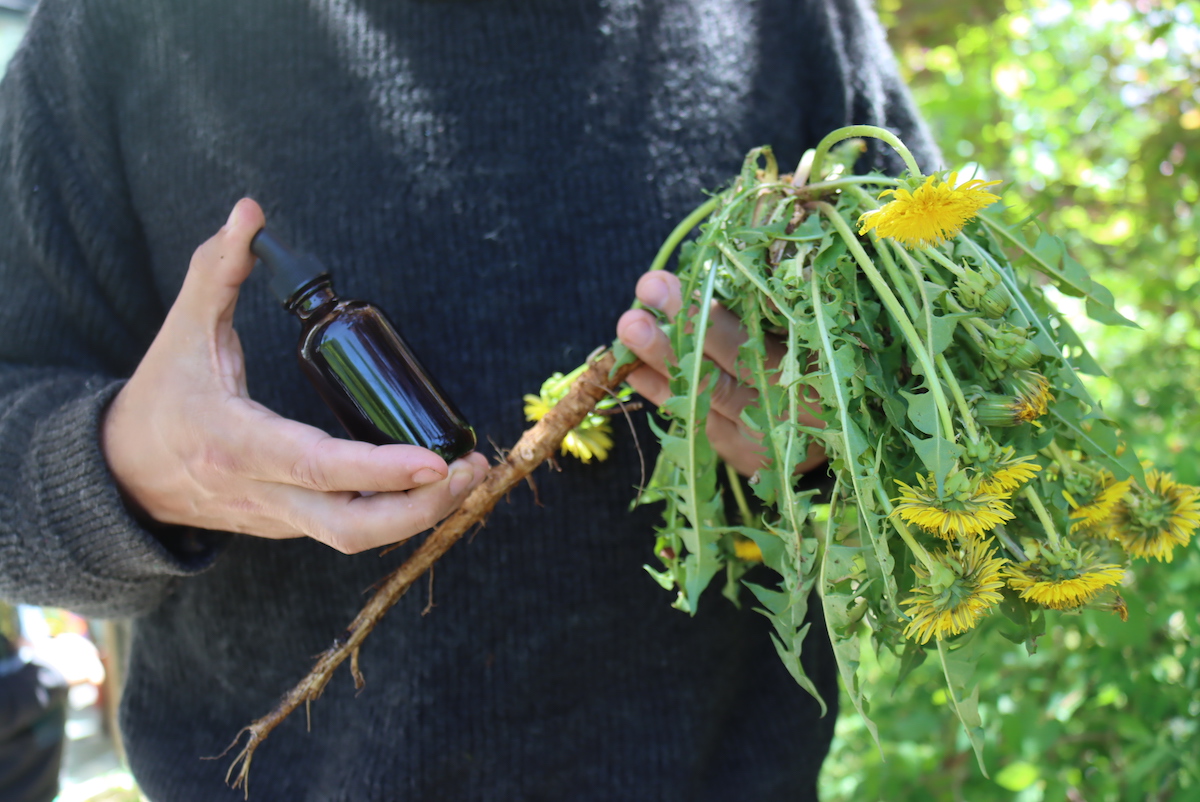
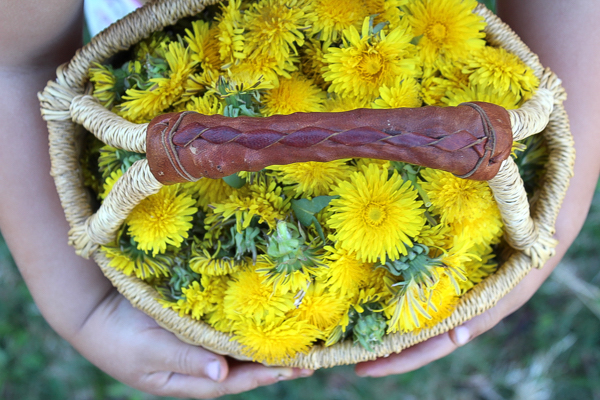
For whole-plant tincture, dig up 2 or 3 whole dandelion plants in spring, getting as much of the tap root out of the ground as you reasonably can. Dandelion is surprisingly resilient, and even a small piece of root left in the soil will usually resprout the following year. For a root-only tincture, you can dig roots either in early spring (more bitter, more medicinal) or in fall after the first frost (sweeter, plumper), and you’ll want about 10 good-sized ones to fill a quart jar.
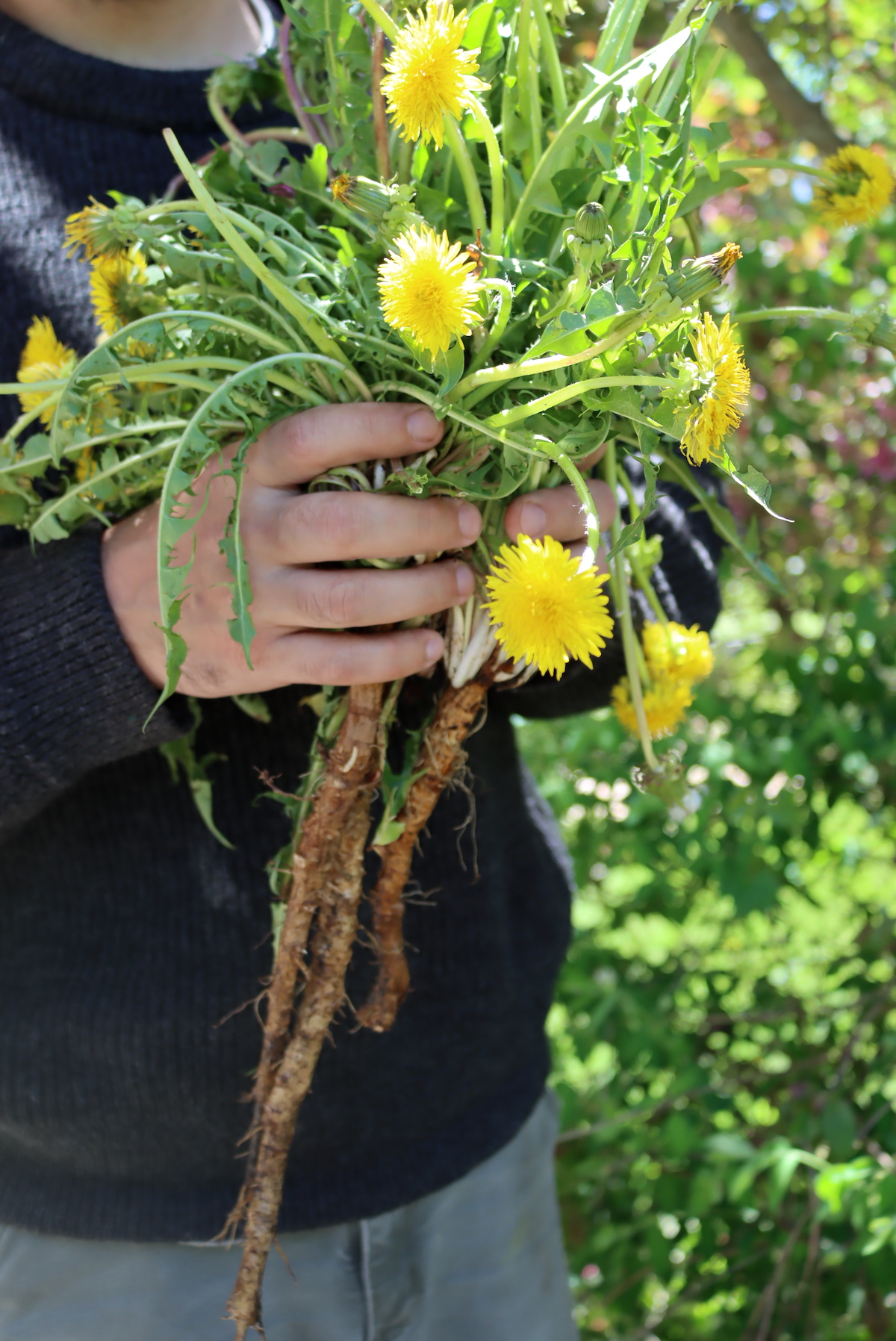
Wash the dandelions thoroughly back at the sink, scrubbing the roots really well to remove all the soil. Any dirt left in the jar won’t hurt you, but it’ll affect the flavor and make straining more of a chore. Once the plants are clean, chop them as finely as you reasonably can. A sharp knife works for whole plants; for tougher roots, pulse-chopping in a food processor speeds things up considerably.
Combining with Alcohol
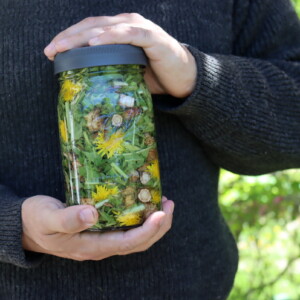
Pack the chopped plant material into a clean quart mason jar. The jar should be about 2/3 full of plant material, with room left for the alcohol. Pour vodka (or your spirit of choice) over the dandelions until the jar is filled to within an inch of the top, making sure all the plant material is submerged. Cap the jar, label it with the contents and date, and tuck it into a cool, dark cupboard.
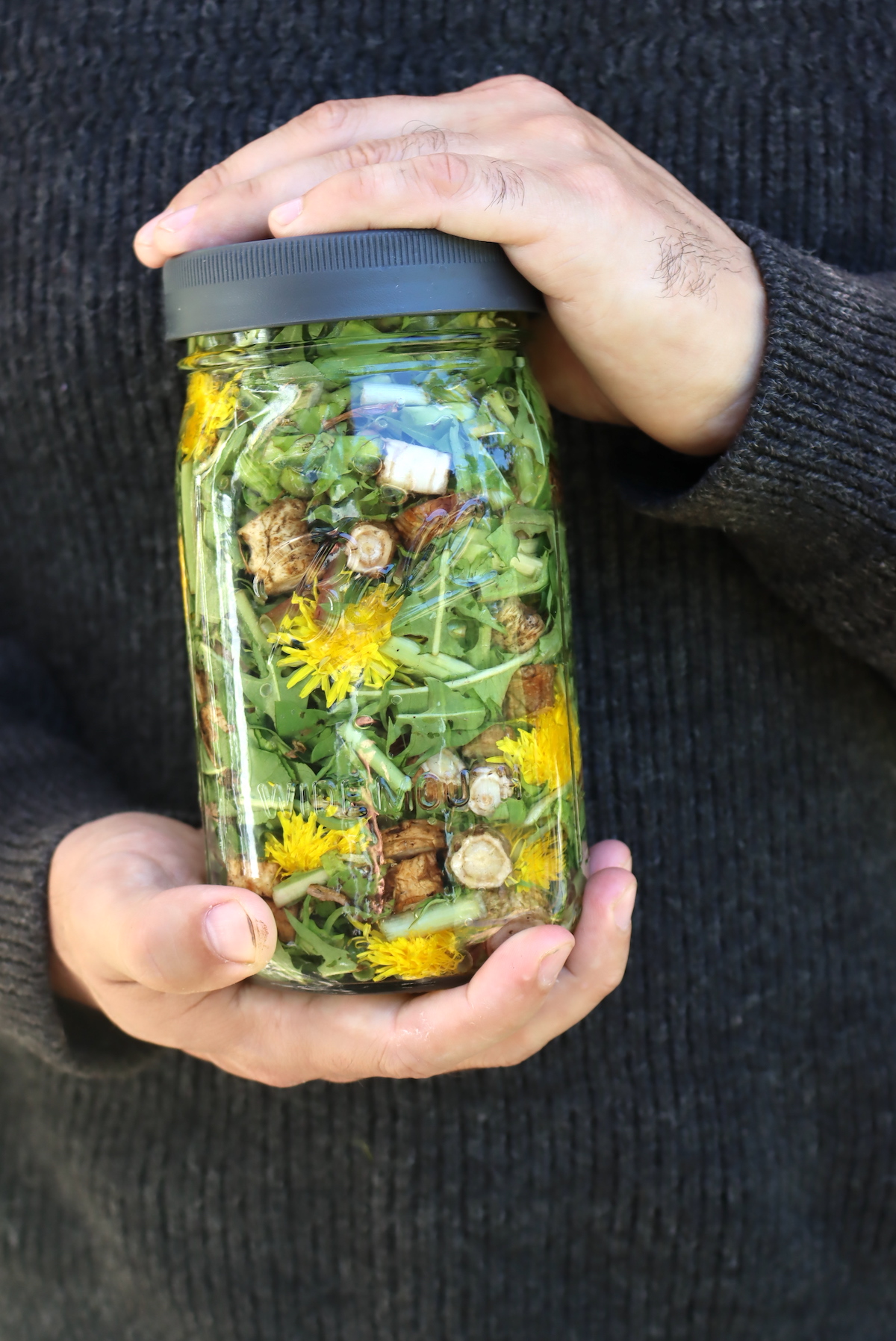
Shake the jar every day for the first week, then every few days for the remainder of the maceration. This keeps the plant material in contact with fresh alcohol and helps the extraction along.
Straining and Bottling
The tincture needs at least 4 weeks to infuse, but I aim for 6 to 8 weeks to make sure it’s reached full potency. When it’s ready, strain it through a cheesecloth-lined fine mesh strainer into a clean bowl or pitcher. Squeeze the spent plant material gently to release the last of the liquid, then compost it. Decant the finished tincture into amber dropper bottles for daily use, labeled with the contents and the date.
A Note on Alcohol Percentage
For preservation, tinctures need to be at least 25% alcohol once the plant material’s water content is factored in. Since fresh dandelions contribute water of their own, I use a spirit of at least 40% ABV (80 proof) for whole-plant or fresh-root tinctures.
- Folk method (what’s described above): Pack the jar about 2/3 full of plant material, cover with alcohol to within an inch of the top. Forgiving and works for almost every tincture.
- Weight-to-volume method: Herbalists often weigh the plant material and alcohol in a precise ratio (1:2 fresh, 1:5 dried) for more consistent dosing. More dishes, more precise.
- High-proof spirits: If you’re starting with Everclear or another 190 proof grain alcohol, dilute it with distilled water to about 50% ABV before using. Higher alcohol percentages can be too aggressive and may extract constituents you don’t want alongside the ones you do.
Dandelion Tincture Dosage
The book Backyard Medicine offers detailed recommendations for dandelion tincture dosage:
- General health maintenance: 1/2 teaspoon twice daily
- Acute skin eruptions: 10 drops in water frequently throughout the day
- Arthritis, gout, eczema, psoriasis, and liver trouble: 1 teaspoon three times a day in water
- Indigestion: 10 drops in water every hour until resolved
These are the dosage ranges in traditional herbal practice, but the right dose for you depends on your situation. If you’re pregnant or nursing, taking prescription medication, or managing a chronic condition, talk to your doctor or a clinical herbalist before adding any tincture to your routine.
Storage and Shelf Life
Store finished dandelion tincture in a cool, dark, dry place. A pantry shelf or medicine cabinet works perfectly. Alcohol-based tinctures keep their potency for 2 to 5 years before the constituents start to noticeably degrade, though the alcohol itself prevents spoilage indefinitely. Mine usually gets used up well before that. Discard any tincture that smells off or shows visible mold.
Glycerite (alcohol-free) and vinegar-based tinctures have a shorter shelf life of about 1 to 2 years. Whichever menstruum you use, always store in amber glass to protect the constituents from light degradation.
Recipe Tips & Variations
- Alternative spirits: Brandy adds a warm, slightly sweet note that pairs well with the bitterness of dandelion root. Whiskey gives a deeper, richer profile. Gin works if you’re after something more aromatic. All work at 80 proof or above.
- Alcohol-free version: Substitute food-grade vegetable glycerine for the vodka to make a glycerite instead. The process is identical, the ratios shift slightly, and the shelf life drops to about 1 to 2 years.
- Vinegar tincture: Raw apple cider vinegar is another non-alcohol option. Shorter shelf life than alcohol (1 to 2 years), but cheaper and food-friendly.
- Using dried root: Use about half the volume of dried root compared to fresh, since dried material rehydrates and swells in the alcohol. Maceration time stays the same.
- Sweetening to mask the bitterness: A spoonful of honey stirred into the finished tincture can take the edge off without affecting the medicinal properties. You can also take your drops in lemon water or a small glass of juice.
- That milky layer at the bottom: Sometimes a milky substance settles at the bottom of a dandelion tincture jar, especially with whole-plant or root-only versions. This is inulin, a starch native to dandelion roots, and it’s completely normal. Give the bottle a good shake before each dose.
Tincture Formulations
Dandelion combines beautifully with other bitter spring tonic herbs. Burdock tincture is another digestive bitter and blood cleanser made from another wild-foraged root. Chickweed tincture is made from the first tender greens of spring and pairs well with dandelion.
Equal parts of all three make a balanced spring tonic, and the deeper craft of mastering herbal formulations is one of the more interesting rabbit holes if you start making your own remedies in earnest.
Ways to Use Dandelion
Tincture is one of the most concentrated ways to capture dandelion’s medicinal benefits, but it’s far from the only way to use this plant. I keep plenty of dandelion recipes in rotation around here, from the flowers all the way down to the roots.
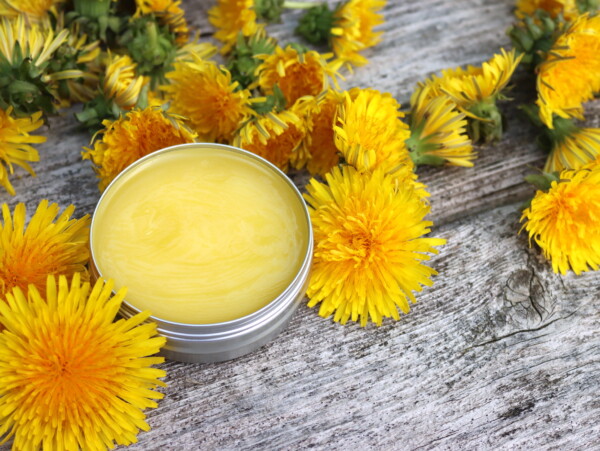
The flowers turn into a delicious dandelion jelly that tastes like honey, a bright dandelion wine, or a topical dandelion salve for dry hands and sore muscles. The greens go into spring salads or get sautéed like other bitter greens. The roots can be roasted into dandelion root coffee, simmered into dandelion-infused oil, or just cooked like a vegetable. And once spring really gets rolling, the same plant turns up in cordials, capers, fritters, and baked goods too.
Dandelion Tincture FAQs
Yes. Any neutral or mildly flavored spirit at 80 proof (40% ABV) or above will work for a dandelion tincture. Vodka is the most neutral, brandy adds a warm sweetness, gin brings botanical notes, and whiskey gives a deeper profile. If you’re using high-proof grain alcohol like Everclear, dilute it with distilled water to about 50% ABV first.
Substitute food-grade vegetable glycerine for the alcohol to make a glycerite, or use raw apple cider vinegar to make a vinegar tincture. The process is identical: pack the jar with chopped dandelion, cover with your chosen menstruum, macerate for 6 to 8 weeks, then strain. Glycerites and vinegar tinctures have a shorter shelf life of about 1 to 2 years.
Yes. Dried dandelion root is widely available and works well in a tincture, particularly if you’ve missed the harvest season. Use about half the volume of dried root compared to fresh, since dried material rehydrates and swells in the alcohol. Maceration time stays the same.
That’s inulin, a starch found in dandelion roots, and it’s completely normal. It tends to show up more with whole-plant or root-only tinctures. Just give the bottle a good shake before each dose. Some herbalists consider the inulin part of the medicinal value of the tincture, so there’s no need to filter it out.
Stored in a cool, dark place in amber glass, an alcohol-based dandelion tincture keeps its potency for 2 to 5 years. The alcohol prevents spoilage indefinitely, so a forgotten jar in the back of the pantry is usually still safe to use, though it may have lost some of its medicinal strength. Glycerites and vinegar tinctures last 1 to 2 years.
Dandelion Recipes & Remedies
If you tried this Dandelion Tincture recipe, or any other recipe on Practical Self Reliance, leave a ⭐ star rating and let me know what you think in the 📝 comments below!
And make sure you stay in touch with me by following on social media!
Dandelion Tincture
Equipment
Ingredients
- 2-3 whole dandelion plants, OR ~10 good-sized dandelion roots for root-only tincture
- 3 cups vodka (80 proof / 40% ABV minimum), enough to fill the jar to within an inch of the top and completely cover the plant material
Instructions
- Harvest 2 to 3 whole dandelion plants (or about 10 dandelion roots) from a clean, unsprayed location. Brush off most of the soil in the field, then wash thoroughly back at the sink, scrubbing the roots well.
- Chop the plant material as finely as you reasonably can. A sharp knife works for whole plants; for tougher roots, pulse-chopping in a food processor is faster.
- Pack the chopped plant material into a clean quart mason jar. The jar should be about 2/3 full of plant material.
- Pour vodka over the dandelion until the jar is filled to within an inch of the top. Make sure all the plant material is submerged.
- Cap the jar, label it with the contents and date, and store in a cool, dark place.
- Shake the jar daily for the first week, then every few days for the remainder of the maceration.
- Let macerate for at least 4 weeks, ideally 6 to 8 weeks for full potency.
- Strain the finished tincture through a cheesecloth-lined fine mesh strainer into a clean bowl or pitcher. Press the spent plant material to release the last of the liquid, then compost it.
- Decant the strained tincture into amber dropper bottles. Label with contents and date.
Notes
A Note from Your Family Herbalist
I’m a family herbalist, trained by more than 20 years of hands-on work with medicinal plants and rounded out with coursework through the Herbal Academy of New England. That means I know my way around the plants in this post, and I’ve personally made and used the remedies I write about, often many times over. But there’s a real difference between knowing what works on my homestead and knowing what’s right for you.
Medicine is a personal affair. Every body is different, every medical history is different, and herbs interact with medications, pregnancy, nursing, and existing health conditions in ways no general blog post can anticipate. Even mild medicinal plants like chamomile cause allergic reactions in some people, so what sits comfortably on my own medicine shelf might not be the right choice for yours.
For guidance tailored to your situation, there are three directions I’d point you:
- See a local clinical herbalist. A practicing clinical herbalist can take your full health picture into account, recommend the right herb and dose for you, and adjust the protocol as you go. Ask around at your nearest food co-op, herb farm, or natural-foods store; most communities have at least one.
- Talk to your doctor before adding any new herb to your routine, especially if you take prescription medications, are pregnant or nursing, or are managing a chronic condition. A good doctor will welcome the conversation.
- Educate yourself, the way I have. The Herbal Academy of New England runs the courses I credit with sharpening my own practice. Their Introduction to Herbal Medicine course is where I’d start. I’ve also taken and recommend their Mushroom Course and their Botany and Wildcrafting Course. All three are well-paced and easy to follow at home.
Herbal Tincture Recipes

Find the perfect recipe
Searching for something else? Enter keywords to find the perfect recipe!










Great and wonderful. Thank you from our family.
You’re quite welcome!
The dandelions are going gangbusters, and I thought that I’d like to make some tincture. While reading the article, I also read about roasting the roots. It got me to wondering if I could use the technique of boiling the roots for a few minutes in order to slip off the outer skin of the dandelion root prior to chopping it up and covering in vodka. I wouldn’t think that this would affect the medicinal value too much, but was wondering your thoughts on the matter. If that’s not a good idea, could I use a coffee filter to strain out the dirt? I have thousands of old “Mr. Coffee” filters that are quite handy for many non-coffee ideas and this might just be another! Thanks for any thoughts on the matter.
Cooking will probably denature many of the medicinal compounds, at least I’d assume. I actually don’t know for sure. When we make dandelion root cake, we just use a vegetable peeler to peel the roots before grating them into cake and that works wonders, so that might be a better option. And in terms of filtering, a coffee filter is ideal. It works best if you use a fine mesh strainer first to get out the big pieces, then filter it a second time through a coffee filter.